
























James Webb Photographs the Merger of Two Stars in Andromeda
Nov 18, 2026
Soumyadeep Mukherjee
Soumyadeep Mukherjee is an award-winning astrophotographer from India. He has a doctorate degree in Linguistics. His work extends to the sub-genres of nightscape, deep sky, solar, lunar and optical phenomenon photography. He is also a photography educator and has conducted numerous workshops. His works have appeared in over 40 books & magazines including Astronomy, BBC Sky at Night, Sky & Telescope among others, and in various websites including National Geographic, NASA, Forbes. He was the first Indian to win “Astronomy Photographer of the Year” award in a major category.
Share:
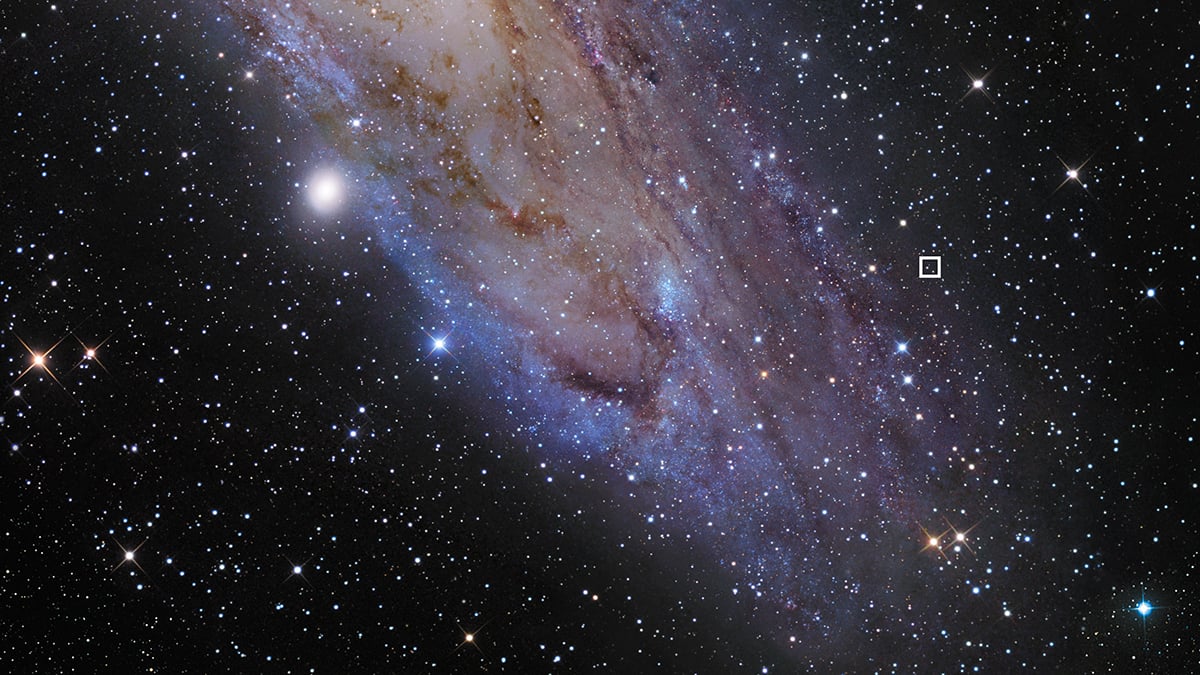
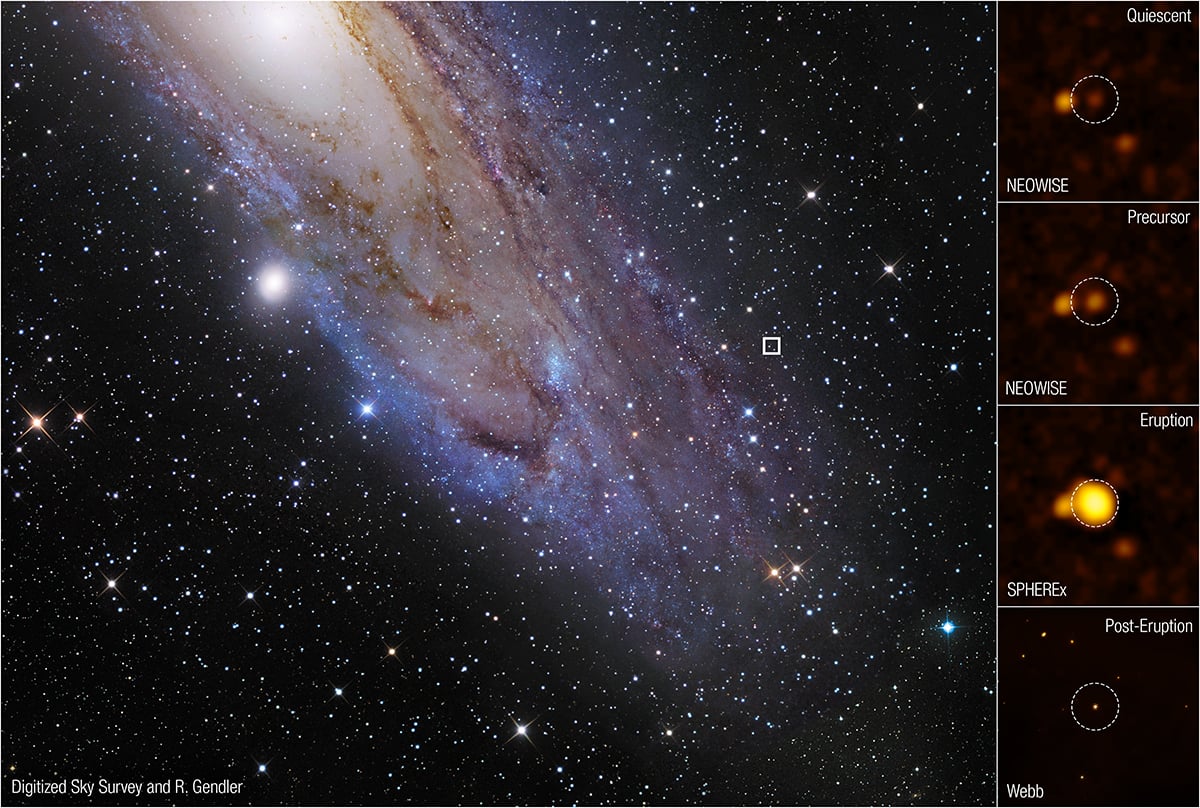
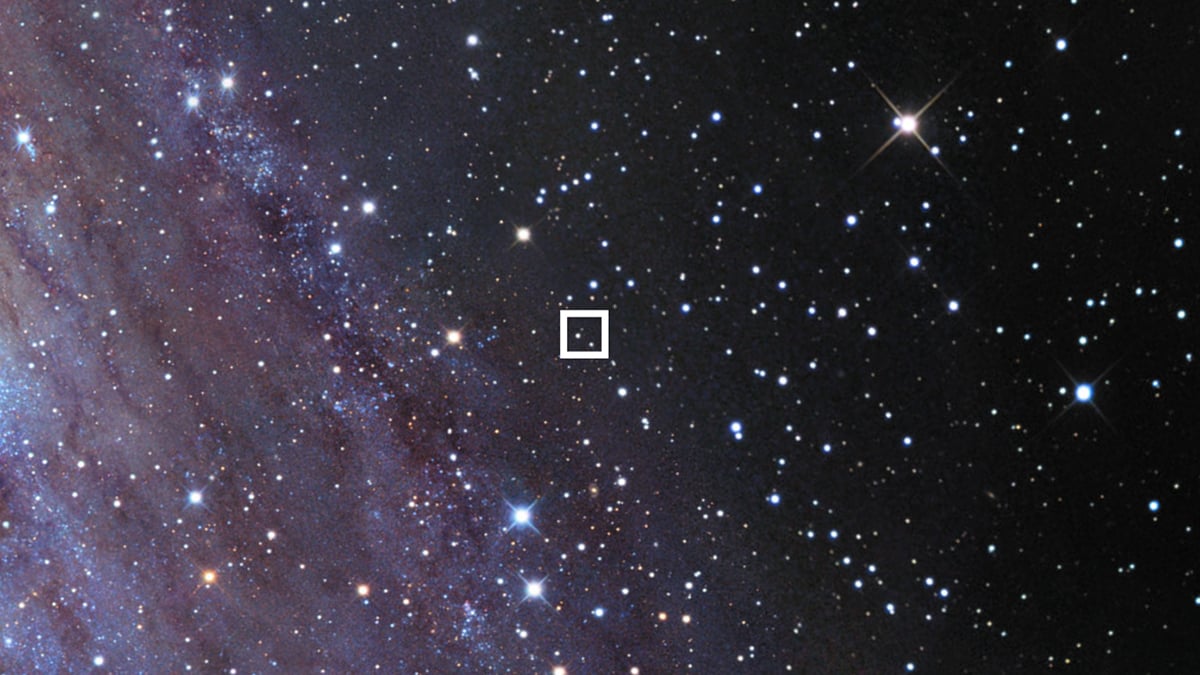
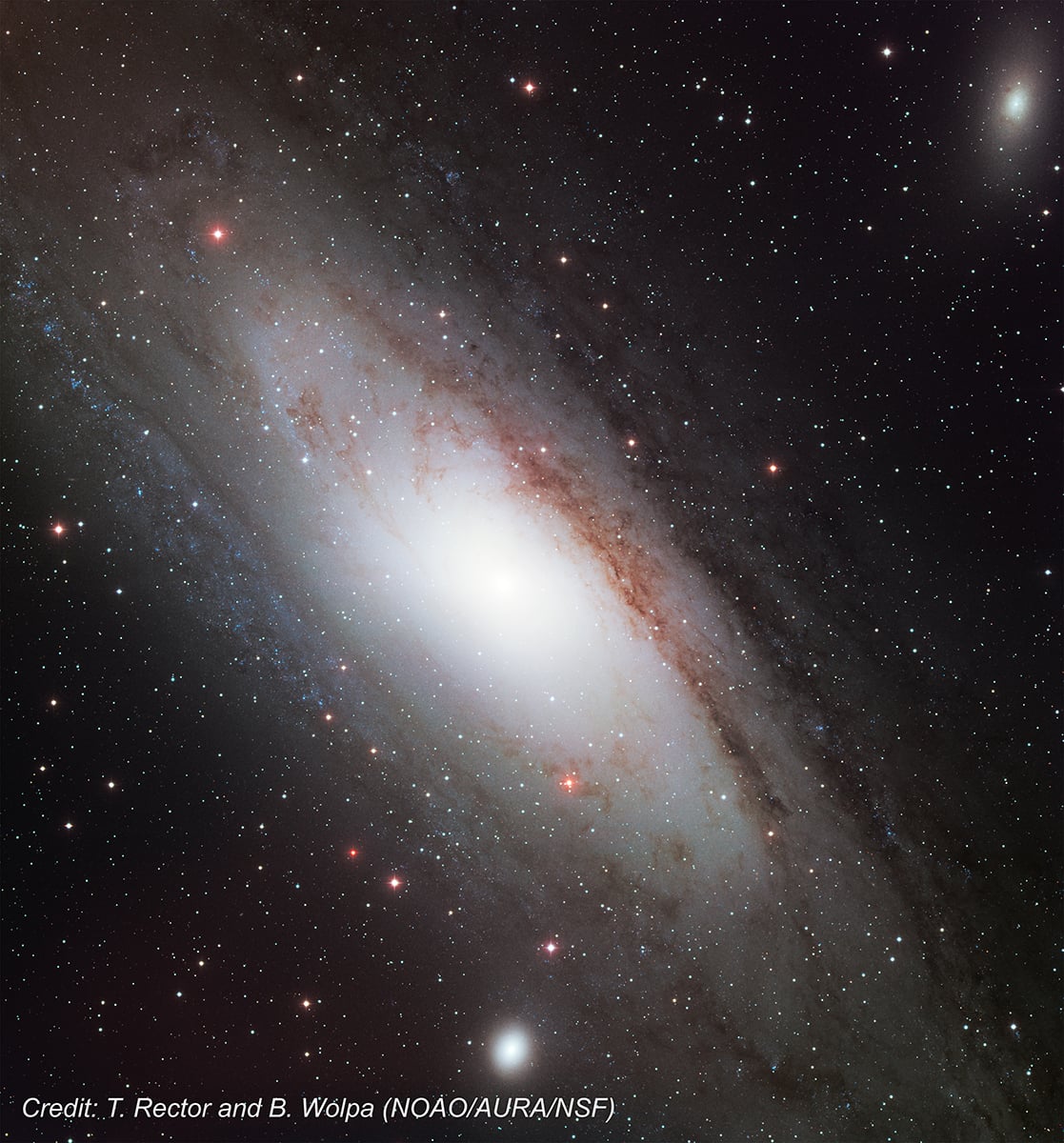
Astronomers have reconstructed the merger of two stars in the Andromeda Galaxy using observations from the James Webb Space Telescope and several other observatories. The smaller star spent about seven years spiraling through the outer layers of its much larger companion. Their interaction eventually ended in a merger and a sudden eruption in October 2025. The event, known as AT 2025abao, has given astronomers a detailed view of how two stars interact inside a shared envelope of gas.
A star began brightening in Andromeda
The first signs of trouble appeared in archival observations from NASA’s NEOWISE mission. In February 2023, researchers noticed an unusual variable object in the outskirts of Andromeda. Earlier records showed that its brightness had remained fairly consistent between 1989 and 2018. Around 2018, however, the star began brightening.
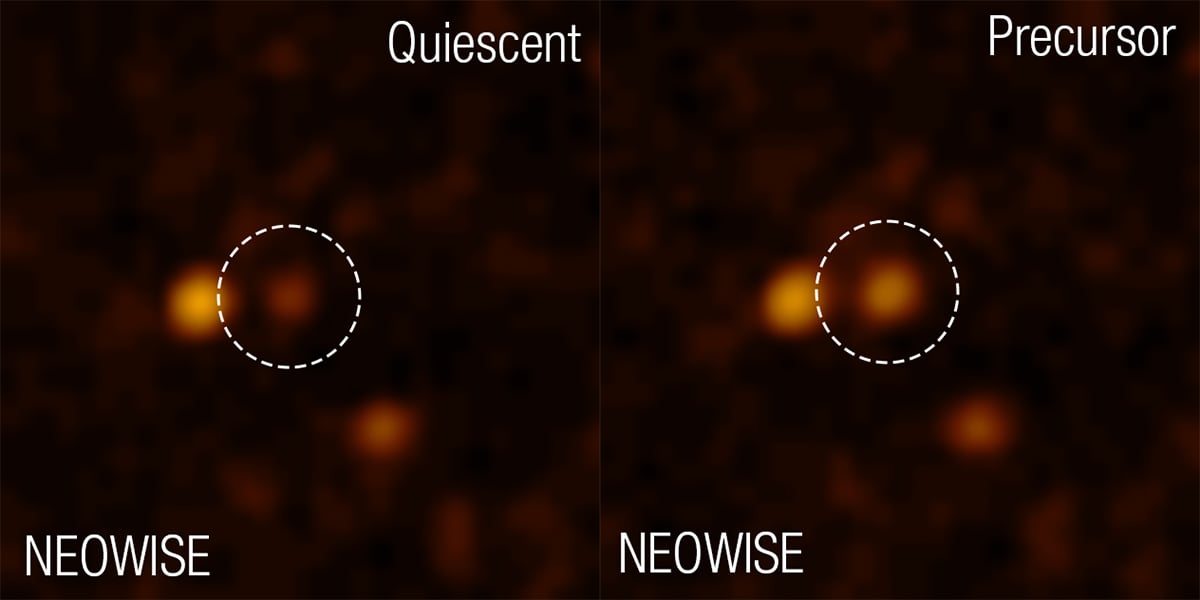
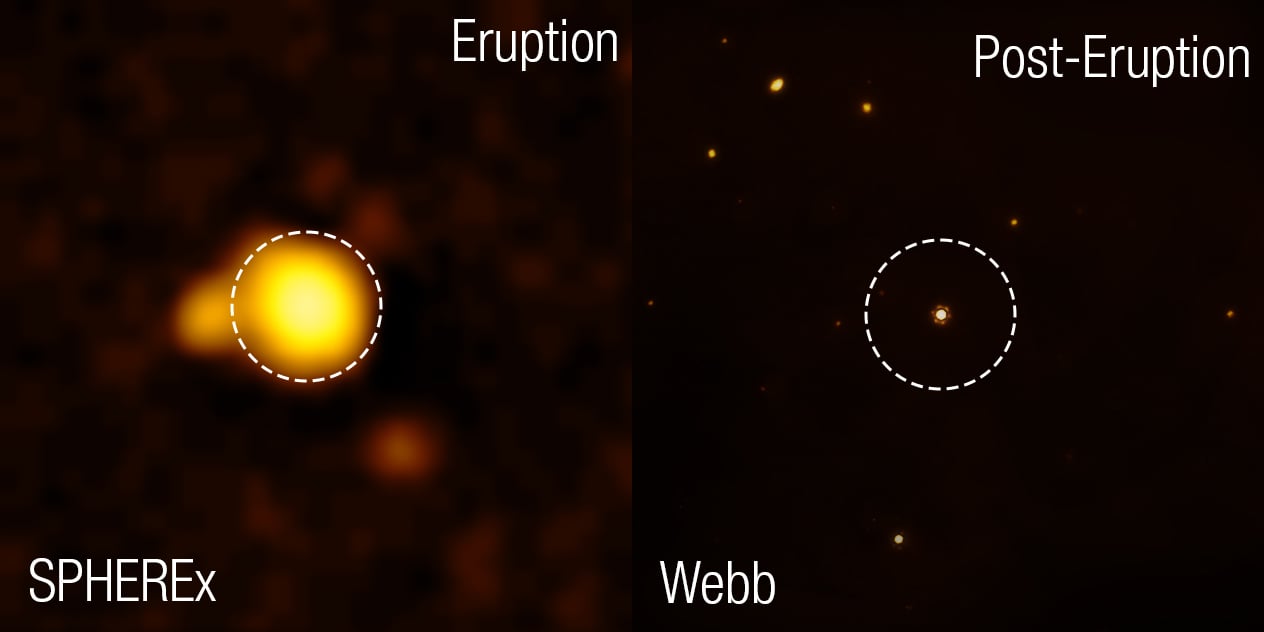
In September 2024, the Wide-field Infrared Transient Explorer (WINTER) recorded increasing infrared brightness from the system. Its measurements also indicated that the star was producing dust. NASA’s SPHEREx mission picked up another change in July 2025.
The decisive event came on October 17, 2025, when the Zwicky Transient Facility detected a sudden eruption. The system brightened rapidly, marking the end of the long period of gradual change. Researchers then arranged observations with several ground-based and space-based telescopes.
Two stars with a dramatic difference in size
The observations and computer models revealed that AT 2025abao began as a binary system. Its two stars orbited a common center of mass, but they differed greatly in size and mass. Researchers nicknamed the larger star Big Bao and its smaller companion Little Bao. These names also help explain why the interaction ended the way it did.
Big Bao had about seven times the Sun‘s mass. Its radius reached around 350 times the Sun’s radius, and it shone with roughly 18,000 times the Sun’s luminosity. Researchers identified it as an asymptotic giant branch star, an advanced stage in stellar evolution. At this point, a star develops an enormous outer envelope of gas around its inner regions.
Little Bao had only about 0.7 times the Sun’s mass. It was much smaller and fainter than its companion. For years, the two stars orbited one another without undergoing the dramatic interaction that eventually brought them together. Their circumstances changed when the expanding envelope of Big Bao reached the smaller star’s orbit.
Seven years of spiraling ended in a stellar merger
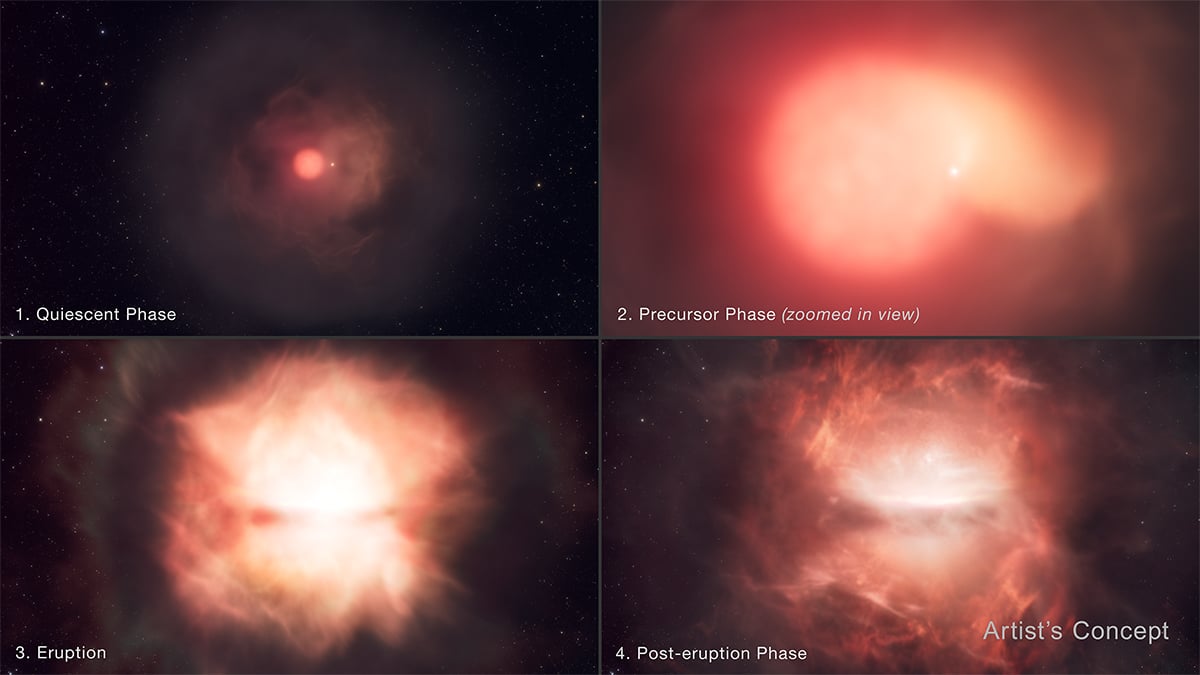
Astronomers call the process behind Bao’s transformation common-envelope evolution. It begins when an expanding star engulfs its companion within its outer gaseous envelope. Both stars then move inside the same extended layer of material. The smaller star experiences drag as it travels through the gas, losing orbital energy and moving closer to the giant’s core.
The researchers estimate that the interaction lasted about seven years, during which the stars completed roughly seven orbits. That is a remarkably short period compared with other known binary mergers involving smaller stars. Some such systems have undergone thousands of orbits before reaching their final merger.
The final encounter occurred in 2025, when Little Bao reached the core of Big Bao. The merger released energy and drove the ejection of material from the giant’s envelope. This produced the sudden eruption detected on October 17. The system also left behind a cloud of gas and dust that continued expanding after the event.
Clear skies!
See more from DIYPhotography.net on Google
Add DIYPhotography.net as a trusted source. This makes
our stories more likely to appear in your Google Search results.
 Add as a preferred source on Google

Soumyadeep Mukherjee
Soumyadeep Mukherjee is an award-winning astrophotographer from India. He has a doctorate degree in Linguistics. His work extends to the sub-genres of nightscape, deep sky, solar, lunar and optical phenomenon photography. He is also a photography educator and has conducted numerous workshops. His works have appeared in over 40 books & magazines including Astronomy, BBC Sky at Night, Sky & Telescope among others, and in various websites including National Geographic, NASA, Forbes. He was the first Indian to win “Astronomy Photographer of the Year” award in a major category.
Join the Discussion
DIYP Comment Policy
Be nice, be on-topic, no personal information or flames.