
























ESO’s VISTA Captures Hidden Stars of the Magellanic Clouds
Sep 14, 2026
Soumyadeep Mukherjee
Soumyadeep Mukherjee is an award-winning astrophotographer from India. He has a doctorate degree in Linguistics. His work extends to the sub-genres of nightscape, deep sky, solar, lunar and optical phenomenon photography. He is also a photography educator and has conducted numerous workshops. His works have appeared in over 40 books & magazines including Astronomy, BBC Sky at Night, Sky & Telescope among others, and in various websites including National Geographic, NASA, Forbes. He was the first Indian to win “Astronomy Photographer of the Year” award in a major category.
Share:
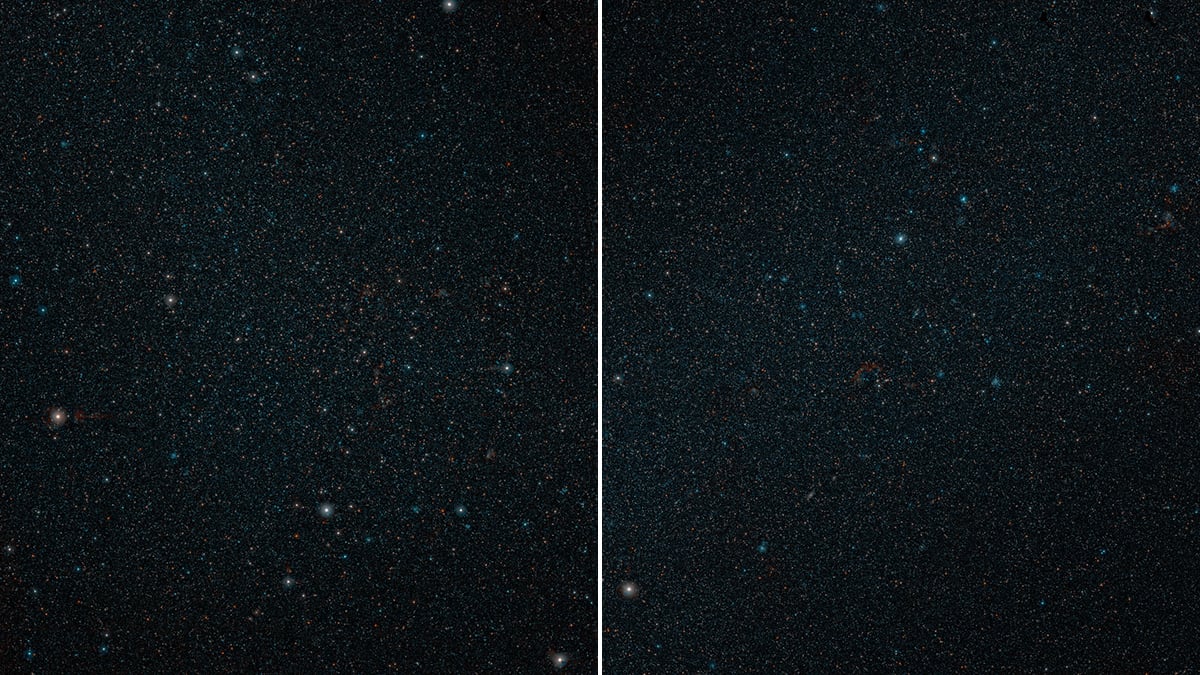
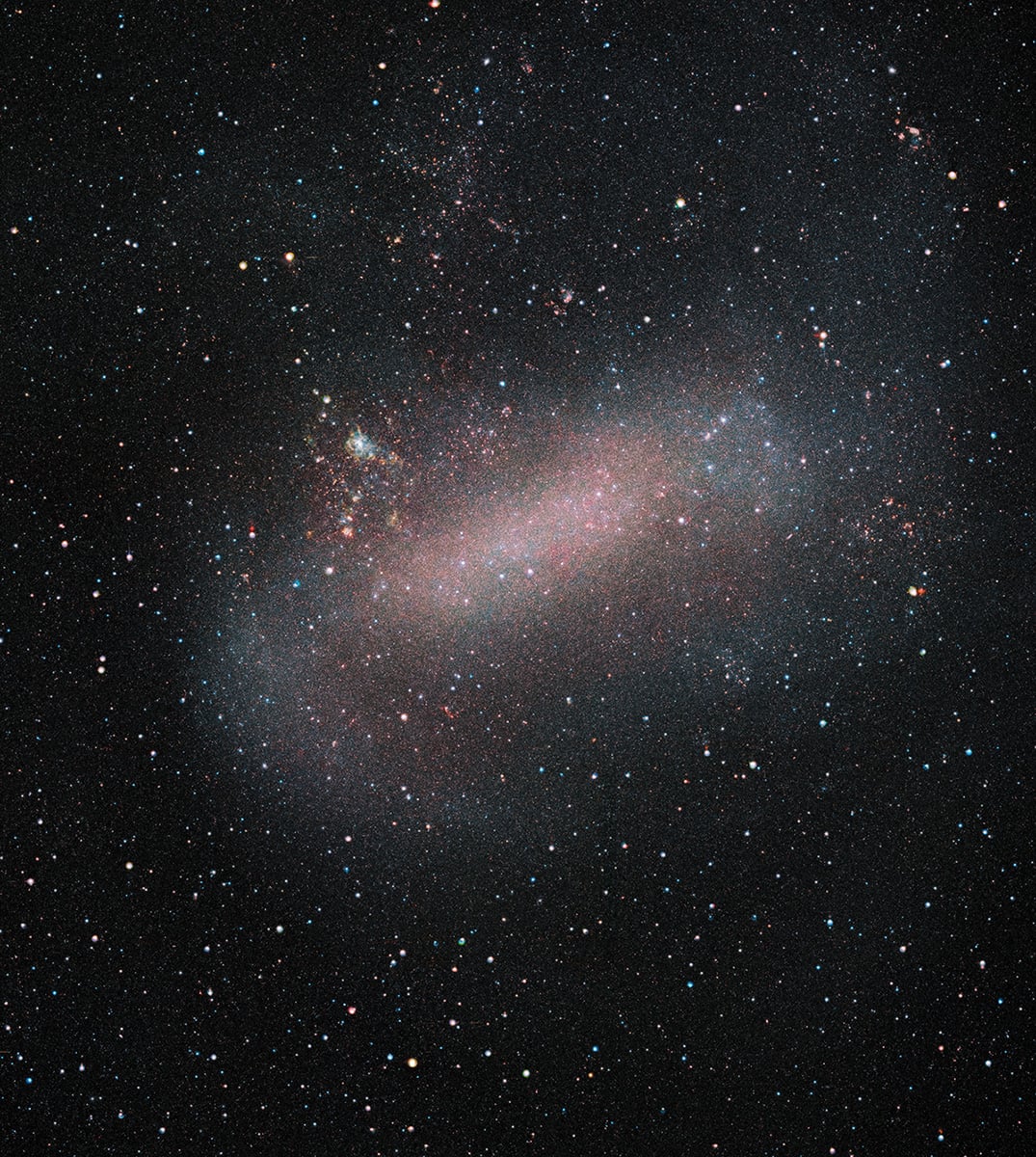
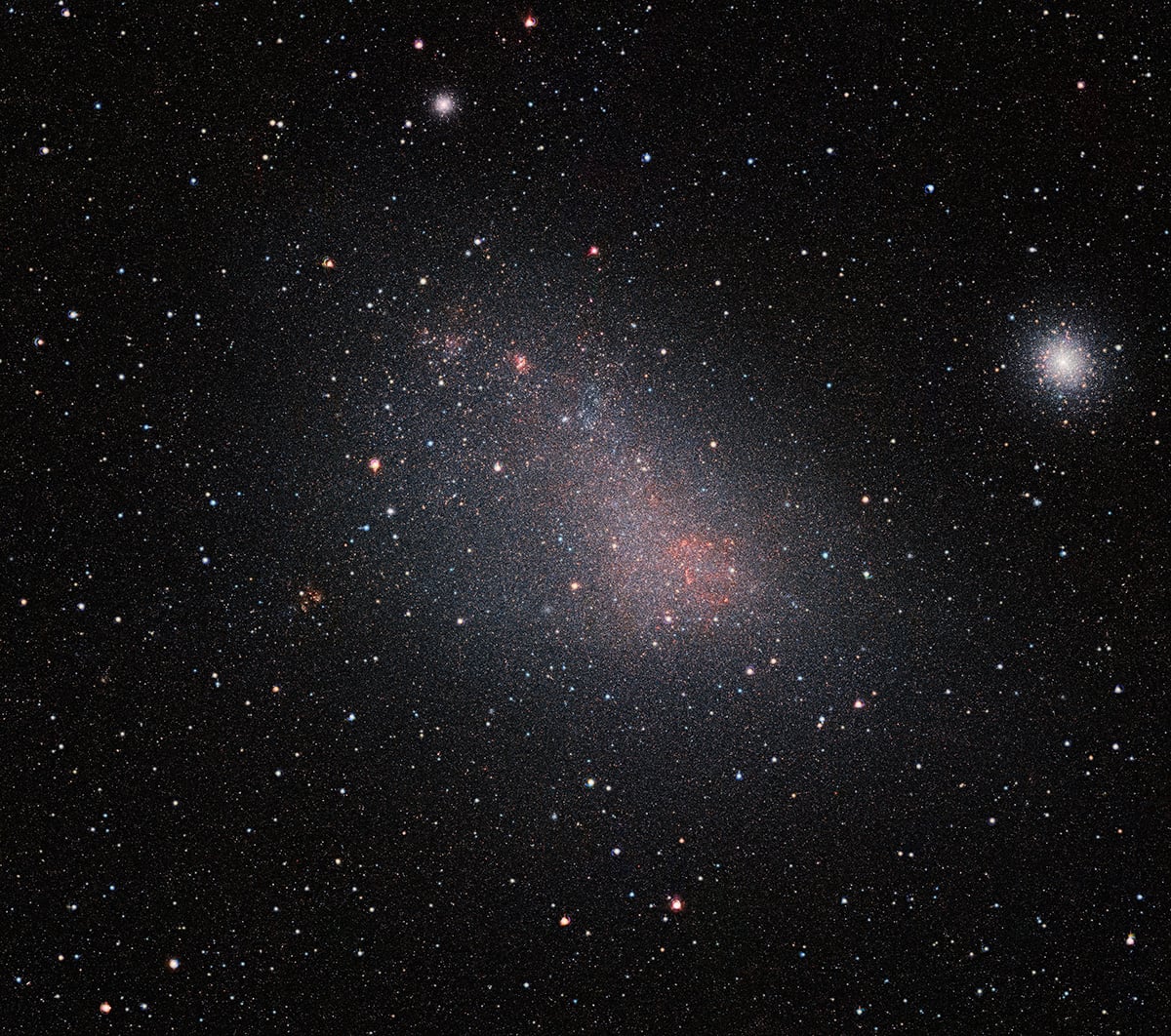
The Large and Small Magellanic Clouds look amazing through a wide-field telescope. They appear as two diffuse patches beside the Milky Way, familiar sights in the southern sky. Their central regions contain huge numbers of stars packed into relatively small areas, making individual objects difficult to separate.
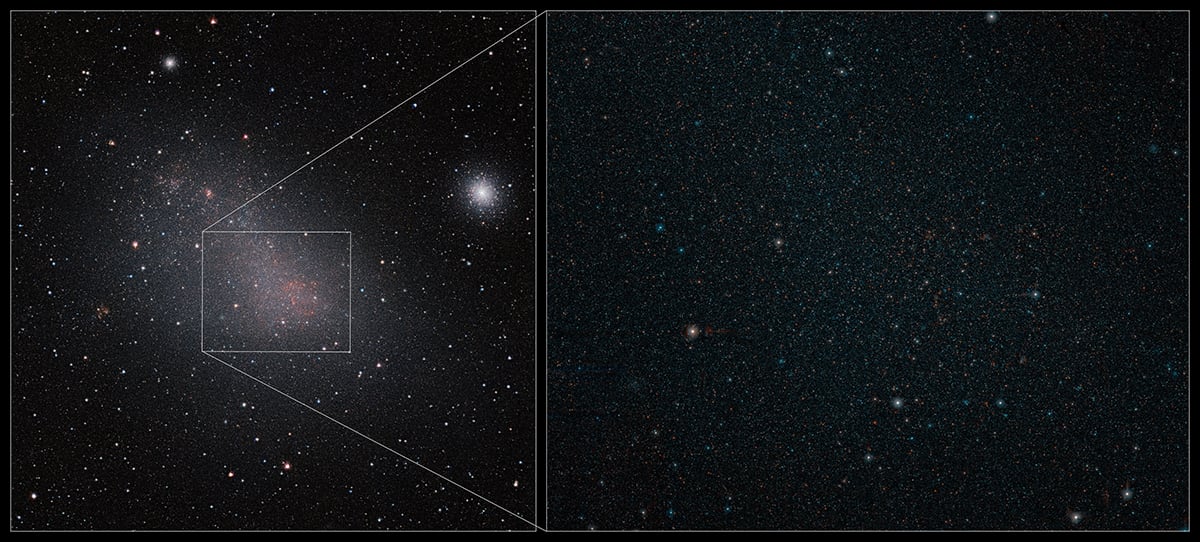
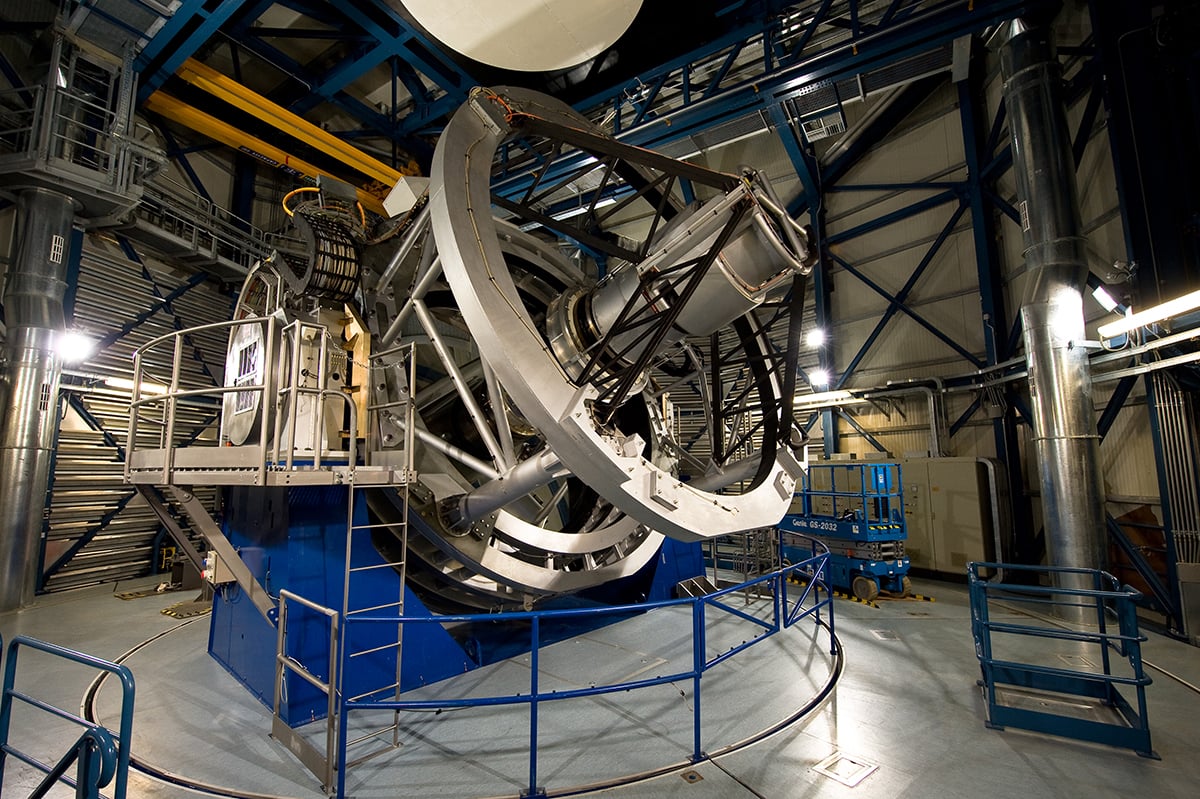
ESO has released two enormous infrared images that take a much closer look at those regions. The images show the centres of the Large Magellanic Cloud (LMC) and Small Magellanic Cloud (SMC). These images were captured using observations from ESO’s Visible and Infrared Survey Telescope for Astronomy, or VISTA. The telescope sits at ESO’s Paranal Observatory in Chile.
VISTA goes into the most crowded regions
Astronomers have studied the Magellanic Clouds for centuries, but their central regions have remained difficult to observe. The LMC contains a dense stellar bar, while the SMC has a similarly crowded central core. In such fields, the light from several stars can overlap and hide the fainter members of the population.
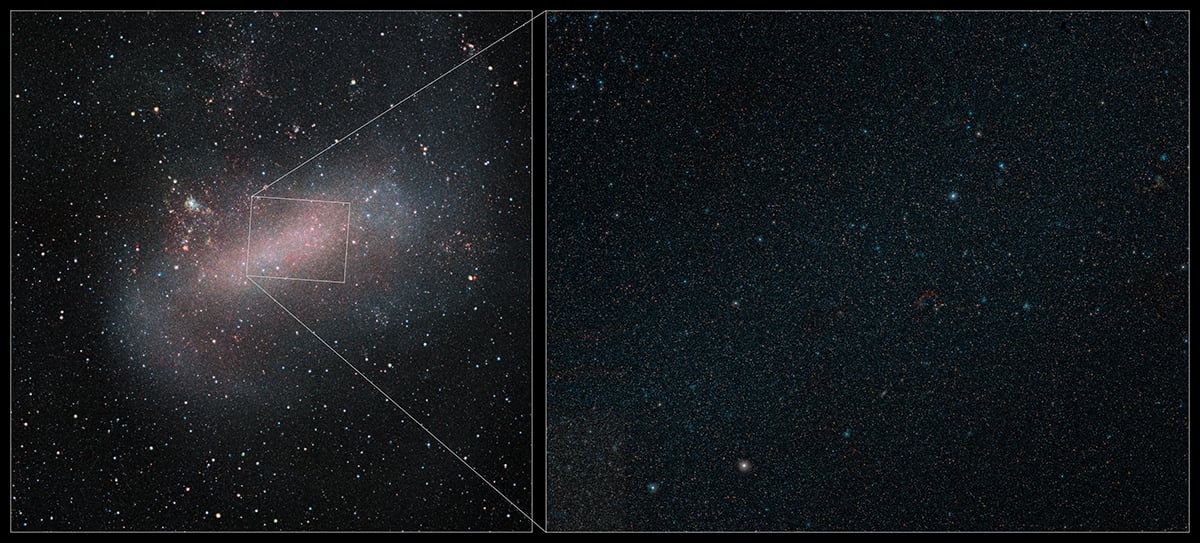
VISTA was a good match for the job. Its wide field allowed astronomers to cover substantial areas of the Magellanic Clouds, while its infrared camera could detect stars that optical surveys may miss. The new observations used the J and Ks near-infrared filters and focused on the inner regions of both galaxies.
The observations form part of the VMCDeep project, which aimed to push deeper into the crowded centres of the Clouds. Earlier wide-field surveys had difficulty resolving stars below the red clump because of crowding. VMCDeep targets those fainter stars and adds more detailed information about the stellar populations in these regions.
Years of observations reveal stellar movement
The VISTA team observed the central regions about 40 times in each filter during the extended campaign. Those observations add new epochs to the earlier VISTA survey and extend the available time baseline to roughly 11 years.
An individual star’s motion across the sky is extremely small when viewed from Earth. Astronomers call this proper motion. Detecting these motions requires measurements of stellar positions and observations separated by enough time for the movement to become measurable.
The new VISTA data was able to provide the measurements. The researchers compared the position of a star from one epoch with its position in later observations. When they repeated that process for thousands of stars, they could map how different parts of the galaxy move.
This could help astronomers identify the dynamical centers of the LMC and SMC. The center of a galaxy is not always as easy to define as simply finding the brightest point in an image. Different stellar populations can have different distributions, while interactions can disturb the outer parts of a galaxy.
The stars carry evidence of the Magellanic Clouds’ past
The LMC and SMC have not evolved independently. They interact with each other and with the much larger Milky Way.
These gravitational encounters can alter the shapes of galaxies and change the paths followed by their stars. The Magellanic Clouds contain structures that show their long history of interaction.
The new VISTA observations focus on the most tightly bound regions of the Clouds. The research team wants to use the data to investigate how interactions between the LMC and SMC have affected these central areas. The team also plans to study the influence of the Milky Way.
Clear skies!
See more from DIYPhotography.net on Google
Add DIYPhotography.net as a trusted source. This makes
our stories more likely to appear in your Google Search results.
 Add as a preferred source on Google

Soumyadeep Mukherjee
Soumyadeep Mukherjee is an award-winning astrophotographer from India. He has a doctorate degree in Linguistics. His work extends to the sub-genres of nightscape, deep sky, solar, lunar and optical phenomenon photography. He is also a photography educator and has conducted numerous workshops. His works have appeared in over 40 books & magazines including Astronomy, BBC Sky at Night, Sky & Telescope among others, and in various websites including National Geographic, NASA, Forbes. He was the first Indian to win “Astronomy Photographer of the Year” award in a major category.


Join the Discussion
DIYP Comment Policy
Be nice, be on-topic, no personal information or flames.