




















ESO’s VISTA gets a Spectroscopic Upgrade: 4MOST Achieves First Light
Oct 22, 2025
Soumyadeep Mukherjee
Soumyadeep Mukherjee is an award-winning astrophotographer from India. He has a doctorate degree in Linguistics. His work extends to the sub-genres of nightscape, deep sky, solar, lunar and optical phenomenon photography. He is also a photography educator and has conducted numerous workshops. His works have appeared in over 40 books & magazines including Astronomy, BBC Sky at Night, Sky & Telescope among others, and in various websites including National Geographic, NASA, Forbes. He was the first Indian to win “Astronomy Photographer of the Year” award in a major category.
Share:

The European Southern Observatory (ESO) has reached a major milestone in astronomy. The powerful 4MOST instrument has achieved its first light on the VISTA telescope at Paranal Observatory in Chile. Unlike traditional imaging telescopes, 4MOST simultaneously records the spectra of thousands of objects. This means it can measure what stars and galaxies are made of, how fast they move, and how they evolve. The achievement marks the beginning of a new era in wide-field spectroscopic surveys.
What is 4MOST
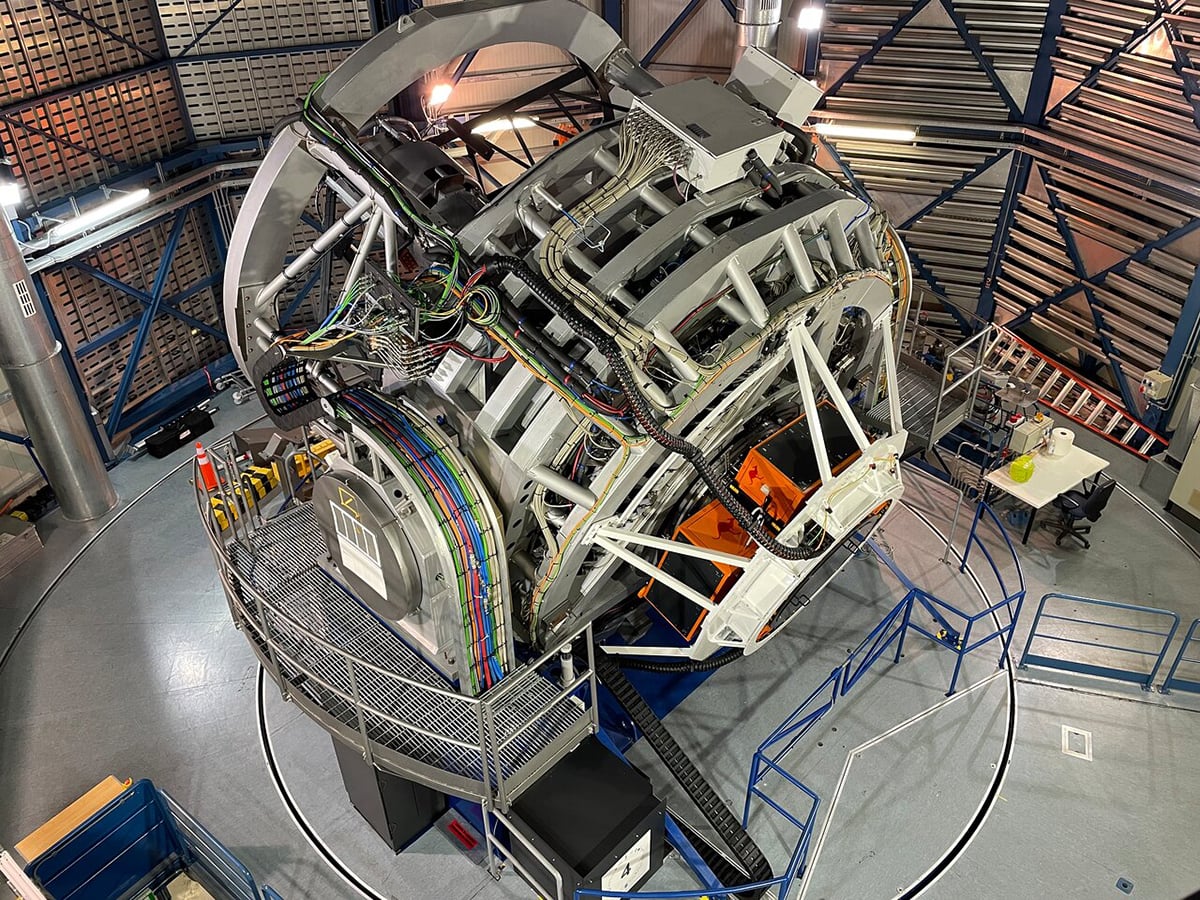
4MOST, short for 4-metre Multi-Object Spectroscopic Telescope, is the latest upgrade to the 4.1-metre VISTA telescope. For more than a decade, VISTA has served as one of ESO’s best infrared survey telescopes. With 4MOST, it now gains the ability to collect spectra from over 2,400 objects at once. Instead of observing one object at a time, astronomers can now gather data on millions of stars and galaxies. This efficiency is crucial for addressing large-scale questions about the evolution of the Milky Way and the universe.
4MOST covers a field of view of about 2.5 degrees, roughly equal to 20 full Moons. Each observation captures light from thousands of sources, funneled into thin optical fibres. The instrument then breaks that light into its wavelengths, creating detailed spectra. Its spectral resolution ranges from R ≈ 4,000–7,500 in low-resolution mode to R ≈ 21,000 in high-resolution mode. This allows astronomers to use the same instrument for both wide surveys and precise stellar studies.
The technology behind 4MOST
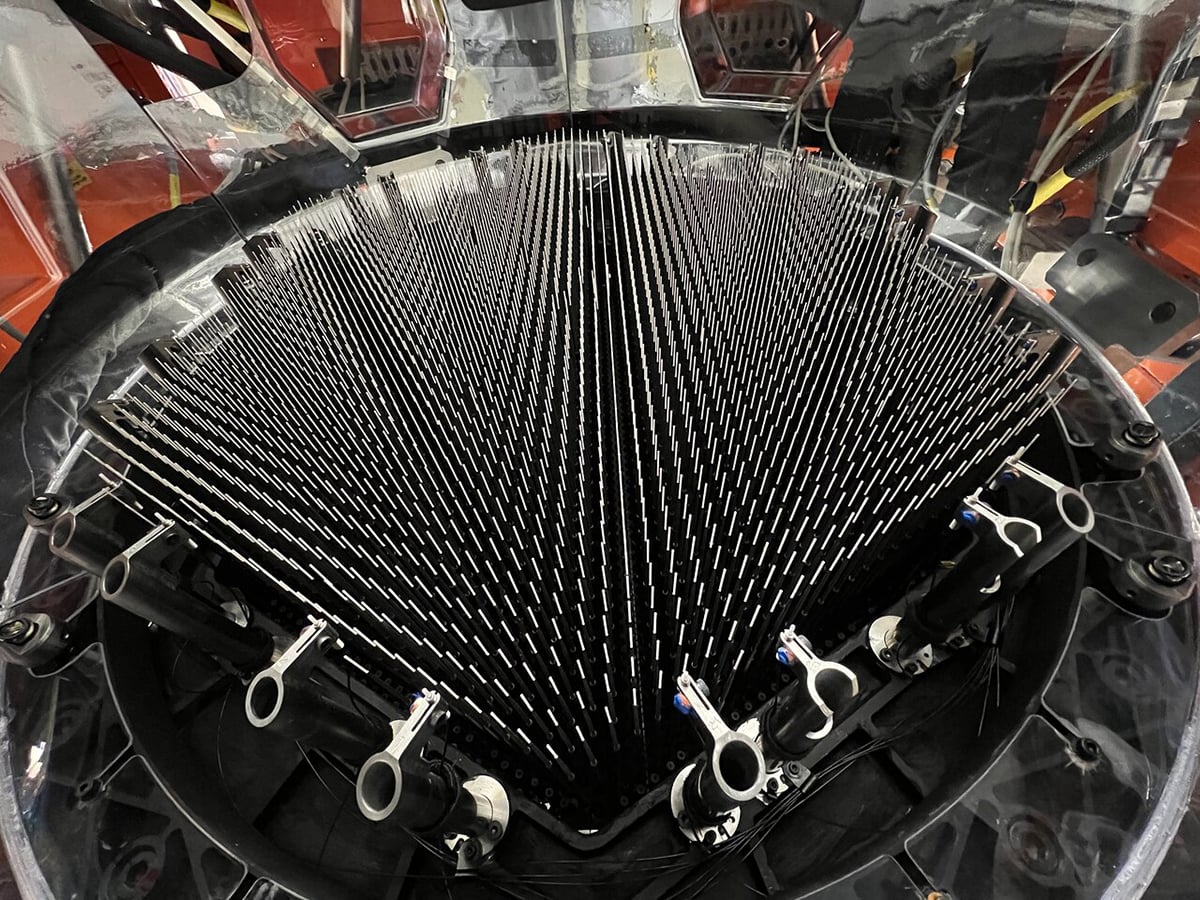
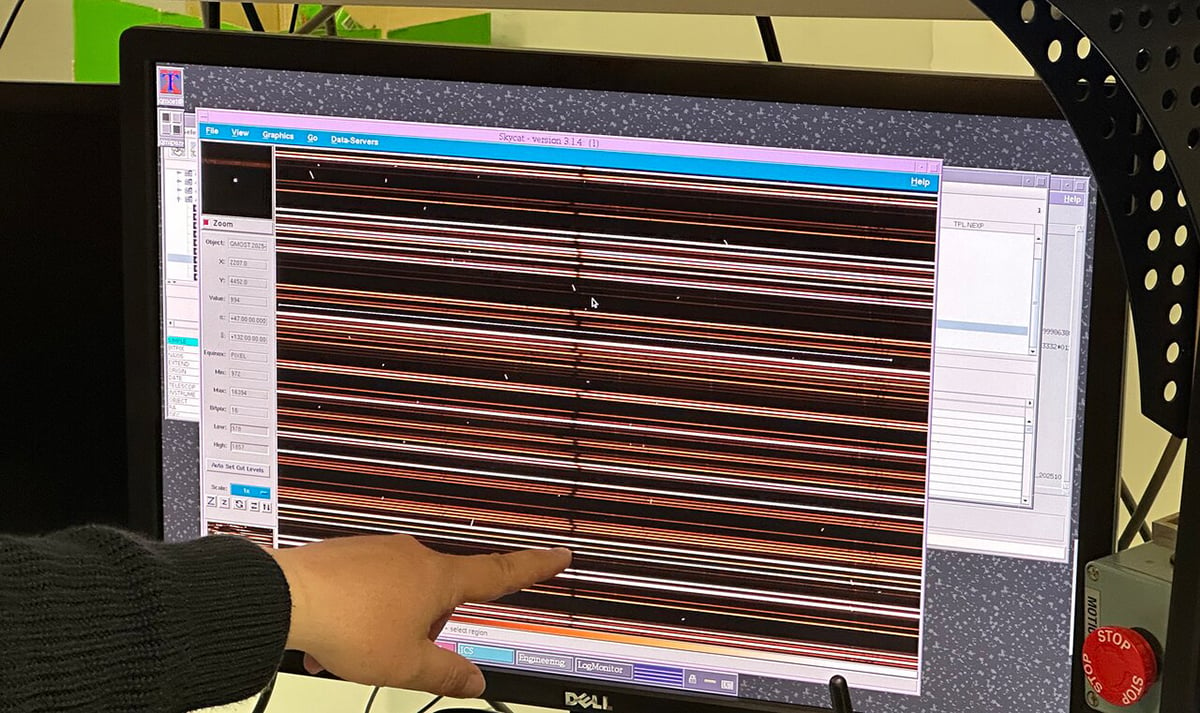
At the heart of 4MOST lies a remarkable innovation: the AESOP fibre-positioning system. It uses 2,436 tiny robotic spines, each carrying an optical fibre. Every fibre can tilt and rotate to point at a specific target in the telescope’s field of view. These spines reposition in about one minute, letting the instrument switch targets almost instantly. The light from each object travels through its fibre to one of three spectrographs: two low-resolution and one high-resolution. Each spectrograph splits the light into its component wavelengths. This process reveals the object’s temperature, velocity, and chemical composition.
Installing 4MOST required major upgrades to VISTA. Engineers added a new wide-field corrector and an atmospheric dispersion corrector. They also improved the guiding systems to handle the high precision needed for fibre spectroscopy. ESO and the 4MOST consortium also built a dedicated data system. It automatically processes, calibrates, and archives the huge volume of spectra. This ensures that the data will be easily accessible to astronomers worldwide.
The “first light”
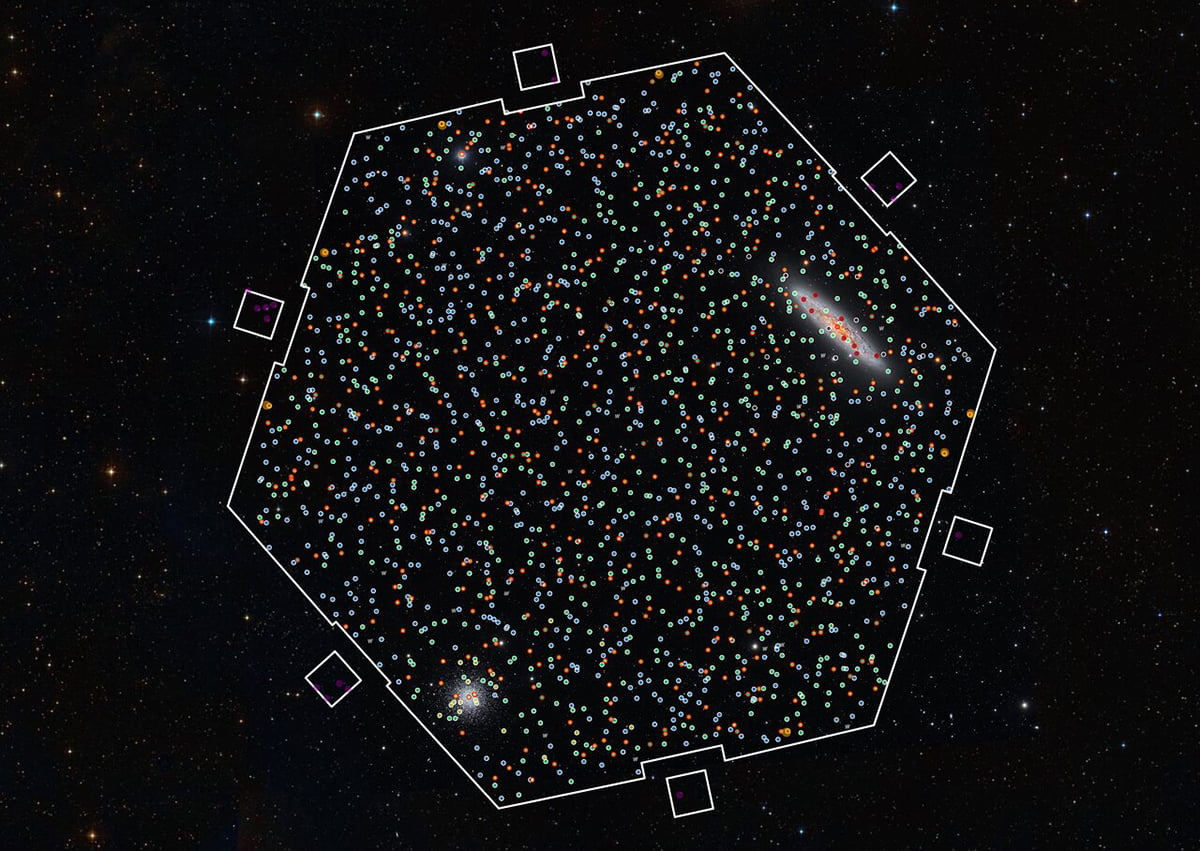
The first light of 4MOST occurred on 18 October 2025 at Paranal Observatory. It was a moment of pride for the teams that worked for more than a decade on this instrument. For its first observation, 4MOST targeted a field containing the Sculptor Galaxy (NGC 253) and the globular cluster NGC 288. Both are well-known calibration fields, ideal for testing the instrument’s performance.
During this first exposure, 4MOST collected spectra for more than a thousand galaxies and many Milky Way stars. Each fibre captured light from an individual target. The results confirmed that the instrument was performing as designed. ESO released an image showing the full field of view of 4MOST. Every small circle in the image represented one of the 2,400 active fibres. It was a visual confirmation of the instrument’s incredible multiplexing power.
According to ESO, the first light data showed excellent spectral quality and signal stability. The optical alignment, throughput, and data calibration were all within expectations. This first light marked the end of construction and the start of commissioning. Full science operations are planned for mid-2026.
What 4MOST will study
4MOST’s design makes it ideal for large-scale sky surveys. It will not focus on individual targets but instead gather data across wide regions of the sky. ESO has approved several major five-year survey programs using 4MOST. For the Milky Way, it will map millions of stars. By measuring their motion and chemical composition, astronomers can trace the Galaxy’s history and structure. It complements ESA’s Gaia mission, which measures stellar positions and distances. Gaia tells us where the stars are. 4MOST will tell us what they are made of and how they move. Together, they will create a complete 3D picture of our Galaxy’s evolution.
For extragalactic science, 4MOST will measure the redshifts of galaxies and quasars. This helps map the large-scale structure of the Universe and study dark matter and cosmic expansion. The instrument will also support missions like Euclid and eROSITA, providing detailed spectroscopic data to complement their imaging surveys. Because 4MOST operates in the southern hemisphere, it fills an important observational gap left by northern facilities.
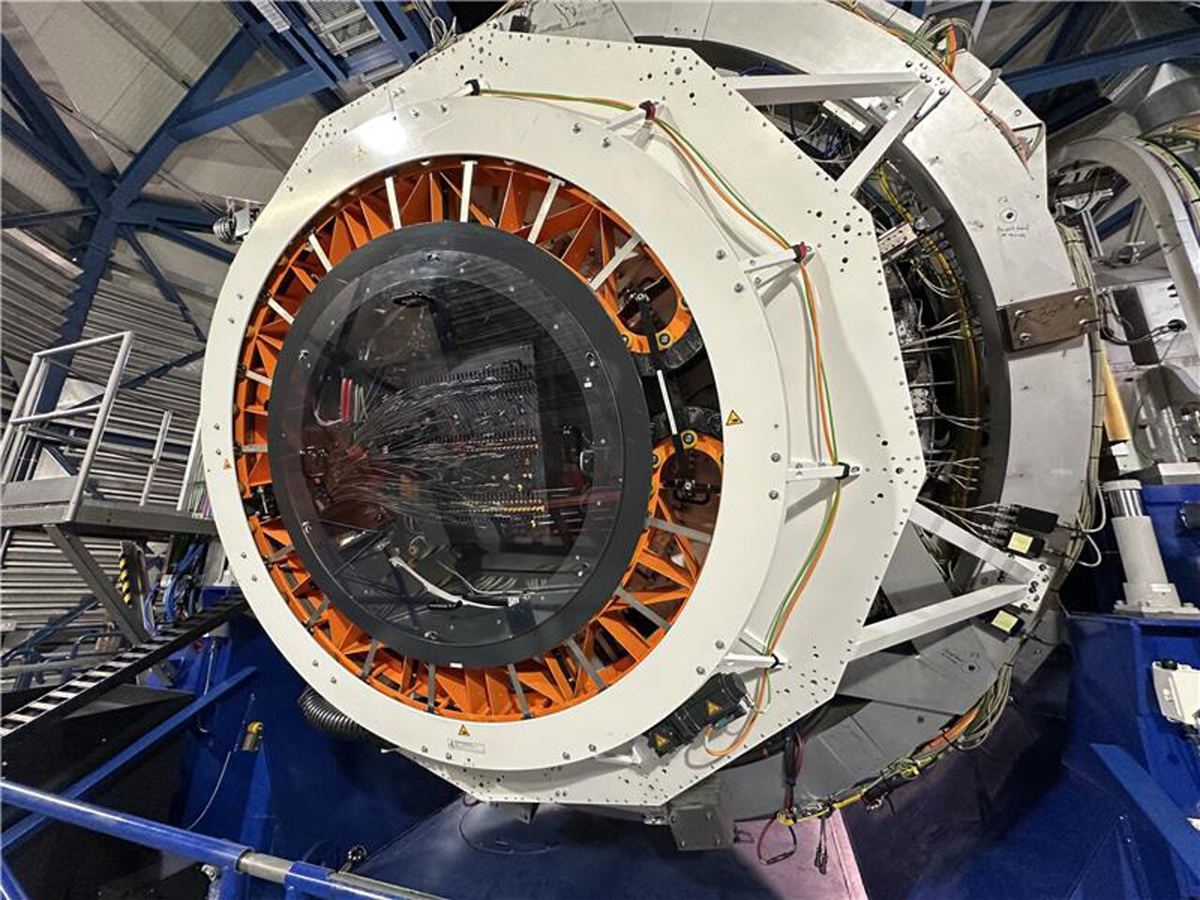
Over five years, 4MOST will gather spectra for over 25 million objects. Each night of observation adds thousands of new measurements, building one of the largest astronomical datasets ever created. The scientific impact is expected to be enormous. By linking imaging, spectroscopy, and motion data, astronomers can explore how stars, galaxies, and cosmic structures formed and evolved.
Clear skies!
See more from DIYPhotography.net on Google
Add DIYPhotography.net as a trusted source. This makes
our stories more likely to appear in your Google Search results.
 Add as a preferred source on Google

Soumyadeep Mukherjee
Soumyadeep Mukherjee is an award-winning astrophotographer from India. He has a doctorate degree in Linguistics. His work extends to the sub-genres of nightscape, deep sky, solar, lunar and optical phenomenon photography. He is also a photography educator and has conducted numerous workshops. His works have appeared in over 40 books & magazines including Astronomy, BBC Sky at Night, Sky & Telescope among others, and in various websites including National Geographic, NASA, Forbes. He was the first Indian to win “Astronomy Photographer of the Year” award in a major category.



Join the Discussion
DIYP Comment Policy
Be nice, be on-topic, no personal information or flames.