


















How to Choose Best Lenses for Concert Photography
Jul 27, 2025
Dunja Đuđić Kalinin
Dunja Djudjic is a multi-talented artist based in Novi Sad, Serbia. With 15 years of experience as a photographer, she specializes in capturing the beauty of nature, travel, concerts, and fine art. In addition to her photography, Dunja also expresses her creativity through writing, embroidery, and jewelry making.
Share:
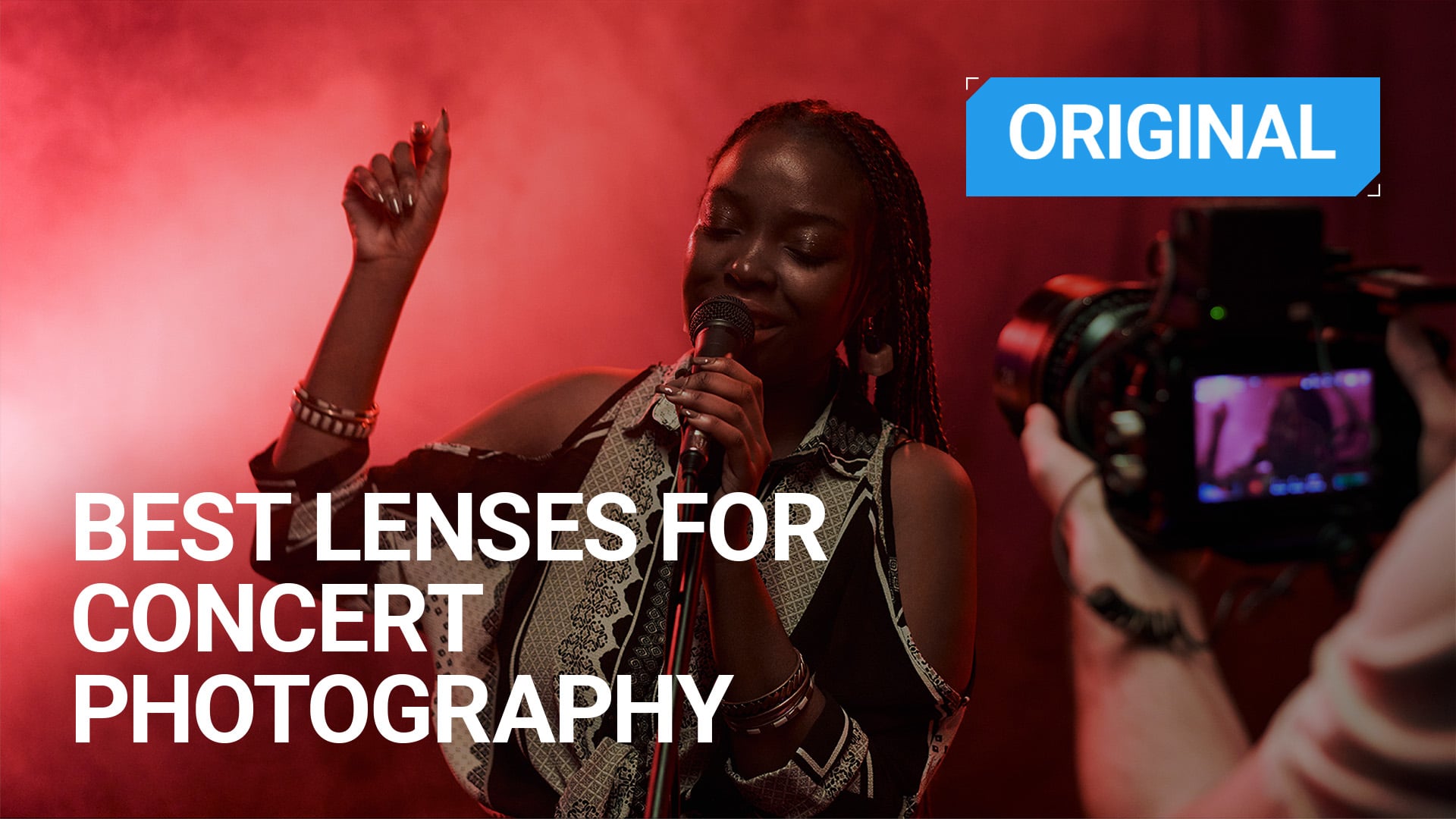
Finding the best lenses for concert photography can make a much bigger difference than choosing the camera body. A fast, sharp, and versatile lens ensures you get the shot without motion blur or irreparable noise.
So what makes the best lens for concert photography? I’d say there are two key things: wide apertures and optical versatility. But I also prefer super-sharp lenses, and we can’t disregard the lens size and weight. After all, you’re gonna run around with them for a few hours.
In this article, we’ll go through types of concert photography lenses that will give you the best results. We’ll also give you some specific suggestions to make the choice easier. So, let’s dive right into it and choose your ideal lens for shooting concerts.
[Related Reading: The Ultimate Guide to Concert Photography: Gear, Settings, Techniques & More]
Prime vs Zoom Lenses for Concert Photography
Choosing between prime and zoom lenses is a classic dilemma in concert photography. My thought is always “why not both?” and I most often carry around one prime and one zoom. But let’s get into specifics a bit and dissect why you may want one or the other (or both).
Benefits of Prime Lenses: Sharpness and Speed
Prime lenses typically offer a wider maximum at a relatively low price. While they are believed to have superior image quality over zooms, with newer lenses, it’s not necessarily the case. A lens like the 50mm f/1.8 or the 85mm f/1.4 delivers exceptional low-light performance, sharpness, and creamy bokeh. Personally, I use a Nikon 50mm f/1.8 prime (on a crop body, so it’s around 75mm equivalent). It’s small, lightweight, and incredibly capable in low-light environments. It’s one of my favorite tools for intimate stage portraits and capturing details. And it cost me around $100, so it’s a very affordable option.
Advantages of Zooms at Fast-Paced Events
On the other hand, zoom lenses offer unmatched flexibility. A 24–70mm or 70–200mm lets you reframe your shot instantly. This is essential when you’re working with limited mobility. In fast-paced environments, the ability to zoom instead of physically moving closer can be the difference between a missed moment and a magazine-worthy shot. This is especially convenient since most large concerts and festivals only allow photographing during the first three songs.
[Related Reading: How to Get a Concert Photo Pass: Breaking Into Live Music Photography]
My Sigma Art 18–35mm f/1.8 is the sharpest zooms I’ve ever used. It offers stunning image quality and a very usable aperture, and I just love to shoot with it while I’m in the pit. On the minus side, it’s heavy and bulky, so that’s worth considering if you shoot long sets or festivals.
Can Modern Zooms Match Prime Quality?
As I mentioned: yes! Today’s professional zooms like the Canon RF 24–70mm f/2.8L or Sony 70–200mm f/2.8 GM II offer image quality that rivals prime lenses. If you invest in high-quality zooms, you may not need to compromise sharpness for versatility.
I also use a Nikon 35–105mm f/3.5–4.5. It’s a 1990s lens and it’s extremely versatile. While it offers a perfect range for concert photography, it’s not ideal for low light. And I must say that it isn’t the sharpest tool in the bag. Still, it shows that even older lenses can have their place in your kit if you know how to work with their strengths. And there are plenty of vintage lenses with exceptional sharpness and a larger aperture than my cheap-o Nikon.
Wide-Angle Lenses for Concert Photography
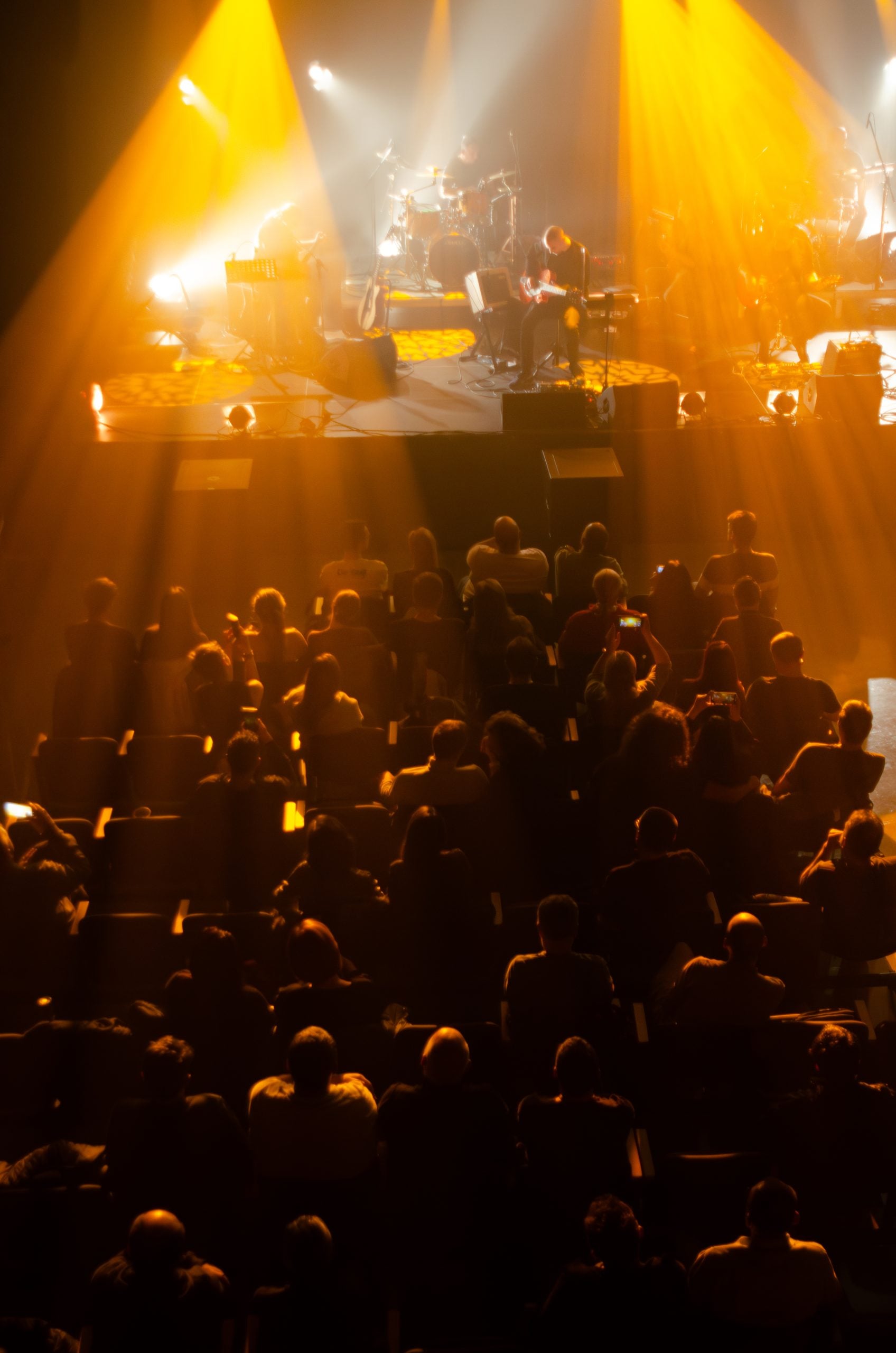
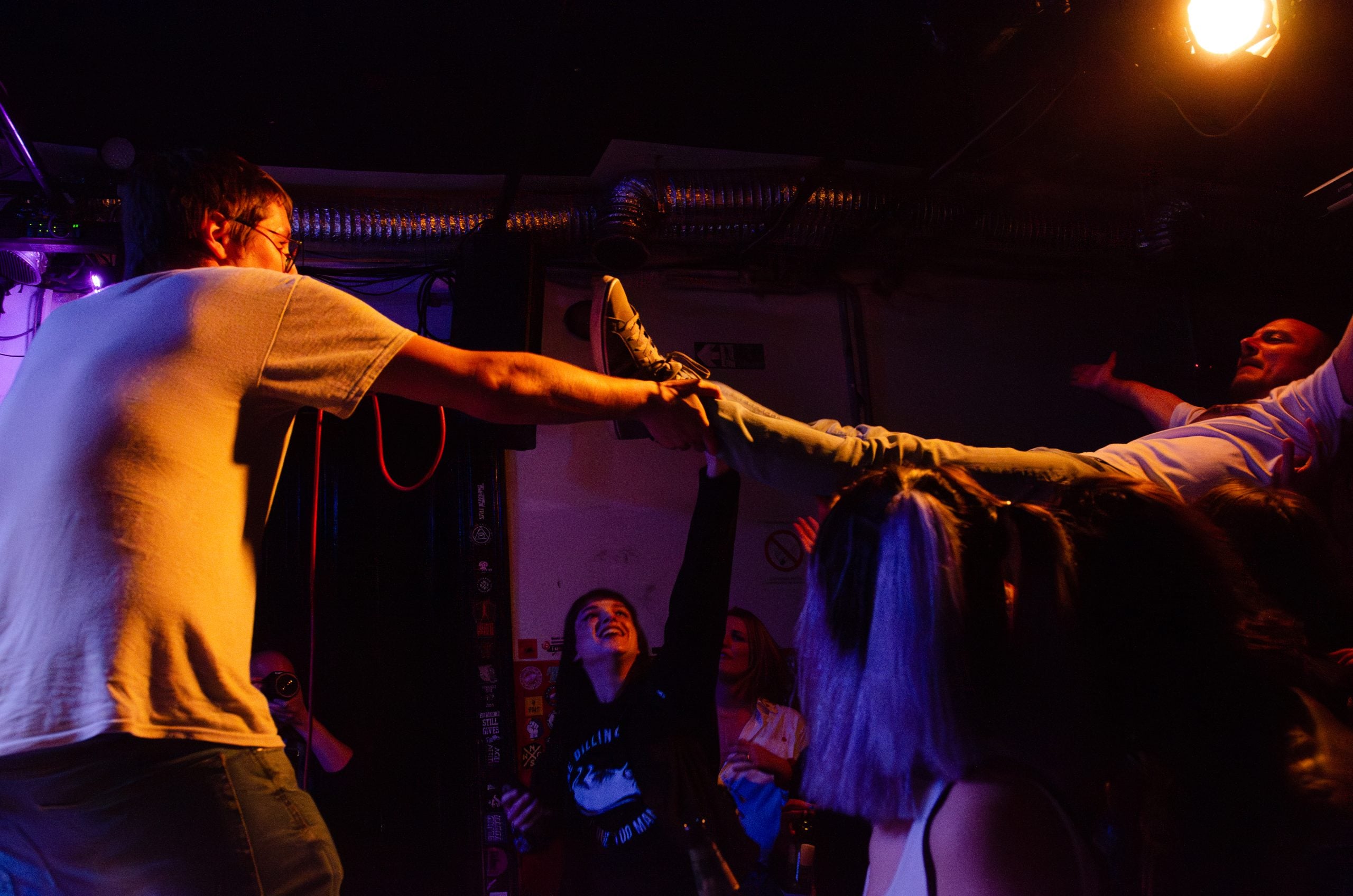
Wide-angle lenses are ideal for capturing the whole atmosphere of a show. Whether you’re documenting a massive stage setup or a tight basement venue, a wide lens helps tell the entire story, and it should have its place in your camera bag.
Best for Stage, Crowd, and Small Venues
A lens like the 16–35mm f/2.8 allows you to include the entire stage, lights, and crowd in a single frame. It’s also perfect for smaller venues where space is limited and you’re close to the action. Focal lengths from 14mm to 35mm are commonly used to create immersive, context-rich images. They’re especially useful when you want to highlight the setting as much as the performer.
Standard Zoom Lenses: Your All-Round Workhorse
If you had to pick just one lens for concert photography, a 24–70mm f/2.8 would probably be the safest choice. This versatile zoom covers everything from mid-wide to short telephoto. With this range, you can capture full-body shots, mid-closeups, and even wide stage views without swapping lenses. It’s the all-in-one tool for everything from the photo pit to stage-side shooting.
Telephoto Lenses for Long-Range and Isolation
Telephoto lenses allow you to capture close-ups from a distance. If you’re shooting from the crowd or balcony, a 70–200mm f/2.8 or even a 135mm prime will get you the tight, emotional portraits you want.
Also, once you’re out of the pit, longer focal lengths let you keep shooting from afar without the band members looking like small dots.
Top Choices Like 70–200mm f/2.8
A fast telephoto like the 70–200mm f/2.8 is probably your safest bet when you move to the crowd to take some shots from there. It balances reach, aperture, and image quality beautifully.
[Related Reading: Camera Settings and Tips for Concert Photography Beginners]
Specialty Lenses for Unique Concert Shots
Other than zooms and primes, or wide, standard, and telephoto lenses, specialty lenses offer creative options that break the mold.
Fisheye and Ultra-Wide for Dramatic Stage Perspectives
A fisheye lens can capture a 180° field of view. It’s great for intimate club gigs or capturing the energy of a mosh pit (my personal favorites). It adds a surreal, energetic twist to your portfolio, and I love hardcore and punk gigs captured with a lens like this. I personally don’t own it, but hey… One day.
Macro for Intimate Close-Ups
Yup, you read that right. Even macro lenses like the 100mm f/2.8 can be your choice for stunning close-up portraits of performers and instruments. Photographer Bojan Božić swears by his macro lens for concert work, proving its unexpected value. I mean, just look at this portrait from Darko Rundek’s concert!
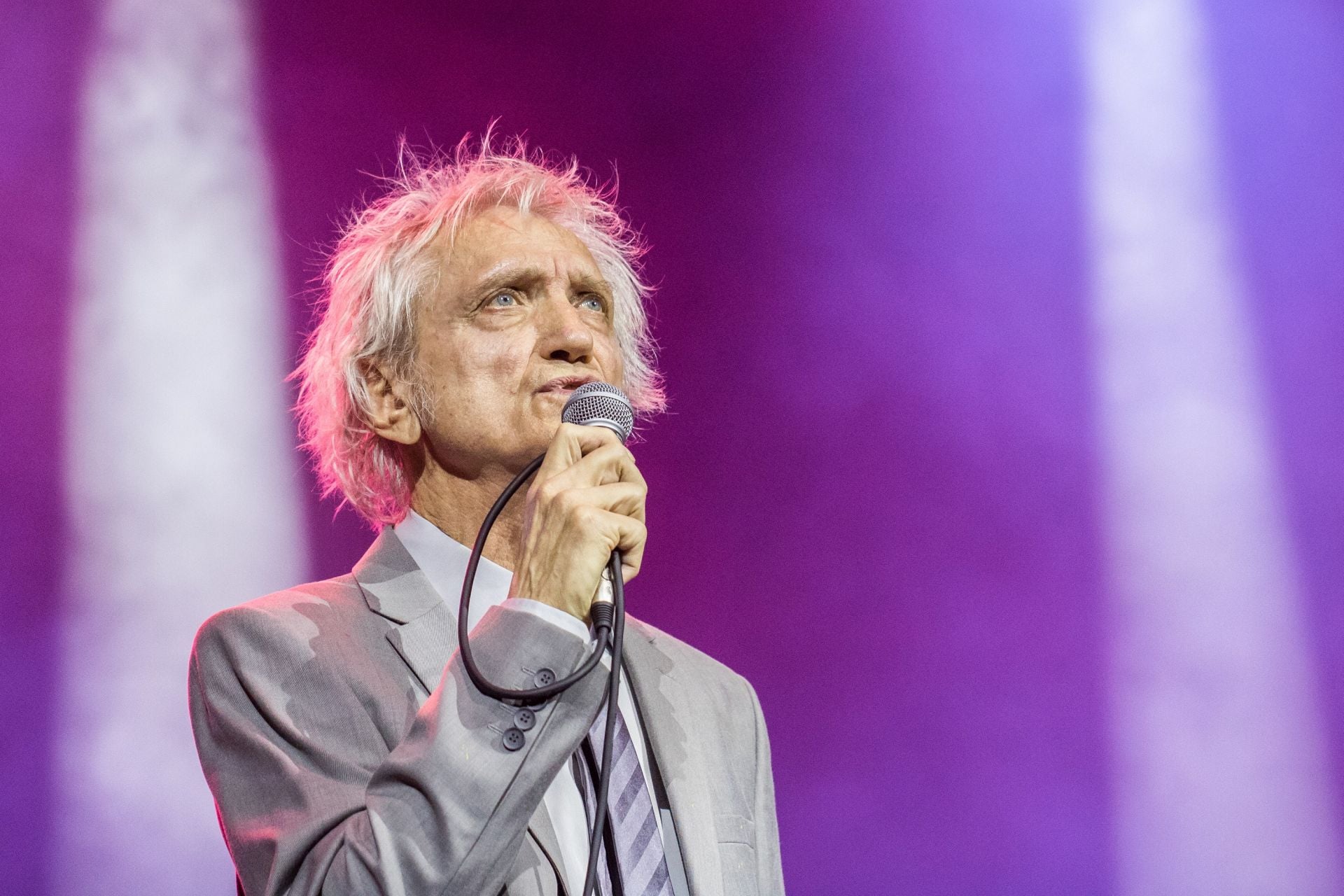
Using unconventional lenses forces you to think differently. Primes, fisheyes, and macros make you move, anticipate, and frame more intentionally, resulting in more creative images.
Some Concert Photography Lens Suggestions
Okay, I think now’s the time for some specific suggestions. Keep in mind that I personally haven’t used most of these lenses (other than some Nikon and Sigma ones), but I gathered some input from fellow concert photographers to make this list as useful as possible.
Canon
- Canon EF 50mm f/1.8 STM ($135) – Sharp, compact, and affordable.
- Canon EF 85mm f/1.8 USM ($499) – Excellent for close-up portraits in low light.
- Canon EF 100mm f/2.8L Macro IS USM ($1,299) – Another close-up portraits choice (mentioned above)
- Canon RF 24–70mm f/2.8L IS USM ($2,399) – The ultimate workhorse for Canon R cameras.
- Canon RF 70–200mm f/2.8L IS USM ($2,799)– For shooting all the way from the crowd. Lightweight for a 2.8 telephoto lens.
Nikon
- Nikon 50mm f/1.8G ($256.95) or even cheaper 50mm f/1.8D ($196.95) – You can’t go wrong with a “nifty fifty.” Excellent for beginners and veterans alike; small, lightweight, razor sharp.
- Nikon Z 85mm f/1.8 S ($846.95) – Fantastic portrait option for mirrorless.
- Nikon Z 24–70mm f/2.8 S ($2,096.95) – A versatile flagship zoom for all purposes. Nikon AF-S NIKKOR 24-70mm f/2.8E ED VR ($1,696.95) is the Nikon F version.
Sony
- Sony 50mm f/1.8 ($248) – Lightweight, sharp, and fast.
- Sony 24–70mm f/2.8 GM II ($1,798) – Versatile, and among the sharpest zooms on the market.
- Sony 70–200mm f/2.8 GM OSS II ($2,998) – Fast, stabilized, and precise, for those shots from the crowd after the first three songs are done.
Fujifilm
- Fujifilm XF 16–55mm f/2.8 R LM WR ($999) – Professional-grade build and quality, a versatile zoom for the pit.
- Fujifilm XF 90mm f/2 R LM WR ($949) – Excellent prime for isolated shots and portraits.
Third-Party Favorites
- Sigma Art 18–35mm f/1.8 (Canon EF – $879/Nikon F – $839) – Exceptional sharpness, versatile, and ideal for the pit and smaller venues.
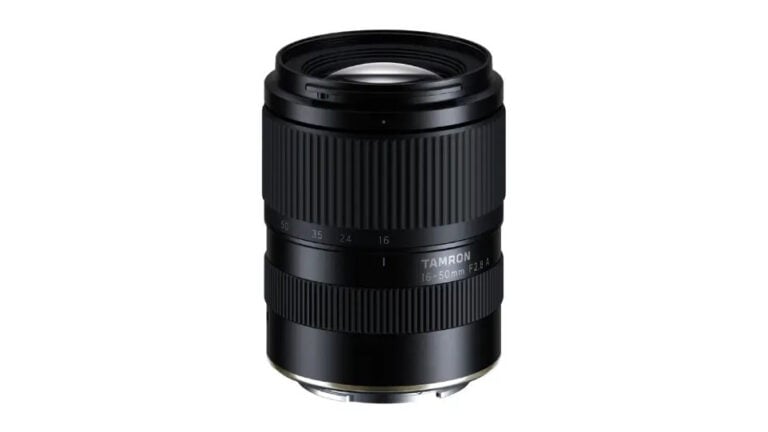
- Tamron 17-50mm F4 Di III VXD ($549) – A versatile and super-sharp zoom (here’s a review, too)
- Tamron 28–75mm f/2.8 G2 ($799) – Another versatile zoom with great sharpness and value.
- Rokinon/Samyang 14mm f/2.8 ($399) – Great value for creative wide-angle shots.
- Viltrox 56mm f/1.4 ($239) – A sharp, fast prime for a great price.
Ultimately, finding the best lenses for concert photography isn’t about chasing the most expensive gear. It’s about understanding how different focal lengths and aperture values serve your creative vision and adapt to challenging environments. Whether you prefer the precision of primes, the flexibility of zooms, or the creativity of specialty lenses, that’s up to you. But having a well-rounded kit (and knowing how to use it) makes all the difference. Choose tools that complement your style and make the most of every moment you’re behind the lens.
See more from DIYPhotography.net on Google
Add DIYPhotography.net as a trusted source. This makes
our stories more likely to appear in your Google Search results.
 Add as a preferred source on Google

Dunja Đuđić Kalinin
Dunja Djudjic is a multi-talented artist based in Novi Sad, Serbia. With 15 years of experience as a photographer, she specializes in capturing the beauty of nature, travel, concerts, and fine art. In addition to her photography, Dunja also expresses her creativity through writing, embroidery, and jewelry making.
Related Posts
 Concert Photographer: Where Did Your Integrity Go? (Or How Concert Photographers Handle Contracts In Norway)
 Wide-angle lenses are not “landscape lenses” – All lenses are landscape lenses
 How to choose the best tripod for your photography needs
 Watch this before you choose your go-to lens for street photography
Join the Discussion
DIYP Comment Policy
Be nice, be on-topic, no personal information or flames.