

















Best Cameras for Concert Photography: Features to Look for and Cameras to Pick
Jul 19, 2025
Dunja Đuđić Kalinin
Dunja Djudjic is a multi-talented artist based in Novi Sad, Serbia. With 15 years of experience as a photographer, she specializes in capturing the beauty of nature, travel, concerts, and fine art. In addition to her photography, Dunja also expresses her creativity through writing, embroidery, and jewelry making.
Share:
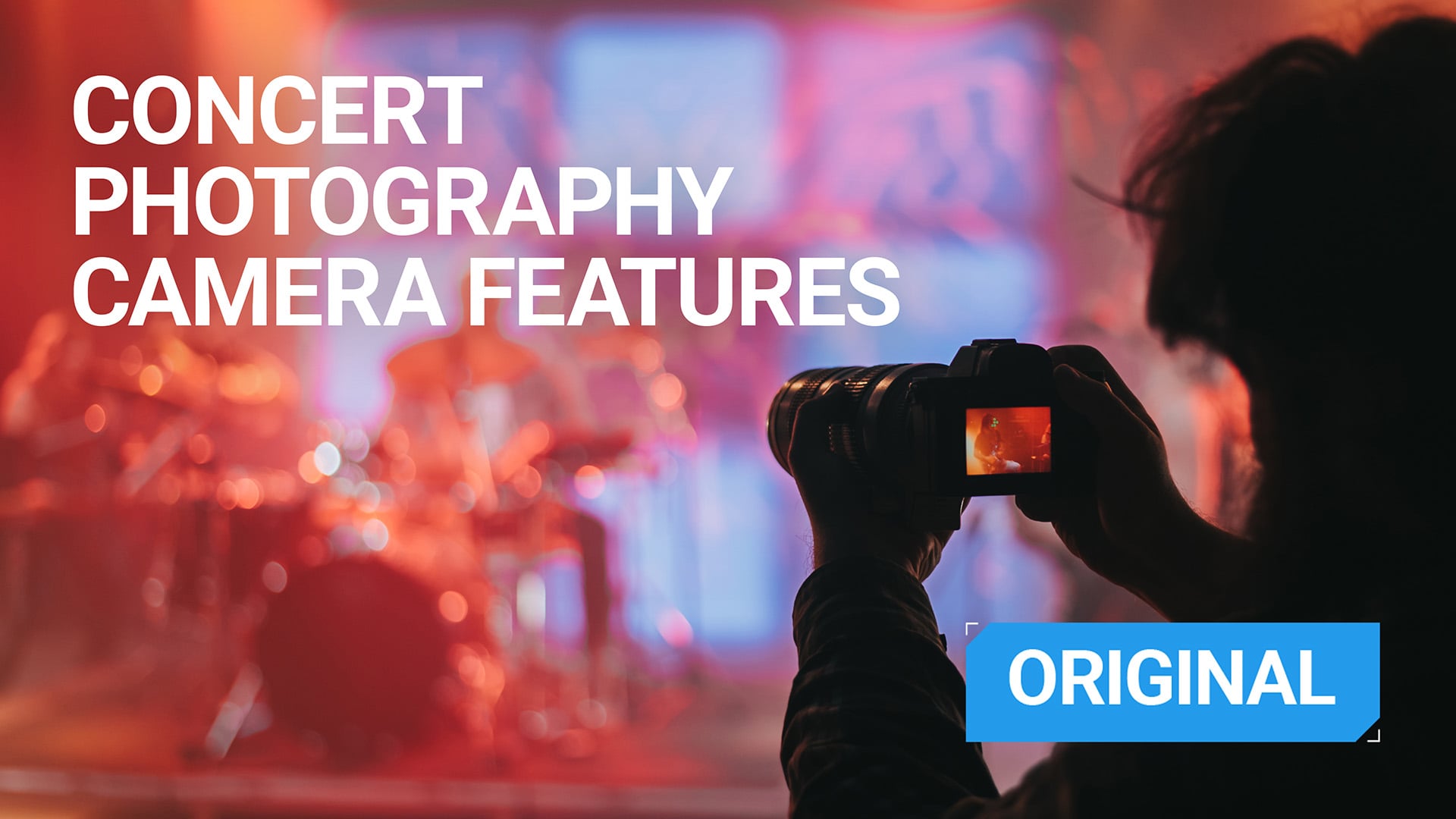
Concert photography demands gear that performs and delivers in tricky conditions. Dim lighting, fast-paced action, and often chaotic conditions – in concert photography, gear matters.
Now, you don’t need the latest and greatest camera to be able to shoot concerts, don’t worry. In this guide, we’ll break down the must-have features and match each one with some of the best cameras for concert photography that you can trust in the pit.
[Related Reading: The Ultimate Guide to Concert Photography: Gear, Settings, Techniques & More]
1. High Usable ISO – Shoot Clean in Low Light
Why It Matters
Concert venues are, in most cases, tricky to photograph. It’s not only dimly lit bars or moody theater stages. Lighting conditions even on large concert stages are sometimes challenging for photography as well. Stage lighting looks impressive to the audience, but for a camera sensor, it’s far less thrilling: heavy contrast, erratic flashes, long stretches of darkness, and blue or red lights that look awful in photos.
This is where high usable ISO performance becomes critical. And I say usable because the maximum ISO of your camera doesn’t always mean great low-light performance. After a certain point, that gritty, pixelated texture can ruin skin tones and fine detail. I shoot with a Nikon D7000, ask me how I know. :) You can also rely on AI denoise, but that only works up to a point.
So, the goal isn’t to just “go high,” but to go high cleanly. A camera with good high-ISO performance allows you to push ISO to 3200, 6400, or even 12,800 with newer models while still maintaining usable image quality.
What to Look For
- Full-frame sensors handle high ISO better than APS-C or Micro Four Thirds
- Backside-illuminated (BSI) sensors gather light more efficiently
- Modern image processors like the BIONZ XR (Sony), DIGIC X (Canon), or EXPEED 6 (Nikon) help clean up noise without sacrificing detail
- ISO performance that’s usable: not just spec-sheet impressive. Read the reviews and comments from other photographers
Camera Suggestions
- Sony A7 IV – Clean results up to ISO 12,800, full-frame sensor
- Canon EOS R6 Mark II – Exceptional high-ISO performance with minimal grain
- Nikon Z6 II – Excellent noise control even in difficult lighting
- Fujifilm X-T5 – APS-C but impressive ISO management for its size
[Related reading: Low-Light Concert Photography: How to Use Speedlights when Shooting Live Music]
2. Fast and Precise Autofocus
Why It Matters
In concert photography, moments happen fast and unpredictably. Performers are constantly on the move – leaping, spinning, crouching – often in wildly changing stage lighting. Combine that with smoke machines, lasers, or even total blackouts between songs, and you’ve got a true autofocus challenge. A fast and intelligent AF system isn’t just helpful – it’s essential for keeping up.
When your camera can lock onto a performer’s eye or face instantly and track them as they move across the stage, it takes one major burden off your shoulders. Instead of fighting to nail focus manually, you’re free to concentrate on timing, framing, and storytelling.
This is especially true for those shooting with wide apertures like f/1.8 or f/2.8, where the depth of field is razor-thin. A missed focus here can mean the difference between a portfolio shot and a throwaway frame. That’s why newer mirrorless cameras with advanced tracking systems make such a huge difference in live music environments.
What to Look For
- Real-time Eye-AF or subject recognition that works in low light
- Customizable AF zones or tracking points
- Reliable continuous AF (AF-C or AI Servo) for fast-moving subjects
- Sensitivity in low light (e.g., down to -4 EV or better)
Camera Suggestions
- Canon EOS R6 Mark II – Its Dual Pixel CMOS AF II system is among the fastest and most accurate, especially for eye detection in dim lighting
- Sony A7 IV – Offers real-time Eye-AF for humans and animals, with excellent tracking even under flashing lights or smoke
- Nikon Z8 – Delivers high-end AF performance borrowed from the flagship Z9, with smart subject tracking and deep AF coverage
- Panasonic S5 II – Now features phase-detection autofocus, finally making Panasonic a real contender for action-heavy concert work
If you’re photographing genres like rock, punk, or metal – where performers rarely stay still – investing in a body with strong AF will save you countless missed moments and frustration.

3. Low-Light Performance – Beyond ISO
Why It Matters
The best cameras for concert photography go beyond cranking up the ISO when shooting in low light. While high usable ISO is critical, there’s a lot more happening behind the scenes that affects how well your camera handles dark and moody environments. Sensor design, stabilization, and how your camera processes light and noise all work together to shape the final result.
Most concerts are lit with stage lights that shift constantly – from barely-there ambiance to blinding strobes. You’ll often shoot in near-darkness, punctuated by unpredictable flashes of colored light. To handle this, your camera needs more than just sensitivity – it needs a bit of “brains”, too.
For example, a camera with a backside-illuminated (BSI) or stacked sensor will gather light more efficiently than traditional sensors. In-body image stabilization (IBIS) is another major advantage, especially when shooting handheld at slower shutter speeds. While it won’t stop subject motion, it does help reduce blur from your own movement – useful when you’re squeezed into a tight spot with no room for a monopod or tripod.
Fast lenses also play a big role here. Even with an average ISO performer, a wide-aperture lens (like f/1.8 or f/2.0) can help you get sharper shots with more control over depth of field.

What to Look For
- Full-frame or high-performance APS-C sensors
- BSI or stacked sensor architecture
- Reliable in-body image stabilization (IBIS)
- Good dynamic range and highlight recovery in RAW
Camera Suggestions
- Sony A7S III – Famous for its extreme low-light capabilities; ideal for dark venues and moody sets
- Panasonic S5 II – Offers excellent low-light performance with IBIS and full-frame sensor
- Nikon Z6 II – Great mix of clean low-light output and dynamic range for shadows
- Canon EOS R8 – A strong entry into full-frame with very solid low-light image quality
4. Battery Life
Why It Matters
Concerts can run for hours – especially if you’re shooting festivals or covering multiple sets in one night. Add to that pre-show soundchecks, post-show encores, and downtime between acts, and you’re looking at a long haul. Thankfully, mirrorless cameras have come a long way in battery efficiency. However, they still tend to drain power faster than DSLRs. This is especially when using continuous autofocus, IBIS, burst mode, and electronic viewfinders.
A dead battery mid-set is the kind of headache you really don’t want when your favorite band hits their big moment. That’s why battery life isn’t just a convenience – it’s a necessity for live music photography.
If you’re used to DSLRs that can shoot 1,000+ frames on a single battery, switching to mirrorless might feel like a downgrade at first. But many modern mirrorless cameras have improved dramatically, especially those with larger capacity batteries and support for USB-C charging or external power banks. Still, even if you find the best camera for concert photography, I still advise you to bring a spare battery, especially on longer sets and festivals.

What to Look For
- Battery rating of 400+ shots per charge
- USB-C charging or power delivery (PD) support
- Option to add a battery grip for extended shoots
- On-screen or physical battery indicators that are easy to check in the dark
Camera Suggestions
- Nikon Z6 II – Rated for around 410 shots; optional battery grip gives you more shooting time and better ergonomics
- Sony A7 IV – Excellent battery efficiency with Sony’s Z-series batteries; supports USB-C power on the go
- Canon EOS R5 – Handles demanding settings and long shoots without draining quickly, making it great for all-day events

5. Bonus: Dual Card Slots
Why It Matters
Concert photography doesn’t offer do-overs. If a memory card fails mid-set and you’re only using one, those images could be gone for good. That’s why dual card slots are a smart safety net. Not everyone needs this feature, but it’s a reassuring one to have. Some photographers use it for redundancy (RAW to both cards), while others use it for overflow or to separate RAW and JPEG files.
What to Look For
- Dual SD or SD + CFexpress Type B slots
- Support for backup or overflow recording
- Fast write speeds for continuous shooting
Camera Suggestions
- Sony A7 IV – One CFexpress Type A and one UHS-II SD; great for flexibility and speed
- Canon R6 Mark II – Dual UHS-II SD slots with reliable backup options
- Nikon Z6 II – Dual slot setup with customizable recording modes
Bonus: Ergonomics and Build Quality
Why It Matters
Concert photography often means shooting for hours while standing, crouching, or weaving through a dense crowd. You won’t always (if ever) have room for a monopod or time to adjust a tripod. So, comfort, handling, and durability matter more than you expect. A camera that feels right in your hand will help you move faster, shoot longer, and react more instinctively.
You’ll also want a body that holds up to tough environments – think beer spills, sweat, dust, or even the occasional flying elbow. Weather sealing and solid construction go a long way in the pit.
Cameras to Consider
- Fujifilm X-T5 – Lightweight, with tactile dials and excellent balance for handheld work
- Nikon Z8 – Robust and weather-sealed; ideal for photographers who want a dependable workhorse
- Sony A7C II – Compact and discreet, making it a strong option for low-profile shooting in tight venues
So, What’s the Best Camera for Concert Photography?
Obviously, there’s no “one size fits all” solution when choosing the best camera for concert photography. It isn’t just about specs, but also about knowing which features actually make a difference in real-world shooting. In short, prioritize low-light performance, autofocus, reliability, and battery life. And we hope that our suggestions and tips will be helpful when choosing your little concert companion.
See more from DIYPhotography.net on Google
Add DIYPhotography.net as a trusted source. This makes
our stories more likely to appear in your Google Search results.
 Add as a preferred source on Google

Dunja Đuđić Kalinin
Dunja Djudjic is a multi-talented artist based in Novi Sad, Serbia. With 15 years of experience as a photographer, she specializes in capturing the beauty of nature, travel, concerts, and fine art. In addition to her photography, Dunja also expresses her creativity through writing, embroidery, and jewelry making.
Related Posts
 Concert Photographer: Where Did Your Integrity Go? (Or How Concert Photographers Handle Contracts In Norway)
 Lily drone is back, features 4K camera and improved features
 Pick a Card, Any Card; Play Poker or Improve Your Photography Game
 Use Nikon’s Lens Simulator to Pick Your Next Lens (Non-Nikon Shooters Too!)
Join the Discussion
DIYP Comment Policy
Be nice, be on-topic, no personal information or flames.
One response to “Best Cameras for Concert Photography: Features to Look for and Cameras to Pick”
Good article! If I could add one thing under ergonomics, it’d be “well-placed (and programmable) knobs, dials and buttons’ rather than touch screens or menus. Especially when shooting manual mode, as I do, you don’t want to have to stop shooting to make adjustments. One of the first things I did with my now ancient Nikon D4 was assign ISO to the record button so I could change it on the fly.