
























Soleye 300 Solar Telescope: A New Benchmark in Solar Imaging
Jun 24, 2025
Soumyadeep Mukherjee
Soumyadeep Mukherjee is an award-winning astrophotographer from India. He has a doctorate degree in Linguistics. His work extends to the sub-genres of nightscape, deep sky, solar, lunar and optical phenomenon photography. He is also a photography educator and has conducted numerous workshops. His works have appeared in over 40 books & magazines including Astronomy, BBC Sky at Night, Sky & Telescope among others, and in various websites including National Geographic, NASA, Forbes. He was the first Indian to win “Astronomy Photographer of the Year” award in a major category.
Share:
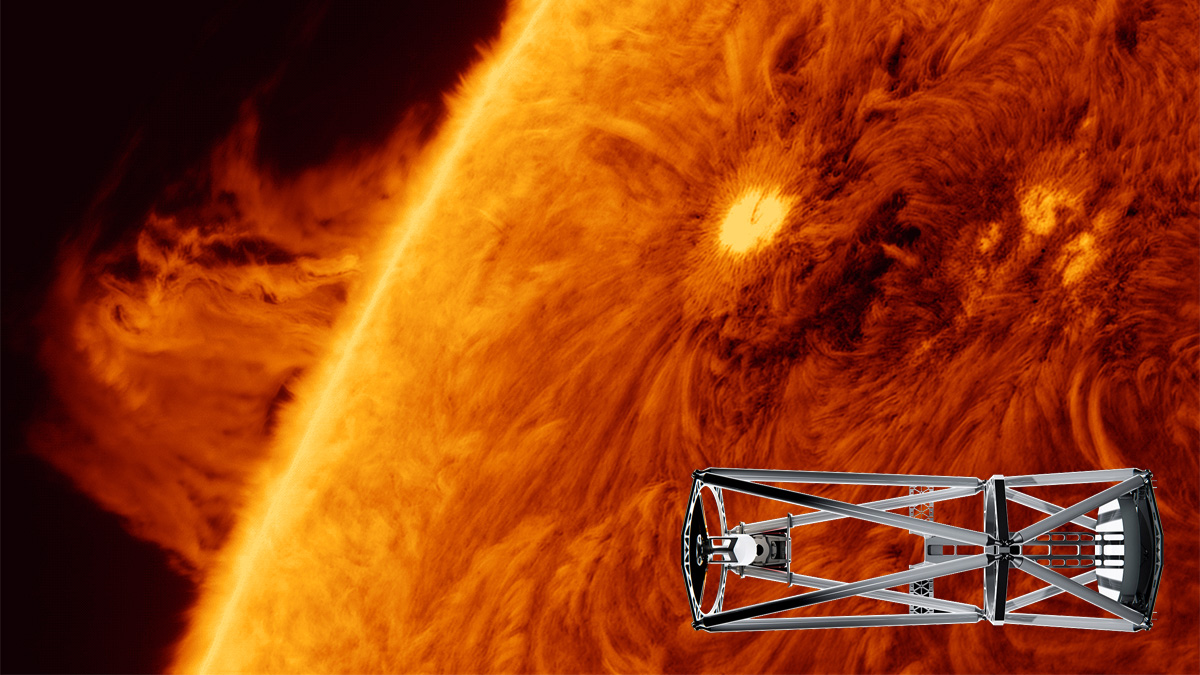
Solar telescopes have always faced a tough challenge. The Sun is blindingly bright and fiercely hot. Traditional telescopes, even with filters, struggle to handle this intense light and heat. But the Soleye 300 is different. It is a telescope that was built from the ground up specifically for the Sun. This isn’t a converted night-time scope. This is a solar Newtonian, designed with precision and purpose. It offers excellent resolution, low weight, and world-class thermal stability. The Soleye 300 is a serious tool for professional solar imagers. It is also a fresh idea, a modern rethink of solar telescopes.
The core design
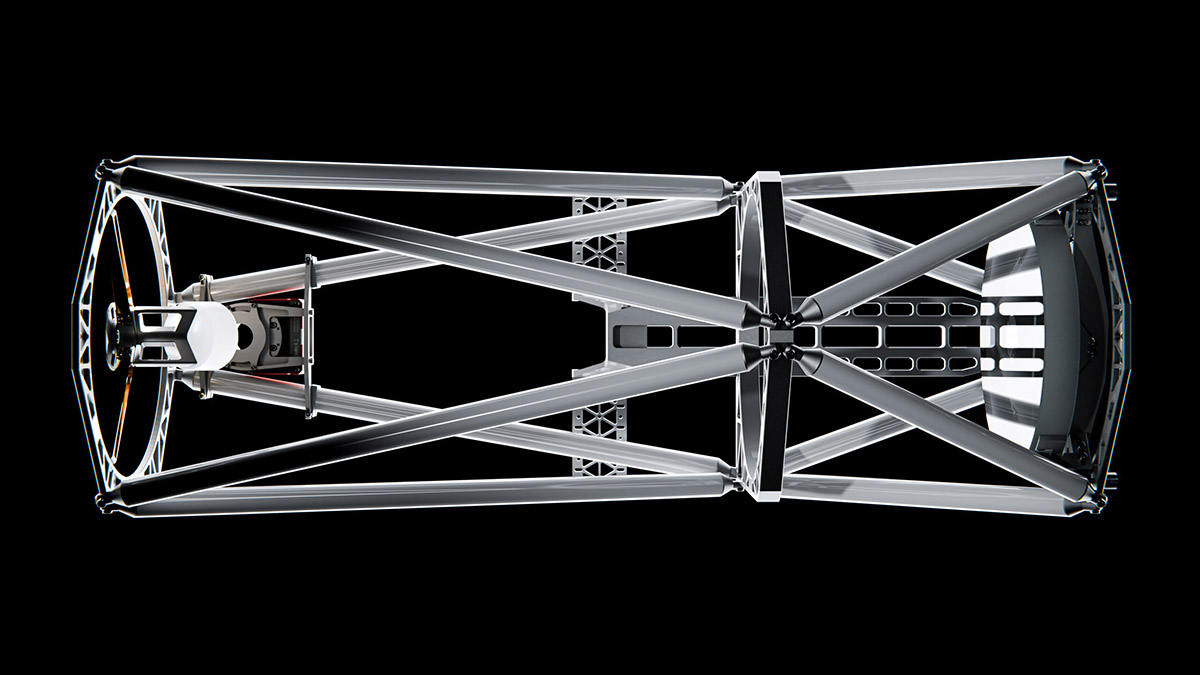
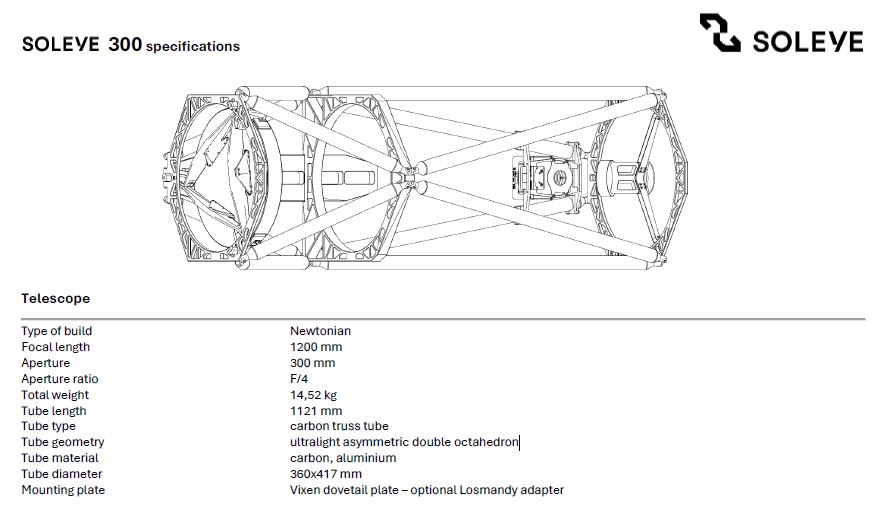
At the heart of the Soleye 300 is a 300 mm parabolic mirror. The focal length is 1200 mm, giving it an f/4 focal ratio. That makes it fast, bright, and capable of capturing images with short exposure times. This is important in solar imaging, where sharpness depends on freezing atmospheric turbulence.
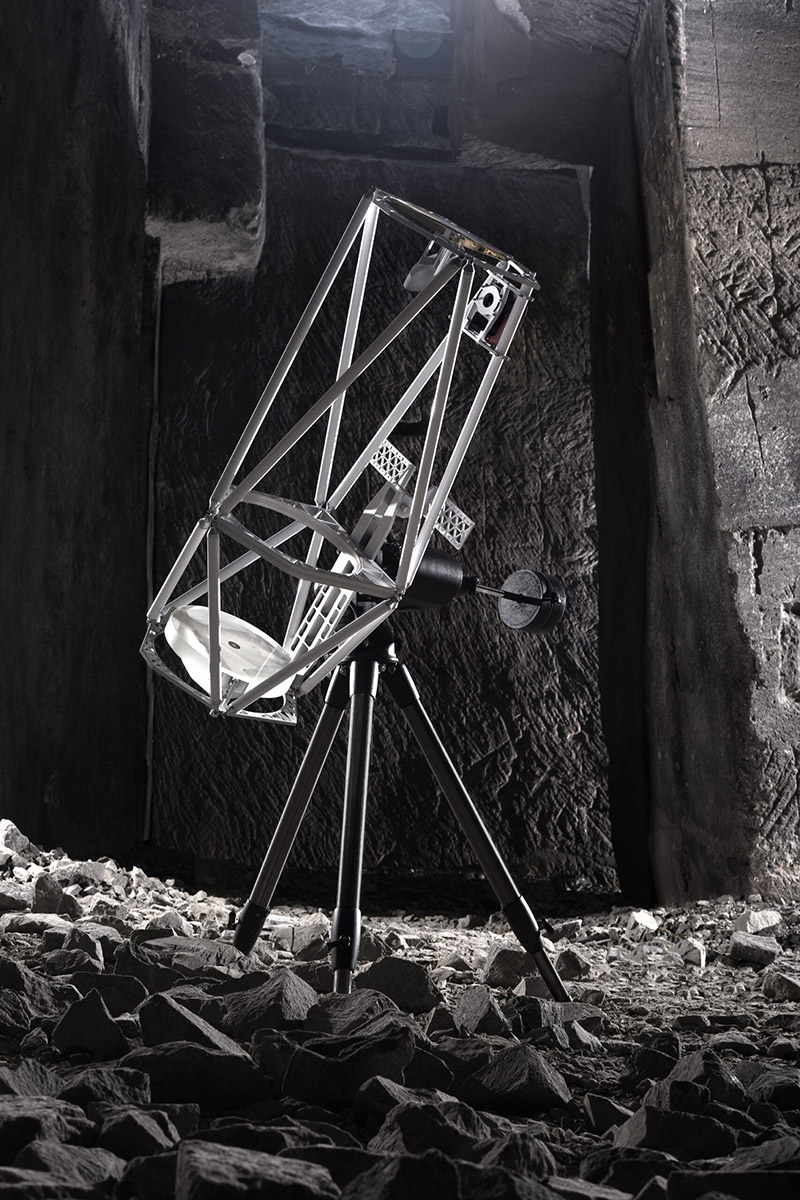
The optical tube uses a double-octahedron truss structure. It’s made from carbon fiber, so it’s both strong and light. The entire telescope weighs just around 14.5 kg. You can set it up easily, even in mobile solar observatories. The open truss design also helps air flow freely and prevents heat buildup. The structure is compact. It is only 1.2 meters long when assembled. This makes it portable for a 300 mm scope, very rare in this size class.
Mirror technology that changes the game
The Soleye 300 uses an innovative approach to heat management. It starts with the mirror. Instead of standard coatings, the Soleye mirrors reflect most of the light and reject heat.
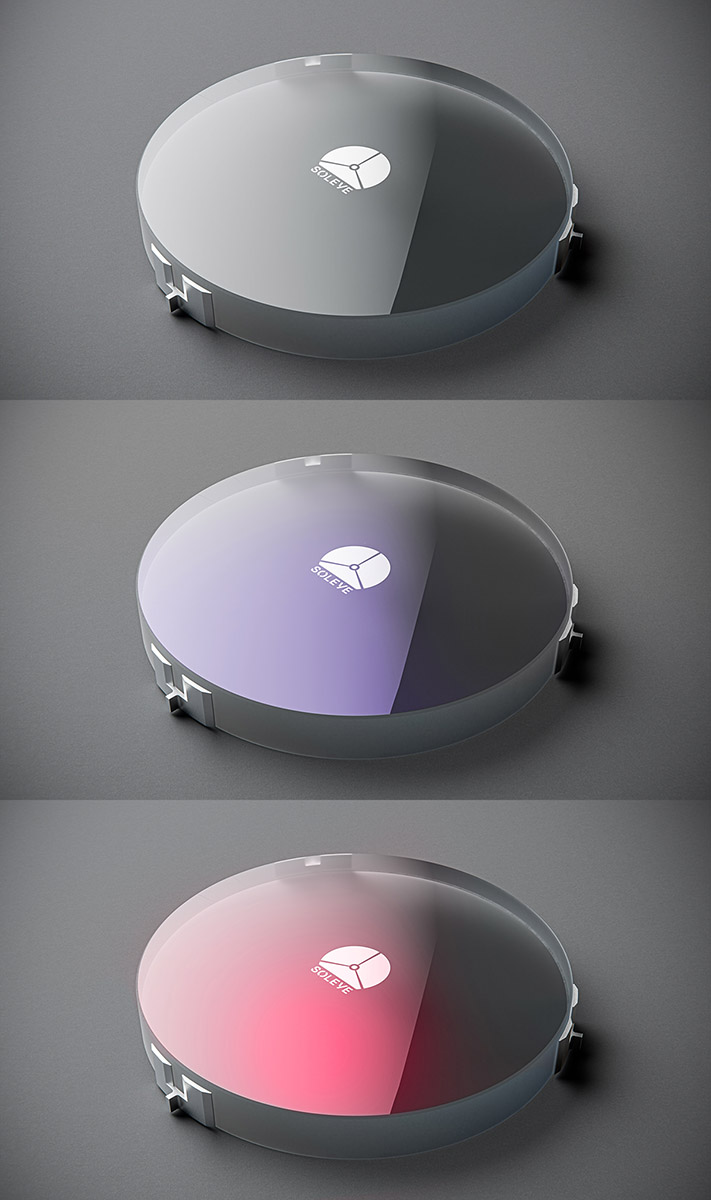
There are three versions:
- White (uncoated aluminum): reflects almost all light.
- Violet (Ca K optimized): passes ultraviolet for calcium K-line imaging.
- Red (H-alpha optimized): passes light near 656.3 nm with minimal internal reflection.
These mirrors reflect 96% of the Sun’s light and absorb almost none of the heat. That prevents the mirror from deforming. It keeps surface accuracy stable even under full solar intensity. The mirror surface is remarkably smooth. The coating uniformity is better than ±5 nm. That keeps the wavefront error low. The system reaches a Strehl ratio of more than 95%. For solar imaging, that’s crucial. Any slight surface error can destroy detail in fine solar features.
Passive cooling with an “Air Knife”
Most large solar telescopes suffer from “tube seeing.” Warm air rises off heated surfaces and causes turbulence. But the Soleye 300 uses passive cooling. It avoids fans, fans that can shake the structure or vibrate the image. Instead, it has an “air knife” design. Air flows over the mirror in a laminar layer. The airflow is managed through the geometry of the mirror cell. This sweeps heat away without introducing vibration. The open truss design also helps. Air can escape easily. There are no closed tubes to trap heat. All of this keeps the optics stable and allows longer imaging runs.
Precision focus and mounting
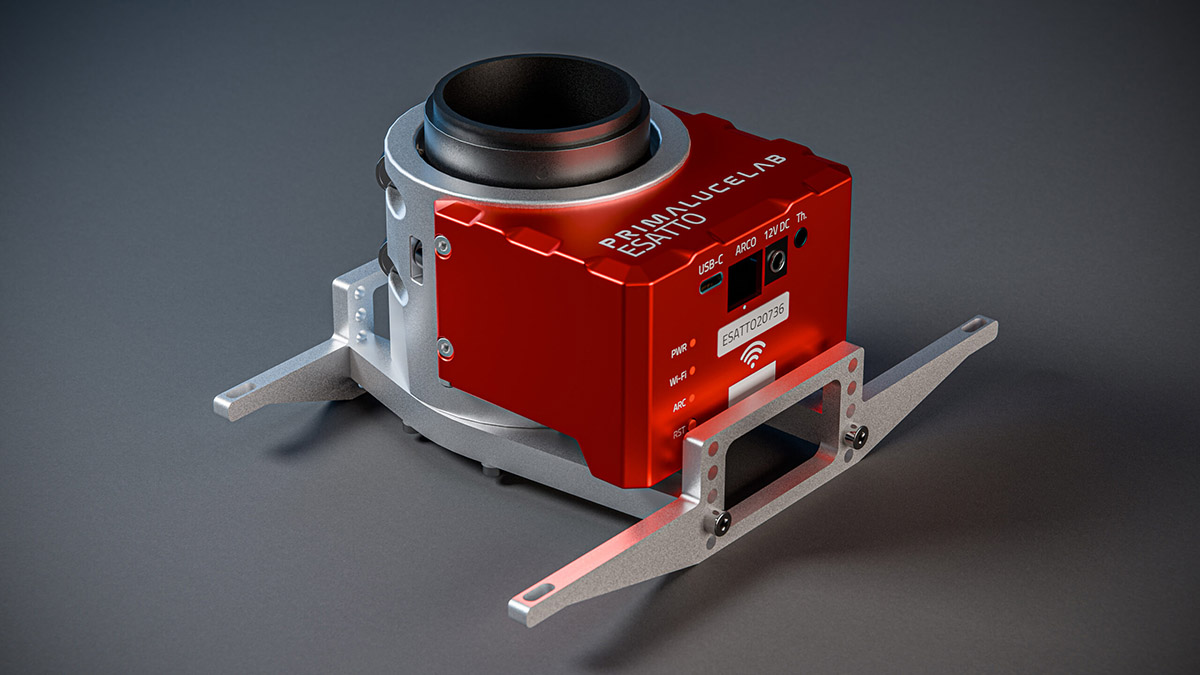
The focuser is another strength of this telescope. The Soleye 300 comes with a customized ESATTO 2″ electronic focuser from Primalucelab. This focuser is motorized. It works with fine steps and allows remote control. You can adjust focus even during live imaging. That’s perfect for critical focus on fine solar features.
The mirror is supported by a six-point cell with floating support pads. This ensures no stress points distort the mirror. The scope also includes adjustable spider vanes for the secondary mirror. These are tensioned carefully to avoid image shift.
Imaging performance
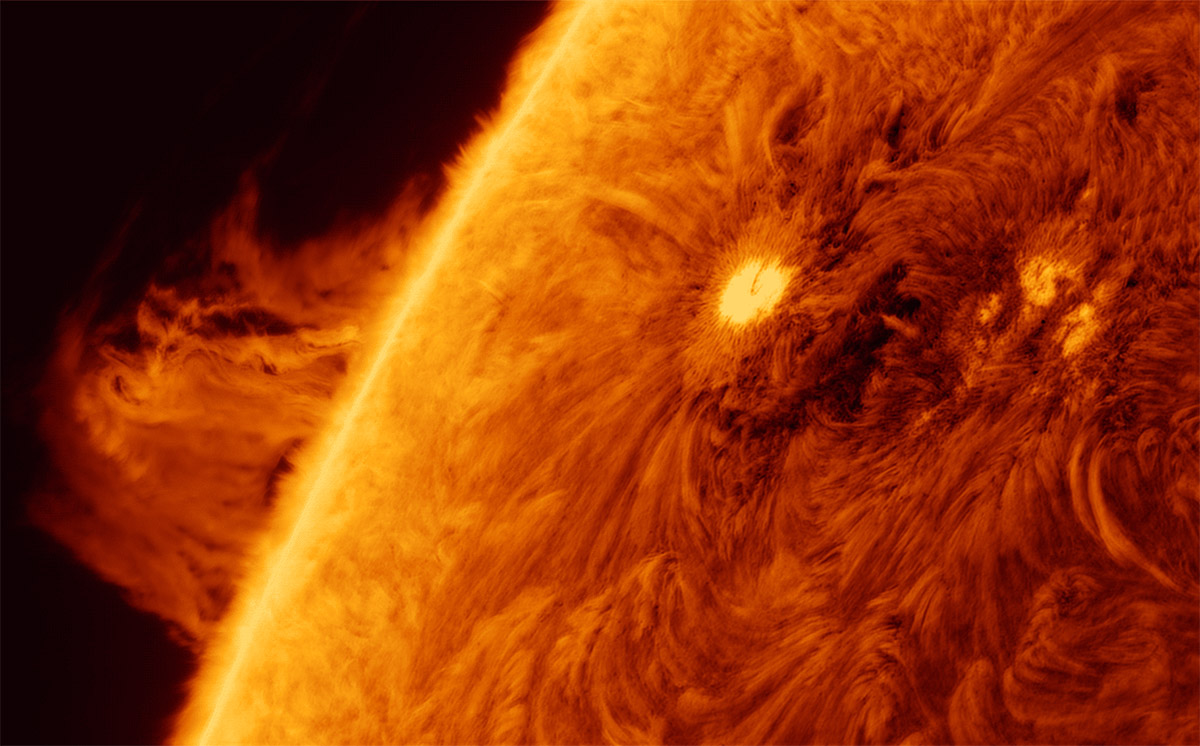
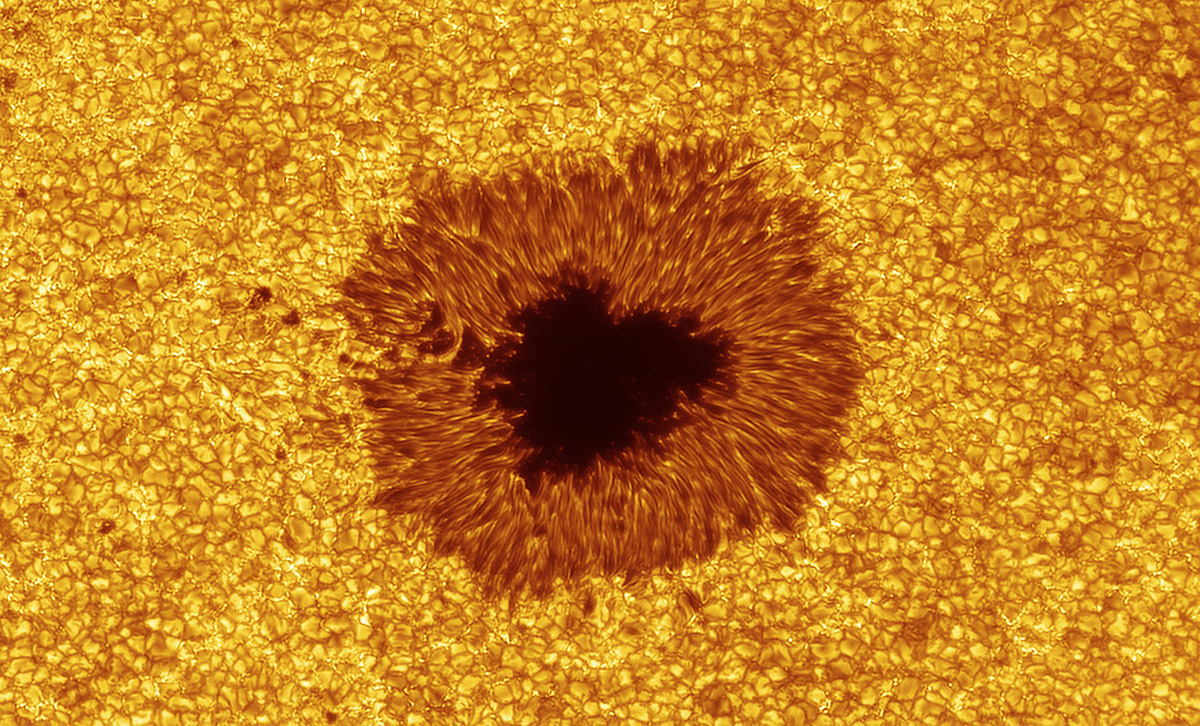
This telescope is built for high frame-rate imaging. It works beautifully with short exposure times. At 0.35 milliseconds, you can freeze atmospheric turbulence. That makes it ideal for capturing fine detail on the solar surface—sunspots, granulation, filaments, and prominences.
The Soleye 300 supports all major solar imaging wavelengths:
- H-alpha for chromospheric detail.
- Ca K for bright plage regions.
- G-band and white light for sunspot and granulation contrast.
Advanced users can switch mirrors to optimize performance for specific wavelengths. The Red version excels at H-alpha. The Violet version works best with Ca K and G-band filters. The White version gives general-purpose solar continuum images.
Upgrade options
Soleye offers several customization options. These are not just cosmetic. They improve function and expand usability.
You can add:
- Gold-plated tripod legs for stability and heat reflection.
- Instrument console for mounting cameras, filters, and electronics.
- Dual-band ERF (energy rejection filter) for safer full-aperture operation.
- Barlow adapters and correctors for different imaging scales.
- Transport cases for safe travel.
- An aluminized night mirror to convert it into a nighttime Newtonian telescope.

Price and availability
The Soleye telescope can be ordered through the official website. Remember, it is not a cheap or budget-friendly telescope. There are currently two main configurations available:
Soleye 300 “Violet” Base package: $14,500
Soleye 300 “Red Dualband” Base package: $16,000
The Soleye 300 is not for visual observing. It is an imaging telescope only. It does not come with eyepieces or visual accessories. You must use cameras and narrowband filters for safe solar use. It is also not for beginners. You need experience with solar imaging, camera control, and post-processing. But for advanced users, it delivers observatory-class performance in a portable package.
Final thoughts
The Soleye 300 is one of the most exciting solar telescopes on the market. It combines cutting-edge optics, smart engineering, and deep solar imaging experience. It solves many problems that traditional scopes face under the Sun. With its energy-rejecting mirror, open truss design, and motorized focus, it offers features that few telescopes match. It is compact, light, and built for speed. It also supports modular upgrades, making it flexible for long-term use. It’s not cheap. But for serious solar imagers, it could be the ultimate tool. If you want to take your solar imaging to the next level, the Soleye 300 is a telescope that deserves your attention.
Clear skies!
See more from DIYPhotography.net on Google
Add DIYPhotography.net as a trusted source. This makes
our stories more likely to appear in your Google Search results.
 Add as a preferred source on Google

Soumyadeep Mukherjee
Soumyadeep Mukherjee is an award-winning astrophotographer from India. He has a doctorate degree in Linguistics. His work extends to the sub-genres of nightscape, deep sky, solar, lunar and optical phenomenon photography. He is also a photography educator and has conducted numerous workshops. His works have appeared in over 40 books & magazines including Astronomy, BBC Sky at Night, Sky & Telescope among others, and in various websites including National Geographic, NASA, Forbes. He was the first Indian to win “Astronomy Photographer of the Year” award in a major category.


Join the Discussion
DIYP Comment Policy
Be nice, be on-topic, no personal information or flames.
2 responses to “Soleye 300 Solar Telescope: A New Benchmark in Solar Imaging”
Have you followed the development of the coming smaller siblings of this telescope? Are they really coming? And the version developed by Antlia, the 200F4?
Hi Jamie! Yes, the Soleye 230, 200 & 150 are coming. They have been listed on the official website, but we are yet to receive much info on them expect for their aperture and material. Once they are out, we will surely cover them. Antlia has already teased the 200F4 scope, but once again, without revealing much info. They might be releasing it in Q1, 2026.