
























Hubble Captures the Spiraling Secrets of Galaxy UGC 11397
Jun 24, 2025
Soumyadeep Mukherjee
Soumyadeep Mukherjee is an award-winning astrophotographer from India. He has a doctorate degree in Linguistics. His work extends to the sub-genres of nightscape, deep sky, solar, lunar and optical phenomenon photography. He is also a photography educator and has conducted numerous workshops. His works have appeared in over 40 books & magazines including Astronomy, BBC Sky at Night, Sky & Telescope among others, and in various websites including National Geographic, NASA, Forbes. He was the first Indian to win “Astronomy Photographer of the Year” award in a major category.
Share:
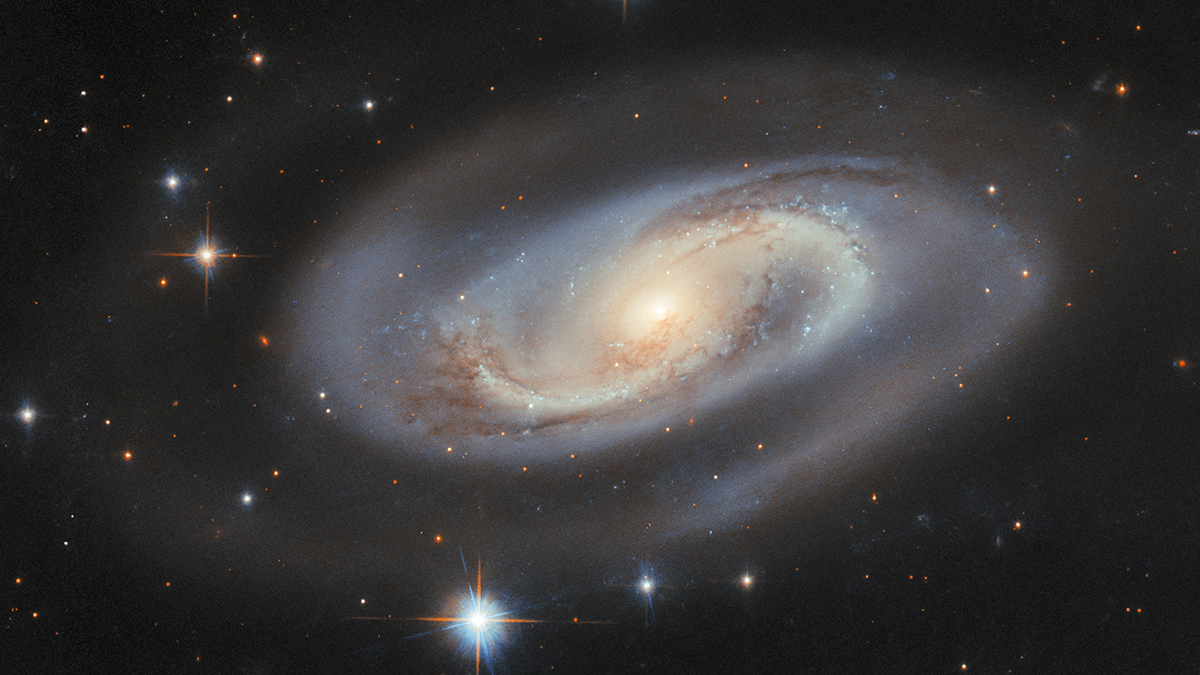
The Hubble Space Telescope has once again delivered a stunning image. This time, it captured the distant spiral galaxy UGC 11397. Located around 250 million light-years away in the constellation Lyra, this galaxy is more than just a beautiful swirl of stars. At its center hides a massive and active black hole. Hubble’s latest Picture of the Week reveals both the visual charm and scientific intrigue of this cosmic marvel.
A stunning spiral in Lyra
UGC 11397 is a textbook example of a spiral galaxy. It has long, graceful arms that twist out from a bright central bulge. These arms are filled with stars, dust, and gas. The inner parts glow in warmer colors, mostly yellow and gold. The outer arms shine in soft blues. This color difference tells us a lot. The blue regions contain hot, young stars. These stars burn brightly and live short lives. Their presence indicates ongoing star formation. The yellow areas hold older stars, which are cooler and live much longer. This color contrast maps the galaxy’s stellar history.
UGC 11397 lies in the northern sky. It sits within the boundaries of the constellation Lyra. Though it’s too faint to be seen without a telescope, Hubble’s powerful optics easily resolve it in detail. The galaxy is located approximately 250 million light-years from Earth. That means the light captured in Hubble’s image began its journey long before humans even walked the Earth. This makes the image a kind of time machine. We see UGC 11397 as it was 250 million years ago.
A hidden monster in the core
What makes this galaxy truly fascinating lies in its heart. Hidden in the bright central region is a supermassive black hole. It weighs in at about 174 million times the mass of our Sun. That’s over 40 times the mass of the black hole at the center of the Milky Way. But this black hole is not just sitting quietly. It is actively feeding on matter. Gas and dust fall into it at high speeds. As this material heats up, it gives off strong radiation, especially in X-rays. This process is called accretion.

Despite this powerful activity, the black hole remains invisible in visible light. That’s because thick dust clouds block our direct view. However, scientists can still detect its presence using other wavelengths, especially X-rays. These emissions mark UGC 11397 as a Type 2 Seyfert galaxy.
A snapshot from Hubble
Hubble used its Advanced Camera for Surveys (ACS) to take this image. ACS is one of Hubble’s most important instruments. It captures wide-field images in high resolution. For UGC 11397, ACS helped resolve not only the spiral arms but also subtle features like dust lanes and star clusters. This observation was part of a large Hubble survey. The goal of the survey is to study nearby active galactic nuclei (AGN). Scientists want to understand how black holes grow. They also want to measure their masses with great accuracy. By observing galaxies like UGC 11397, astronomers can compare different black hole environments. They can analyze how a galaxy’s structure and star formation relate to the activity of its central black hole.
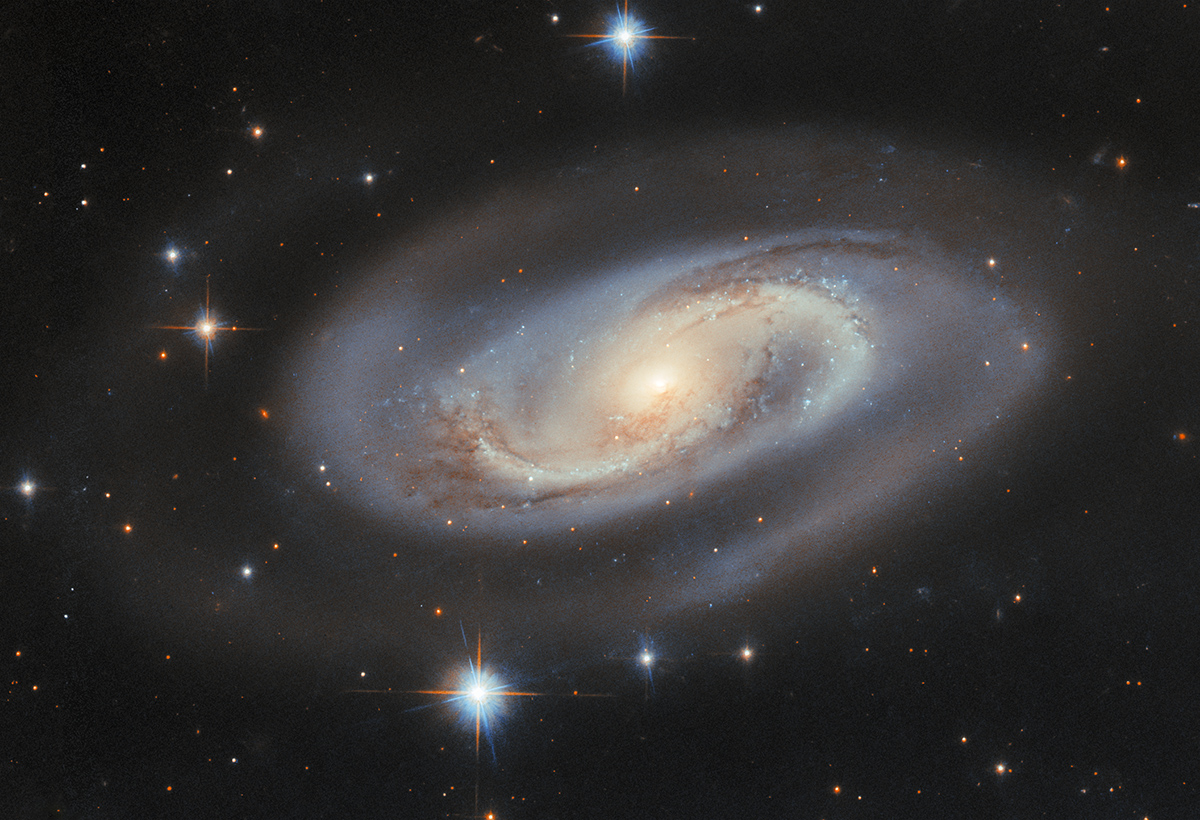
UGC 11397 may look like just another pretty spiral. But it hides a powerful and active black hole. Its dusty core masks intense activity. Its sweeping arms tell the story of star formation. And its X-ray signature reveals the drama at its heart. Thanks to the Hubble Space Telescope, we can study this galaxy in detail. Scientists are using these observations to understand how galaxies and the black holes inside them form and grow.
Clear skies!
See more from DIYPhotography.net on Google
Add DIYPhotography.net as a trusted source. This makes
our stories more likely to appear in your Google Search results.
 Add as a preferred source on Google

Soumyadeep Mukherjee
Soumyadeep Mukherjee is an award-winning astrophotographer from India. He has a doctorate degree in Linguistics. His work extends to the sub-genres of nightscape, deep sky, solar, lunar and optical phenomenon photography. He is also a photography educator and has conducted numerous workshops. His works have appeared in over 40 books & magazines including Astronomy, BBC Sky at Night, Sky & Telescope among others, and in various websites including National Geographic, NASA, Forbes. He was the first Indian to win “Astronomy Photographer of the Year” award in a major category.



Join the Discussion
DIYP Comment Policy
Be nice, be on-topic, no personal information or flames.