






















Acuter Elite Phoenix 40: A Compact Window to the Sun
Jun 25, 2025
Soumyadeep Mukherjee
Soumyadeep Mukherjee is an award-winning astrophotographer from India. He has a doctorate degree in Linguistics. His work extends to the sub-genres of nightscape, deep sky, solar, lunar and optical phenomenon photography. He is also a photography educator and has conducted numerous workshops. His works have appeared in over 40 books & magazines including Astronomy, BBC Sky at Night, Sky & Telescope among others, and in various websites including National Geographic, NASA, Forbes. He was the first Indian to win “Astronomy Photographer of the Year” award in a major category.
Share:

Solar telescopes open a whole new world of observation. They show you what your eyes can’t see. Flares, prominences, and filaments, these dynamic solar features are hidden from normal view. With the Acuter Elite Phoenix 40, you can explore them in detail. This compact hydrogen-alpha telescope brings powerful solar views into the hands of serious enthusiasts.
Built for the Sun
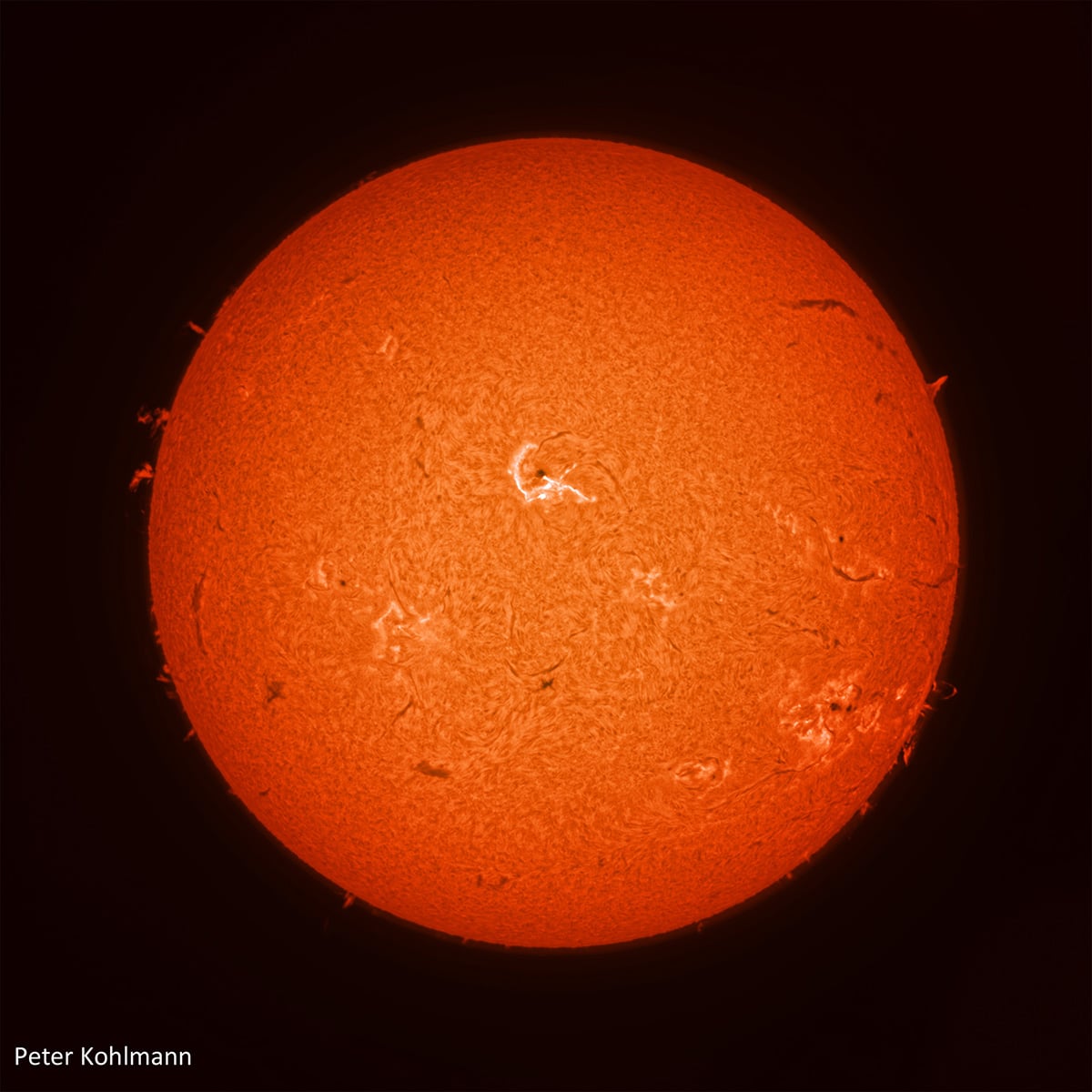
The Acuter Elite Phoenix 40 is designed specifically for viewing the Sun’s chromosphere. It does this by isolating a very narrow slice of the light spectrum, the H-alpha line at 656.28 nm. This narrow band of light shows the Sun in an incredibly dynamic state. You can see solar prominences leaping off the edge. You can observe surface filaments, sunspots, and even solar flares.
This telescope is not like a normal optical tube. It includes a front-mounted etalon filter, which helps in isolating H-alpha light. The filter delivers a bandwidth of less than 0.6 Ångströms, which is narrow enough to reveal fine details. This level of contrast makes features like filaments and spicules stand out clearly.

Key specifications
The Phoenix 40 has an aperture of 40 mm and a focal length of 400 mm. That gives it a focal ratio of f/10. While 40 mm may sound small, it’s ideal for solar observing. Smaller apertures limit heat buildup and improve contrast during daytime use.
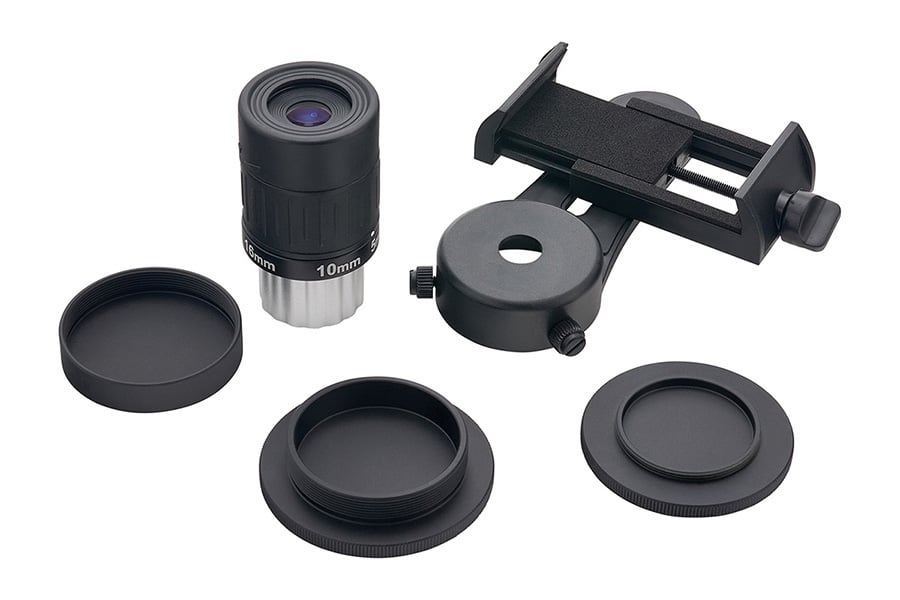
The telescope includes a Crayford focuser for precise focusing. This type of focuser provides smooth, backlash-free control, which is essential for observing fine solar structures. It comes with a zoom eyepiece that ranges from 8 mm to 24 mm, giving you variable magnification between roughly 17x and 50x. That’s ideal for both wide-field views of the solar disk and close-ups of limb activity.
Weighing around 2 kg (tube only), the Phoenix 40 is very portable. It’s ideal for outreach programs, school demonstrations, and travel. Its dovetail mounting bar fits standard tripod or mount heads, making setup fast and easy.
Versatile design
The Phoenix 40 isn’t just a one-trick pony. When you remove the front-mounted etalon and solar filters, you can use the telescope for night-time astronomy. It then functions like a regular achromatic refractor, with a clear 40 mm aperture and 400 mm focal length. This makes it a dual-purpose telescope, great for both solar and basic night-sky observing. You can observe the Moon, bright planets, and terrestrial objects once the solar filters are off. It also comes with a 1.25″ star diagonal, red dot finder, and a smartphone adapter. You can easily attach your phone to capture solar images and videos.
Ideal for beginners and enthusiasts
The Phoenix 40 is well-suited for both advanced beginners and seasoned solar observers. For those just starting, it offers a safe, easy way to explore hydrogen-alpha views without the complexity of a modular system. For experienced users, it provides a compact, travel-ready scope that complements larger solar setups. The included accessories: zoom eyepiece, smartphone adapter, finder, and diagonal, offer an all-in-one solution. There’s no need to invest in extra parts just to get started.
Price and availability
The Acuter Elite Phoenix 40 is priced at $1,400 and is available via telescope retailers.
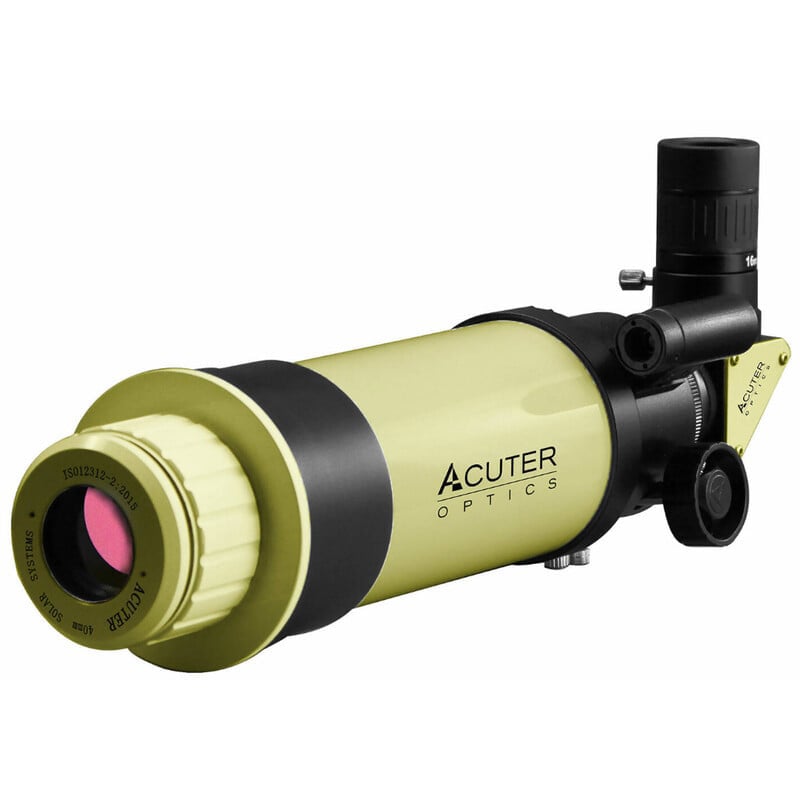
The Acuter Elite Phoenix 40 offers impressive H-alpha performance in a compact, safe, and affordable package. It brings the dynamic face of the Sun to life for visual observers and casual photographers alike. With proper filter safety and smart use, it becomes a lifelong tool for solar exploration. While there are larger and more advanced solar scopes on the market, few match the Phoenix 40’s value, flexibility, and ease of use. It’s a solar telescope that invites you to look up, safely, at our nearest star, and see it like never before.
Clear skies!
See more from DIYPhotography.net on Google
Add DIYPhotography.net as a trusted source. This makes
our stories more likely to appear in your Google Search results.
 Add as a preferred source on Google

Soumyadeep Mukherjee
Soumyadeep Mukherjee is an award-winning astrophotographer from India. He has a doctorate degree in Linguistics. His work extends to the sub-genres of nightscape, deep sky, solar, lunar and optical phenomenon photography. He is also a photography educator and has conducted numerous workshops. His works have appeared in over 40 books & magazines including Astronomy, BBC Sky at Night, Sky & Telescope among others, and in various websites including National Geographic, NASA, Forbes. He was the first Indian to win “Astronomy Photographer of the Year” award in a major category.

Join the Discussion
DIYP Comment Policy
Be nice, be on-topic, no personal information or flames.