




















This Satellite Image Sees Beyond Typhoon Surigae’s Clouds
Oct 6, 2026
Soumyadeep Mukherjee
Soumyadeep Mukherjee is an award-winning astrophotographer from India. He has a doctorate degree in Linguistics. His work extends to the sub-genres of nightscape, deep sky, solar, lunar and optical phenomenon photography. He is also a photography educator and has conducted numerous workshops. His works have appeared in over 40 books & magazines including Astronomy, BBC Sky at Night, Sky & Telescope among others, and in various websites including National Geographic, NASA, Forbes. He was the first Indian to win “Astronomy Photographer of the Year” award in a major category.
Share:
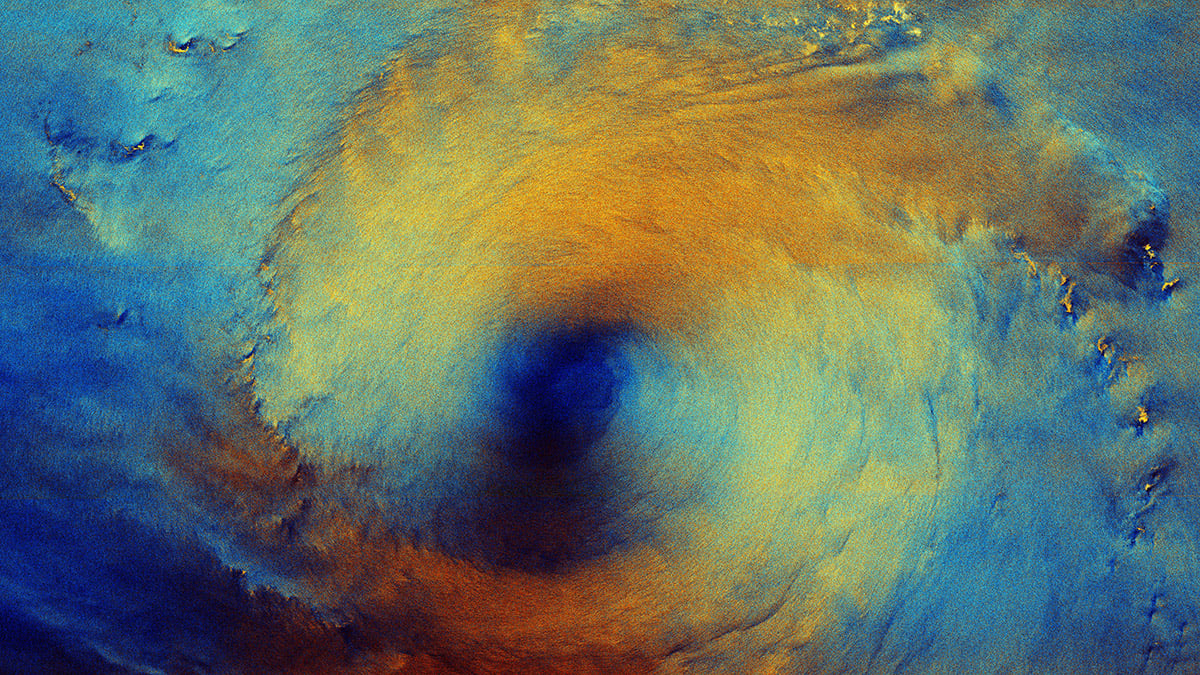
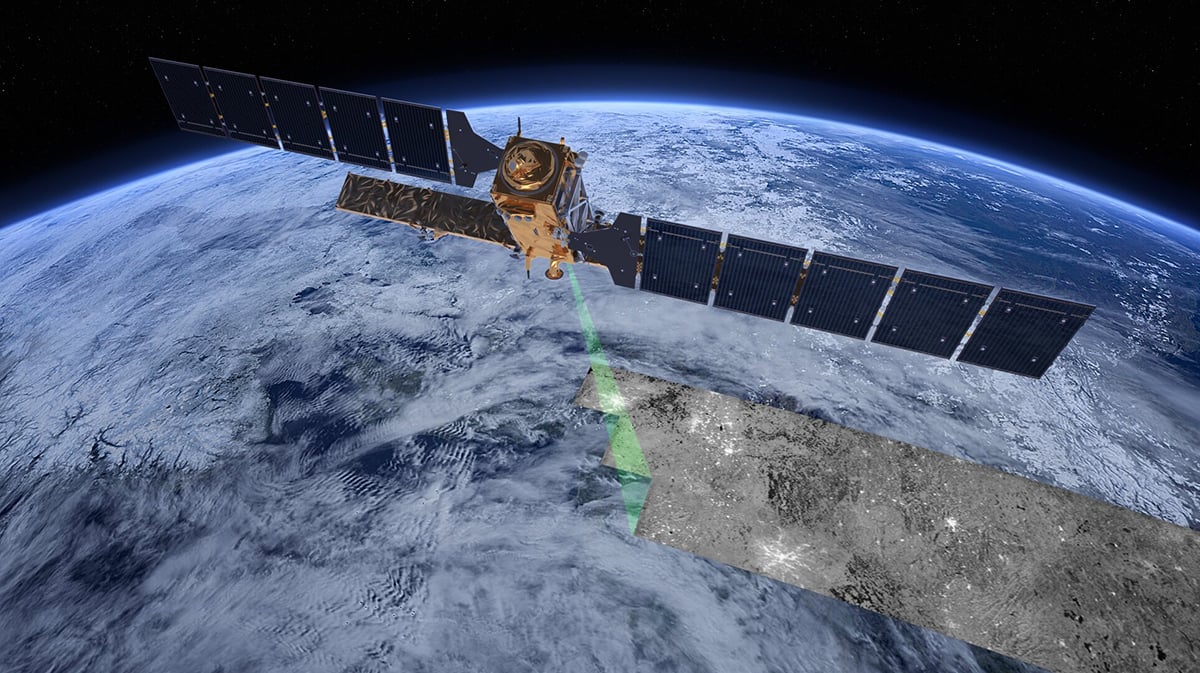
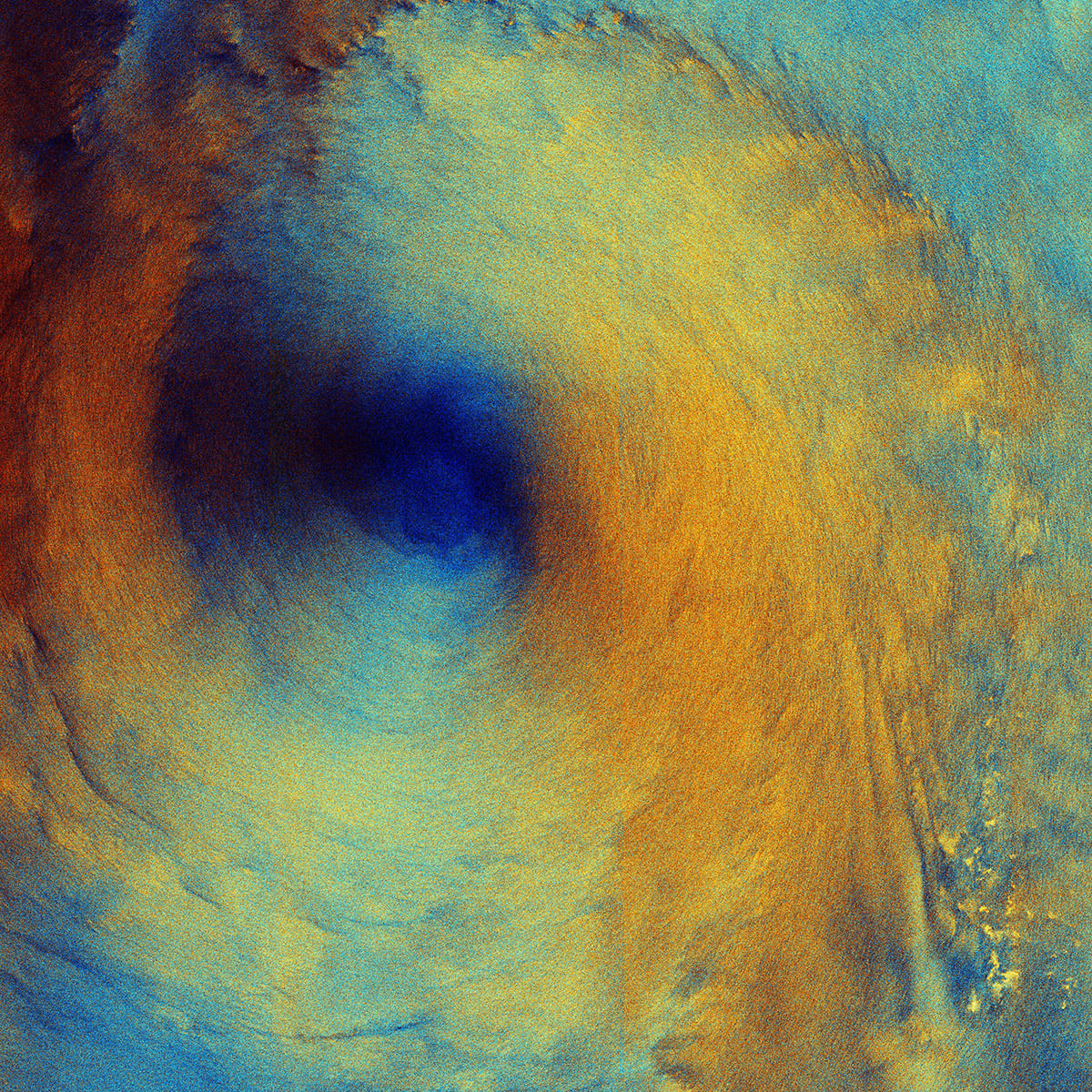
A new satellite image from the European Space Agency shows Typhoon Surigae in a very interesting way. A dark blue area marks the calmer water around the eye, while orange and yellow areas show rougher water around the storm. The Copernicus Sentinel-1 satellite captured the image on 28 September 2026, when Surigae was about 200 kilometers south of Japan’s Shikoku island. The satellite uses radar, so it can observe the ocean through the thick cloud cover surrounding a typhoon.
What makes the view unusual is the part of the storm that Sentinel-1 observed. The satellite was not photographing Surigae’s clouds, as we see in most typhoon images. Its radar was measuring the surface of the ocean beneath them. The dark center marks the relatively calm water around the eye, while the bright ring around it reveals rougher seas stirred by the typhoon.
Sentinel-1 looks through the storm
Most views we see of a tropical cyclone come from optical and infrared satellites. Those instruments give us the familiar images used in weather reports. They show the cloud bands wrapping around the eye and help meteorologists follow the storm as it moves.
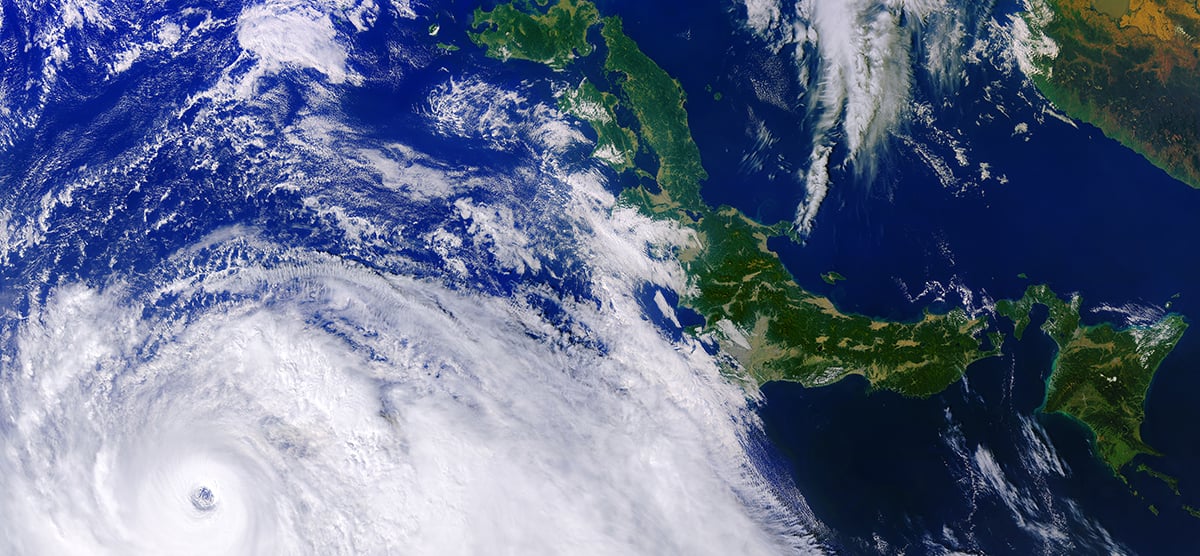
Sentinel-1 is a little different. Its Synthetic Aperture Radar, or SAR, sends microwave pulses towards the surface and records their reflections. Because the satellite supplies its own signal, it does not need sunlight. Its radar can also work through clouds and rain, giving scientists access to the sea surface during conditions that can make ordinary satellite imaging difficult.
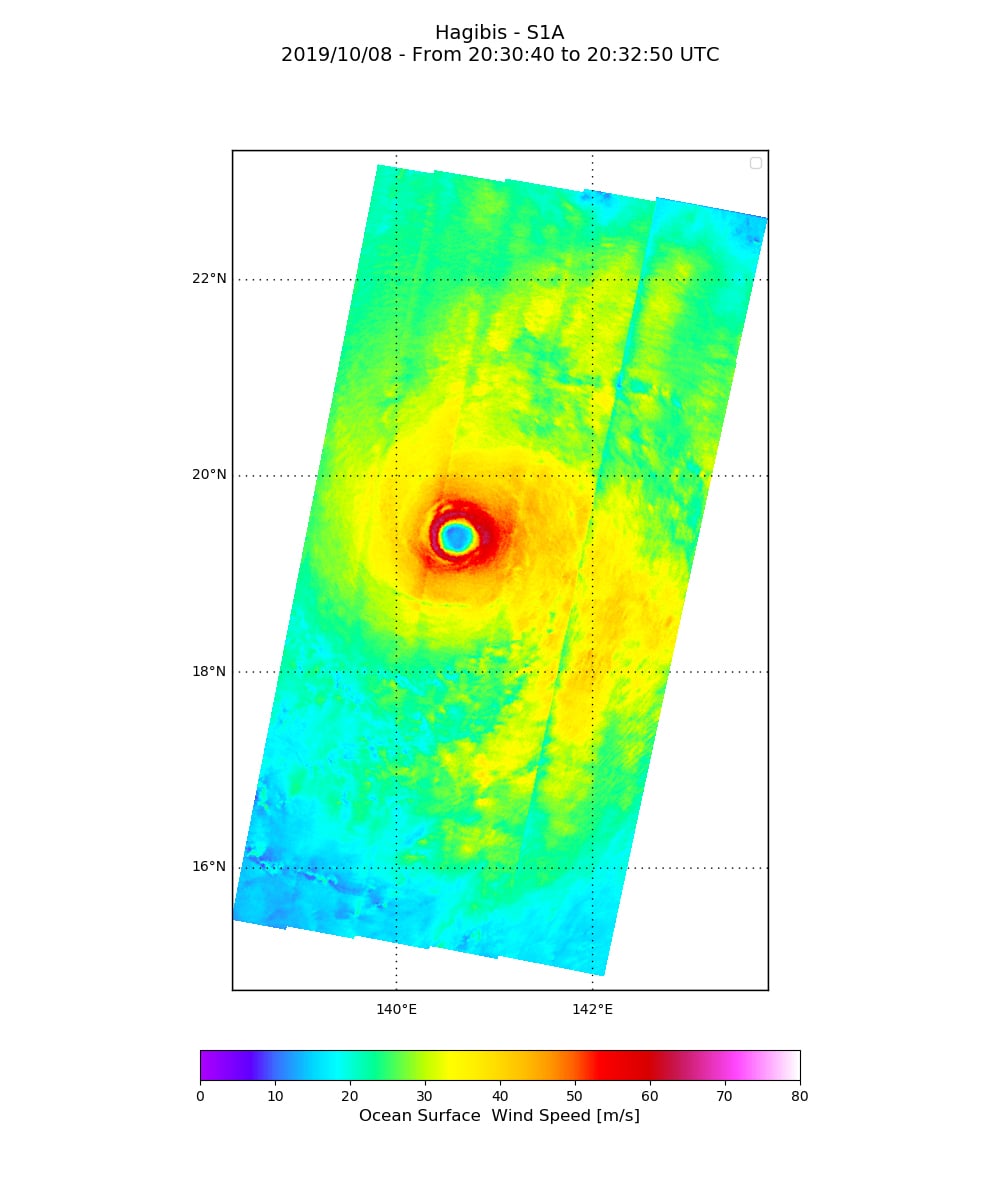
Scientists use this radar response to work out information about the wind field over the ocean. ESA has used Sentinel-1 observations for this purpose during previous tropical cyclones, including Typhoon Hagibis in 2019.
The blue, orange and yellow areas
The colors make the Surigae image look almost like a conventional photograph, but they do not represent the natural appearance of the ocean.
ESA created the false-color effect by combining two radar polarizations and assigning different colors to the resulting signals. This allows subtle differences in the radar measurements to stand out across the image.
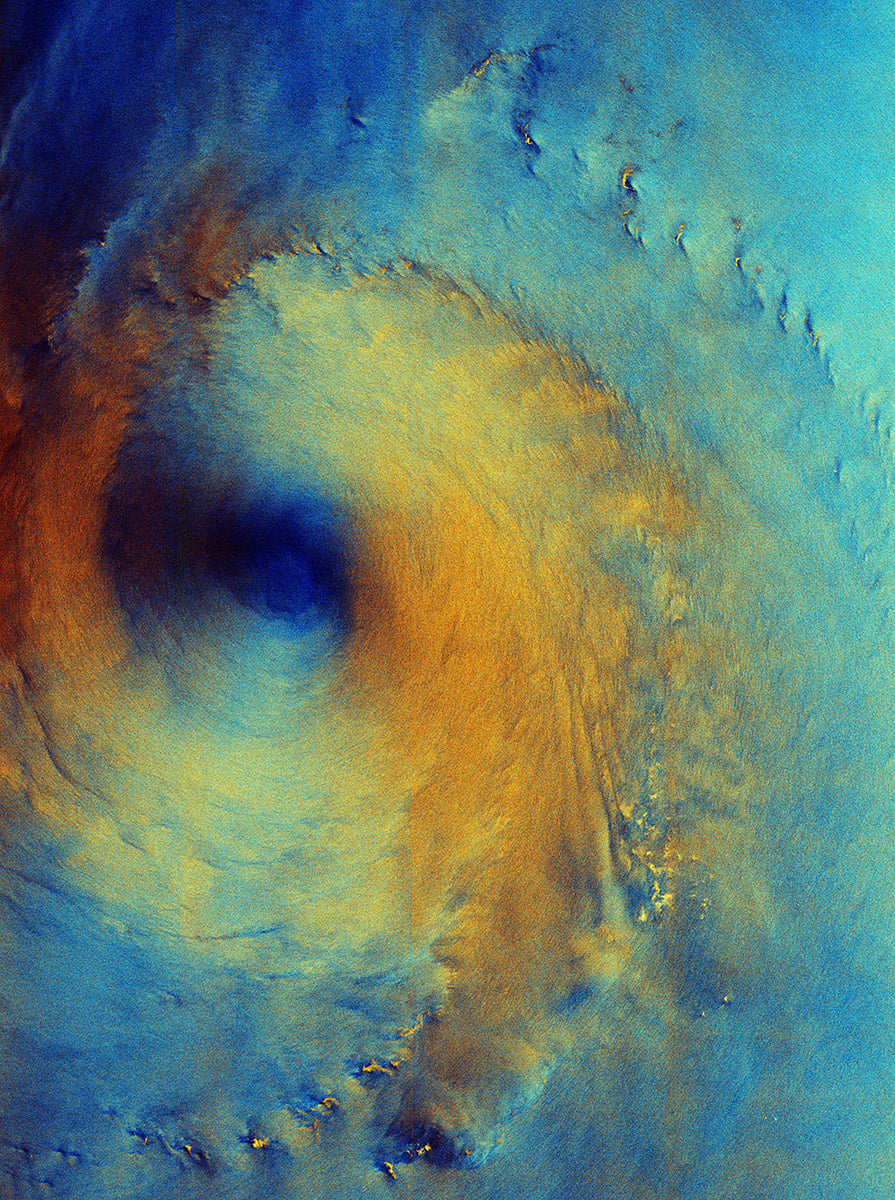
The dark blue region around the centre corresponds to the calmer ocean within the eye. Around it, the orange and yellow ring marks much rougher conditions. The strong winds around the eyewall disturb the water and create a surface that produces a different radar response.
The lighter blue areas represent different radar signals and could correspond to changes in wind speed, movement of the sea surface, or areas affected by rain. The image does not assign A single explanation to every patch of color. Radar measurements can respond to several factors at the same time.
The eye and eyewall of the typhoon
The most recognizable feature in the image is probably the dark center. The eye of a mature tropical cyclone can contain much calmer conditions than the eyewall surrounding it.
The strongest winds occur around the eyewall. There, air rises rapidly, and thunderstorms produce the most intense weather in the storm. Inside the eye, descending air creates a region with lighter winds and fewer clouds at lower levels.
Sentinel-1 sees part of that contrast at the ocean surface. The relatively calm water around the eye produces a different radar response from the rougher water around the eyewall. This allows researchers to examine the storm’s inner structure. The size of the eye and the distribution of rough water around it can provide clues about the organization of the cyclone.
Clear skies!
See more from DIYPhotography.net on Google
Add DIYPhotography.net as a trusted source. This makes
our stories more likely to appear in your Google Search results.
 Add as a preferred source on Google

Soumyadeep Mukherjee
Soumyadeep Mukherjee is an award-winning astrophotographer from India. He has a doctorate degree in Linguistics. His work extends to the sub-genres of nightscape, deep sky, solar, lunar and optical phenomenon photography. He is also a photography educator and has conducted numerous workshops. His works have appeared in over 40 books & magazines including Astronomy, BBC Sky at Night, Sky & Telescope among others, and in various websites including National Geographic, NASA, Forbes. He was the first Indian to win “Astronomy Photographer of the Year” award in a major category.


Join the Discussion
DIYP Comment Policy
Be nice, be on-topic, no personal information or flames.