
























30 hours of the Dynamic Sun: CONA Images in Visible and Infrared
Oct 10, 2025
Soumyadeep Mukherjee
Soumyadeep Mukherjee is an award-winning astrophotographer from India. He has a doctorate degree in Linguistics. His work extends to the sub-genres of nightscape, deep sky, solar, lunar and optical phenomenon photography. He is also a photography educator and has conducted numerous workshops. His works have appeared in over 40 books & magazines including Astronomy, BBC Sky at Night, Sky & Telescope among others, and in various websites including National Geographic, NASA, Forbes. He was the first Indian to win “Astronomy Photographer of the Year” award in a major category.
Share:

The Sun never rests. Every moment, plasma arcs twist, magnetic fields snap, and waves of heat rise through its atmosphere. Scientists have long wanted to capture these fleeting events with clarity. Yet Earth’s turbulent air always stood in the way. A breakthrough at the Goode Solar Telescope (GST) in California has changed that story. Using the Cryogenic Off-Axis Nulling Adaptive Optics (CONA) system, researchers at the New Jersey Institute of Technology (NJIT) have captured the Sun in stunning detail.
Recently, the National Solar Observatory (NSO) released 30 hours of this data to the public. These observations were recorded in two distinct wavelengths: H-alpha (656.3 nm) and Helium I (1083 nm). Together, they reveal layers of the Sun that no single image could show alone.
The adaptive optics
The atmosphere has always been a challenge for astronomers. Air currents bend light, causing images to shimmer and blur. That’s why adaptive optics exist: systems that correct the distortion in real time. The CONA system does this with extraordinary precision. It uses a wavefront sensor to measure how the incoming light is distorted. Then, a deformable mirror reshapes hundreds of times per second to cancel out the turbulence. The result is a sharp, steady view, even under imperfect sky conditions.
With CONA engaged, the Goode Solar Telescope can achieve a spatial resolution of about 63 kilometers on the Sun’s surface. That’s enough to capture features smaller than most solar granules, the tiny cells of plasma that cover the Sun’s visible face.
This level of detail allows researchers to study the smallest magnetic structures and track how they evolve second by second. For the first time, we can see the Sun not as a uniform glow, but as a dynamic, textured landscape.
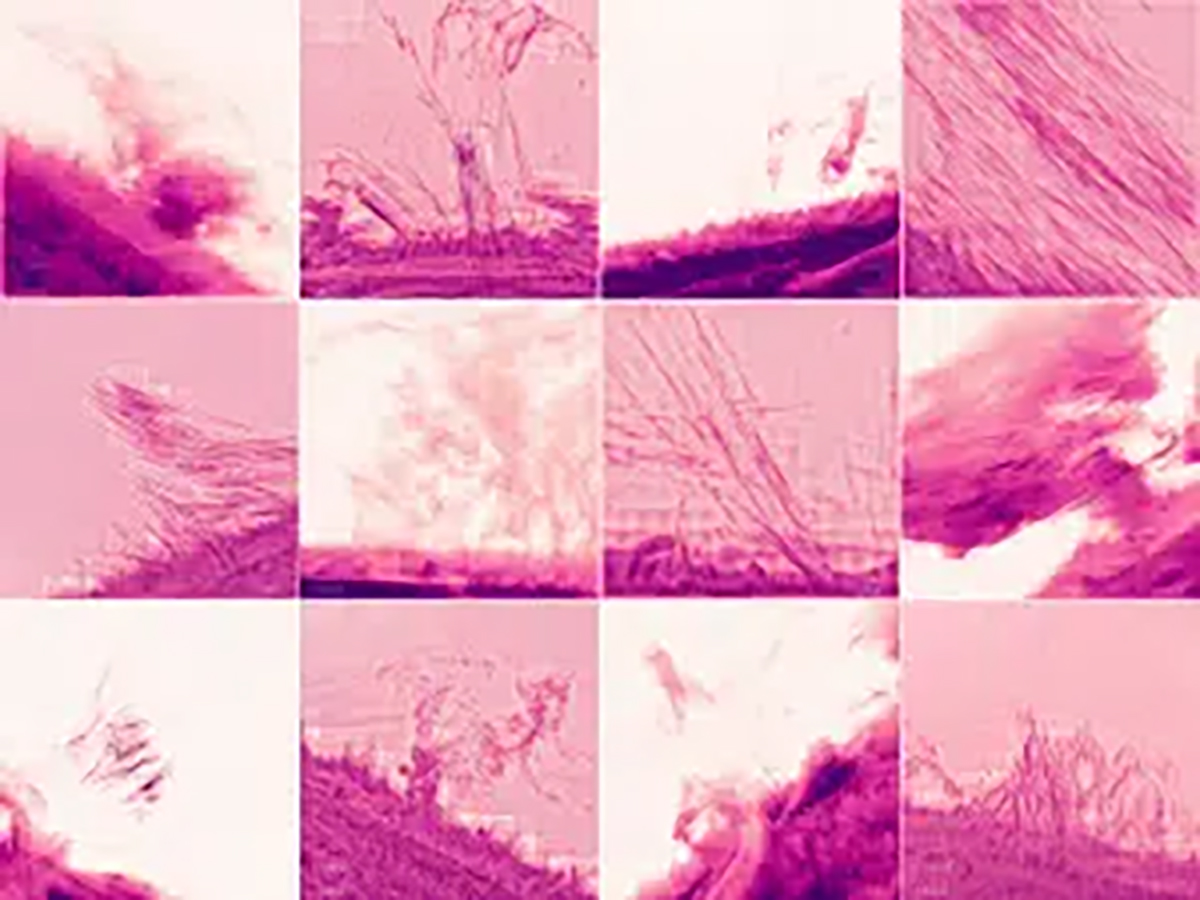
The twin instruments: VIS and NIRIS
The data were captured using two specialized instruments: the Visible Imaging Spectrometer (VIS) and the Near-Infrared Imaging Spectropolarimeter (NIRIS).
VIS observes in H-alpha, a deep red wavelength emitted by hydrogen in the Sun’s chromosphere. This layer sits just above the visible surface, where magnetic energy constantly reshapes the plasma. In H-alpha, we can see filaments, sunspot canopies, and bright prominences rising far above the solar limb.
NIRIS, on the other hand, observes in Helium I (1083 nm), which lies in the near-infrared region. This wavelength probes higher altitudes and cooler, fainter plasma. It reveals structures invisible to the naked eye, such as coronal rain, plasmoids, and magnetic arches that stretch high into the upper atmosphere.
Together, VIS and NIRIS form a powerful duo. They record two layers of the solar atmosphere at once, the dense, active chromosphere and the extended, delicate corona. The visible and infrared data complement each other perfectly, showing how energy and material flow between layers.
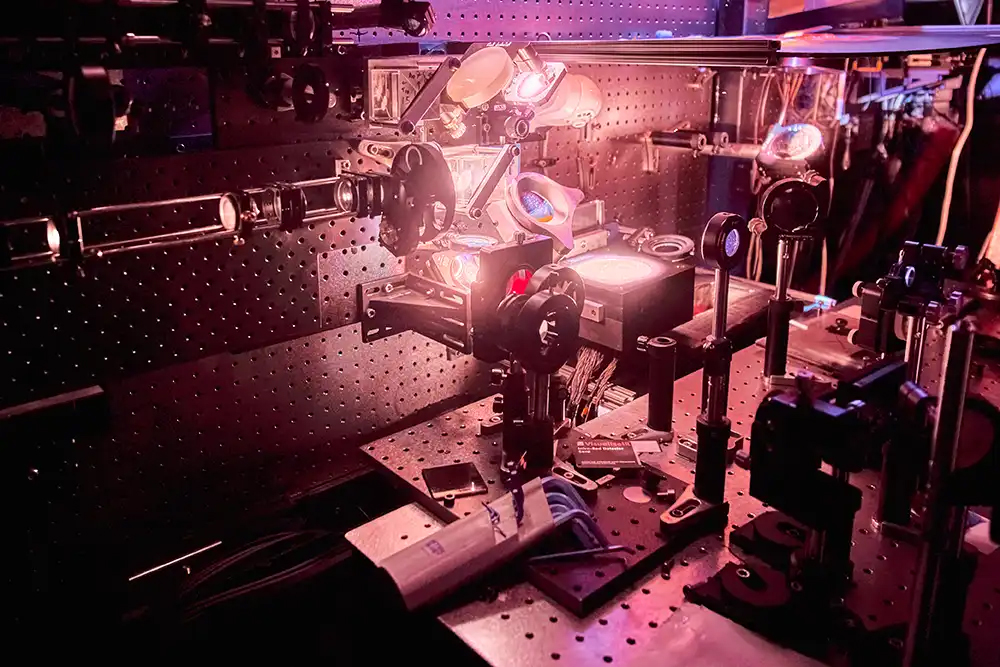
What the images and videos show
The 30 hours of CONA data include both still images and time-lapse videos. They bring the Sun’s movement to life.
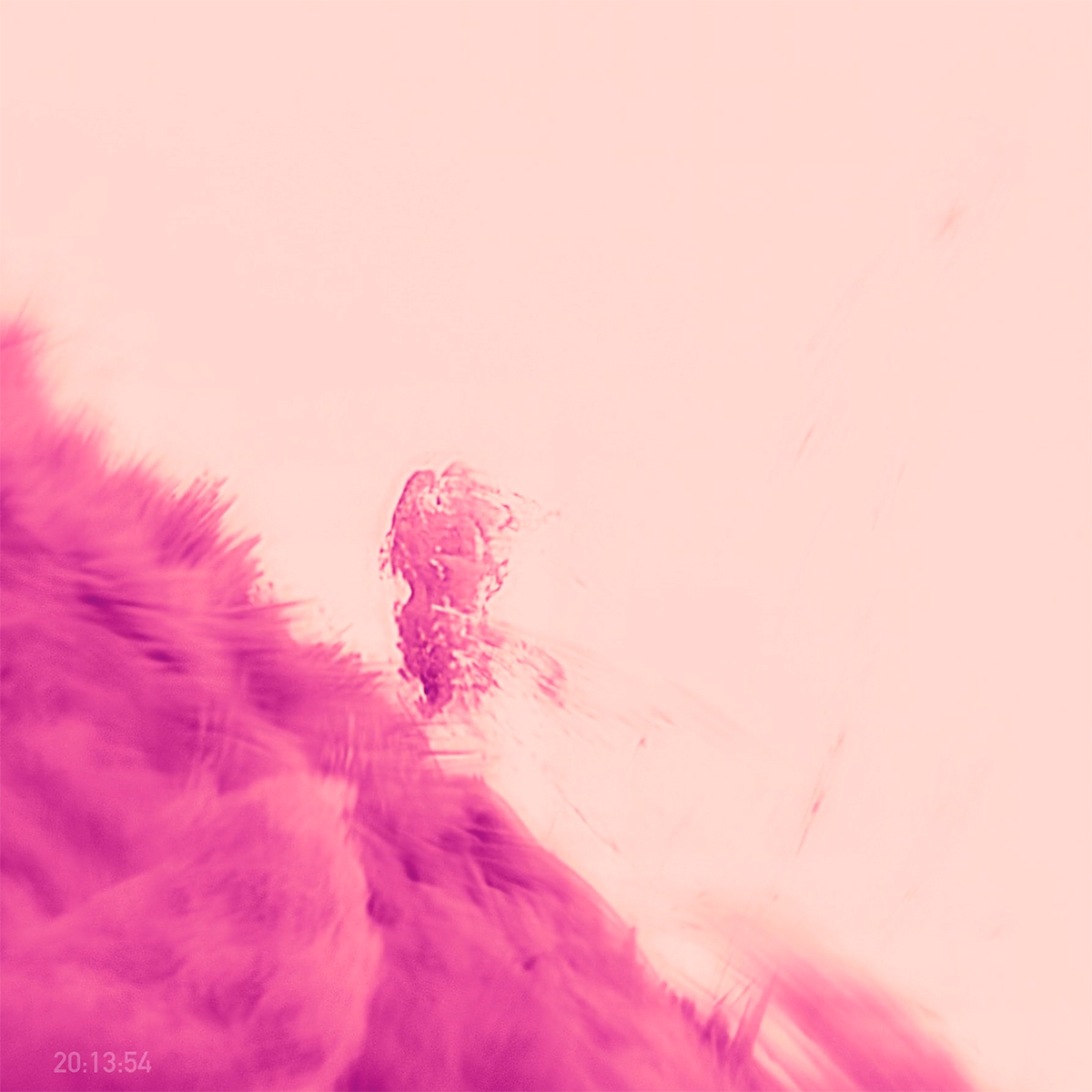
In the H-alpha sequences, plasma filaments appear like red threads twisting in magnetic tension. Prominences expand, stretch, and collapse. Jets of plasma, called spicules, shoot upward and vanish in seconds. Every ripple and flicker reflects the raw energy beneath.
In the Helium I images, the same regions look softer and more extended. Coronal rain appears as glowing streaks falling back toward the surface. Loops of plasma connect sunspot regions like glowing bridges. Even faint structures, previously lost in the glare, now stand out clearly.
Comparing the two wavelengths shows how tightly linked the Sun’s layers are. A disturbance in one immediately triggers changes in the other. Seeing both together helps scientists understand how solar storms begin, knowledge that could one day improve space weather prediction.
The optics that make it possible
Behind every clear image lies careful optical engineering. The Goode Solar Telescope uses a unique off-axis Gregorian design. Unlike standard telescopes, it has no central obstruction. That design reduces scattered light and improves contrast, critical for solar imaging, where brightness differences can be extreme. Both VIS and NIRIS are spectropolarimetric instruments. They capture light intensity and measure polarization, how light waves vibrate. Polarization carries information about magnetic fields. By analyzing it, scientists can map magnetic strength and direction at different solar heights.
In H-alpha, this allows researchers to study flows and turbulence. In Helium I, the longer wavelength gives a clearer view through hotter, denser layers. It reveals cooler, thin plasma that’s otherwise invisible.
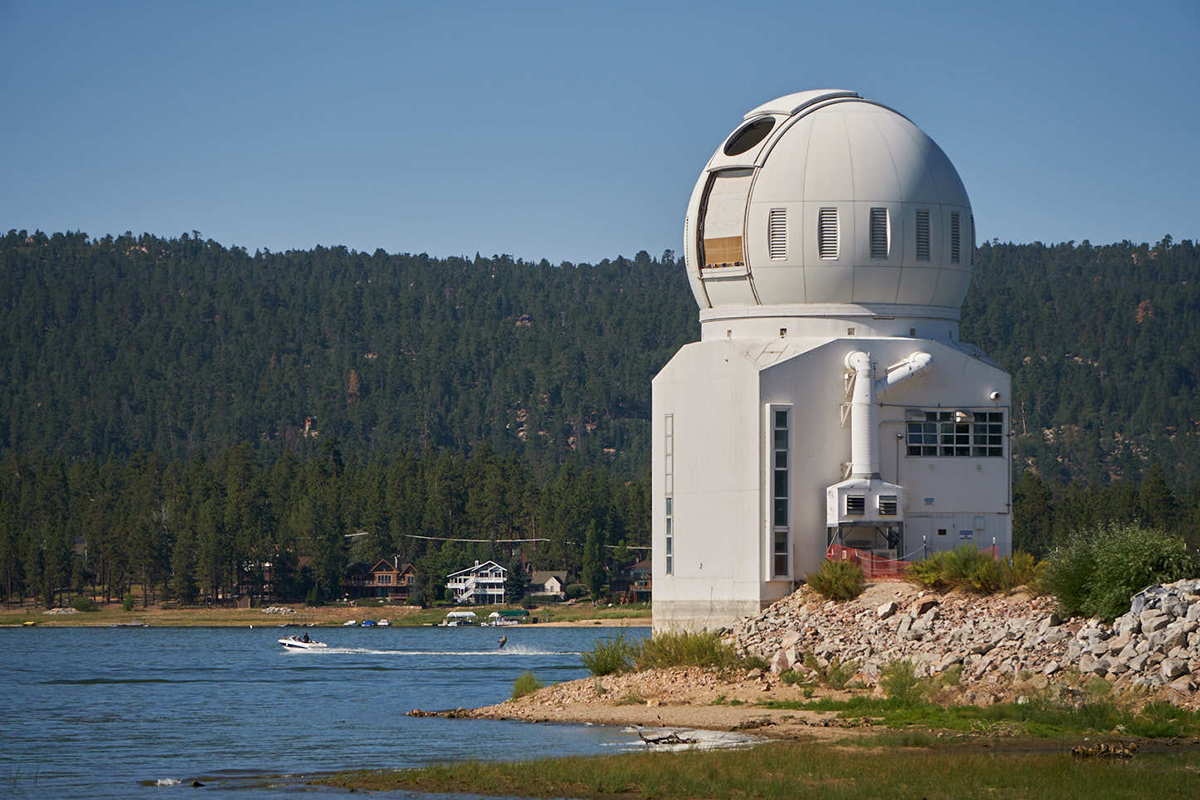
Science and beauty in equal measure
The CONA dataset is a rare visual experience. Watching these solar scenes unfold feels like observing a living organism, one that breathes energy, heat, and motion. For scientists, the data provide measurable insight. They help refine models of magnetic reconnection, the explosive process that powers flares and coronal mass ejections. They also help track how energy travels through the solar atmosphere, from dense plasma near the surface to the thin corona above.
The success of the CONA adaptive optics system shows how ground-based telescopes can still compete with space-based ones. While satellites like SDO and Solar Orbiter provide continuous coverage, systems like CONA can reach higher resolutions and finer details, especially when supported by cutting-edge optical correction.
Clear skies!
See more from DIYPhotography.net on Google
Add DIYPhotography.net as a trusted source. This makes
our stories more likely to appear in your Google Search results.
 Add as a preferred source on Google

Soumyadeep Mukherjee
Soumyadeep Mukherjee is an award-winning astrophotographer from India. He has a doctorate degree in Linguistics. His work extends to the sub-genres of nightscape, deep sky, solar, lunar and optical phenomenon photography. He is also a photography educator and has conducted numerous workshops. His works have appeared in over 40 books & magazines including Astronomy, BBC Sky at Night, Sky & Telescope among others, and in various websites including National Geographic, NASA, Forbes. He was the first Indian to win “Astronomy Photographer of the Year” award in a major category.
Related Posts
 Kolari Vision’s new neutral density filter works with both visible light and infrared cameras
 Winners of Kolari Vision’s 2024 infrared contest reveal the magic beyond the visible spectrum
 NASA shares first-ever visible light images of Venus’s surface
 The Sun in 8K: VTT Photographs the Sun in Hi-resolution
Join the Discussion
DIYP Comment Policy
Be nice, be on-topic, no personal information or flames.