

















Your Photos Are Instagrammable. That Might Be the Problem
Jun 6, 2026
Dunja Đuđić Kalinin
Dunja Djudjic is a multi-talented artist based in Novi Sad, Serbia. With 15 years of experience as a photographer, she specializes in capturing the beauty of nature, travel, concerts, and fine art. In addition to her photography, Dunja also expresses her creativity through writing, embroidery, and jewelry making.
Share:

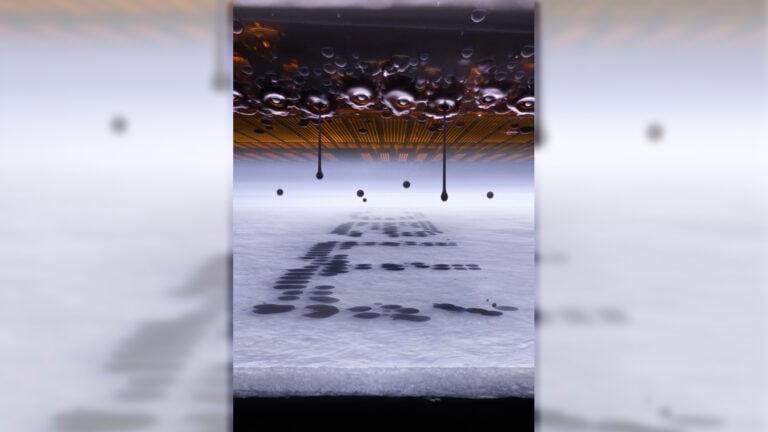
When you scroll through Instagram, you’ll see plenty of photos with perfectly diffused light, beautiful subject, cinematic color grading… What’s more, your photos may look like that too. Nothing bad about taking technically flawless photos, but… Ah yes, there’s a but.
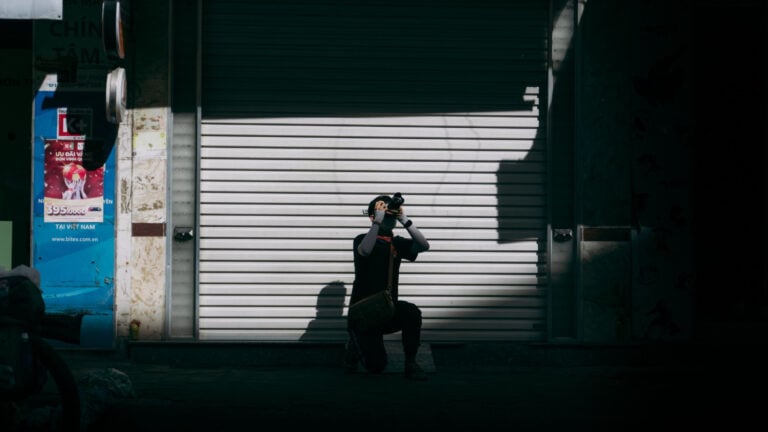
In a recent video, Jared Thomas Tapy calls out these “perfect photos” in the context of storytelling, stating that “photography today suffers from an overdose of aesthetics” and “has a terminal case of style over substance.” If you feel like your photos look great but just don’t feel right, I think you’ll like this video as much as I did.
Beauty Has Become Wallpaper
We live in an era where great lighting and perfect editing are easier to achieve than ever. On the surface, that sounds like progress. But Jared argues it’s created a different kind of problem. When everything looks beautiful, nothing stands out. People scroll past stunning images that all look kinda similar.
The mistake, he says, is treating beauty as the goal rather than a byproduct of something real. He points to photographers like Gordon Parks, whose images are gorgeous but whose power comes from the moments being witnessed rather than constructed. Today, Jared notes, we reverse-engineer that. We simulate emotion and stylize tragedy and longing into something more digestible.
These images are designed to please, not to provoke. They’re built for engagement, not endurance. Somewhere between the dopamine hit of likes and the death of patience, storytelling has gone out of fashion.
We Are Curating Instead of Exploring
Part of the issue is the pace at which we live. Storytelling requires patience, and patience has become scarce.
The problem is that storytelling takes time. It asks something of you. In a culture obsessed with speed, taking time is seen as inconvenient. So we’ve adapted. We’ve simplified. We’ve stopped exploring the world and started curating it.
Jared argues that Dorothea Lange wasn’t aiming for beauty when she photographed Migrant Mother. She did edit the image to make the composition work better. But I believe that this better composition wasn’t a goal on its, as it tends to be today. The focus is on the story, and the “removing the thumb” was secondary. But as Jared laments, “People don’t photograph people anymore, they photograph looks.”
How to Think Like a Storyteller
In his video, Jared is clear that, if you simply enjoy making beautiful images, that’s fine. And I absolutely agree. I don’t think this video is meant to shame anyone, and my write-up certainly isn’t. But Jared raises a larger concern that “we’ve elevated aesthetics above everything else photography can do.”
“We’ve trained ourselves to ignore images that tell stories while praising images that AI can now generate effortlessly. Storytelling photography still matters because it’s the closest thing we have to empathy made visible.”
The thing is, your storytelling aspirations don’t begin with the camera. They rather begin with “attention, curiosity, and a willingness to care about what you’re looking at,” as Jared puts it. “Seeing is mechanical. A camera can see; what a camera cannot do is wonder.”
So, before you pick up the camera, Jared suggests asking yourself a few honest questions if you want to go into the “storytelling mode,” so to speak:
- Why this moment?
- Why this person?
- Why now?
If you can’t answer those questions, Jared claims that you’re not really making a photo, but just taking one.
When it comes to photographing people, Jared says something that has stuck with me: “A good portrait doesn’t flatter. It reveals.” We keep looking for the perfect, most flattering lighting and angles, whether we’re photographing others or taking selfies or self-portraits. And once again, there’s nothing wrong with that, and it has its purpose. But in documentary, storytelling photography, it definitely is more about revealing someone’s story than flattering them with the perfect angle and lighting.
Jared encourages you to study outside of photography, too. And that’s something I’d always recommend as well. Listen to music, go to art galleries, study different types of art and creative work. You never know what you’ll pick up and when the inspiration will strike you. I personally find a lot of inspiration when listening to music, and lately it also comes when I’m outside in nature, simply observing the world around me.
The Photos That Last
Jared closes with another thought that really stayed with me, even though I watched this video around a week ago
“The photographers who endure aren’t necessarily the easiest to recognize. They’re the hardest to forget.”
He also adds that improving as a photographer is about being present rather than being perfect. “The camera shouldn’t be a shield between you and the world,” he says, “it should be a bridge.”
[The Disease of Aesthetic Photography (And Why It’s Ruining The Medium) | Jared Thomas Tapy]
See more from DIYPhotography.net on Google
Add DIYPhotography.net as a trusted source. This makes
our stories more likely to appear in your Google Search results.
 Add as a preferred source on Google

Dunja Đuđić Kalinin
Dunja Djudjic is a multi-talented artist based in Novi Sad, Serbia. With 15 years of experience as a photographer, she specializes in capturing the beauty of nature, travel, concerts, and fine art. In addition to her photography, Dunja also expresses her creativity through writing, embroidery, and jewelry making.



Join the Discussion
DIYP Comment Policy
Be nice, be on-topic, no personal information or flames.