























The Secret to More Creative Photography Isn’t Breaking the Rules
Jun 5, 2026
Alysa Gavilan
Alysa Gavilan has spent years exploring photography through photojournalism and street scenes. She enjoys working with both film and mirrorless cameras, and her fascination with the craft has grown over the decades. Inspired by Vivian Maier, she is drawn to capturing everyday moments that often go unnoticed.
Share:
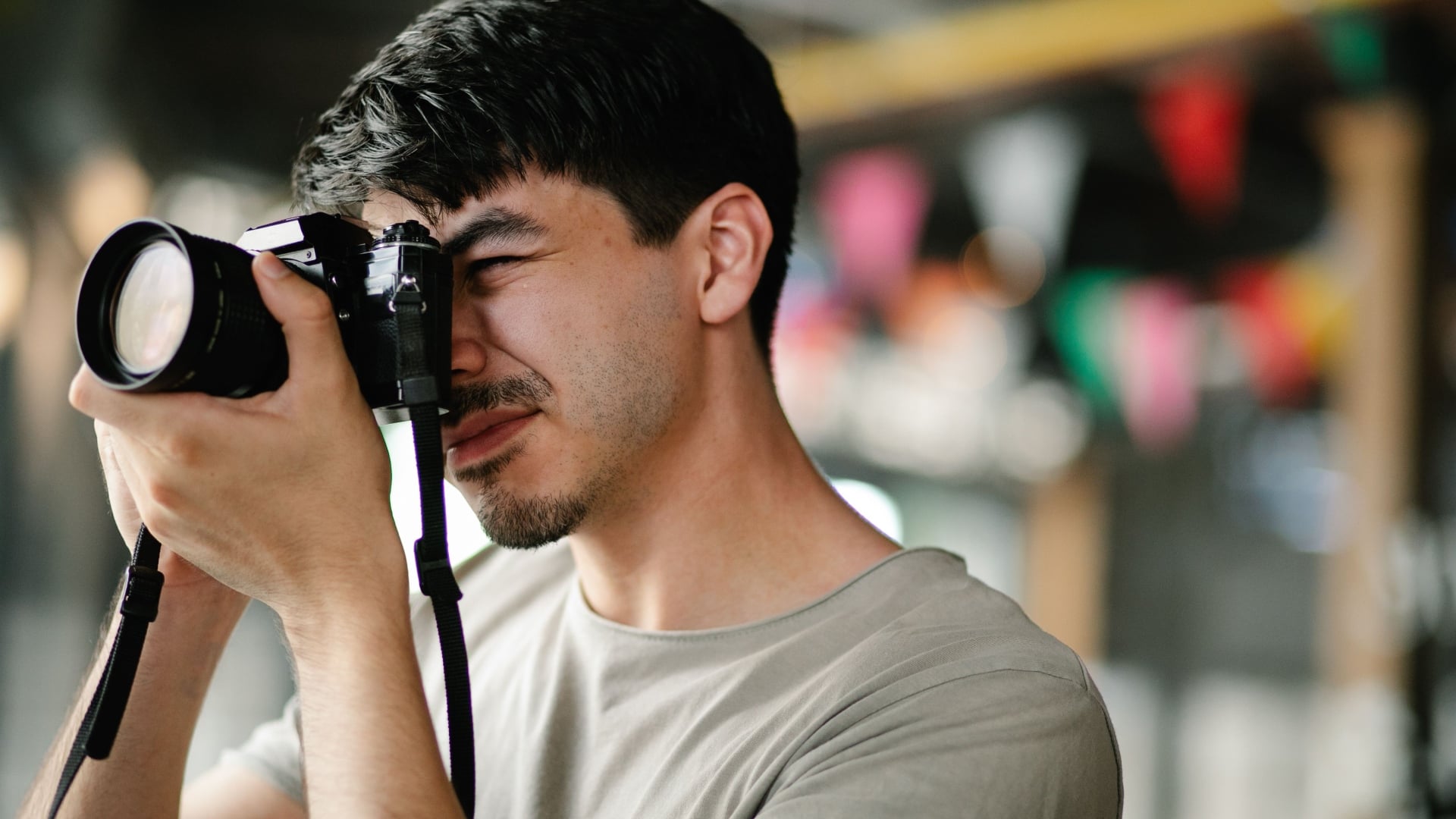
Many photographers eventually run into the same question: does learning too many rules make your work less creative?
According to photographer and educator Mark Wallace, the answer is no. In a recent CreativeLive video, Wallace argued that understanding technical principles is often what allows artists to push boundaries and create something genuinely original.
His point challenges a common belief among beginners that creativity and structure exist at opposite ends of the spectrum. Instead, Wallace suggests that many of history’s most influential artists first mastered the fundamentals before reinventing them.
Creativity Built On Foundations
Wallace pointed to several well known figures from art, architecture, and entertainment to make his case.
One example was artist Josef Albers, whose work explored the relationships between color, shape, and contrast. At first glance, some of Albers’ pieces appear deceptively simple, often consisting of little more than colored squares. Yet those works became highly influential because they were rooted in a deep understanding of visual perception and color theory.
According to Wallace, Albers was able to create something entirely new because he understood the rules so thoroughly that he could manipulate them in unexpected ways.
The same principle applies beyond photography and painting.
Architect Frank Gehry’s distinctive buildings, including the Guggenheim Museum Bilbao and Walt Disney Concert Hall, appear to defy conventional architectural forms. Wallace noted that such designs would not have been possible without a strong grasp of engineering, materials science, and structural principles.

The Pattern Repeats Across Art History
Wallace also highlighted Pablo Picasso as an example of artistic evolution rather than instant innovation.
Today, Picasso is most closely associated with Cubism, a movement that fundamentally changed how artists approached perspective and representation. Yet Picasso did not begin his career painting fragmented faces and abstract forms. He first trained in traditional techniques and spent years developing his understanding of color, composition, texture, and form.
Only later did he begin challenging those conventions.
The same pattern can be seen in movements such as Impressionism and Pointillism. Impressionist painters shocked critics in their time by focusing on everyday scenes rather than royalty, religious subjects, or historical events. Pointillist artists developed an entirely new visual language built on small dots of color, something that required a sophisticated understanding of how colors interact and how the human eye perceives them.
Wallace’s point is that innovation often emerges from knowledge, not from ignoring it.
Why This Matters For Photographers
For photographers, especially those learning studio lighting, composition, or editing, the message is reassuring.
Many newcomers worry that studying technical concepts such as lighting ratios, color theory, leading lines, or composition grids will make their work formulaic. Wallace argues the opposite. Technical understanding provides a toolkit. What artists choose to do with that toolkit is where creativity begins.
In photography, some of the most recognizable styles are built on deliberate departures from established conventions. Those choices become more meaningful when photographers understand exactly what rule they are bending or breaking.
That does not mean every creative person needs formal training. Wallace acknowledged that some artists learn principles intuitively through years of experience rather than structured education. Either way, the foundation still exists.
Understanding First, Experimenting Second
Wallace’s conclusion was simple: a systematic approach to photography does not ruin creativity.
Instead, mastering the basics allows photographers to see new possibilities. History is filled with artists, architects, comedians, and creators who learned established methods before transforming them into something uniquely their own.
For photographers struggling to balance technical precision with artistic expression, that may be one of the most valuable lessons of all: understanding the rules is often the first step toward creating work that no longer looks like anyone else’s.
See more from DIYPhotography.net on Google
Add DIYPhotography.net as a trusted source. This makes
our stories more likely to appear in your Google Search results.
 Add as a preferred source on Google

Alysa Gavilan
Alysa Gavilan has spent years exploring photography through photojournalism and street scenes. She enjoys working with both film and mirrorless cameras, and her fascination with the craft has grown over the decades. Inspired by Vivian Maier, she is drawn to capturing everyday moments that often go unnoticed.
Related Posts
 There is no way to break compositional rules, only move to more advanced rules
 From burnout to breakthrough: Five key steps to breaking the creative block
 Creative Sports Photography: How To Show Motion For A Creative Effect
 Personal projects are the ultimate secret to developing your street photography
Join the Discussion
DIYP Comment Policy
Be nice, be on-topic, no personal information or flames.