






















NASA’s TESS Tracks Interstellar Comet 3I/ATLAS in Its Final Act
Feb 4, 2026
Soumyadeep Mukherjee
Soumyadeep Mukherjee is an award-winning astrophotographer from India. He has a doctorate degree in Linguistics. His work extends to the sub-genres of nightscape, deep sky, solar, lunar and optical phenomenon photography. He is also a photography educator and has conducted numerous workshops. His works have appeared in over 40 books & magazines including Astronomy, BBC Sky at Night, Sky & Telescope among others, and in various websites including National Geographic, NASA, Forbes. He was the first Indian to win “Astronomy Photographer of the Year” award in a major category.
Share:
Interstellar objects move through our solar system at extreme speeds. They follow unbound trajectories. And they leave forever. When comet 3I/ATLAS entered the inner solar system in 2025, astronomers recognized the scientific urgency. This was only the third confirmed interstellar visitor ever detected. Unlike asteroids bound to the Sun, 3I/ATLAS carried material from another stellar environment. It offered a rare chance to study matter formed around a distant star.
From the moment of discovery, observatories worldwide mobilized. Space telescopes joined in. Mars spacecraft turned their cameras. Even missions designed for other purposes adapted their schedules. Among them was NASA’s Transiting Exoplanet Survey Satellite (TESS). In January 2026, TESS performed a dedicated follow-up campaign, tracking the fading comet as it departed the solar system. That observation marked one of the final coordinated scientific efforts on 3I/ATLAS.
Discovery of a Hyperbolic Comet: 3I/ATLAS
Astronomers first detected 3I/ATLAS on July 1, 2025, using the ATLAS survey system in Chile. Initial measurements quickly revealed something unusual. The object moved too fast. Its orbit did not close around the Sun. Instead, calculations showed a strongly hyperbolic trajectory. This confirmed its interstellar origin.
The designation “3I” reflected its status as the third known interstellar object, following ʻOumuamua in 2017 and 2I/Borisov in 2019. Unlike ʻOumuamua, which showed no clear coma, 3I/ATLAS behaved like a classical comet. Solar heating released gas and dust from its nucleus. A visible coma formed, and a tail developed. These features allowed astronomers to apply familiar cometary analysis techniques.
Early observations constrained the nucleus size to somewhere between several hundred meters and a few kilometers across. Hubble imaging helped refine these estimates. Meanwhile, photometric monitoring tracked changes in brightness as the comet approached the Sun.
Importantly, orbital modeling confirmed that 3I/ATLAS originated beyond the solar system and would not remain gravitationally bound. Its passage was brief by astronomical standards. Therefore, every observing window mattered.
A Solar system–wide observation campaign
As news of the discovery spread, a coordinated campaign took shape. Ground-based telescopes monitored the comet nightly. Large observatories captured spectra. Amateur astronomers contributed time-series photometry. Meanwhile, spacecraft already operating throughout the solar system added unique perspectives.
The comet passed relatively close to Mars in early October 2025. This geometry allowed Mars-orbiting spacecraft to image the coma and tail from a vantage point impossible from Earth. Several Mars missions collected data during this encounter, providing high-contrast views of the dust cloud and its evolving structure.
At the same time, the Hubble Space Telescope obtained high-resolution images that revealed fine details in the coma. These observations helped constrain the nucleus size and examine jet-like features driven by localized outgassing.
The James Webb Space Telescope contributed to infrared spectroscopy. These measurements identified strong carbon dioxide emissions, along with water vapor and carbon monoxide. The relative abundance of these species differed from that of many solar system comets. This suggested that 3I/ATLAS formed under chemical conditions unlike those near our Sun.
When TESS turned from exoplanets to a comet
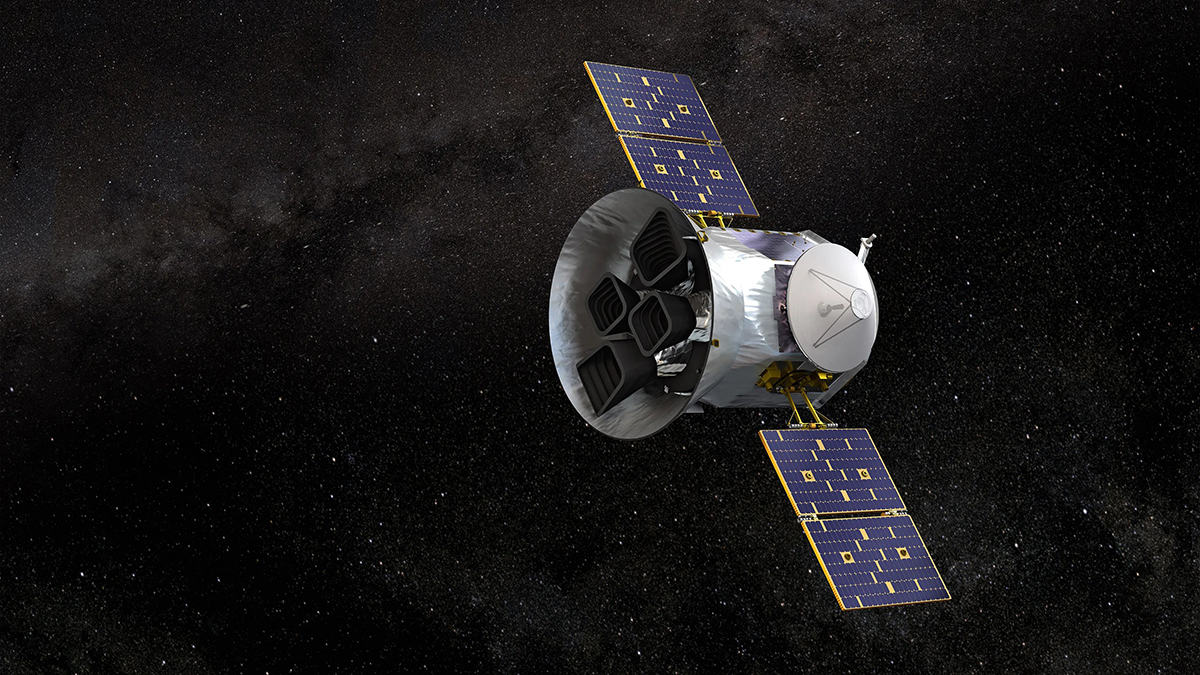
TESS launched in 2018 with a clear mission. It searches for exoplanets by measuring tiny dips in starlight during planetary transits. To achieve this, it records continuous, high-precision photometry over large regions of sky. That same capability also makes TESS valuable for studying moving objects.
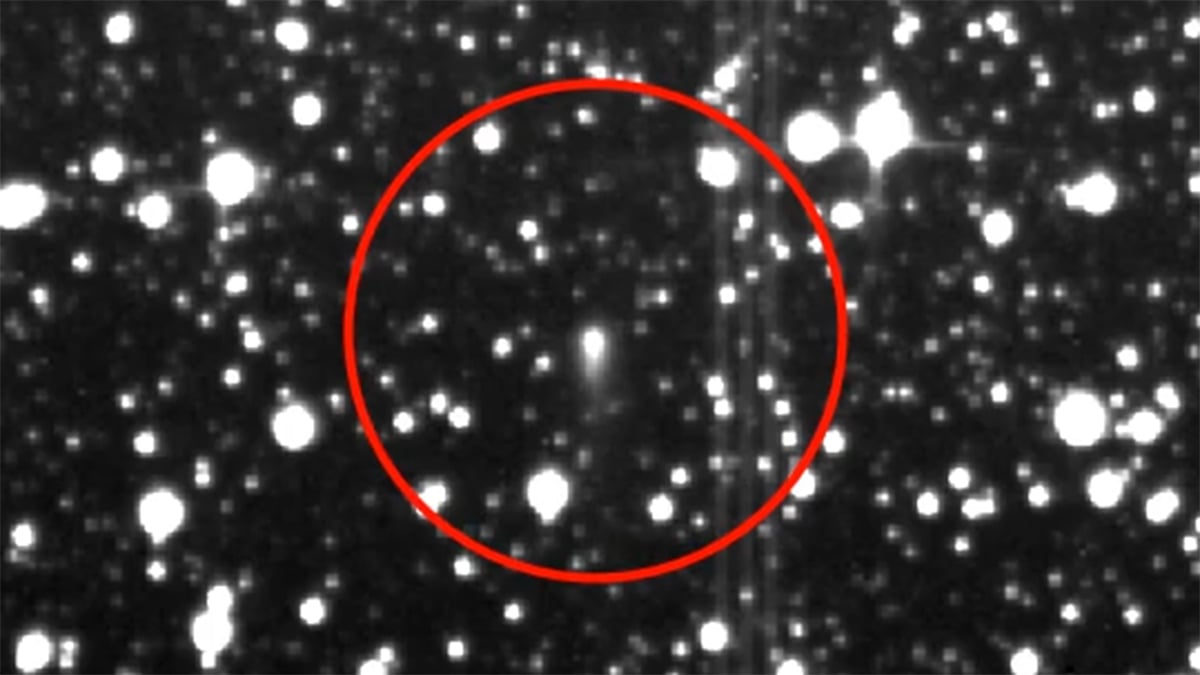
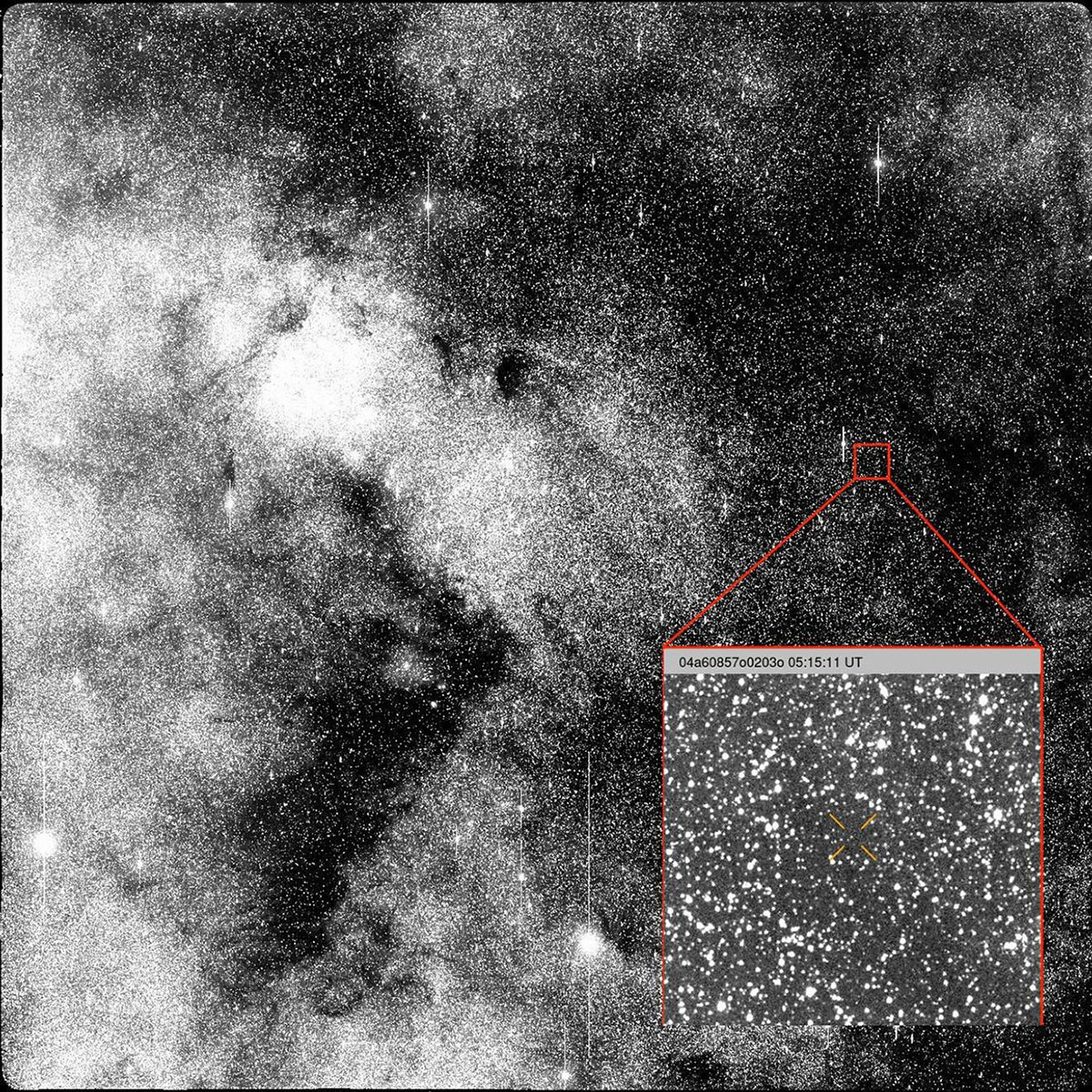
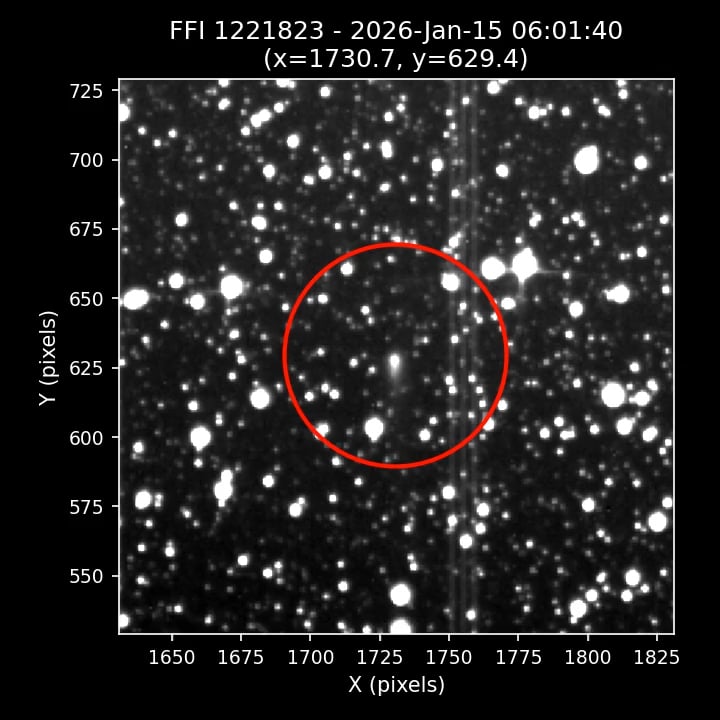
In January 2026, NASA scheduled a special observation window to follow 3I/ATLAS. From January 15 to January 22, TESS temporarily paused its standard exoplanet survey. Instead, it tracked the comet as it crossed the spacecraft’s wide field of view. By that time, 3I/ATLAS had already passed perihelion and was receding from the Sun. Its activity had begun to decline. However, subtle brightness variations still carried information about rotation and residual outgassing. TESS provided continuous coverage over several days, something ground-based observatories cannot achieve due to daylight and weather.
During this period, TESS measured the comet’s integrated brightness with high temporal resolution. These data allow scientists to construct detailed light curves. From those curves, researchers can infer rotation periods and detect changes in activity driven by uneven surface heating.
Interestingly, scientists also discovered that TESS had imaged 3I/ATLAS months earlier, before its official discovery. By revisiting archival frames and stacking the data, they recovered faint detections from May 2025. This extended the observational baseline and improved orbital modeling.
Although TESS briefly entered safe mode during the campaign due to a solar panel issue, the interruption proved minor. The mission resumed quickly. The resulting dataset was archived and released publicly, enabling researchers around the world to participate in analysis.
What the data reveal about an interstellar comet
Comets act as natural laboratories. As sunlight warms their surfaces, volatile ices sublimate. Escaping gas entrains dust. Jets form. These processes expose interior material and reveal physical structure. For 3I/ATLAS, brightness variations pointed to a rotating nucleus. Several observing teams reported periodic behavior consistent with a rotation period on the order of tens of hours. Jet features appeared to wobble as active regions rotated in and out of sunlight.
Spectroscopic measurements provided a chemical context. Carbon dioxide emerged as a dominant volatile, with measurable contributions from water and carbon monoxide. This composition contrasts with many solar system comets, where water often dominates near similar heliocentric distances. They suggest that planet-forming disks around other stars can produce icy bodies with distinct chemical signatures. In turn, this informs models of planetary system evolution across the galaxy.
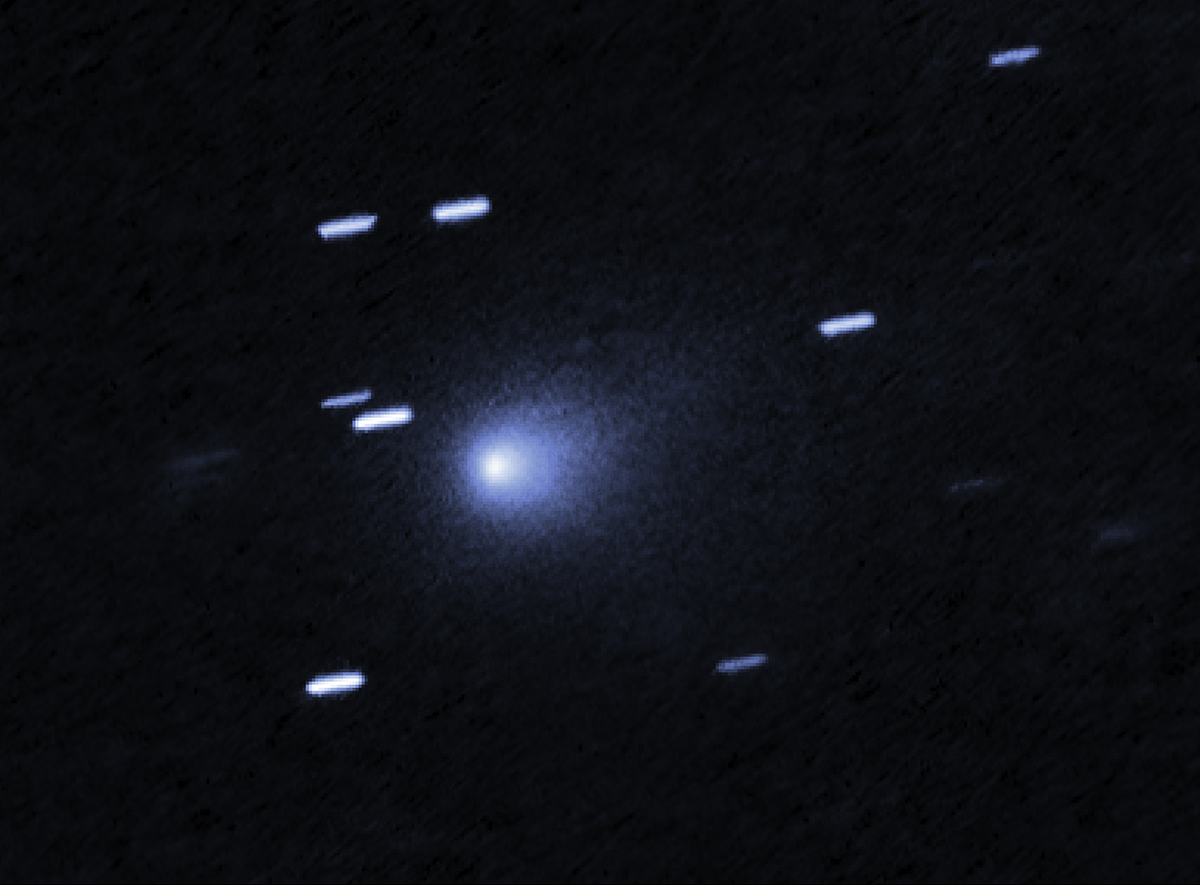
Meanwhile, imaging revealed changes in tail morphology as solar radiation pressure acted on released dust. Some observations even showed transient structures aligned toward the Sun, indicating complex interactions between gas flow and radiation forces.
TESS photometry added another layer. Its continuous coverage captured subtle fluctuations impossible to detect in fragmented ground-based datasets. These measurements help constrain the nucleus’s shape, spin state, and evolving activity levels as the comet faded.
The long goodbye: Watching 3I/ATLAS leave
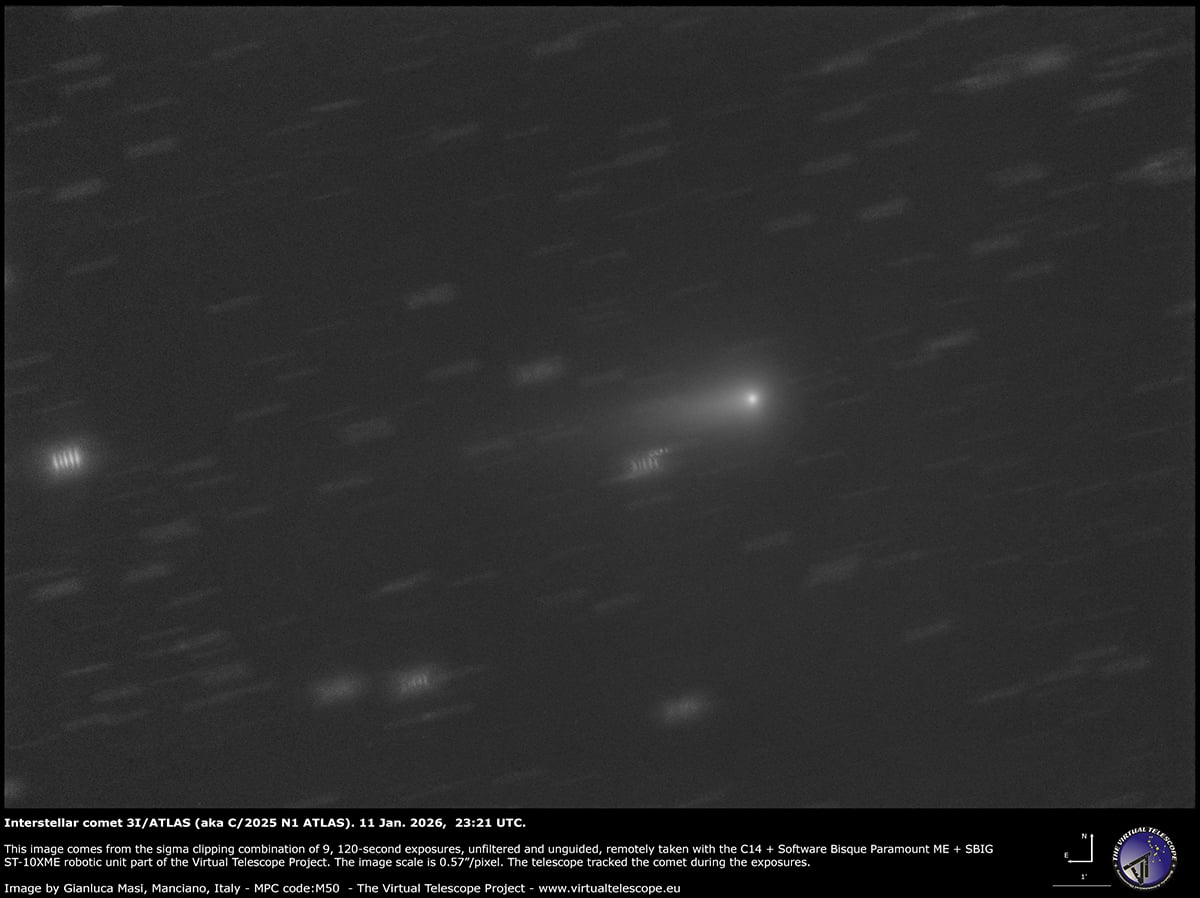
3I/ATLAS reached perihelion in late October 2025. After that point, it began its outward journey. In December, it made its closest approach to Earth, remaining safely distant. Even then, only large telescopes could detect it. As weeks passed, the comet faded. Observers gradually lost the ability to track it. By early 2026, most ground-based facilities reported only marginal detections. TESS’s January campaign, therefore, captured one of the last extended brightness records.
Its hyperbolic trajectory guarantees it will never return to the inner solar system. Over time, it will escape the Sun’s gravitational influence completely and continue its solitary path through interstellar space. For astronomers, analysis of the collected data will continue for years.
Interstellar objects provide direct samples of material formed around other stars. No spacecraft mission can yet retrieve such samples. Therefore, every passing visitor becomes a natural experiment. Unlike ʻOumuamua, it displayed clear cometary activity. Unlike 2I/Borisov, it benefited from broader multi-spacecraft coverage. The result is the most comprehensive dataset ever obtained for an interstellar comet.
Further reading
Right from the discovery of the interstellar comet 3I/ATLAS, DIYP has published several articles on its photographs and features. Here is the list of articles:
- A New Visitor from the Stars: Comet 3I/ATLAS
- Gemini North Photographs the Interstellar Comet 3I/ATLAS
- Hubble’s Sharpest Portrait of a Visitor from the Stars: Comet 3I/ATLAS
- JWST Reveals the Secrets of Interstellar Comet 3I/ATLAS in New Images
- SPHEREx Maps the Carbon Dioxide Breath of Interstellar Comet 3I/ATLAS
- Gemini South Photographs Anti-Solar Tail of 3I/ATLAS
- Interstellar Comet 3I/ATLAS: Gemini South Images Reveal a Growing Tail
- Interstellar Comet 3I/ATLAS through Many Eyes: All Images so Far
- A Faint Smudge from Mars: Did Perseverance Really Capture Interstellar Comet 3I/ATLAS?
- ESA’s Mars Orbiter Capture “Closest Yet” View of Interstellar Comet 3I/ATLAS
- Comet 3I/ATLAS Returns: Astronomer Photographs it after Perihelion
- Tianwen-1’s Surprise Close-Up: China’s Mars Orbiter Images Interstellar Comet 3I/ATLAS
- Interstellar Comet 3I/ATLAS Returns to View with a Growing Ion Tail
- NASA Shares Eight New Images of Interstellar Comet 3I/ATLAS
- Hubble Space Telescope Revisits Interstellar Comet 3I/ATLAS
- ESA’s JUICE captures a detailed image of Interstellar Comet 3I/ATLAS
- X-Ray Images of 3I/ATLAS: XRISM and XMM-Newton Captures Interstellar Comet
- Gemini North Reveals Green Glow in Interstellar Comet 3I/ATLAS
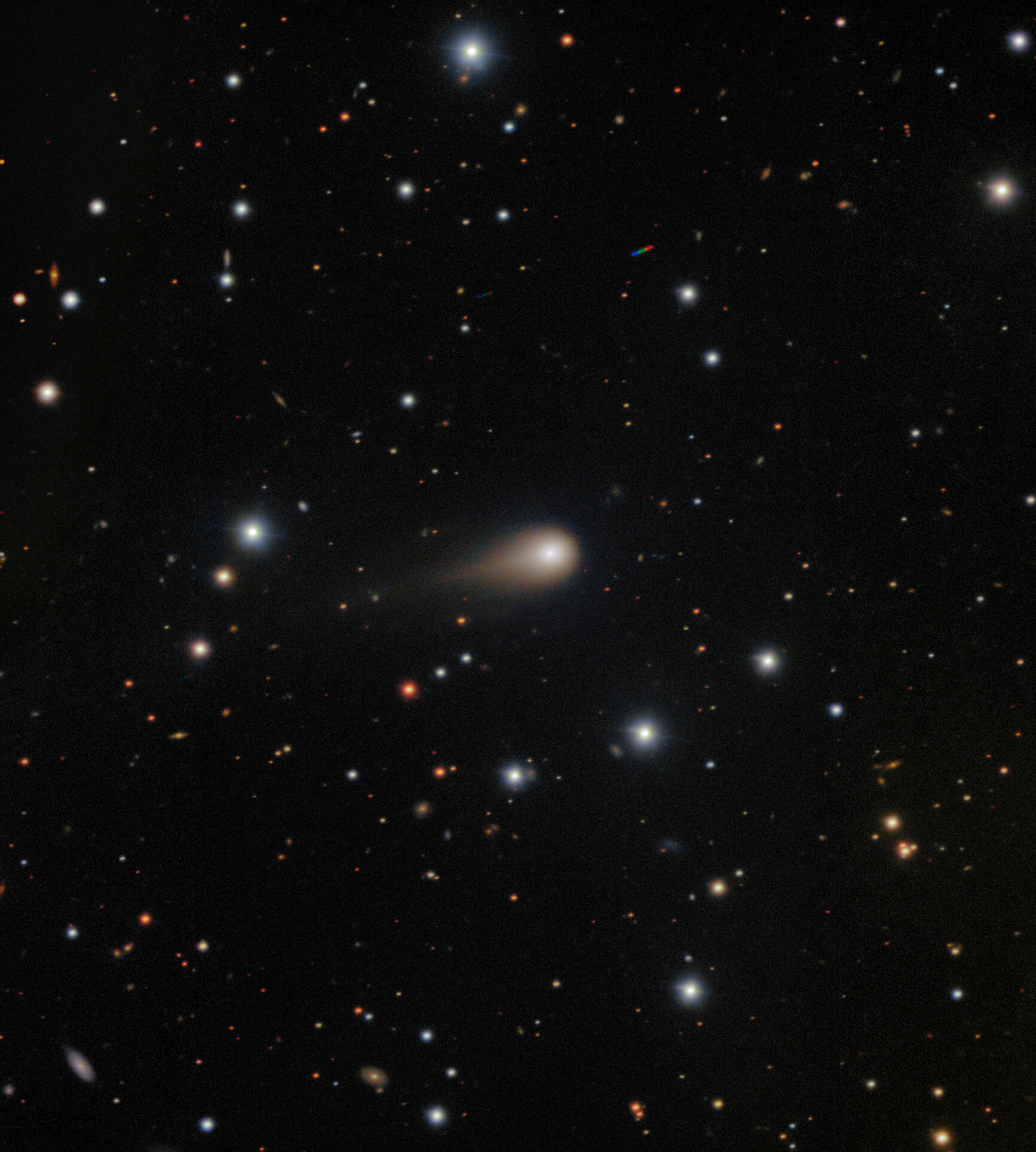
Clear skies!
See more from DIYPhotography.net on Google
Add DIYPhotography.net as a trusted source. This makes
our stories more likely to appear in your Google Search results.
 Add as a preferred source on Google

Soumyadeep Mukherjee
Soumyadeep Mukherjee is an award-winning astrophotographer from India. He has a doctorate degree in Linguistics. His work extends to the sub-genres of nightscape, deep sky, solar, lunar and optical phenomenon photography. He is also a photography educator and has conducted numerous workshops. His works have appeared in over 40 books & magazines including Astronomy, BBC Sky at Night, Sky & Telescope among others, and in various websites including National Geographic, NASA, Forbes. He was the first Indian to win “Astronomy Photographer of the Year” award in a major category.


Join the Discussion
DIYP Comment Policy
Be nice, be on-topic, no personal information or flames.