























Gemini North Photographs A Comet Breaking Apart After Perihelion
Feb 1, 2026
Soumyadeep Mukherjee
Soumyadeep Mukherjee is an award-winning astrophotographer from India. He has a doctorate degree in Linguistics. His work extends to the sub-genres of nightscape, deep sky, solar, lunar and optical phenomenon photography. He is also a photography educator and has conducted numerous workshops. His works have appeared in over 40 books & magazines including Astronomy, BBC Sky at Night, Sky & Telescope among others, and in various websites including National Geographic, NASA, Forbes. He was the first Indian to win “Astronomy Photographer of the Year” award in a major category.
Share:
Long-period comets provide a rare window into the earliest stages of solar system formation. These objects originate in the distant Oort Cloud and preserve primordial material that has remained largely unchanged for billions of years. These comets give astronomers a brief opportunity to study both their composition and structural integrity under solar heating. Comet C/2025 K1 (ATLAS) offered exactly such a case. Discovered in May 2025 by the Asteroid Terrestrial-impact Last Alert System, this comet followed a steep inbound trajectory toward the Sun. Orbital analysis soon confirmed its origin in the Oort Cloud and classified it as non-periodic.
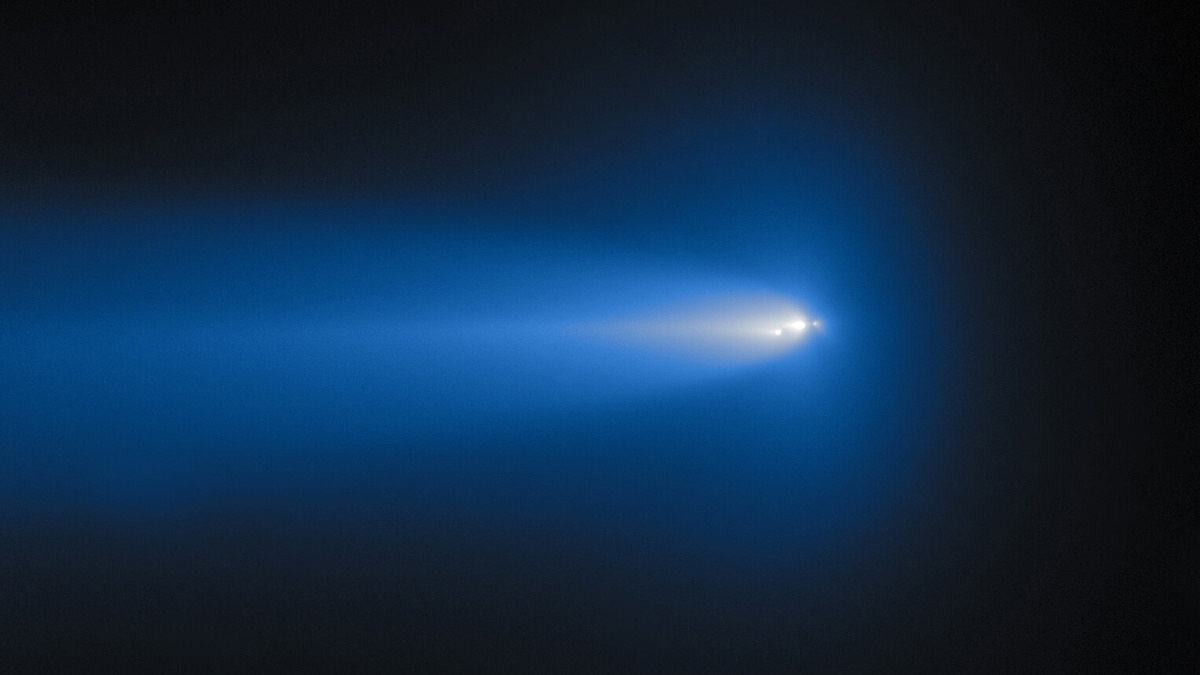
As it approached perihelion in October 2025, expectations grew that the nucleus would not survive intact. Although the comet initially emerged from its closest approach to the Sun, subsequent observations revealed progressive fragmentation. High-resolution imaging from Gemini North later captured multiple nucleus components drifting apart, marking the comet’s physical disintegration. What follows traces that evolution, from discovery through perihelion survival to final fragmentation, and explains what this event reveals about comet structure and Solar System history.
Discovery of Comet C/2025 K1
ATLAS first detected Comet C/2025 K1 on 24 May 2025. At discovery, the object appeared faint and compact. Early follow-up imaging revealed a small coma, confirming its cometary nature. Astronomers quickly began orbit determination. The results showed a highly elongated trajectory typical of long-period comets. The orbital solution indicated an origin in the Oort Cloud, placing C/2025 K1 among a class of objects that may take millions of years to complete a single orbit around the Sun.
Because this was likely its first close encounter with the inner Solar System, researchers expected a fragile nucleus. Oort Cloud comets often retain loosely bound internal structures. They formed in cold, distant regions and avoided repeated solar heating cycles that strengthen short-period comets.
At the same time, early spectroscopic measurements showed that C/2025 K1 was depleted in certain carbon-chain molecules. This unusual chemistry suggested a distinct formation environment and hinted at atypical activity as the comet warmed.
Approach to perihelion and early activity
As C/2025 K1 moved inward, solar radiation began driving sublimation. Surface ice converted directly to gas. That gas entrained dust and expanded the coma. Observers tracked these changes across multiple observatories. The comet reached perihelion on 8 October 2025 at a distance of about 0.334 astronomical units from the Sun. At this range, solar heating becomes intense. Internal volatile pockets expand rapidly. Mechanical stress builds inside the nucleus.
Historically, many comets fail under such conditions. Yet C/2025 K1 briefly defied expectations. It survived perihelion and reappeared on the outbound leg of its orbit. Astronomers recovered it again by mid-October. This survival raised cautious optimism that the nucleus remained intact.
However, brightness measurements told a different story. Despite its close approach to the sun, the comet never became prominent. By December, it measured near magnitude 14, well below naked-eye visibility. This muted response suggested either a small nucleus, inefficient outgassing, or both. Meanwhile, subtle changes in coma morphology hinted that structural damage had already begun.
Onset of fragmentation
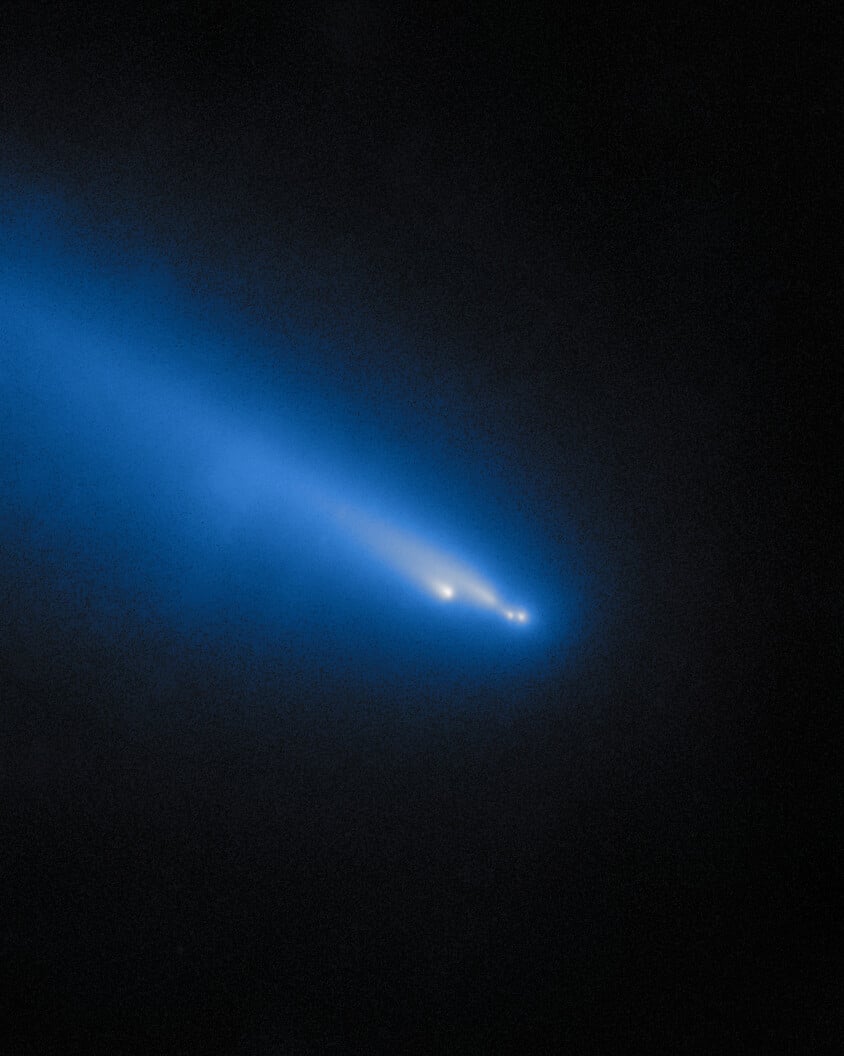
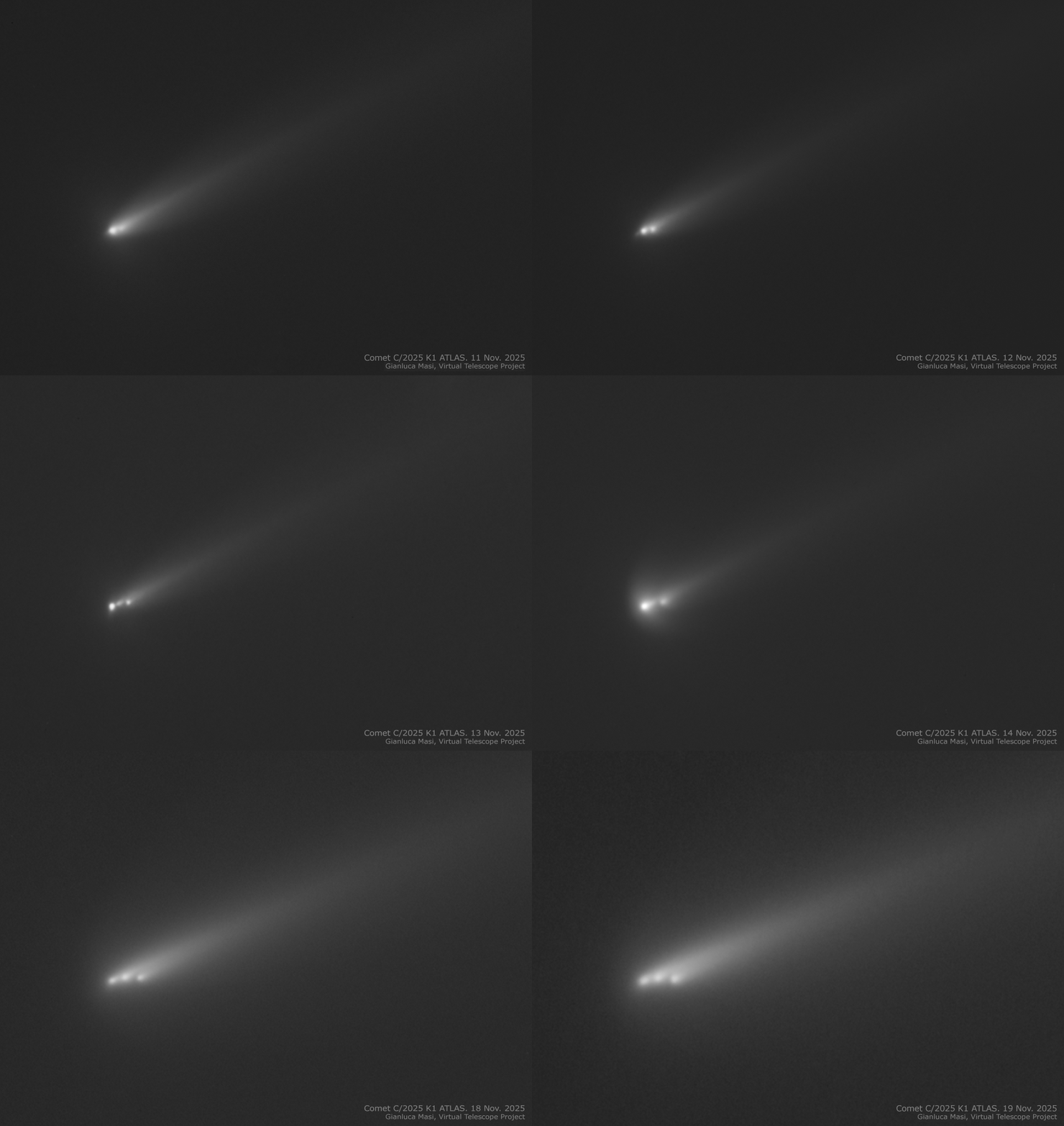
By early November 2025, observers started reporting anomalies. The coma appeared asymmetric. Photometric profiles changed from night to night. Soon after, imaging revealed distinct condensations within the coma. Around 10 November, astronomers confirmed the first clear fragmentation event. At least two components are separated from the primary nucleus. Within days, additional pieces became visible.
Instead of a single coherent core, C/2025 K1 now displayed multiple brightness peaks. Each fragment carried its own envelope of gas and dust. Their relative positions shifted over time, confirming independent motion. Such behavior indicates internal failure rather than surface shedding. The nucleus had begun to break apart from within.
Gemini North observations and direct imaging of breakup
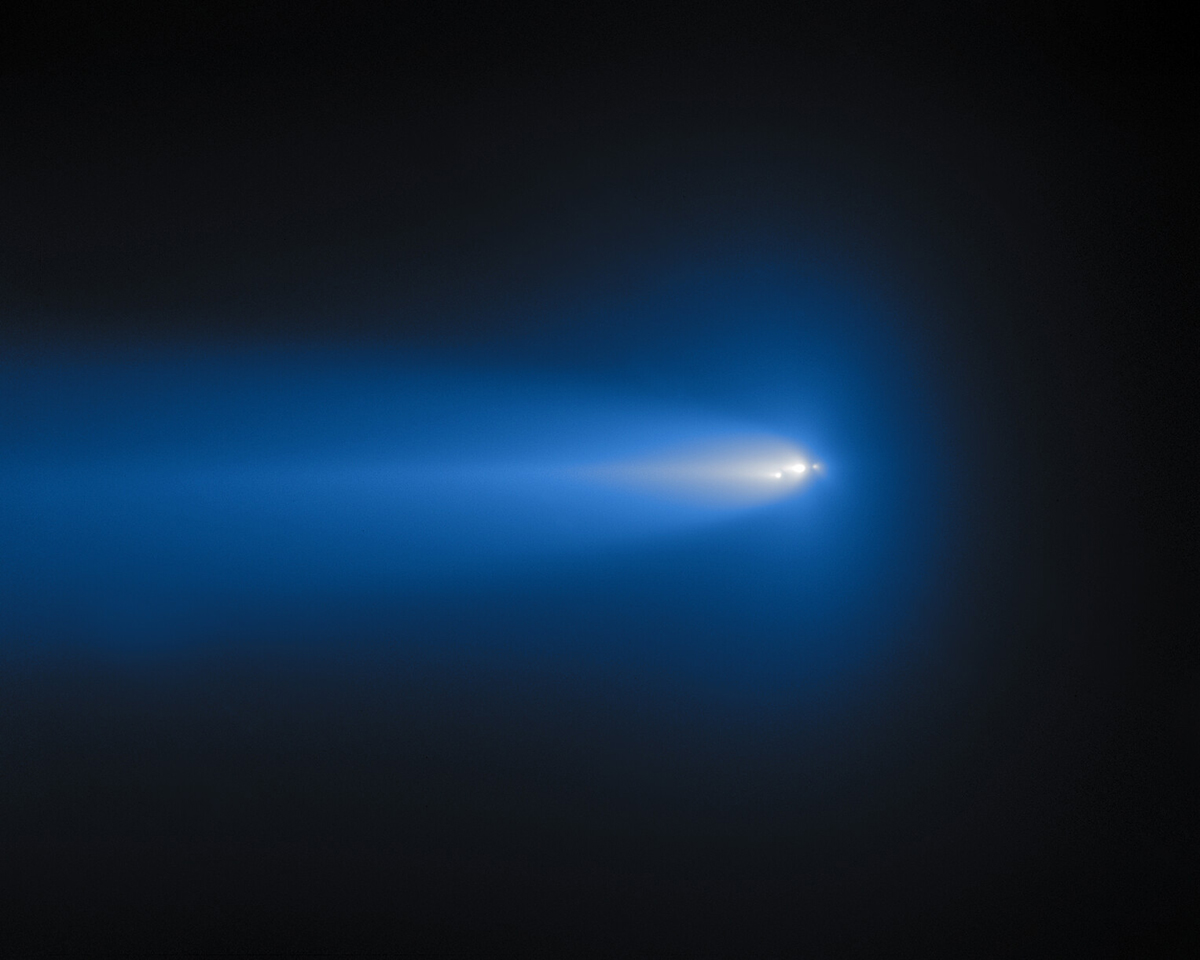
The most revealing data came from the Gemini North telescope in Hawaiʻi. Operating with an 8.1-meter primary mirror, Gemini North provides the resolution needed to separate closely spaced comet fragments.
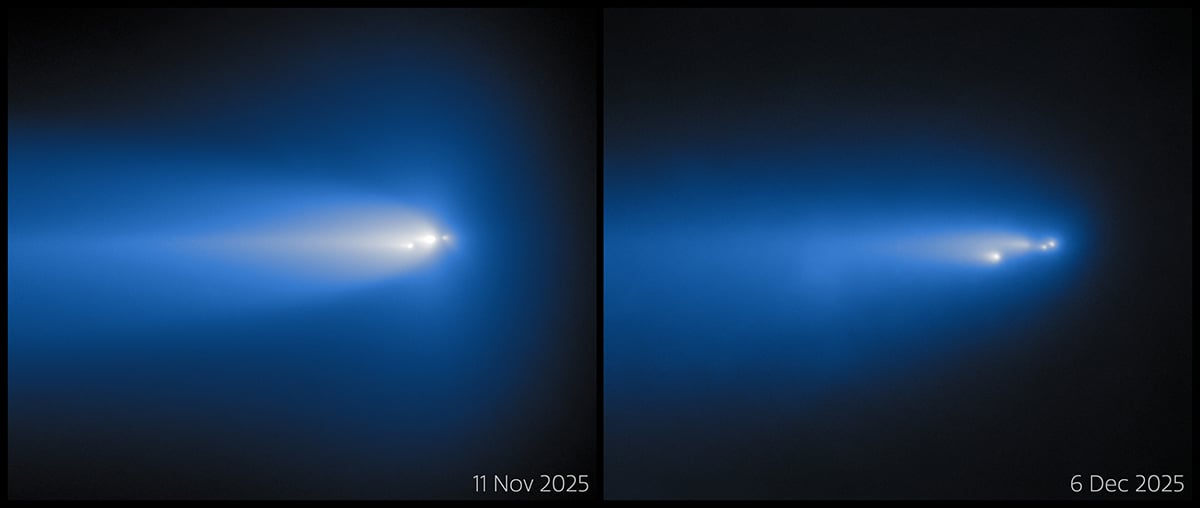
Images obtained on 11 November and again on 6 December 2025 captured several distinct nucleus components. Rather than a simple split, the comet showed a cluster of fragments arranged along its trajectory. Each fragment displayed its own coma. Some brightened temporarily while others faded. Their spacing increased over time, demonstrating ongoing dispersal.
Most comet breakups either occur near the Sun, where observation proves difficult, or appear only after debris has spread. In contrast, C/2025 K1 fragmented while remaining accessible to ground-based telescopes. Gemini North documented the process with clarity. The data strongly suggested that C/2025 K1 possessed a weak, porous structure. Instead of behaving like a monolithic body, it responded to thermal stress as a loosely bound aggregate.

Implications for cometary structure and evolution
Comet C/2025 K1 reinforces a growing consensus: many long-period comets resemble rubble piles more than solid ice blocks. In such bodies, ice and dust form a fragile framework held together by weak gravitational and mechanical forces. When solar heating penetrates the interior, trapped gases expand. Pressure fractures the structure. Once cracks form, breakup accelerates.
The multiple fragments observed in C/2025 K1 support this model. Moreover, the comet’s early carbon depletion may have influenced its behavior. Reduced volatile content can alter how heat propagates through the nucleus. This may explain why the comet failed after perihelion rather than during closest approach.
Fragmentation also exposes pristine interior material. Each piece releases fresh gas and dust, allowing spectroscopic analysis of previously shielded regions. In this way, breakup events provide insight into compositional layering inside cometary nuclei. From a broader perspective, these observations help refine models of comet survival rates. Many Oort Cloud comets likely perish during their first solar passage. C/2025 K1 appears to follow that pattern. Its journey probably began millions of years ago. Its end unfolded within weeks.
Clear skies!
See more from DIYPhotography.net on Google
Add DIYPhotography.net as a trusted source. This makes
our stories more likely to appear in your Google Search results.
 Add as a preferred source on Google

Soumyadeep Mukherjee
Soumyadeep Mukherjee is an award-winning astrophotographer from India. He has a doctorate degree in Linguistics. His work extends to the sub-genres of nightscape, deep sky, solar, lunar and optical phenomenon photography. He is also a photography educator and has conducted numerous workshops. His works have appeared in over 40 books & magazines including Astronomy, BBC Sky at Night, Sky & Telescope among others, and in various websites including National Geographic, NASA, Forbes. He was the first Indian to win “Astronomy Photographer of the Year” award in a major category.



Join the Discussion
DIYP Comment Policy
Be nice, be on-topic, no personal information or flames.