





















Art Deco Cameras: How 1920s and 1930s Design Turned Cameras Into Style Icons
Feb 1, 2026
Dunja Đuđić Kalinin
Dunja Djudjic is a multi-talented artist based in Novi Sad, Serbia. With 15 years of experience as a photographer, she specializes in capturing the beauty of nature, travel, concerts, and fine art. In addition to her photography, Dunja also expresses her creativity through writing, embroidery, and jewelry making.
Share:
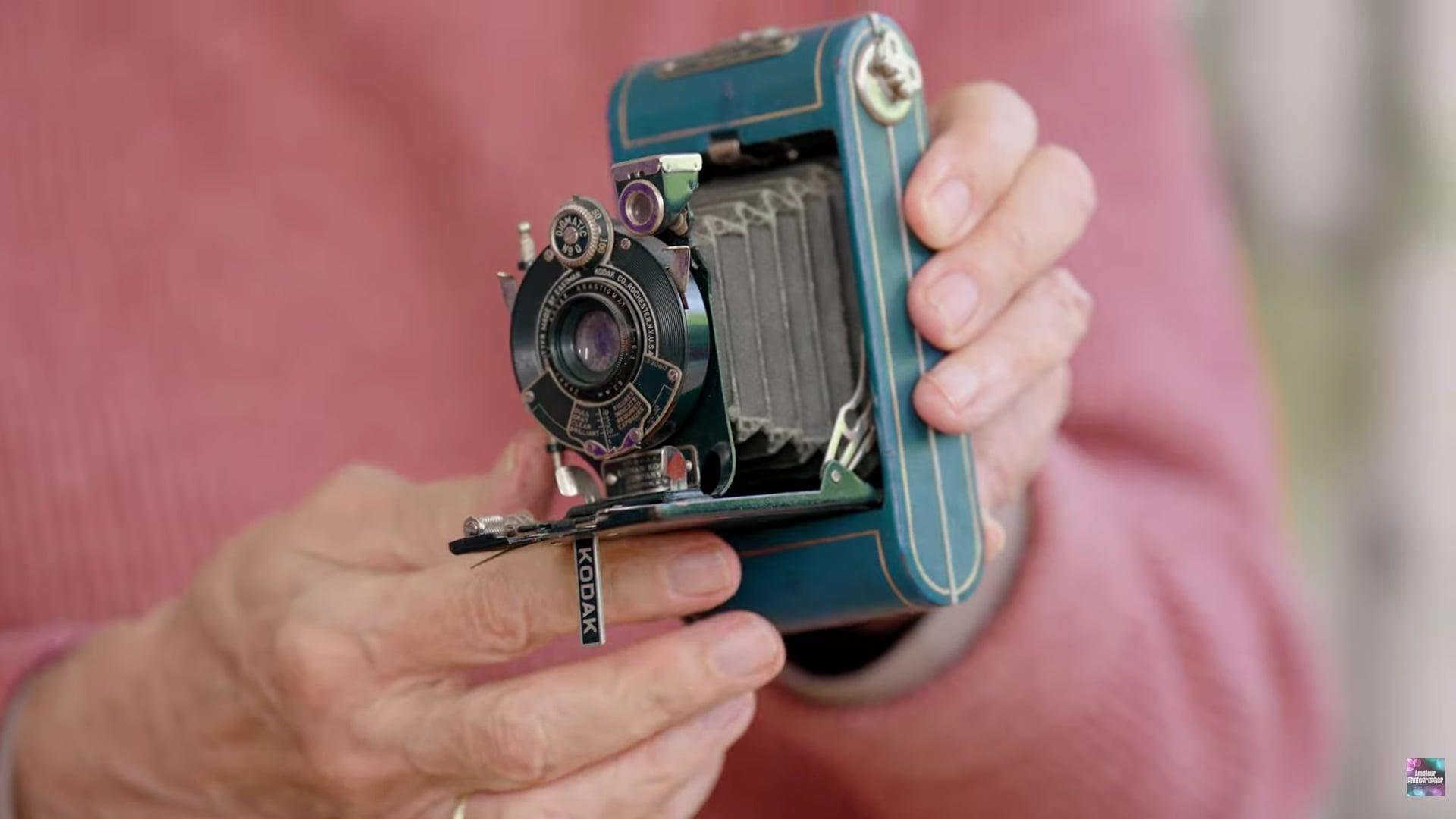
Most modern cameras today all feel pretty similar. Black boxes, subtle curves, minimal decoration, and a strong focus on function over form. They’re undoubtedly incredibly capable tools, but visually, they rarely stand out. But it wasn’t always this way. In this video, Nigel Atherton and John Wade of The Amateur Photographer explore how the art deco movement shaped camera design in the 1920s and 1930s. Drawing inspiration from architecture, jewelry, and interior design, Art Deco brought bold geometry, rich colors, and decorative flair to cameras at a time when photography was becoming more accessible to everyday people.
John explains that Kodak played a huge role in pushing this shift. In the mid-1920s, the company hired industrial designer Walter Dorwin Teague and asked him to “jazz up” their cameras. One of his most famous redesigns was the Vest Pocket Kodak.
Originally a very plain folding camera, it was transformed into something far more stylish, featuring sharp Art Deco patterns, decorative faceplates, and five striking color options. Rather than calling them red or blue, Kodak gave each color a bird-inspired name. Interestingly enough, Zeiss also names their lenses after bird families.
One of the most charming features on these cameras is Kodak’s autographic system. John demonstrates how photographers could use a small stylus and a hidden door on the back of the camera to write notes directly onto the film backing paper. Once exposed to light, those notes appeared on the negative itself. It’s an early form of captioning, or metadata if you will.
[Related reading: Make Jigsaw Puzzles Inside a Camera]
Not all Art Deco cameras were high-end. John shows a version of the iconic Kodak Brownie, the Beau Brownie. The mechanics remained extremely simple, but the styling became much more expressive. Decorative faceplates, color-matched bodies, and geometric patterns turned basic snapshot cameras into desirable objects. As John points out, many of these weren’t “good” cameras in a technical sense. But hey, at least they looked fantastic.
Things get more serious with the Kodak Bantam Special. This is where Art Deco design meets genuine photographic sophistication. Compact, beautifully finished, and packed with proper controls, the Bantam Special stands out as one of the era’s most successful blends of style and performance. Even small details, like how the camera stands upright, feel carefully thought through.
One of the most striking cameras on the table is the early Rolleicord from Rollei. With its fully patterned front panel, it looks like the ultimate art deco statement piece.
The video finishes with a wonderfully unexpected twist. The guys show us a 1950s camera with a lady’s makeup compact hidden inside. In case you want to touch up a little after taking photos and pressing the camera against your face. :) It’s quirky and extravagant like nothing I’ve seen before.
I enjoyed watching the video and learning about the old cameras that are entirely new to me. Seeing these cameras up close makes the art deco era feel wonderfully alive, and it’s well worth watching the full video to check them out.
[Art Deco cameras of the 1920s and 30s via Amateur Photographer]
See more from DIYPhotography.net on Google
Add DIYPhotography.net as a trusted source. This makes
our stories more likely to appear in your Google Search results.
 Add as a preferred source on Google

Dunja Đuđić Kalinin
Dunja Djudjic is a multi-talented artist based in Novi Sad, Serbia. With 15 years of experience as a photographer, she specializes in capturing the beauty of nature, travel, concerts, and fine art. In addition to her photography, Dunja also expresses her creativity through writing, embroidery, and jewelry making.



Join the Discussion
DIYP Comment Policy
Be nice, be on-topic, no personal information or flames.