

















Make Jigsaw Puzzles Inside a Camera
Dec 2, 2025
David Prochnow
Our resident “how-to” project editor, David Prochnow, lives on the Gulf Coast of the United States in Ocean Springs, Mississippi. He brings his expertise at making our photography projects accessible to everyone, from a lengthy stint acting as the Contributing How-To Editor with Popular Science magazine. While you don’t have to actually build each of his projects, reading about these adventures will contribute to your continued overall appreciation of do-it-yourself photography. A collection of David’s best Popular Science projects can be found in the book, “The Big Book of Hacks,” Edited by Doug Cantor.
Share:

If you think that life is like a jigsaw puzzle that must be pieced together to form a picture of your mortal soul, then his project is perfect for you. Rather than damning you to an eternal purgatory, this jigsaw puzzle is a novelty creation that generates four interlocking pieces from your final prints.
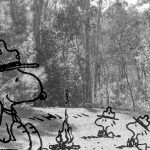
This innovative in-camera project derives its inspiration from a previous DIYP article that added comic character frames to film negatives. Rather than inserting Snoopy and his friend Woodstock along the edge of a negative, this project warps an entire negative into a fully-fledged jigsaw puzzle piece. Let’s get started.
Don’t Puzzle the Details
While this project could be performed with a 35mm camera, the jigsaw puzzle piece shape would be very small and difficult to securely insert into the camera’s light chamber. Therefore, a medium format is the preferred camera for this project. Oh, and if you’re shopping for a suitable camera candidate, then look no further than the sophisticated Debonair.
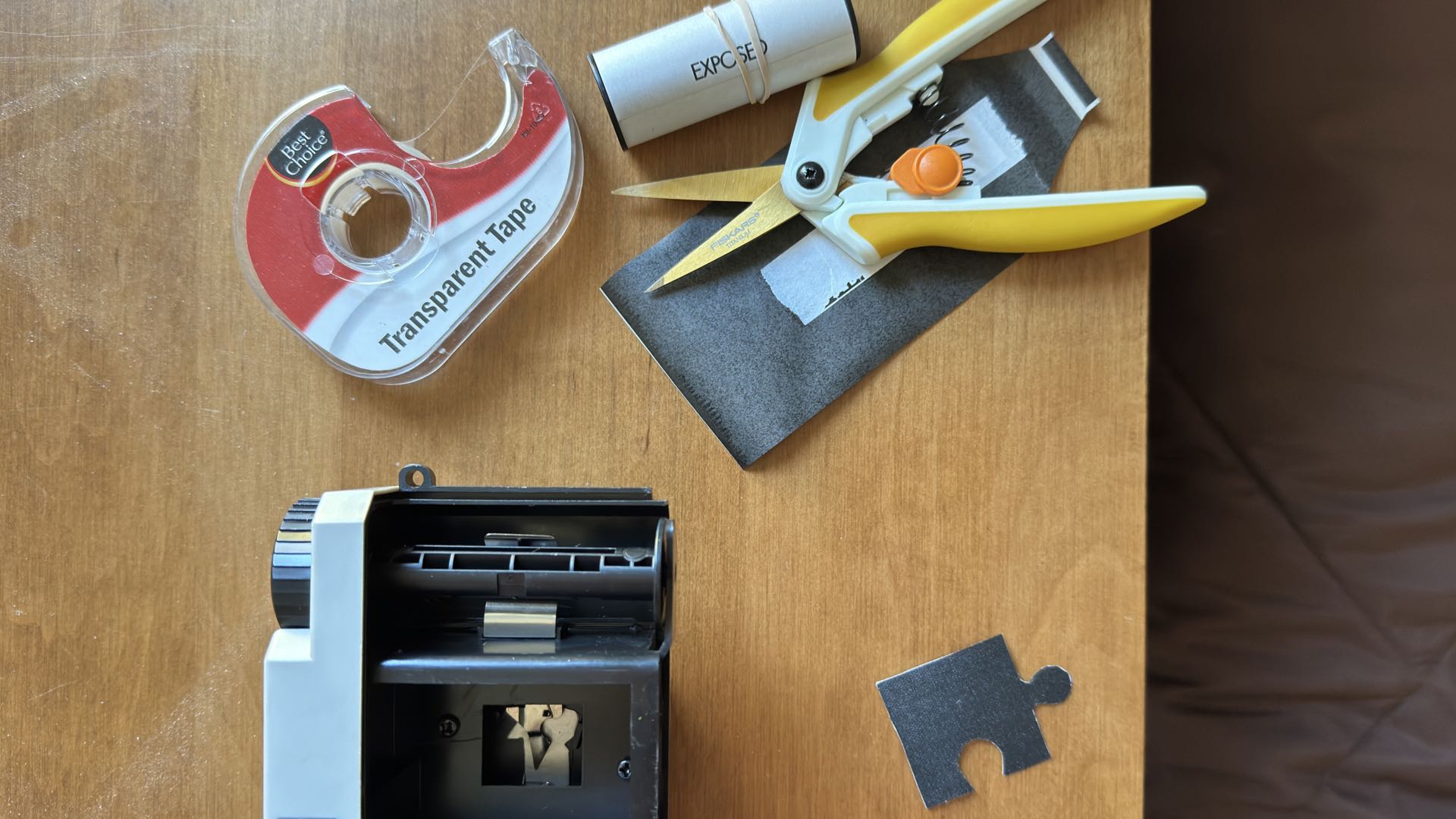
In order to keep the jigsaw puzzle as simple and complete as possible, a four piece form factor is used. Specifically, one “universal” piece outline is embedded inside the light chamber as a mask and the camera is rotated four times to make the suitable pieces on four separate negatives. Confused? Don’t be, it’s all extremely simple to perform.
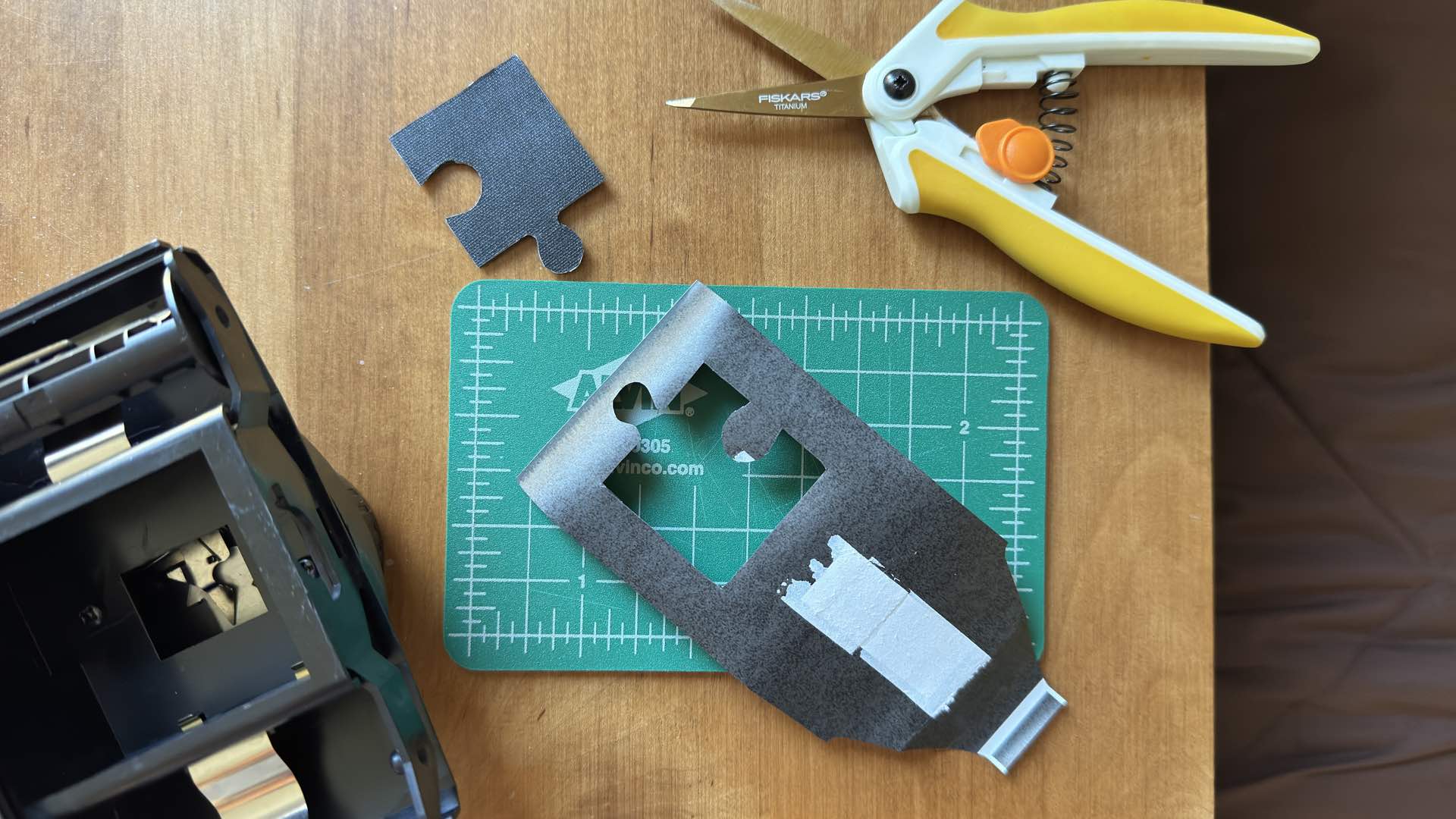
First of all, you’ll need to create a puzzle piece that can be interlocked with all of its adjacent neighbors. This shape is ideal for use as a template:
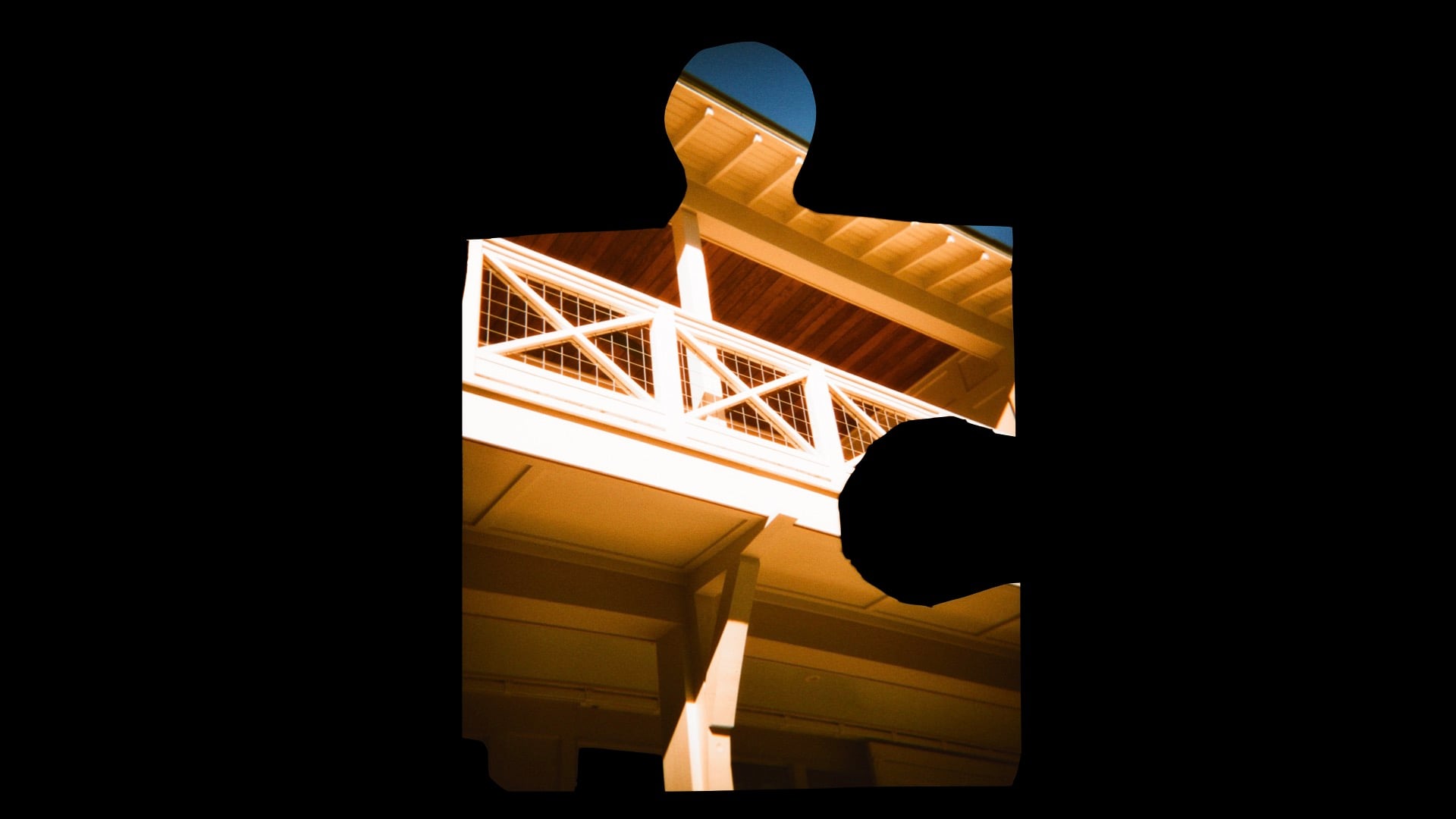
Looking at this shape, the previously described rotation/exposure exercise should now become clear. Yes, you could configure four different cameras with the jigsaw puzzle piece masks rotated in four different orientations, but that’s both costly and cumbersome.
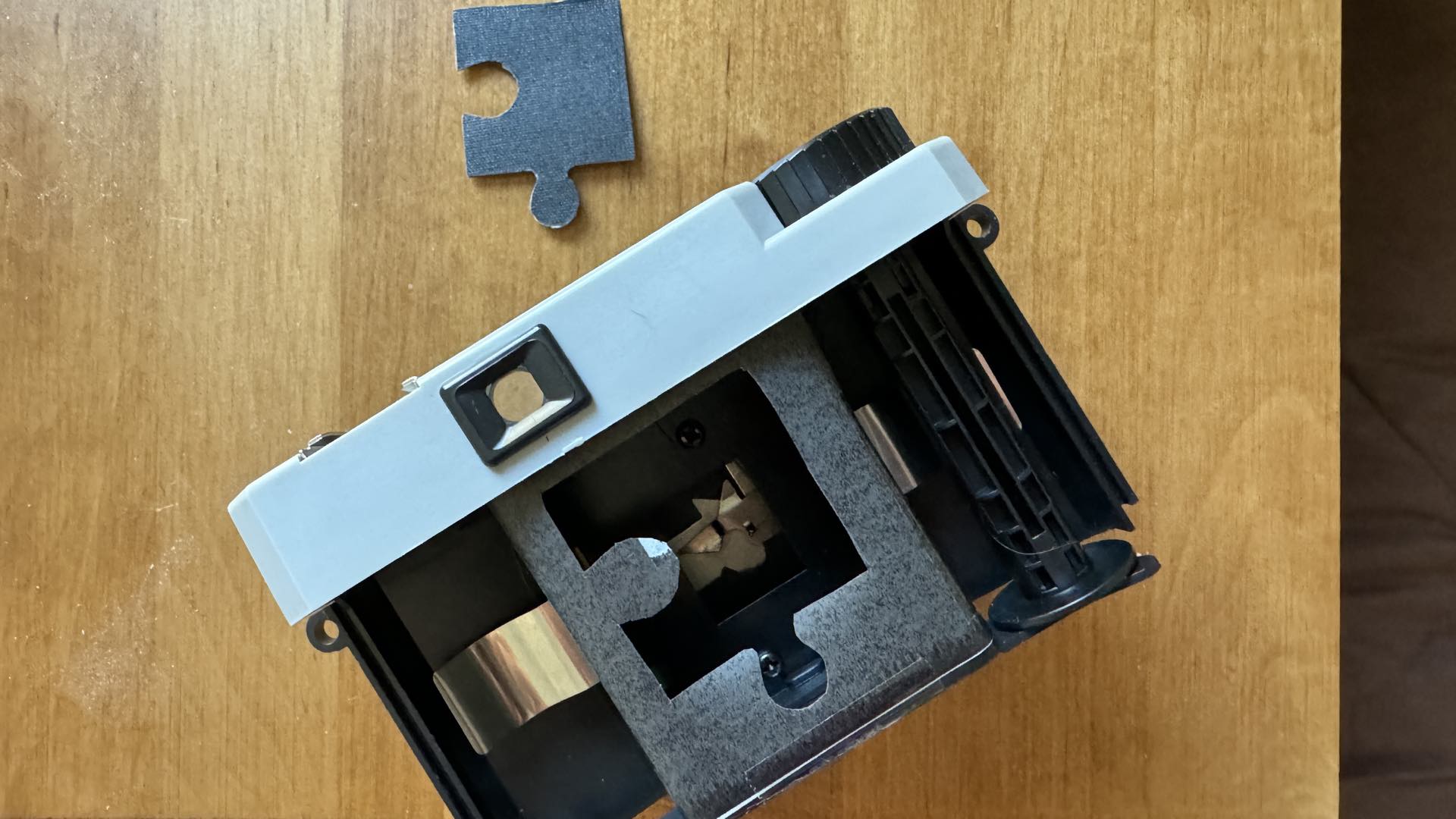
Basically, you’ll examine your subject and mentally divide the scene into four frames. Each frame will eventually become one puzzle piece. Beginning in the lower right corner take the first exposure with the camera held in a horizontal manner. Now, advance the film, move your viewpoint to the lower left and rotate the camera 90-degrees either clockwise or counterclockwise, depending upon the orientation of the template mask installed inside the camera. This is your second exposure. Change your view into the upper left and rotate the camera upside-down for the third exposure. Finally, the fourth, and last, exposure is made in the upper right corner with the camera rotated 90-degrees clockwise or counterclockwise.
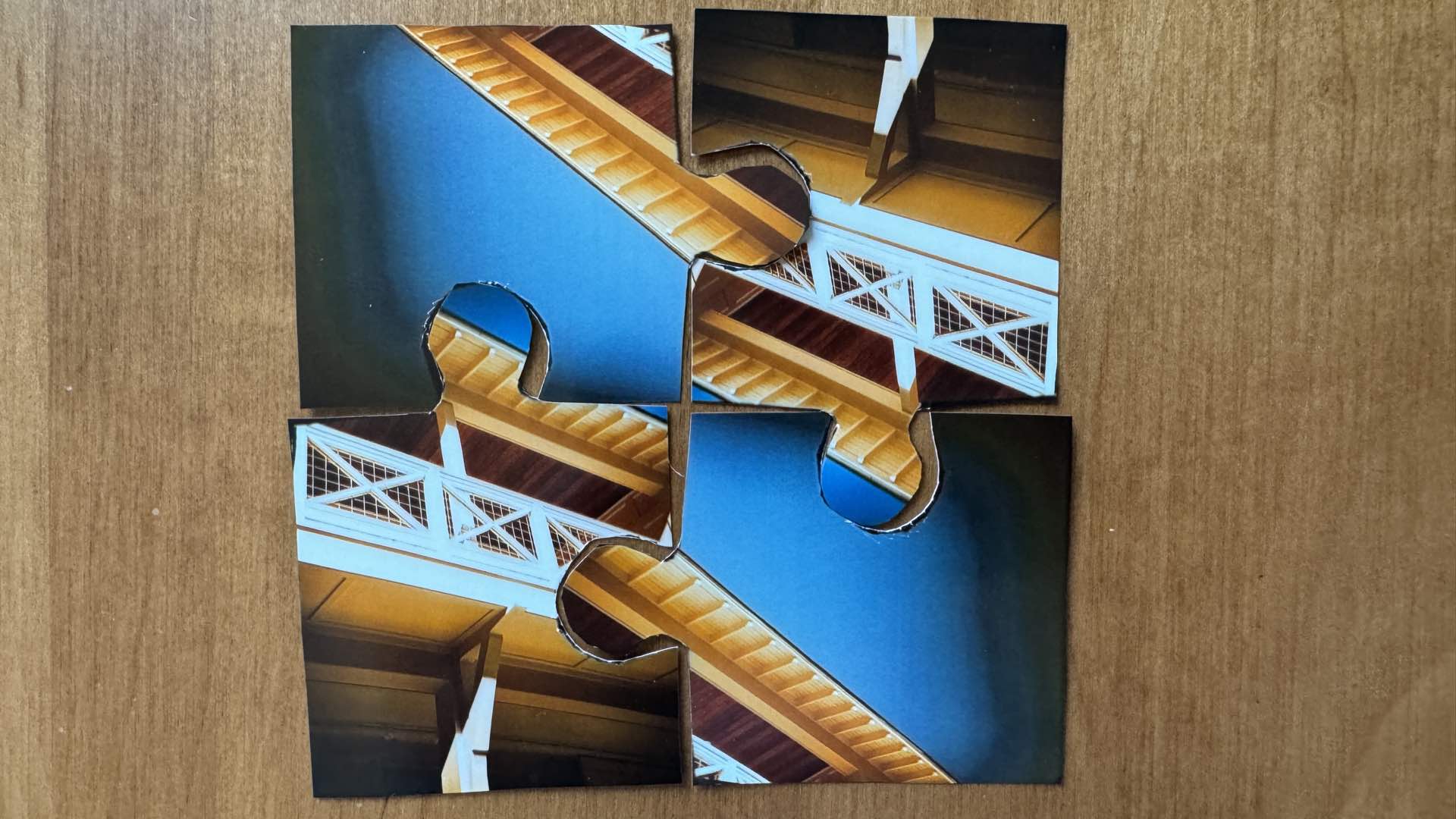
By fixing the puzzle piece mask in one direction and rotating the camera during each exposure, a final result, similar to the above-mentioned four camera scenario, can be achieved. Just remember these three pointers when inserting your mask:
1. Make sure your mask is big enough to cover the entire negative frame inside the light chamber. Stray exposure leaks could ruin the jigsaw puzzle piece effect.
2. Center your mask inside the negative frame. This will help ease the assembly of the final jigsaw puzzle.
3. Finally, and this is very important…make sure that the mask is securely taped down along every edge inside the light chamber. If the advancing film slides over the mask and catches on a raised edge, the result could spell disaster for the film, the camera, and your budding jigsaw puzzle making career.
And that’s it. You are now a puzzle master or, maybe, a puzzled master. Nonetheless, rendering recognizable scenes as four-piece jigsaw puzzles is a creative gift that can be easily slipped into a greeting card for any occasion.
Enjoy.
See more from DIYPhotography.net on Google
Add DIYPhotography.net as a trusted source. This makes
our stories more likely to appear in your Google Search results.
 Add as a preferred source on Google

David Prochnow
Our resident “how-to” project editor, David Prochnow, lives on the Gulf Coast of the United States in Ocean Springs, Mississippi. He brings his expertise at making our photography projects accessible to everyone, from a lengthy stint acting as the Contributing How-To Editor with Popular Science magazine. While you don’t have to actually build each of his projects, reading about these adventures will contribute to your continued overall appreciation of do-it-yourself photography. A collection of David’s best Popular Science projects can be found in the book, “The Big Book of Hacks,” Edited by Doug Cantor.



Join the Discussion
DIYP Comment Policy
Be nice, be on-topic, no personal information or flames.