



























Never-Before-Seen Images of Hamburg’s Jewish Deportations Uncovered
Dec 2, 2025
Alysa Gavilan
Alysa Gavilan has spent years exploring photography through photojournalism and street scenes. She enjoys working with both film and mirrorless cameras, and her fascination with the craft has grown over the decades. Inspired by Vivian Maier, she is drawn to capturing everyday moments that often go unnoticed.
Share:
The Holocaust remains one of the darkest chapters in human history, yet even today new pieces of evidence still come to light and reshape what you know about how these crimes unfolded. The newly identified photographs of Jewish deportations from Hamburg offer a rare view into a moment that had long been documented only through testimony and written accounts.
For the first time, historians have located visual proof of the Nazi deportations from the Hanseatic city in the fall of 1941. These images overturn decades of misinterpretation and place you directly in front of a scene where terror, humiliation, and forced displacement unfolded in public view.
On October 25, 1941, more than one thousand Jewish residents of Hamburg were taken from their homes and sent to the Litzmannstadt Ghetto. Until now, no photographs of this specific deportation were known to exist.
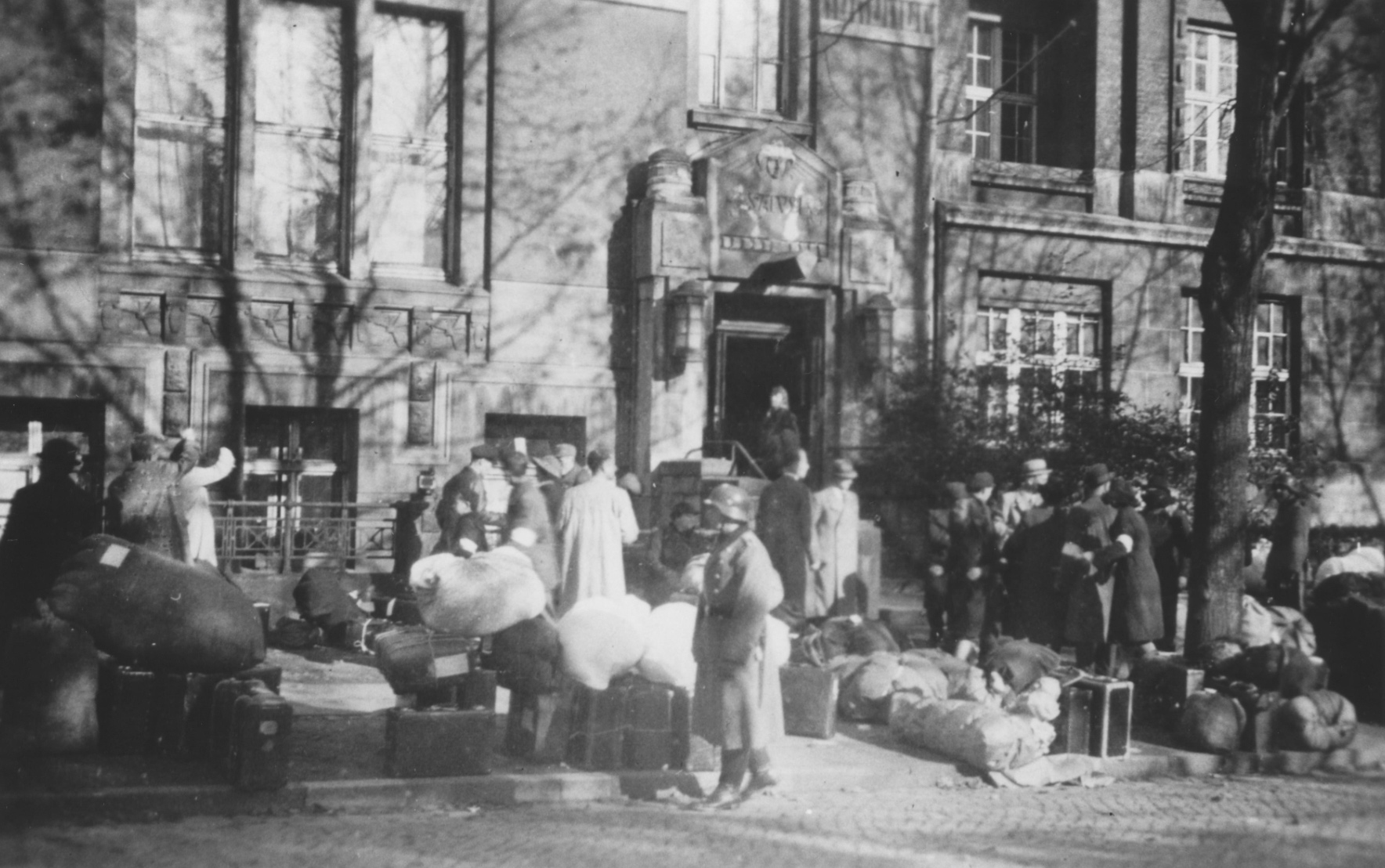
Researchers from Freie Universität Berlin and the Hamburg Memorials and Learning Centers Foundation have changed that by uncovering three images that confirm the exact process used by Nazi authorities.
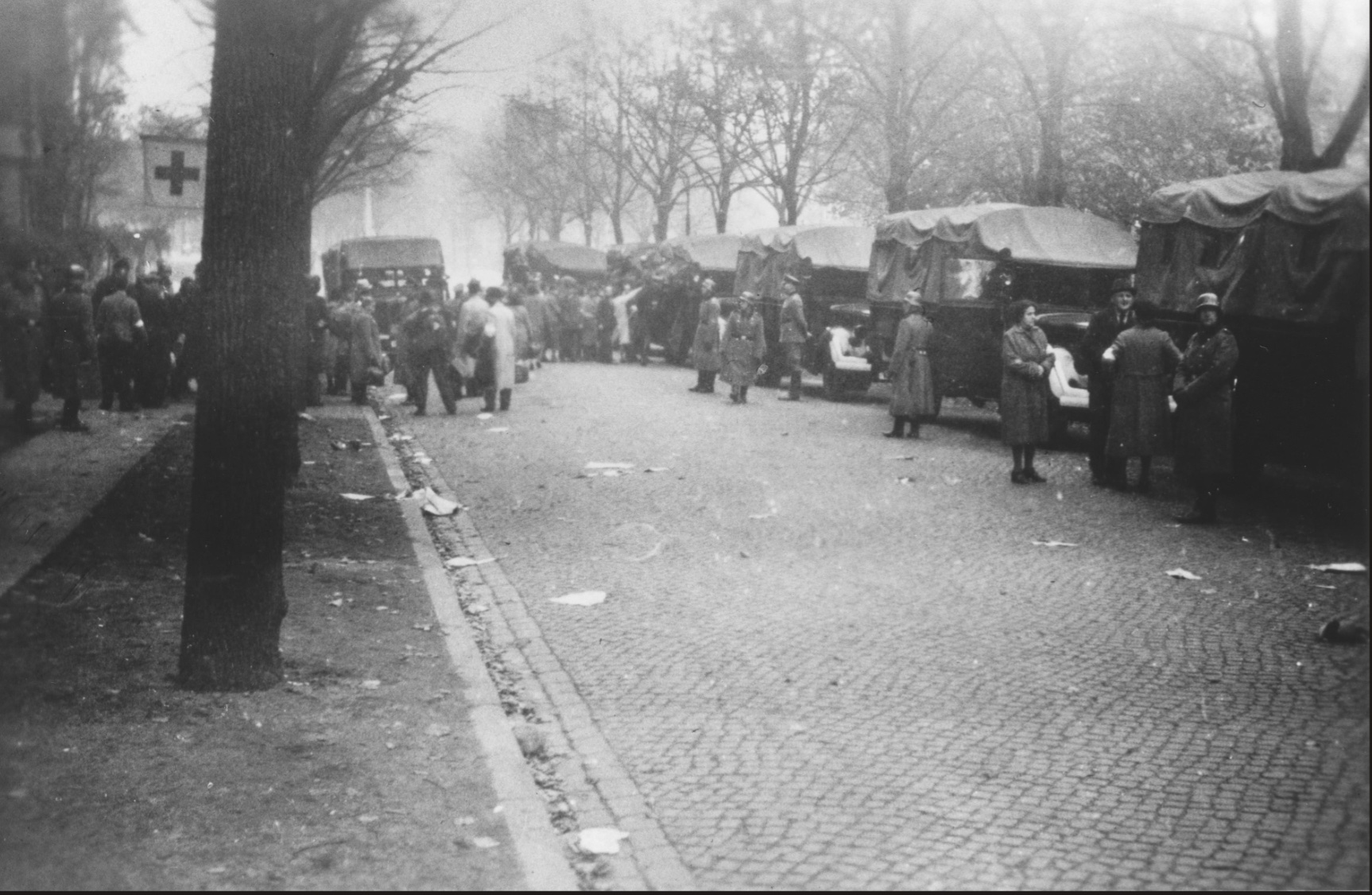
These photos reveal the arrival of persecuted families at the assembly point, their handling by police forces, and their transport in troop trucks to Hannoverscher Bahnhof, the central departure point for deportations during the Nazi era.
Discovering the Lost Photos
The discovery came through careful collaboration between the Documentation Center denk.mal Hannoverscher Bahnhof and the project “LastSeen. Images of Nazi Deportations” based at the Selma Stern Center for Jewish Studies Berlin Brandenburg.
The photographs were found inside a personal album belonging to Bernhardt Colberg, a member of Reserve Police Battalion 101. The album is preserved today at the United States Holocaust Memorial Museum in Washington, D.C.
For many years the images had been labeled as scenes of civilians being evacuated after Allied air raids. The new analysis has fully overturned that assumption through a detailed review of uniforms, vehicles, and historical timelines.
Photos of Jewish Deportation
Researchers established that the photographs were taken at the Logenhaus collection point on Moorweidenstraße. On October 24, 1941, Jewish residents arrived at this location carrying only the few possessions they were permitted to take.
After spending the night in overcrowded and unsanitary rooms, families were forced outside the next morning, loaded into trucks, and taken to Hannoverscher Bahnhof. From there they began the horrific journey to the Litzmannstadt Ghetto.
Between 1940 and 1945 more than eight thousand Jews, Sinti, and Roma were deported from Hamburg and northern Germany to ghettos, concentration camps, and extermination camps across occupied Eastern Europe.
The newly surfaced images bring renewed clarity to that history.
Validating the Photos
Dr. Alina Bothe, project manager of “LastSeen,” explained that the photographs immediately resembled known deportation procedures. A thorough validation process later confirmed her initial impression.
Dr. Kristina Vagt from the Documentation Center noted that these images fill a critical gap, since the events at Moorweidenstraße had previously been reconstructed only through survivor accounts and perpetrator testimonies.
She also emphasized the importance of visual sources in public exhibitions because they show that these crimes occurred in broad daylight, in ordinary city streets, witnessed by neighbors and passersby.
Wolfgang Kopitzsch, historian and former police president in Hamburg, added that Reserve Police Battalion 101 is infamously connected to mass shootings and deportations. The dates written in Colberg’s album match the historical record, and there were no major air raids in Hamburg at that moment, which confirms that the people in the photographs were not being evacuated for safety. They were being targeted, rounded up, and sent into a system of forced labor, deprivation, and death.
Historians now hope that members of the public will come forward with information about the individuals seen in these images. Any detail, even something small, may help identify victims or perpetrators and further restore the humanity of those who were forced into these scenes.
See more from DIYPhotography.net on Google
Add DIYPhotography.net as a trusted source. This makes
our stories more likely to appear in your Google Search results.
 Add as a preferred source on Google

Alysa Gavilan
Alysa Gavilan has spent years exploring photography through photojournalism and street scenes. She enjoys working with both film and mirrorless cameras, and her fascination with the craft has grown over the decades. Inspired by Vivian Maier, she is drawn to capturing everyday moments that often go unnoticed.
Related Posts
 Paul McCartney announces new photo book that includes never before seen Beatles’ images
 These never-seen-before entries to the Comedy Wildlife Awards will make your day
 This photographer creates warped landscapes like you’ve never seen before
 “Earth Restored” shows astronauts’ photos of the Earth as you’ve never seen them before
Join the Discussion
DIYP Comment Policy
Be nice, be on-topic, no personal information or flames.