
























JWST and Chandra Uncovers a Massive Protocluster in the Early Universe
Jan 29, 2026
Soumyadeep Mukherjee
Soumyadeep Mukherjee is an award-winning astrophotographer from India. He has a doctorate degree in Linguistics. His work extends to the sub-genres of nightscape, deep sky, solar, lunar and optical phenomenon photography. He is also a photography educator and has conducted numerous workshops. His works have appeared in over 40 books & magazines including Astronomy, BBC Sky at Night, Sky & Telescope among others, and in various websites including National Geographic, NASA, Forbes. He was the first Indian to win “Astronomy Photographer of the Year” award in a major category.
Share:
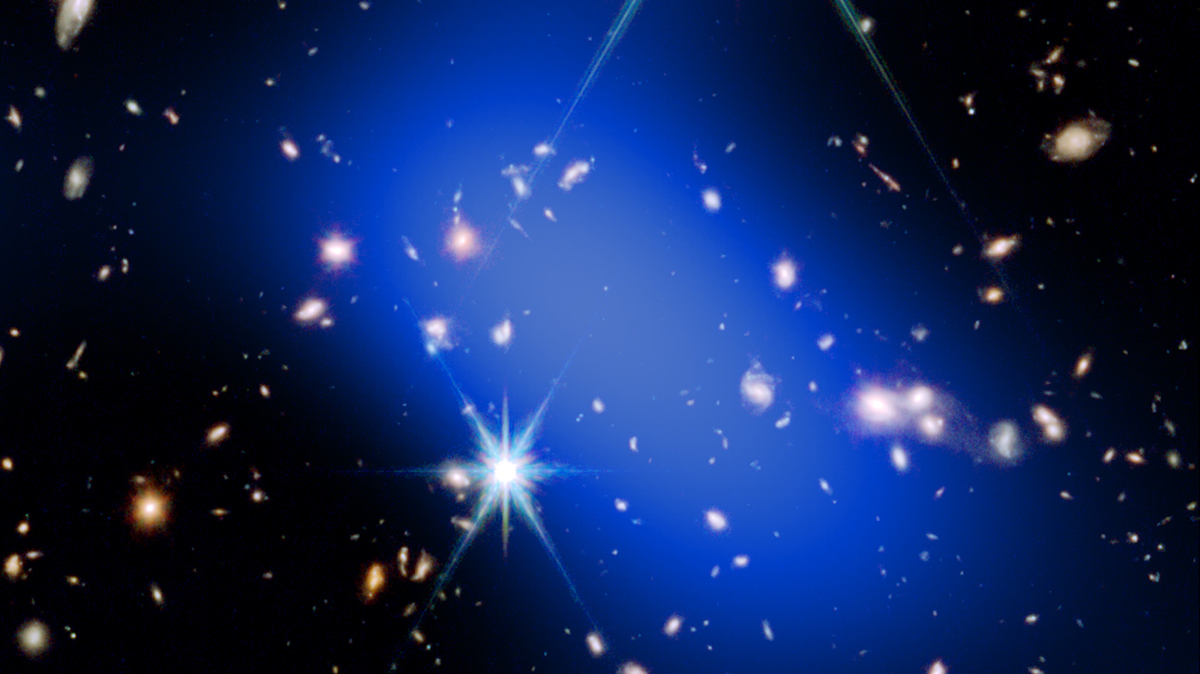
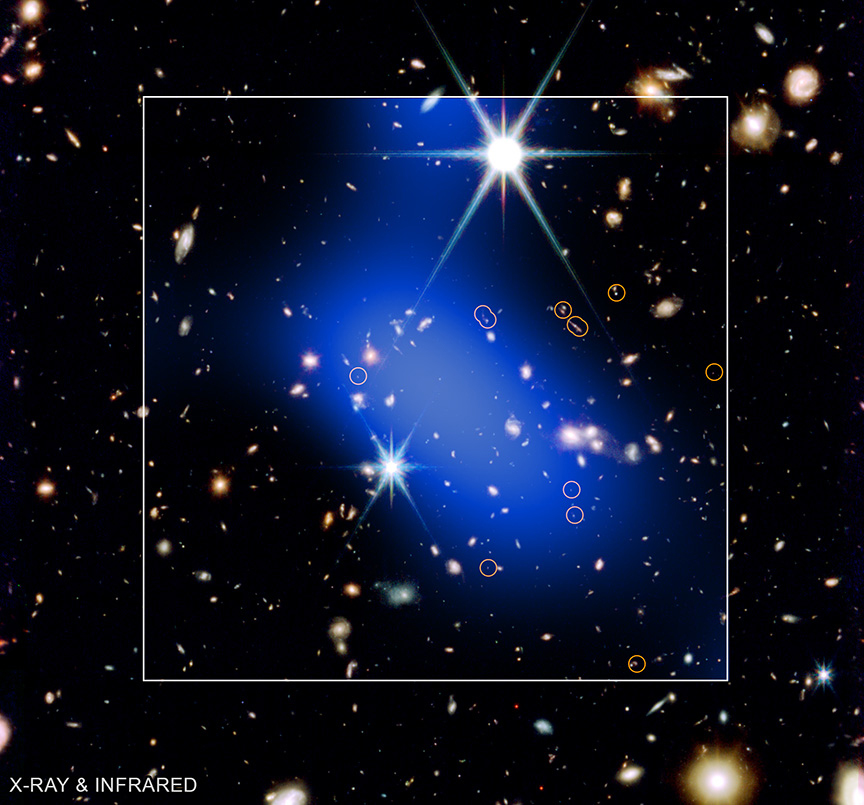
Astronomers have found a massive structure forming in the early universe that overturns long-held ideas about cosmic evolution. In January 2026, a team using NASA’s James Webb Space Telescope and Chandra X-ray Observatory published evidence for what may be the most distant confirmed galaxy protocluster yet observed. This object, known as JADES-ID1, appears in the universe when it was only about one billion years old, far earlier than most models predicted clusters could assemble.
The discovery provides a new window into the timeline of cosmic structure formation. The finding combines deep infrared imaging from JWST with X-ray mapping from Chandra to show both the galaxies and the hot gas that indicate a cluster is forming. What scientists see challenges assumptions about when large gravitational structures can first form.
Probing the early cosmos
Astronomers study the most distant reaches of the universe to understand how matter first clumped together after the Big Bang. Light from very distant objects travels for billions of years before it reaches Earth. That means looking at objects far away is the same as looking back in time. For JADES-ID1, the light we detect today left the object when the universe was only about 7% of its present age.
The object’s distance corresponds to a high redshift of approximately z ≈ 5.7. Redshift measures how much the universe has expanded since the light left an object. The larger the redshift, the further back in time we are observing. A redshift of around 5.7 places JADES-ID1 at a formative period of the universe, when galaxies were young, and the first large-scale structures were emerging.
Galaxy clusters are the largest gravitationally bound systems in the universe. Today’s clusters contain hundreds or thousands of galaxies, spread across millions of light-years, embedded in clouds of superheated gas and vast amounts of unseen dark matter. Finding such structures in their infancy lets astronomers trace how matter evolved from small early fluctuations into the complex cosmos we see today.
What defines a protocluster?
A protocluster describes a stage when a future galaxy cluster is just beginning to assemble. It is not yet a full cluster. Instead, it is a group of galaxies bound by gravity and surrounded by gas that is heating up as it falls inward. Over time, a protocluster grows as more galaxies and material accumulate. Eventually, it becomes a mature cluster like those we observe in the more recent universe.
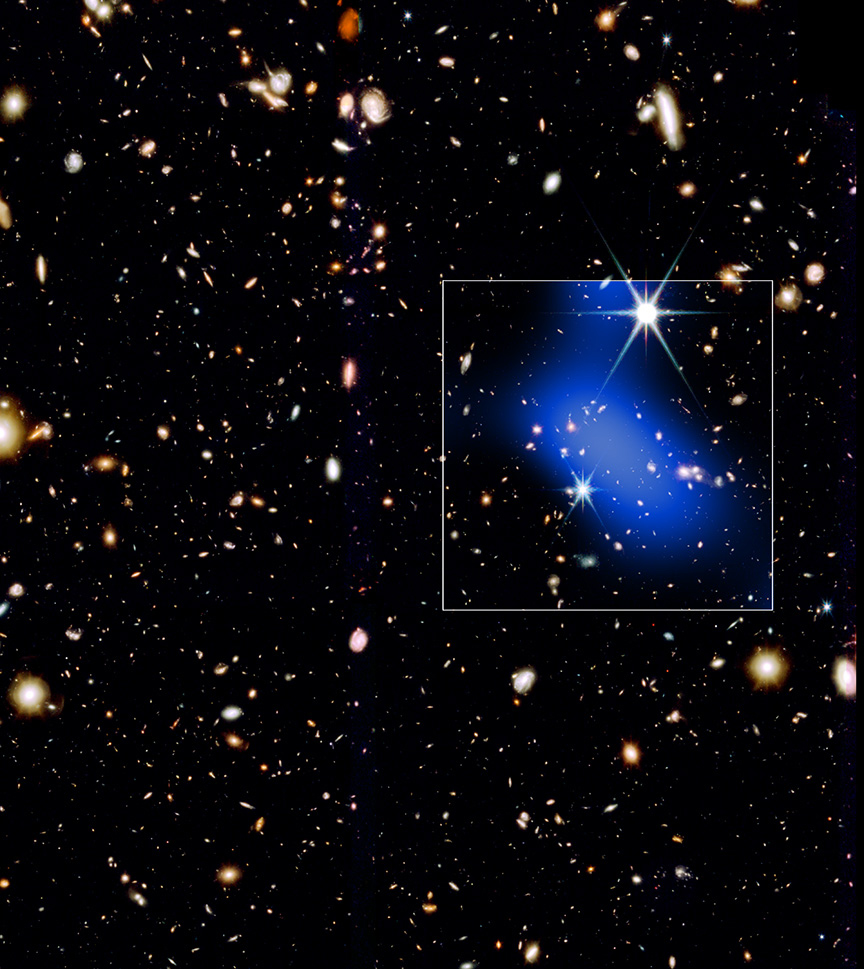
The defining features of a protocluster require both a dense concentration of galaxies and the presence of hot intracluster gas. JWST’s infrared observations identify galaxies in the distant field. Chandra’s X-ray instruments detect hot gas that emits in the X-ray part of the spectrum. Gas at millions of degrees is a hallmark of cluster assembly, as it is heated by shocks when matter falls into the growing gravitational well.
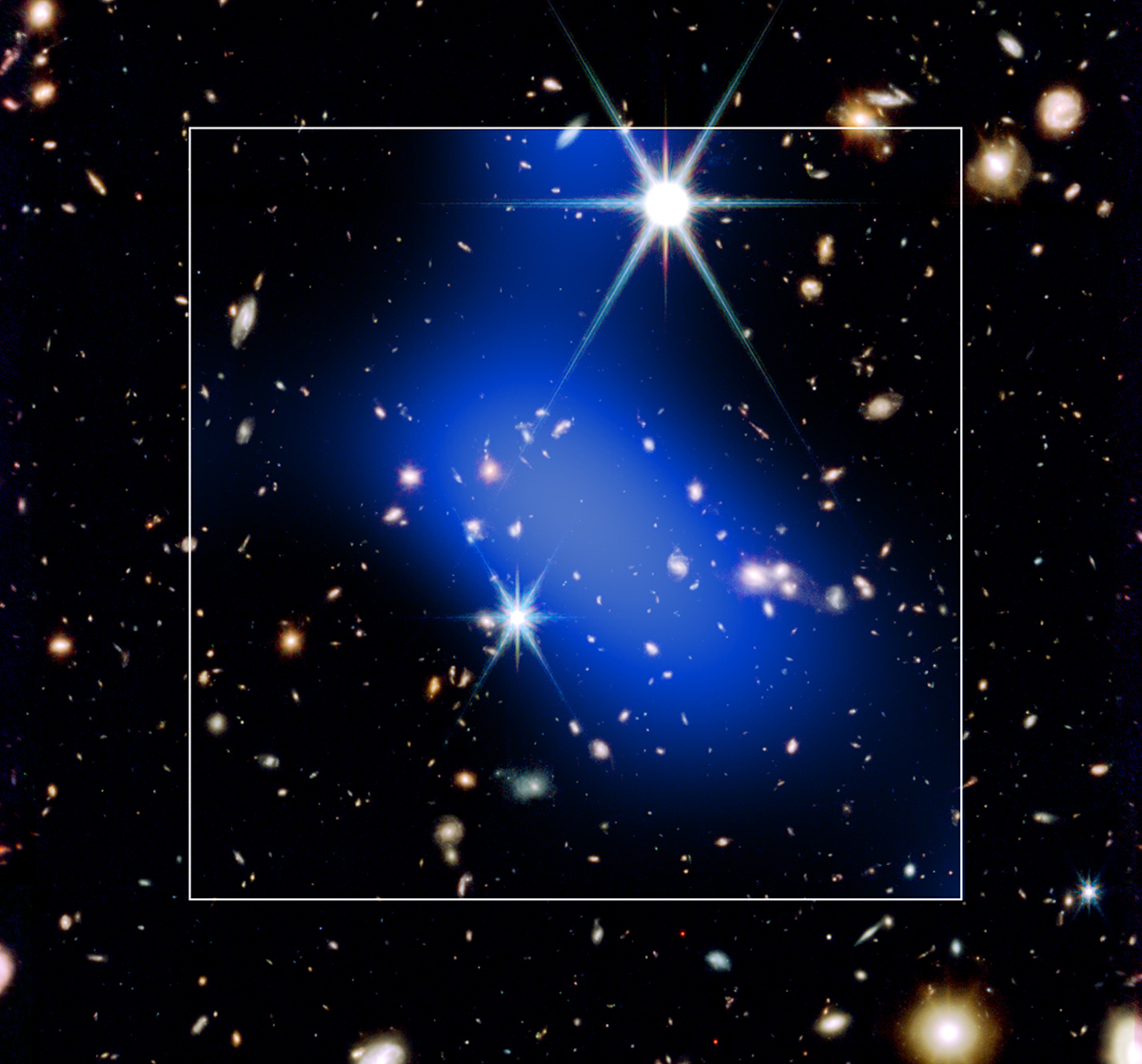
What sets JADES-ID1 apart from other candidates is that it meets both of these criteria. The infrared data show at least 66 potential member galaxies located near each other and likely bound by gravity. The X-ray data from Chandra reveal hot gas in the same region, indicating that cluster-scale collapse has already begun. This combination confirms that JADES-ID1 is not just a loose grouping but a genuine protocluster, caught in the act of assembling itself.
Telescopes that peered further together
Detecting and confirming a structure like JADES-ID1 requires both deep imaging and deep X-ray data. That’s why astronomers combined resources from two of NASA’s most powerful space observatories. The James Webb Space Telescope excels at observing faint, distant galaxies in infrared light. Infrared wavelengths penetrate cosmic expansion effects and redshifted light from early galaxies. JWST’s powerful detectors can see objects that are otherwise invisible to optical telescopes. In the field that contains JADES-ID1, JWST’s advanced deep imaging campaign revealed dozens of distant galaxy candidates.
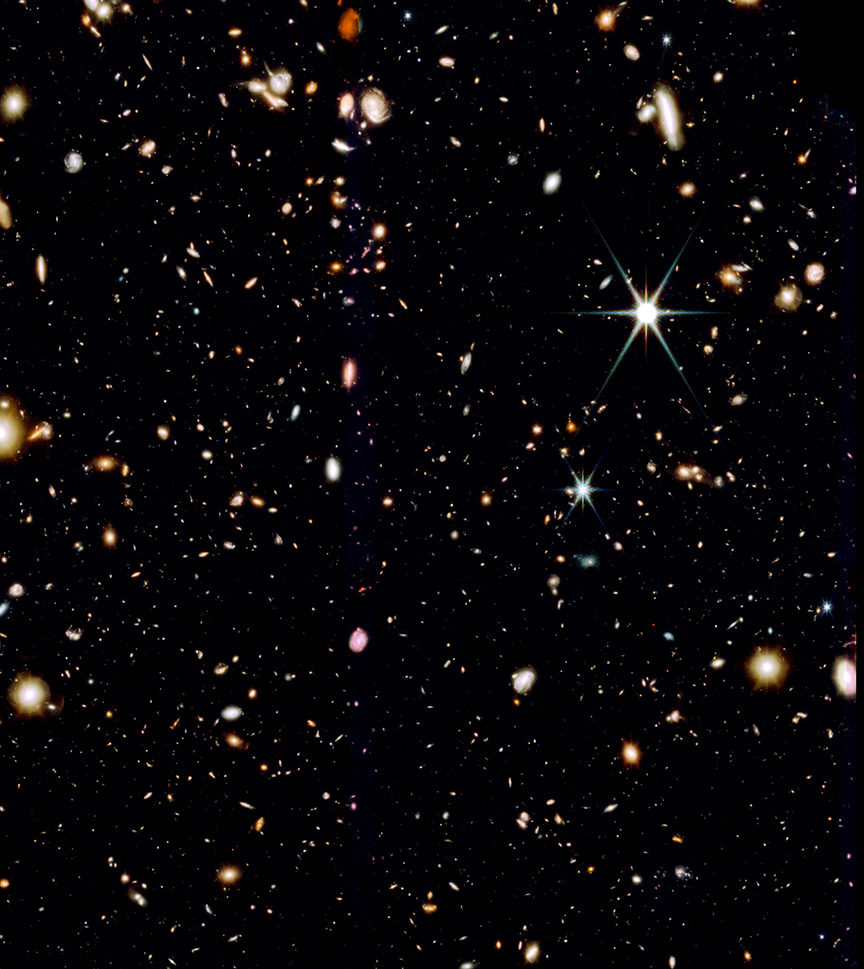
The Chandra X-ray Observatory was designed to detect the highest-energy light in the universe. Hot gas in galaxy clusters is heated to millions of degrees as it collapses under gravity. Gas at these temperatures emits X-rays. Chandra’s sensitive instruments can identify even faint X-ray emissions from distant sources, providing the missing link to confirm that a system is truly forming into a cluster.
Astronomers focused on a region of sky known as the Chandra Deep Field South, the deepest X-ray survey ever conducted. JWST’s deep observations of the same region, part of the JWST Advanced Deep Extragalactic Survey (JADES), yielded complementary data. The overlap provided a unique opportunity to combine datasets and uncover objects like JADES-ID1 that neither telescope could fully characterize on its own.

A surprise in a young universe
One of the most striking aspects of JADES-ID1 is its age. Most cosmological models suggest that clusters with this level of mass and development should not exist until about two to three billion years after the Big Bang. The existence of a massive protocluster only about one billion years after the universe began challenges those assumptions.
JADES-ID1 has an estimated total mass of about 20 trillion times that of the Sun. That is an enormous scale, especially so early in cosmic history. Clusters of this size are typically the result of long periods of growth. Their formation generally requires time for many galaxies to fall together and for the intracluster medium to heat and emit X-rays. Seeing these signs so soon suggests that some regions of the early universe experienced rapid structure growth.
“This may be the most distant confirmed protocluster ever seen,” said lead researcher Ákos Bogdán of the Center for Astrophysics, Harvard & Smithsonian. “JADES-ID1 is giving us new evidence that the universe was in a huge hurry to grow up.”
Previous protocluster candidates existed at lower redshifts, and the earliest examples with X-ray emission were seen when the universe was about three billion years old. JADES-ID1’s position at a redshift of roughly 5.7 pushes the timeline back by nearly two billion years compared to those earlier examples.
Importance of the discovery
The discovery of JADES-ID1 has broad implications for our understanding of cosmic evolution. Galaxy clusters are important tracers of the large-scale structure of the universe. They also serve as benchmarks for models of cosmic expansion, dark matter distribution, and the influence of dark energy.
Clusters and their protoclusters reveal information about how matter organized itself under the influence of gravity. Theories of structure formation rely on the growth of small irregularities in the early universe. These irregularities grow over time, eventually forming stars, galaxies, and clusters. Finding a massive structure so early suggests that the initial conditions or the growth processes were more efficient in some regions than previously understood.
Protocluster environments also impact how galaxies evolve. Galaxies in dense environments interact more often. These interactions can trigger star formation or strip gas from galaxies, affecting how they grow and age. Studying systems like JADES-ID1 lets astronomers investigate these processes in the first billion years of cosmic history, a time when the universe was very different from today.
Future space telescopes and next-generation observatories promise to expand the search further. Proposed X-ray missions like the Lynx X-ray Observatory and ESA’s Athena could push X-ray sensitivity even deeper, making it possible to detect more distant intracluster gas at earlier times. Their data, combined with JWST’s continuing observations, will help pin down how common early protoclusters truly are.
Clear skies!
See more from DIYPhotography.net on Google
Add DIYPhotography.net as a trusted source. This makes
our stories more likely to appear in your Google Search results.
 Add as a preferred source on Google

Soumyadeep Mukherjee
Soumyadeep Mukherjee is an award-winning astrophotographer from India. He has a doctorate degree in Linguistics. His work extends to the sub-genres of nightscape, deep sky, solar, lunar and optical phenomenon photography. He is also a photography educator and has conducted numerous workshops. His works have appeared in over 40 books & magazines including Astronomy, BBC Sky at Night, Sky & Telescope among others, and in various websites including National Geographic, NASA, Forbes. He was the first Indian to win “Astronomy Photographer of the Year” award in a major category.

Join the Discussion
DIYP Comment Policy
Be nice, be on-topic, no personal information or flames.