






















ALMA and JWST Reveals a Superheated Galaxy in the Early Universe
Nov 28, 2025
Soumyadeep Mukherjee
Soumyadeep Mukherjee is an award-winning astrophotographer from India. He has a doctorate degree in Linguistics. His work extends to the sub-genres of nightscape, deep sky, solar, lunar and optical phenomenon photography. He is also a photography educator and has conducted numerous workshops. His works have appeared in over 40 books & magazines including Astronomy, BBC Sky at Night, Sky & Telescope among others, and in various websites including National Geographic, NASA, Forbes. He was the first Indian to win “Astronomy Photographer of the Year” award in a major category.
Share:
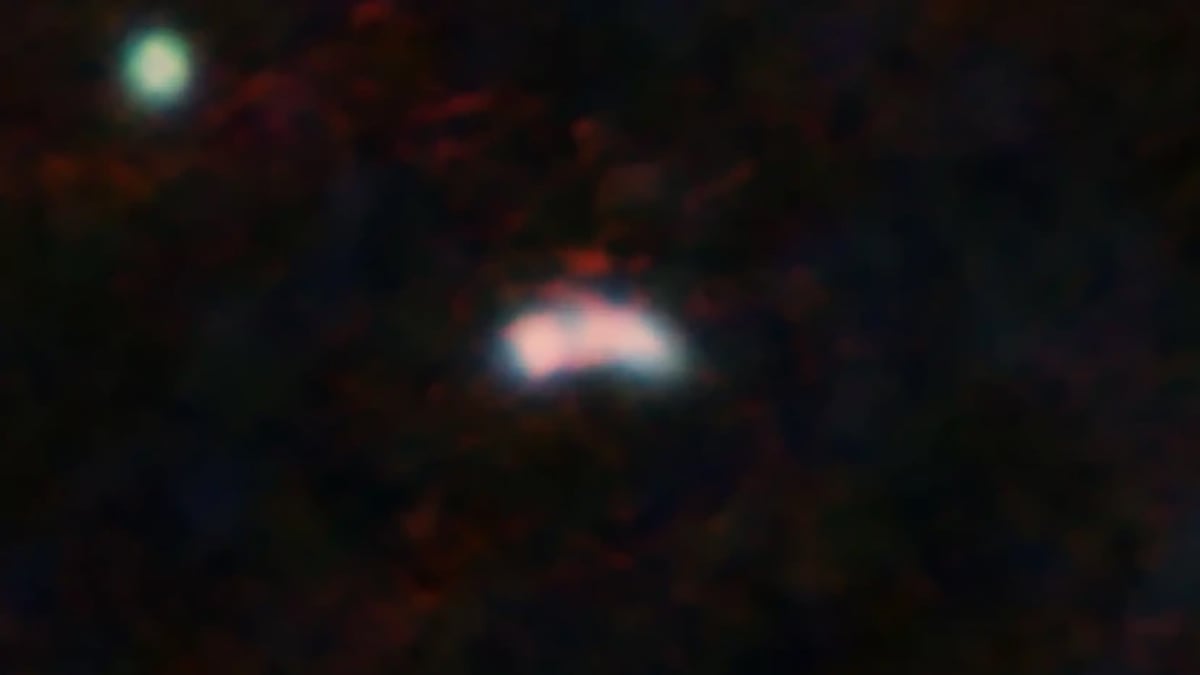
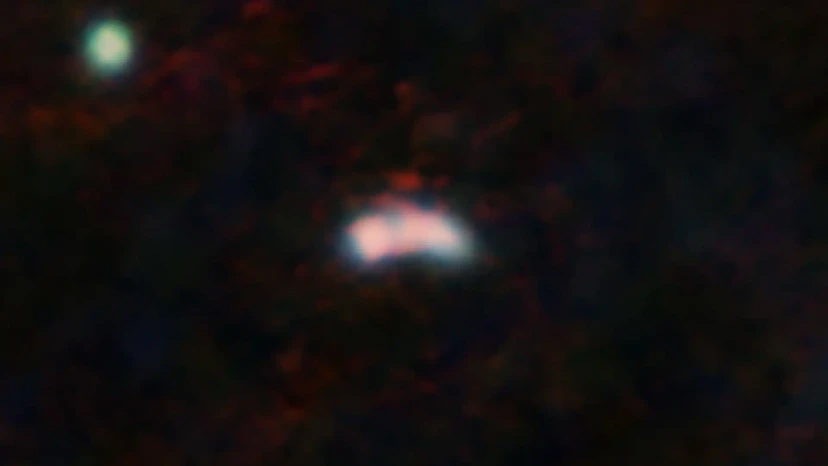
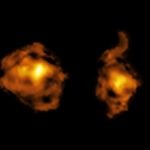
Astronomers expected the early Universe to look simple. They imagined small galaxies, faint clouds of gas, and slow steps toward structure. A discovery, however, has challenged that picture. Using the Atacama Large Millimeter/submillimeter Array (ALMA), researchers found a young galaxy producing stars at a furious rate. It sits more than 13 billion light-years away. Its light started traveling when the Universe was barely 600 million years old. Yet it behaves like a fully powered star factory rather than a fragile young system.
The galaxy, known as MACS0416_Y1 or simply Y1, glows with warm dust and intense infrared radiation. These features show a burst of rapid star formation hidden behind thick clouds of dust. The dust is unusually hot for such an early time. That single detail has prompted astronomers to reconsider how early galaxies grew and how quickly they enriched themselves with heavy elements.
A close look at a distant object
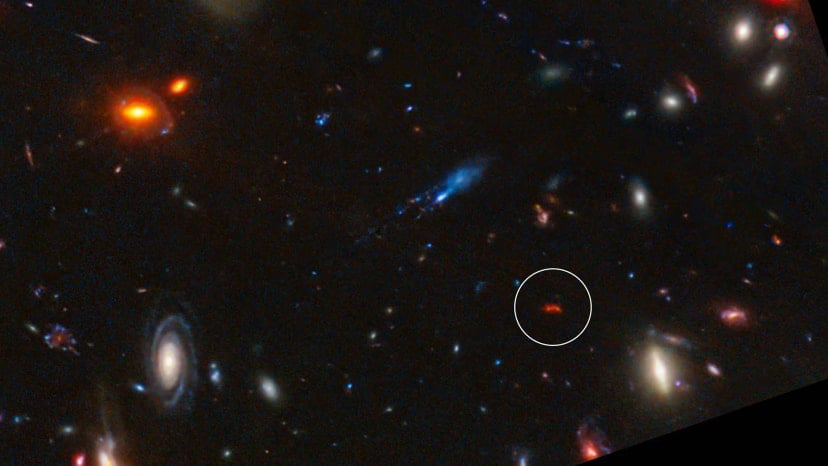
Y1 lies behind the galaxy cluster MACS J0416. This cluster acts as a natural lens. Its gravity amplifies the light from Y1 and lets telescopes study details that would otherwise stay invisible. ALMA then measured the galaxy’s faint dust emission at multiple submillimetre wavelengths. This is where cold and warm dust radiate most efficiently.
Dust temperature is a reliable indicator of star-forming activity. Dust warms when young stars pour ultraviolet radiation into the surrounding gas. Most distant galaxies show relatively cool dust because their star formation is slow and spread out. Y1 breaks that rule. The dust temperature sits at about 90 Kelvin, which is unusually warm for such a young galaxy. In simpler terms, the dust glows far brighter than astronomers expected.
This temperature result surprised the team. The early Universe should have held smaller, quieter galaxies. They should not yet have produced enough stars or metals to heat so much dust. Y1 proves that assumptions about early cosmic conditions need revision.
Star formation at a stunning pace
The warm dust led to another important measurement. When astronomers calculated the infrared luminosity, they found a high rate of star formation. Y1 forms roughly 180 solar masses of stars each year. This level of activity is extreme even by modern standards.
By comparison, the Milky Way forms about one solar mass of stars per year. Y1 forms stars nearly two hundred times faster. And it does this only a few hundred million years after the Big Bang. That means some galaxies matured quickly and went through intense growth phases at very early times.
This discovery also helps explain a growing puzzle. Observations from the James Webb Space Telescope (JWST) have revealed more dust in early galaxies than expected. Dust forms when massive stars explode and scatter heavy elements. Astronomers struggled to understand how so much dust could exist so early. Y1 offers a simple answer. If rapid and heavily obscured starbursts occurred in young galaxies, then dust could accumulate much faster than older models predicted. Y1, therefore, does not stand alone as an odd case. It may be part of a hidden population of dusty, fast-growing galaxies that optical and infrared telescopes cannot easily detect.
A new view of early galaxy populations
This discovery forces astronomers to rethink how they search for galaxies at high redshift. If many young galaxies are dusty, optical surveys will miss them. Infrared surveys may miss them too, depending on how thick the dust is. That leaves ALMA as the key to completing the census of early galaxies.
Y1 hints at a larger and more diverse population of early star-forming systems. Some galaxies may shine brightly in ultraviolet light but contain little dust. Others may stay completely hidden behind thick clouds and reveal themselves only through submillimetre signals. The early Universe was probably not uniform. It may have contained a mix of quiet systems and explosive starburst galaxies, each growing in different ways.
This broader perspective shifts how cosmologists model galaxy growth. It adds new pathways for how stars formed, how metals appeared, and how feedback shaped young galaxies. It also suggests that the early Universe may have been more vibrant than previous generations of data indicated.
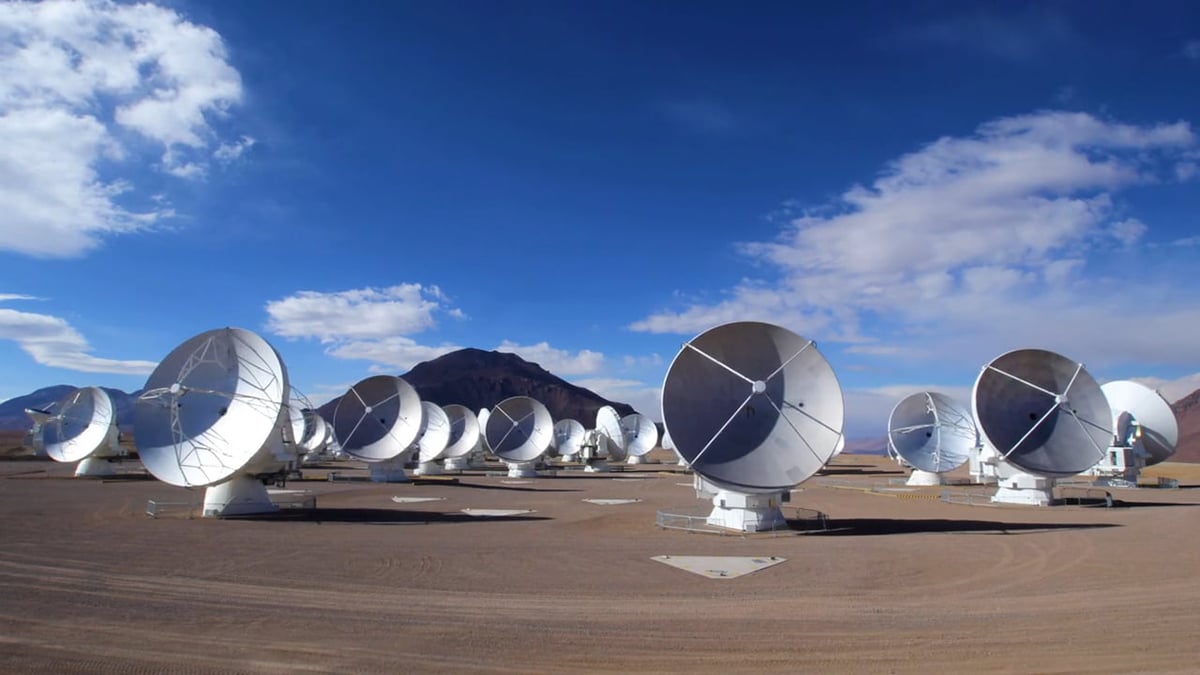
Researchers now want to know whether Y1 is unique or common. They will search for more dusty galaxies at similar distances. ALMA will play a central role because it can detect faint dust emission even from galaxies that optical instruments cannot see. JWST will continue to provide detailed imaging and spectroscopy. Together, both facilities can create a comprehensive picture of how early star factories operated.
Clear skies!
See more from DIYPhotography.net on Google
Add DIYPhotography.net as a trusted source. This makes
our stories more likely to appear in your Google Search results.
 Add as a preferred source on Google

Soumyadeep Mukherjee
Soumyadeep Mukherjee is an award-winning astrophotographer from India. He has a doctorate degree in Linguistics. His work extends to the sub-genres of nightscape, deep sky, solar, lunar and optical phenomenon photography. He is also a photography educator and has conducted numerous workshops. His works have appeared in over 40 books & magazines including Astronomy, BBC Sky at Night, Sky & Telescope among others, and in various websites including National Geographic, NASA, Forbes. He was the first Indian to win “Astronomy Photographer of the Year” award in a major category.

Join the Discussion
DIYP Comment Policy
Be nice, be on-topic, no personal information or flames.