























Chandra Photographs Hot Wind Escaping Milky Way’s Central Black Hole
Jun 12, 2026
Soumyadeep Mukherjee
Soumyadeep Mukherjee is an award-winning astrophotographer from India. He has a doctorate degree in Linguistics. His work extends to the sub-genres of nightscape, deep sky, solar, lunar and optical phenomenon photography. He is also a photography educator and has conducted numerous workshops. His works have appeared in over 40 books & magazines including Astronomy, BBC Sky at Night, Sky & Telescope among others, and in various websites including National Geographic, NASA, Forbes. He was the first Indian to win “Astronomy Photographer of the Year” award in a major category.
Share:
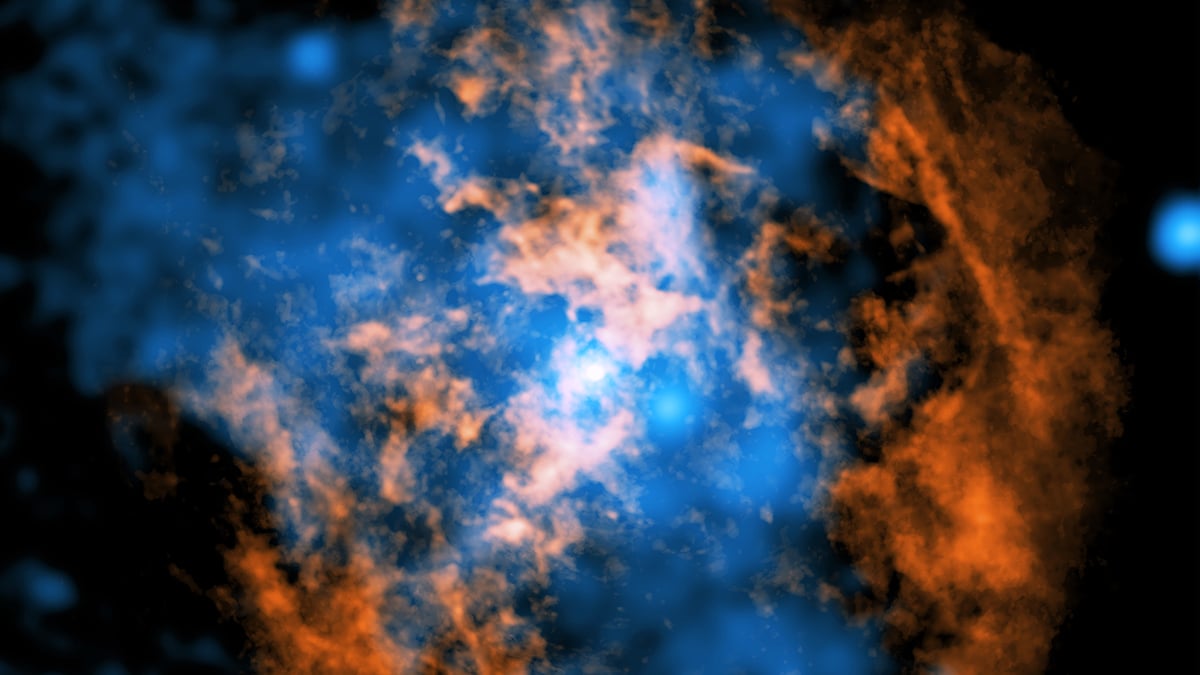
The environment around Sagittarius A* operates under extreme physical conditions. Gas near the black hole reaches temperatures of several million degrees, while strong stellar winds from nearby massive stars continuously inject fresh material into the galactic center. Under such conditions, astronomers expect supermassive black holes to accrete surrounding matter efficiently. However, Sagittarius A* has remained unusually faint for decades of observations. Although the Milky Way’s central black hole contains nearly four million solar masses, it emits only a tiny fraction of the energy seen from active galactic nuclei in other galaxies.
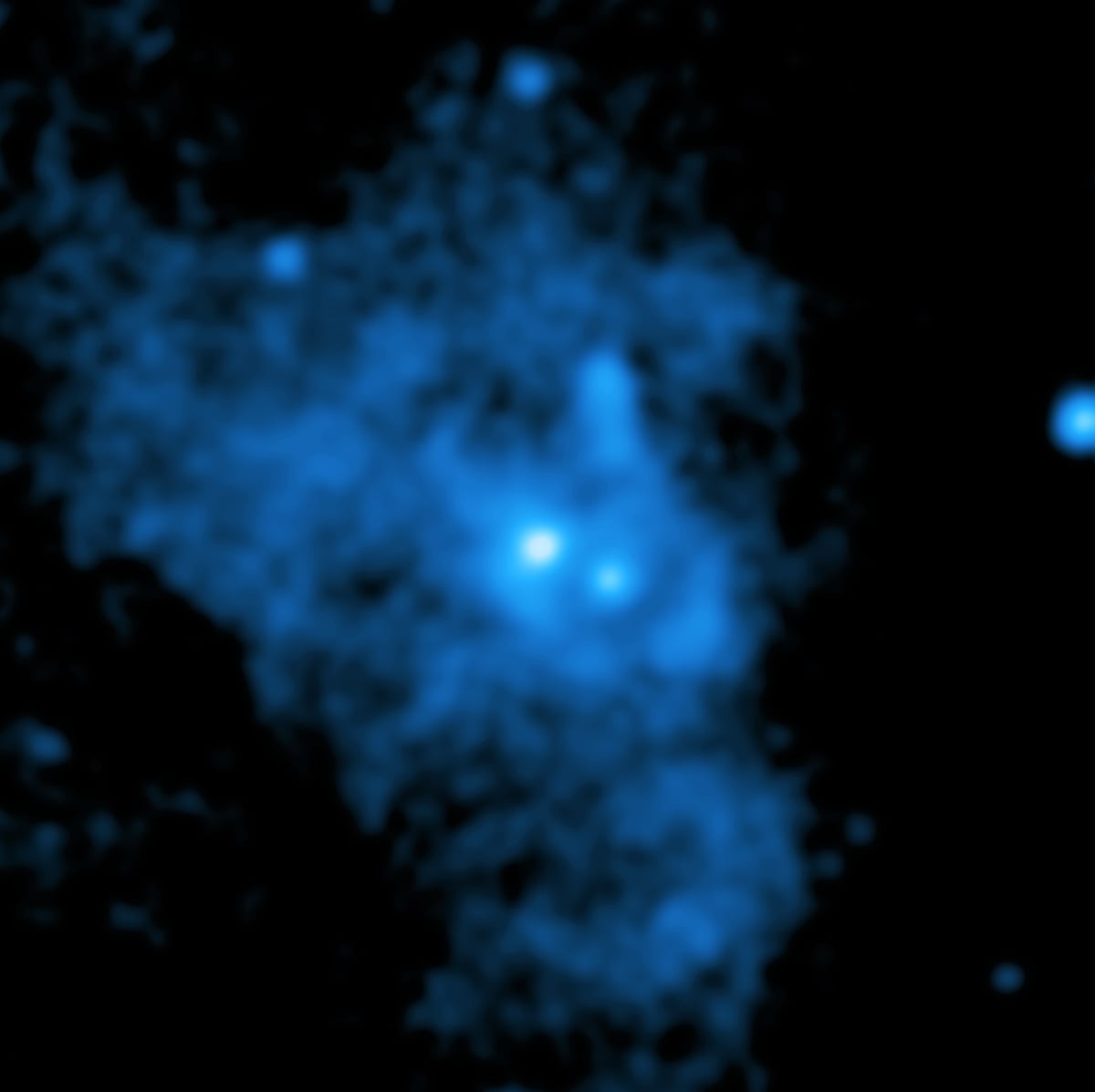
New observations from NASA’s Chandra X-ray Observatory offer a major clue behind this long-standing mystery. Astronomers have found evidence that a large fraction of the gas approaching Sagittarius A* does not fall inward at all. Instead, extremely hot material escapes outward in the form of a diffuse X-ray wind. The outflow appears strong enough to disrupt the accretion process near the black hole and remove a significant portion of the available fuel before gravity can capture it completely.
Sagittarius A*: An unusual supermassive black hole
Astronomers identified Sagittarius A* as the Milky Way’s central black hole by tracking the motions of stars orbiting an invisible object at enormous speeds. Decades of observations revealed a compact source containing about four million times the Sun’s mass. The object lies approximately 26,000 light-years away from Earth, within the dense core of the galaxy.
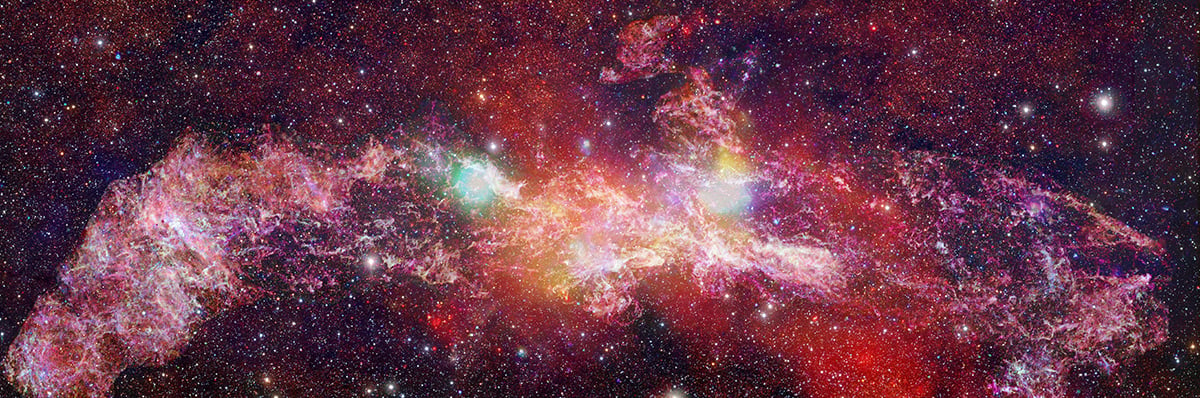
Despite its enormous mass, Sagittarius A* behaves very differently from many other known supermassive black holes. In active galaxies, black holes consume large amounts of surrounding gas and produce powerful radiation across the electromagnetic spectrum. Some generate luminous quasars that outshine the combined light of billions of stars. Sagittarius A* shows only weak activity by comparison.
Astronomers have observed occasional X-ray and infrared flares from the region, yet the black hole spends most of its time in a quiet state. This weak emission puzzled researchers because the galactic center contains abundant material that should feed the black hole continuously. Massive stars orbiting close to Sagittarius A* release strong stellar winds packed with ionized gas. Those winds collide, heat up, and fill the surrounding environment with energetic plasma.
Chandra’s X-ray vision reveals the motion of hot gas
NASA launched the Chandra X-ray Observatory in 1999 to study some of the hottest and most energetic regions in the universe. Unlike optical telescopes, Chandra detects X-rays produced by extremely hot gas, shock waves, and energetic particles. The observatory has spent more than two decades monitoring the Milky Way’s center and building one of the deepest X-ray datasets ever collected for this region.
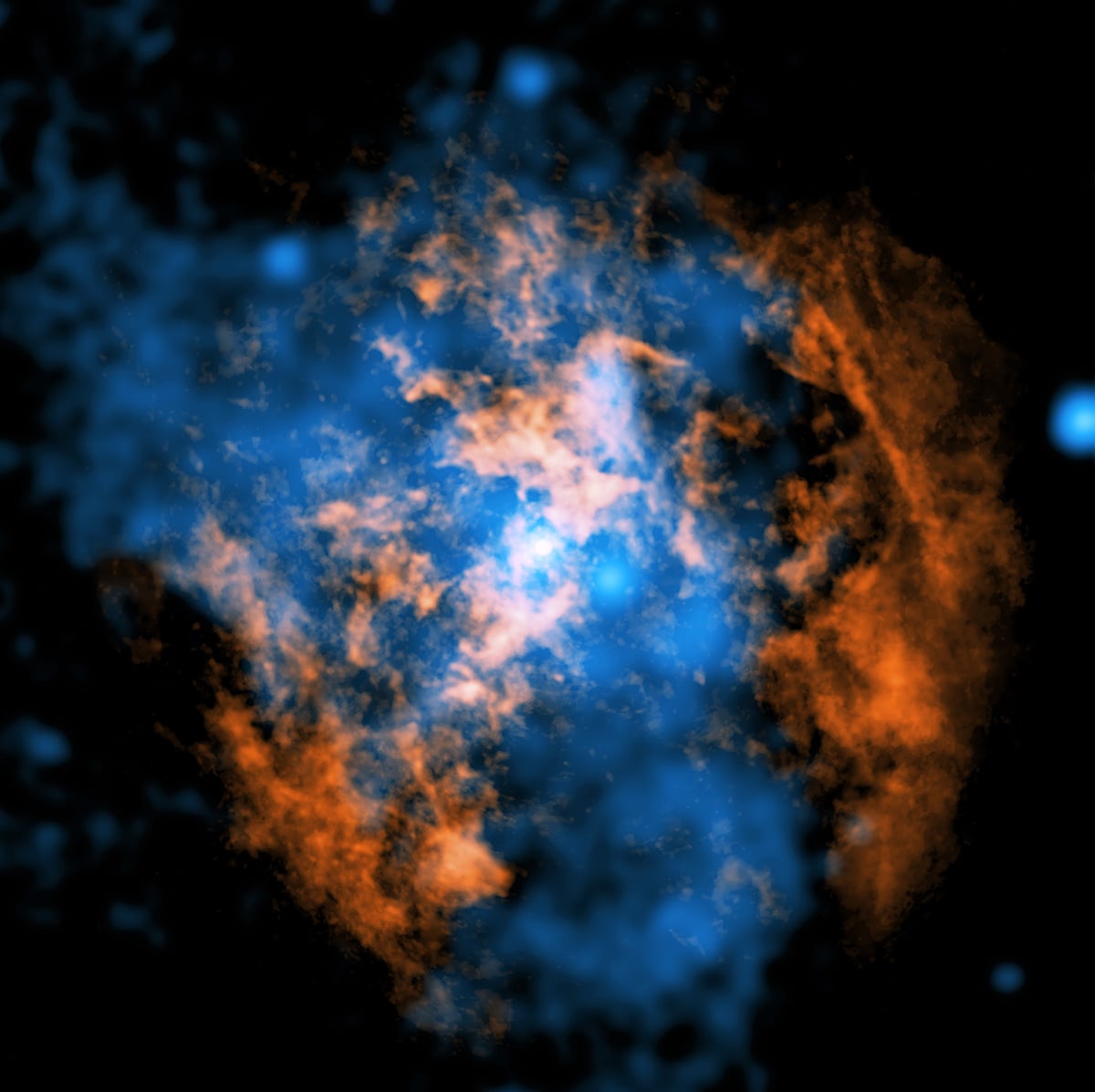
For the new study, astronomers analyzed long-term observations surrounding Sagittarius A*. They focused on how hot gas behaves close to the black hole and how energy flows through the surrounding plasma. The data revealed structures consistent with a broad outflow of material moving away from the galactic center.
The gas involved in the wind reaches temperatures of millions of degrees. At such temperatures, atoms become highly ionized and emit X-rays efficiently. Chandra detected that emission and allowed researchers to trace the distribution of the hot plasma around Sagittarius A*.
Researchers estimate that only a small percentage of available gas ultimately falls inward. The remaining material either circulates through the galactic center or escapes outward through the hot wind detected by Chandra. That process naturally limits the black hole’s brightness and helps explain why Sagittarius A* remains relatively faint.
One of the most extreme environments in the Milky Way
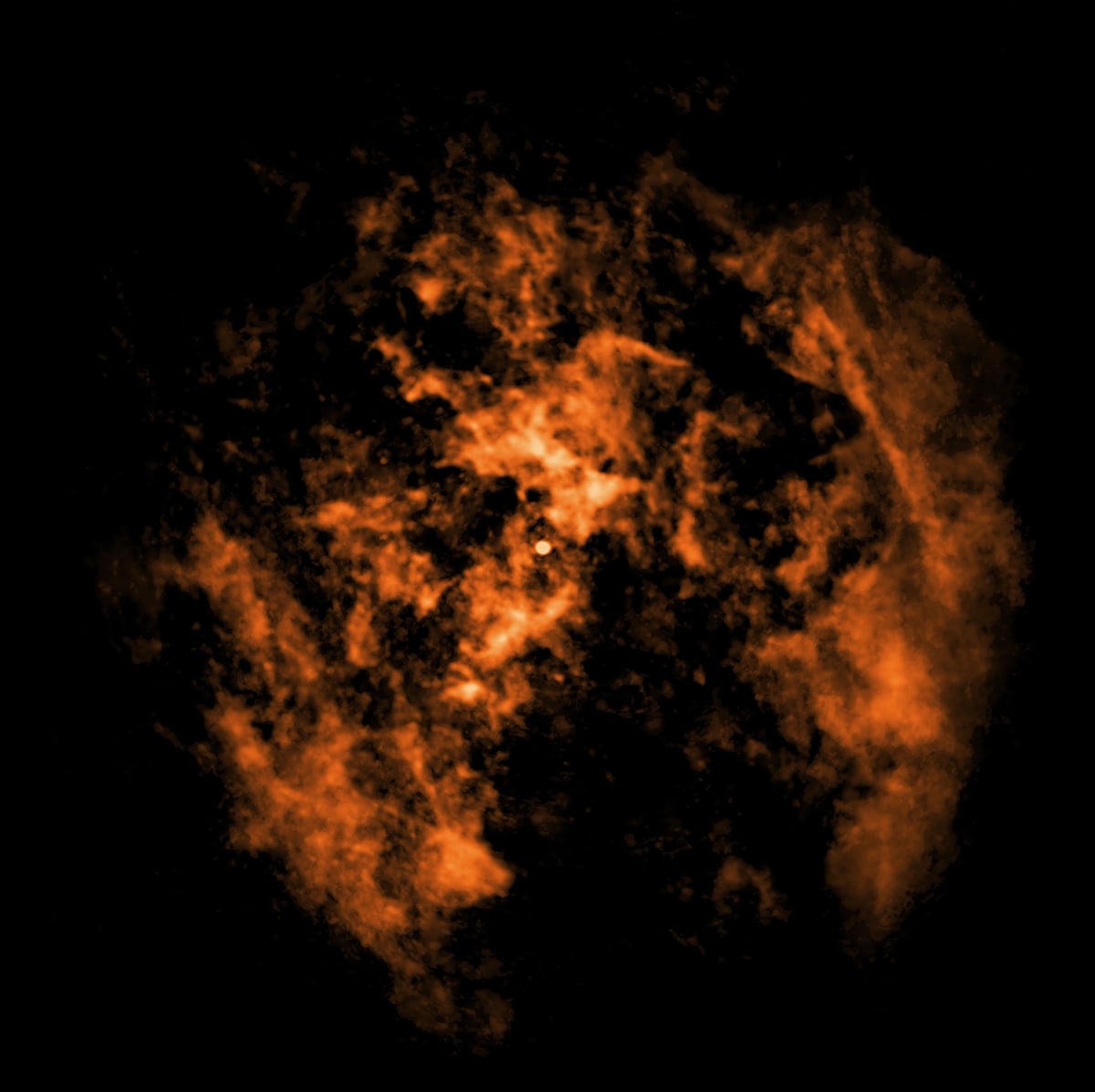
The central region of the Milky Way contains dense star clusters, magnetic filaments, superheated plasma, and rapidly moving gas clouds. Conditions there differ dramatically from the relatively calm environment surrounding the Solar System. Massive stars crowd close together near Sagittarius A*, and many of them lose material through fast stellar winds moving at millions of kilometers per hour.
When those winds collide, they generate shock fronts that heat the surrounding gas to extreme temperatures. Chandra detects those hot regions through their X-ray emission. The observatory’s images reveal a tangled environment filled with glowing structures and turbulent plasma. The newly detected wind likely forms within this chaotic region.
Gas flowing toward Sagittarius A* becomes compressed and heated as it approaches the black hole. Turbulence and magnetic interactions then redistribute energy through the plasma. Part of the material continues inward, while some gain enough energy to escape outward again.
Astronomers believe magnetic fields may contribute significantly to this process. Twisted magnetic structures can transfer angular momentum through the accretion flow and accelerate charged particles away from the black hole. Turbulence within the hot plasma may also help drive the observed outflow.
Clear skies!
See more from DIYPhotography.net on Google
Add DIYPhotography.net as a trusted source. This makes
our stories more likely to appear in your Google Search results.
 Add as a preferred source on Google

Soumyadeep Mukherjee
Soumyadeep Mukherjee is an award-winning astrophotographer from India. He has a doctorate degree in Linguistics. His work extends to the sub-genres of nightscape, deep sky, solar, lunar and optical phenomenon photography. He is also a photography educator and has conducted numerous workshops. His works have appeared in over 40 books & magazines including Astronomy, BBC Sky at Night, Sky & Telescope among others, and in various websites including National Geographic, NASA, Forbes. He was the first Indian to win “Astronomy Photographer of the Year” award in a major category.

Join the Discussion
DIYP Comment Policy
Be nice, be on-topic, no personal information or flames.