
























Chandra Captures the Sharpest X-Ray View of M87’s Black Hole Jet
Jun 28, 2026
Soumyadeep Mukherjee
Soumyadeep Mukherjee is an award-winning astrophotographer from India. He has a doctorate degree in Linguistics. His work extends to the sub-genres of nightscape, deep sky, solar, lunar and optical phenomenon photography. He is also a photography educator and has conducted numerous workshops. His works have appeared in over 40 books & magazines including Astronomy, BBC Sky at Night, Sky & Telescope among others, and in various websites including National Geographic, NASA, Forbes. He was the first Indian to win “Astronomy Photographer of the Year” award in a major category.
Share:
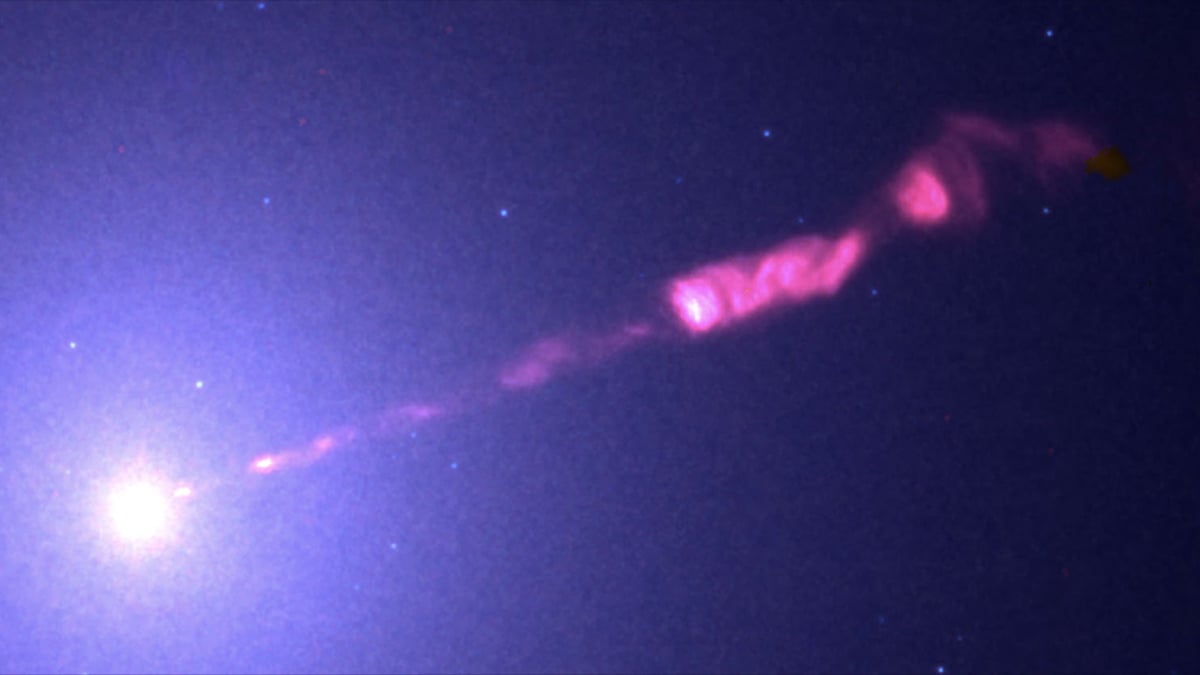
Supermassive black holes shape the evolution of galaxies far beyond their immediate surroundings. Although they occupy a region no larger than our Solar System, they can inject enormous amounts of energy into space through narrow, relativistic jets. These outflows heat interstellar gas, regulate star formation, and influence the growth of entire galaxies.
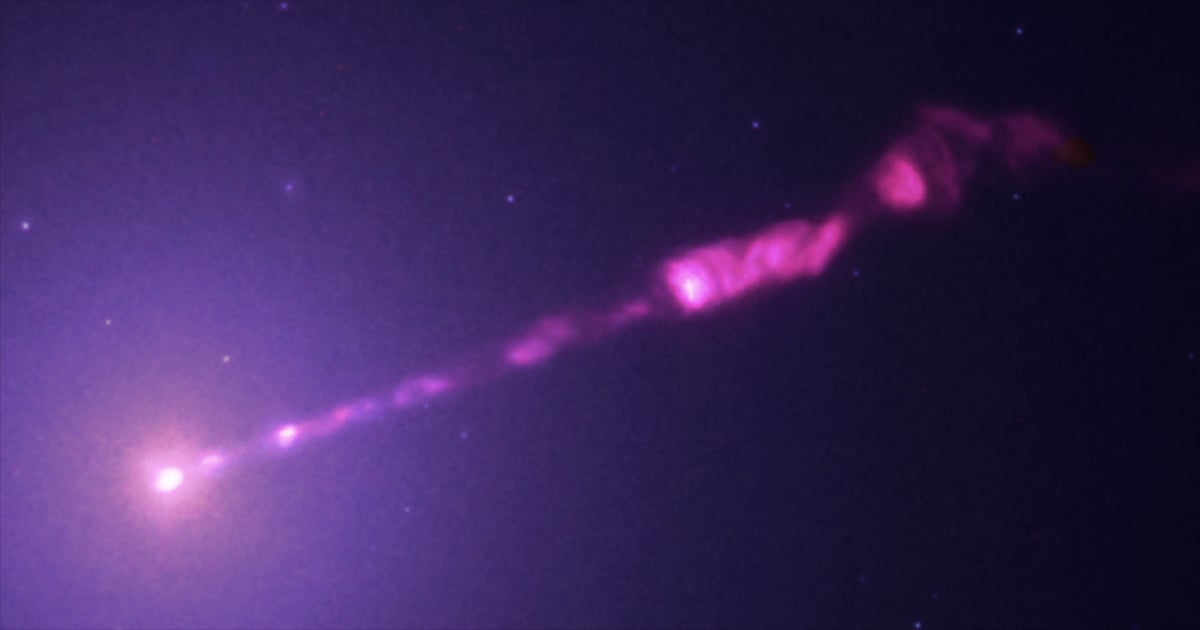
In a new study, using more than thirteen years of observations from NASA‘s Chandra X-ray Observatory, astronomers have produced the sharpest X-ray images ever obtained of the jet emerging from the supermassive black hole in Messier 87, or M87. The study follows the jet as it evolves. The observations reveal moving structures, changing brightness, and hidden details that previous X-ray images could not resolve.
M87: One of the best laboratories for Black Hole physics
Few galaxies have influenced black hole research as much as M87. Located about 55 million light-years away in the Virgo Cluster, this giant elliptical galaxy hosts one of the most massive black holes ever measured. The central black hole contains about 6.5 billion times the mass of the Sun and has become one of the most closely observed objects in modern astronomy.
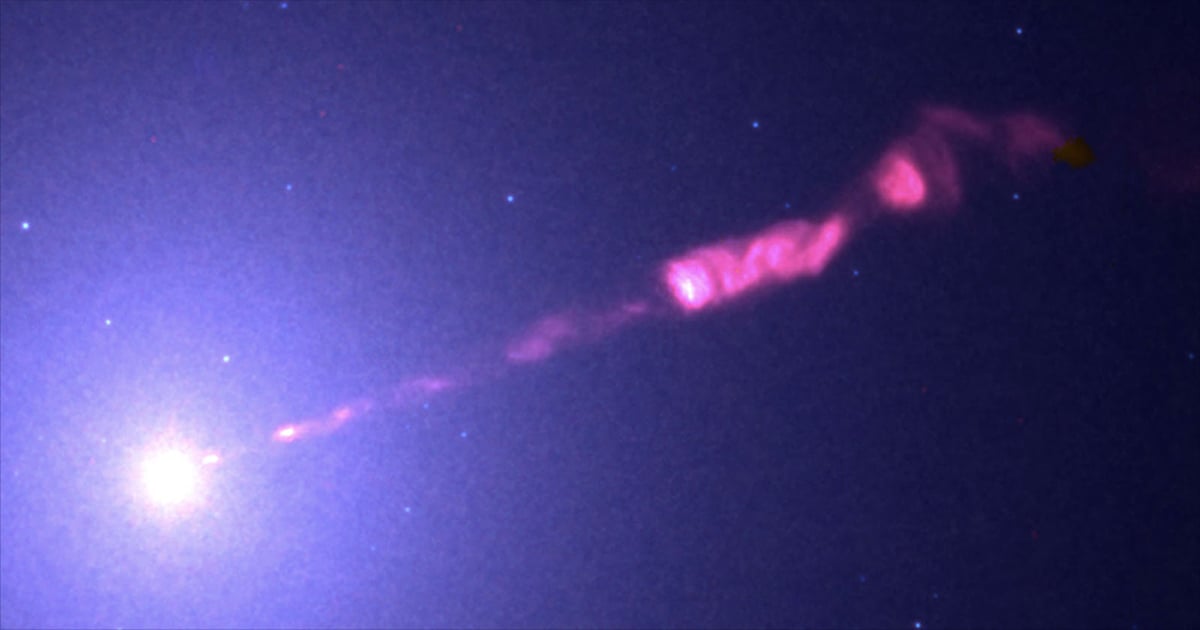
Its fame grew in 2019 when the Event Horizon Telescope released the first direct image of a black hole’s shadow. That image marked a historic milestone, but it represented only one part of the story. While astronomers celebrated the dark ring surrounding the event horizon, another spectacular feature continued to attract scientific attention. A narrow jet of hot plasma extends outward from the galaxy’s core and stretches several thousand light-years into space.
This jet has fascinated astronomers for decades because it offers a rare opportunity to observe the effects of a supermassive black hole beyond its immediate environment. Instead of disappearing into the black hole, a fraction of the infalling material becomes trapped by intense magnetic fields near the accretion disk. Those magnetic fields channel the plasma into two oppositely directed jets that travel outward at speeds approaching that of light.
Sharpening Chandra’s vision
Although Chandra remains the world’s most powerful X-ray observatory, every telescope has its limits. Tiny structures inside the M87 jet often appeared blurred together because of the way the telescope spreads incoming X-rays across its detectors. Bright knots blended into one another, making it difficult to separate individual features or follow their evolution.
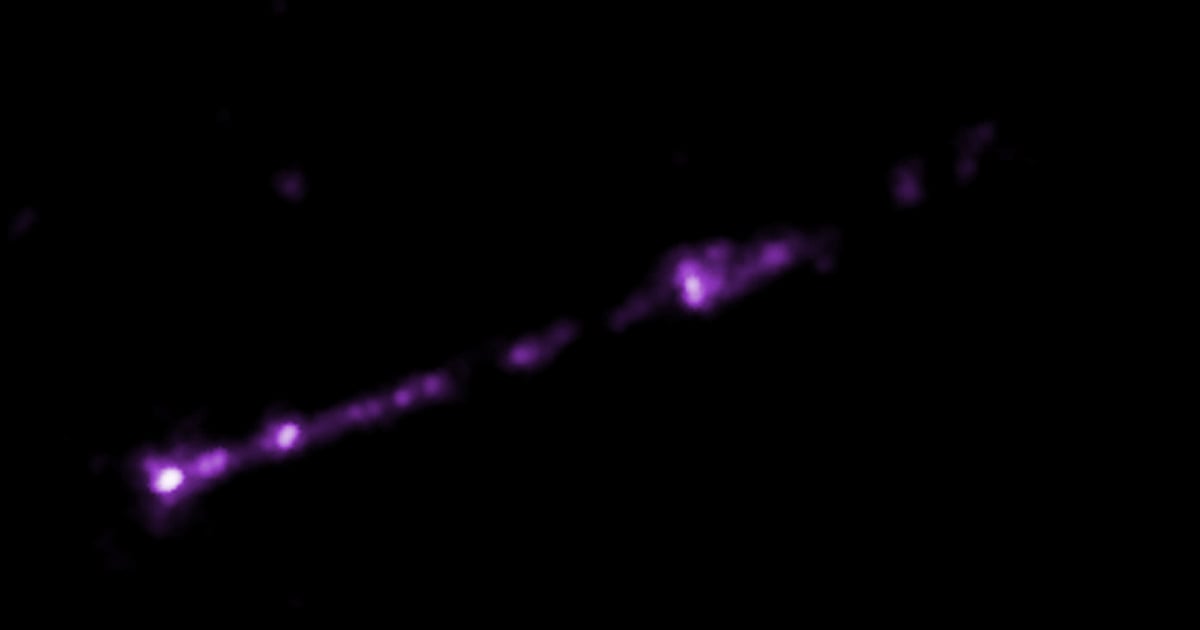
The research team revisited Chandra’s archive and applied advanced image reconstruction techniques to existing observations. The method mathematically removes much of the telescope’s optical blur and restores details that remain hidden in standard images. The scientists analyzed fourteen Chandra observations collected between 2012 and 2025.
The improvement becomes obvious when comparing the new images with earlier ones. Regions that once appeared as single bright sources now separate into multiple compact knots connected by thin filaments. Some structures even display internal complexity that astronomers had never seen in X-rays.
Combining multiple observatory data
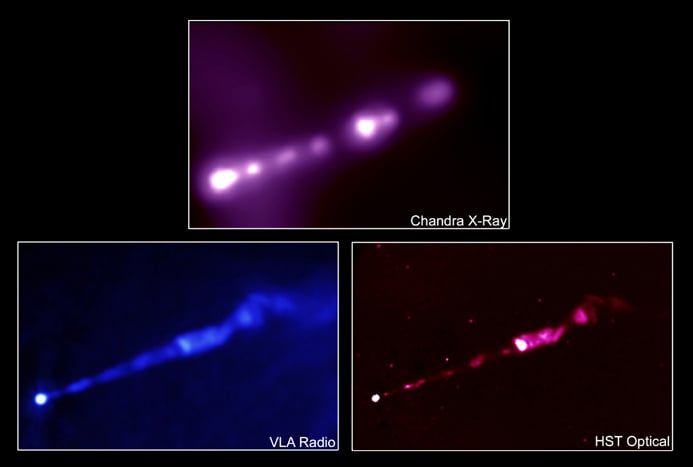
The research team compared the new X-ray images with infrared observations from the James Webb Space Telescope, optical images from the Hubble Space Telescope, and radio data from the Karl G. Jansky Very Large Array. Together, these facilities provide an almost continuous view of the jet across the electromagnetic spectrum.
The comparison revealed that many bright features appear in every wavelength, but they do not always occupy exactly the same position. In several regions, the X-ray emission lies slightly closer to the black hole than the optical or radio emission.
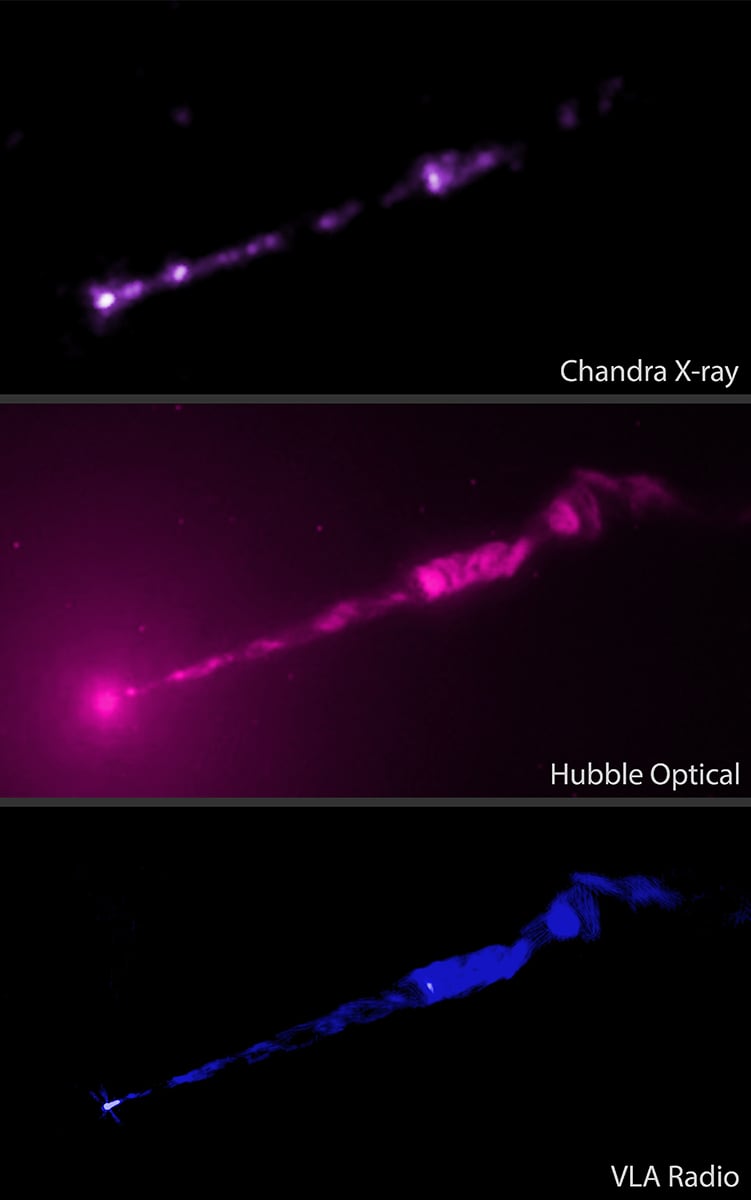
That small displacement tells us something interesting. The highest-energy electrons produce X-rays soon after they are accelerated. As they move farther along the jet, they lose energy through synchrotron radiation. They then begin emitting optical, infrared, and eventually radio waves. In other words, the different wavelengths trace the same particles at different stages of their lives.
This multiwavelength approach allows astronomers to reconstruct the physical history of the jet instead of studying isolated snapshots. It reveals where particles gain energy, how they move through the magnetic field, and how they gradually cool while travelling thousands of light-years from the black hole.
Clear skies!
See more from DIYPhotography.net on Google
Add DIYPhotography.net as a trusted source. This makes
our stories more likely to appear in your Google Search results.
 Add as a preferred source on Google

Soumyadeep Mukherjee
Soumyadeep Mukherjee is an award-winning astrophotographer from India. He has a doctorate degree in Linguistics. His work extends to the sub-genres of nightscape, deep sky, solar, lunar and optical phenomenon photography. He is also a photography educator and has conducted numerous workshops. His works have appeared in over 40 books & magazines including Astronomy, BBC Sky at Night, Sky & Telescope among others, and in various websites including National Geographic, NASA, Forbes. He was the first Indian to win “Astronomy Photographer of the Year” award in a major category.



Join the Discussion
DIYP Comment Policy
Be nice, be on-topic, no personal information or flames.