

















NASA’s Roman Telescope Is All Set to Launch: Pre-Launch Images
Aug 28, 2026
Soumyadeep Mukherjee
Soumyadeep Mukherjee is an award-winning astrophotographer from India. He has a doctorate degree in Linguistics. His work extends to the sub-genres of nightscape, deep sky, solar, lunar and optical phenomenon photography. He is also a photography educator and has conducted numerous workshops. His works have appeared in over 40 books & magazines including Astronomy, BBC Sky at Night, Sky & Telescope among others, and in various websites including National Geographic, NASA, Forbes. He was the first Indian to win “Astronomy Photographer of the Year” award in a major category.
Share:
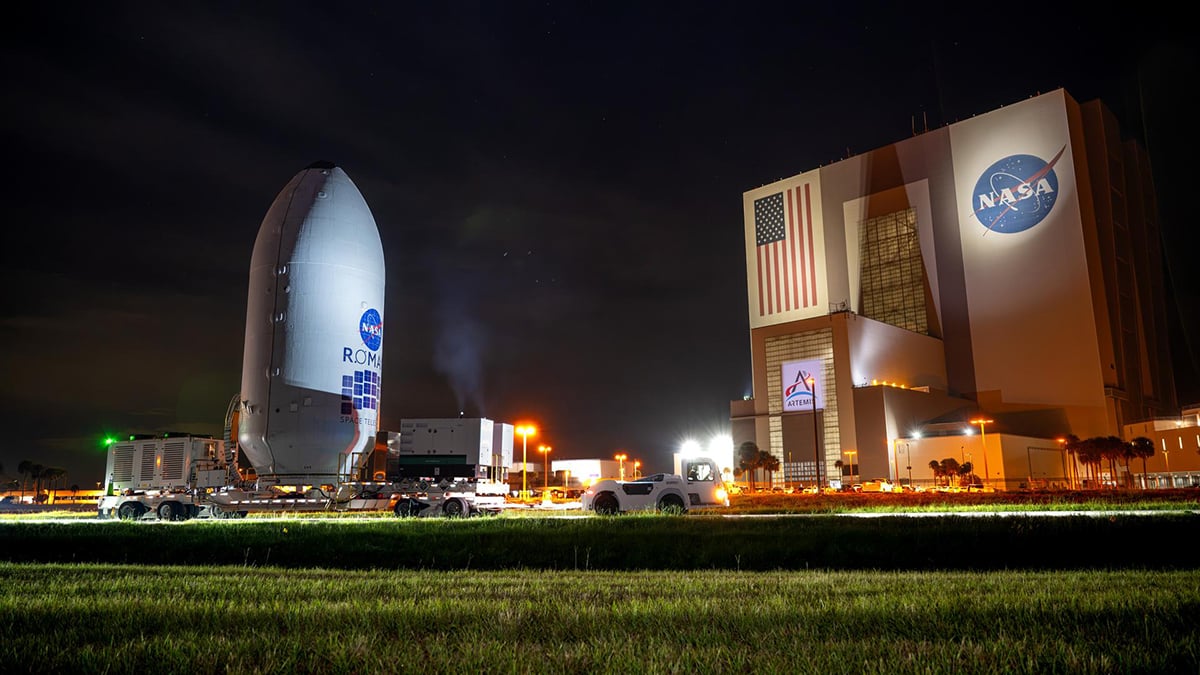
NASA’s Nancy Grace Roman Space Telescope is about to begin one of the most ambitious astronomical surveys ever attempted from space. The telescope is scheduled to launch at 7:26 a.m. EDT on August 30, 2026, aboard a SpaceX Falcon Heavy from NASA’s Kennedy Space Center in Florida. NASA expects the telescope to begin science operations in early 2027, after about three months of deployment and commissioning. We can’t wait to see its images!
Here are a few interesting things to know about the Roman Telescope before it begins its survey of the cosmos.
The naming of the mission
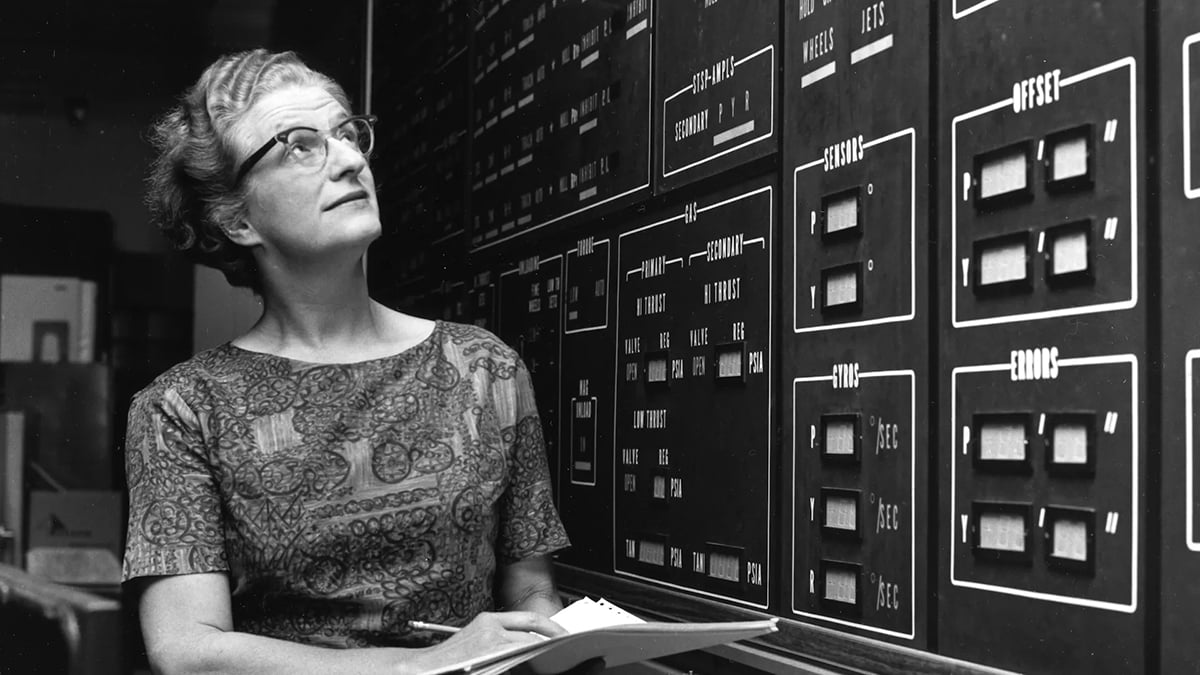
Roman is named after Dr. Nancy Grace Roman (1925–2018), NASA’s first chief of astronomy. She spent much of her career arguing for observatories that could operate above Earth’s atmosphere and give astronomers access to a much clearer view of the universe.
Roman helped establish the scientific and organizational foundations for NASA’s Great Observatories programme. That programme eventually included Hubble, the Chandra X-ray Observatory, the Compton Gamma Ray Observatory and Spitzer. She is often called the “mother of Hubble” because of her role in developing the project.
The bigger picture of the cosmos
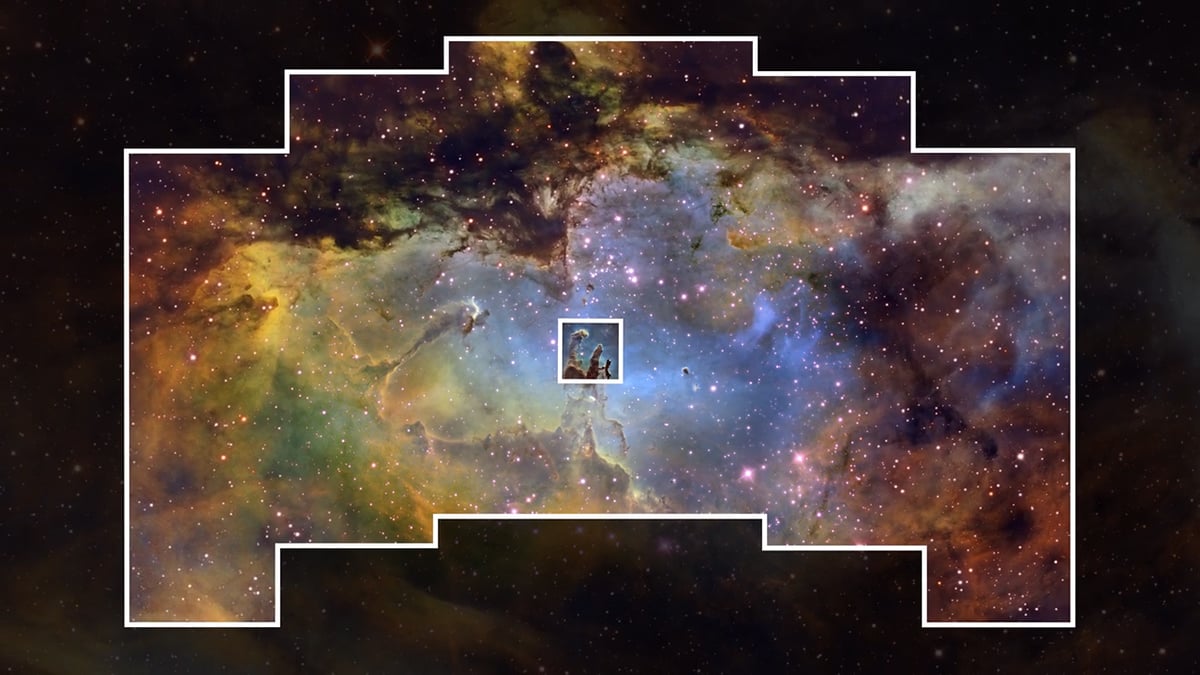
One of the most interesting features of the Roman telescope is its field of view. The Wide Field Instrument is a 300-megapixel camera designed for large-scale surveys. It will observe visible and near-infrared light and can also perform spectroscopy.
The comparison with Hubble helps explain what makes it different. Both telescopes have 2.4-metre primary mirrors, but Roman will cover at least 100 times more sky in a single view. Each Roman image will capture a region about 1.5 times larger than the apparent size of the full Moon.
Travelling a million miles to join JWST
Roman will travel about 1.5 million kilometers from Earth to the second Sun-Earth Lagrange point, or L2. The James Webb Space Telescope operates in the same region.
L2 is a location where the gravitational influence of the Sun and Earth combines with a spacecraft’s motion around the Sun. That allows an observatory to follow a relatively stable orbit while using less fuel than it would need in many other configurations. Roman’s orbit will be large, extending much farther than the Moon’s orbit around Earth.
Carrying the names of more than a million people
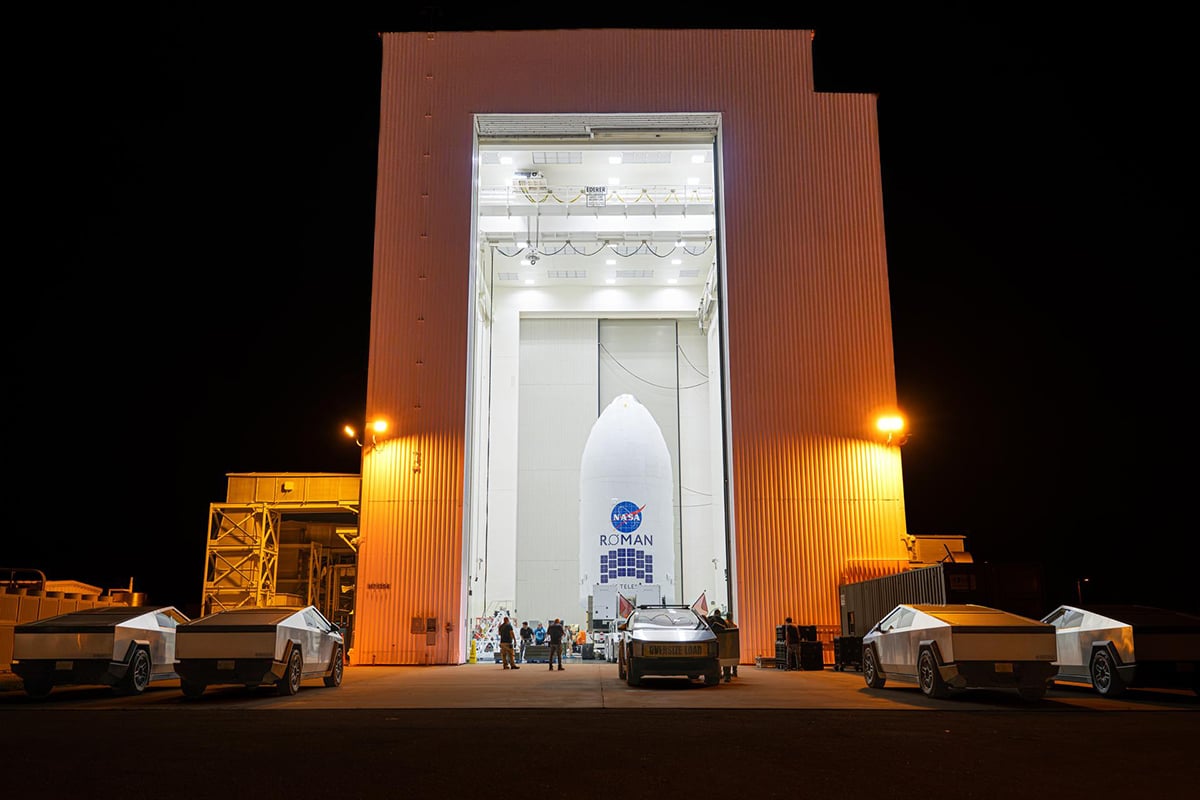
Roman will carry something aboard it that has no connection with astronomy: the names of more than 1.3 million people. NASA invited the public to submit names for a memory card attached to a plaque on the spacecraft. More than 1.3 million people took part. Their names will travel with Roman to its destination near L2.
The names on the memory card will remain with the spacecraft while it surveys distant galaxies and searches for planets in the Milky Way.
Scanning the skies for at least 5 years
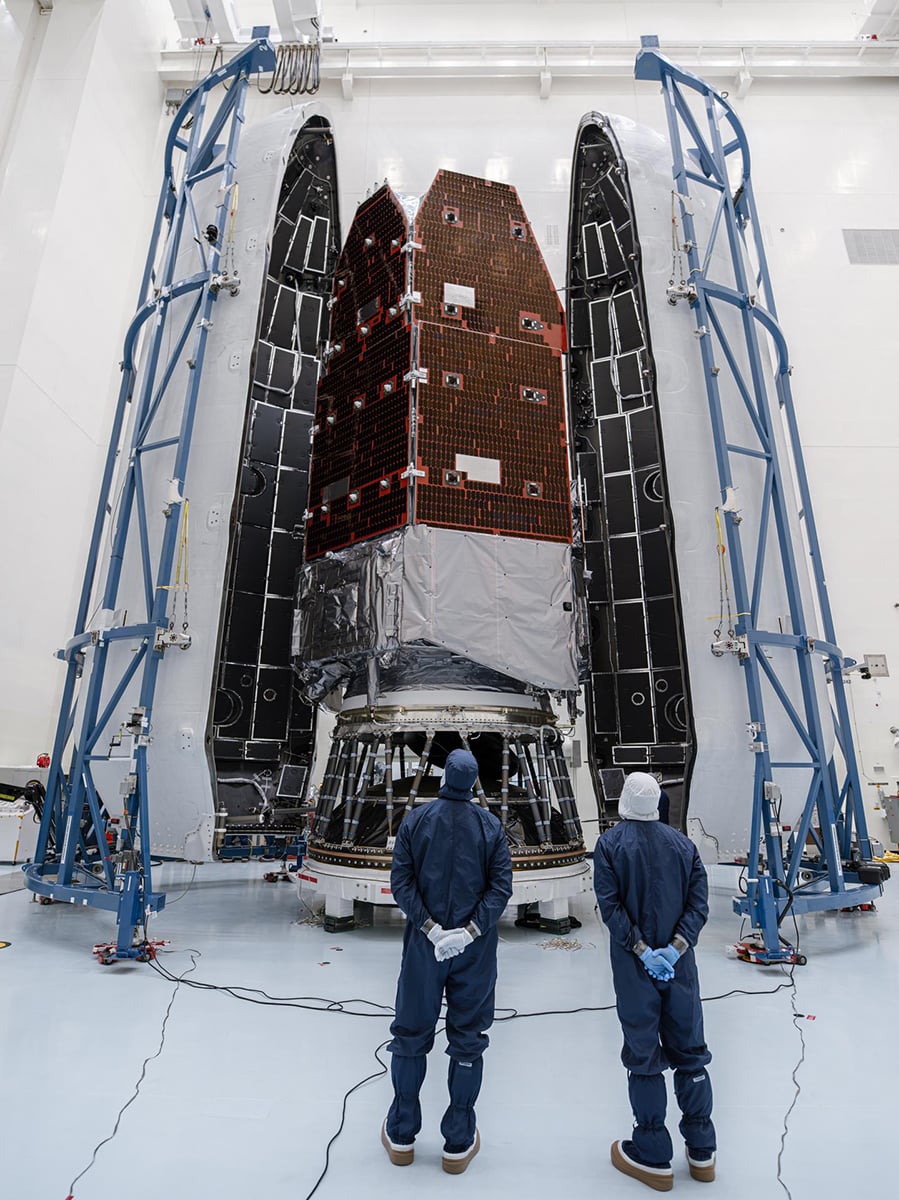
NASA has given Roman a primary mission lifetime of five years. The observatory is designed to support another five years if the mission receives an extension and its systems remain healthy. Its fuel is expected to be the resource that eventually limits its operations.
It is also important to know that astronauts won’t be able to service Roman at L2. NASA has, however, designed the spacecraft to be refuelable, in case robotic servicing becomes a thing in the future.
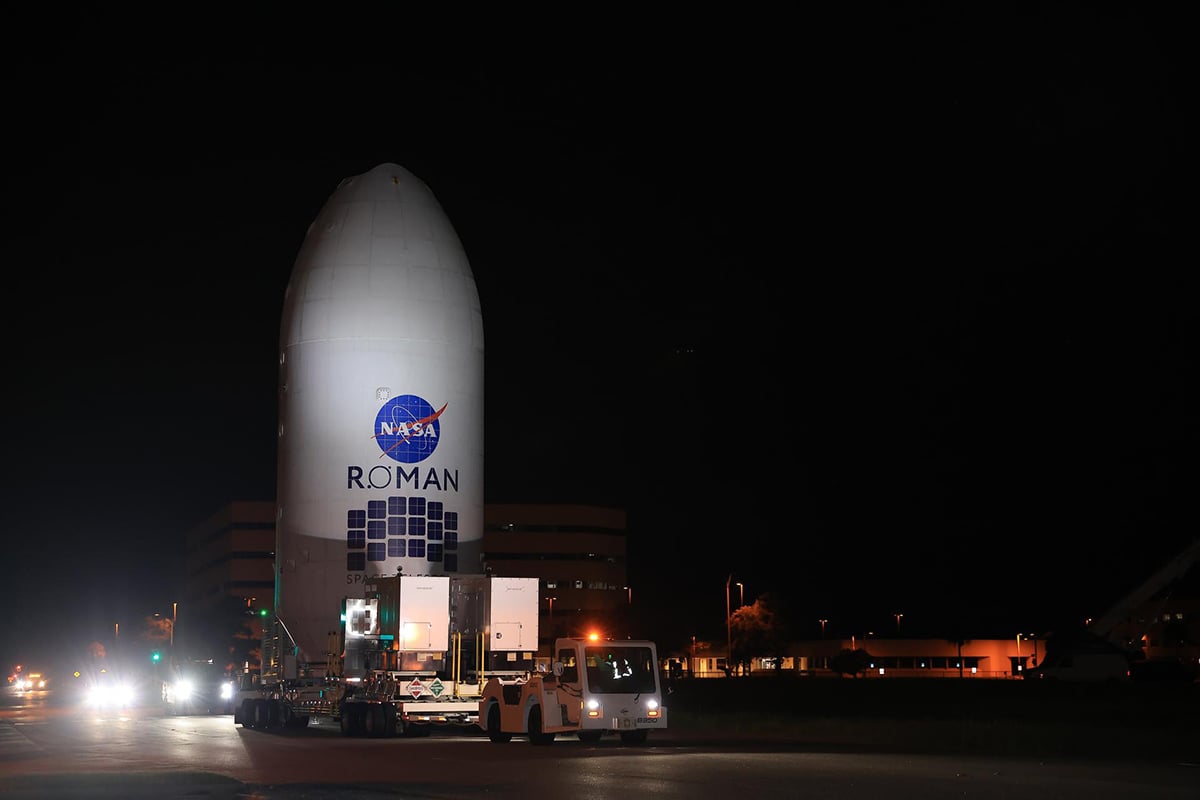
Two instruments onboard the Roman Telescope
Roman has two science instruments, and they have very different jobs. The Wide Field Instrument will carry out most of the observatory’s survey work. It is a 300-megapixel visible-to-near-infrared camera and slitless spectrometer. Its wide field will allow Roman to gather large amounts of information.
The Coronagraph Instrument, on the other hand, will test technology for observing planets next to much brighter stars. Roman’s coronagraph will suppress the glare of the bright stars using masks, deformable mirrors and active wavefront control.
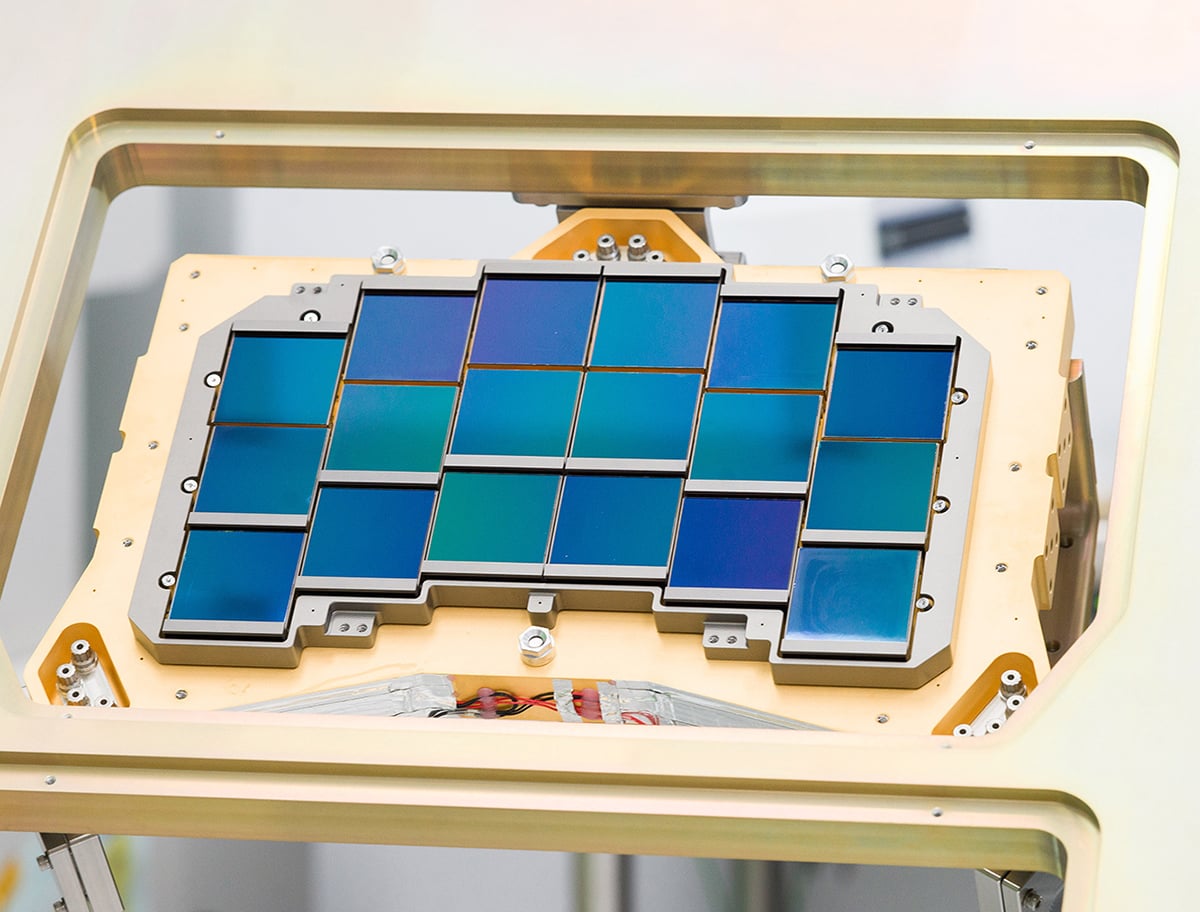
First images by early 2027
Roman will need about three months after launch before science observations begin. And during that period, engineers will deploy the spacecraft’s systems, calibrate the instruments and test the observatory’s performance.
And the exciting news for most of us? NASA expects the first science images in early 2027.
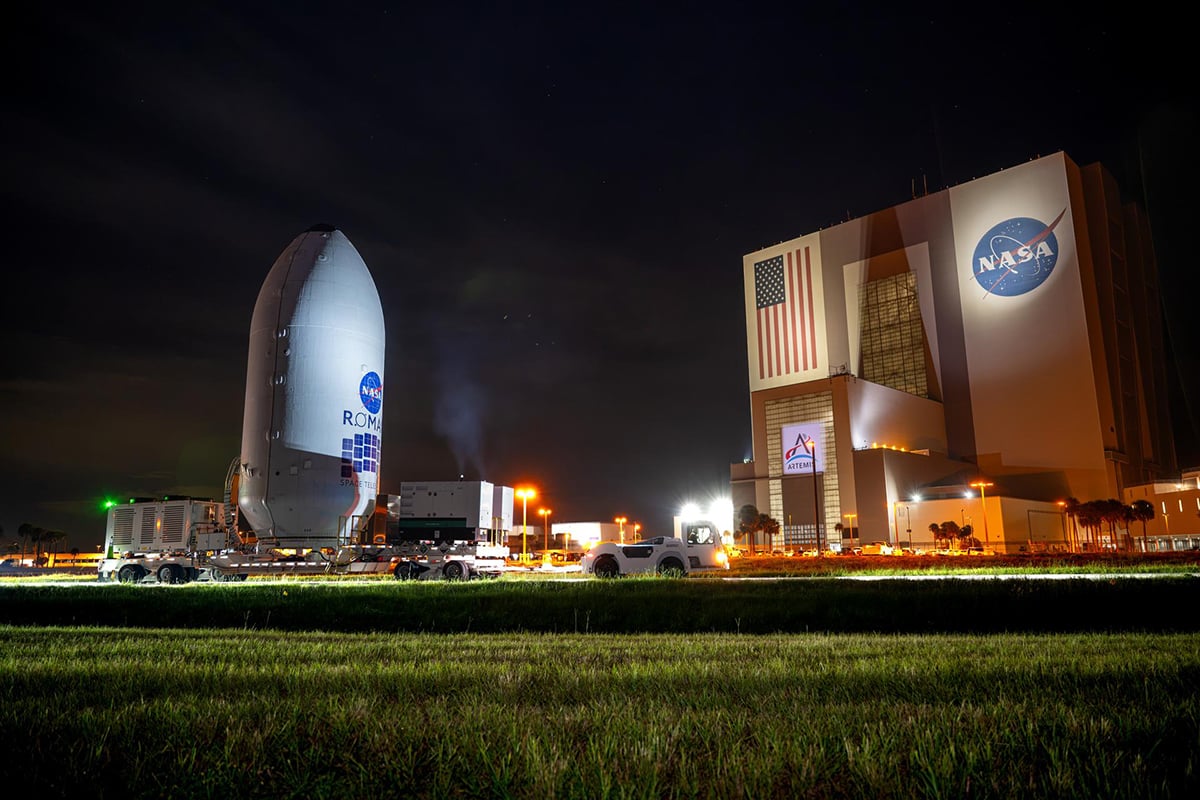
Watch the Roman launch live
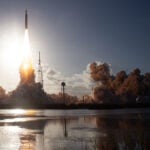
Roman’s launch is scheduled for August 30, 2026, from Launch Complex 39A at Kennedy Space Center. A SpaceX Falcon Heavy will carry the observatory into space, with liftoff targeted for 7:26 a.m. EDT.
NASA will be streaming the launch on its social media platforms, including Facebook, Instagram and YouTube. The coverage will continue for about an hour after liftoff to follow several early milestones.
Clear skies!
See more from DIYPhotography.net on Google
Add DIYPhotography.net as a trusted source. This makes
our stories more likely to appear in your Google Search results.
 Add as a preferred source on Google

Soumyadeep Mukherjee
Soumyadeep Mukherjee is an award-winning astrophotographer from India. He has a doctorate degree in Linguistics. His work extends to the sub-genres of nightscape, deep sky, solar, lunar and optical phenomenon photography. He is also a photography educator and has conducted numerous workshops. His works have appeared in over 40 books & magazines including Astronomy, BBC Sky at Night, Sky & Telescope among others, and in various websites including National Geographic, NASA, Forbes. He was the first Indian to win “Astronomy Photographer of the Year” award in a major category.

Join the Discussion
DIYP Comment Policy
Be nice, be on-topic, no personal information or flames.
One response to “NASA’s Roman Telescope Is All Set to Launch: Pre-Launch Images”
In New Zealand on Friday 28 August 2026 Son Recently go out go to Wellington:
1: Lambton Quay BNZ North End via Middleton Rd via Westchester Dr via Johnsonville–Porirua Mwy via Centennial Hwy via Wellington Urban Mwy via Aotea Quay via Waterloo Quay via Whitmore St via Lambton Quay via Stout St to Withdrawal Money.
And 2: Lambton Quay Kiwibank to Withdrawal Money.
Then Son Buy any other item what else:
1: Petone via Thorndon Quay via Hutt Rd via Hutt Expy via The Esplanade via Te Puni St via Annie Huggan Grove:
(a): To throw 1st.
Then Continues Buying any other item what else:
And (b): PAK’nSAVE.
2: Waikanae Woolworths via Jackson St via Hutt Rd via Hutt Expy via Centennial Hwy via Johnsonville–Porirua Mwy via Transmission Gully Mtwy via Kapiti Expy via Te Moana Rd via Marae Ln.
3: Paraparaumu:
(a): Z – Kapiti – Service Station via Marae Ln via Te Moana Rd via Kapiti Expy via Kapiti Rd to Fill the Petrol and Wash the Car.
Then Continues Buying any other item what else:
(b): Kapiti PAK’nSAVE via Kapiti Rd via Amohia St via Coastlands Parade.
(c): Eat Potato Long Roll with Luncheon in the Car in Coastlands Parking.
Then Continues Buying any other item what else:
And (d): The Warehouse.
And then Son go home via Coastlands Parade via Amohia St via Kapiti Rd via Kapiti Expy via Transmission Gully Mtwy via Johnsonville–Porirua Mwy via Westchester Drive via Middleton Rd to throw New The Warehouse Clothing into Washing Machine then Start Washing and then eat and drink what else.
And So DIYPhotography, Canada, Mexico, Central America, Caribbean, South America, Polynesia, Greenland, Europe, United States, Japan, New Zealand, Africa, West Asia, Philippines, Vietnam, Laos, Cambodia, Thailand, Myanmar, Micronesia, Melanesia, Singapore, Central Asia, South Asia, North Korea, South Korea, Malaysia, Indonesia, Brunei, East Timor, Bermuda, Australia, United Kingdom, Macau, Hong Kong, Taiwan, Mongolia, Saint Pierre and Miquelon and Everyone, now all go have a best upgraded realest strongest extremely biggest fighting and moreover to get all the money, everything, whatever and many more out from 4 Quintuple Country List: List 1 China/Mongolia/Taiwan/Macau/Hong Kong, List 2 North Korea/South Korea/Central Asia/South Asia/Myanmar, List 3 Laos/Thailand/Cambodia/Philippines/Vietnam and List 4 Russia/West Asia/Eastern Europe/Southeast Europe/Central Europe into 4 Single Country List: 1st List New Zealand, 2nd List United Kingdom, 3rd List Singapore and 4th List United States for every time.