




















James Webb Captures Galaxies Magnified More Than 300 Times
Sep 29, 2026
Soumyadeep Mukherjee
Soumyadeep Mukherjee is an award-winning astrophotographer from India. He has a doctorate degree in Linguistics. His work extends to the sub-genres of nightscape, deep sky, solar, lunar and optical phenomenon photography. He is also a photography educator and has conducted numerous workshops. His works have appeared in over 40 books & magazines including Astronomy, BBC Sky at Night, Sky & Telescope among others, and in various websites including National Geographic, NASA, Forbes. He was the first Indian to win “Astronomy Photographer of the Year” award in a major category.
Share:
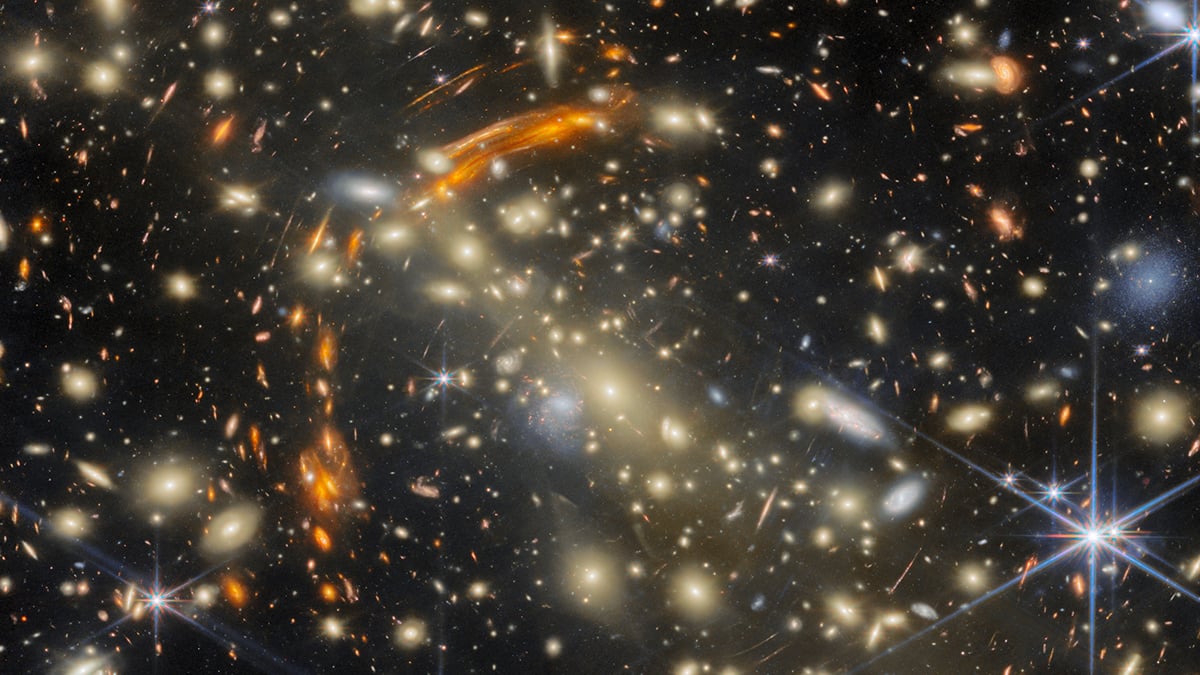
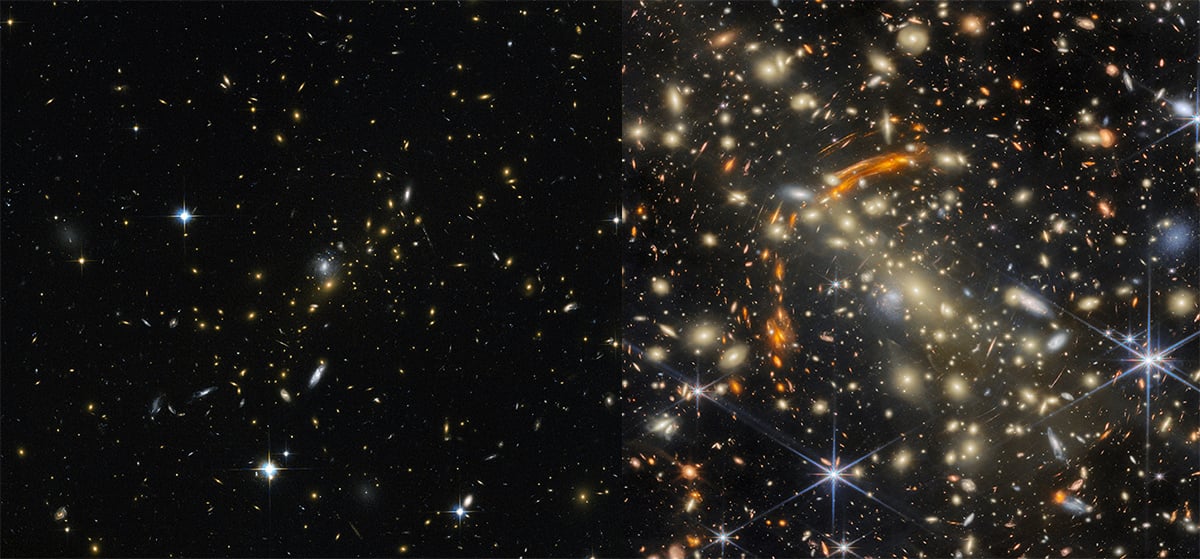
The James Webb Space Telescope has photographed the galaxy cluster MACS J0454.1-0300, where gravity distorts and magnifies galaxies far behind it. This is known as “gravitational lensing”. The new image shows several long orange arcs, repeated images of distant galaxies, and faint background galaxies that even Hubble could not see in an earlier observation. The title of the image, “Cosmic House of Mirrors”, sounds very apt.
MACS J0454.1-0300 lies in the constellation Orion. James Webb saw the cluster as it looked around eight billion years ago, when its light began its journey towards Earth. Several of the objects in the image, however, sit much farther away, behind the cluster from our viewpoint. Their light passed through the cluster’s enormous gravitational field before reaching JWST, changing the appearance of those distant galaxies.
The galaxy cluster is bending the light
The bright galaxies in the center of the image belong to MACS J0454.1-0300. The cluster contains a huge amount of mass, including its galaxies, hot gas, and dark matter. This mass produces a strong gravitational field around the cluster, and light passing through this region does not follow the same path it would take through space.
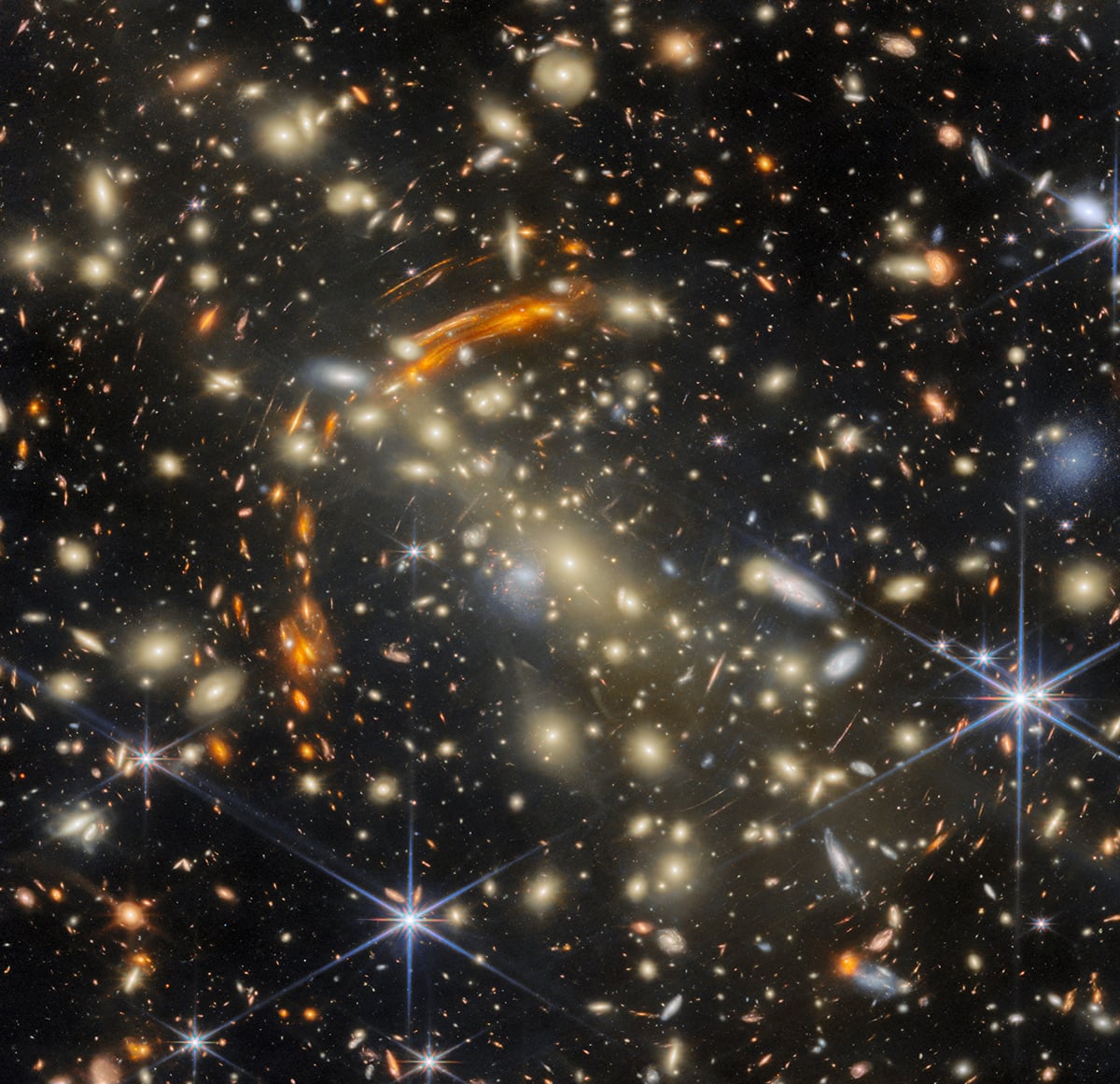
This effect is known as gravitational lensing. Massive objects curve spacetime, and light follows those curves as it travels through the Universe. When a distant galaxy sits behind a massive cluster, the cluster can shift, stretch, or magnify the galaxy’s apparent image. The effect becomes especially strong when the background galaxy lines up closely with the foreground cluster and the observer.
This is the explanation behind the long orange arcs surrounding MACS J0454.1-0300. They are distant galaxies whose light has been distorted on its way to JWST. Some appear as thin arcs because the cluster stretches their images across the sky. Others appear as small curved fragments, depending on their position behind the cluster and the path their light followed.
Some of the distant galaxies appear several times
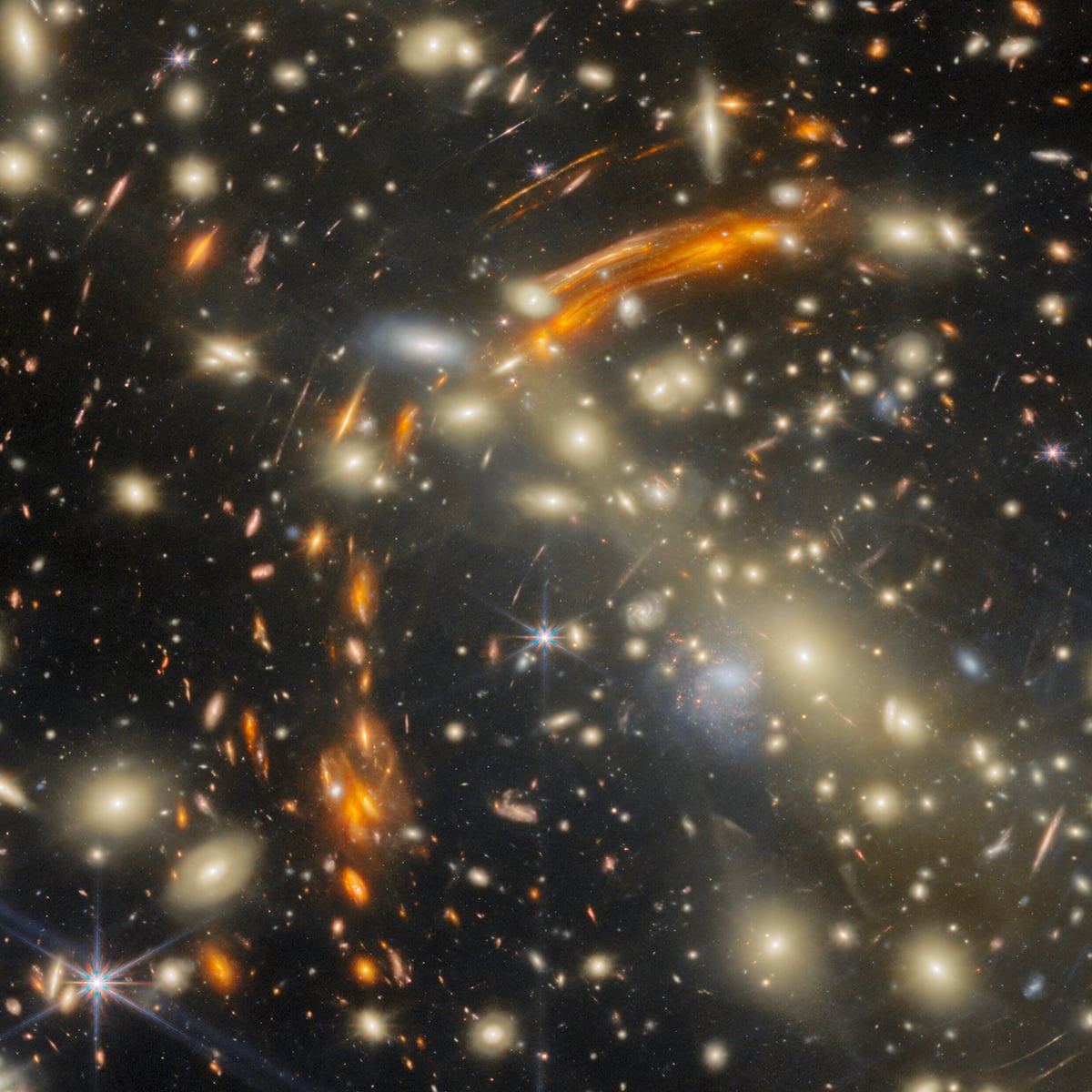
The lensing effect becomes even more interesting when the geometry creates several paths for light from the same background galaxy. The cluster can make astronomers see the same galaxy in two, three, or even four separate places. The positions of these images depend on the mass distribution within the cluster and the alignment between the foreground cluster, the distant galaxy, and Earth.
Four-or-more-image systems are relatively uncommon. ESA estimates that astronomers find them in around 10 to 20 percent of galaxy clusters. MACS J0454.1-0300 contains two such regions, giving researchers multiple examples of this unusual lensing configuration within the same cluster.
In the new JWST image, quadruple iterations of the same galaxy appear twice. This makes it the first galaxy cluster observed to exhibit this phenomenon. In addition to that, JWST’s observations revealed bright knots within some of the lensed galaxies. Some of these regions measure only about five light-years across, while the gravitational lens can magnify them by more than 300 times.
Webb reveals hundreds of galaxies missing from Hubble’s view
The new JWST image also gives us a comparison with an earlier observation of the same cluster. The Hubble Space Telescope photographed MACS J0454.1-0300 back in 2014. Hubble’s image showed the bright cluster galaxies and several of the most obvious gravitationally lensed sources, but James Webb reveals hundreds of additional galaxies across the same field.
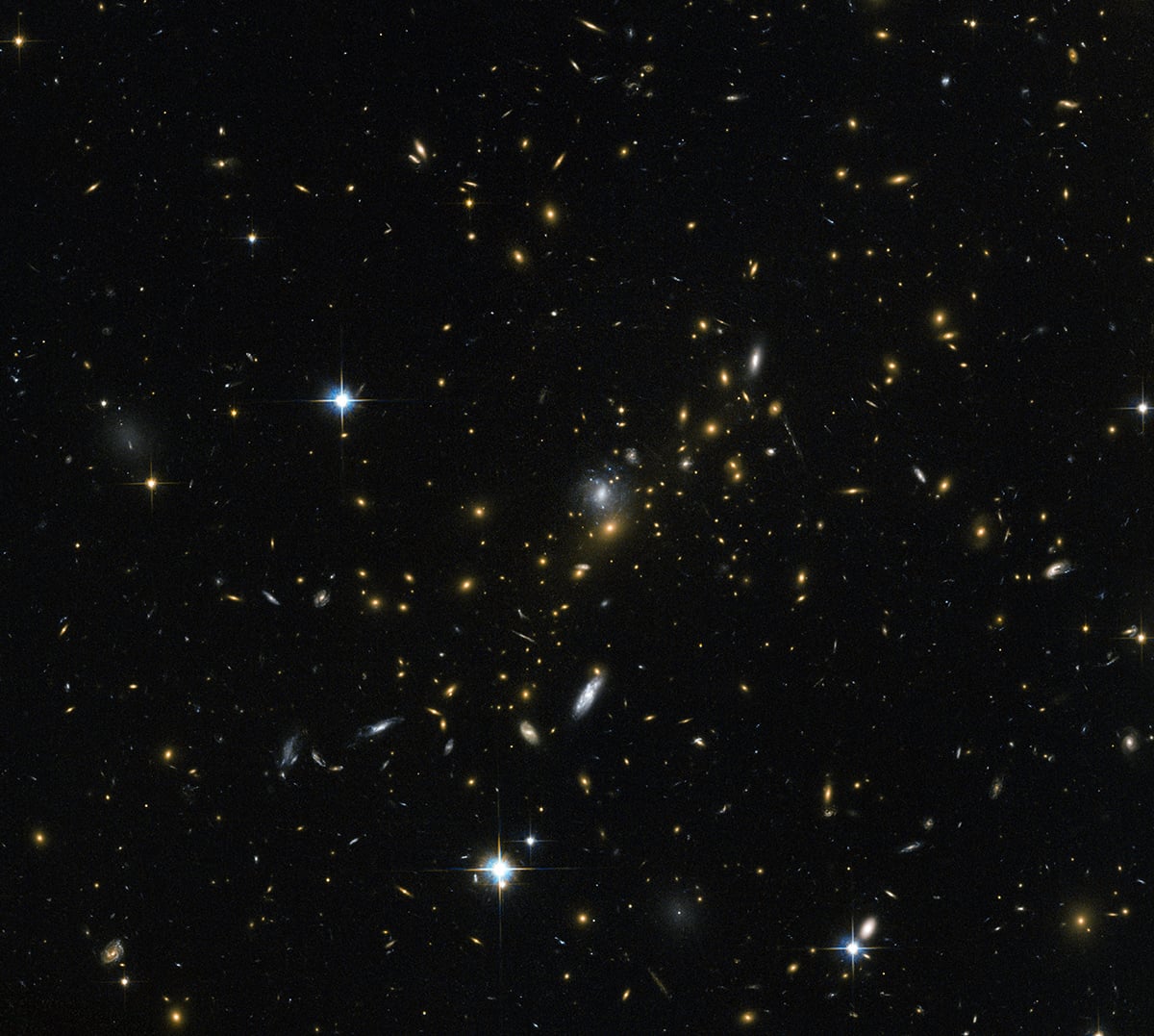
NIRCam collected the observations for this image across wavelengths ranging from about 0.9 to 4.44 microns. Webb used several filters during the observations, giving astronomers information across different parts of the infrared spectrum. The final image combines those observations into a view that shows the bright cluster, the distorted background galaxies, and the much fainter sources that become visible at infrared wavelengths.
Clear skies!
See more from DIYPhotography.net on Google
Add DIYPhotography.net as a trusted source. This makes
our stories more likely to appear in your Google Search results.
 Add as a preferred source on Google

Soumyadeep Mukherjee
Soumyadeep Mukherjee is an award-winning astrophotographer from India. He has a doctorate degree in Linguistics. His work extends to the sub-genres of nightscape, deep sky, solar, lunar and optical phenomenon photography. He is also a photography educator and has conducted numerous workshops. His works have appeared in over 40 books & magazines including Astronomy, BBC Sky at Night, Sky & Telescope among others, and in various websites including National Geographic, NASA, Forbes. He was the first Indian to win “Astronomy Photographer of the Year” award in a major category.


Join the Discussion
DIYP Comment Policy
Be nice, be on-topic, no personal information or flames.