



















ESA’s JUICE Photographed Earth With Two Cameras: More to Come
Oct 1, 2026
Soumyadeep Mukherjee
Soumyadeep Mukherjee is an award-winning astrophotographer from India. He has a doctorate degree in Linguistics. His work extends to the sub-genres of nightscape, deep sky, solar, lunar and optical phenomenon photography. He is also a photography educator and has conducted numerous workshops. His works have appeared in over 40 books & magazines including Astronomy, BBC Sky at Night, Sky & Telescope among others, and in various websites including National Geographic, NASA, Forbes. He was the first Indian to win “Astronomy Photographer of the Year” award in a major category.
Share:
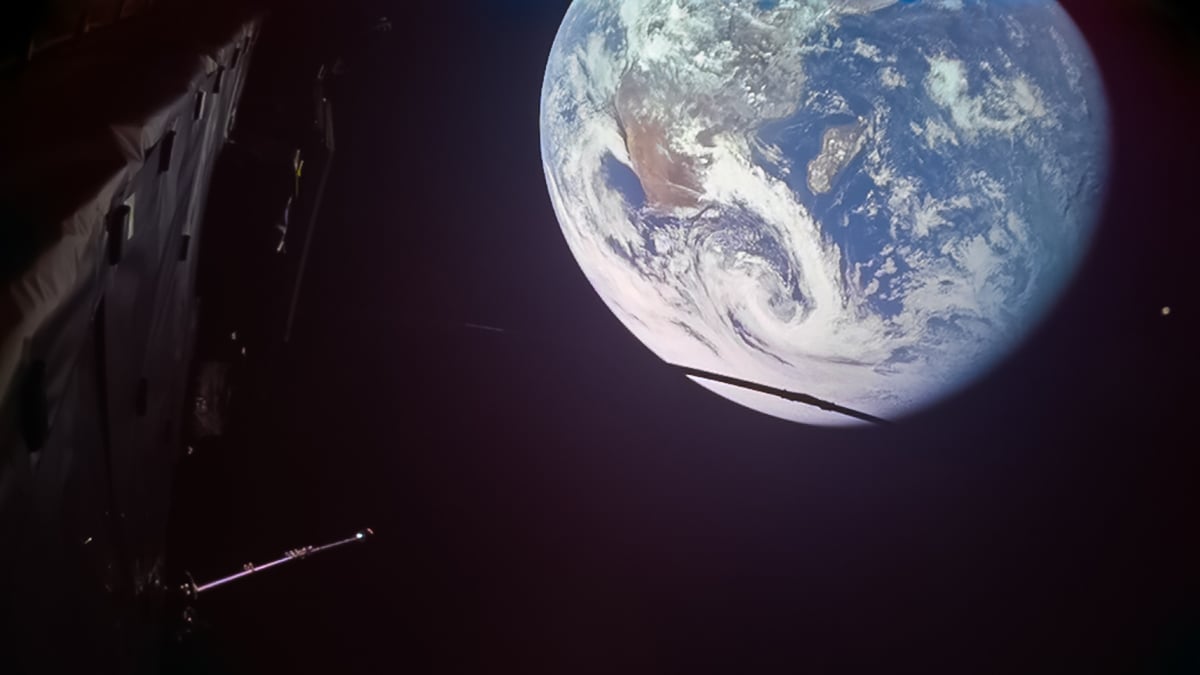
On September 28, ESA’s JUICE spacecraft passed 8,640 kilometers above the Indian Ocean. As it moved away from Earth, one of its small monitoring cameras and the navigation camera captured a view of Earth. The photograph shows much of the continent, along with Madagascar, Yemen, and Oman.
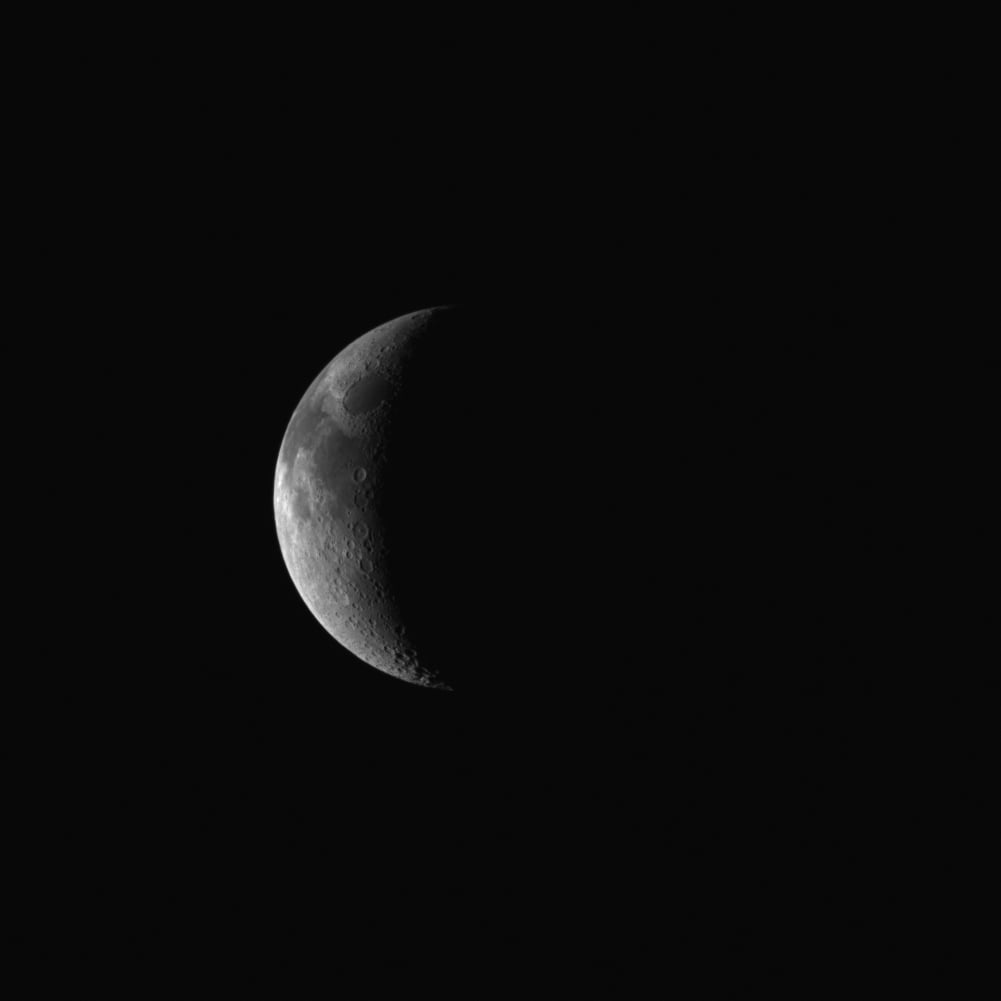
The photograph comes with another story. JUICE carries a more capable scientific camera called JANUS, and that instrument also observed Earth and the Moon during this flyby. ESA expects to release those higher-resolution images after the science teams finish processing the data.
Earth flyby: Gravity assist for JUICE
JUICE reached its closest point to Earth at 13:45 CEST on September 28. It passed over the Indian Ocean, travelling from east to west, and came within 8,640 kilometers of the planet. Earth’s gravity then bent the spacecraft’s trajectory by about 20 degrees and increased its velocity by roughly 3.5 kilometers per second.
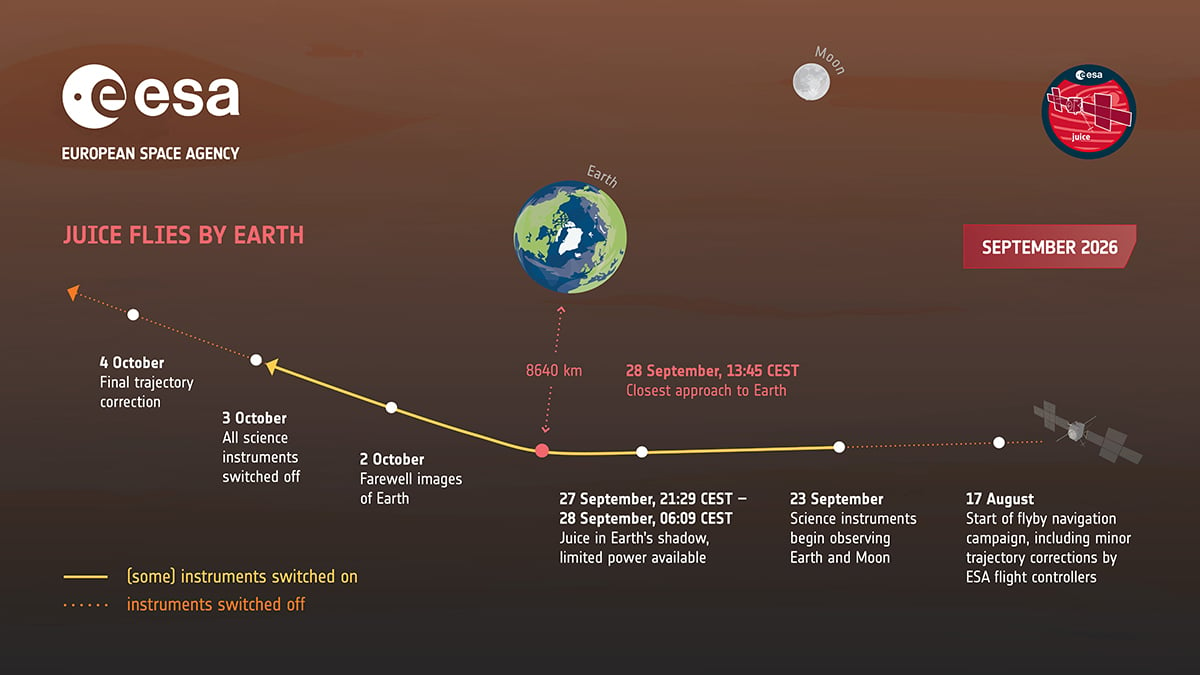
ESA began the dedicated navigation campaign on August 17 and planned six opportunities to make small corrections. In the end, mission controllers needed only one manoeuvre, carried out four weeks before the flyby. This correction placed JUICE on the right approach path to extract the required change from Earth’s gravity.
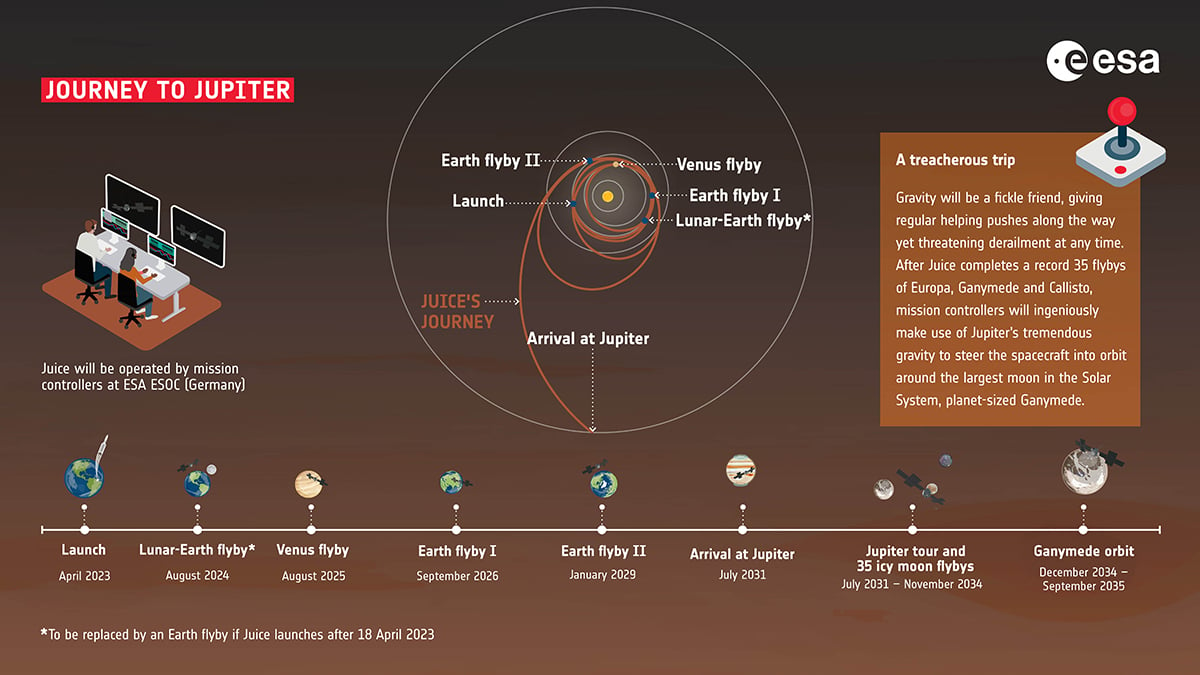
The next Earth encounter will come in January 2029. That final flyby will place JUICE on its final trajectory towards Jupiter, where the spacecraft is expected to arrive in July 2031. From there, it will begin an extensive tour of Jupiter and its large icy moons, including 35 planned flybys of Ganymede, Callisto and Europa.
The Earth image from JUICE’s monitoring camera
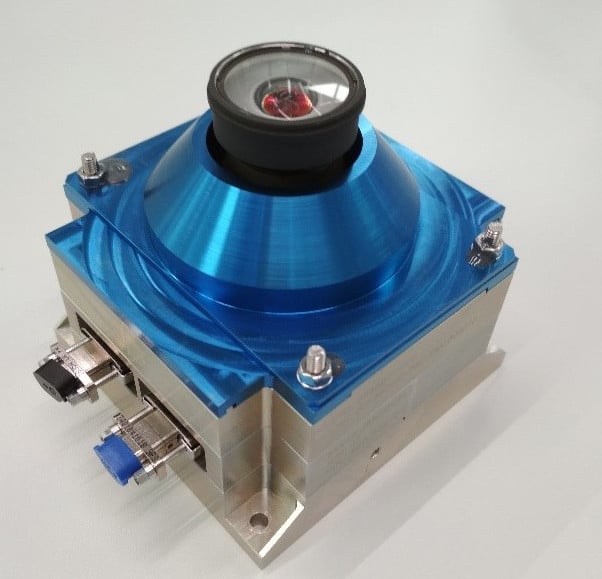
The Earth photograph came from the Juice Monitoring Camera 1, or JMC1. ESA installed two monitoring cameras on JUICE, mainly to keep an eye on the spacecraft’s booms and antennas, particularly during the difficult deployment period after launch.
JMC1 sits on the front, or +X side, of the spacecraft and points diagonally upwards towards the +Y/+Z direction. Its field of view includes some of JUICE’s deployed antennas and can also include part of a solar array, depending on the spacecraft’s orientation.
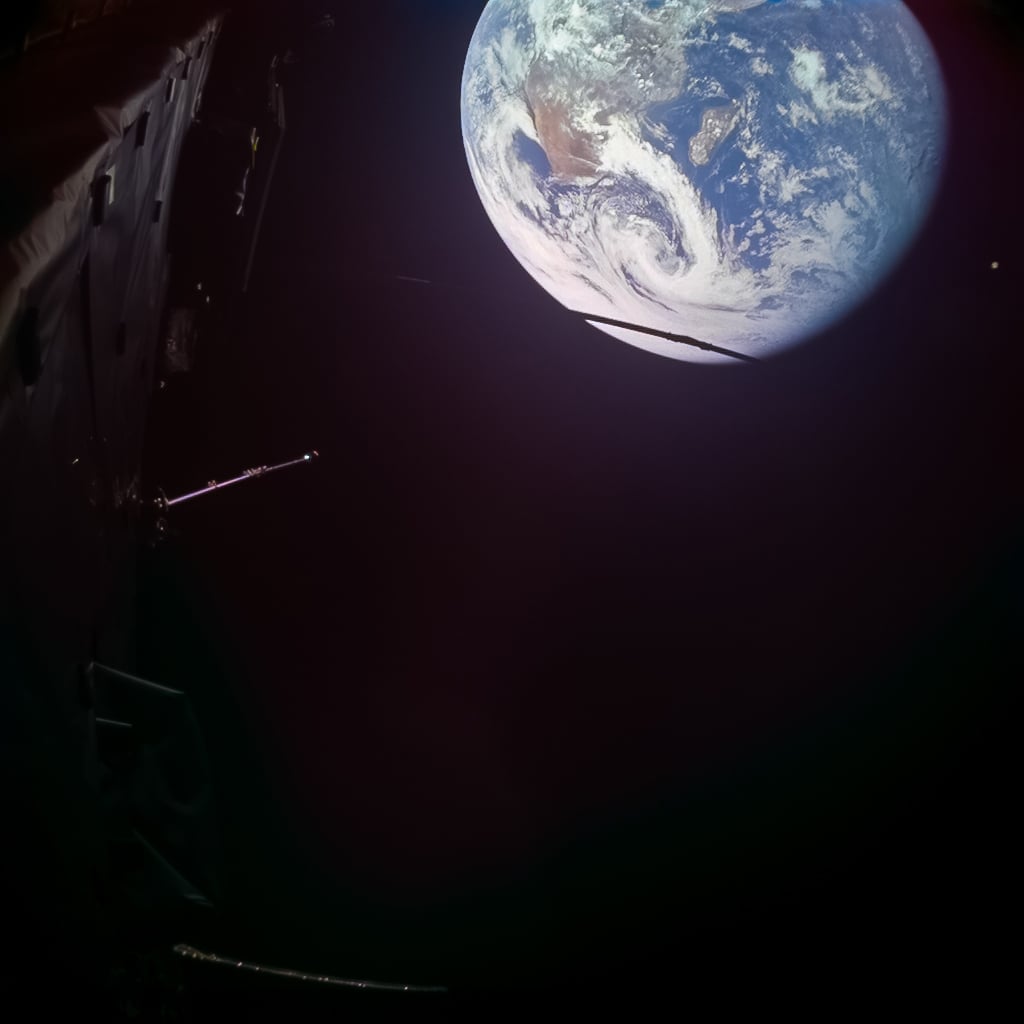
JMC1 records square images measuring 1024 × 1024 pixels. During the September flyby, it captured the Earth view at around 13:58 CEST, as JUICE was moving away from its closest approach. The final image combines four images taken with different exposures, helping preserve more detail in the darker parts of the scene.
Another camera in action: NavCam
JUICE’s Navigation Camera, or NavCam, also had a chance to photograph the planet while engineers tested the system in space. One of its images shows part of Madagascar in black and white. The camera took the image at 13:47 CEST, only two minutes after JUICE passed its closest point to Earth.
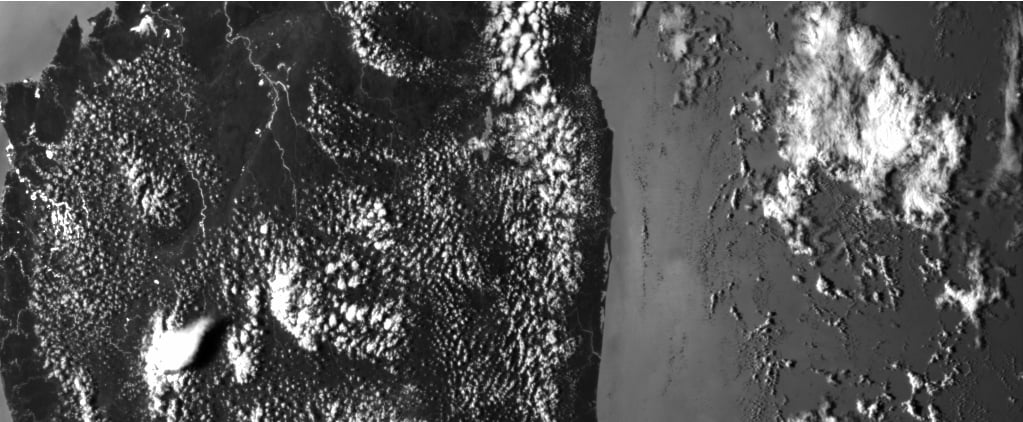
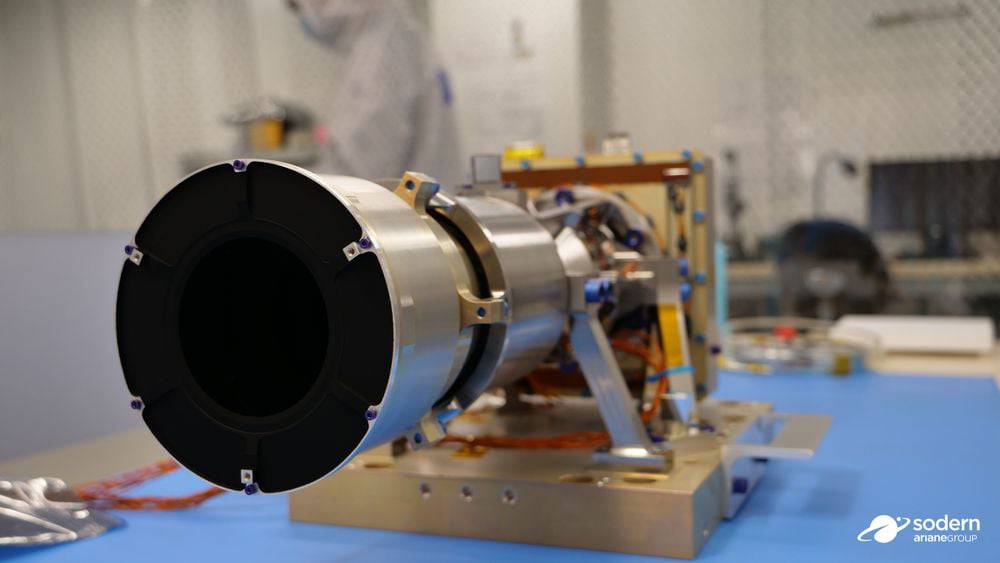
NavCam has a very different purpose from the monitoring cameras. Its eventual job will include helping JUICE navigate around Jupiter and its moons. During the Earth flyby, engineers used the opportunity to test its imaging and optical-navigation capabilities under real flight conditions. Looking at the horizon of the Moon and observing Earth provided useful targets for checking how the system performs away from Earth-based test facilities.
A sharper Earth view is coming
The JMC1 photograph is probably not the best Earth image JUICE will produce during this encounter. ESA says its scientific camera, JANUS, is also collecting high-resolution images of Earth and the Moon. Those images will require additional time to reach Earth and go through processing and evaluation by the instrument teams.
While the monitoring camera spends much of its time watching the spacecraft, JANUS forms part of JUICE’s scientific payload and will eventually photograph Jupiter and its icy moons in considerably greater detail.
Clear skies!
See more from DIYPhotography.net on Google
Add DIYPhotography.net as a trusted source. This makes
our stories more likely to appear in your Google Search results.
 Add as a preferred source on Google

Soumyadeep Mukherjee
Soumyadeep Mukherjee is an award-winning astrophotographer from India. He has a doctorate degree in Linguistics. His work extends to the sub-genres of nightscape, deep sky, solar, lunar and optical phenomenon photography. He is also a photography educator and has conducted numerous workshops. His works have appeared in over 40 books & magazines including Astronomy, BBC Sky at Night, Sky & Telescope among others, and in various websites including National Geographic, NASA, Forbes. He was the first Indian to win “Astronomy Photographer of the Year” award in a major category.

Join the Discussion
DIYP Comment Policy
Be nice, be on-topic, no personal information or flames.