






















Juno’s latest flyby photos reveal Jupiter like never before
Nov 12, 2024
Dunja Đuđić Kalinin
Dunja Djudjic is a multi-talented artist based in Novi Sad, Serbia. With 15 years of experience as a photographer, she specializes in capturing the beauty of nature, travel, concerts, and fine art. In addition to her photography, Dunja also expresses her creativity through writing, embroidery, and jewelry making.
Share:

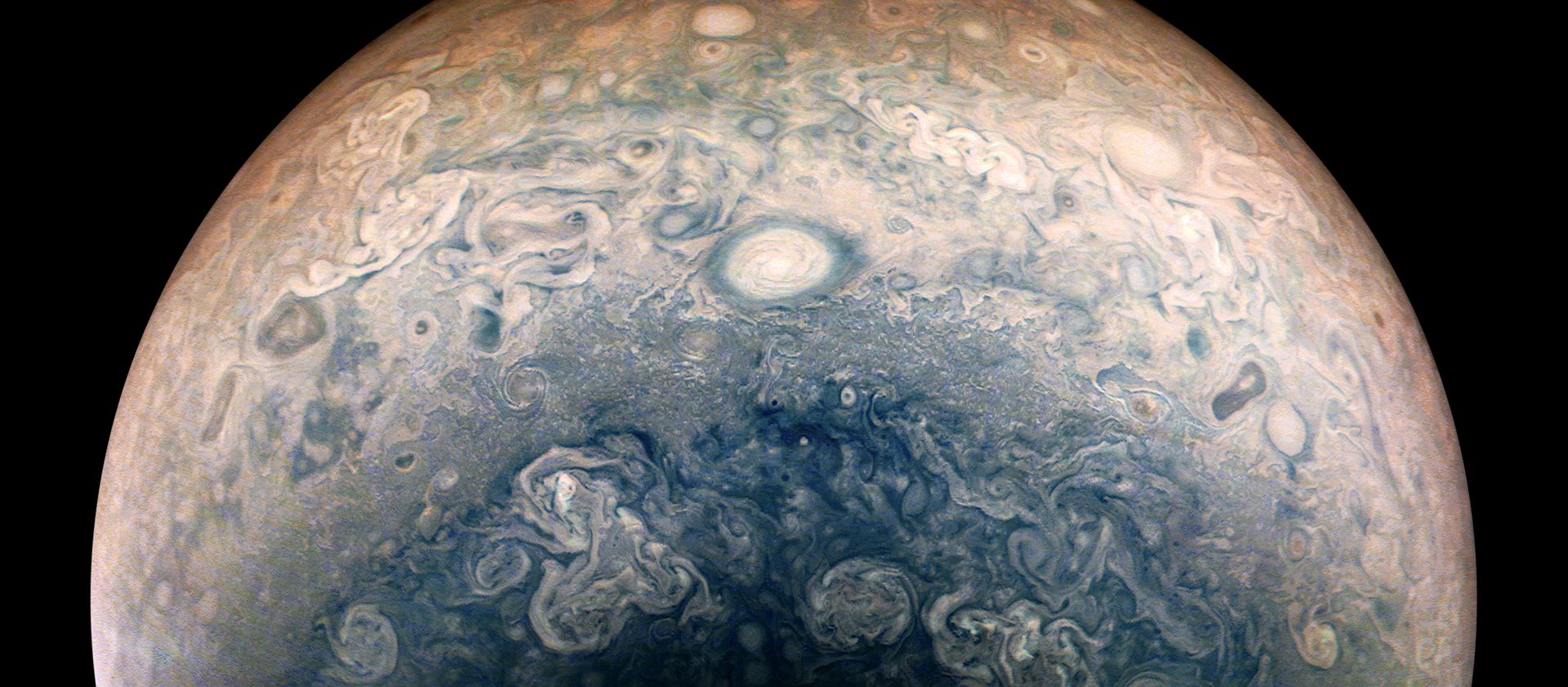
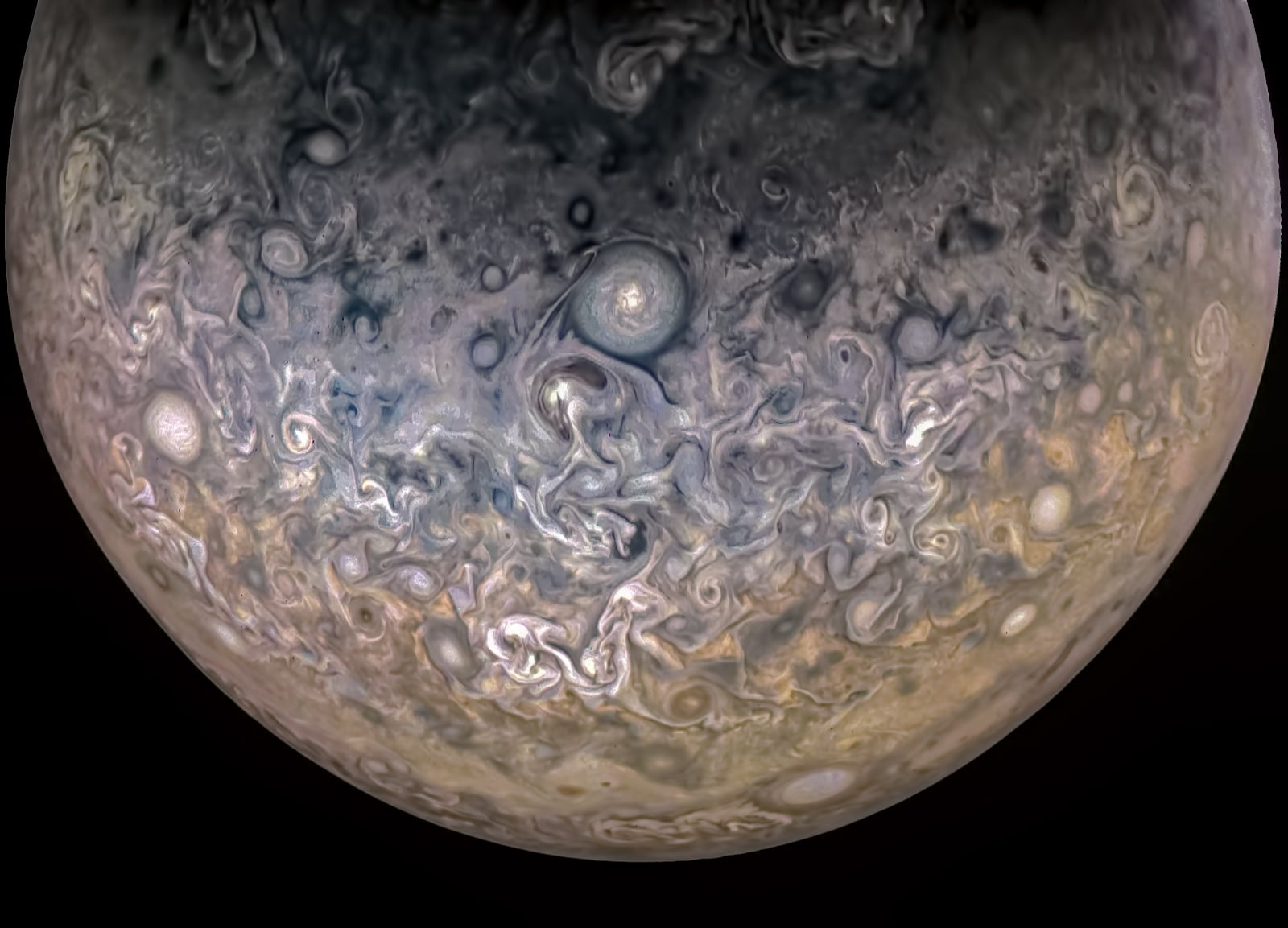
NASA’s Juno spacecraft, which has orbited Jupiter since 2016, recently captured striking new images of the gas giant during its 66th close flyby. This solar-powered mission, launched in August 2011, seeks to understand Jupiter’s formation and evolution, shedding light on the development of our solar system.
“Jupiter is the Rosetta Stone of our solar system,” said Juno’s principal investigator, Scot Bolton. “Juno is going there as our emissary – to interpret what Jupiter has to say.”
The Juno mission has been studying the Jovian system (Jupiter, its rings and many moons) to learn about the giant planet’s formation and evolution. It’s with the hope that it might shed light on the development of the entire solar system. The recent flyby brought Juno close to Amalthea, one of Jupiter’s moons, capturing data with its two-megapixel JunoCam.
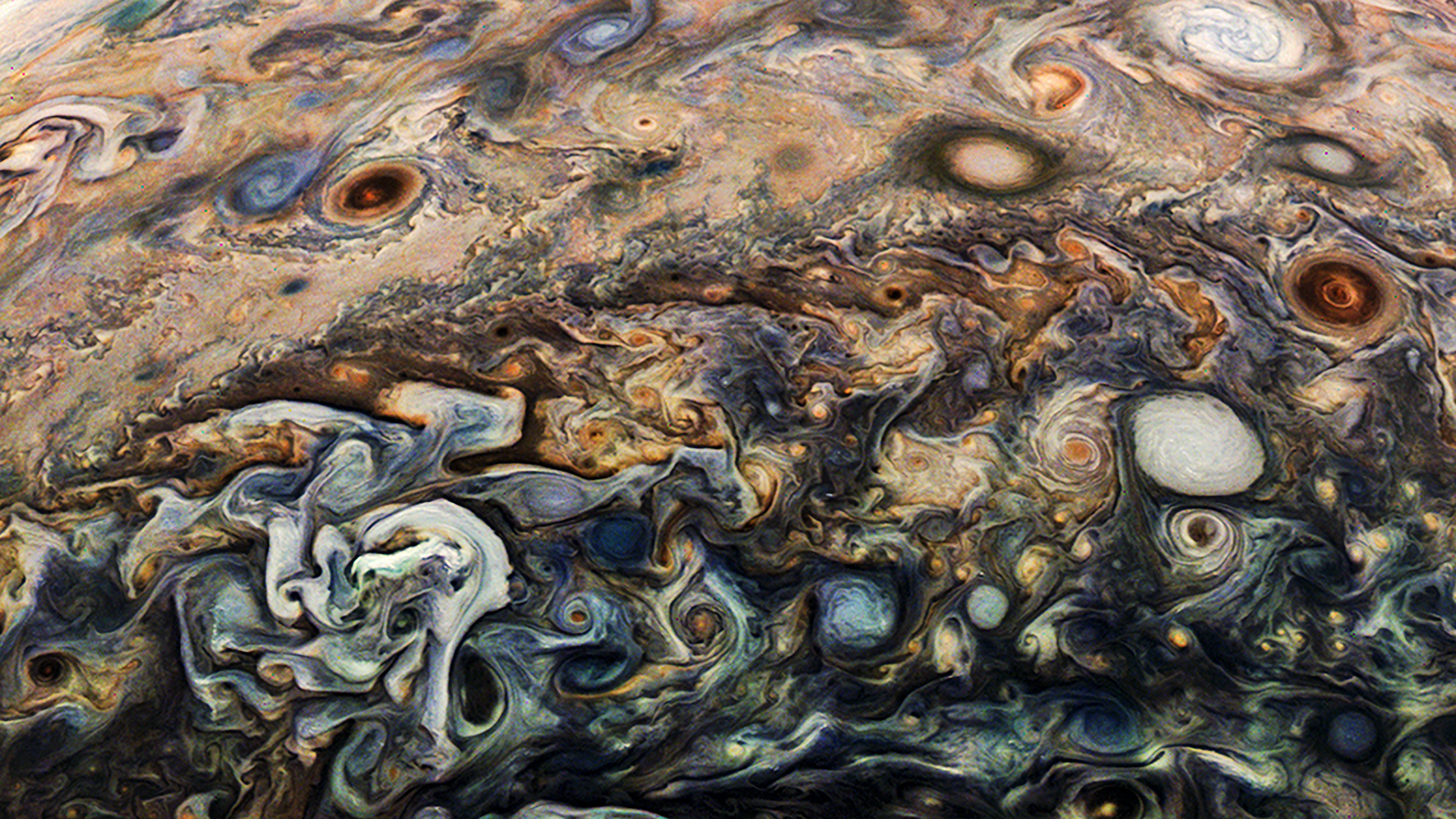
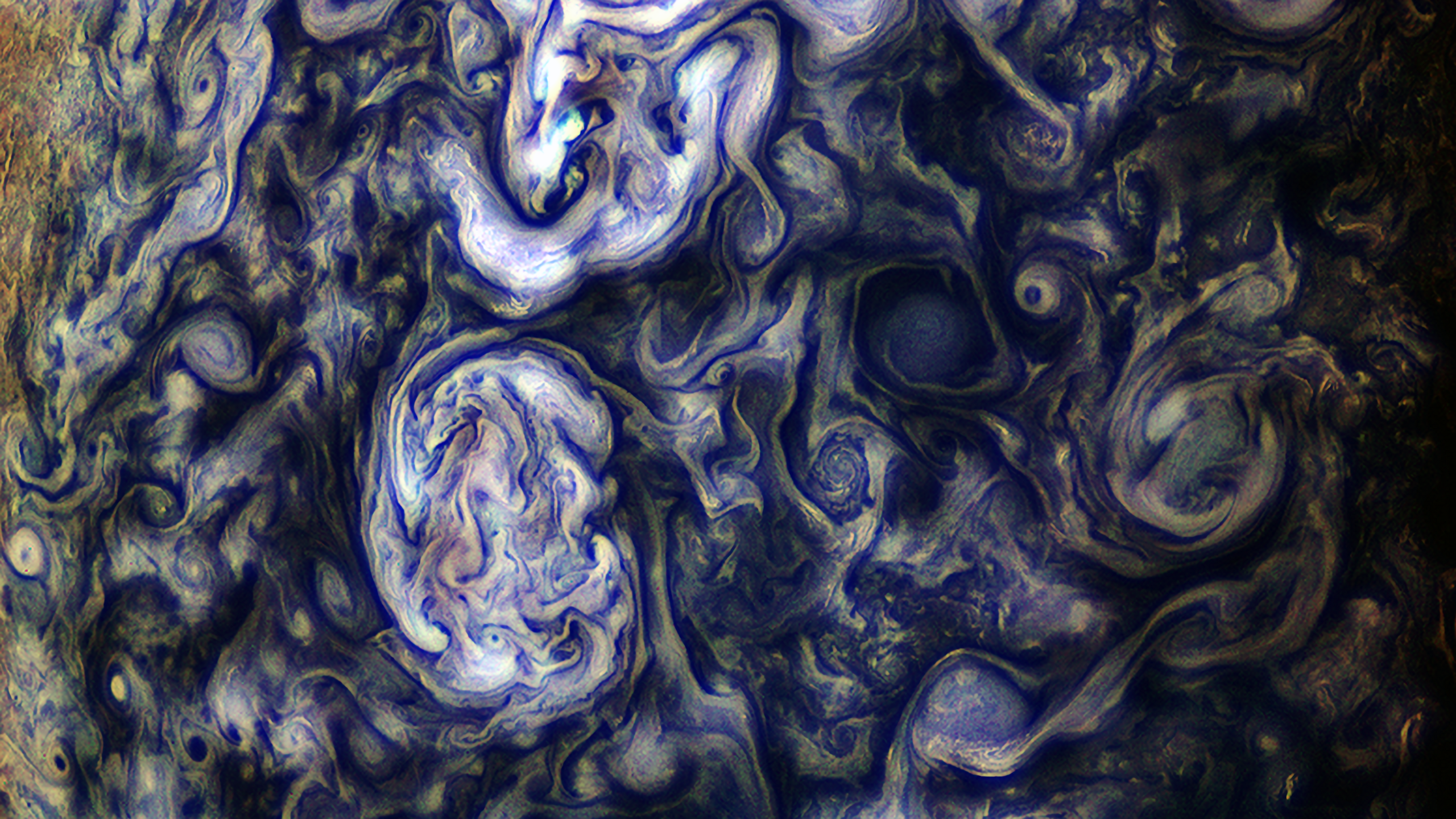
The new images from Juno provide us with enhanced insights into Jupiter’s atmosphere, magnetic field, and moons, adding to our understanding of the gas giant’s complex structure. These visuals reveal details of Jupiter’s massive cyclones at its poles, the iconic Great Red Spot, and its faint ring system. Juno’s close proximity to Amalthea during the recent flyby also allowed for closer observation of this moon, which, along with other moons in Jupiter’s orbit, offers clues about the planet’s influence on its surroundings.
Mission extension and citizen collaboration
Originally set to end in 2017, Juno’s mission has been extended through 2025, adding 42 orbits to explore Jupiter’s moons and rings further. Juno’s polar path has already revealed massive polar cyclones, unique views of Jupiter’s iconic Great Red Spot, and details about its magnetic field.
One of Juno’s unique aspects is its collaborative approach to image processing. Raw JunoCam data is publicly available, enabling citizen scientists to create vivid images that highlight key features. “The mission doesn’t have a team of scientists dedicated to image processing,” writes Jamie Carter of Forbes, so these citizen contributions are vital in showcasing Juno’s findings.
Enjoy more recent Jupiter photos below, and learn more about Juno on NASA’s website.

[via The Smithsonian]
See more from DIYPhotography.net on Google
Add DIYPhotography.net as a trusted source. This makes
our stories more likely to appear in your Google Search results.
 Add as a preferred source on Google

Dunja Đuđić Kalinin
Dunja Djudjic is a multi-talented artist based in Novi Sad, Serbia. With 15 years of experience as a photographer, she specializes in capturing the beauty of nature, travel, concerts, and fine art. In addition to her photography, Dunja also expresses her creativity through writing, embroidery, and jewelry making.


Join the Discussion
DIYP Comment Policy
Be nice, be on-topic, no personal information or flames.
One response to “Juno’s latest flyby photos reveal Jupiter like never before”
Those beautiful pictures are just amazing and show us just how unique our planetary system is; each planet is awesome! To have this opportunity to study our giant neighbors is going to give us a much better understanding of what makes Jupiter tick!