





















Photographer Captures Three Faces of the Moon in a Single Night
Sep 22, 2026
Soumyadeep Mukherjee
Soumyadeep Mukherjee is an award-winning astrophotographer from India. He has a doctorate degree in Linguistics. His work extends to the sub-genres of nightscape, deep sky, solar, lunar and optical phenomenon photography. He is also a photography educator and has conducted numerous workshops. His works have appeared in over 40 books & magazines including Astronomy, BBC Sky at Night, Sky & Telescope among others, and in various websites including National Geographic, NASA, Forbes. He was the first Indian to win “Astronomy Photographer of the Year” award in a major category.
Share:
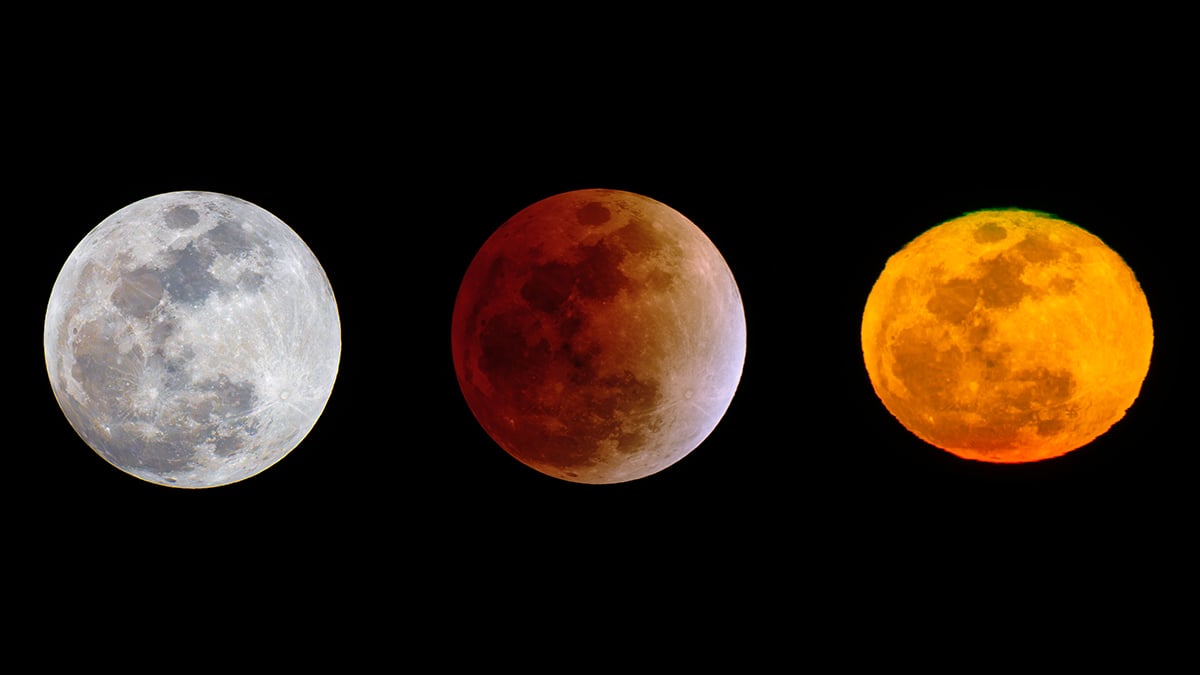
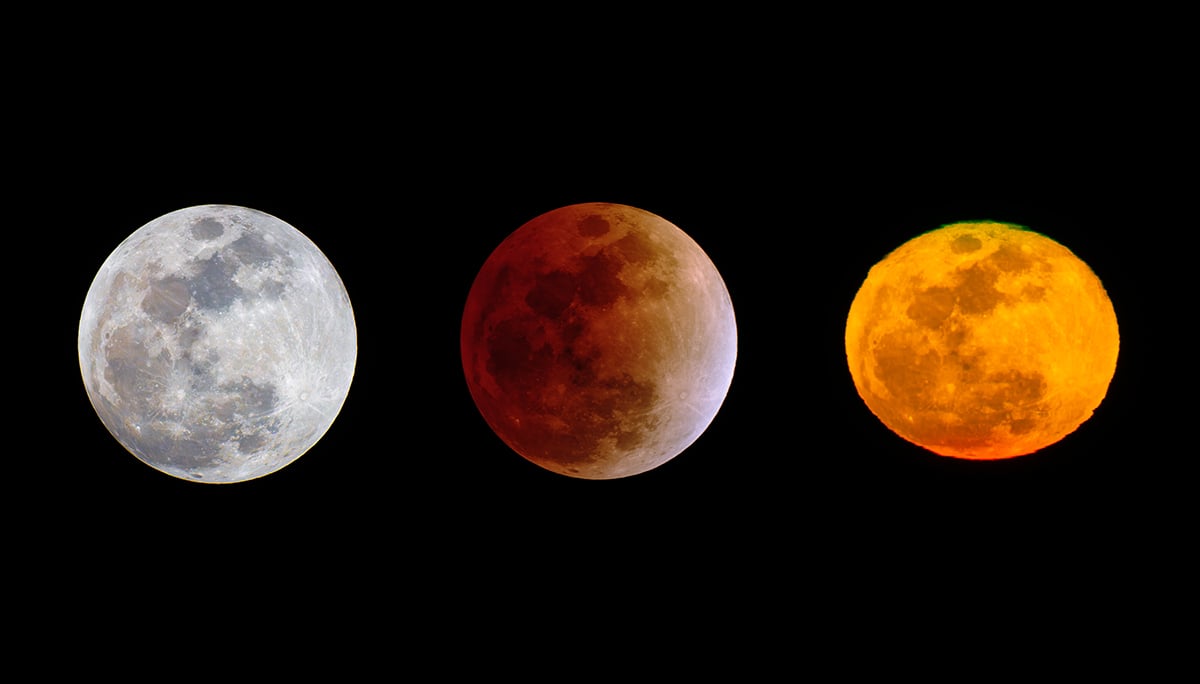
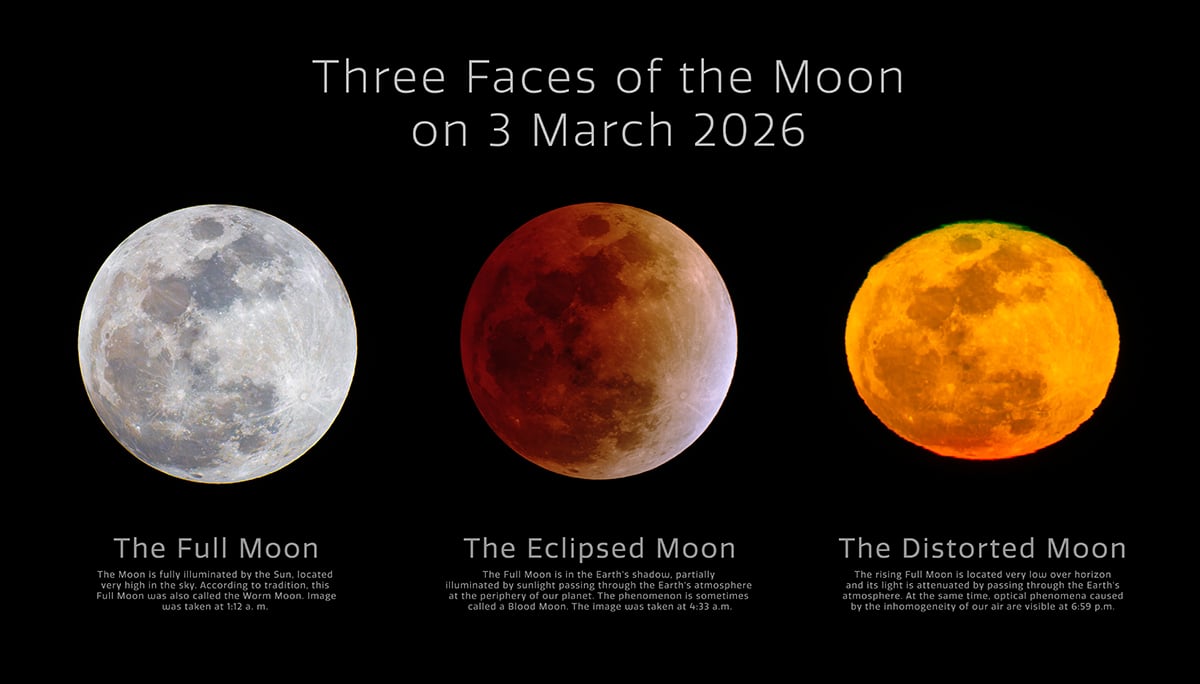
When you look at the moon on a full moon night, do you notice any changes? While a lot of changes are not apparent to the naked eye, you must have noticed the most obvious change: its color. The moon looks very different when it rises or sets and when it is high up in the sky. When it is a lunar eclipse, you add another change. An astrophotographer has captured these exact changes of the moon and combined them in his image “Three Faces of the Moon over Kitt Peak”.
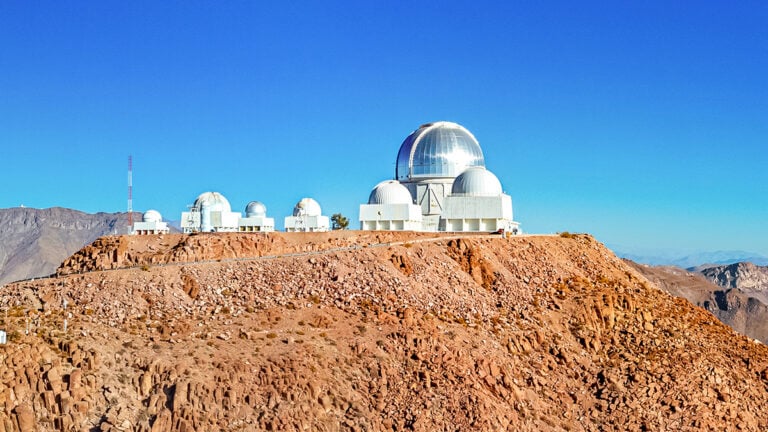
Petr Horálek photographed the Moon three times from Kitt Peak National Observatory in Arizona. The first photograph shows a normal full Moon above the observatory. Hours later, the same Moon had turned red during a total lunar eclipse. That evening, Horálek photographed it again, this time low over the horizon with a distorted shape and thin green and red edges.
A full Moon before the eclipse
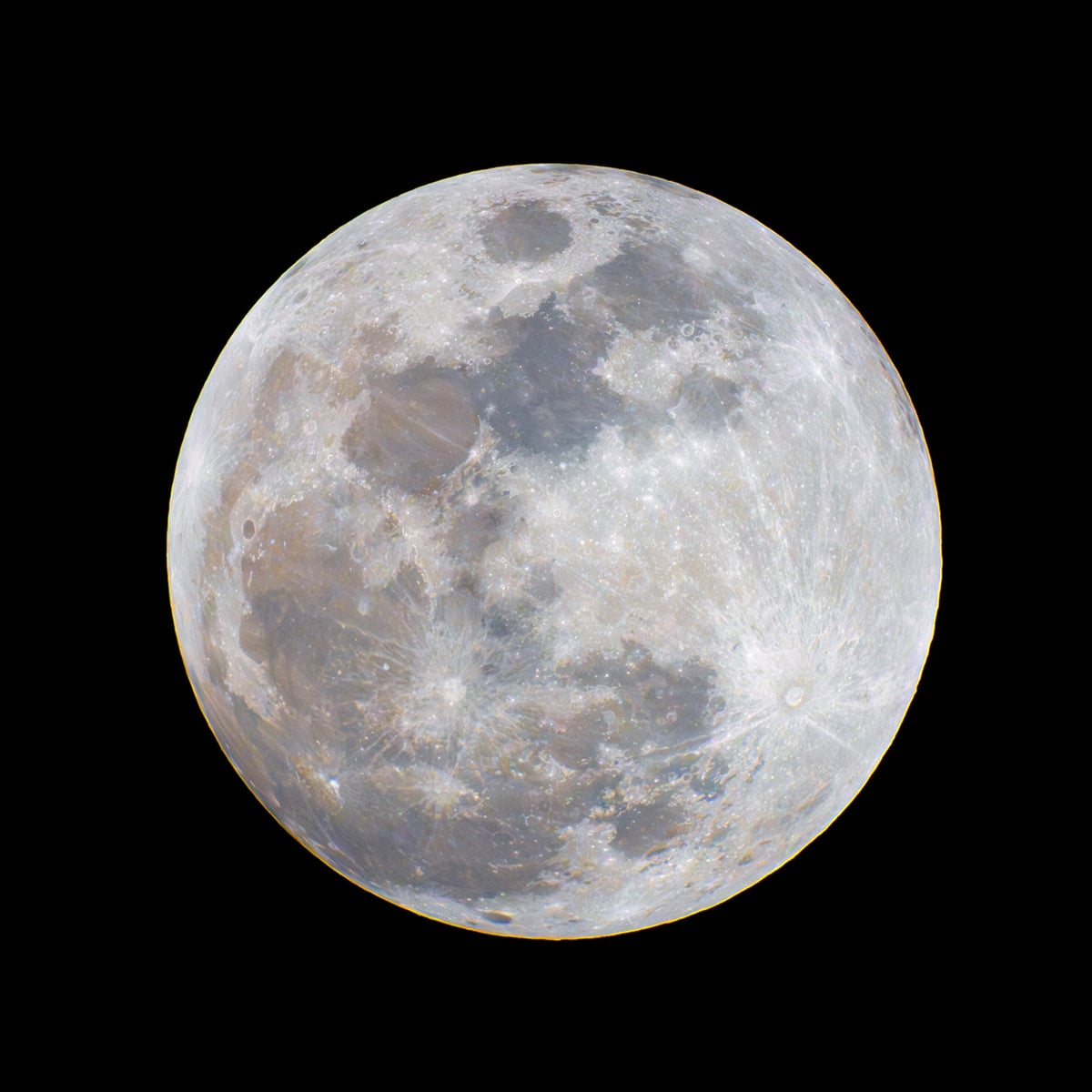
The first photograph looks very familiar. At 1:12 a.m., the Moon was still shining as a normal full Moon, with sunlight illuminating almost the entire side facing Earth.
A full Moon occurs when the Moon sits opposite the Sun in our sky. Sunlight then falls across the lunar hemisphere facing Earth, giving us the bright circular disc that photographers regularly capture. The Moon reaches this phase roughly once every 29.5 days.
A full Moon does not automatically mean that an eclipse will follow. On 3 March, the day of the image, Earth moved between the Sun and Moon, allowing the lunar disc to pass through Earth’s shadow. The event developed into a total lunar eclipse. Horálek’s first photograph captures the Moon before the eclipse.
Earth’s shadow turns the Moon red
At 4:33 a.m., Horálek photographed the Moon during totality. Most of the lunar surface had moved into Earth’s umbra, the darkest part of our planet’s shadow. During a total lunar eclipse, the lunar surface often takes on a copper, orange, or deep red color. The effect comes from sunlight that reaches the Moon after passing through Earth’s atmosphere.
Under normal conditions, sunlight travels from the Sun to the Moon without passing through Earth‘s atmosphere. During an eclipse, Earth blocks that direct path. Some sunlight still reaches the Moon, however, because it passes through the atmosphere around Earth’s edge.
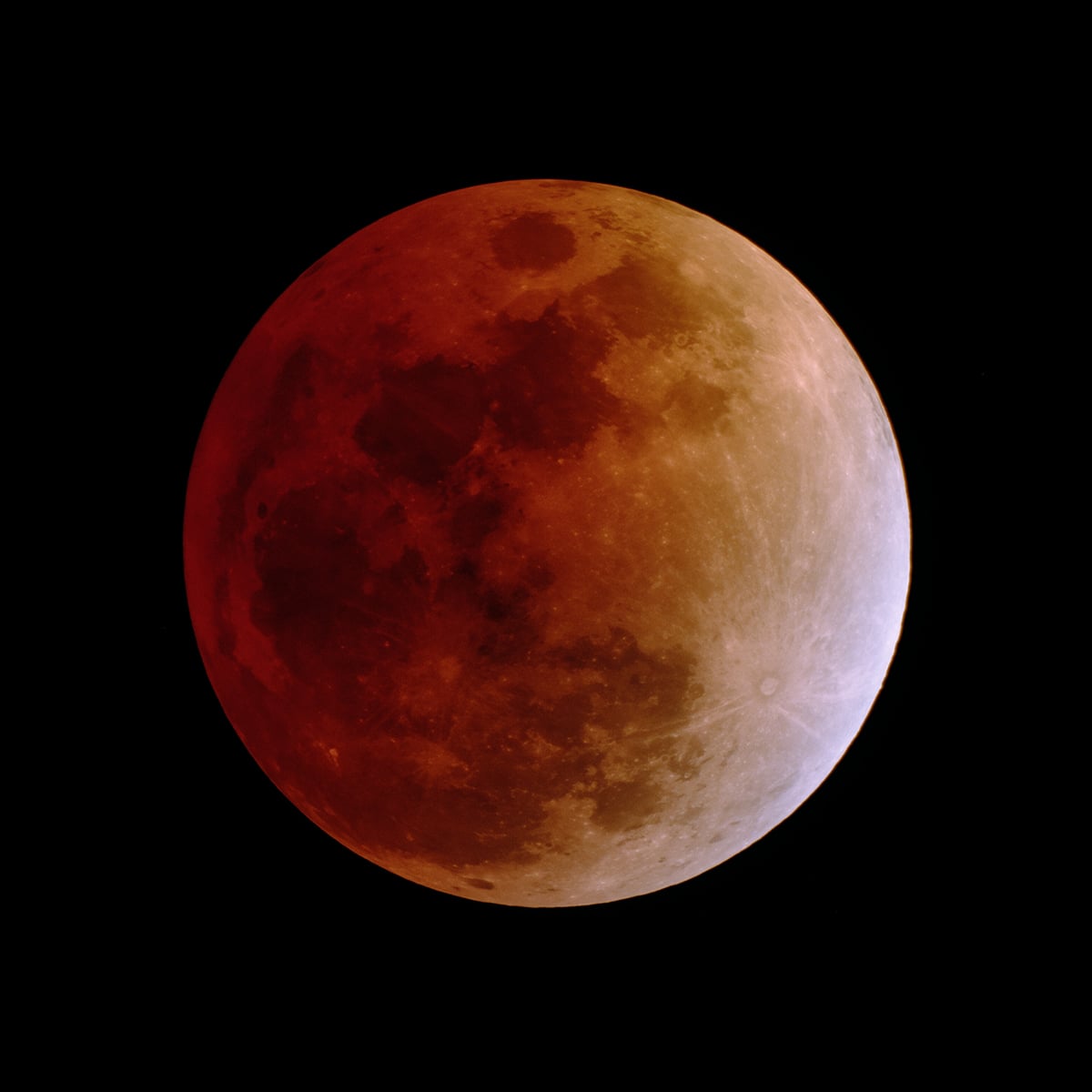
Earth’s atmosphere scatters blue light more strongly than red light. Red and orange light can travel through the atmosphere and continue toward the Moon. The lunar surface reflects that light into space, allowing observers on Earth to see the Moon glowing red during totality.
In Horálek’s image, we see another detail. The right-hand portion of the lunar disc remained within Earth’s penumbra. The penumbra forms the lighter outer part of Earth’s shadow. A point inside the penumbra still receives some direct sunlight because Earth blocks only part of the Sun from that location. The Moon therefore does not darken evenly as it moves through the different parts of the shadow.
A low Moon reveals an atmospheric phenomenon
Horálek’s third photograph was captured at 6:59 p.m. The Moon was low above the horizon, and its appearance had changed again. This time, Earth’s shadow had to role to play. The unusual shape is due to the atmosphere between the Moon and the camera.
When the Moon sits high in the sky, its light travels through a relatively short column of atmosphere before reaching an observer. Near the horizon, that path becomes much longer. The light passes through more air, giving atmospheric refraction a stronger influence over what we see.
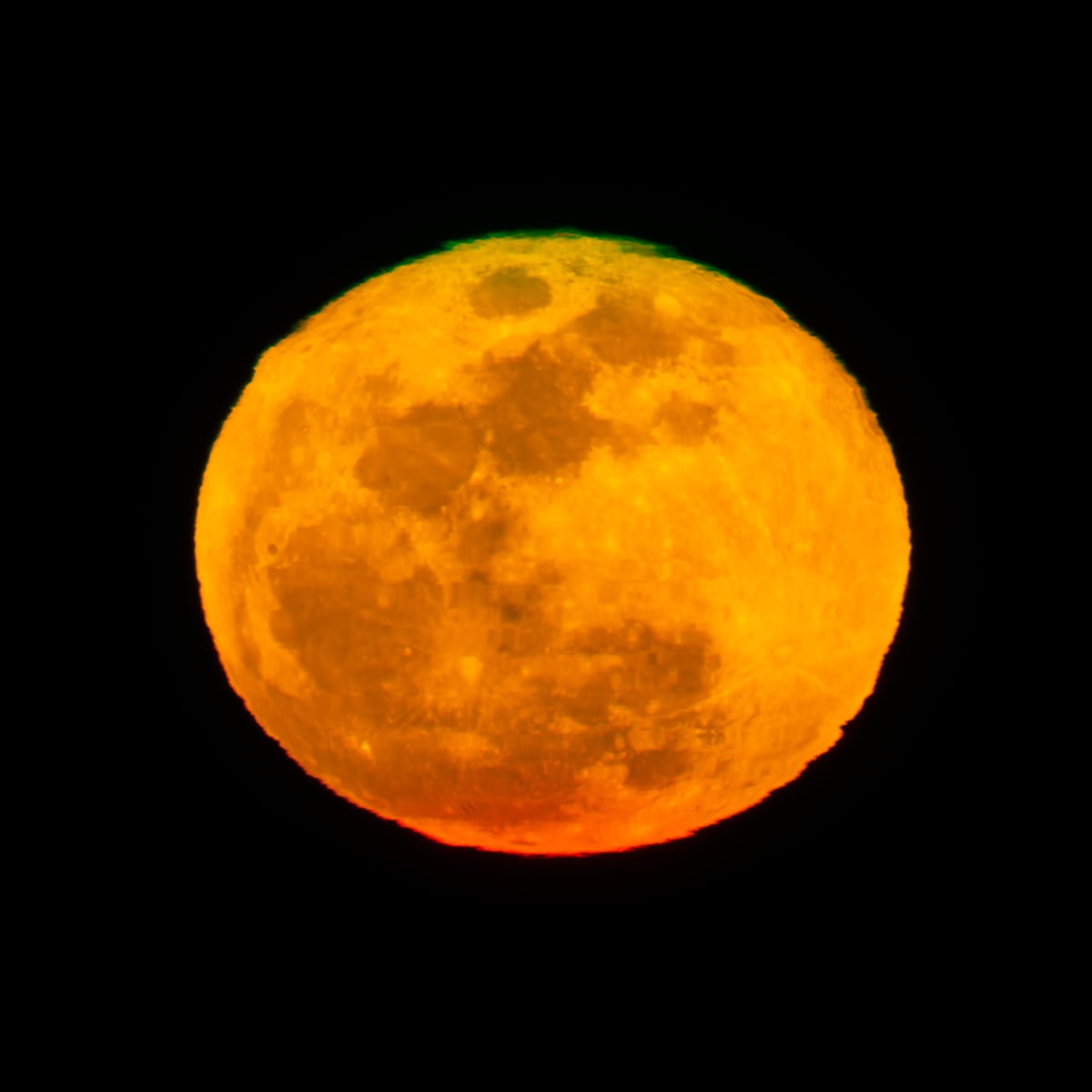
Refraction bends light as it travels through air of different densities. Near the horizon, the effect can distort the apparent shape of the Moon. A normally round lunar disc can appear flattened, stretched, or uneven along its edges. This effect is known as atmospheric dispersion.
In this particular image, Horálek captured another interesting phenomenon. The upper edge of the Moon shows a thin green rim, while the lower edge appears red. The color separation relates to the same atmospheric effects that can produce a green flash near the horizon. The green rim is usually extremely narrow and difficult to see. The right combination of lunar position and atmospheric conditions can reveal it.
Clear skies!
See more from DIYPhotography.net on Google
Add DIYPhotography.net as a trusted source. This makes
our stories more likely to appear in your Google Search results.
 Add as a preferred source on Google

Soumyadeep Mukherjee
Soumyadeep Mukherjee is an award-winning astrophotographer from India. He has a doctorate degree in Linguistics. His work extends to the sub-genres of nightscape, deep sky, solar, lunar and optical phenomenon photography. He is also a photography educator and has conducted numerous workshops. His works have appeared in over 40 books & magazines including Astronomy, BBC Sky at Night, Sky & Telescope among others, and in various websites including National Geographic, NASA, Forbes. He was the first Indian to win “Astronomy Photographer of the Year” award in a major category.



Join the Discussion
DIYP Comment Policy
Be nice, be on-topic, no personal information or flames.