


















Totality from 50,000 Feet: NASA Pilots Chased the Solar Eclipse
Sep 1, 2026
Soumyadeep Mukherjee
Soumyadeep Mukherjee is an award-winning astrophotographer from India. He has a doctorate degree in Linguistics. His work extends to the sub-genres of nightscape, deep sky, solar, lunar and optical phenomenon photography. He is also a photography educator and has conducted numerous workshops. His works have appeared in over 40 books & magazines including Astronomy, BBC Sky at Night, Sky & Telescope among others, and in various websites including National Geographic, NASA, Forbes. He was the first Indian to win “Astronomy Photographer of the Year” award in a major category.
Share:
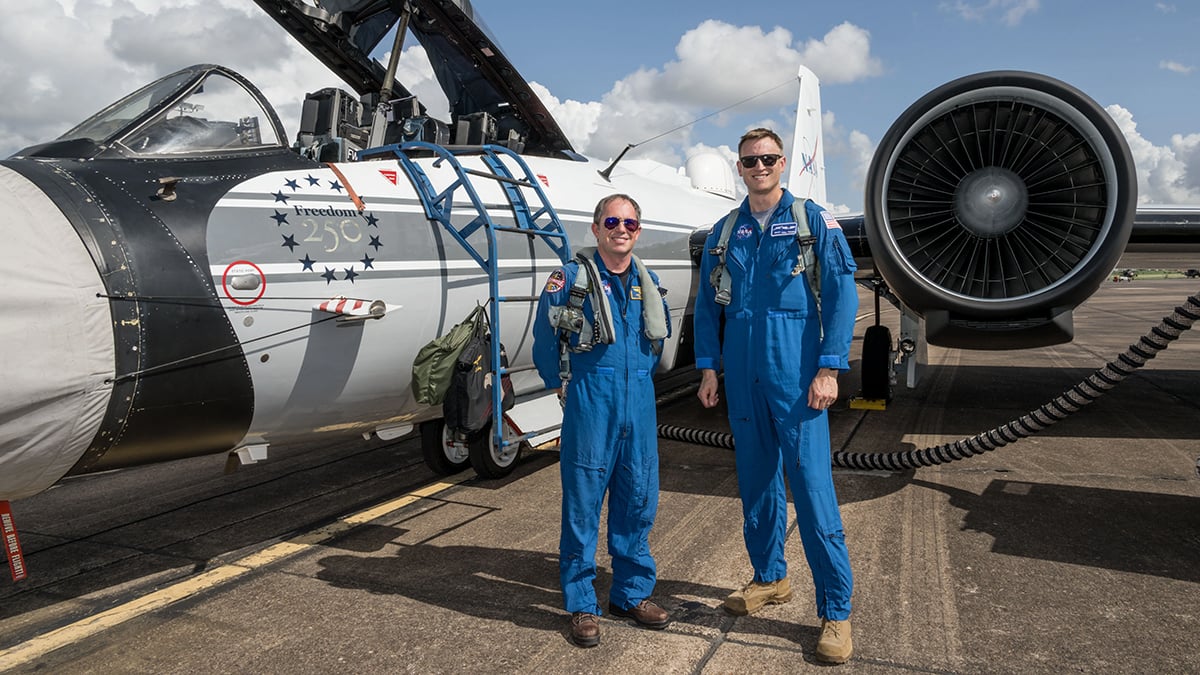
Millions of people enjoyed and photographed the Total solar eclipse on August 12. For NASA, however, it was a chance to do some science! NASA used a high-altitude WB-57F research aircraft to take advantage of those conditions from about 50,000 feet above the North Atlantic and captured the solar eclipse.
The aircraft flew from NASA’s Johnson Space Center in Houston to Iceland ahead of the eclipse. On eclipse day, it operated over the waters near Iceland and entered the Moon’s shadow carrying a specialized imaging system. The cameras observed the corona across visible and infrared wavelengths. The observations were aimed at one of the biggest problems in solar physics: why the Sun’s outer atmosphere is vastly hotter than its visible surface.
NASA put a WB-57F in the Eclipse Path
Observing a total eclipse from the ground comes with several limitations. Clouds can block the Sun at the worst possible moment. Additionally, turbulence and atmospheric absorption can affect measurements. While these are mostly fine for observers and photographers like us, they pose a problem for scientists who want to collect precise observations at wavelengths outside the visible range.
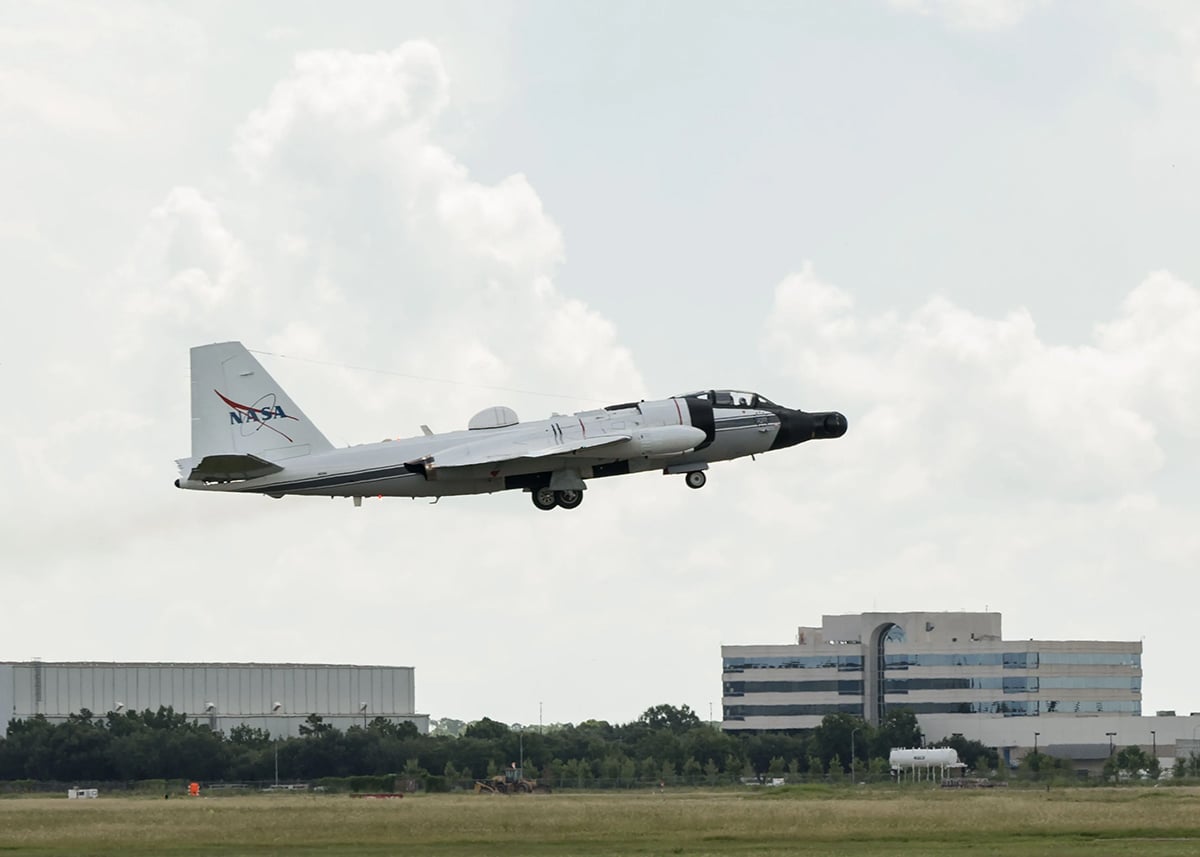
In this situation, NASA’s WB-57F was a solution. The aircraft could fly to Iceland and then move out over the Atlantic to intercept the Moon’s shadow. It could also climb to around 50,000 feet, putting the instruments above most clouds and much of the atmospheric water vapor that affects astronomical observations.
The aircraft departed Ellington Field in Houston and travelled to Iceland before the eclipse. From there, the NASA crew planned a flight along the eclipse track. The pilots had to account for the movement of the Moon’s shadow, the aircraft’s speed and the exact timing of totality.
The result was a moving observing platform that could reach a section of the eclipse path unavailable to a conventional observatory. NASA has used the same basic strategy during previous total eclipses, including the April 8, 2024 eclipse across North America.
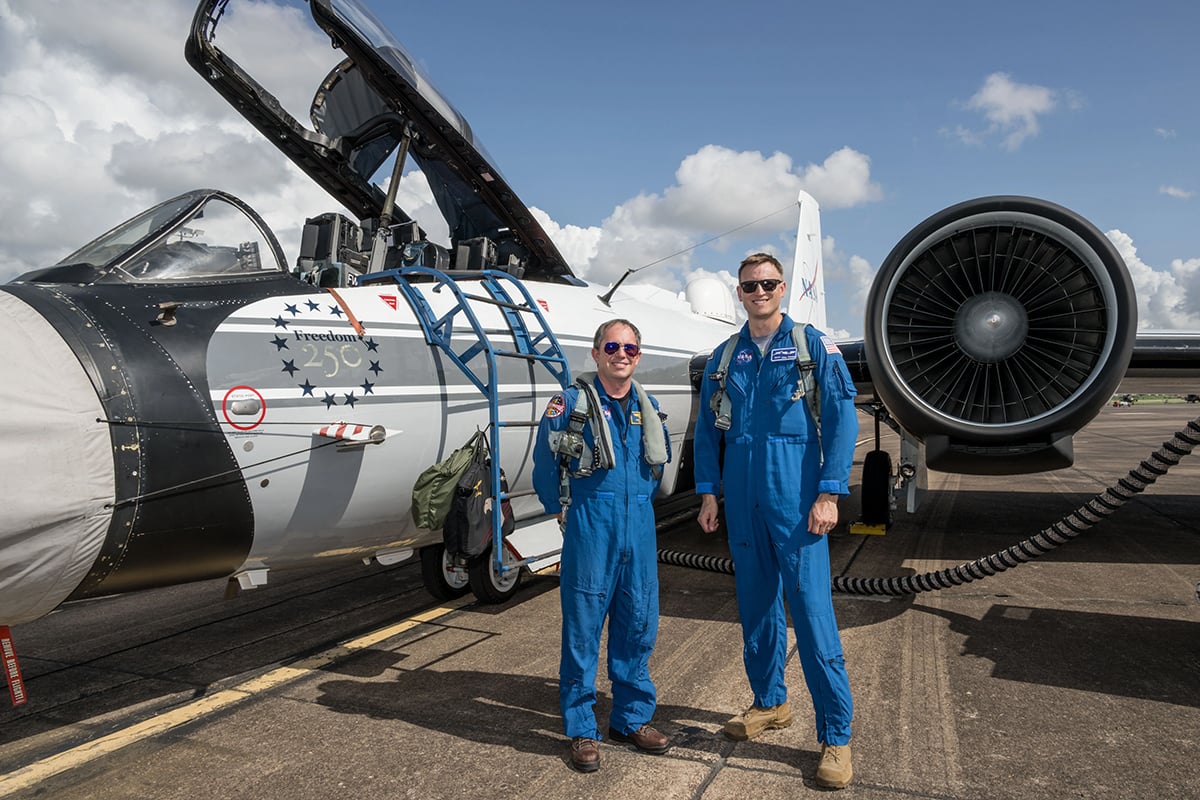
Fifty thousand feet for the eclipse
The WB-57F’s altitude was also very important for reasons beyond avoiding clouds. The atmosphere absorbs and scatters electromagnetic radiation, with the effects becoming especially significant at some infrared wavelengths. Water vapour is one of the main obstacles.
By taking the instruments to around 50,000 feet, the researchers removed a large portion of the atmosphere from the observing path. The remaining atmosphere still mattered, but the conditions were much better than at sea level.
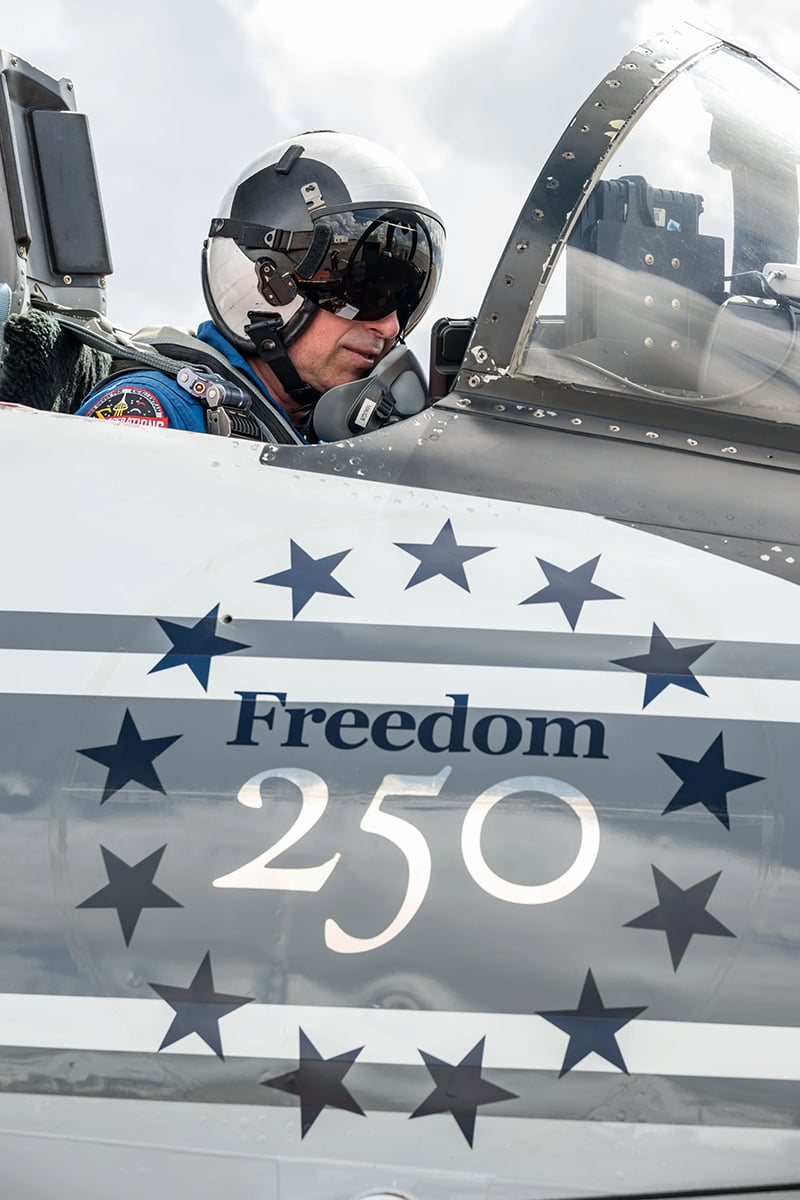
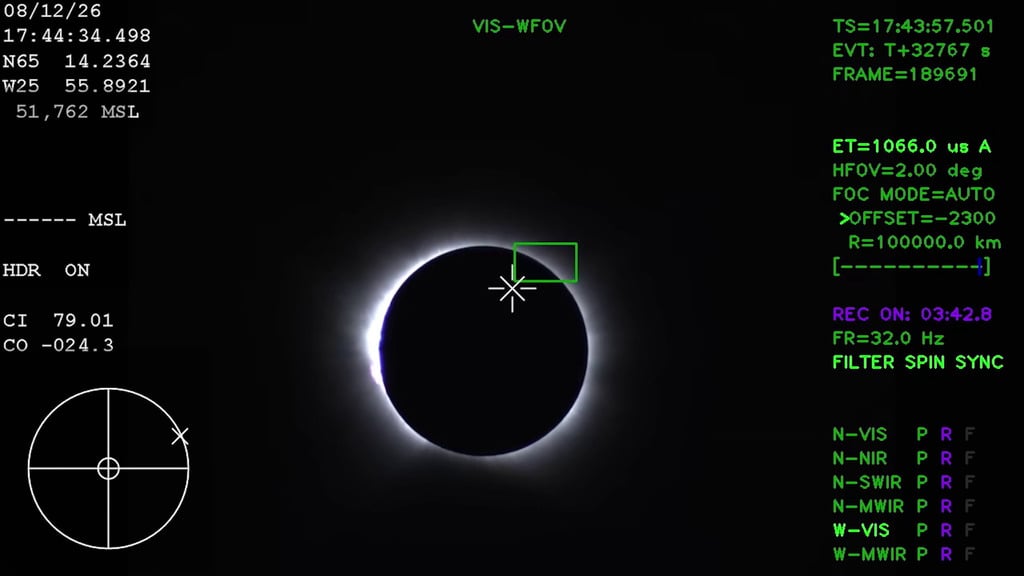
Different wavelengths reveal different physical conditions in the solar atmosphere. A visible-light image can show the large-scale structure of the corona, and infrared observations can provide information that is unavailable from ordinary eclipse photography.
The aircraft also reduced the risk posed by clouds. NASA and SwRI reported that the team observed the eclipse from above the cloud cover near Iceland. That allowed the instruments to continue collecting data even when observers below were dealing with poor weather.
The pilots chased a moving shadow
The Moon’s shadow moves across Earth‘s surface as the eclipse progresses. Its path and speed can be calculated, but the aircraft still has to follow a planned route while maintaining the required altitude and heading.
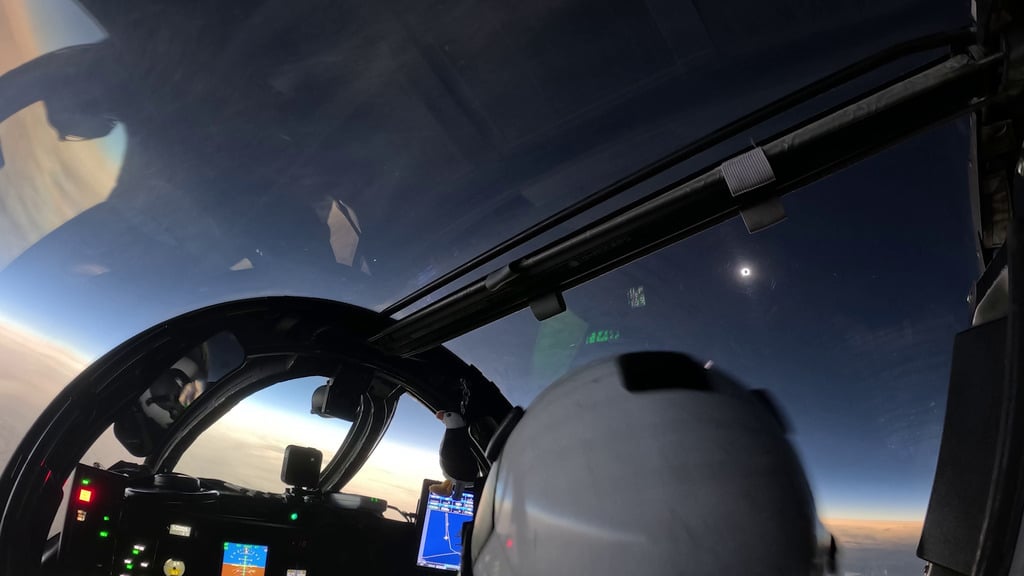
NASA pilots John Gustine and Cary Klemm were among the crew involved in the mission. Gustine flew the eclipse observation flight, while sensor equipment operator Klemm managed the scientific cameras. The flight plan was designed around the geometry of the eclipse. The aircraft had to meet the moving shadow and remain within it for as long as possible.
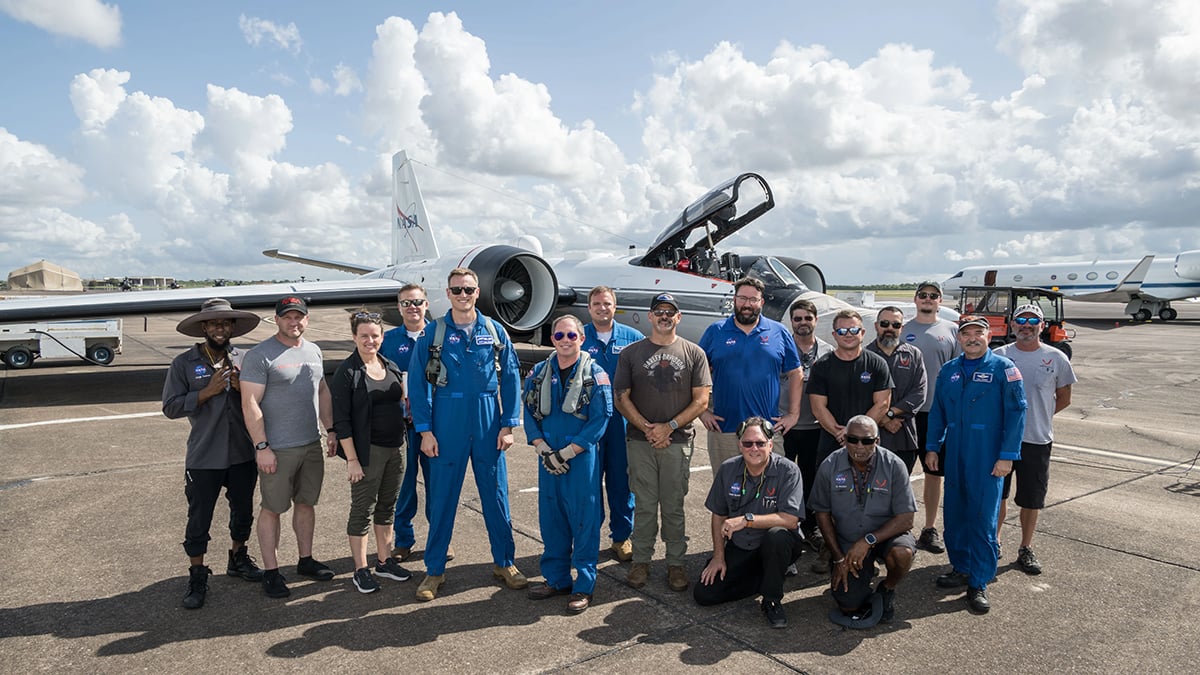
The whole plan required close coordination between the pilots and the science team.
“Going into a mission like this takes a huge team. It starts with the science team establishing the requirements, and then we work closely with them for months leading up to the mission.”
-Tom Parent, NASA WB-57F pilot.
The aircraft also carried cameras that recorded the eclipse from the cockpit. These images gave a view of the Moon’s shadow and the changing conditions around the aircraft. The primary scientific instruments, however, were aimed at the Sun and were collecting data for later analysis.
Clear skies!
See more from DIYPhotography.net on Google
Add DIYPhotography.net as a trusted source. This makes
our stories more likely to appear in your Google Search results.
 Add as a preferred source on Google

Soumyadeep Mukherjee
Soumyadeep Mukherjee is an award-winning astrophotographer from India. He has a doctorate degree in Linguistics. His work extends to the sub-genres of nightscape, deep sky, solar, lunar and optical phenomenon photography. He is also a photography educator and has conducted numerous workshops. His works have appeared in over 40 books & magazines including Astronomy, BBC Sky at Night, Sky & Telescope among others, and in various websites including National Geographic, NASA, Forbes. He was the first Indian to win “Astronomy Photographer of the Year” award in a major category.
Related Posts
 Chasing Totality: I learned these lessons for photographing a solar eclipse so you don’t have to
 Photographers team up with acrobatic pilots for these epic solar eclipse photos
 Satellite images capture crossing paths of totality in 2017 and 2024 North American solar eclipses
 This camera’s shutter speed goes up to 1/1,000,000,000,000 of a second
Join the Discussion
DIYP Comment Policy
Be nice, be on-topic, no personal information or flames.