
















NASA’s Roman Telescope Lifts Off: Photos from the Launch Event
Aug 30, 2026
Soumyadeep Mukherjee
Soumyadeep Mukherjee is an award-winning astrophotographer from India. He has a doctorate degree in Linguistics. His work extends to the sub-genres of nightscape, deep sky, solar, lunar and optical phenomenon photography. He is also a photography educator and has conducted numerous workshops. His works have appeared in over 40 books & magazines including Astronomy, BBC Sky at Night, Sky & Telescope among others, and in various websites including National Geographic, NASA, Forbes. He was the first Indian to win “Astronomy Photographer of the Year” award in a major category.
Share:
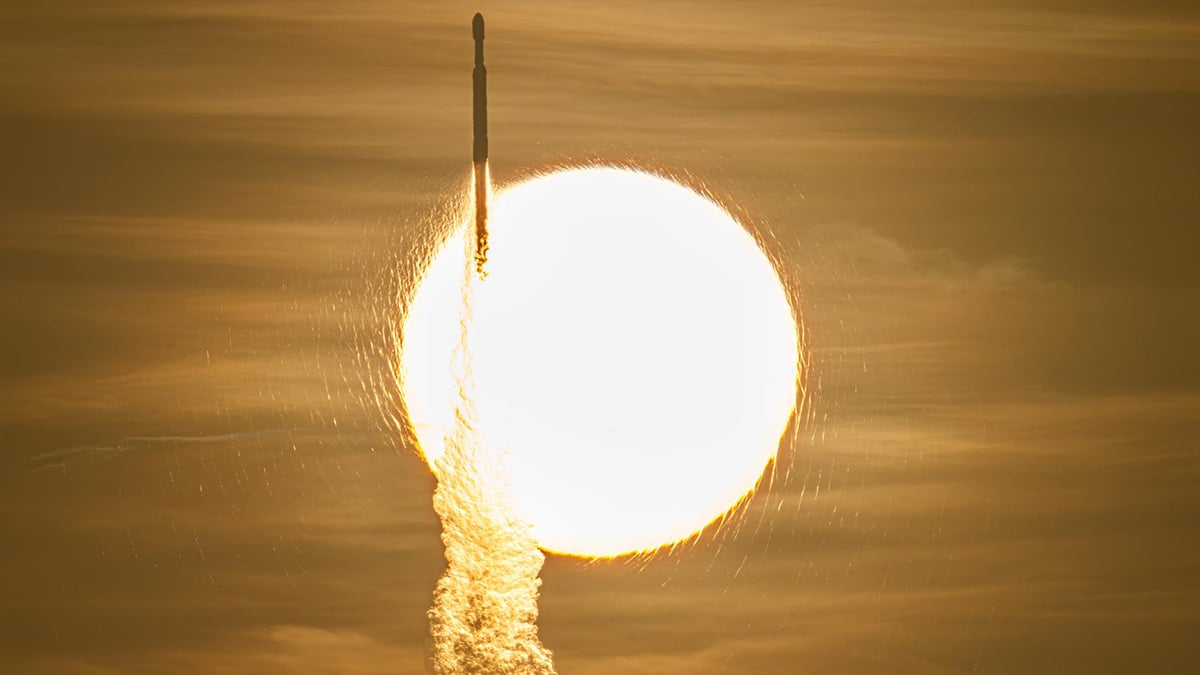
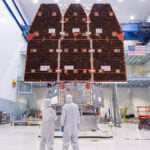
A 2.4-meter space telescope is now on its way toward a point nearly 1.5 million kilometers from Earth. From there, NASA’s Nancy Grace Roman Space Telescope will begin one of the most ambitious astronomical surveys ever attempted. Roman will scan enormous areas of the sky in visible and infrared wavelengths, measuring the distribution of galaxies, stars, and dark matter across cosmic time.
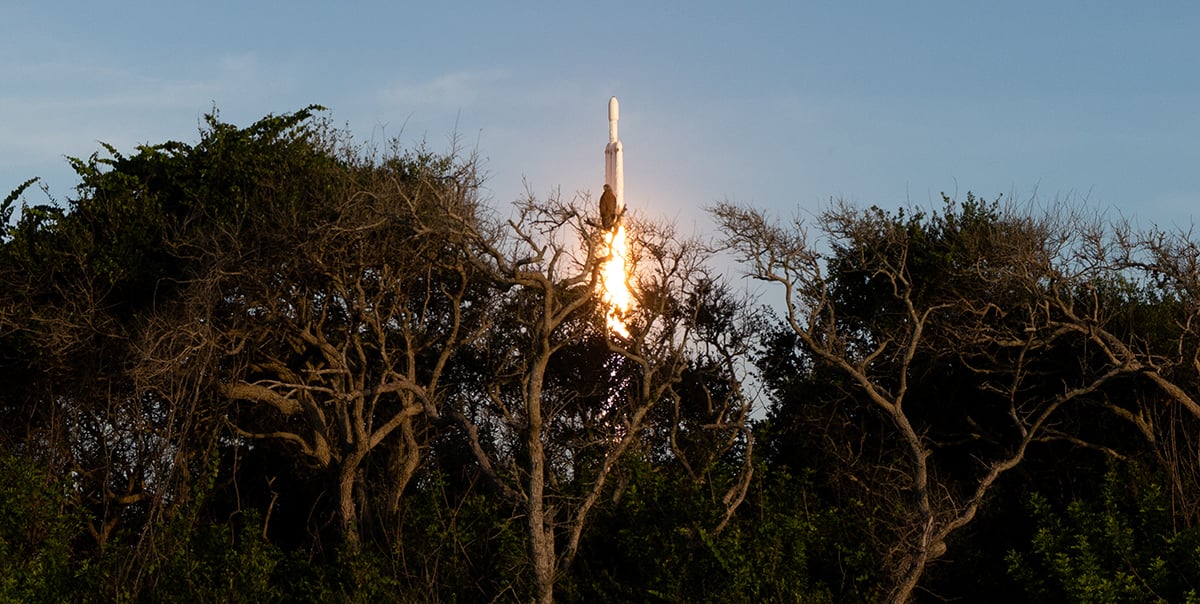
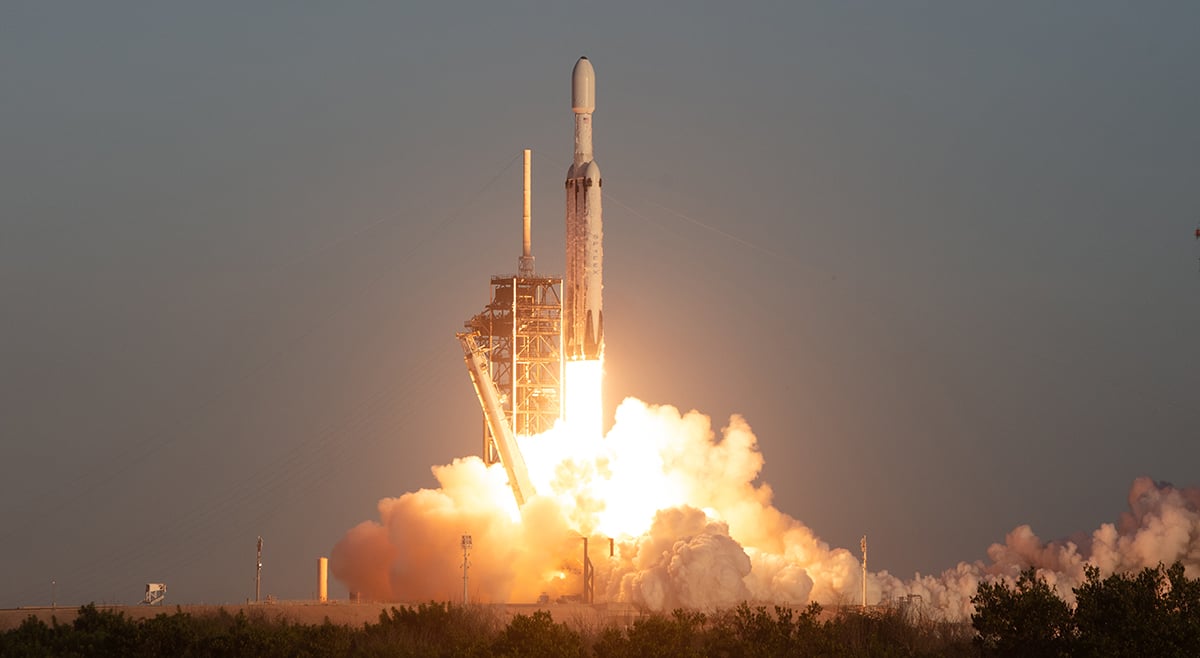
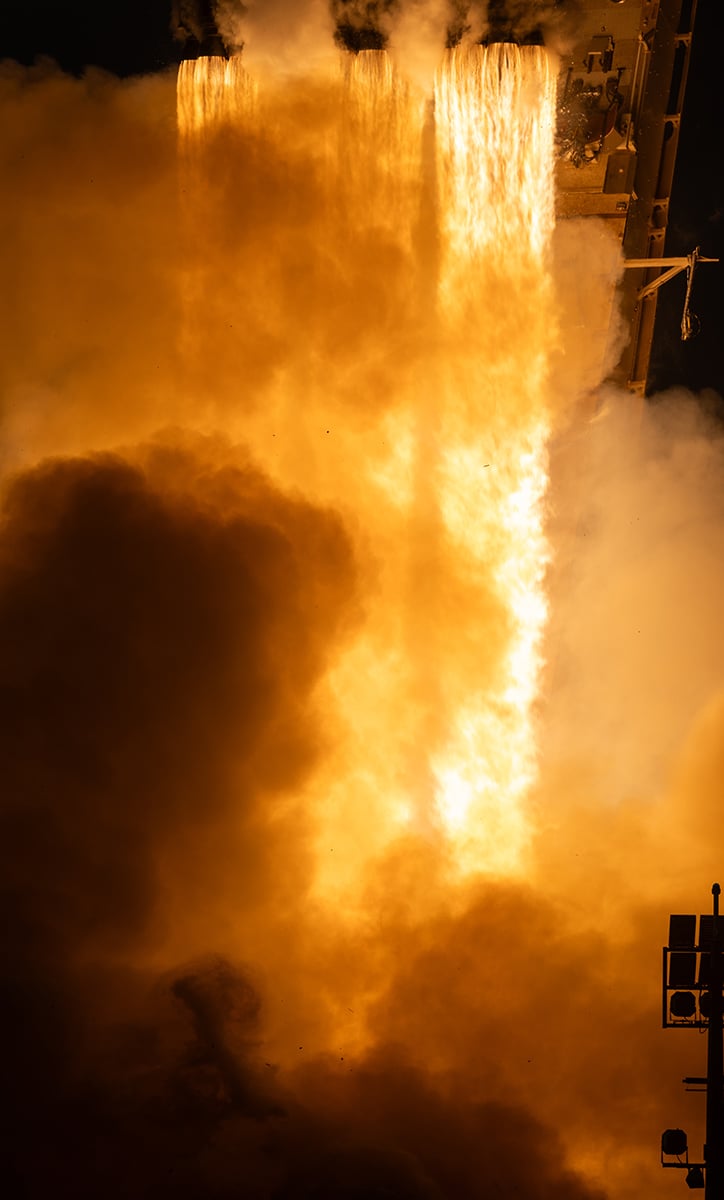
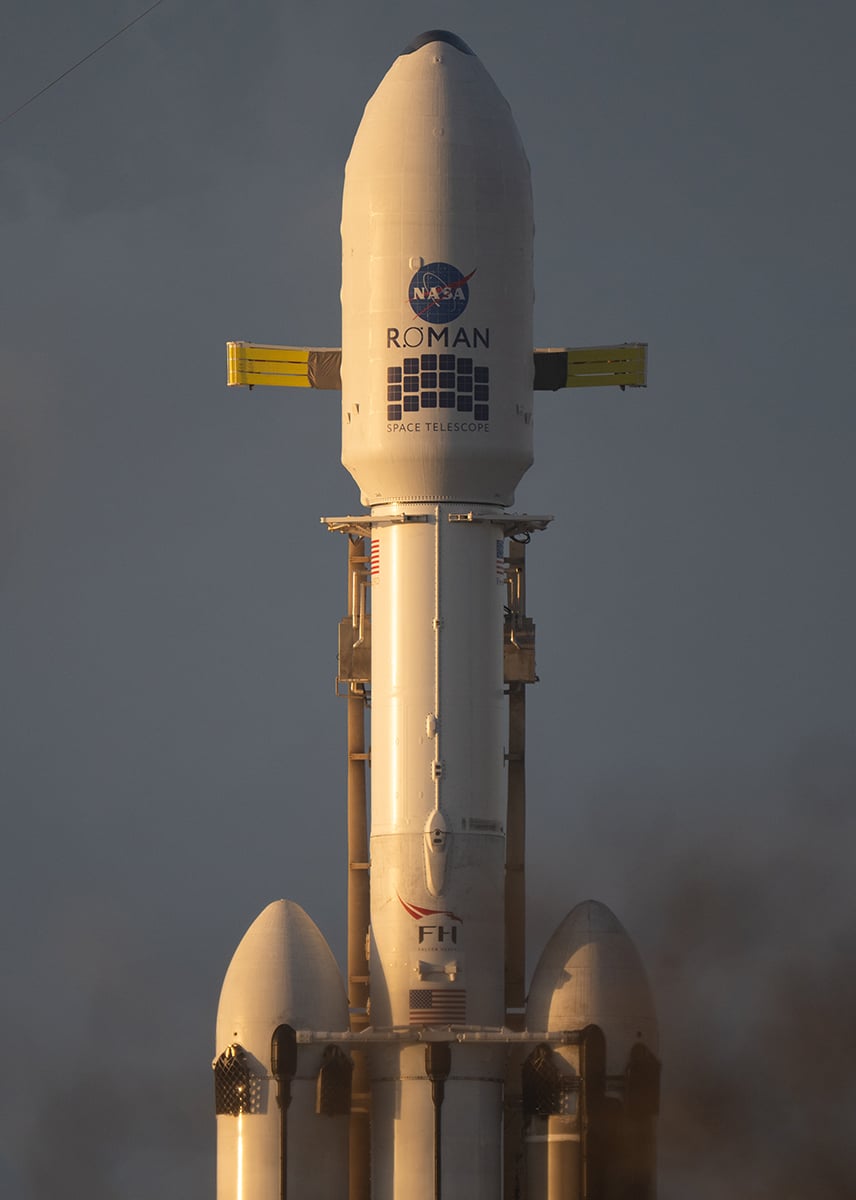
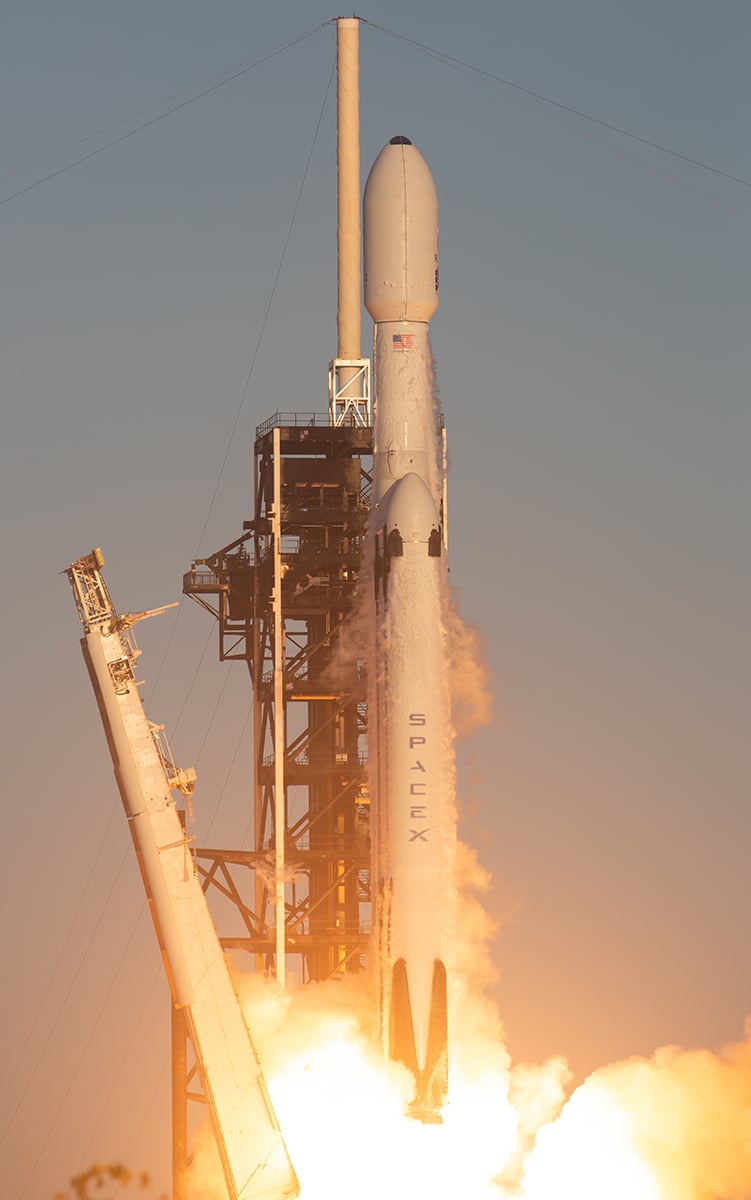
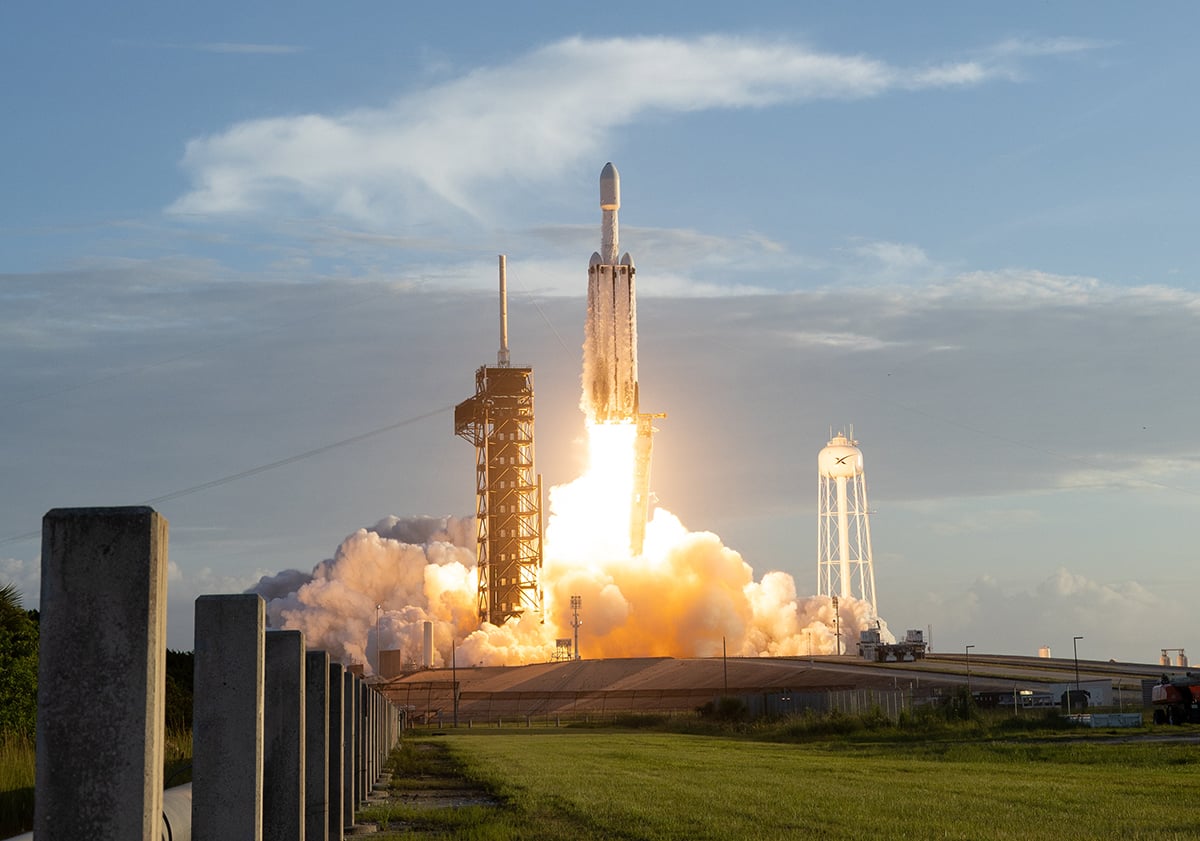
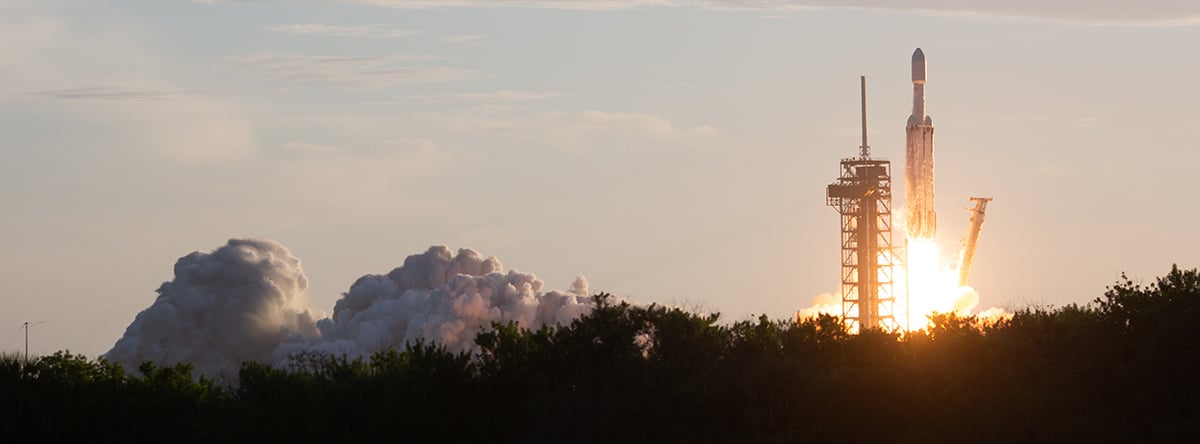
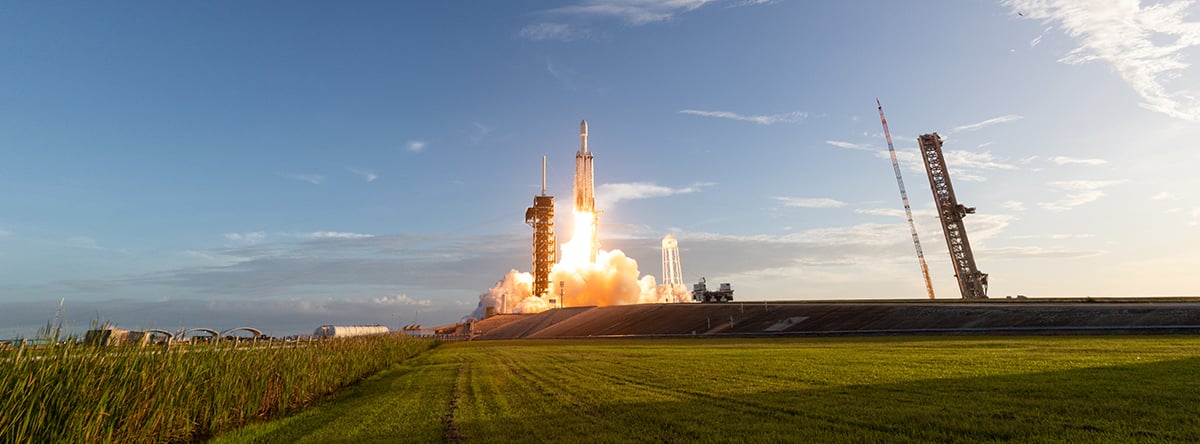
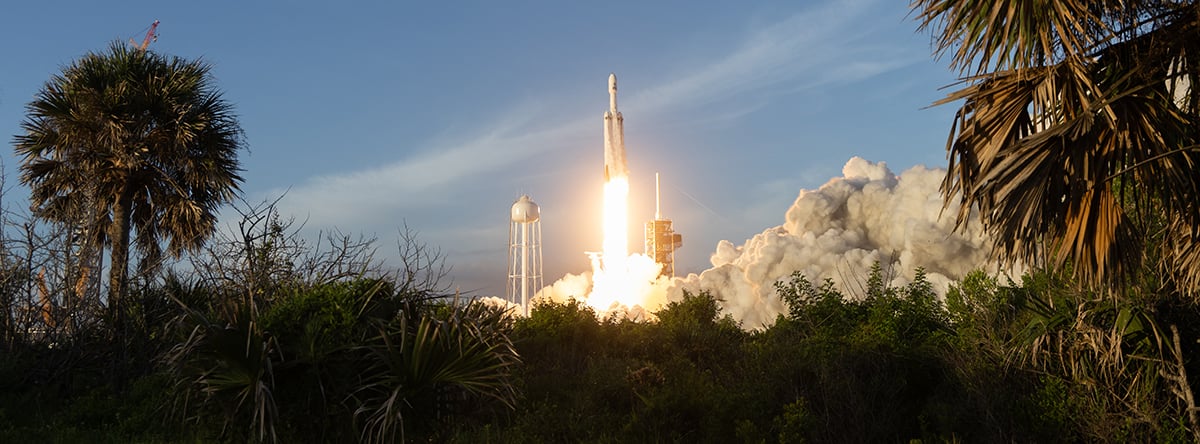
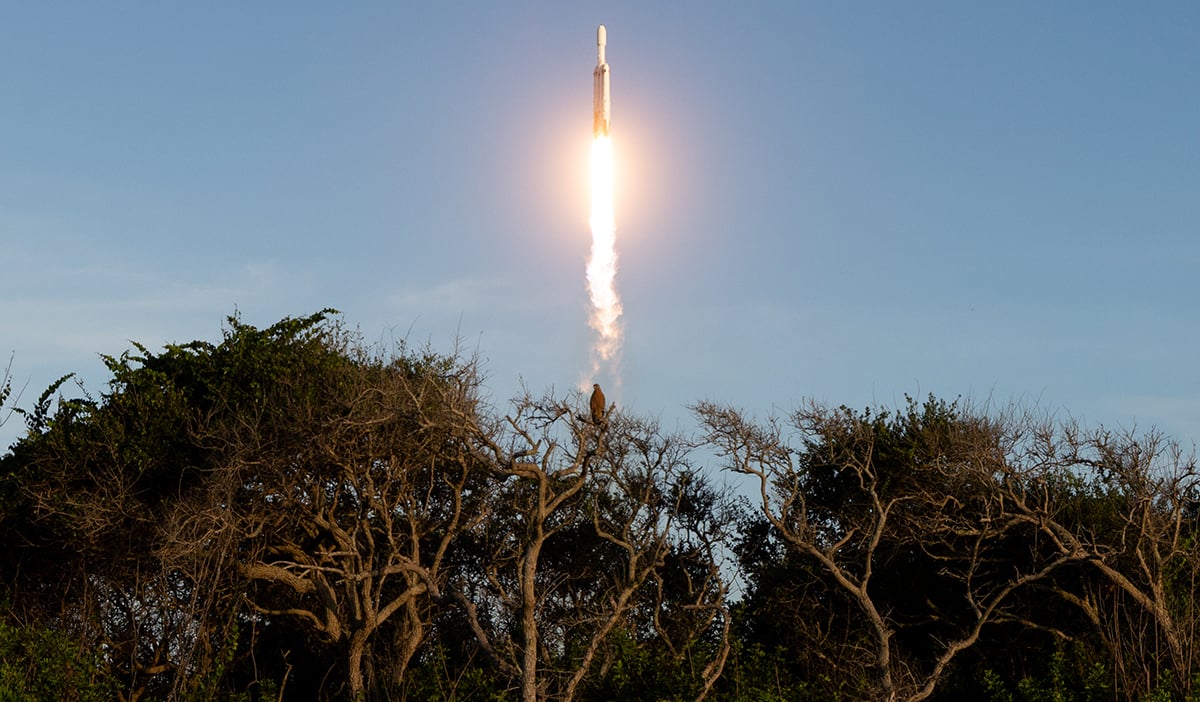
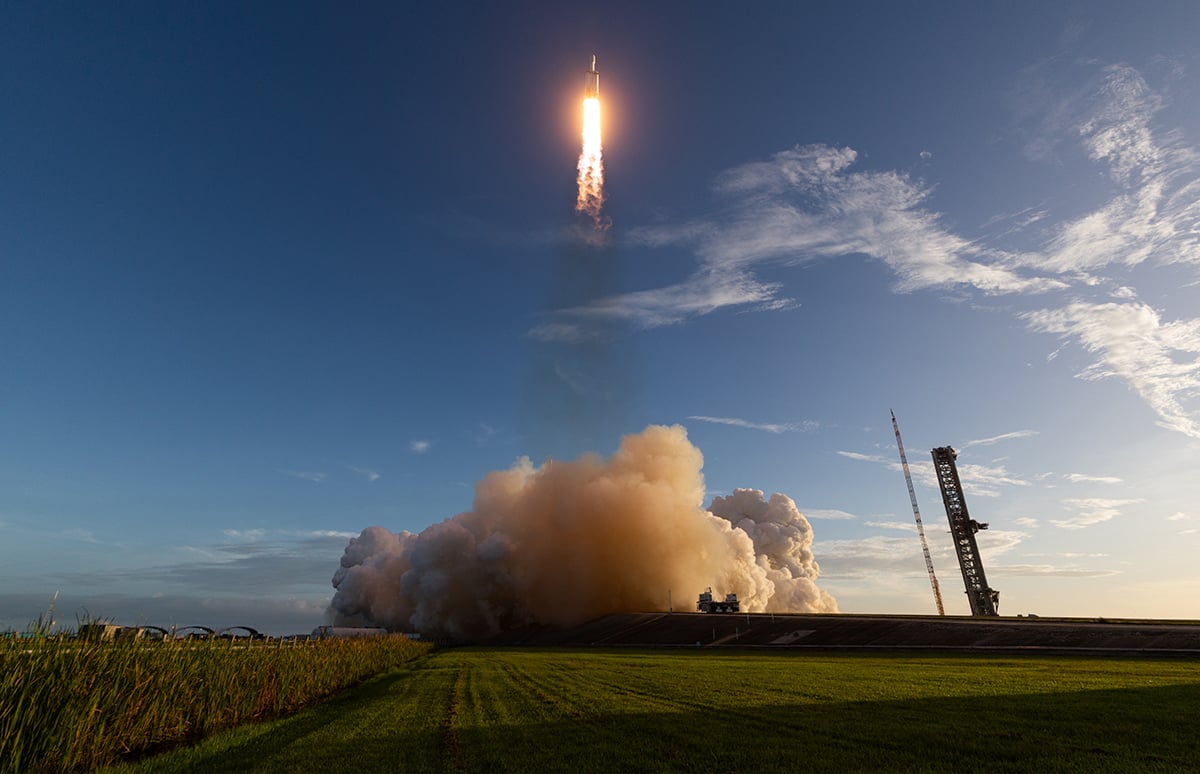
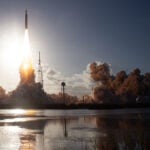
Roman Telescope launched at 7:26 a.m. EDT on August 30 aboard a SpaceX Falcon Heavy from Launch Complex 39A at NASA’s Kennedy Space Center in Florida. The observatory separated from the rocket about 31 minutes after liftoff, and ground controllers began receiving telemetry seven minutes into the flight. NASA later confirmed the deployment of Roman’s solar panels and lower instrument sunshade.
Roman Telescope begins its journey
The spacecraft is now heading for the second Sun-Earth Lagrange point, or L2. Roman will spend about three months reaching its operating orbit and completing initial system checks. NASA expects the mission to operate for at least five years, with an option to extend it for another five years.
Roman Telescope’s advantage comes from how much sky it can observe at once. The telescope will combine a field of view at least 100 times larger than Hubble’s with similar angular resolution. This will let astronomers study the universe statistically, across areas far too large for most previous space telescopes to survey.
Survey at an unprecedented scale
The Wide Field Instrument is the most crucial component of Roman’s survey capability. It contains 18 infrared detectors and has a total of about 300 megapixels. The instrument can capture a patch of sky larger than the apparent size of the full Moon in a single exposure. Its optical design also spreads the detectors around the outer part of the telescope’s focal plane, allowing Roman to maintain sharp imaging across this unusually large field.
Hubble can spend many hours examining a small galaxy or nebula in extraordinary detail. Roman can observe a much larger region and then return to it later. Scientists can compare those repeated observations and identify objects that have changed.
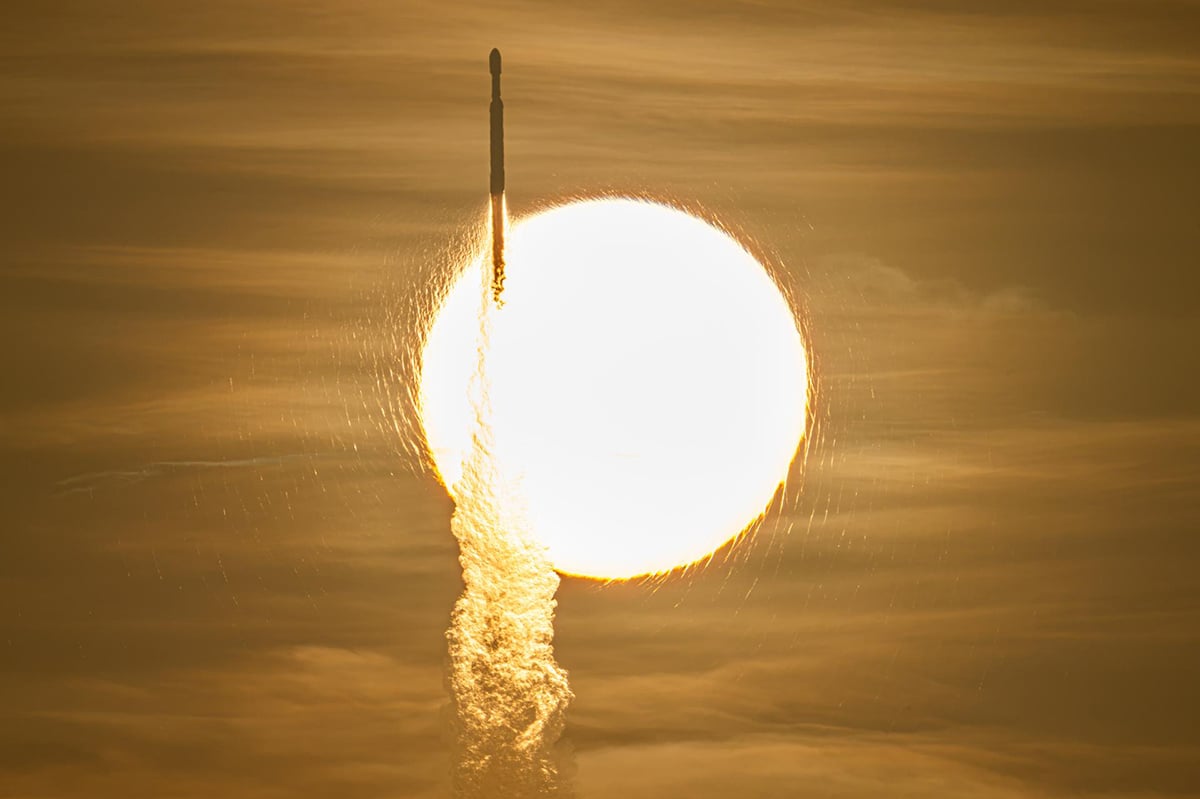
Roman is heading to L2 for a five-year survey
Roman’s destination is the Sun-Earth L2 region. The spacecraft will orbit this point while travelling around the Sun with Earth. The location will allow the telescope to maintain a stable orientation for its instruments and sun-facing systems.
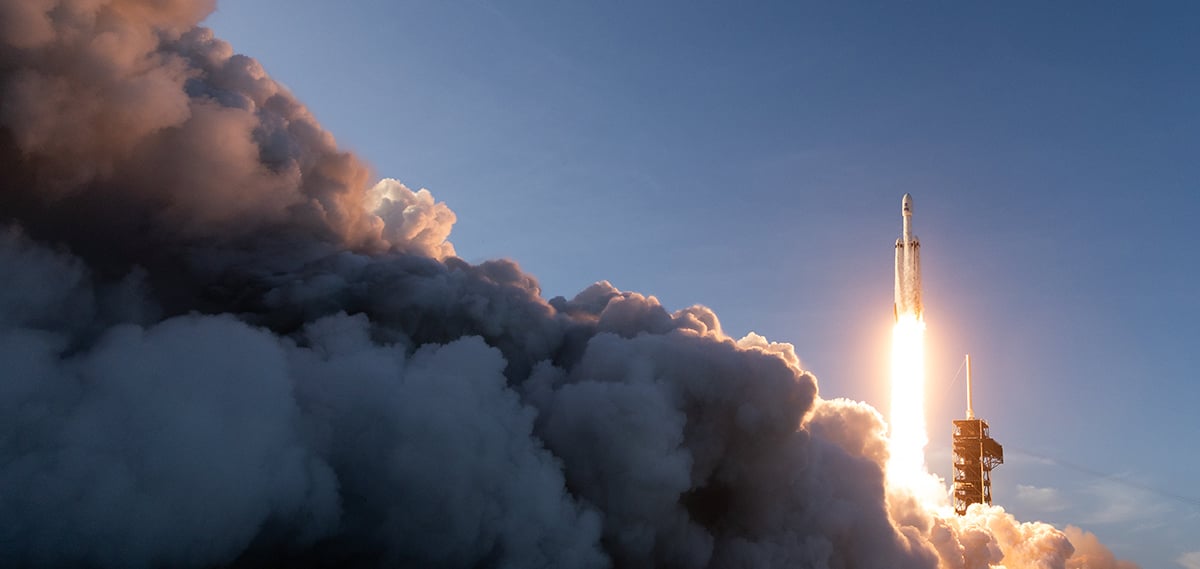
The journey itself is only the first stage. NASA engineers will deploy the remaining spacecraft hardware, check the instruments, and calibrate the telescope before science observations can begin. The high-gain antenna and deployable aperture cover are among the systems scheduled for deployment during the early mission.
The first Roman images are expected in 2027, after the spacecraft completes commissioning and calibration.
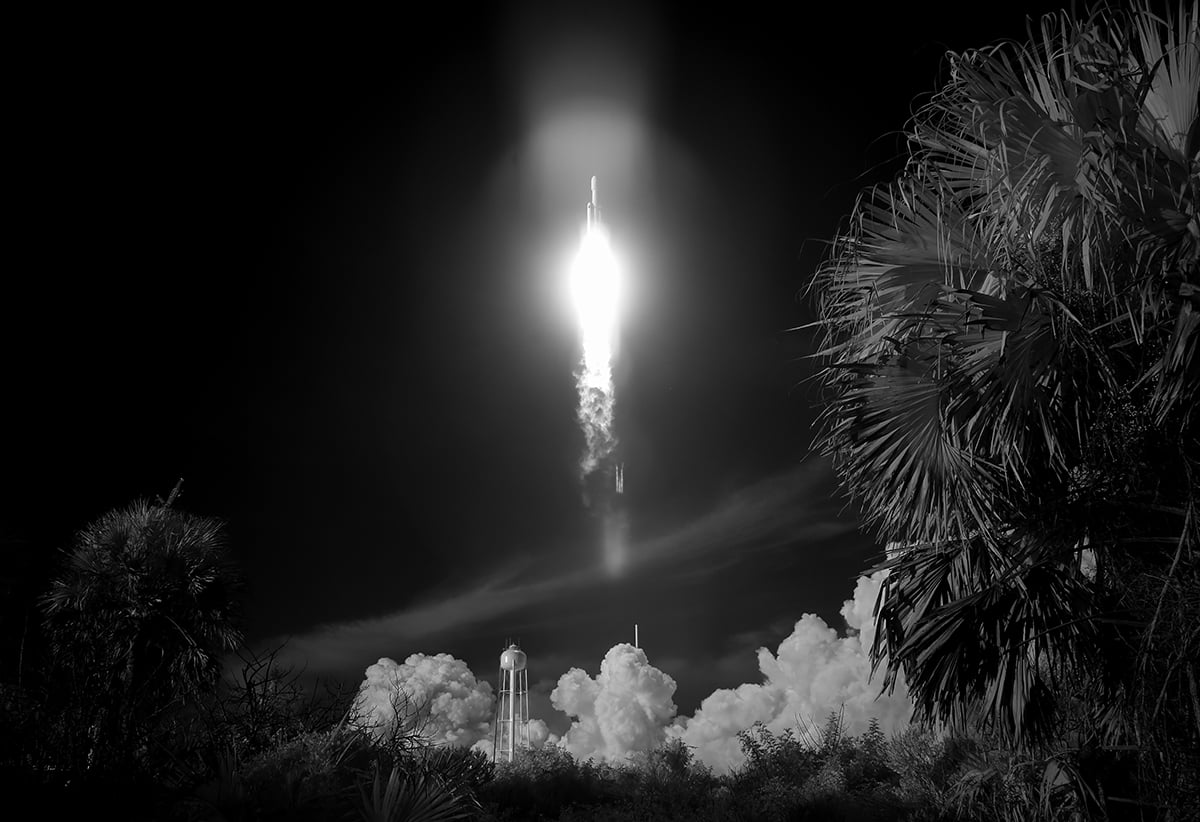
More launch event photos
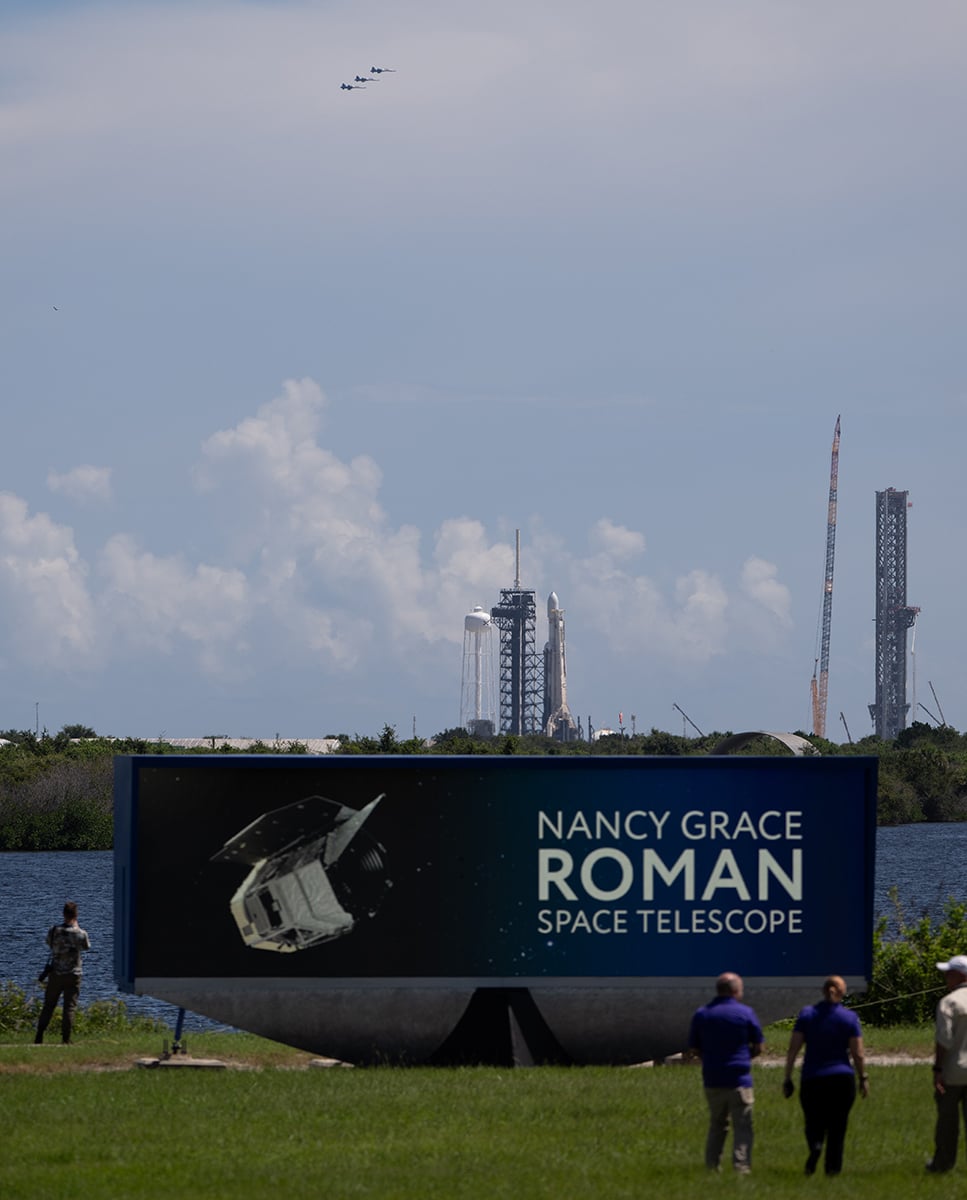
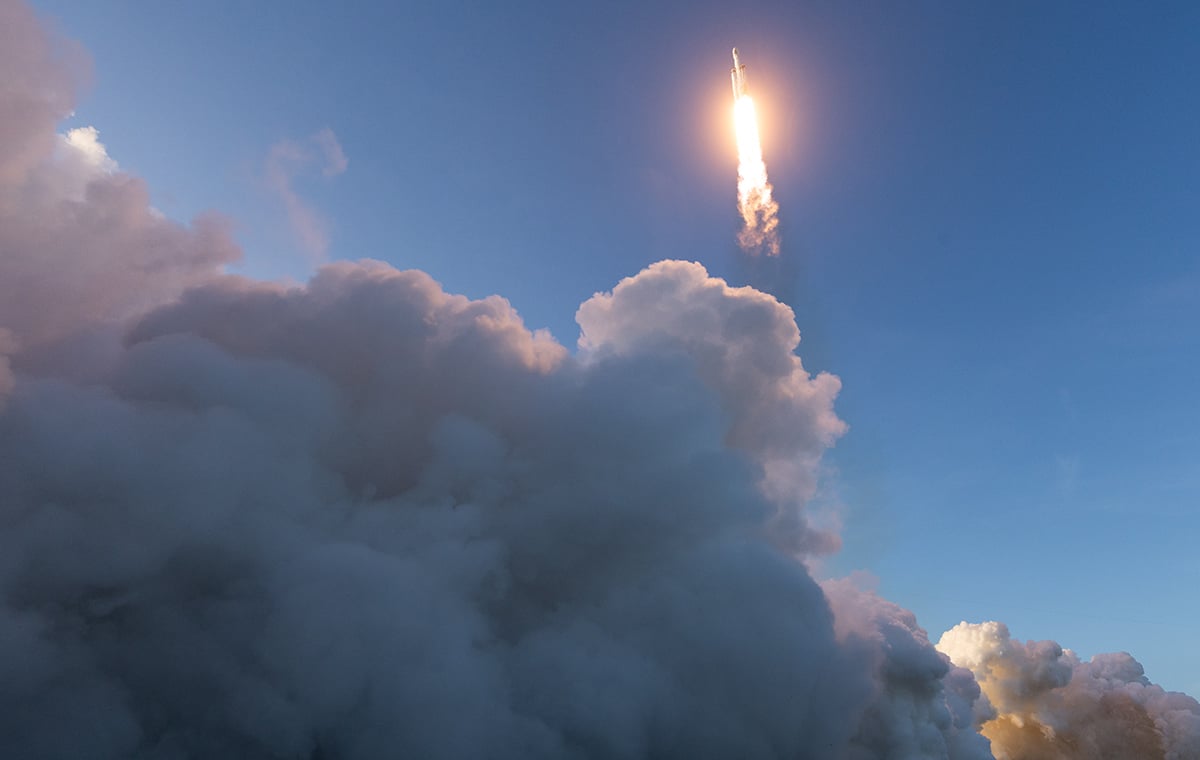
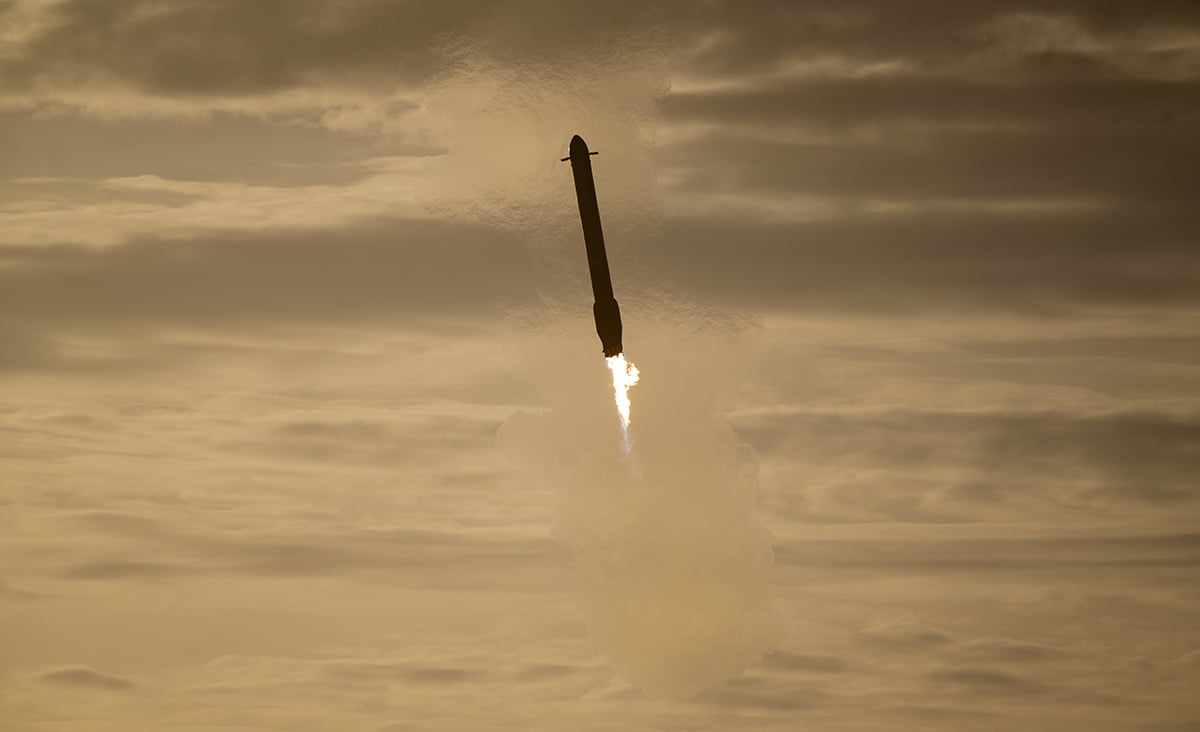
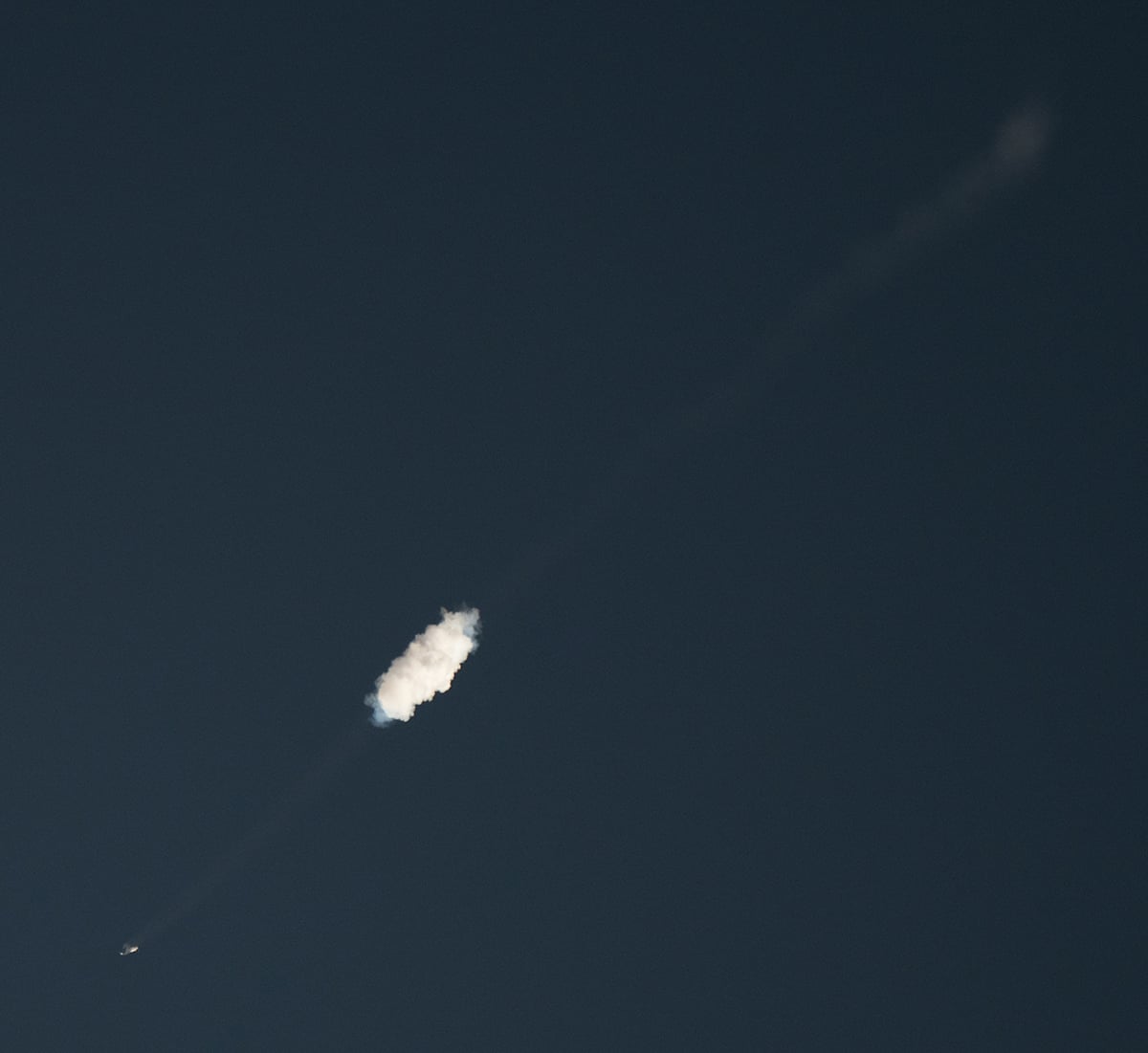
Clear skies!
See more from DIYPhotography.net on Google
Add DIYPhotography.net as a trusted source. This makes
our stories more likely to appear in your Google Search results.
 Add as a preferred source on Google

Soumyadeep Mukherjee
Soumyadeep Mukherjee is an award-winning astrophotographer from India. He has a doctorate degree in Linguistics. His work extends to the sub-genres of nightscape, deep sky, solar, lunar and optical phenomenon photography. He is also a photography educator and has conducted numerous workshops. His works have appeared in over 40 books & magazines including Astronomy, BBC Sky at Night, Sky & Telescope among others, and in various websites including National Geographic, NASA, Forbes. He was the first Indian to win “Astronomy Photographer of the Year” award in a major category.
Join the Discussion
DIYP Comment Policy
Be nice, be on-topic, no personal information or flames.