


















Curiosity Spends 5,000 Days on Mars: Celebrates with a Panorama
Oct 2, 2026
Soumyadeep Mukherjee
Soumyadeep Mukherjee is an award-winning astrophotographer from India. He has a doctorate degree in Linguistics. His work extends to the sub-genres of nightscape, deep sky, solar, lunar and optical phenomenon photography. He is also a photography educator and has conducted numerous workshops. His works have appeared in over 40 books & magazines including Astronomy, BBC Sky at Night, Sky & Telescope among others, and in various websites including National Geographic, NASA, Forbes. He was the first Indian to win “Astronomy Photographer of the Year” award in a major category.
Share:
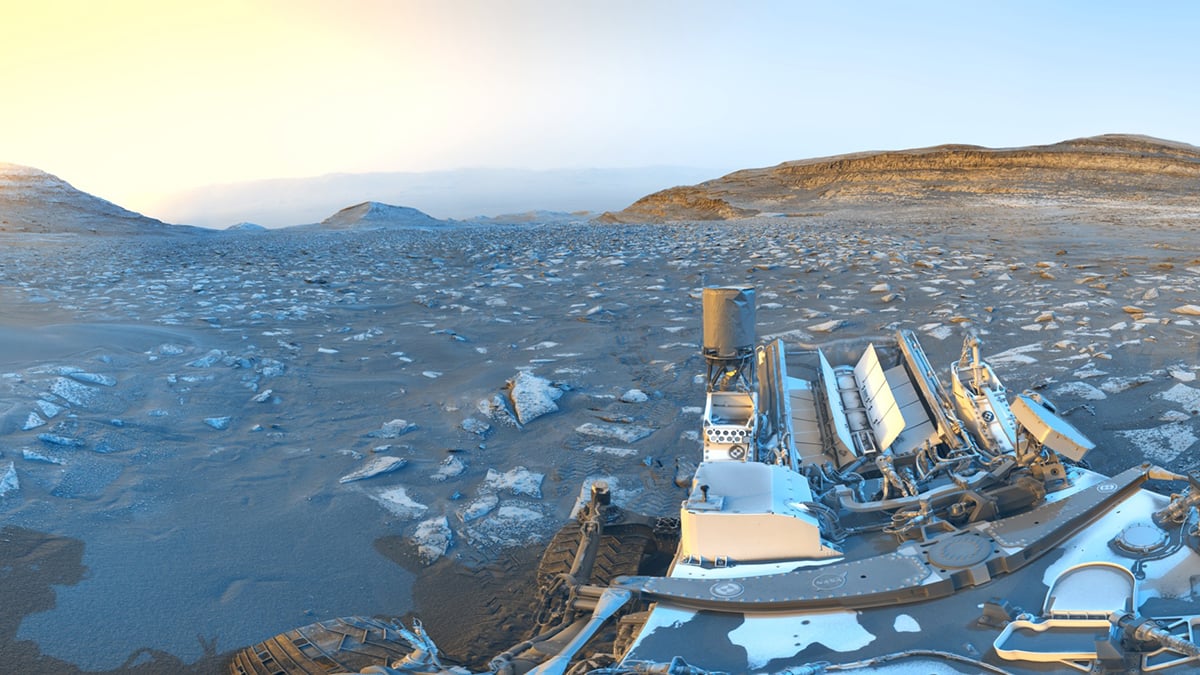
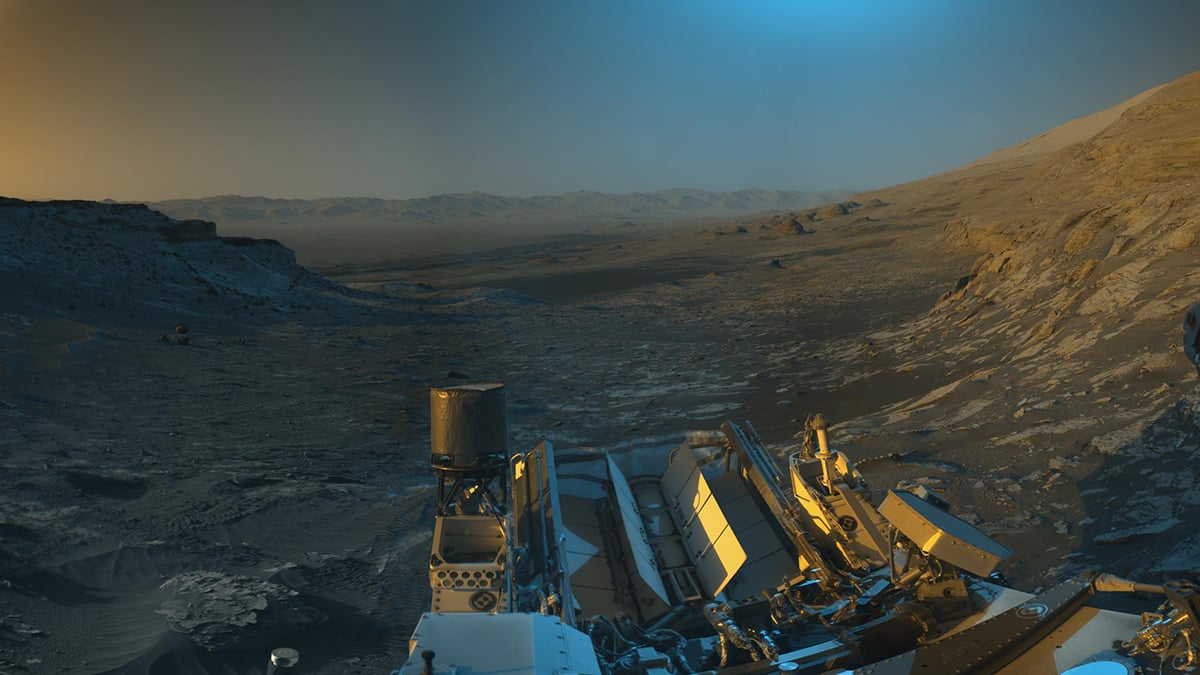
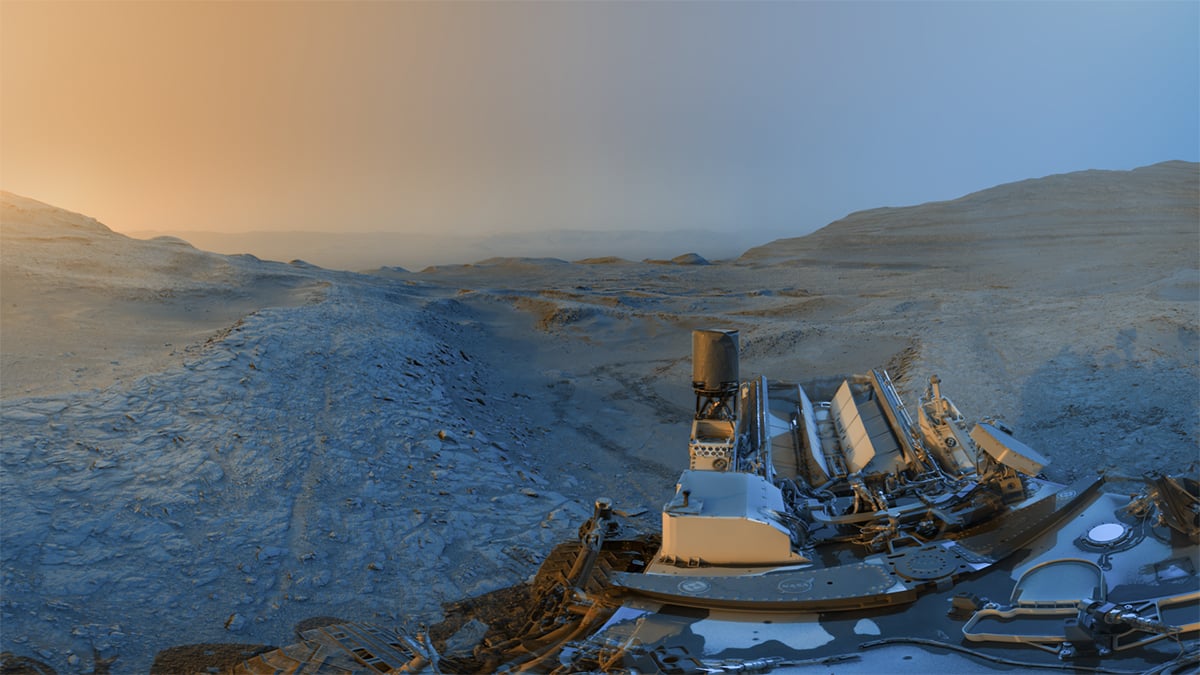
The red planet Mars looks blue and yellow in NASA’s latest photograph from Curiosity. The Curiosity rover has spent 5,000 Martian days driving across Gale Crater. NASA marked the milestone with a photograph that shows Mars at two different times of day. The rover photographed the landscape around a sand ridge called Chocolatal on its 5,000th sol.
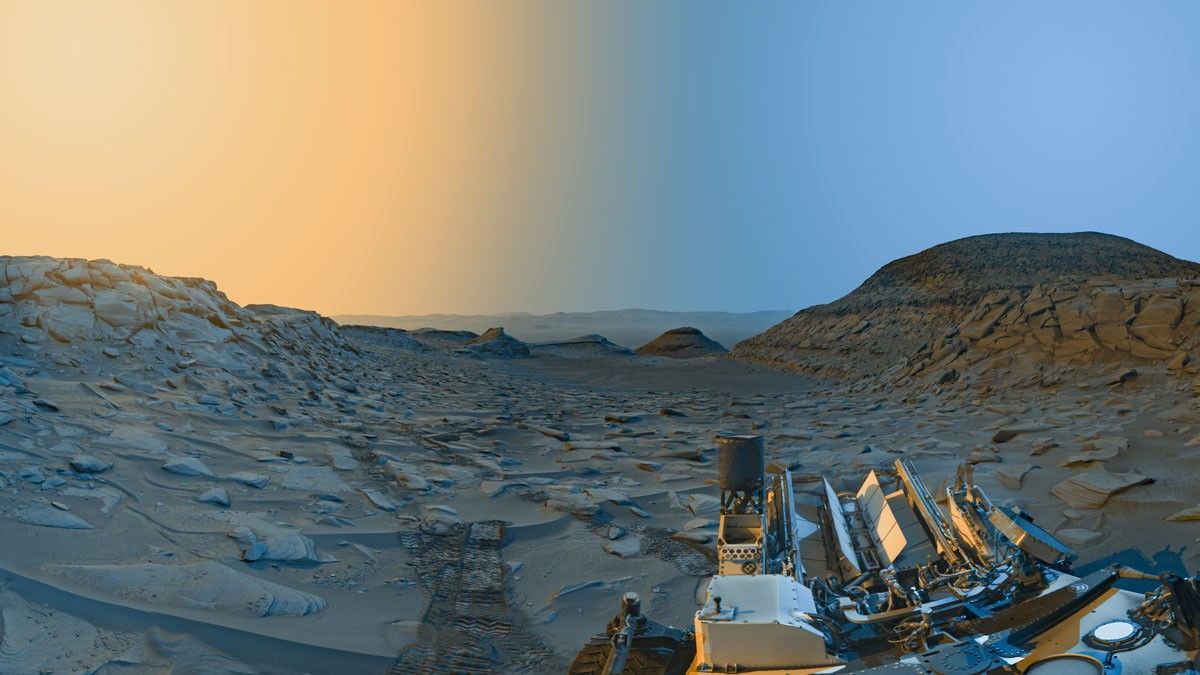
Curiosity took the first panorama at 9:56 a.m. local Mars time on August 30, 2026. That was the rover’s 5,000th Martian day, or sol, on the Red Planet. Three sols later, it photographed the same area again at 5:39 p.m. NASA merged the two views into one wide panorama. The morning scene appears blue, while the afternoon scene appears yellow.
Curiosity’s anniversary photograph
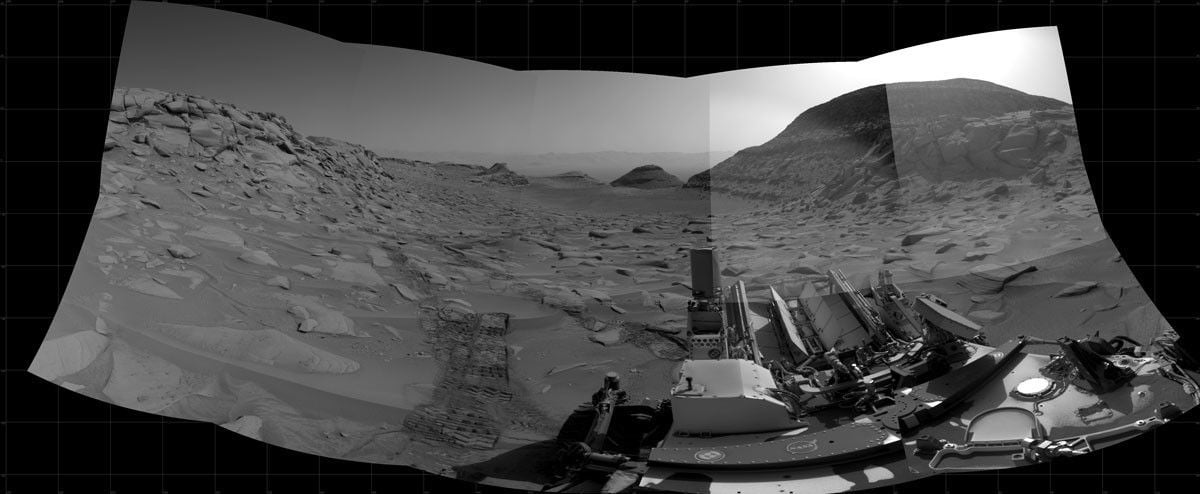
Curiosity has several imaging systems, but for this panorama, it used its black-and-white Navigation Cameras, or Navcams. The Navcams give the rover a wide view of the terrain around it. Engineers use them to plan drives and assess obstacles, while scientists can also use the images to study the landscape.
The rover carries four Navcams arranged as two stereo pairs. The stereo views help the team judge the shape and position of rocks, slopes, and other features around the rover. Those observations help engineers decide where Curiosity can safely drive next.
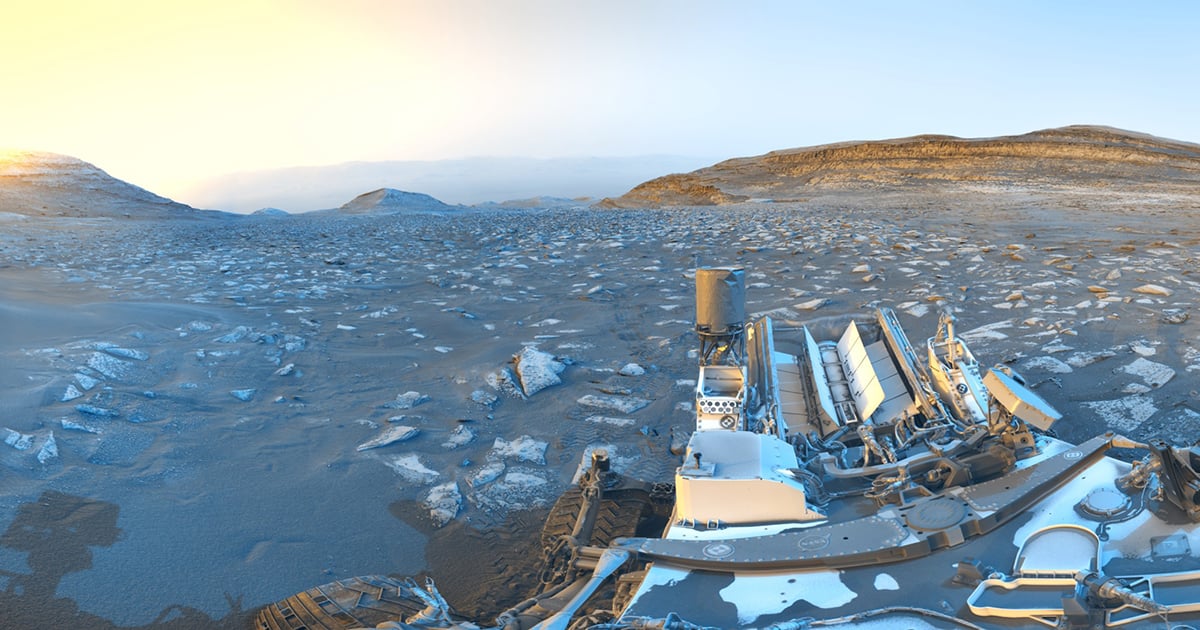
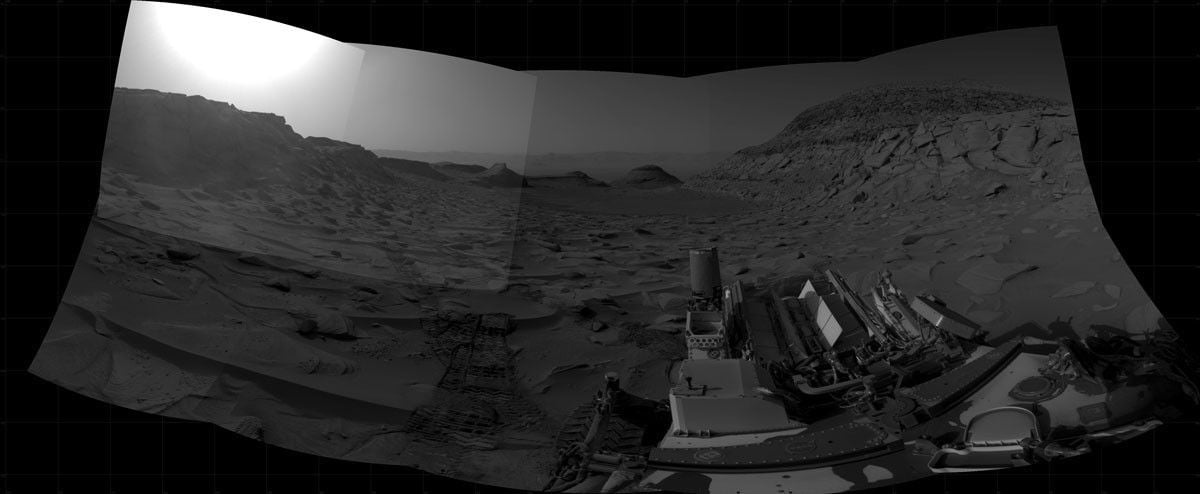
For the 5,000-sol image, the cameras looked across the terrain from Chocolatal and captured a series of frames that NASA could assemble into panoramas. The original views remain black and white. The mission team added the colors later when it combined the morning and afternoon observations.
The blue-and-yellow colorization follows a method NASA used with Curiosity before. In November 2021, the rover photographed a landscape twice in one Martian day, and NASA combined the two sets of images with different colours.
The colours, however, do not represent the natural appearance of the Martian surface. They help separate two photographic observations and make the changing illumination easier to see.
Two views with changing sunlight
The Martian landscape can look very different as the Sun moves across the sky. The morning photograph came at 9:56 a.m. on Sol 5,000. The second came at 5:39 p.m. on Sol 5,003. The rover had moved through its normal science activities during the intervening sols, but it remained at Chocolatal for the two panorama observations.
By late afternoon, the Sun had moved much lower in the sky. This changed the direction and length of the shadows across the sand and rocks. Features that receive fairly even illumination earlier in the day can show much stronger texture later, when the Sun approaches the horizon.
NASA has seen the same effect in earlier Curiosity panoramas. When the rover photographed Marker Band Valley in 2023, the team deliberately captured the scene in the morning and afternoon. The two lighting conditions produced stronger shadows from opposite directions. The resulting image brought out details that would have been harder to see in a single photograph.
Chocolatal was part of Curiosity’s science work
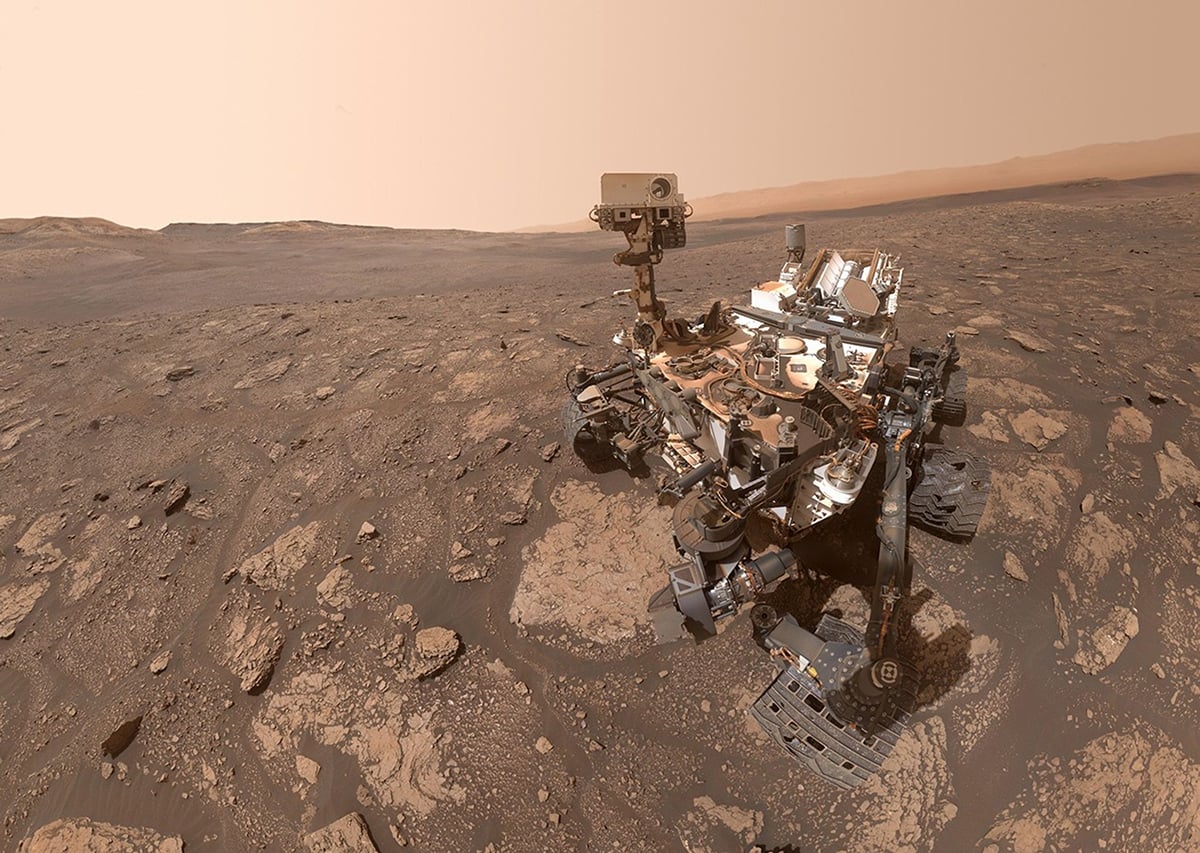
The anniversary photograph, in fact, came from an active science site. Curiosity had reached Chocolatal as the rover’s team wanted to study the unusual sand feature.
Chocolatal is a long, narrow, wind-formed ripple. Scientists are examining whether it could qualify as a transverse aeolian ridge, or TAR. Orbital spacecraft have spotted similar features across Mars, but scientists still have questions about how they form, how their sand moves, and why some remain stable.
Curiosity drove one of its wheels into the ridge during the work around Sol 5,000. The rover then backed away, leaving a trench in the sand. That exposed material below the surface and gave the science team another target to examine.
Clear skies!
See more from DIYPhotography.net on Google
Add DIYPhotography.net as a trusted source. This makes
our stories more likely to appear in your Google Search results.
 Add as a preferred source on Google

Soumyadeep Mukherjee
Soumyadeep Mukherjee is an award-winning astrophotographer from India. He has a doctorate degree in Linguistics. His work extends to the sub-genres of nightscape, deep sky, solar, lunar and optical phenomenon photography. He is also a photography educator and has conducted numerous workshops. His works have appeared in over 40 books & magazines including Astronomy, BBC Sky at Night, Sky & Telescope among others, and in various websites including National Geographic, NASA, Forbes. He was the first Indian to win “Astronomy Photographer of the Year” award in a major category.



Join the Discussion
DIYP Comment Policy
Be nice, be on-topic, no personal information or flames.