



















An Orbiter Photographs a Rover: NASA’s Photo Session on Mars
Jun 30, 2026
Soumyadeep Mukherjee
Soumyadeep Mukherjee is an award-winning astrophotographer from India. He has a doctorate degree in Linguistics. His work extends to the sub-genres of nightscape, deep sky, solar, lunar and optical phenomenon photography. He is also a photography educator and has conducted numerous workshops. His works have appeared in over 40 books & magazines including Astronomy, BBC Sky at Night, Sky & Telescope among others, and in various websites including National Geographic, NASA, Forbes. He was the first Indian to win “Astronomy Photographer of the Year” award in a major category.
Share:
Planetary exploration depends on more than powerful spacecraft and advanced scientific instruments. It also relies on the ability to connect observations made from different vantage points. Orbiters survey vast regions of a planet, revealing geological features that extend for hundreds of kilometres. Surface missions examine those same landscapes at centimetre-scale detail, measuring rock chemistry, mineral composition, and textures that orbiters cannot resolve.
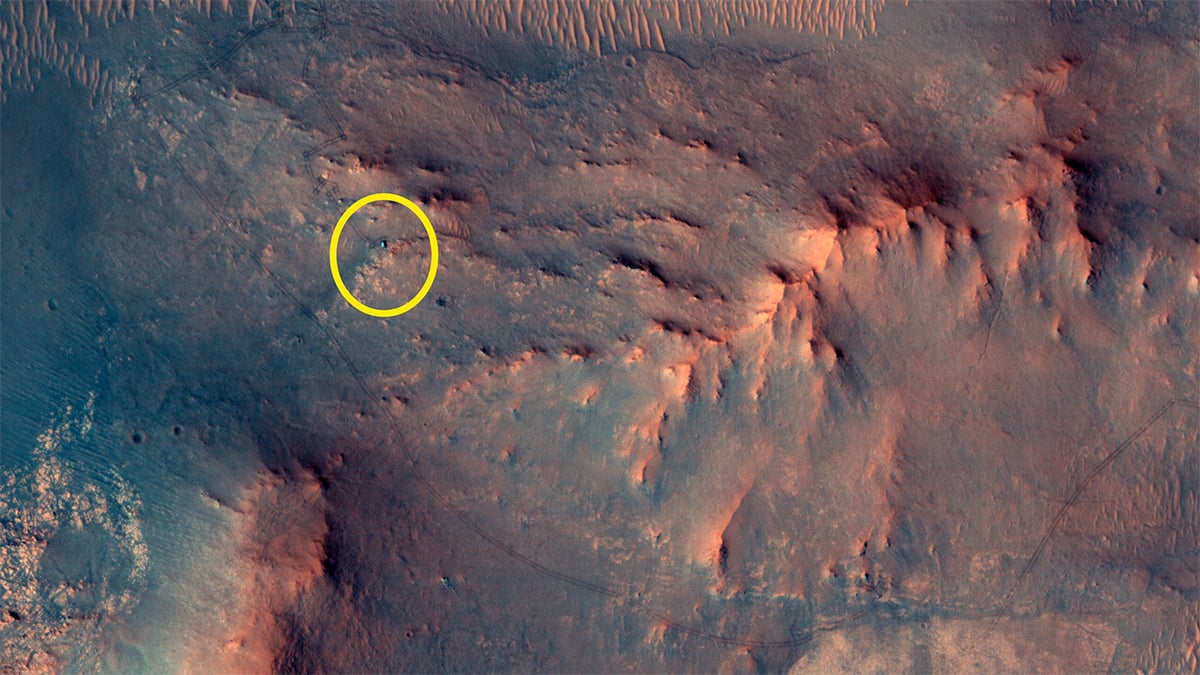
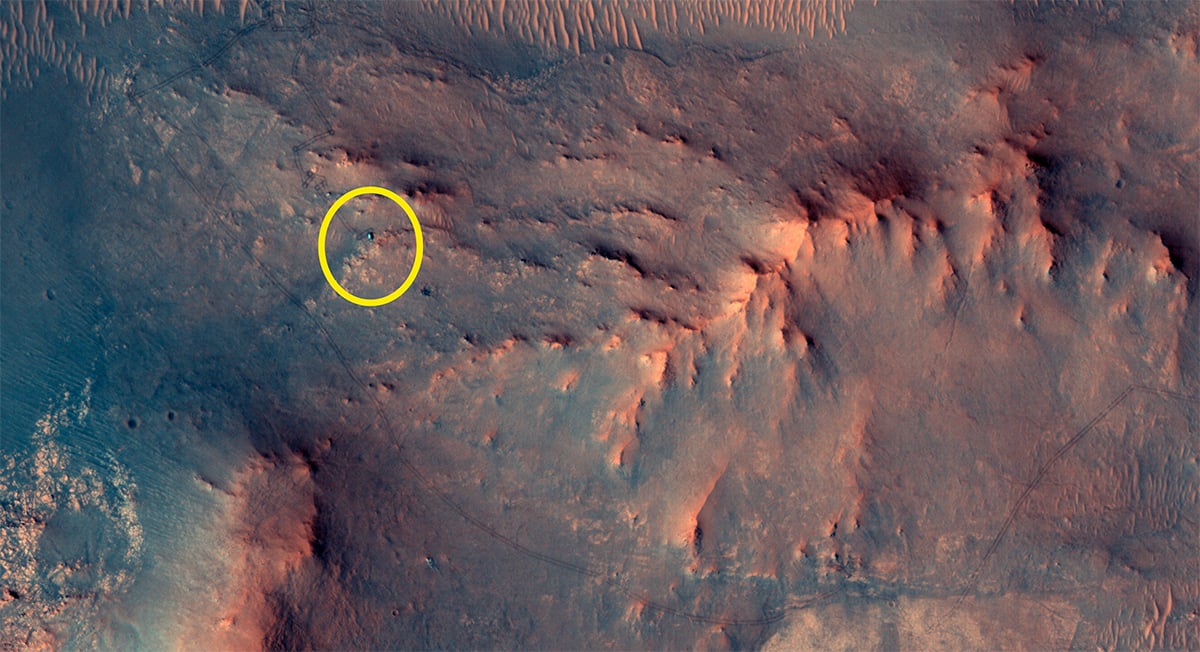
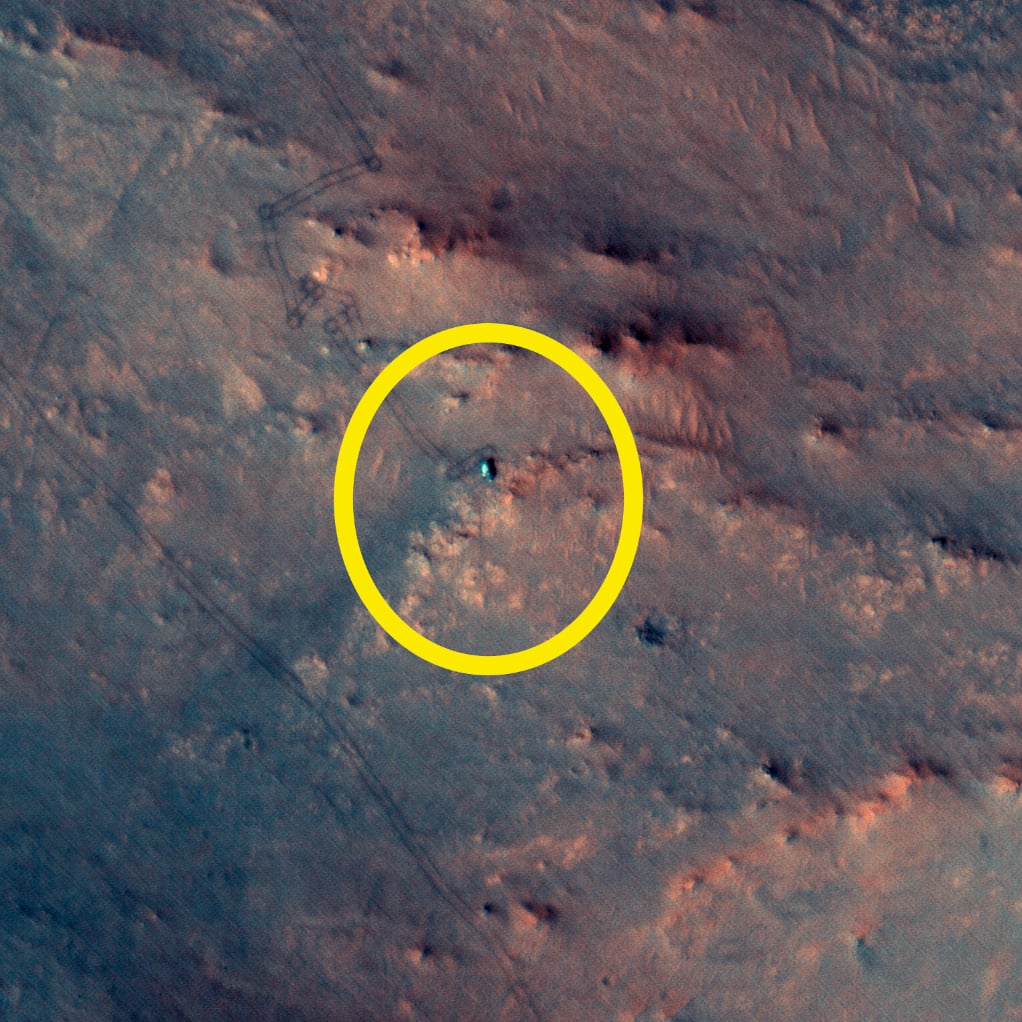
A new image from NASA brings two of them together. Captured on June 13, 2026, by the High Resolution Imaging Science Experiment (HiRISE) aboard the Mars Reconnaissance Orbiter, the photograph shows Perseverance as a speck on the floor of Jezero Crater. Behind it stretches a winding trail of wheel tracks that records more than five years of exploration across one of the most scientifically important locations on Mars. The image arrives just before Perseverance completed a driving distance of 42.195 kilometres, matching the length of a marathon on Earth.
A tiny rover seen from hundreds of kilometers away
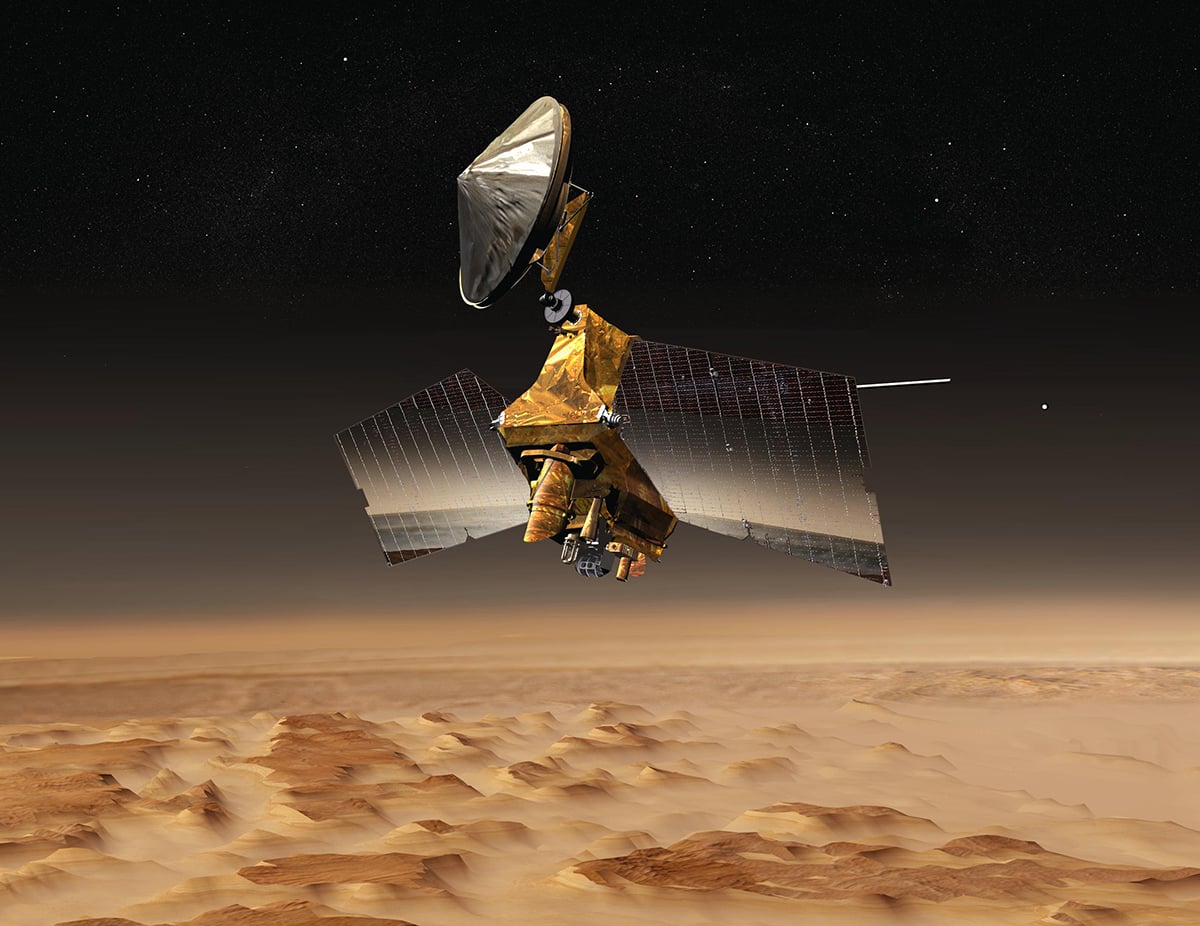
The image released by NASA came from HiRISE, one of the most capable planetary cameras ever built. The instrument flies aboard the Mars Reconnaissance Orbiter, which has been circling Mars since 2006. Nearly two decades after arriving at the Red Planet, the spacecraft continues to support almost every active surface mission.
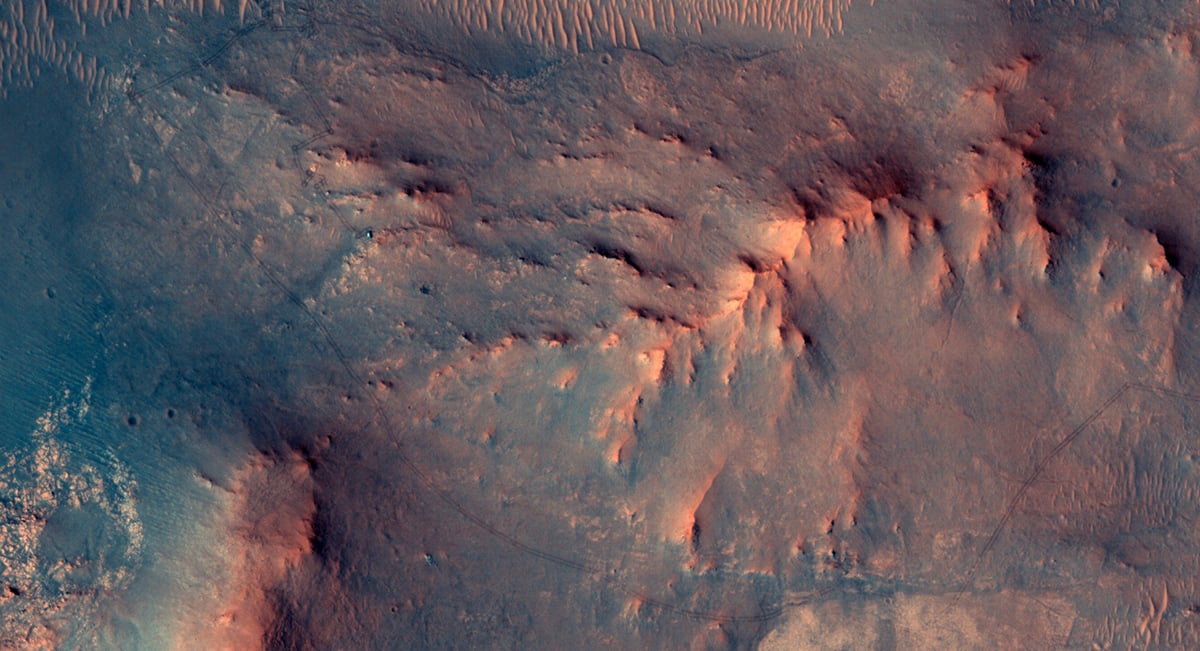
HiRISE was designed to do something no previous Mars camera could achieve. It captures extremely detailed photographs of the surface from an altitude of roughly 300 kilometres. Under good conditions, the camera can resolve features only a few tens of centimetres across. That level of detail allows scientists to study individual rocks, sand ripples, fresh impact craters, and even spacecraft operating on the surface.
Perseverance itself measures only about three meters long. From orbit, it occupies only a handful of pixels in the final image. NASA processed the photograph to make the rover easier to spot, giving it a green tint against the reddish landscape. Without that enhancement, finding the rover would require careful searching.
Five years of driving across an ancient lakebed
Perseverance landed inside Jezero Crater because scientists believe it once contained a lake fed by a river delta billions of years ago. Water flowing into the crater deposited layers of sediment that may preserve evidence of ancient habitable environments. Those ancient deposits make Jezero one of the best places on Mars to search for signs that microbial life may once have existed.
The rover has rarely travelled in a straight line. It has moved from one scientific target to another. It stops to study unusual rocks, drills selected samples, photographs interesting formations, and then continues toward the next destination. Sometimes the shortest route is not the most useful one. Scientists often choose longer paths because they pass through areas with greater geological value.
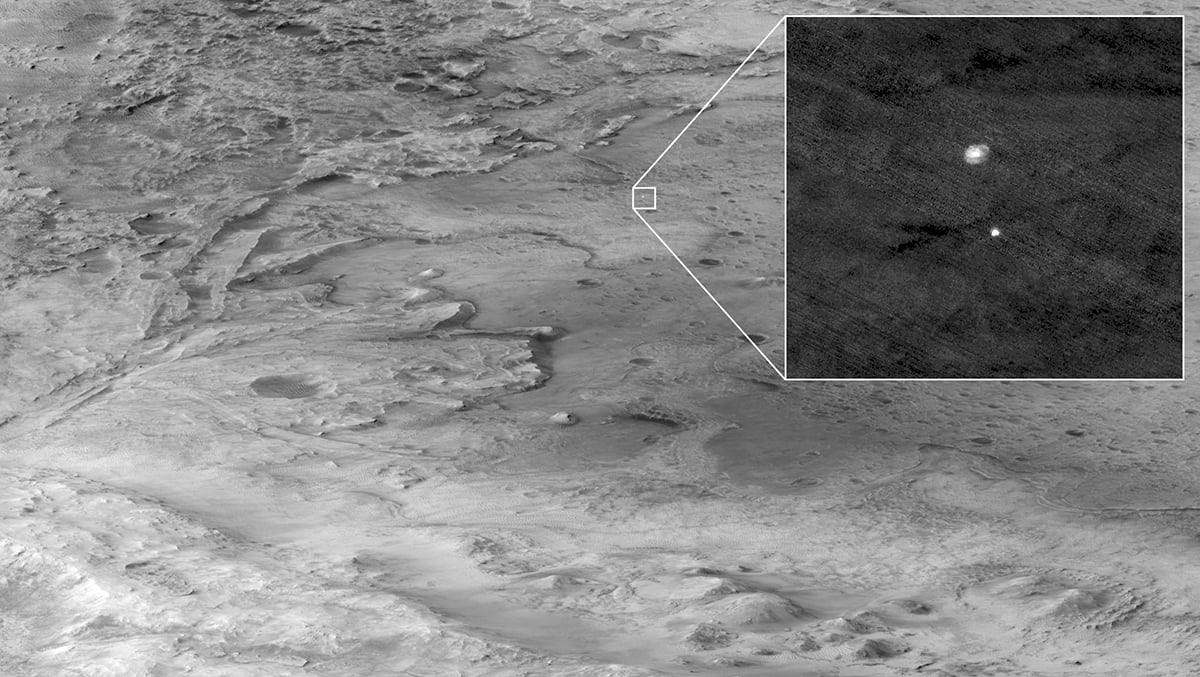
During those five years, Perseverance has crossed ancient sediments, climbed rocky slopes, examined volcanic rocks, and entered regions that formed under very different conditions. Every new location has added another piece to the geological history of Jezero Crater.
The marathon milestone also shows how much Mars rover technology has advanced over the past two decades. Every new rover has inherited lessons from the missions that came before it. Engineers studied the successes of Spirit and Opportunity, examined the challenges faced by Curiosity, and applied those findings while designing Perseverance. The result is a rover that spends less time waiting for instructions and more time exploring.
The search continues in one of Mars’ oldest landscapes
When HiRISE captured the milestone image, Perseverance was investigating a region known as Arbot. Scientists consider this area particularly valuable because it exposes some of the oldest rocks encountered during the mission. Those ancient formations may preserve evidence of geological processes that occurred billions of years before the crater acquired its lake.
Understanding those rocks is essential because Jezero Crater records multiple chapters of Martian history. The oldest rocks formed long before water filled the basin. Later, rivers transported sediments into the crater, gradually building the delta that attracted scientists to the landing site. After the lake disappeared, wind, impacts, and volcanic activity continued to reshape the landscape. Each episode left its signature on the rocks.
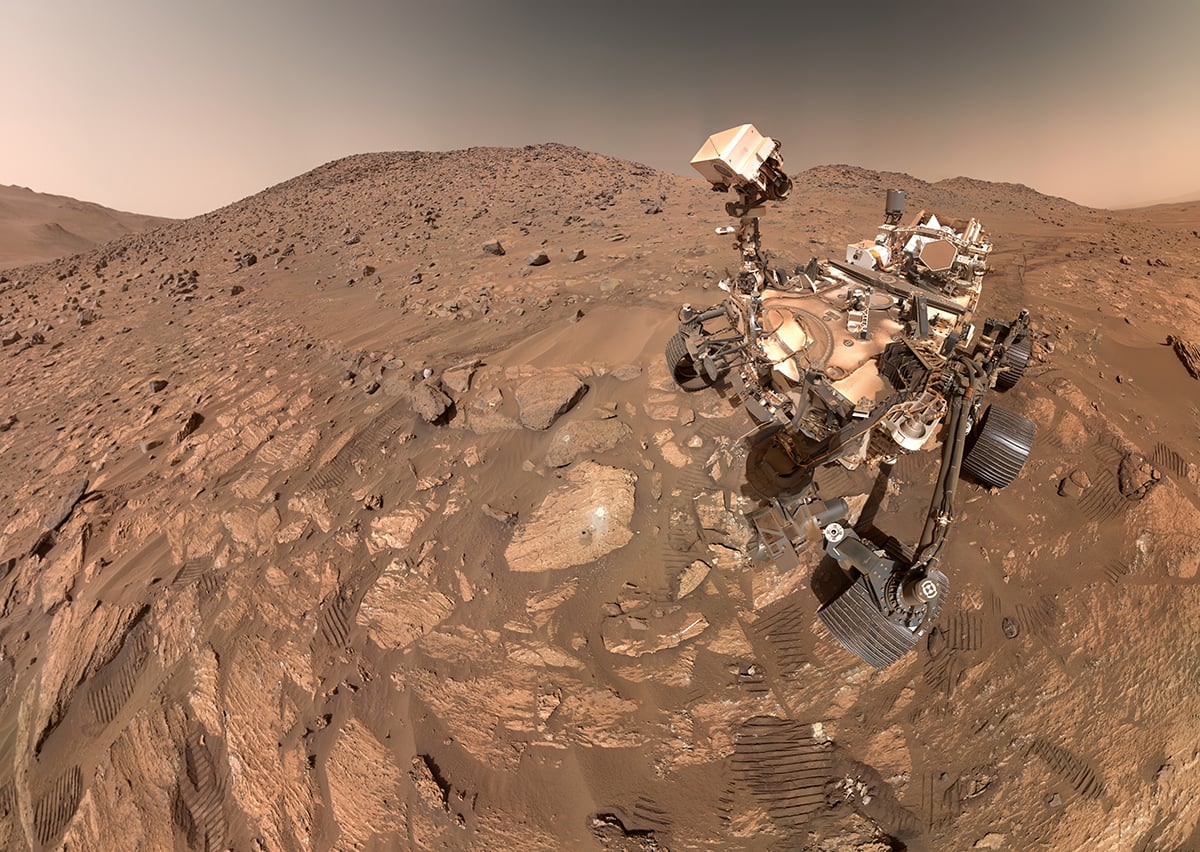
Perseverance investigates these layers using seven scientific instruments, each designed to answer different questions. High-resolution cameras reveal textures that indicate how rocks formed. Spectrometers identify minerals and chemical elements. Other instruments search for organic compounds and examine the composition of surface materials without physically collecting them.
Clear skies!
See more from DIYPhotography.net on Google
Add DIYPhotography.net as a trusted source. This makes
our stories more likely to appear in your Google Search results.
 Add as a preferred source on Google

Soumyadeep Mukherjee
Soumyadeep Mukherjee is an award-winning astrophotographer from India. He has a doctorate degree in Linguistics. His work extends to the sub-genres of nightscape, deep sky, solar, lunar and optical phenomenon photography. He is also a photography educator and has conducted numerous workshops. His works have appeared in over 40 books & magazines including Astronomy, BBC Sky at Night, Sky & Telescope among others, and in various websites including National Geographic, NASA, Forbes. He was the first Indian to win “Astronomy Photographer of the Year” award in a major category.
Related Posts
 Perseverance Rover Photographs the “Clearest Sign Yet” of Life on Mars
 NASA Perseverance rover spots poor broken Ingenuity helicopter in a recent Mars photo
 ESA’s Mars Orbiter Capture “Closest Yet” View of Interstellar Comet 3I/ATLAS
 Tianwen-1’s Surprise Close-Up: China’s Mars Orbiter Images Interstellar Comet 3I/ATLAS
Join the Discussion
DIYP Comment Policy
Be nice, be on-topic, no personal information or flames.