





















This is the Most Detailed Image Ever of the Milky Way’s Center
Jun 26, 2026
Soumyadeep Mukherjee
Soumyadeep Mukherjee is an award-winning astrophotographer from India. He has a doctorate degree in Linguistics. His work extends to the sub-genres of nightscape, deep sky, solar, lunar and optical phenomenon photography. He is also a photography educator and has conducted numerous workshops. His works have appeared in over 40 books & magazines including Astronomy, BBC Sky at Night, Sky & Telescope among others, and in various websites including National Geographic, NASA, Forbes. He was the first Indian to win “Astronomy Photographer of the Year” award in a major category.
Share:
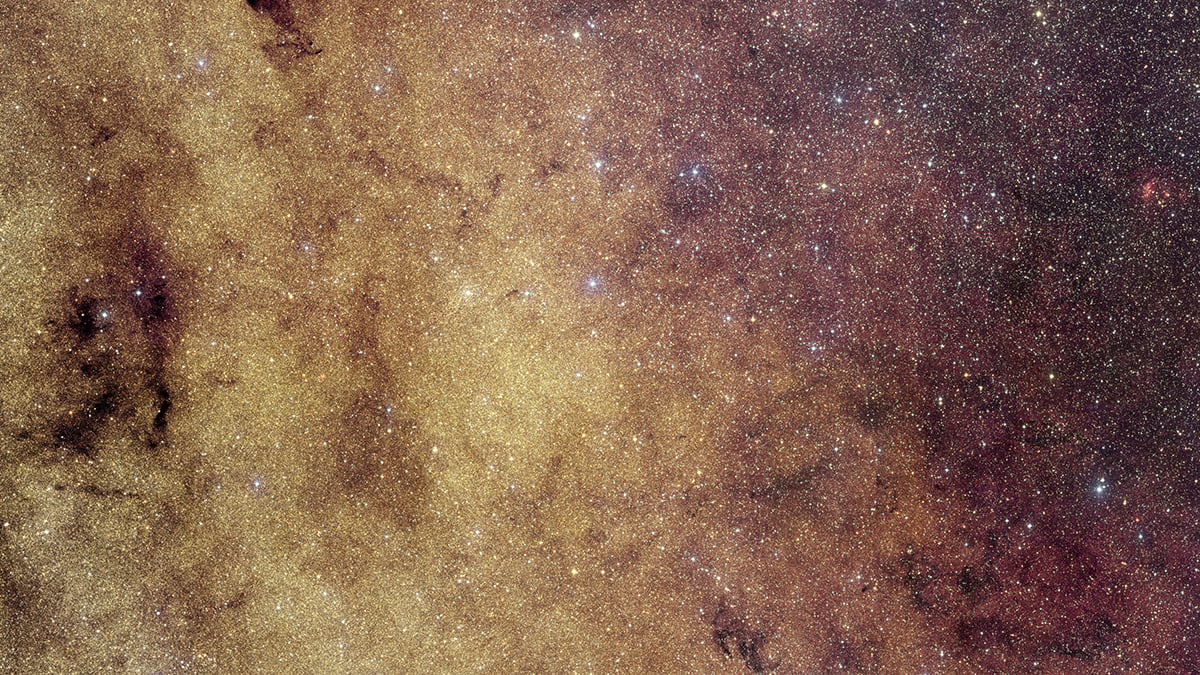
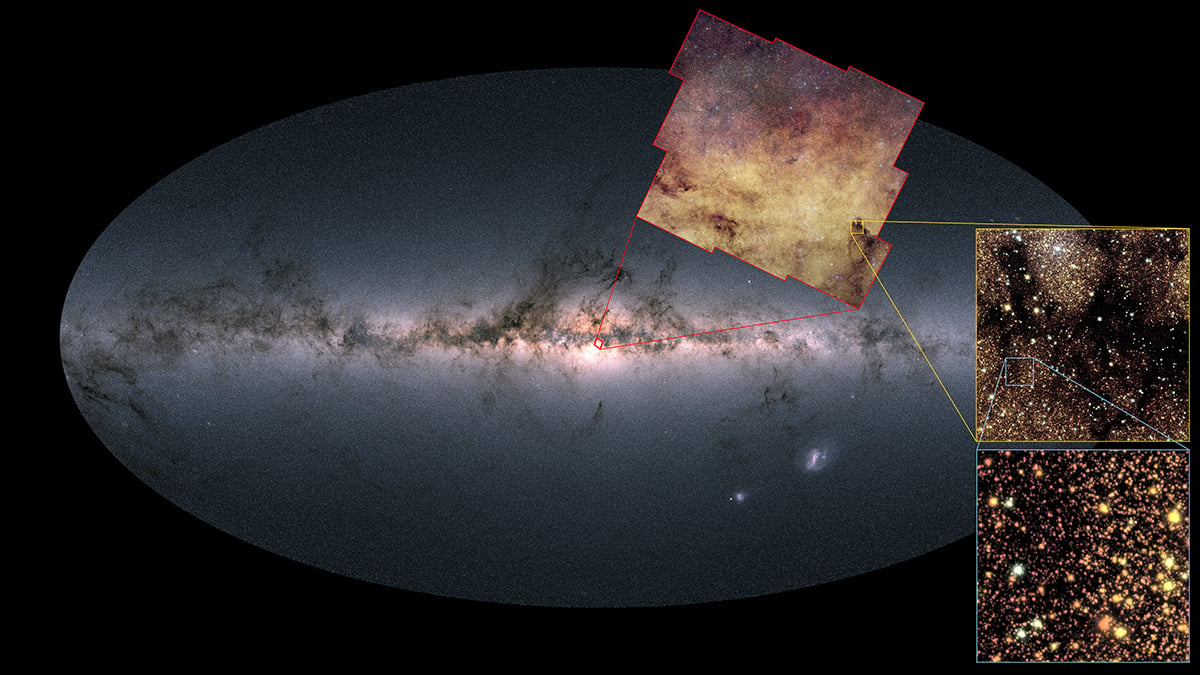
The central bulge of the Milky Way represents one of the most complex stellar environments in the Galaxy. Millions of stars occupy a relatively compact volume of space, while thick clouds of interstellar dust absorb visible light and hide many objects from view. These conditions make the Galactic center one of the most difficult regions to study with optical telescopes. Separating individual stars from this dense background requires both exceptional angular resolution and a wide field of view, two qualities that rarely exist together in a single space telescope. The European Space Agency’s (ESA) Euclid mission has overcome the challenge. Although the spacecraft was designed to investigate the dark Universe, it has captured the largest high-resolution visible-light image ever assembled of the Milky Way‘s central bulge. The enormous six-gigapixel mosaic resolves more than 60 million individual stars across one of the busiest regions in the night sky.
A record-breaking portrait of the Galactic Bulge
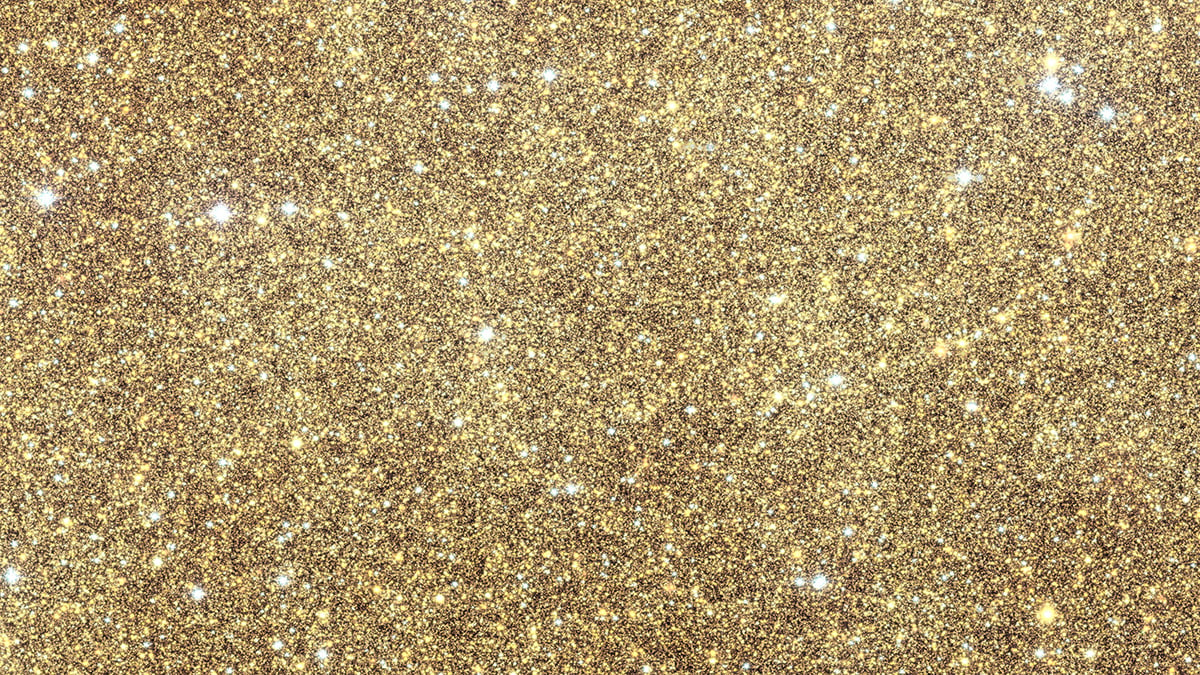
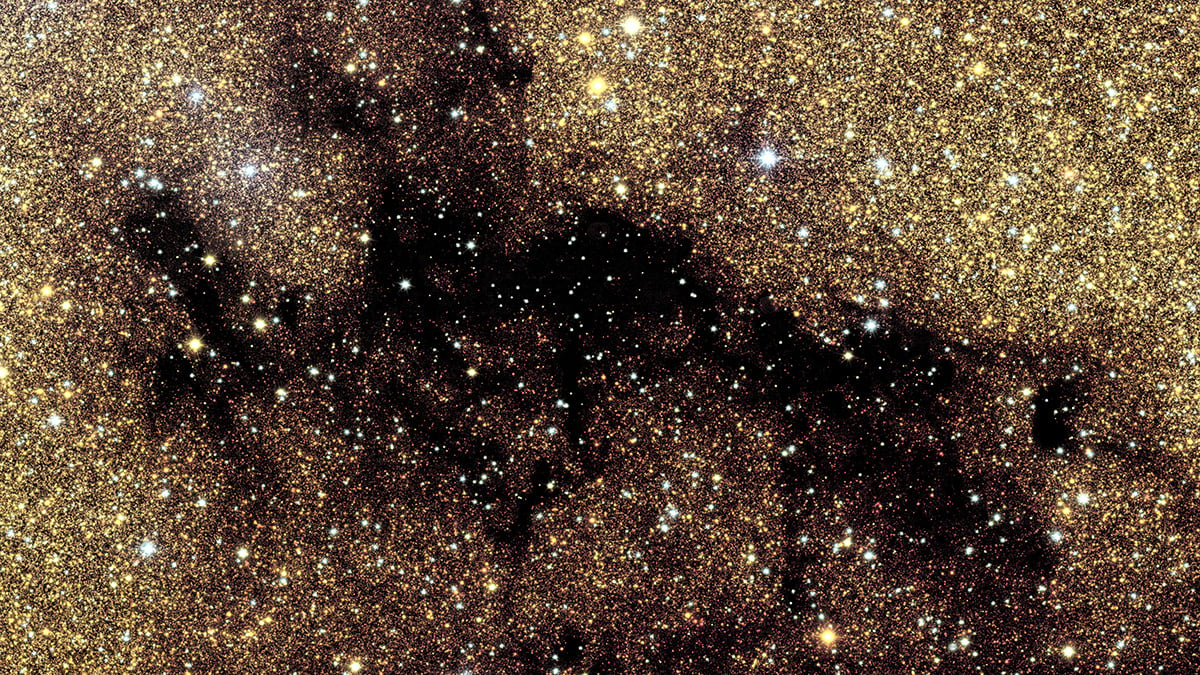
The Milky Way‘s bulge has long fascinated astronomers. It contains some of the oldest stars in our Galaxy and surrounds the supermassive black hole at the Galactic centre. Yet observing this region has never been easy. The sheer number of stars creates severe crowding, and dark clouds of dust scatter and absorb visible light. As a result, neighbouring stars often merge into blurred patches even in high-quality images.
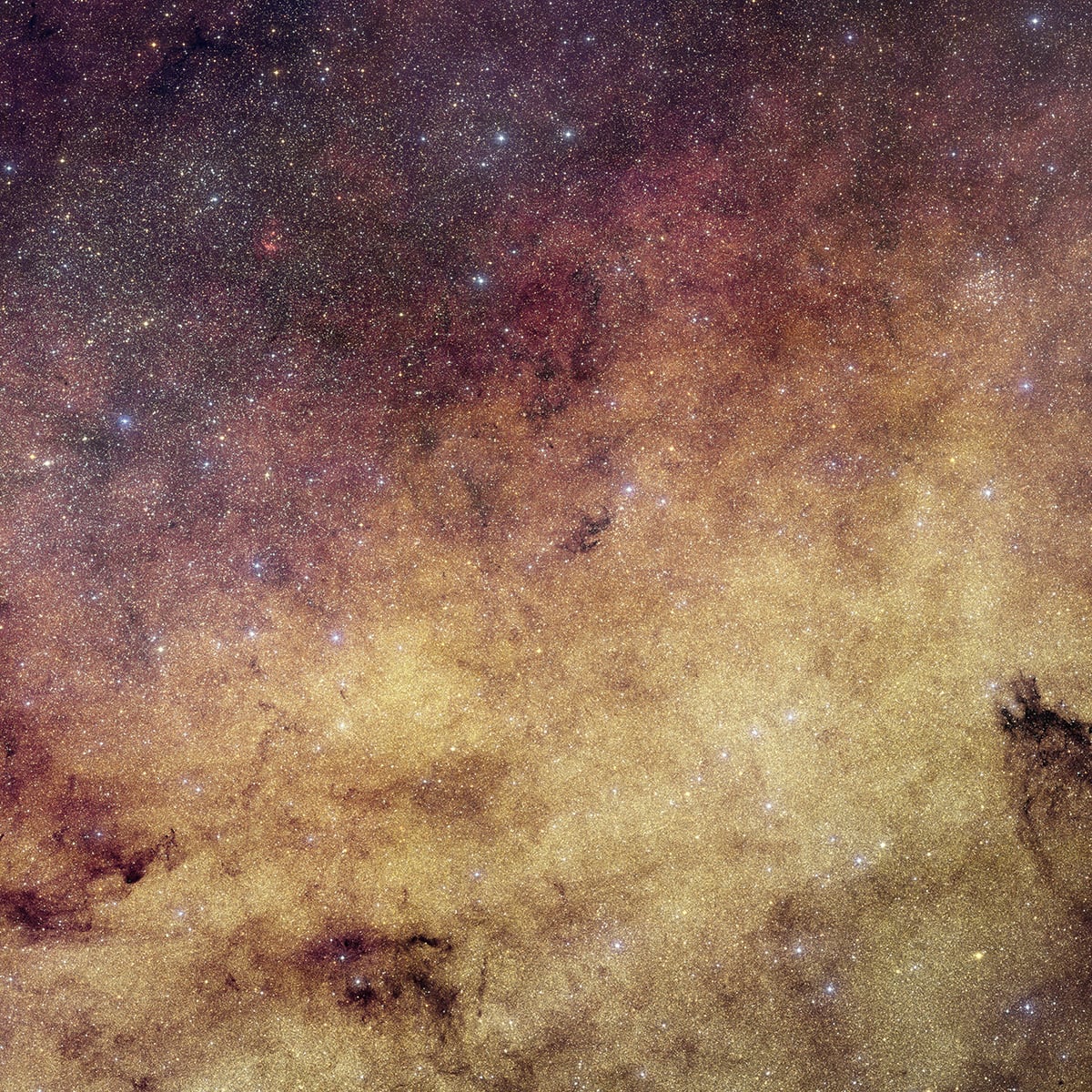
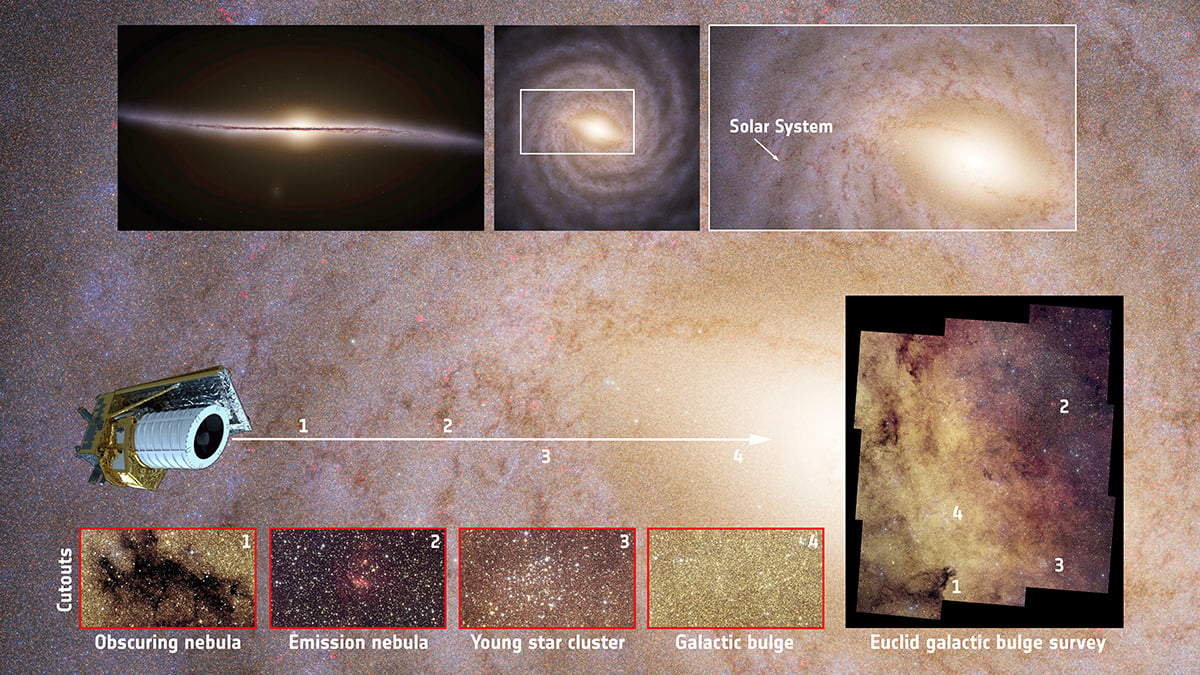
On March 23, 2025, the spacecraft spent approximately 26 hours observing the Galactic Bulge. Euclid recorded nine adjacent fields using its Visible Instrument (VIS). Scientists later combined these observations into a seamless six-gigapixel mosaic that covers a remarkably large section of the sky.
The completed image resolves more than 60 million stars. Every part of the mosaic contains an extraordinary range of stellar objects. Bright foreground stars appear alongside faint stars that lie much farther away. Dense star fields stretch across the image, while dark dust lanes carve intricate patterns through the stellar background. Several regions also contain young blue stars, compact star clusters, and glowing hydrogen clouds where new stars continue to form.
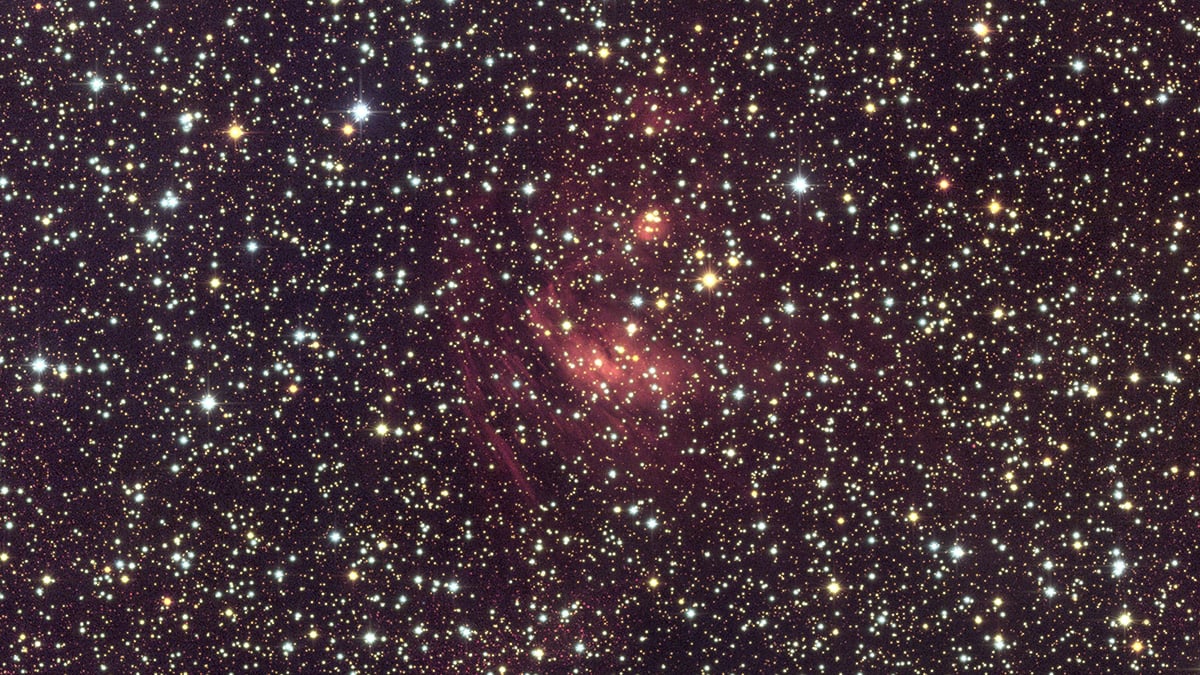
ESA released the image in colour, although Euclid itself records monochrome observations through the VIS instrument. Scientists produced the colour version by combining Euclid’s data with complementary observations from the Canada-France-Hawaii Telescope. This approach preserves the scientific accuracy of the original data while making different stellar populations easier to distinguish.
A dark universe mission turned toward our galaxy
This observation may seem unrelated to Euclid’s primary mission. The spacecraft was never designed specifically to study the Milky Way. ESA launched Euclid to investigate the invisible components that dominate our Universe.
Dark matter and dark energy together account for about 95 percent of the Universe. Despite their overwhelming influence, scientists still know very little about their physical nature. Euclid aims to change that by mapping the large-scale distribution of galaxies across more than one-third of the sky. The mission measures how gravity has shaped these galaxies over billions of years and how cosmic expansion has evolved since the early Universe.
To achieve these goals, ESA equipped Euclid with a 1.2-metre telescope and two highly sophisticated scientific instruments. The Visible Instrument captures extremely sharp optical images, while the Near Infrared Spectrometer and Photometer records infrared observations and measures the distances to billions of galaxies.
Those same capabilities also make Euclid exceptionally effective for stellar astronomy. High angular resolution allows the telescope to separate stars that appear blended in other observations. Meanwhile, its unusually wide field of view enables astronomers to study enormous stellar populations in a single dataset.
Building a better map for future exoplanet discoveries
Although the new image provides an extraordinary view of the Milky Way, its scientific importance extends well beyond Galactic astronomy. The dataset will also play a major role in the search for planets orbiting distant stars.
One of the most successful methods for discovering exoplanets is gravitational microlensing. The technique relies on Einstein’s theory of general relativity. When a foreground star passes almost directly in front of a more distant background star, the foreground star’s gravity bends and magnifies the background star‘s light. Astronomers observe a temporary increase in brightness. If the foreground star hosts a planet, the planet produces an additional, much smaller signal within the light curve.
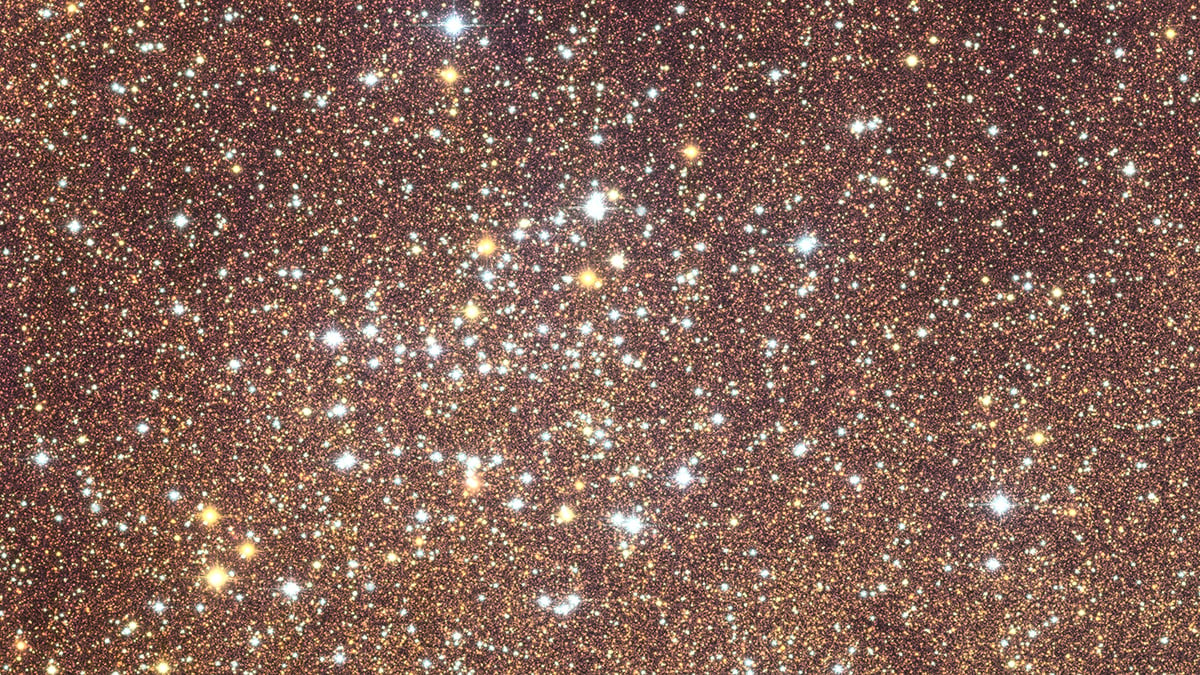
The Galactic bulge offers ideal conditions for this technique because it contains an enormous number of background stars. Every additional star increases the probability of a microlensing event. Consequently, astronomers have focused many exoplanet surveys on this region.
Supporting NASA’s Roman Space Telescope
The scientific impact of Euclid‘s observation will continue to grow over the coming decade. Much of that value comes from its close connection with NASA‘s Nancy Grace Roman Space Telescope.
Roman will conduct one of the most ambitious microlensing surveys ever attempted. During its observations, the spacecraft is expected to detect thousands of temporary brightening events in the Galactic bulge. Many of these events will reveal previously unknown planetary systems, including planets with masses comparable to Earth.
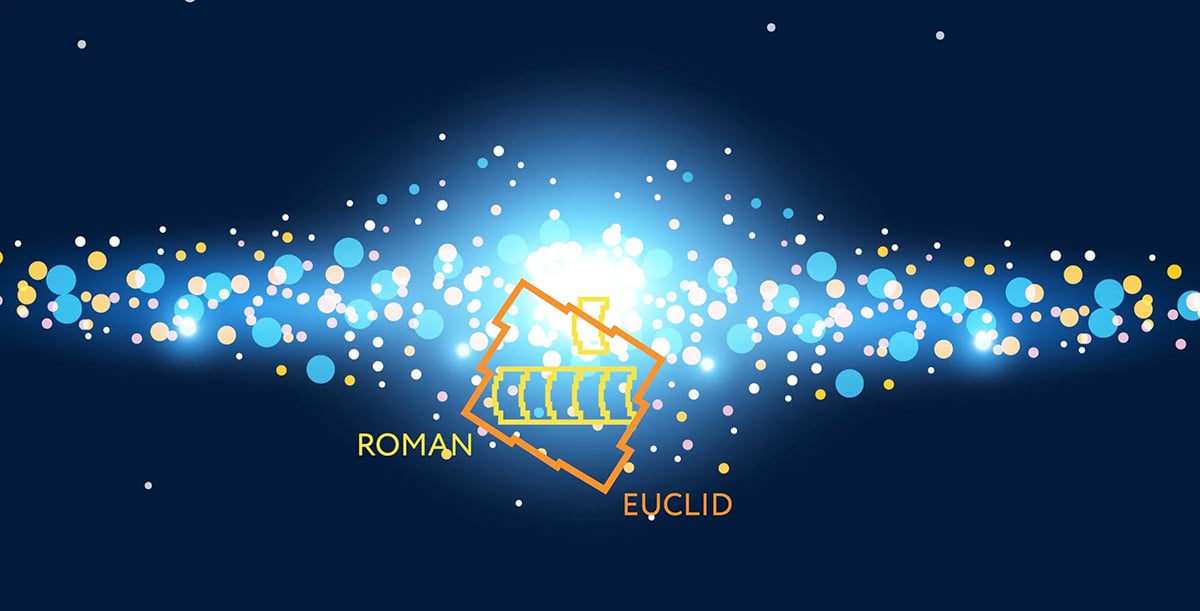
After a microlensing event ends, the foreground and background stars continue moving through space. Their separation gradually increases over several years. Euclid’s high-resolution image provides a precise snapshot of their original positions before these stars drift apart.
Future observations can compare against this reference image and identify the lens star with much greater certainty. Scientists can then estimate the star’s mass more accurately and derive better measurements for the accompanying planet.
Clear skies!
See more from DIYPhotography.net on Google
Add DIYPhotography.net as a trusted source. This makes
our stories more likely to appear in your Google Search results.
 Add as a preferred source on Google

Soumyadeep Mukherjee
Soumyadeep Mukherjee is an award-winning astrophotographer from India. He has a doctorate degree in Linguistics. His work extends to the sub-genres of nightscape, deep sky, solar, lunar and optical phenomenon photography. He is also a photography educator and has conducted numerous workshops. His works have appeared in over 40 books & magazines including Astronomy, BBC Sky at Night, Sky & Telescope among others, and in various websites including National Geographic, NASA, Forbes. He was the first Indian to win “Astronomy Photographer of the Year” award in a major category.


Join the Discussion
DIYP Comment Policy
Be nice, be on-topic, no personal information or flames.