






















Revisiting an Unusual Spiral: Hubble’s Striking New View of NGC 4102
Nov 3, 2025
Soumyadeep Mukherjee
Soumyadeep Mukherjee is an award-winning astrophotographer from India. He has a doctorate degree in Linguistics. His work extends to the sub-genres of nightscape, deep sky, solar, lunar and optical phenomenon photography. He is also a photography educator and has conducted numerous workshops. His works have appeared in over 40 books & magazines including Astronomy, BBC Sky at Night, Sky & Telescope among others, and in various websites including National Geographic, NASA, Forbes. He was the first Indian to win “Astronomy Photographer of the Year” award in a major category.
Share:

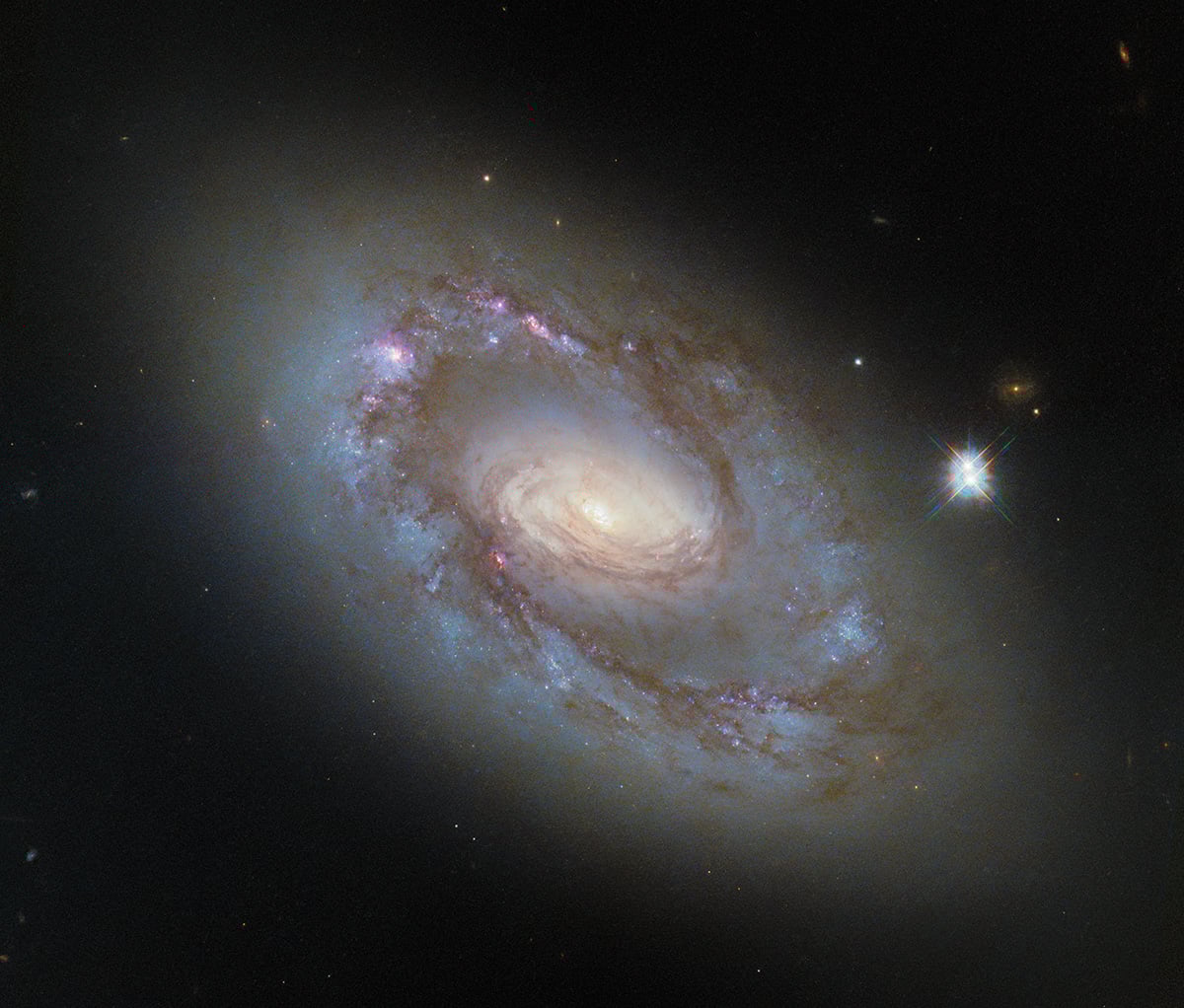
When the Hubble Space Telescope revisited the spiral galaxy NGC 4102, it captured a scene that looks serene but hides a storm of energy at its heart. The new image from ESA/Hubble reveals a dense swirl of gas and dust wrapped around a blazing core, giving astronomers a closer look at one of the most intriguing nearby galaxies. Located about 56 million light-years away in the constellation Ursa Major, NGC 4102 is a galaxy with a quiet face and a turbulent soul.
A galaxy that looks ordinary but isn’t
NGC 4102 appears to be a typical spiral galaxy. It has graceful arms, dust lanes, and a bright central bulge. Yet astronomers have long known that it hides a much more active interior. Observations across multiple wavelengths, optical, infrared, and X-ray, have shown that the galaxy hosts an active galactic nucleus (AGN), powered by a supermassive black hole at its center.
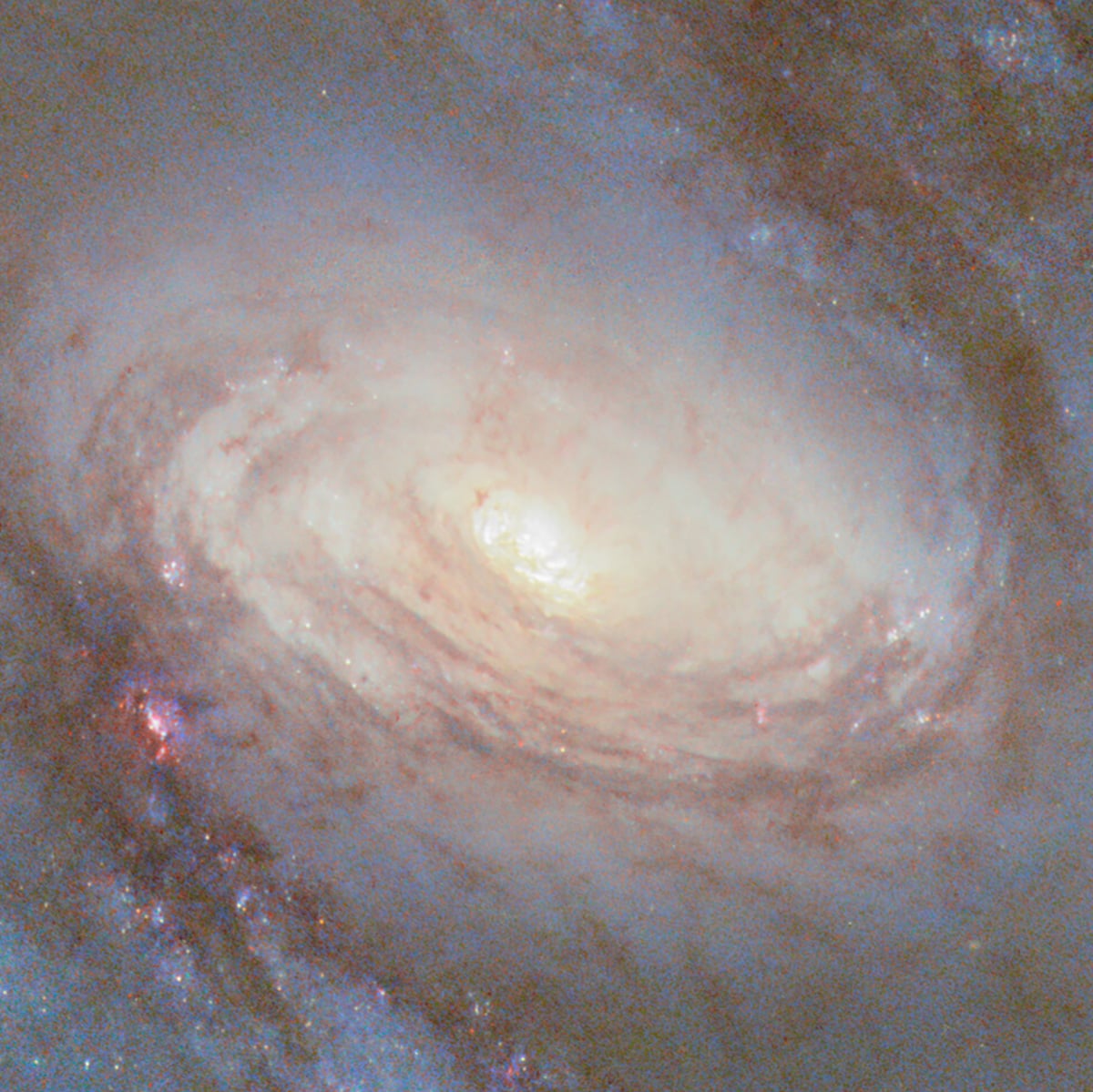
The new Hubble image captures the central region in extraordinary detail. The view spans about 2.6 × 2.3 arcminutes, enough to frame the core and its surrounding structures. Streams of dark dust trace the spiral pattern inward, guiding gas toward the center. Within that core lies a ring of star-forming regions, glowing in shades of pink and blue. Those colors correspond to hydrogen and young, hot stars, the by-products of intense stellar birth.
Astronomers call this galaxy a LINER, short for Low-Ionization Nuclear Emission-Line Region. It’s a type of galaxy whose nucleus emits specific spectral lines produced by mildly ionized gas. LINERs are less energetic than quasars but still show the fingerprints of active black holes. What makes NGC 4102 even more interesting is that it’s a Compton-thick source, meaning the black hole’s radiation is heavily shrouded by dense clouds of gas and dust. That material blocks most X-rays from escaping, allowing astronomers to detect only the indirect signs of activity.
How Hubble improved the view
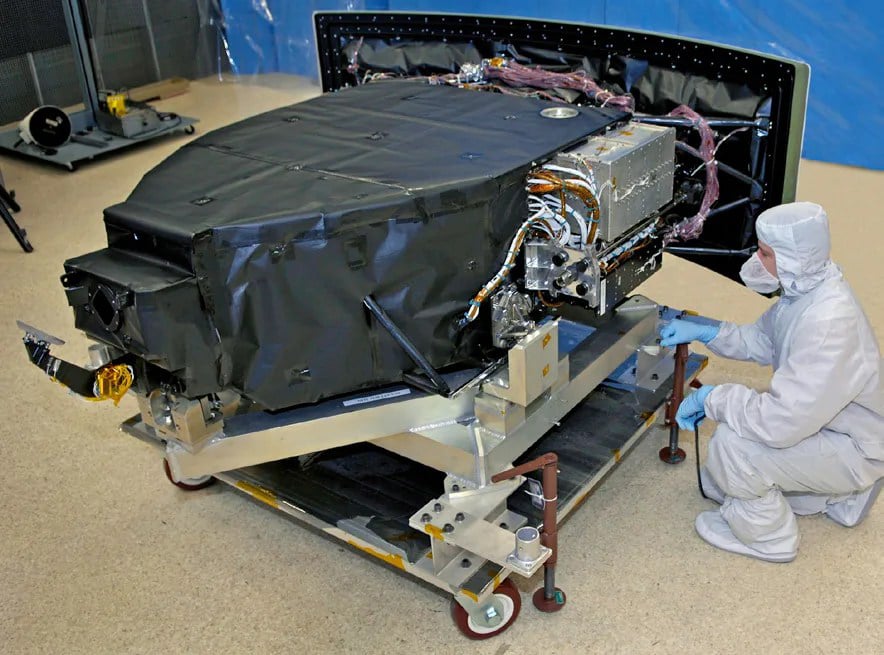
Hubble first imaged NGC 4102 years ago using its older Wide Field and Planetary Camera 2 (WFPC2). That instrument provided valuable data, but its resolution and sensitivity were limited by the technology of its time. The new observations utilize the Wide Field Camera 3 (WFC3), a significantly more advanced system capable of capturing wider and sharper images with enhanced color accuracy.
ESA notes that these new exposures were taken through several filters sensitive to different wavelengths of visible and near-infrared light. Each filter highlights a different component of the galaxy: stars, gas, or dust. When combined, they reveal the delicate interplay between all three.
The result is an image that shows both the bright ring of star formation and the obscuring dust that hides parts of the nucleus. In scientific terms, it’s a clean dataset that helps separate stellar activity from the faint glow of the AGN itself. For the public, it’s a striking visual, a spiral galaxy that looks half peaceful and half restless.
A closer look at its hidden engine
Behind that soft spiral pattern lies a dynamic system feeding on gas and dust. The black hole at the center of NGC 4102 is thought to have a mass of several million Suns. As matter spirals inward, it heats up and emits radiation across the electromagnetic spectrum. However, the dense material surrounding the core absorbs most of that light before it can escape.
This obscuration is why astronomers rely on multiple observatories to study the galaxy. NASA’s Chandra and Swift X-ray telescopes, together with Japan’s Suzaku satellite, have observed NGC 4102 to measure its hidden power. Their findings confirm that the nucleus is heavily veiled but still energetically active, producing the kind of emission patterns seen in more luminous active galaxies.
Such observations make NGC 4102 an important reference point. It represents a middle ground between quiet spirals like our Milky Way and the more extreme Seyfert and quasar galaxies. Studying it helps scientists understand how black holes grow and influence their surroundings in the later stages of galactic evolution.
Rings of fire and dust
The ring structure in NGC 4102 is one of its most distinctive features. It’s packed with bright clusters and glowing hydrogen regions, indicating ongoing star formation. These rings often form when gas is funneled inward by gravitational forces or resonances within the spiral arms. Once compressed near the center, the gas ignites bursts of star formation, sometimes triggered by the same processes that feed the black hole.
In this way, the galaxy’s nucleus and its star-forming ring are connected. While one consumes gas, the other transforms it into new stars. This dual activity gives astronomers clues about how galaxies regulate themselves. When the black hole grows too active, it can heat or expel the surrounding gas, slowing down star formation. Conversely, when conditions are calm, the inflowing material can sustain both processes together.
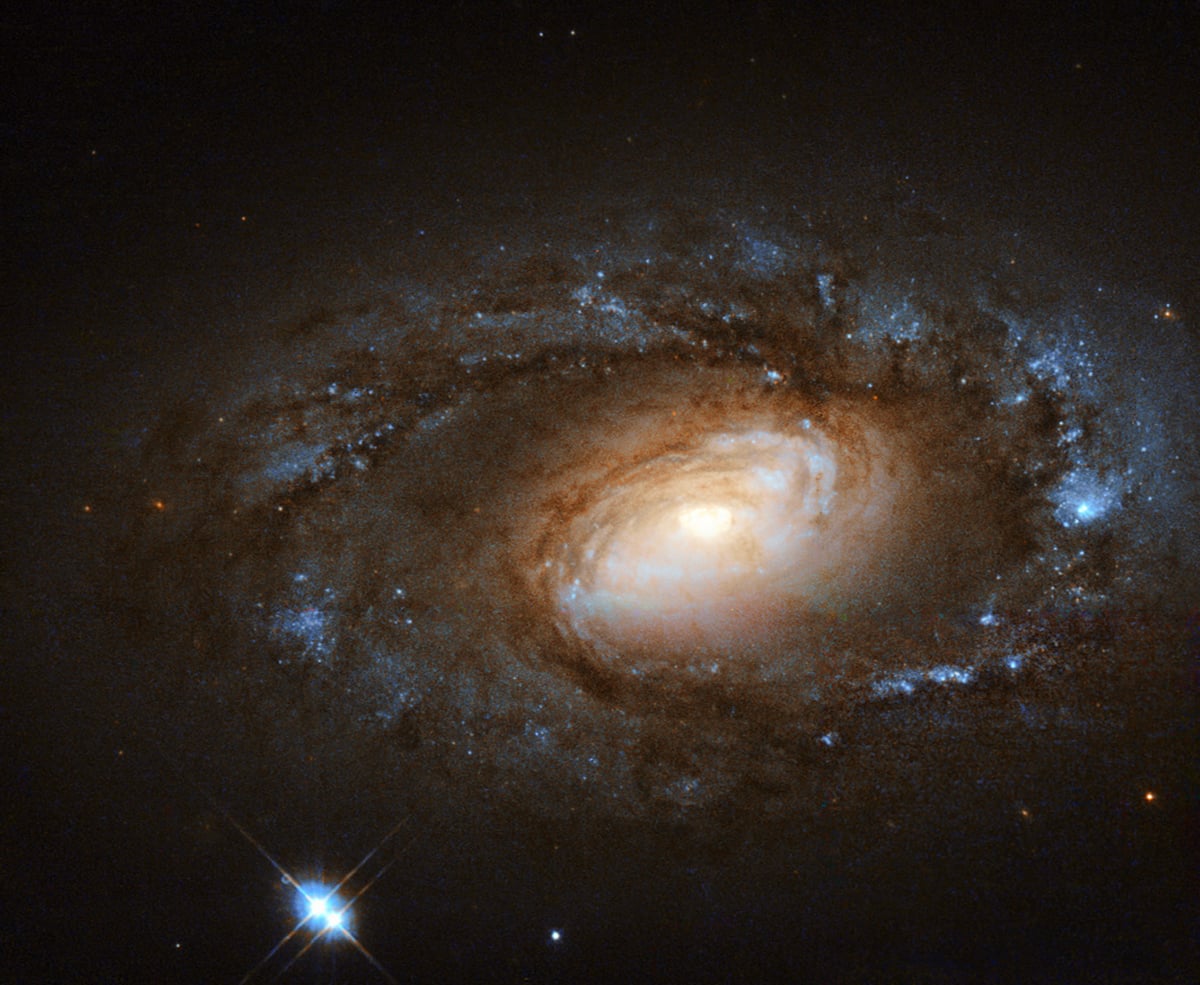
Hubble’s view makes this interaction visible. You can see the dusty filaments curving toward the core and the bright knots where young stars cluster. It’s a miniature laboratory for the feedback mechanisms that shape galaxies across the universe.
Clear skies!
See more from DIYPhotography.net on Google
Add DIYPhotography.net as a trusted source. This makes
our stories more likely to appear in your Google Search results.
 Add as a preferred source on Google

Soumyadeep Mukherjee
Soumyadeep Mukherjee is an award-winning astrophotographer from India. He has a doctorate degree in Linguistics. His work extends to the sub-genres of nightscape, deep sky, solar, lunar and optical phenomenon photography. He is also a photography educator and has conducted numerous workshops. His works have appeared in over 40 books & magazines including Astronomy, BBC Sky at Night, Sky & Telescope among others, and in various websites including National Geographic, NASA, Forbes. He was the first Indian to win “Astronomy Photographer of the Year” award in a major category.


Join the Discussion
DIYP Comment Policy
Be nice, be on-topic, no personal information or flames.