

























NASA’s Chandra Reveals ‘Red, White, and Blue’ Universe: Celebrating US 250th
Jul 11, 2026
Soumyadeep Mukherjee
Soumyadeep Mukherjee is an award-winning astrophotographer from India. He has a doctorate degree in Linguistics. His work extends to the sub-genres of nightscape, deep sky, solar, lunar and optical phenomenon photography. He is also a photography educator and has conducted numerous workshops. His works have appeared in over 40 books & magazines including Astronomy, BBC Sky at Night, Sky & Telescope among others, and in various websites including National Geographic, NASA, Forbes. He was the first Indian to win “Astronomy Photographer of the Year” award in a major category.
Share:
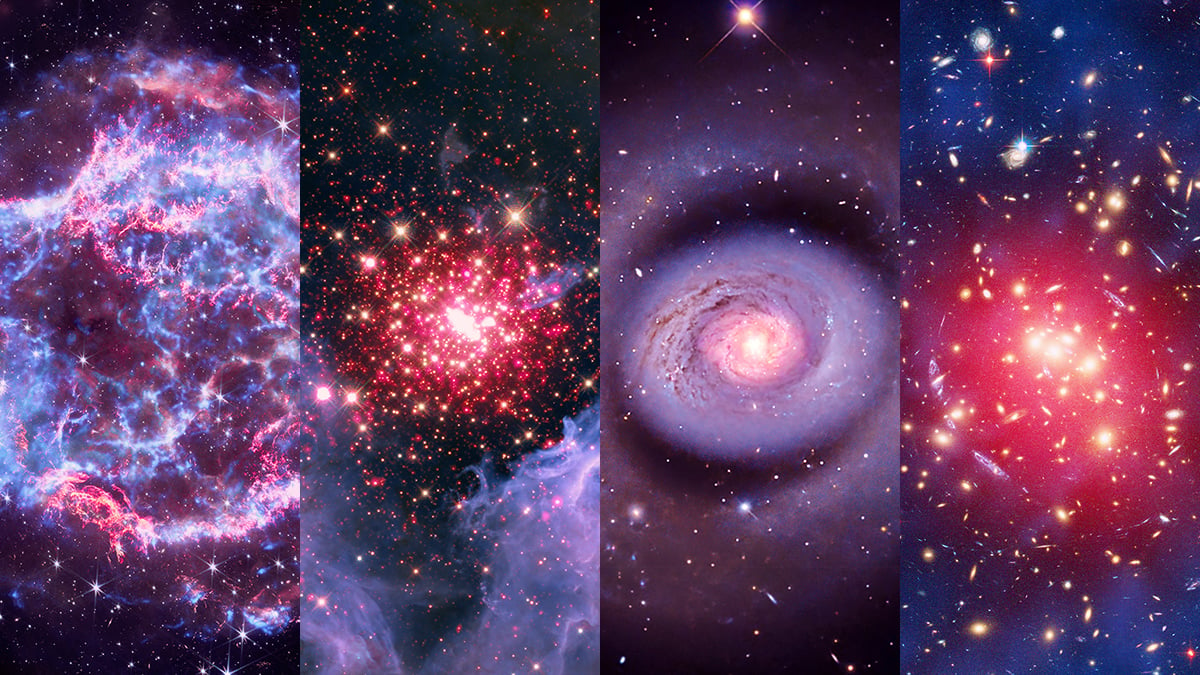
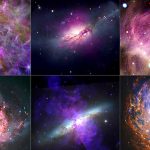
NASA has released a new set of images captured by the Chandra X-ray Observatory to commemorate the 250th anniversary of the United States. The collection presents four familiar cosmic objects in a striking red, white, and blue colour palette.
The collection spans an extraordinary range of cosmic environments. One image captures the aftermath of a massive stellar explosion. Another explores one of the Milky Way‘s richest star-forming regions. A nearby spiral galaxy reveals energetic phenomena hidden among billions of stars, while the final image uncovers the invisible matter shaping an entire galaxy cluster.
Cassiopeia A: Legacy of a stellar explosion
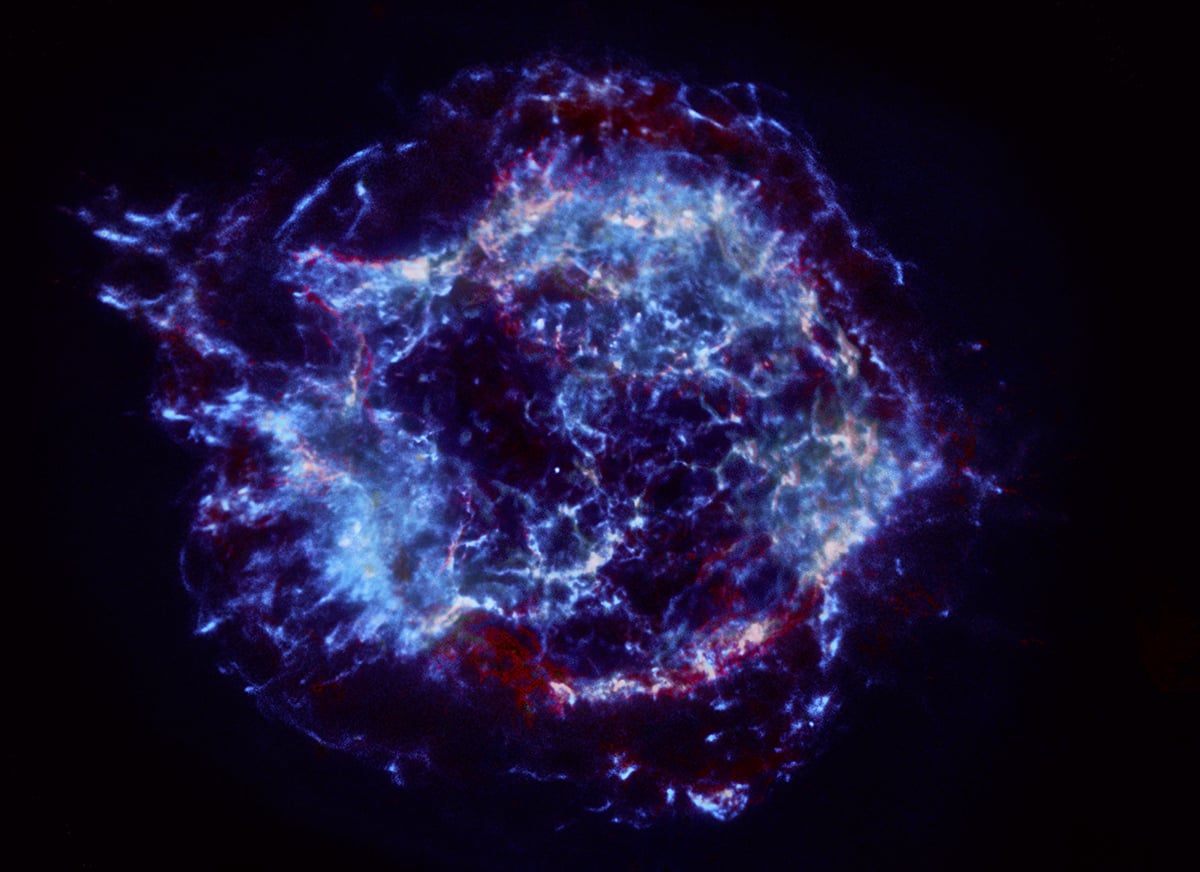
Located approximately 11,000 light-years from Earth, Cassiopeia A marks the remains of a massive star that reached the end of its life in a catastrophic supernova explosion. The event itself took place hundreds of years ago, but its expanding shockwaves continue to ripple through space today. Those shock waves heat the surrounding material to extraordinary temperatures, making the remnant one of the brightest X-ray sources in the Milky Way.
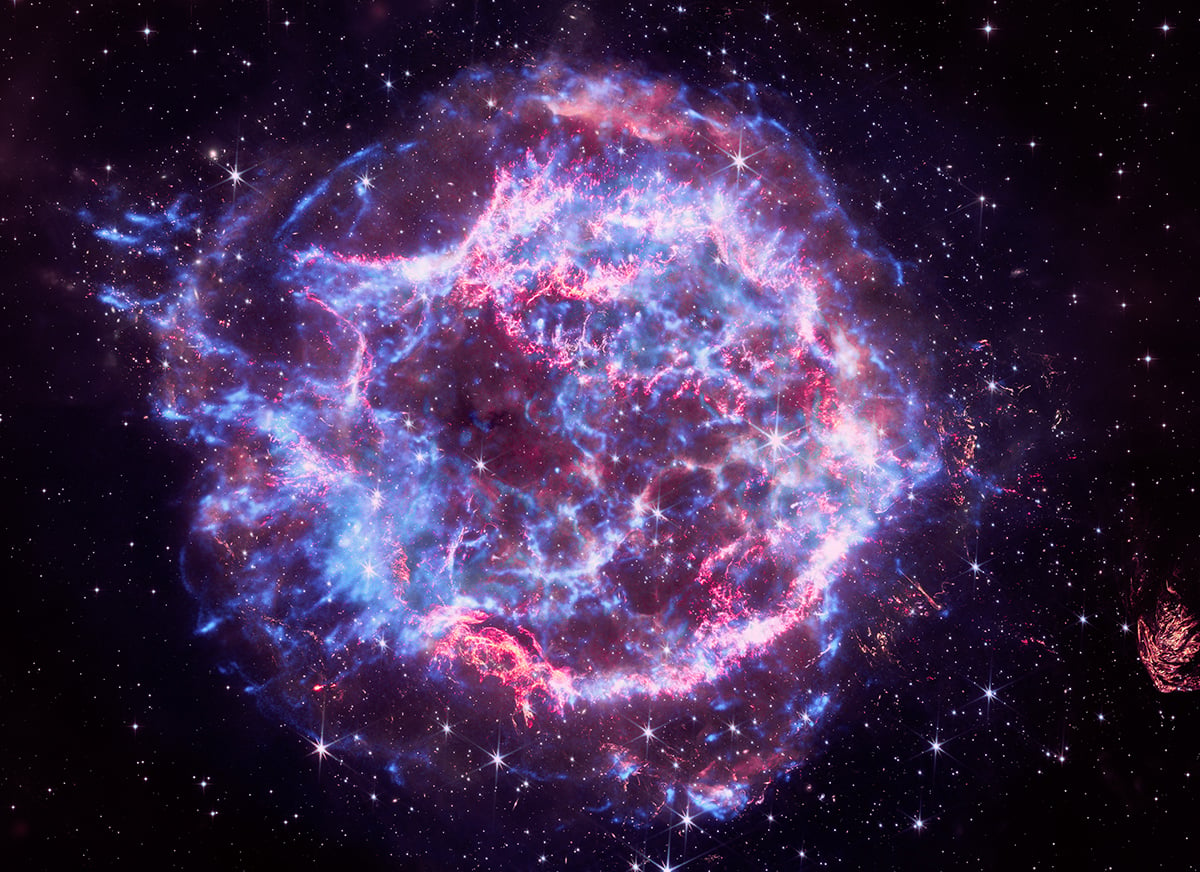
For this new composite, Chandra‘s X-ray observations are combined with infrared data from the James Webb Space Telescope. Although both telescopes observe the same object, they reveal remarkably different features.
Chandra focuses on the hottest material inside the remnant. Its observations trace shock fronts travelling through space at tremendous speeds. JWST, on the other hand, observes much cooler material. Its infrared instruments penetrate dense clouds of dust and reveal intricate filaments spread throughout the remnant.
NGC 3603: A window into stellar birth
NGC 3603 is one of the largest and brightest star-forming regions in the Milky Way. Located roughly 20,000 light-years away, it contains thousands of young stars packed into an enormous cloud of gas and dust. Many of these stars are far larger and more luminous than the Sun, making the region one of the Galaxy’s most active stellar nurseries.
Star formation begins when dense pockets within giant molecular clouds collapse under the influence of gravity. As material falls inward, temperatures and pressures rise until nuclear fusion ignites at the core of a newborn star. Yet the process rarely produces isolated stars. Instead, entire clusters emerge from the same cloud, creating crowded environments where neighbouring stars strongly influence one another.
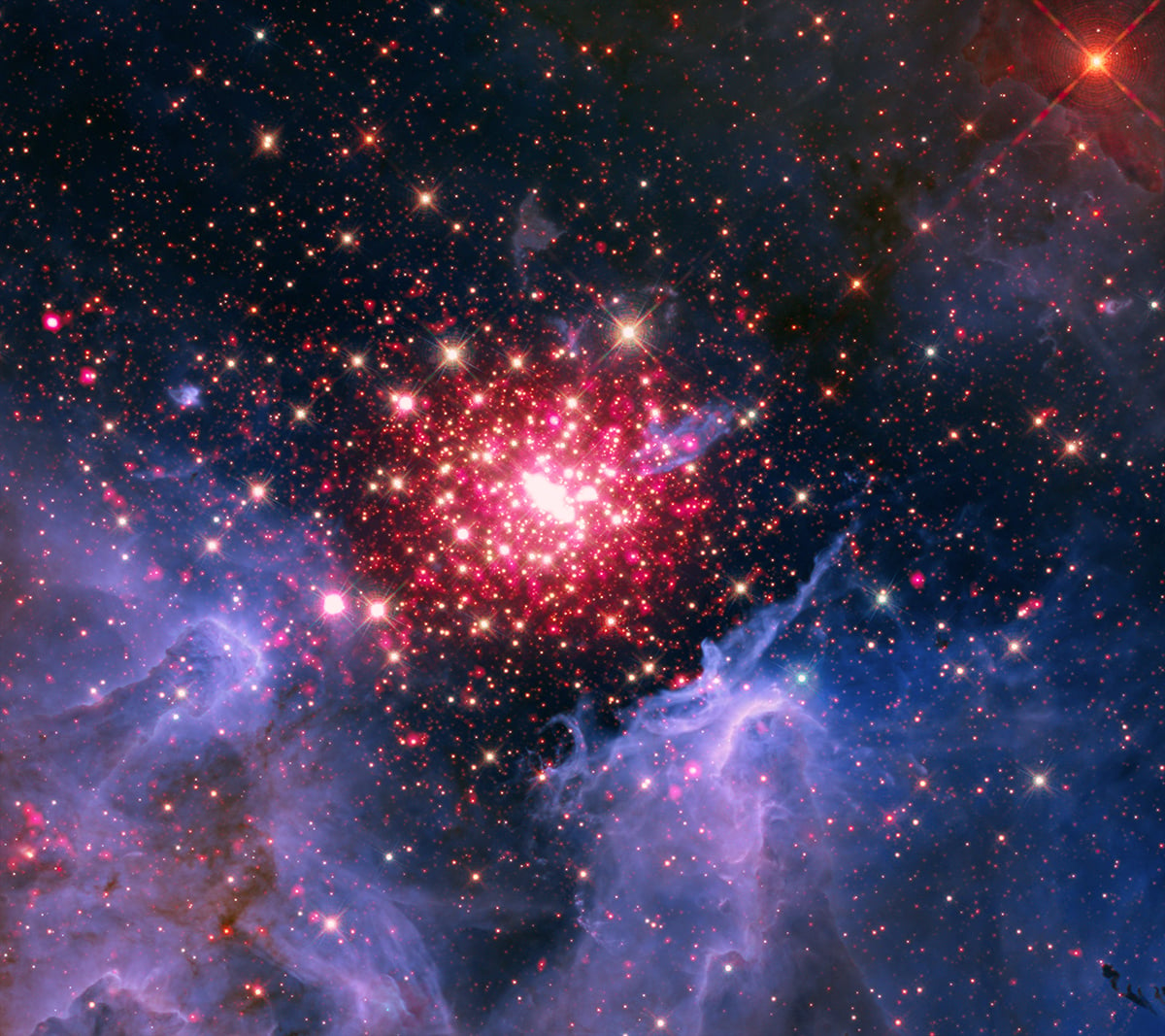
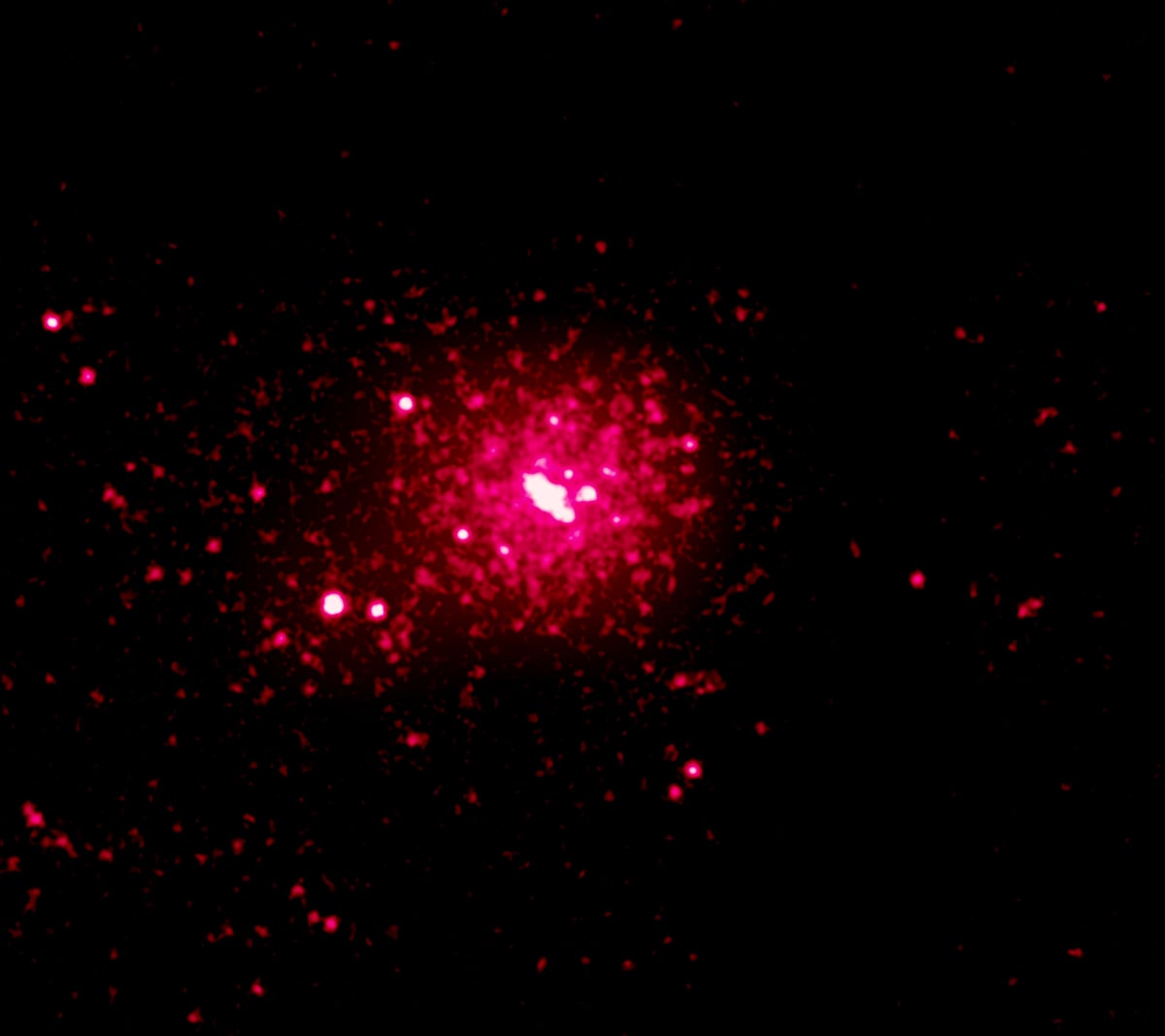
The new composite combines Chandra’s X-ray observations with visible, ultraviolet, and infrared data from the Hubble Space Telescope. Hubble captures the brilliant star cluster embedded within glowing clouds of gas. Chandra contributes another layer of information. Young stars remain highly active during their early evolution. Chandra detects these stars as numerous bright X-ray sources scattered across the cluster.
Messier 94: A galaxy that never rests
The third image in Chandra’s commemorative collection shifts the focus from individual stars to an entire galaxy. Known as Messier 94, or NGC 4736, this spiral galaxy lies about 19 million light-years from Earth in the constellation Canes Venatici. At first glance, it appears calm and symmetrical. Its bright central region and tightly wrapped spiral arms give it the appearance of a mature, settled galaxy.
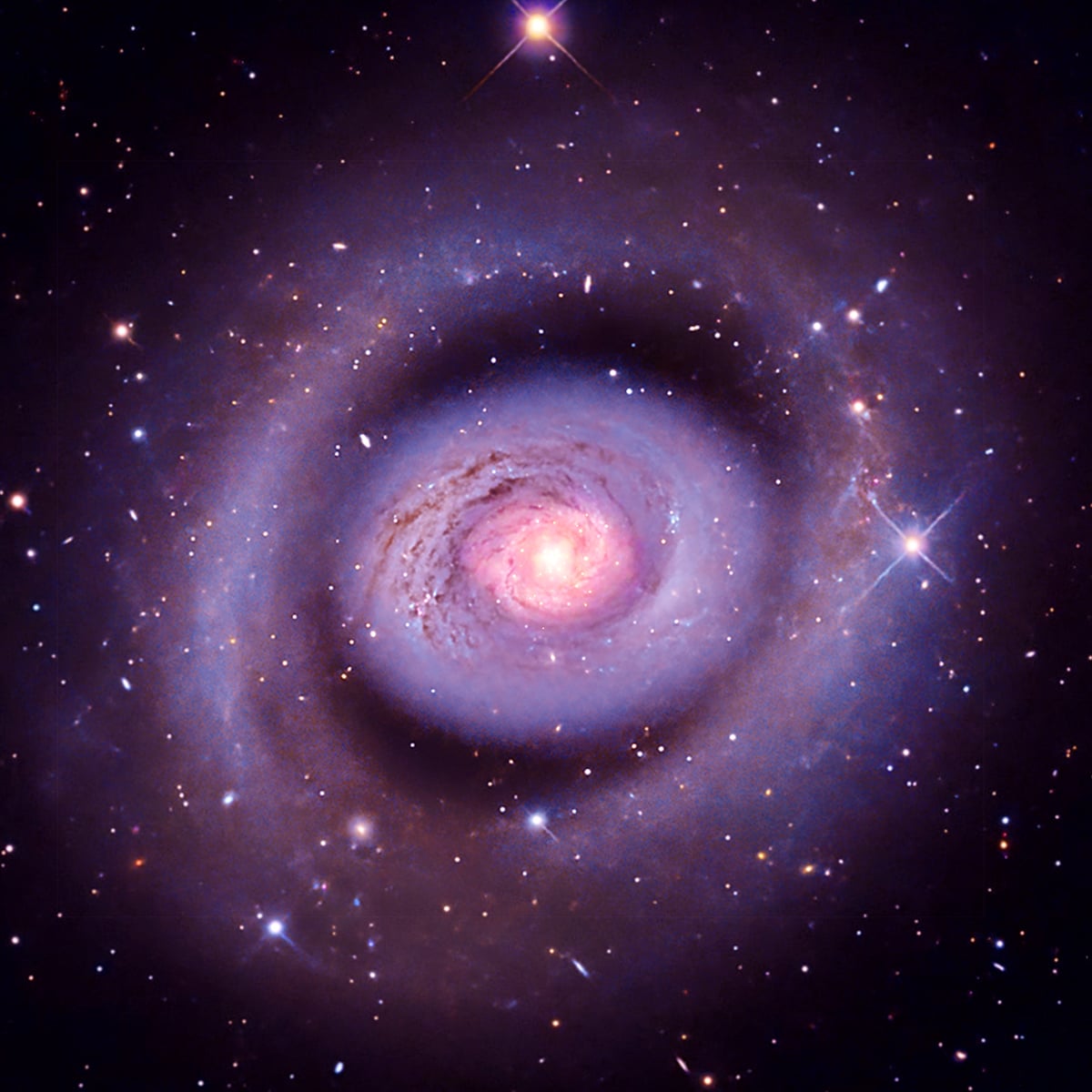
Visible-light observations reveal the galaxy’s familiar spiral structure, but they also highlight a striking inner ring surrounding the central bulge. This ring has long attracted astronomers because it hosts intense star formation. Large numbers of young, hot stars continue to emerge there, making it one of the most active regions in the galaxy.
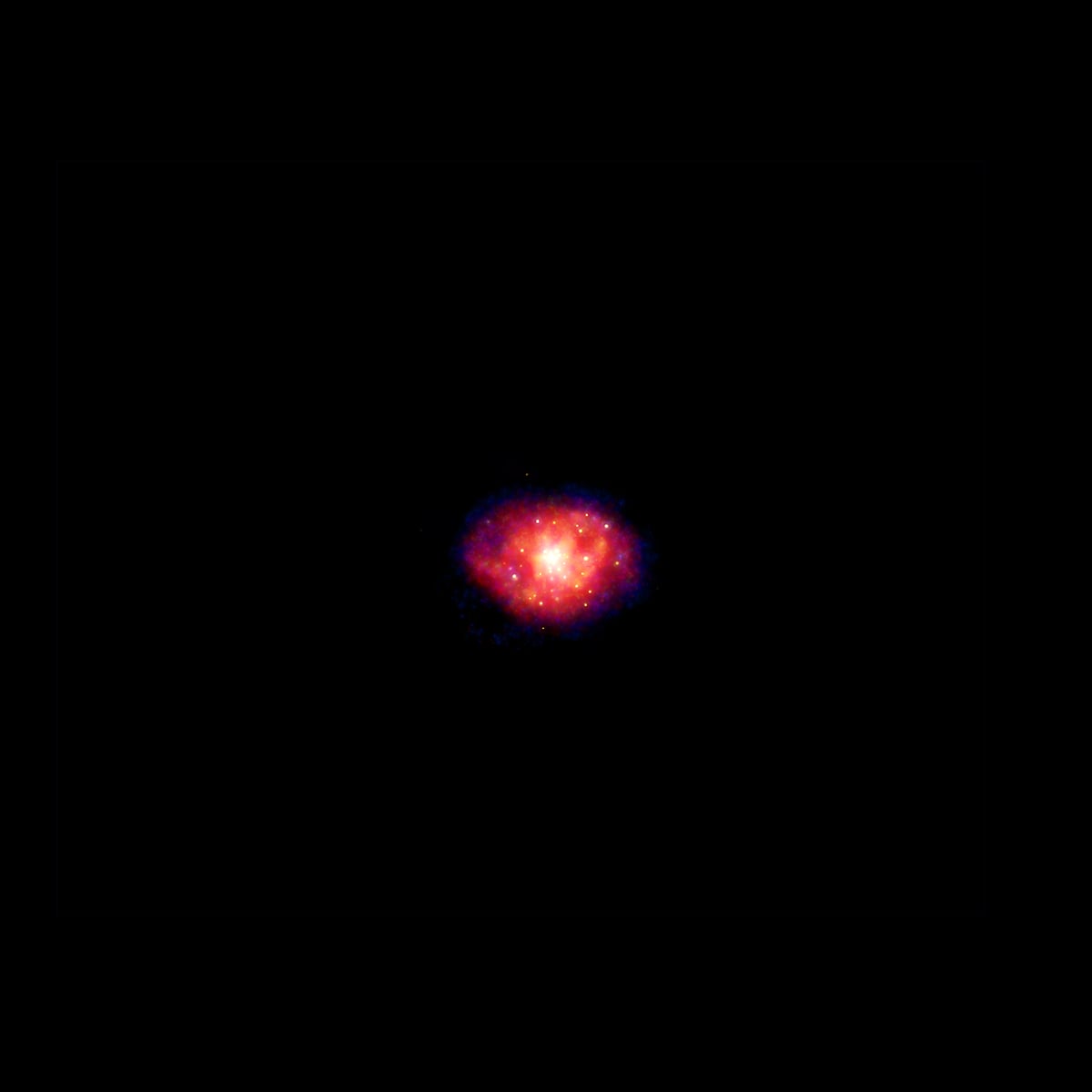
The Chandra observatory detects energetic X-ray sources spread throughout the galaxy. Many of these are X-ray binaries, systems in which a neutron star or black hole orbits a companion star. Matter pulled from the companion forms a rapidly rotating accretion disk around the compact object. Friction inside that disk heats the gas to extraordinary temperatures, producing intense X-ray emission before the material disappears into the compact object.
ZwCl 0024+1652: Mapping a Universe we cannot see
The final image in the collection explores one of the largest structures known in the universe, a galaxy cluster called ZwCl 0024+1652. Galaxy clusters contain hundreds or even thousands of galaxies bound together by gravity. Yet the galaxies themselves represent only a small fraction of the cluster’s total mass. Most of the remaining matter exists in forms that cannot be observed directly.
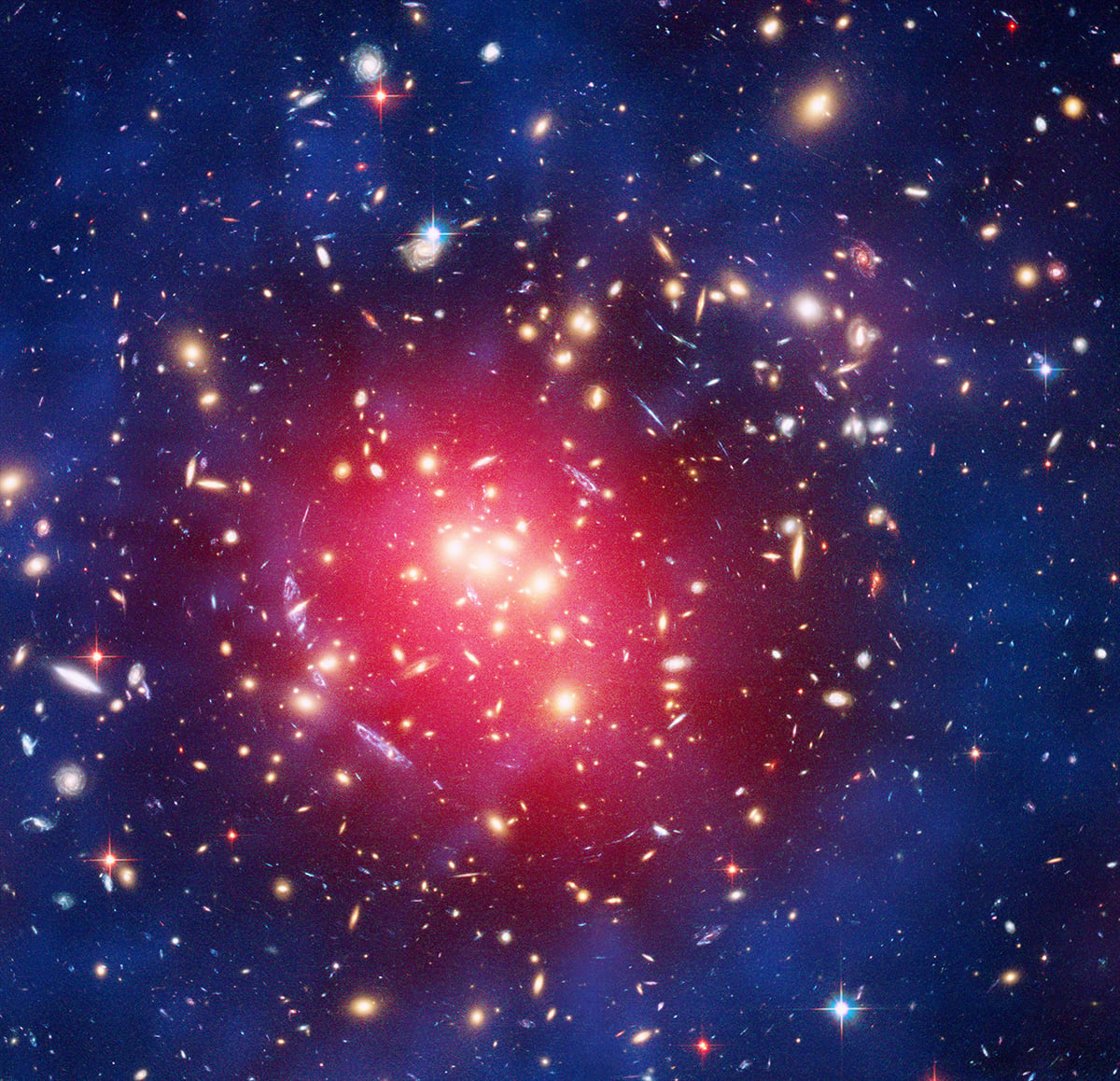
The Hubble Space Telescope identifies the cluster’s individual galaxies. Each contains billions of stars, yet together they account for only part of the cluster’s total mass. Chandra reveals enormous clouds of gas heated to temperatures of tens of millions of degrees. At these extreme temperatures, the gas emits X-rays rather than visible light, making Chandra the ideal instrument for observing it.
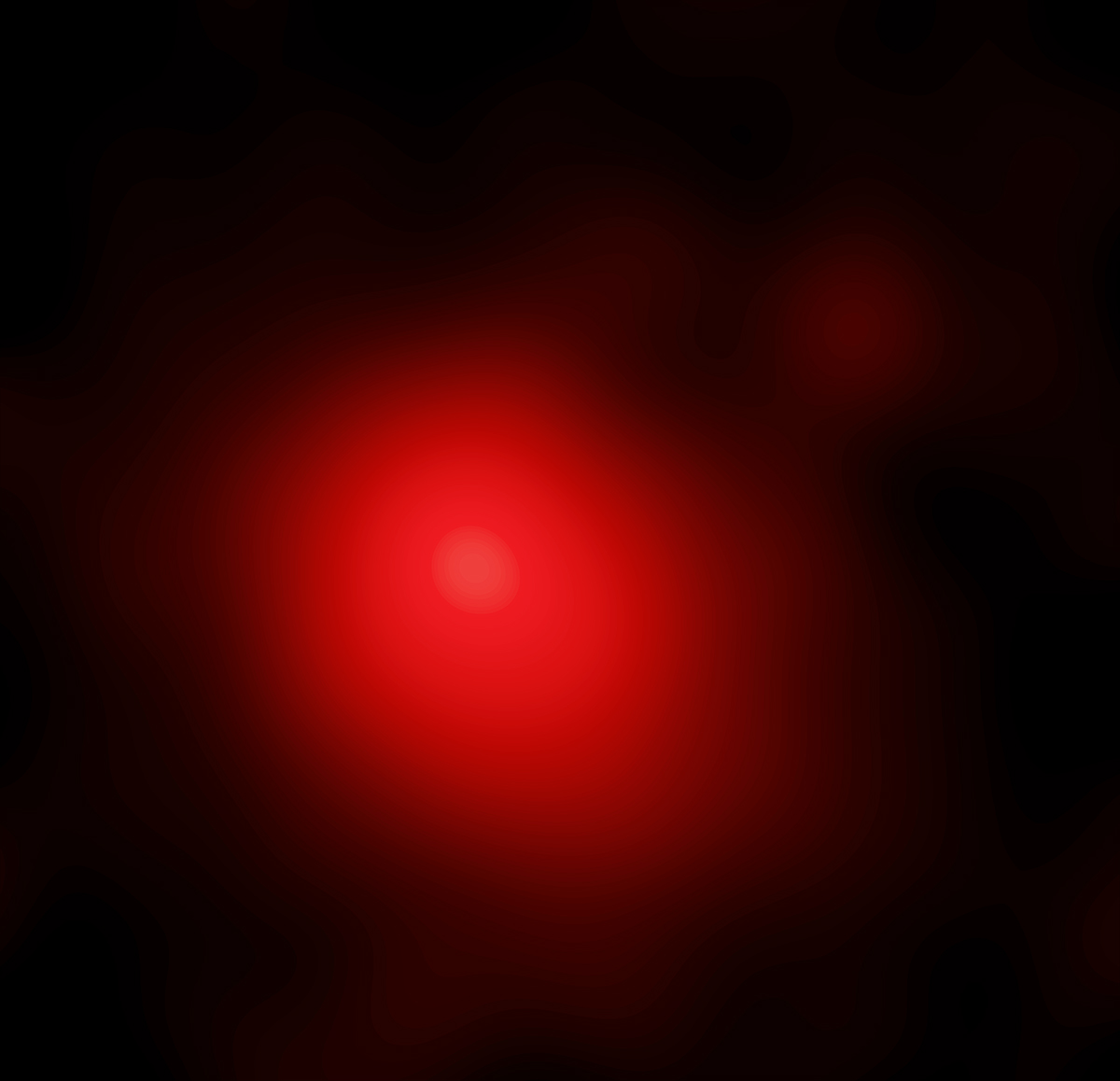
The image goes one step further by including a map of dark matter derived from gravitational lensing. Dark matter neither emits nor reflects light, making it impossible to observe directly with any telescope. Its presence becomes apparent only because gravity bends the light travelling through space. As light from distant background galaxies passes through the cluster, the cluster’s enormous mass subtly distorts those galaxies’ shapes. By measuring those distortions, astronomers can calculate how mass is distributed throughout the cluster.
Clear skies!
See more from DIYPhotography.net on Google
Add DIYPhotography.net as a trusted source. This makes
our stories more likely to appear in your Google Search results.
 Add as a preferred source on Google

Soumyadeep Mukherjee
Soumyadeep Mukherjee is an award-winning astrophotographer from India. He has a doctorate degree in Linguistics. His work extends to the sub-genres of nightscape, deep sky, solar, lunar and optical phenomenon photography. He is also a photography educator and has conducted numerous workshops. His works have appeared in over 40 books & magazines including Astronomy, BBC Sky at Night, Sky & Telescope among others, and in various websites including National Geographic, NASA, Forbes. He was the first Indian to win “Astronomy Photographer of the Year” award in a major category.


Join the Discussion
DIYP Comment Policy
Be nice, be on-topic, no personal information or flames.