




















Chandra Reveals Black Hole Shutting Down Star Formation in Red Potato Galaxy
Jul 21, 2026
Soumyadeep Mukherjee
Soumyadeep Mukherjee is an award-winning astrophotographer from India. He has a doctorate degree in Linguistics. His work extends to the sub-genres of nightscape, deep sky, solar, lunar and optical phenomenon photography. He is also a photography educator and has conducted numerous workshops. His works have appeared in over 40 books & magazines including Astronomy, BBC Sky at Night, Sky & Telescope among others, and in various websites including National Geographic, NASA, Forbes. He was the first Indian to win “Astronomy Photographer of the Year” award in a major category.
Share:
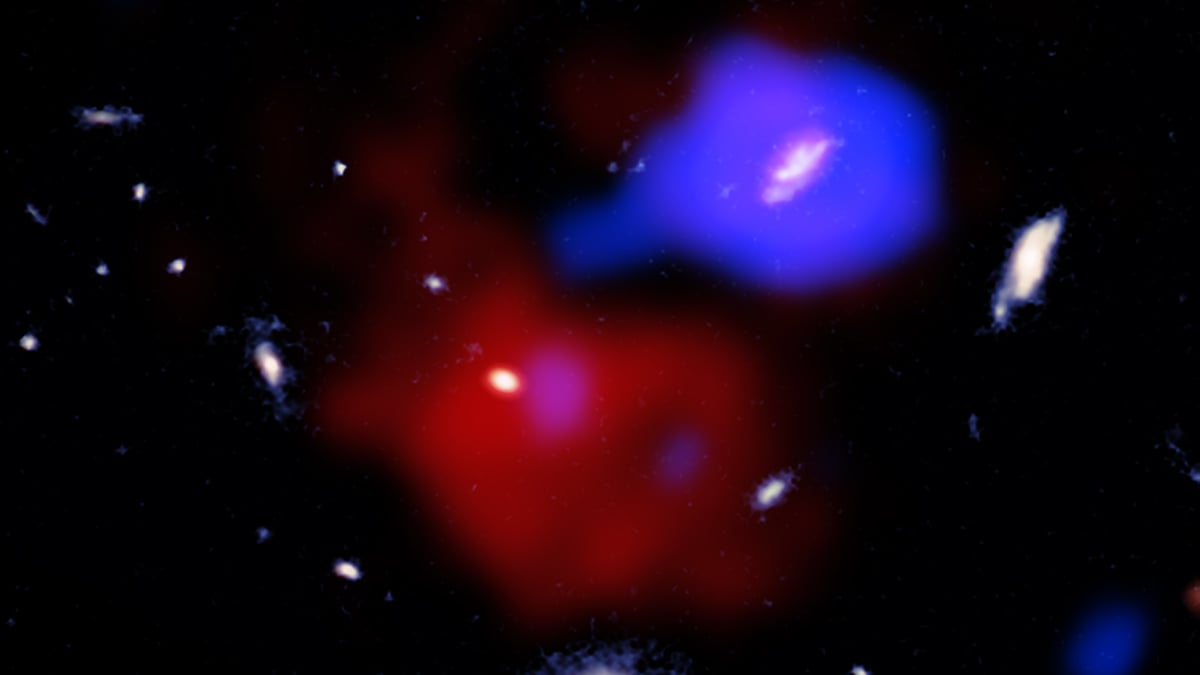
Galaxies grow by turning cold clouds of gas into new stars. This process has shaped the universe for billions of years, giving rise to the countless galaxies we observe today. However, in many cases, galaxies stop producing stars long before they exhaust their gas supply, suggesting that powerful physical processes are regulating their evolution.
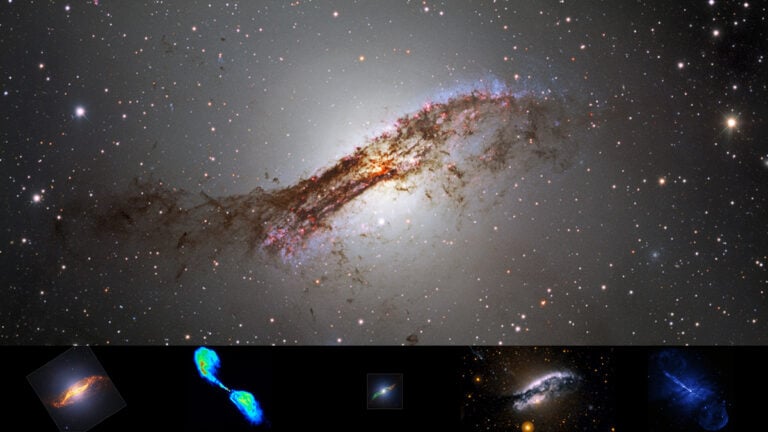
A new study using NASA‘s Chandra X-ray Observatory, along with observations from the James Webb Space Telescope, ALMA, the Hubble Space Telescope, and the European Southern Observatory’s Very Large Telescope, has uncovered an example of black hole feedback at work nearly 11.7 billion light-years away. The observations suggest that a supermassive black hole in a neighboring galaxy may be disrupting the cold gas around a distant galaxy known as the Red Potato, suppressing star formation during one of the most active periods in cosmic history.
The Red Potato Galaxy
The galaxy at the heart of the study has a rather technical name: MQN01 J004131.9−493704. Fortunately, astronomers also gave it a nickname that is much easier to remember. They call it the Red Potato because of its uneven, potato-like appearance in images captured by the James Webb Space Telescope.
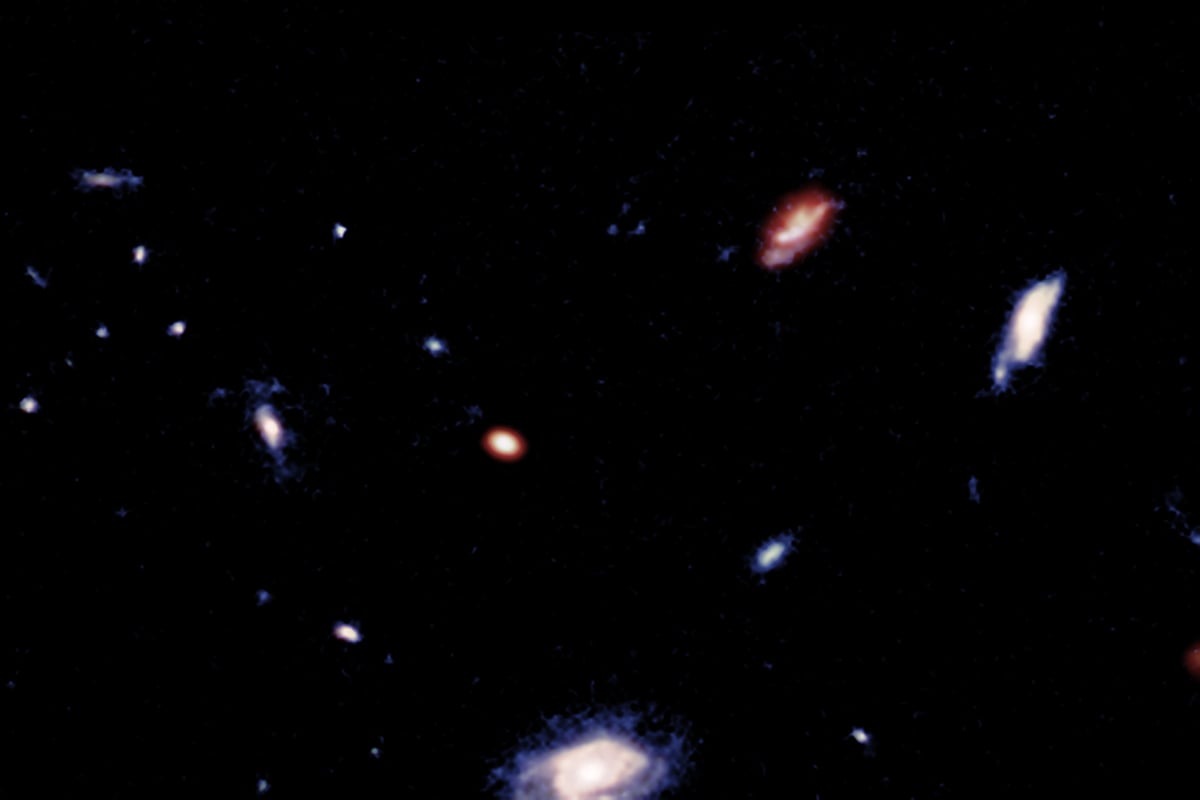
The Red Potato lies around 11.7 billion light-years away. Since light takes time to travel across space, astronomers see the galaxy as it existed when the universe was only about two billion years old. In other words, they are looking back to a time when galaxies were still assembling much of their mass. This period was one of the busiest chapters in cosmic history. Galaxies across the universe were rapidly converting gas into stars.
The Red Potato appeared to do the same. Observations from the Atacama Large Millimetre/submillimeter Array, or ALMA, strengthened that expectation. However, astronomers found a galaxy that seemed unusually quiet. Although the galaxy was still forming stars, the rate was much lower than expected for a system with such an abundant gas supply. The observations, however, did not match the prediction.
Chandra Uncovers the Source of the Problem
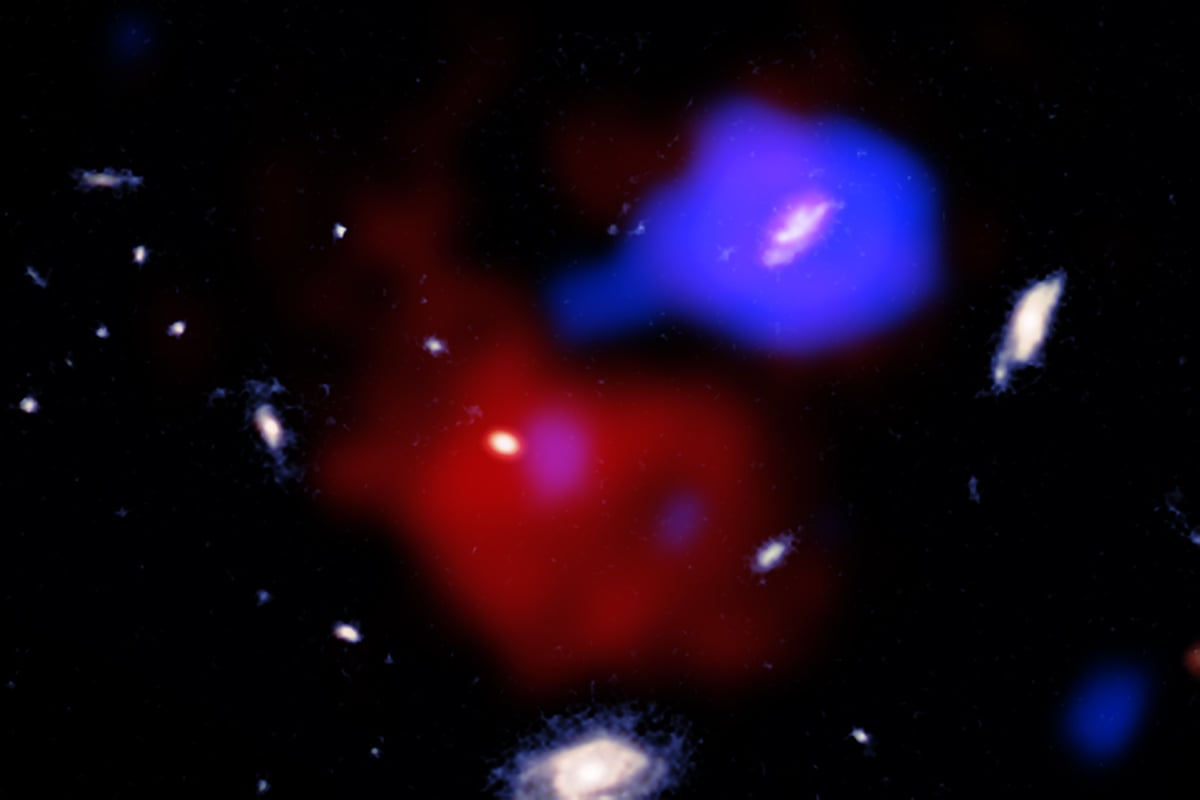
Many of the universe’s most energetic events remain completely invisible to optical telescopes. Growing black holes, for example, release enormous amounts of energy in the form of X-rays. Detecting those X-rays requires a specialized observatory. With data from Chandra, astronomers found that a nearby galaxy was shining brightly in X-rays.
At its center sat a rapidly growing supermassive black hole. As gas and dust spiraled towards the black hole, they became intensely hot before crossing the event horizon. This process released vast amounts of energy into the surrounding space. Active supermassive black holes often produce narrow jets made of highly energetic particles travelling at enormous speeds. These jets can extend far beyond their host galaxies.
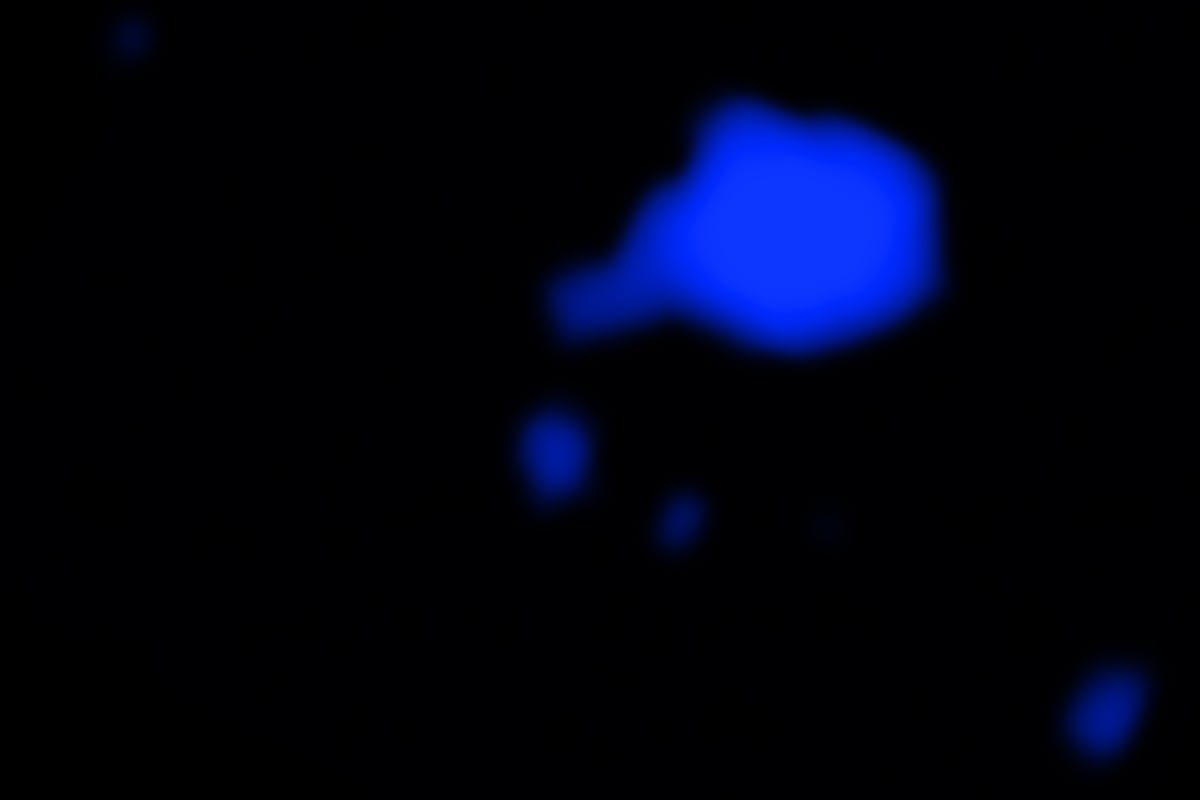
The Chandra observations suggest that one such jet is aimed towards the region occupied by the Red Potato. If the jet is indeed reaching the gas around the Red Potato, it would provide a natural explanation for the galaxy’s surprisingly low star formation rate. This idea also fits with a growing body of evidence collected over the past two decades.
Five observatories, one cosmic mystery
The James Webb Space Telescope played the opening role in this investigation. Its infrared vision revealed the Red Potato in remarkable detail. Webb revealed the galaxy’s unusual shape and enabled astronomers to examine its surrounding environment. The next clue came from ALMA in Chile.
ALMA specialises in observing cold gas and dust, which remain invisible to optical telescopes. Its measurements showed that the Red Potato sits inside a vast reservoir of cold molecular gas. That finding deepened the mystery because the galaxy had all the ingredients needed for vigorous star formation.
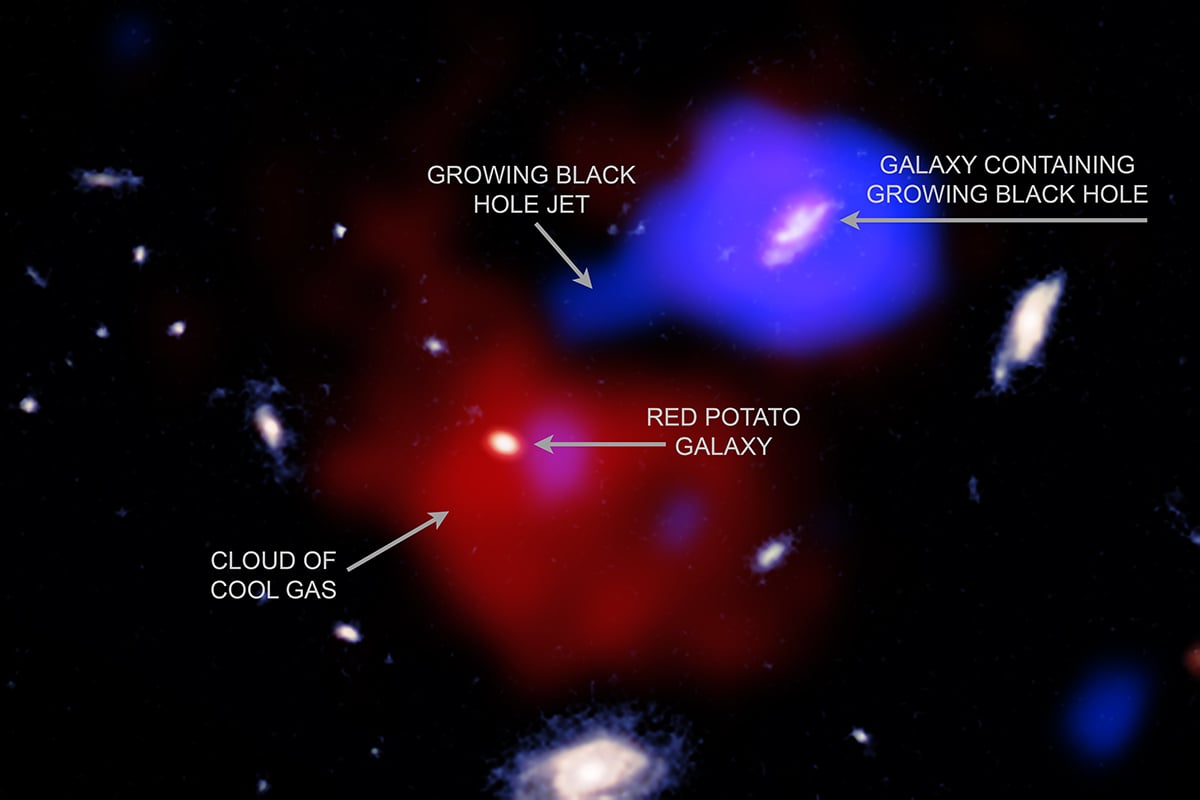
And the missing piece came from Chandra. Its X-ray observations uncovered the neighboring galaxy’s active supermassive black hole. More importantly, they pointed to a jet extending toward the gas surrounding the Red Potato. That discovery connected the quiet galaxy with a powerful energy source nearby.
The Hubble Space Telescope also contributed valuable observations. Its images helped astronomers understand the galaxies and their surroundings from another perspective. Meanwhile, the European Southern Observatory’s Very Large Telescope measured key properties of the galaxies and their environment.
Clear skies!
See more from DIYPhotography.net on Google
Add DIYPhotography.net as a trusted source. This makes
our stories more likely to appear in your Google Search results.
 Add as a preferred source on Google

Soumyadeep Mukherjee
Soumyadeep Mukherjee is an award-winning astrophotographer from India. He has a doctorate degree in Linguistics. His work extends to the sub-genres of nightscape, deep sky, solar, lunar and optical phenomenon photography. He is also a photography educator and has conducted numerous workshops. His works have appeared in over 40 books & magazines including Astronomy, BBC Sky at Night, Sky & Telescope among others, and in various websites including National Geographic, NASA, Forbes. He was the first Indian to win “Astronomy Photographer of the Year” award in a major category.


Join the Discussion
DIYP Comment Policy
Be nice, be on-topic, no personal information or flames.