
























Six Images of Centaurus A: From Dusty Star Fields to Giant Black Hole Jets
Oct 17, 2026
Soumyadeep Mukherjee
Soumyadeep Mukherjee is an award-winning astrophotographer from India. He has a doctorate degree in Linguistics. His work extends to the sub-genres of nightscape, deep sky, solar, lunar and optical phenomenon photography. He is also a photography educator and has conducted numerous workshops. His works have appeared in over 40 books & magazines including Astronomy, BBC Sky at Night, Sky & Telescope among others, and in various websites including National Geographic, NASA, Forbes. He was the first Indian to win “Astronomy Photographer of the Year” award in a major category.
Share:
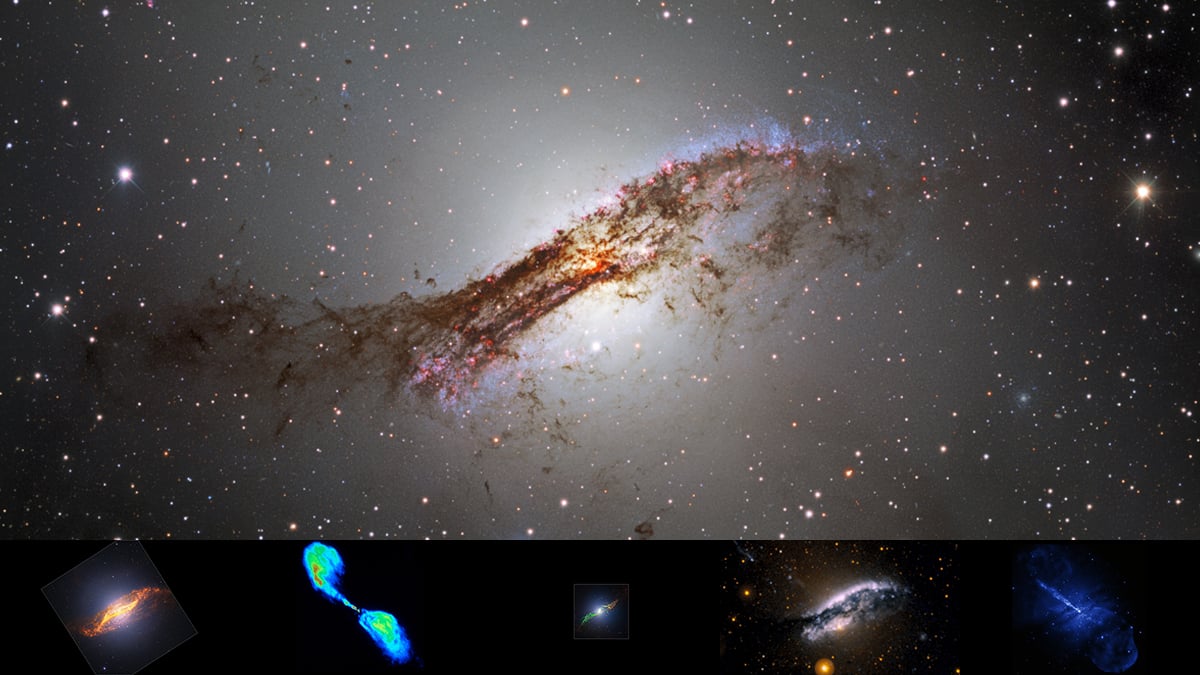
Centaurus A is a galaxy with several faces. In visible light, a broad band of dark dust crosses its bright centre. Radio observations reveal enormous jets extending far beyond its stars. Infrared images, by contrast, reveal details within the dust, while X-ray observations show energetic activity around its central black hole.
Located about 12 million light-years from Earth, Centaurus A is a galaxy shaped by a major collision. The following six images examine the galaxy at different wavelengths. They combine observations from the James Webb Space Telescope, the Very Large Array (VLA), ALMA, the Galaxy Evolution Explorer (GALEX), the Chandra X-ray Observatory, and the Dark Energy Camera (DECam).
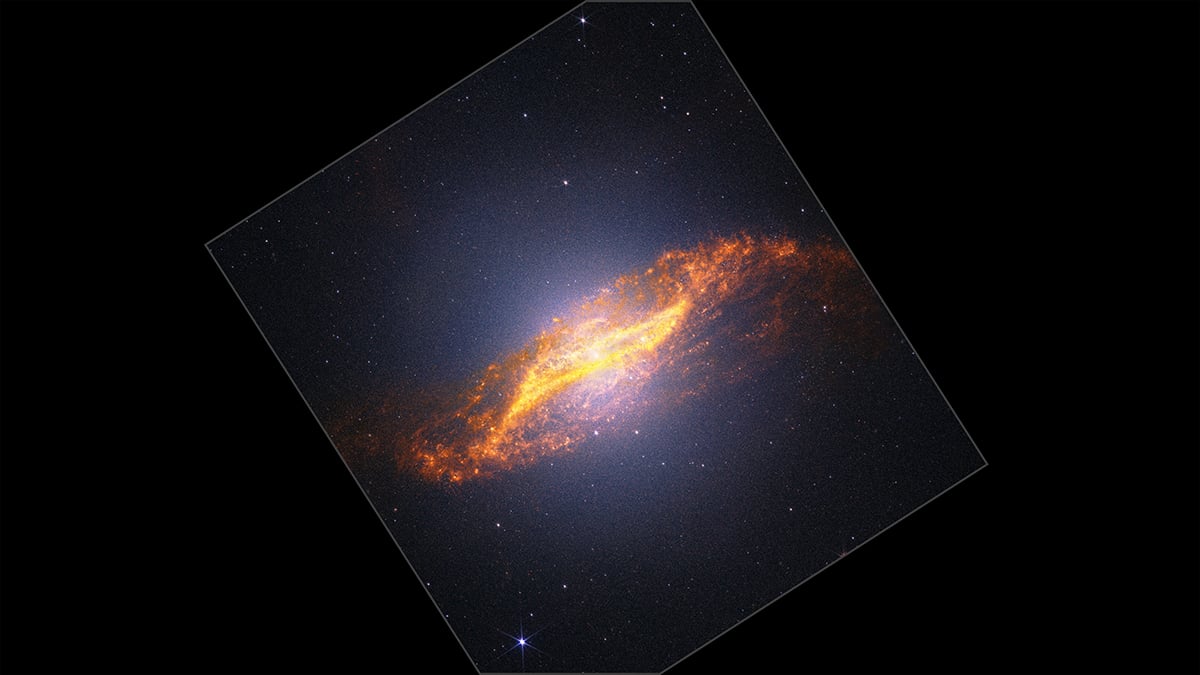
JWST examines the dust inside Centaurus A
The James Webb Space Telescope’s view combines observations from its Near-Infrared Camera (NIRCam) and Mid-Infrared Instrument (MIRI). Both instruments observe infrared radiation, allowing astronomers to investigate regions that dense dust obscures in visible light.
Dust absorbs and scatters visible light, making it difficult to see stars and structures behind thick clouds. James Webb‘s image reveals structure within Centaurus A’s dusty central region. Features that appear dark in an optical photograph can show up differently at infrared wavelengths.
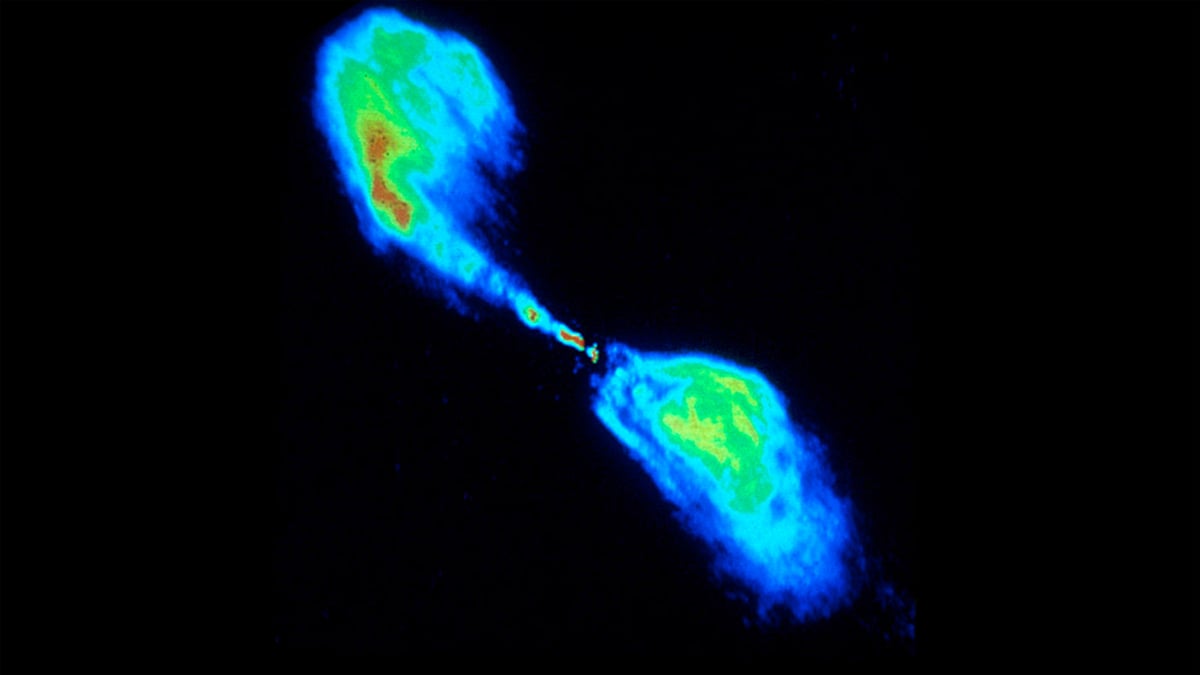
Radio observations reveal extended jets
The Very Large Array shows a very different Centaurus A. Its radio image reveals enormous lobes extending hundreds of thousands of light-years from the galaxy’s center. These structures reach far beyond the region occupied by most of its stars.
The radio image changes our understanding of Centaurus A’s scale. Its bright stellar body forms only one part of a much larger system. The black hole‘s activity reaches deep into the surrounding space, where the jets interact with material far from the galaxy’s center.
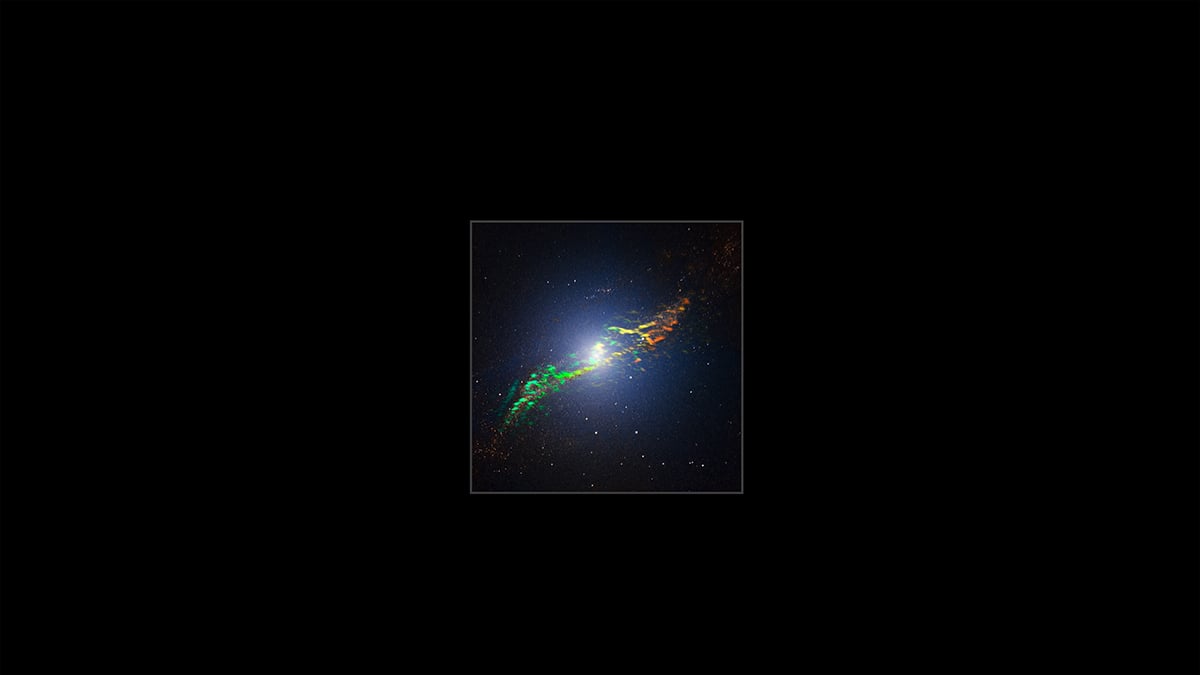
ALMA maps the gas in the dust lane
The dark band crossing Centaurus A contains cold gas as well as dust. This gas provides raw material for star formation, making it an important part of the galaxy’s evolution. The combined view from ALMA, the SOFI instrument, and the New Technology Telescope examines this region at submillimeter and infrared wavelengths.
ALMA, the Atacama Large Millimeter/submillimeter Array, observes radiation at millimeter and submillimeter wavelengths. It can detect molecular gas, including carbon monoxide, which astronomers commonly use to trace cold gas clouds. These observations help researchers map material that visible-light images cannot reveal through the dust.
GALEX uses ultraviolet light to find hot stars
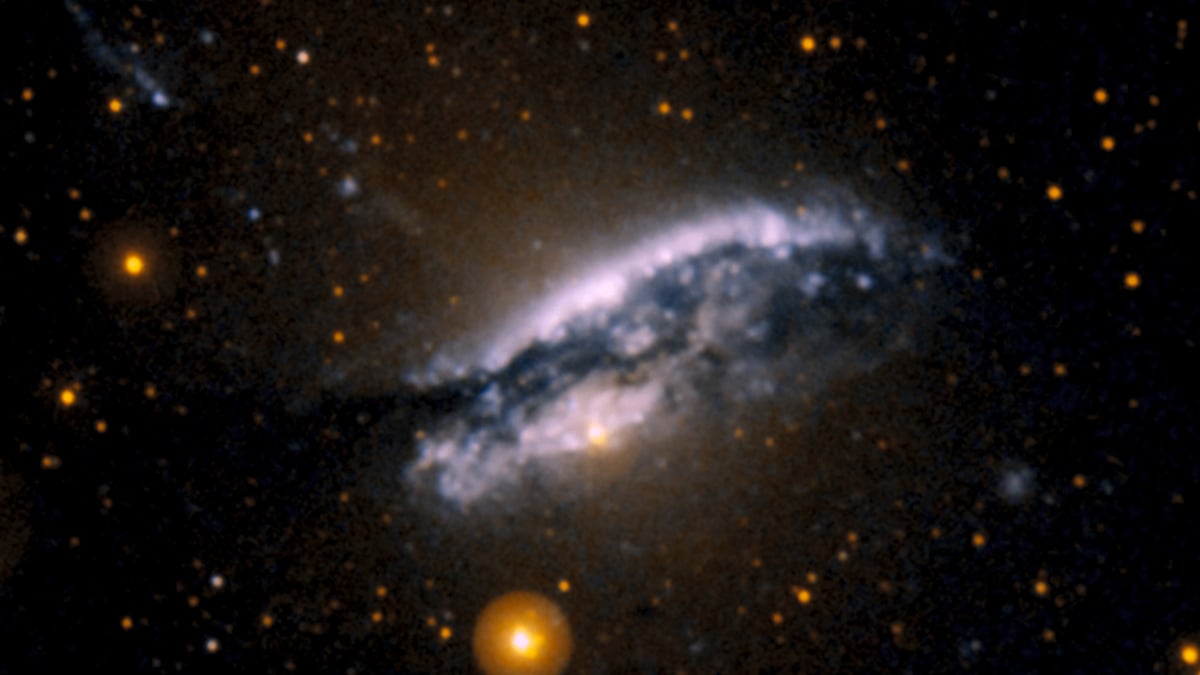
The Galaxy Evolution Explorer, known as GALEX, observed Centaurus A in ultraviolet light. This wavelength range helps astronomers investigate hot stars and signs of relatively recent star formation.
Young, massive stars emit large amounts of ultraviolet radiation. They burn through their nuclear fuel quickly and live much shorter lives than stars like the Sun. Their ultraviolet emission can help astronomers identify stellar populations that formed in the recent astronomical past.
High-energy activity around the black hole
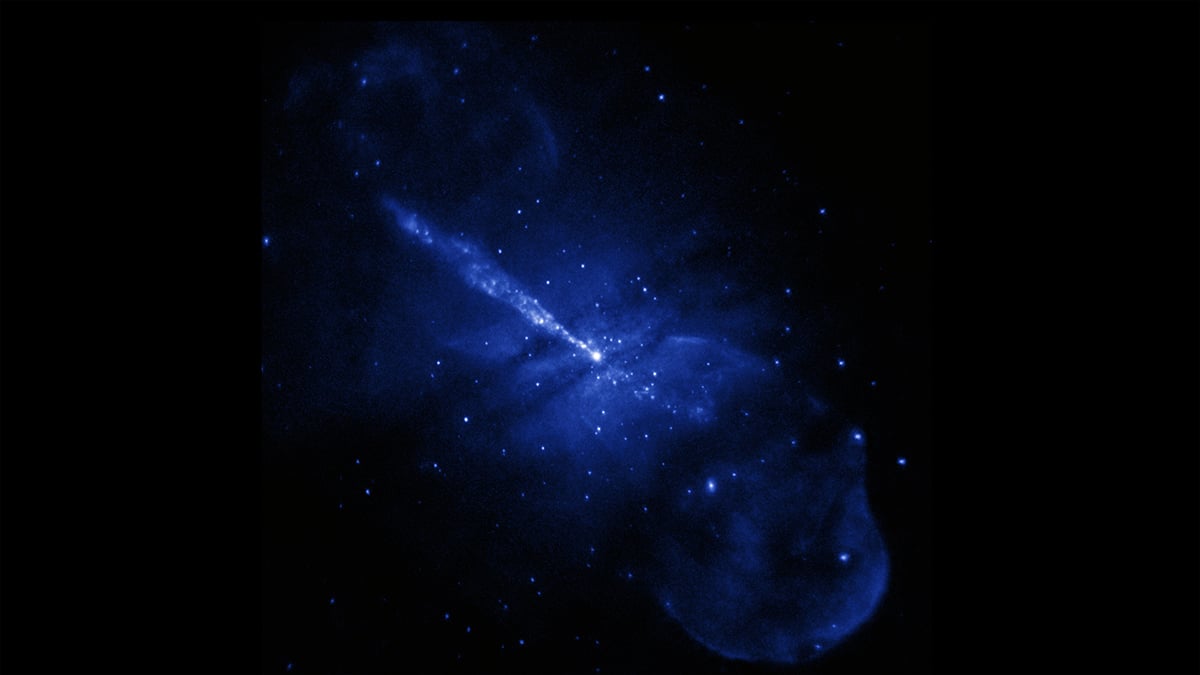
The Chandra X-ray Observatory captures some of the most energetic processes in Centaurus A. Its observations show X-ray emission from the central region and structures associated with the galaxy’s jets.
X-rays can emerge from extremely hot gas and energetic particles. Near Centaurus A’s supermassive black hole, matter and magnetic fields create conditions that produce high-energy radiation. Chandra detects radiation from hot gas and energetic particles around it and within the galaxy.
DECam captures dark dust lane
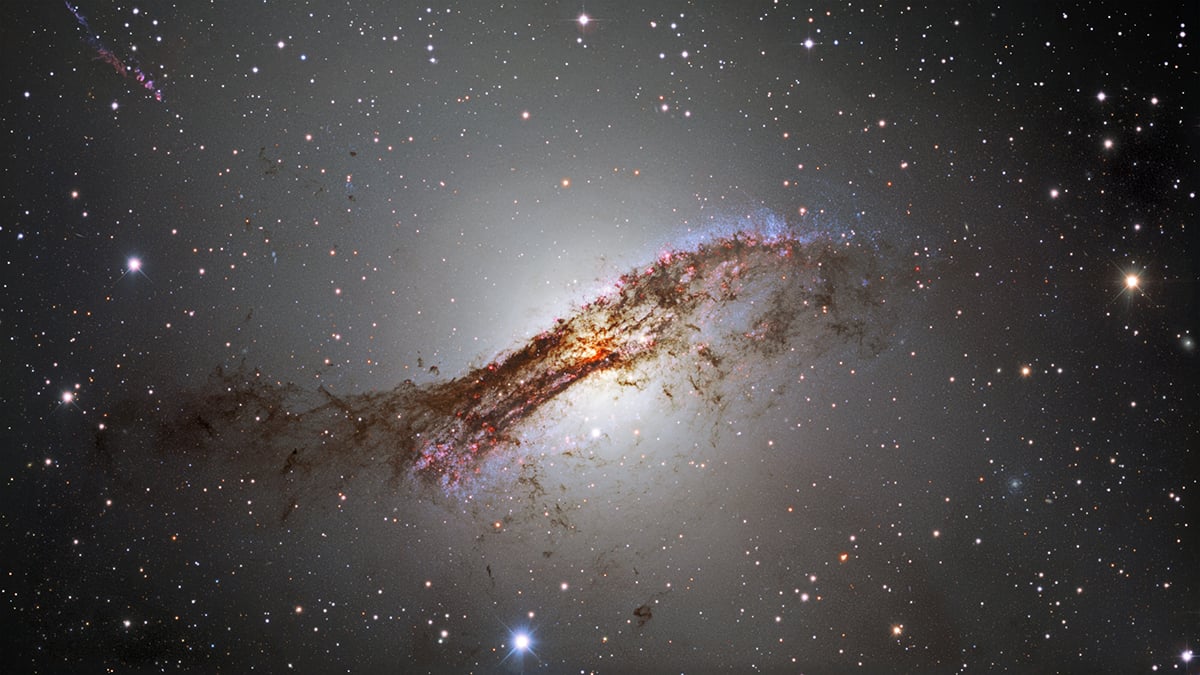
The Dark Energy Camera provides the collection’s optical view. DECam is mounted on the Víctor M. Blanco 4-metre Telescope at the Cerro Tololo Inter-American Observatory in Chile. Its image shows the galaxy’s bright stellar body and the dark band that crosses its center.
The stars produce the diffuse glow that fills the image. The dust lane stands out because its particles absorb and scatter light from stars behind them. This contrast gives Centaurus A its familiar appearance and provides a visible record of the galaxy’s disturbed structure.
Clear skies!
See more from DIYPhotography.net on Google
Add DIYPhotography.net as a trusted source. This makes
our stories more likely to appear in your Google Search results.
 Add as a preferred source on Google

Soumyadeep Mukherjee
Soumyadeep Mukherjee is an award-winning astrophotographer from India. He has a doctorate degree in Linguistics. His work extends to the sub-genres of nightscape, deep sky, solar, lunar and optical phenomenon photography. He is also a photography educator and has conducted numerous workshops. His works have appeared in over 40 books & magazines including Astronomy, BBC Sky at Night, Sky & Telescope among others, and in various websites including National Geographic, NASA, Forbes. He was the first Indian to win “Astronomy Photographer of the Year” award in a major category.
Related Posts
 NASA’s IXPE Photographs Black Hole Jets in Perseus Cluster
 Awakening of a Sleeping Giant: VLA and VLBA Photographs a Supermassive Black Hole
 Chandra Reveals Black Hole Shutting Down Star Formation in Red Potato Galaxy
 James Webb Reveals Dust and Water Around a Star Near Milky Way’s Central Black Hole
Join the Discussion
DIYP Comment Policy
Be nice, be on-topic, no personal information or flames.