




















New ESO Image of GAL316 Reveals a Limit to Star Formation in the Milky Way
Jan 6, 2026
Soumyadeep Mukherjee
Soumyadeep Mukherjee is an award-winning astrophotographer from India. He has a doctorate degree in Linguistics. His work extends to the sub-genres of nightscape, deep sky, solar, lunar and optical phenomenon photography. He is also a photography educator and has conducted numerous workshops. His works have appeared in over 40 books & magazines including Astronomy, BBC Sky at Night, Sky & Telescope among others, and in various websites including National Geographic, NASA, Forbes. He was the first Indian to win “Astronomy Photographer of the Year” award in a major category.
Share:
Star formation links the physics of interstellar gas to the long-term evolution of galaxies. Astronomers often describe this process in simple terms, yet the underlying mechanisms remain complex and poorly constrained. Cold molecular gas collapses under gravity, fragments into dense structures, and eventually forms stars. However, observations repeatedly show that this process remains inefficient. Even in regions rich in gas, only a small fraction turns into stars. The reasons for this inefficiency continue to shape modern astrophysical research.
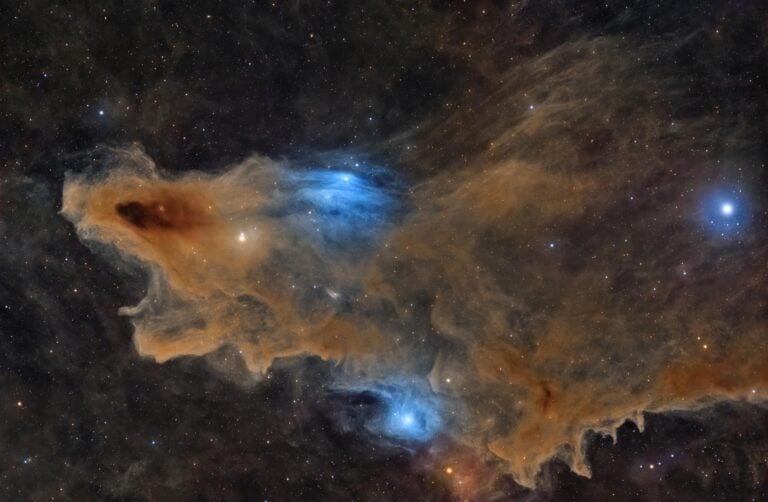
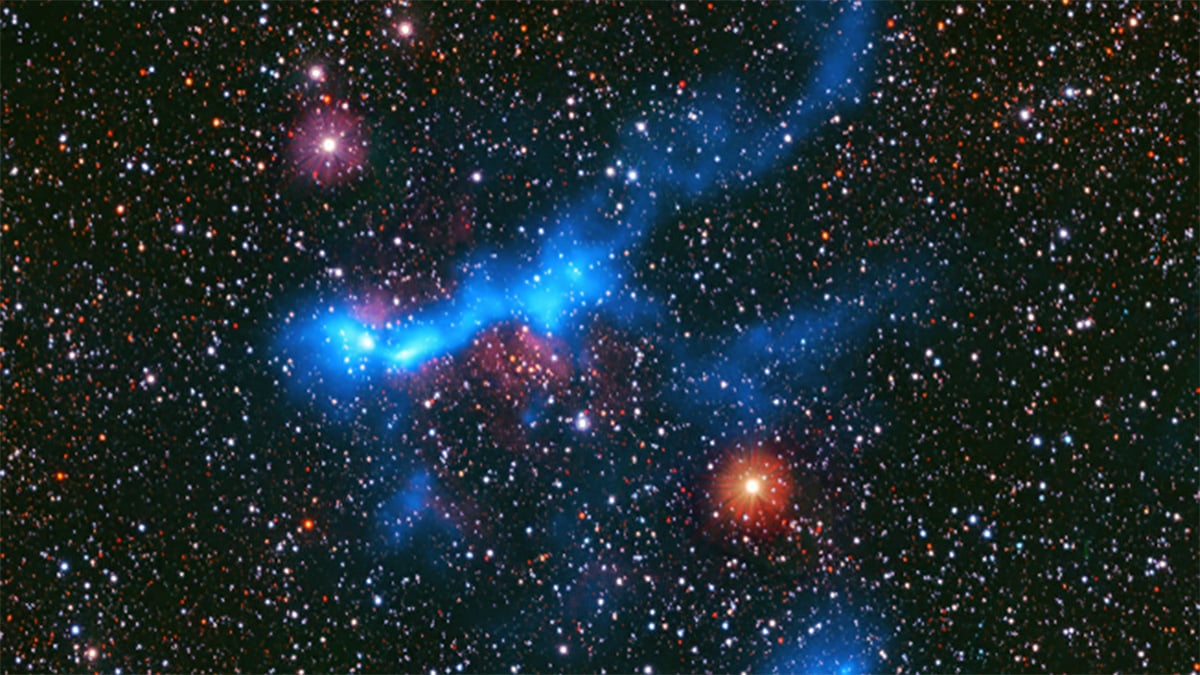
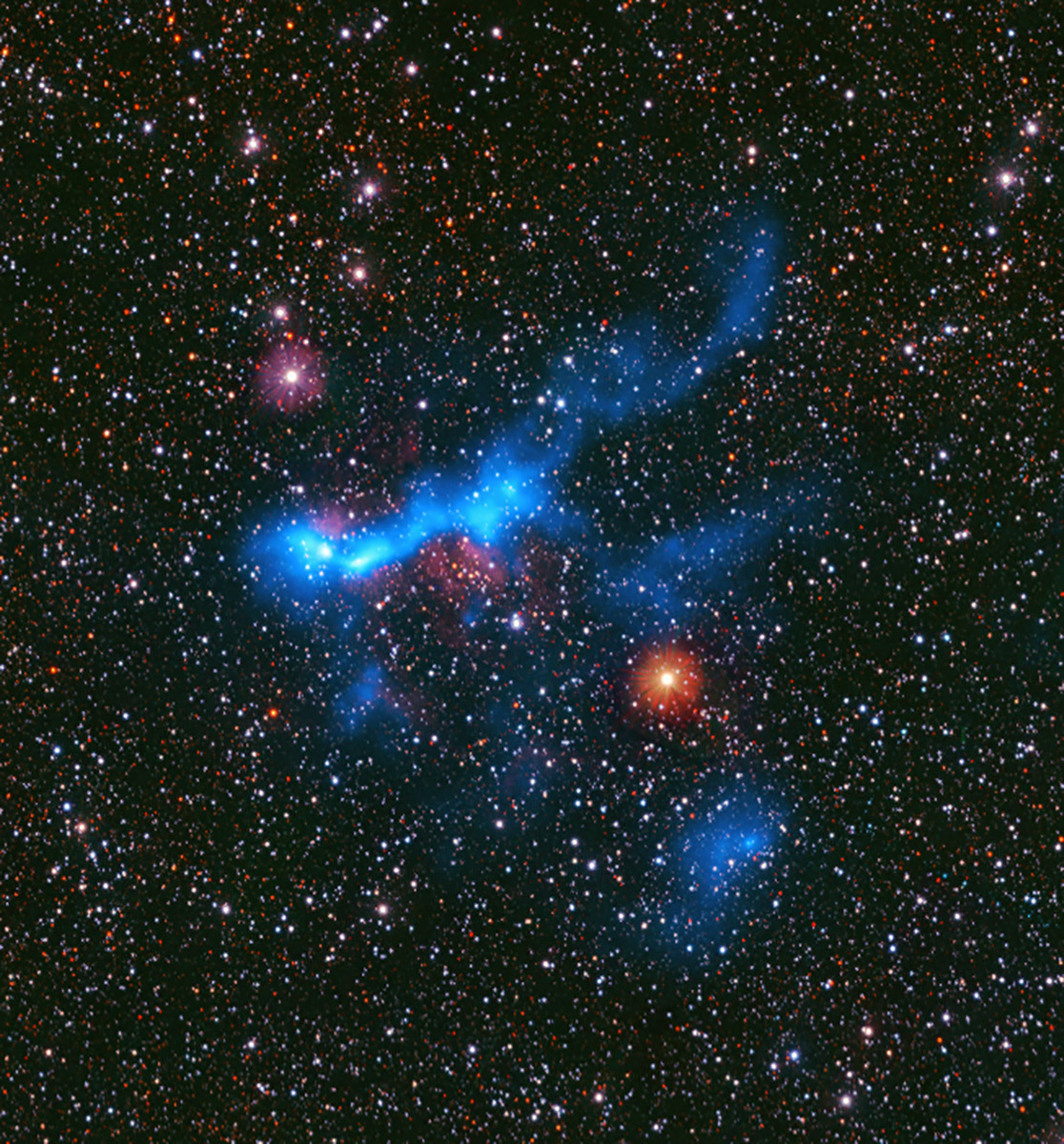
A new image released by the European Southern Observatory (ESO) adds an important piece to this puzzle. The image highlights GAL316, a dense star-forming region in the Milky Way, observed as part of the CAFFEINE survey. The data reveal that above a critical gas density, star formation efficiency no longer increases. This result challenges long-standing assumptions and refines how astronomers understand the link between gas density and star formation.
The physics behind star formation efficiency
Stars form inside molecular clouds, which contain cold hydrogen gas mixed with dust. These clouds span tens to hundreds of light-years and show complex internal structures. Gravity acts to compress the gas, while turbulence, magnetic fields, and thermal pressure resist collapse. The balance between these forces determines whether stars can form.
Astronomers quantify this process using the star formation efficiency, which measures the conversion of gas into stars over time. Observations across the Milky Way show that this efficiency remains surprisingly low. Typically, only one to two percent of a cloud’s mass forms stars before feedback disrupts the remaining gas.
For decades, many models assumed that efficiency should rise with gas density. Denser gas should collapse faster and form stars more readily. This assumption appears logical and remains embedded in many galaxy-scale simulations. However, direct observational tests of this idea require precise measurements of the densest gas, which is difficult to observe.
This challenge motivated surveys like CAFFEINE. By focusing exclusively on dense gas structures, astronomers sought to determine whether increasing density indeed leads to higher star formation efficiency.
The CAFFEINE survey
The CAFFEINE survey, short for Core And Filament Formation and Evolution In Natal Environments, targets the densest star-forming regions in the nearby Milky Way. The survey covers 49 massive molecular cloud complexes within roughly 3,000 parsecs of the Sun. This range allows high spatial resolution while sampling a broad range of environments.
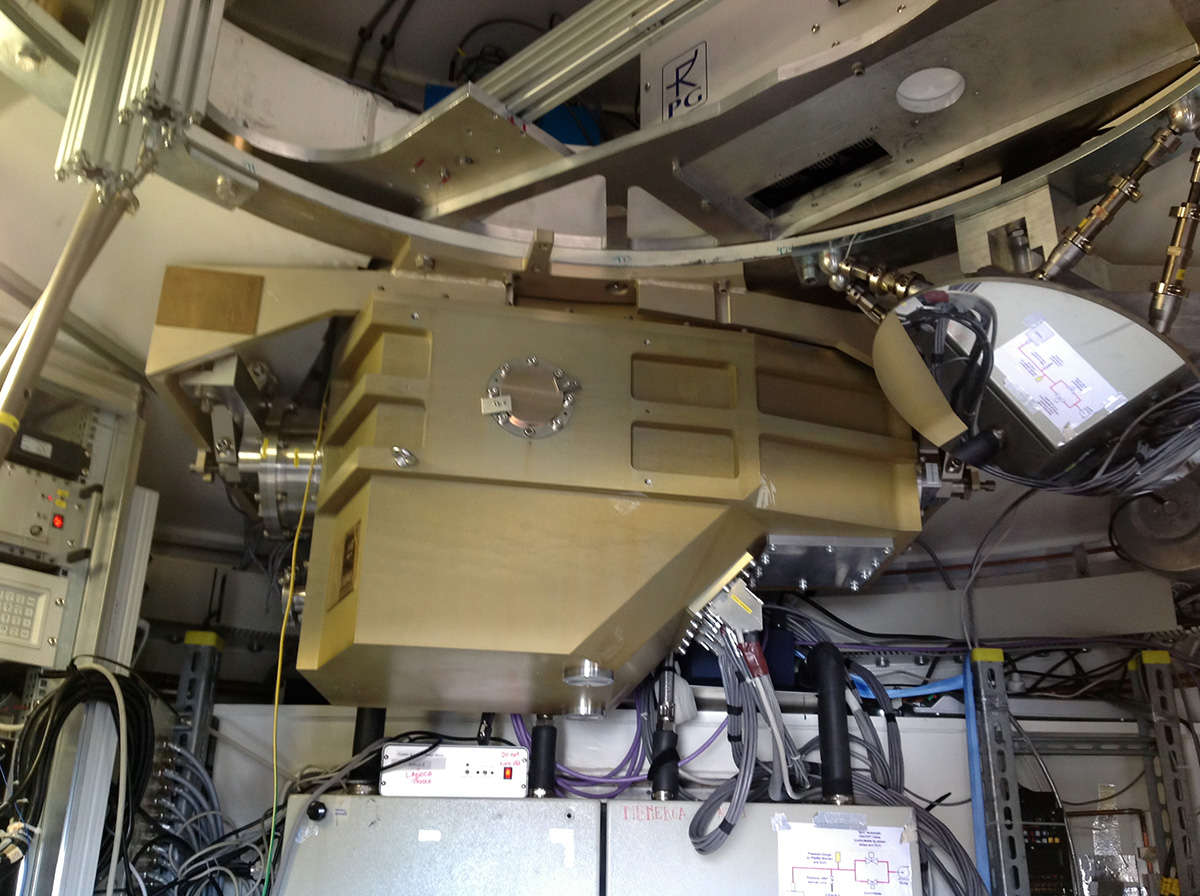
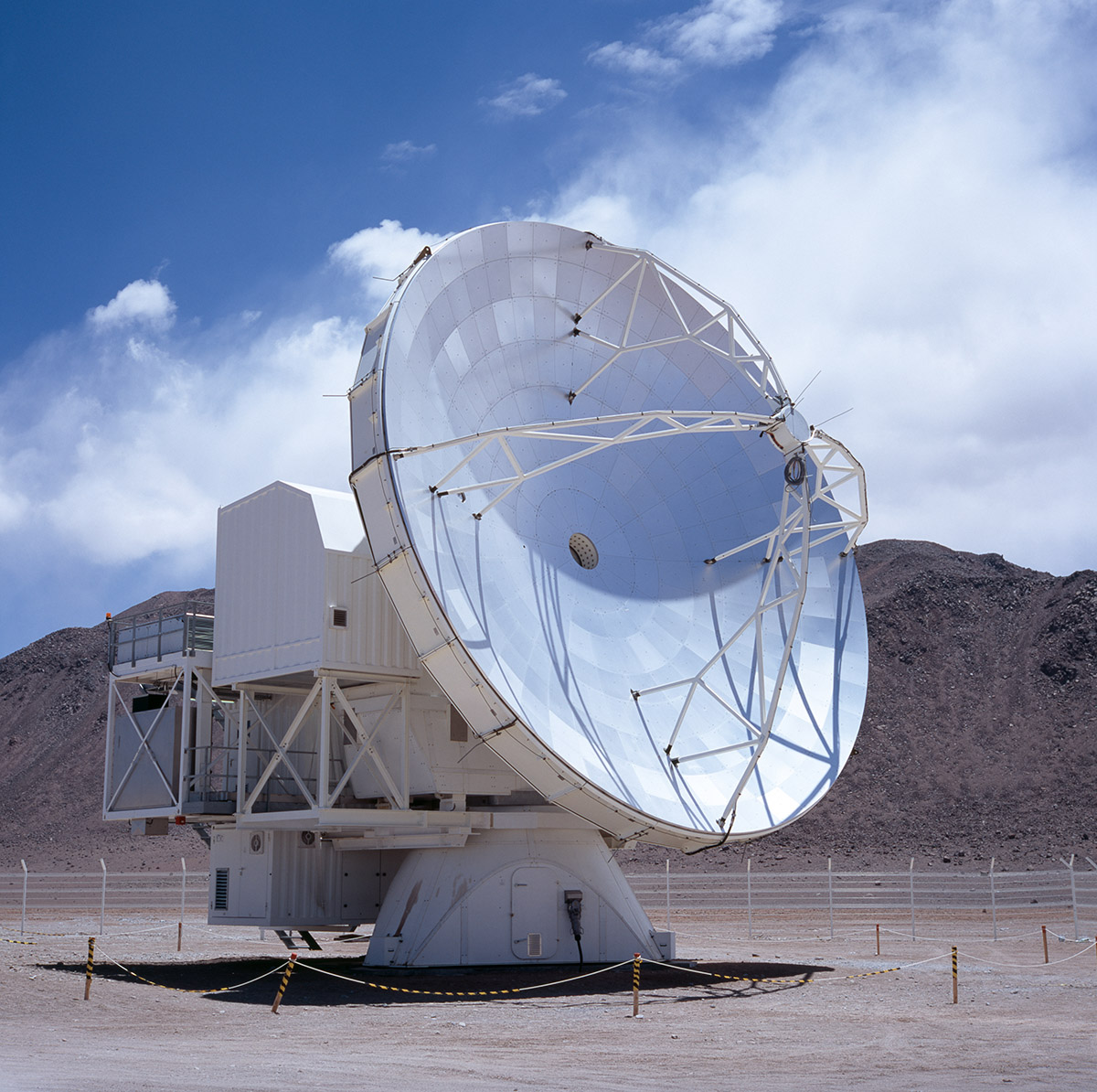
CAFFEINE uses the ArTéMiS camera mounted on the APEX telescope in northern Chile. APEX operates at high altitude in the Atacama Desert, where dry atmospheric conditions enable sensitive submillimetre observations. ArTéMiS detects thermal emission from cold dust at wavelengths of 350 and 450 microns. These wavelengths directly trace dense gas structures that optical telescopes cannot see.
The survey resolves features as small as 0.1 parsec, revealing filaments and compact cores embedded within molecular clouds. These structures represent the immediate precursors to star formation. By mapping them in detail, CAFFEINE provides a direct link between gas structure and star-forming activity.
Crucially, the survey samples regions across a wide range of densities. This diversity allows astronomers to test whether star formation efficiency changes once gas crosses the threshold required for gravitational collapse.
GAL316 as a representative star-forming region
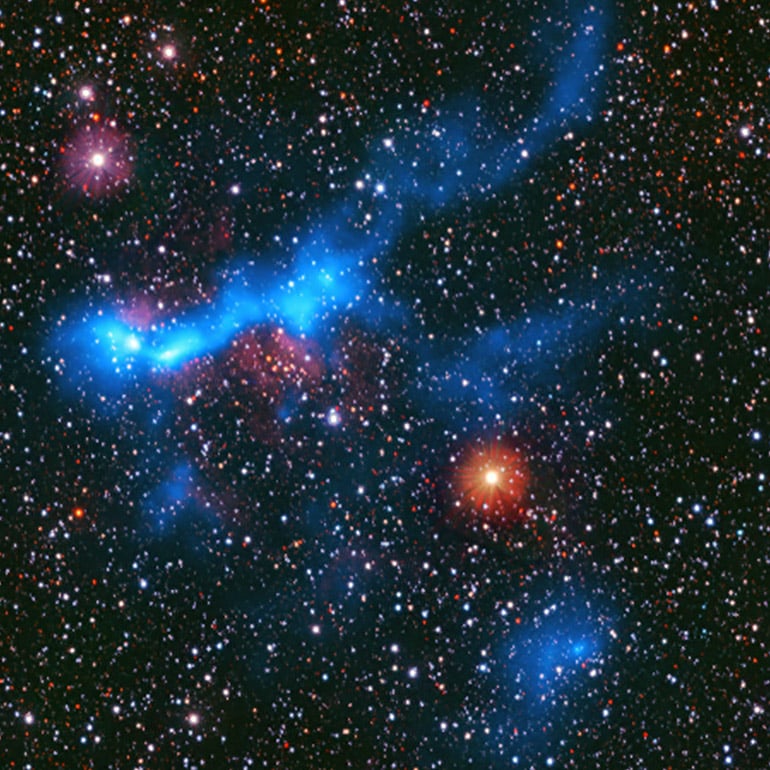
The ESO image focuses on GAL316, one of the regions observed in the CAFFEINE survey. GAL316 lies within the Galactic plane and contains a complex network of dense gas filaments. These filaments appear as a faint blue emission in the image, produced by cold dust detected with ArTéMiS.
Behind this emission, a dense field of stars appears in near-infrared light captured by ESO’s VISTA telescope. This combination of datasets provides both structural and environmental context. The cold gas shows where stars may form, while the background stars reveal the surrounding Galactic field.
GAL316 exhibits gas densities well above the minimum threshold needed for star formation. As a result, it serves as an ideal test case. If star formation efficiency increases steadily with density, GAL316 should show enhanced efficiency compared to less dense regions.
However, the CAFFEINE data indicate otherwise. Despite its high density, GAL316 does not convert gas into stars more efficiently than regions with moderately dense gas. This result mirrors trends seen across the broader survey.
How the image was constructed
The final image combines observations from two complementary instruments. ArTéMiS on APEX captured the submillimetre emission from cold dust. This emission directly traces dense gas, independent of starlight or heating from young stars.
Meanwhile, VISTA recorded near-infrared light from background stars. Infrared wavelengths penetrate dust more effectively than visible light, revealing stars hidden behind thick clouds. By overlaying these datasets, astronomers created a layered view of the region.
This approach highlights the relationship between dense gas and the surrounding stellar environment. Dense filaments appear superimposed on the Galactic background, allowing astronomers to study structure without losing spatial context.
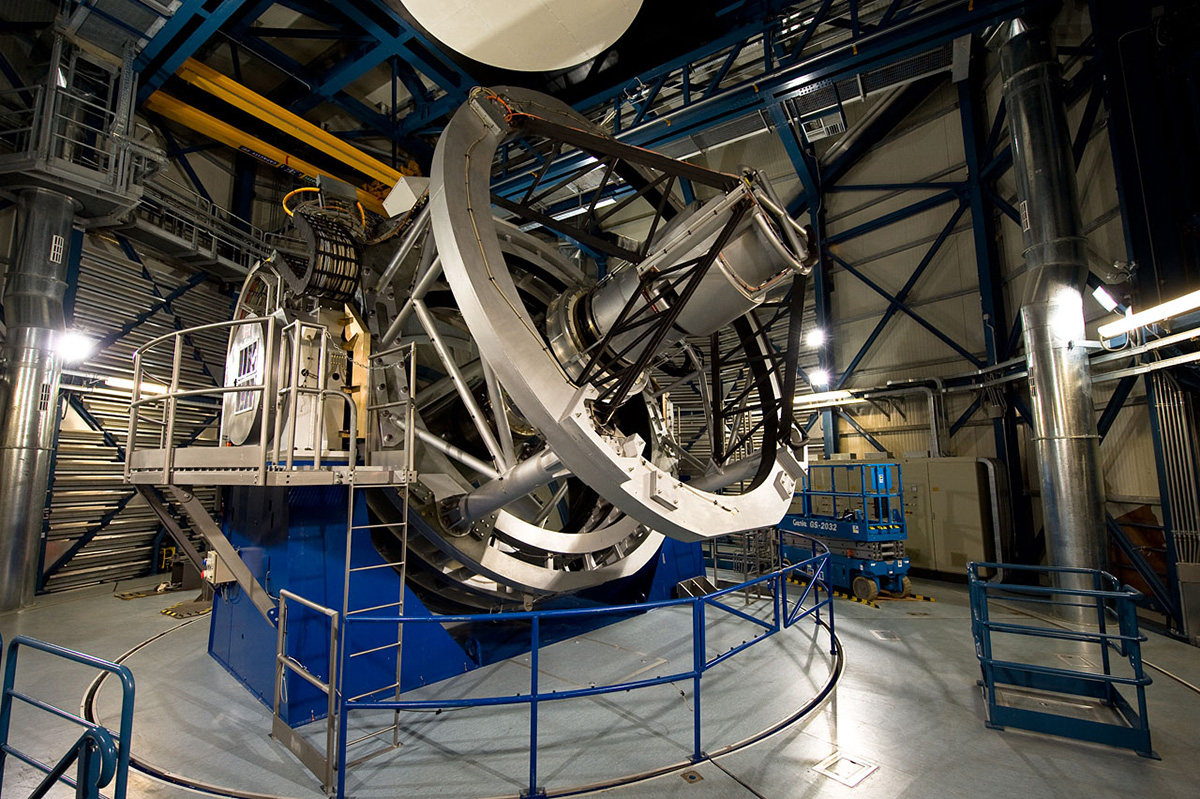
Such composite imaging has become essential in modern star formation studies. It enables researchers to connect small-scale gas structures to large-scale Galactic environments in a single frame.
Clear skies!
See more from DIYPhotography.net on Google
Add DIYPhotography.net as a trusted source. This makes
our stories more likely to appear in your Google Search results.
 Add as a preferred source on Google

Soumyadeep Mukherjee
Soumyadeep Mukherjee is an award-winning astrophotographer from India. He has a doctorate degree in Linguistics. His work extends to the sub-genres of nightscape, deep sky, solar, lunar and optical phenomenon photography. He is also a photography educator and has conducted numerous workshops. His works have appeared in over 40 books & magazines including Astronomy, BBC Sky at Night, Sky & Telescope among others, and in various websites including National Geographic, NASA, Forbes. He was the first Indian to win “Astronomy Photographer of the Year” award in a major category.



Join the Discussion
DIYP Comment Policy
Be nice, be on-topic, no personal information or flames.