


















Six Telescopes Capture Six Different Views of The Crab Nebula
Oct 5, 2026
Soumyadeep Mukherjee
Soumyadeep Mukherjee is an award-winning astrophotographer from India. He has a doctorate degree in Linguistics. His work extends to the sub-genres of nightscape, deep sky, solar, lunar and optical phenomenon photography. He is also a photography educator and has conducted numerous workshops. His works have appeared in over 40 books & magazines including Astronomy, BBC Sky at Night, Sky & Telescope among others, and in various websites including National Geographic, NASA, Forbes. He was the first Indian to win “Astronomy Photographer of the Year” award in a major category.
Share:
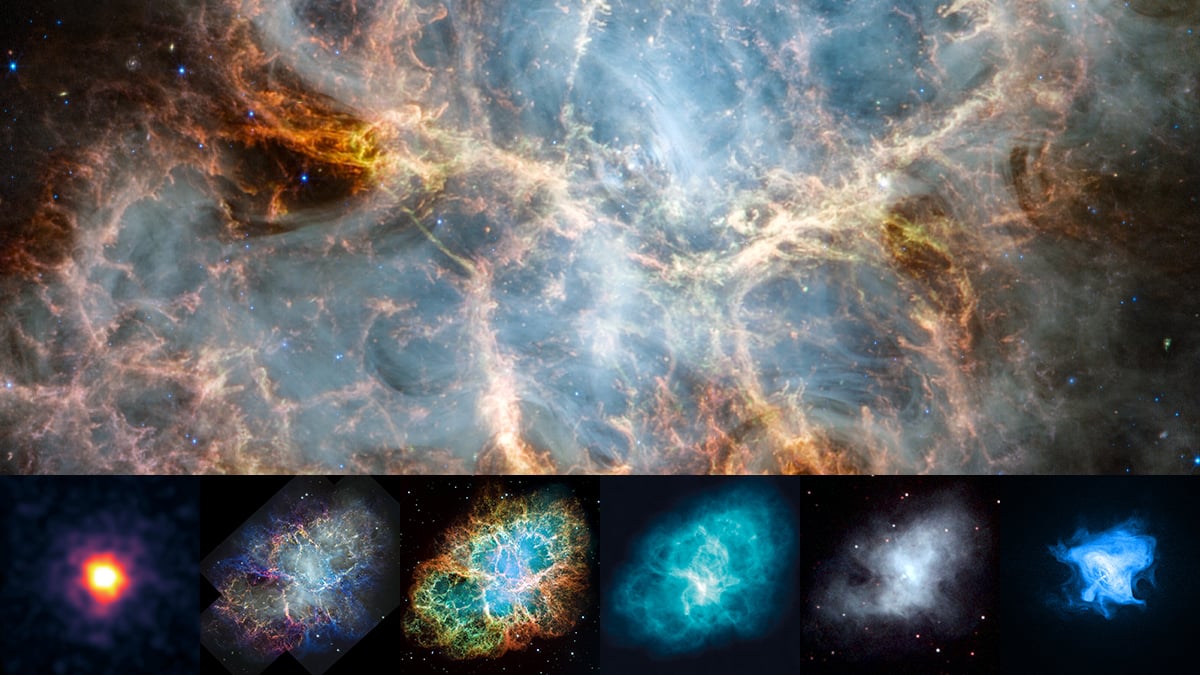
The Crab Nebula is one of astronomy’s most famous deep-sky objects. In visible light, it looks like a tangled cloud of glowing gas with thin filaments spreading out from the center. It is a favorite target for both professional observatories and amateur astrophotographers. The nebula lies about 6,500 light-years from Earth in the constellation Taurus. Chinese astronomers recorded the supernova in 1054, when the exploding star became bright enough to see during the daytime.
NOIRLab has brought six views of the Crab Nebula together. Each of the views highlights different aspects of the object. The images come from the Fermi Gamma-ray Space Telescope, Chandra X-ray Observatory, Swift, Hubble, the James Webb Space Telescope, and the VLA radio telescope.
Fermi sees the Crab at its most energetic
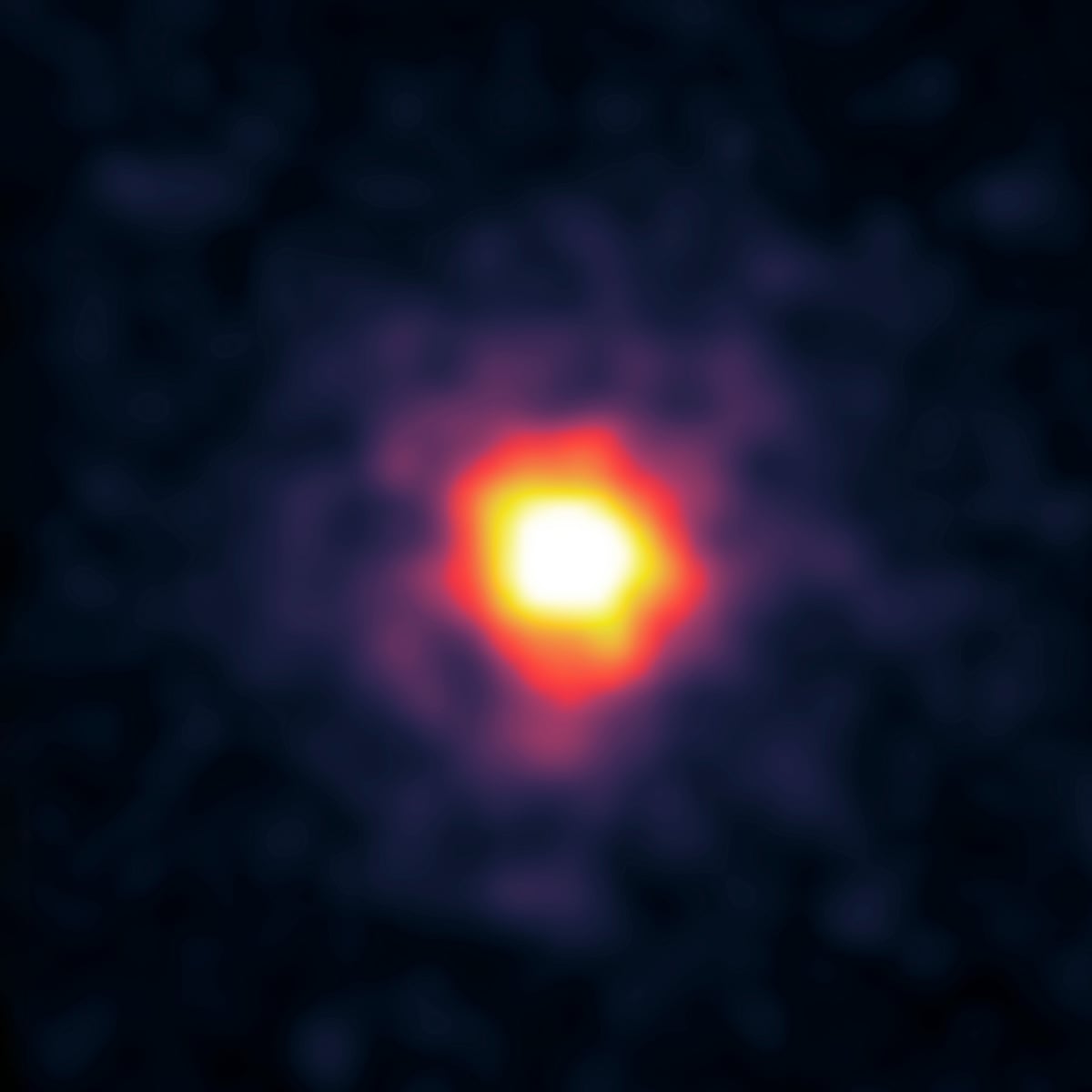
The gamma-ray image takes us to the most energetic end of the comparison. Gamma rays carry far more energy than visible light, and the Crab is one of the brightest and most closely studied sources of high-energy radiation in the sky.
At the center of the nebula sits the Crab Pulsar. This tiny neutron star spins rapidly and has an extremely strong magnetic field. As it loses some of its rotational energy, it sends streams of charged particles into the surrounding space. Some of these particles reach enormous energies and produce gamma rays.
Chandra reveals the hidden center
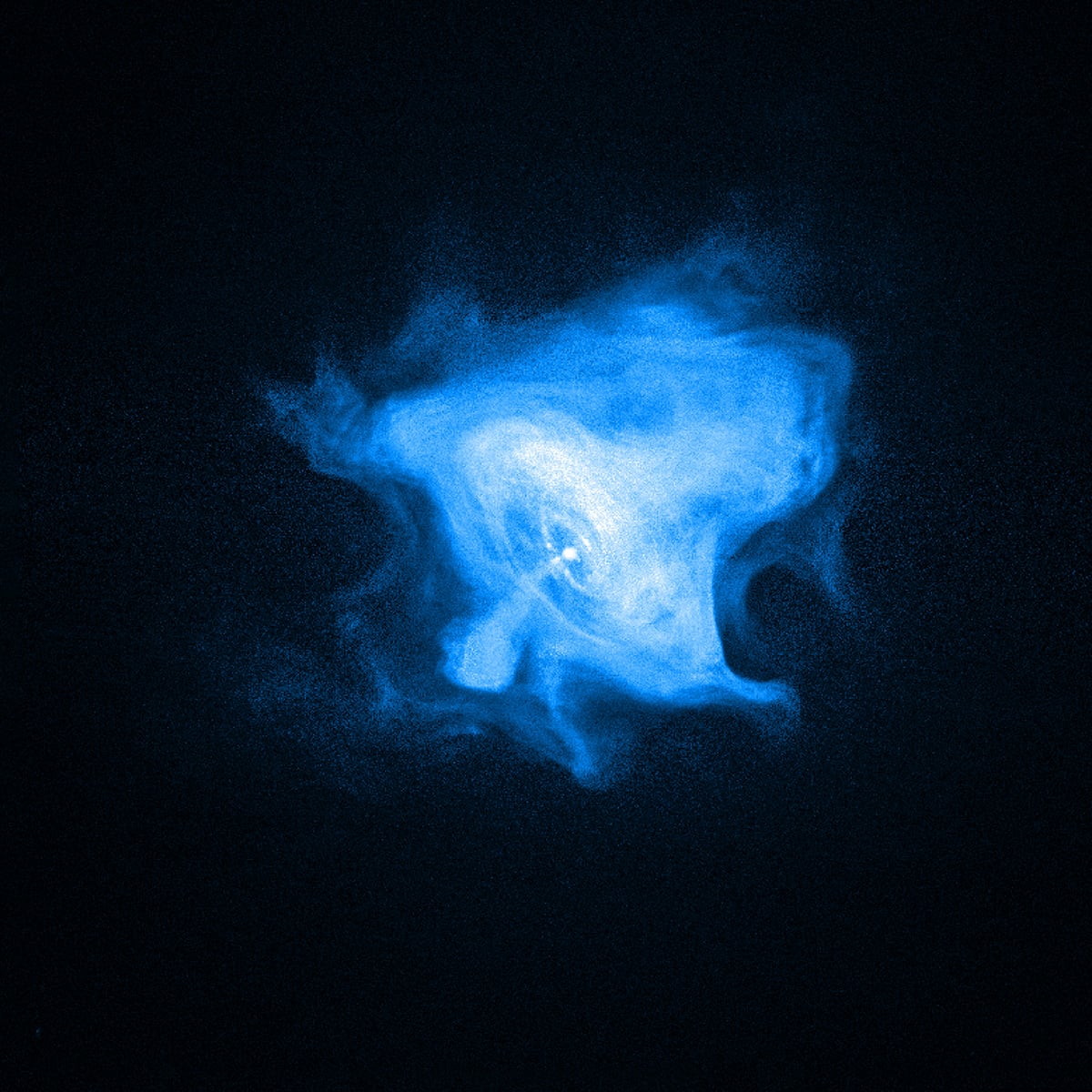
The Crab Nebula looks very different in X-rays. Chandra’s image draws attention to the center, where the pulsar is surrounded by bright rings and narrow structures.
The Crab Pulsar is a neutron star only about 20 kilometers across, yet it contains more mass than the Sun. It spins roughly 30 times every second. This rapid rotation powers a wind of extremely energetic particles.
As this particle wind moves away from the pulsar, it meets the surrounding nebula. The interaction creates a bright ring around the neutron star. Chandra has also captured narrow jets and rapidly changing wisps extending from this central region.
An ultraviolet view of the nebula
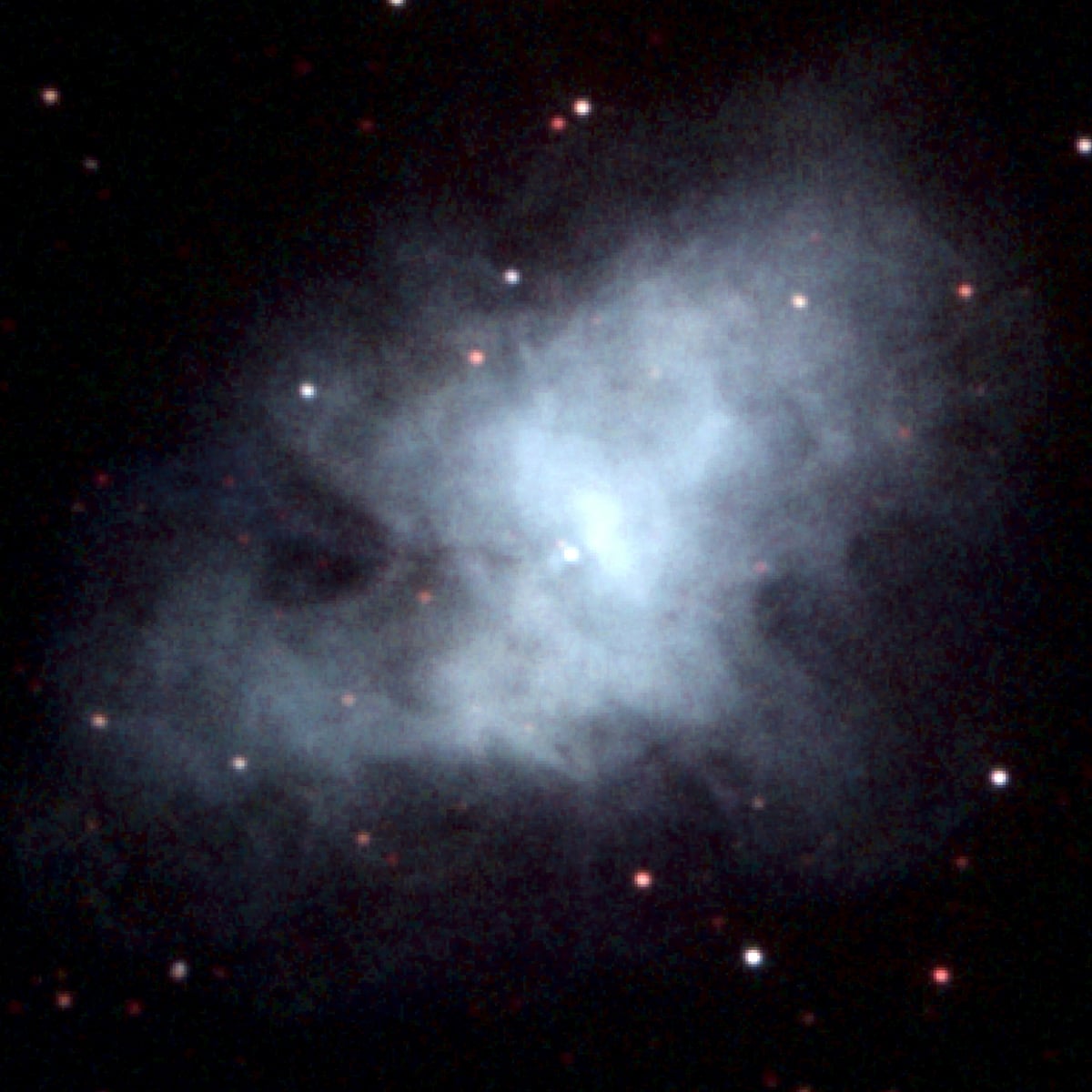
Between the visible and X-ray parts of the spectrum lies ultraviolet light. NASA’s Swift spacecraft has observed the Crab in ultraviolet wavelengths using its Ultraviolet/Optical Telescope. Its image adds another layer to the story.
Ultraviolet light comes from hotter and more energetic processes than the visible light our eyes can see. The Crab contains electrons with a wide range of energies, and these particles produce different kinds of radiation as they move through the nebula’s magnetic field.
The most recognizable image
Hubble’s image shows a dense network of bright filaments stretching across the nebula. These structures are made of material associated with the star that exploded in 1054.
Hubble photographed the Crab several times. Between 1999 and 2000, its Wide Field and Planetary Camera 2 collected 24 separate exposures that were combined into a large mosaic of the nebula.
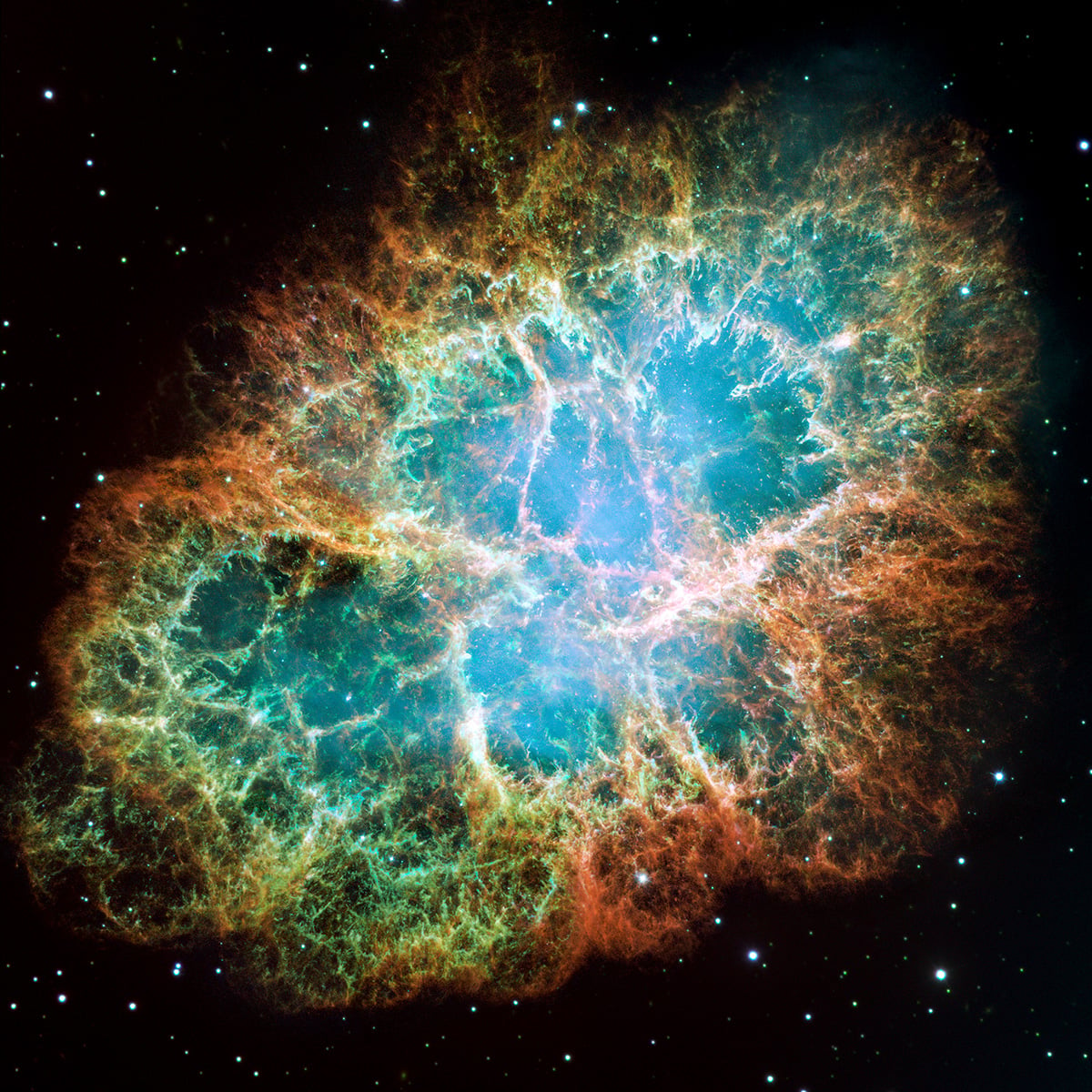
This is also the version of the nebula that astrophotographers try to capture. Long exposures can record its bright filaments, and narrowband filters can bring out some of the strongest emission from the gas. Hubble, however, resolves structures that are far too fine for most amateur equipment.
James Webb’s view: The hidden dust
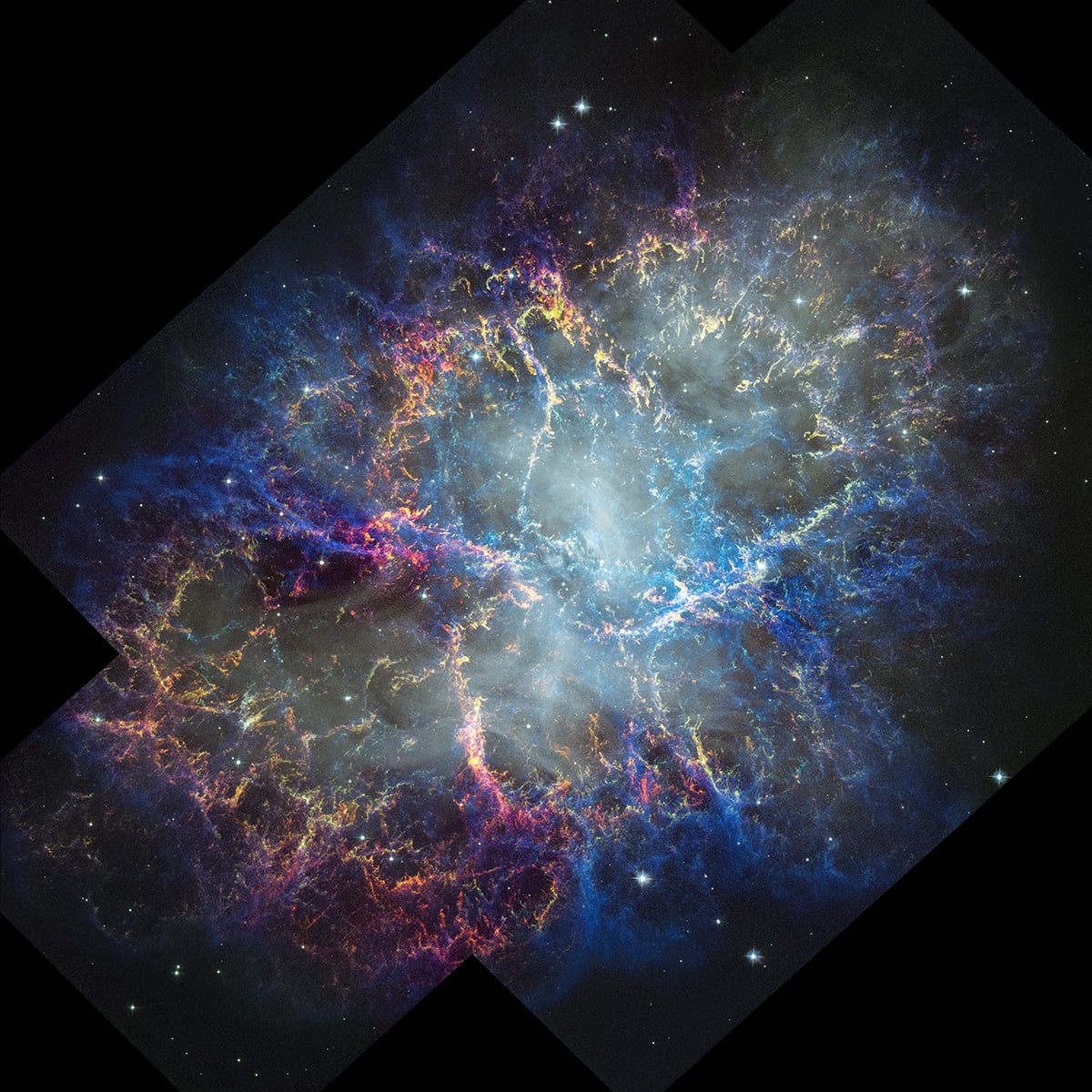
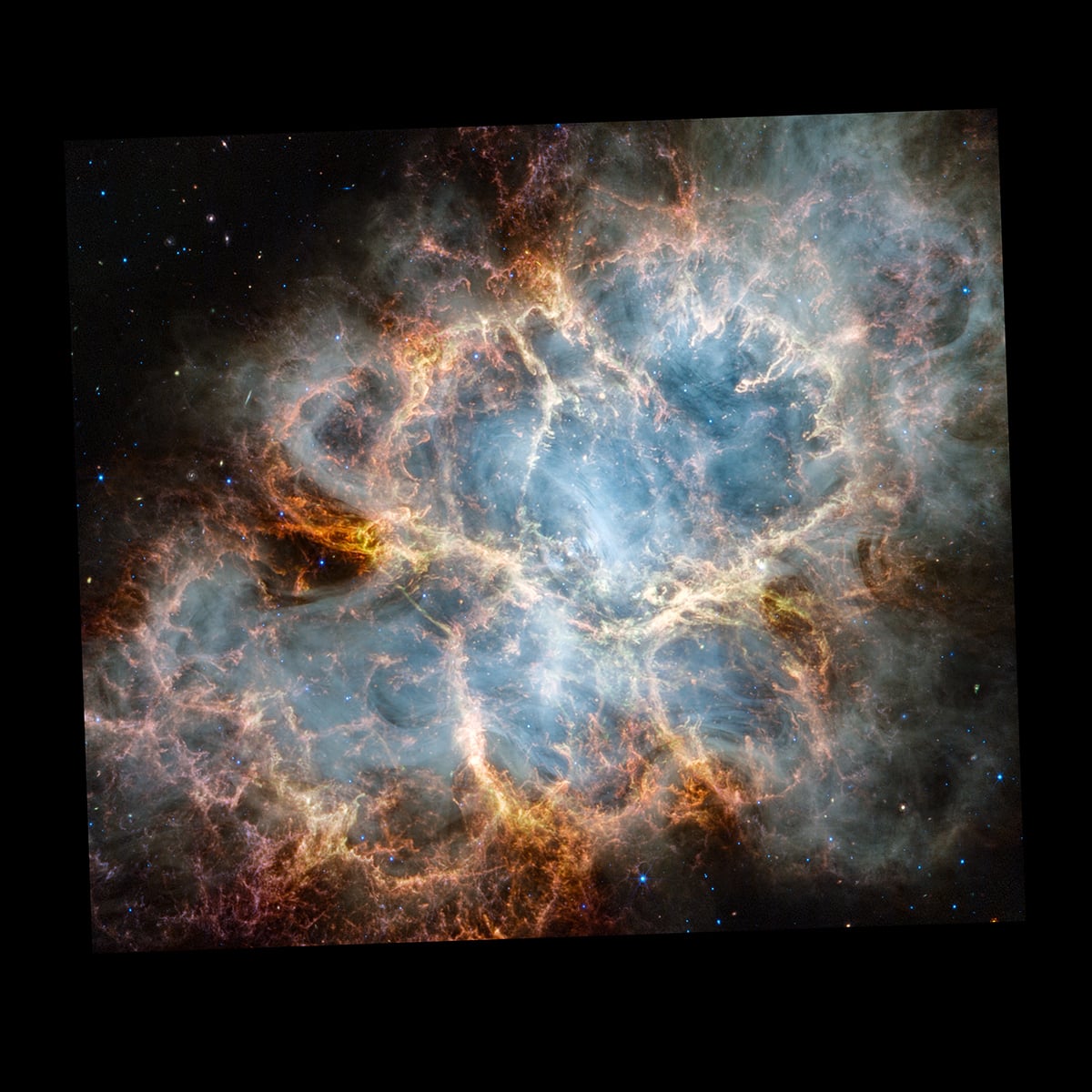
The James Webb Space Telescope gives us a very different look at the Crab Nebula. Its near-infrared observations pick up structures that are difficult to see in visible light. The JWST image reveals large loops and patches of dust spread through the nebula.
James Webb’s image uses colors to represent different infrared wavelengths. Some of the red-orange structures trace Sulphur in the nebula. Other colors highlight dust. A broad glow across the image comes from high-energy particles producing synchrotron radiation.
Radio telescope’s view
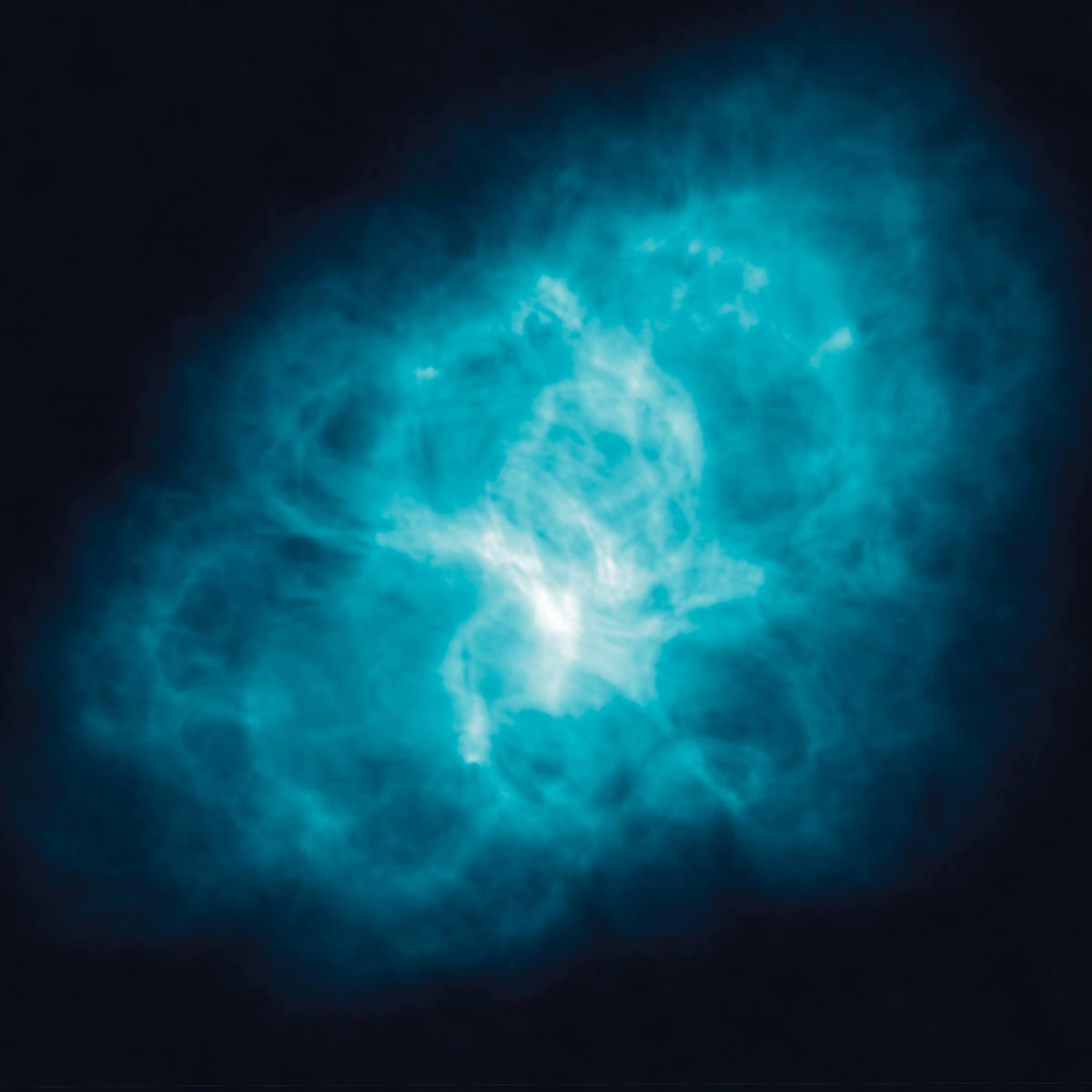
The radio image shows the comparison in the opposite direction. Radio waves have much lower energy than visible light, and they reveal a huge part of the Crab’s interior.
The nebula contains enormous numbers of charged particles released by the pulsar. As electrons move through magnetic fields, they produce radio waves. Radio telescopes can detect this emission across much of the nebula.
Which view of the Crab Nebula is your favourite?
Clear skies!
See more from DIYPhotography.net on Google
Add DIYPhotography.net as a trusted source. This makes
our stories more likely to appear in your Google Search results.
 Add as a preferred source on Google

Soumyadeep Mukherjee
Soumyadeep Mukherjee is an award-winning astrophotographer from India. He has a doctorate degree in Linguistics. His work extends to the sub-genres of nightscape, deep sky, solar, lunar and optical phenomenon photography. He is also a photography educator and has conducted numerous workshops. His works have appeared in over 40 books & magazines including Astronomy, BBC Sky at Night, Sky & Telescope among others, and in various websites including National Geographic, NASA, Forbes. He was the first Indian to win “Astronomy Photographer of the Year” award in a major category.
Join the Discussion
DIYP Comment Policy
Be nice, be on-topic, no personal information or flames.