


























NASA’s MAVEN Mission Ends: Iconic Images by the Spacecraft
Jun 6, 2026
Soumyadeep Mukherjee
Soumyadeep Mukherjee is an award-winning astrophotographer from India. He has a doctorate degree in Linguistics. His work extends to the sub-genres of nightscape, deep sky, solar, lunar and optical phenomenon photography. He is also a photography educator and has conducted numerous workshops. His works have appeared in over 40 books & magazines including Astronomy, BBC Sky at Night, Sky & Telescope among others, and in various websites including National Geographic, NASA, Forbes. He was the first Indian to win “Astronomy Photographer of the Year” award in a major category.
Share:
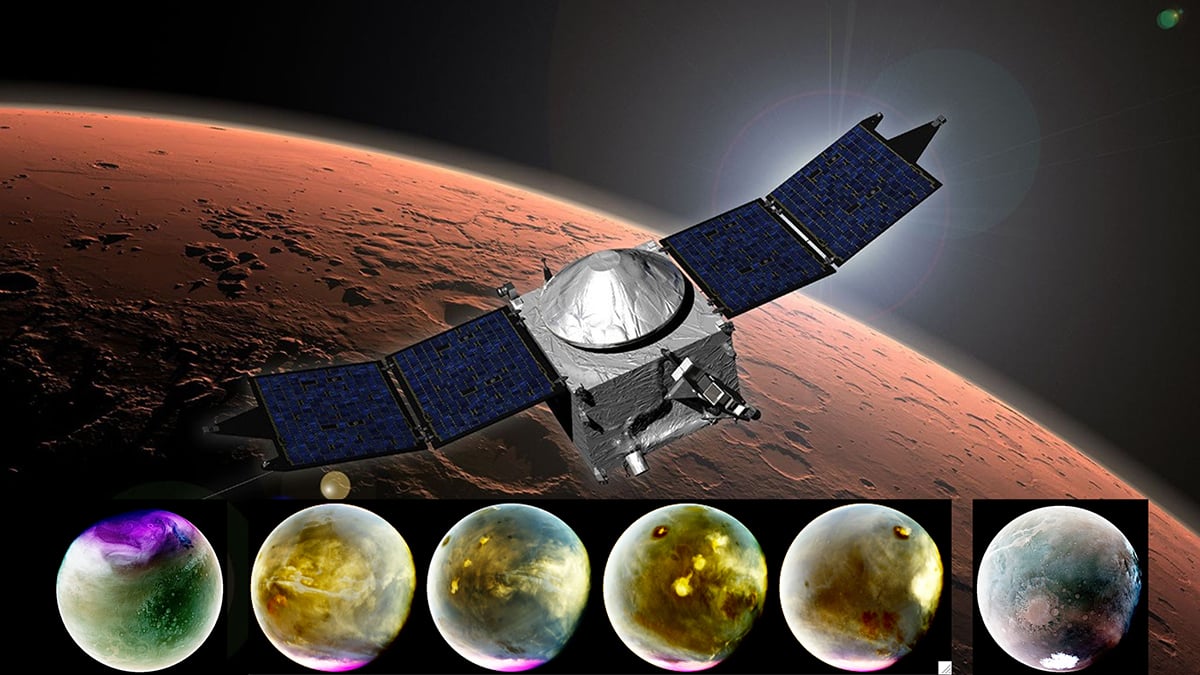
NASA has officially ended the MAVEN mission after more than eleven years in orbit around Mars. The spacecraft spent over a decade studying the structure, composition, and escape processes of the Martian upper atmosphere. During these years, it delivered some of the most important atmospheric measurements ever collected at another planet. Those observations helped scientists reconstruct how Mars evolved from a warmer and wetter world into the cold and arid planet seen today.
The Mars Atmosphere and Volatile Evolution mission, better known as MAVEN, launched on November 18, 2013, and entered Mars orbit on September 21, 2014. NASA originally planned the spacecraft for a one-year science mission. However, MAVEN remained operational far beyond its expected lifetime. The orbiter continued collecting data until late 2025, when communication with the spacecraft stopped permanently. NASA confirmed the mission’s end on June 3, 2026, after engineers failed to restore contact.
MAVEN at Mars
NASA developed MAVEN specifically to investigate atmospheric escape. The spacecraft carried instruments that measured ions, electrons, neutral particles, ultraviolet emissions, solar wind conditions, and magnetic fields. Together, these instruments enabled scientists to study how Mars interacts with its surrounding space environment.
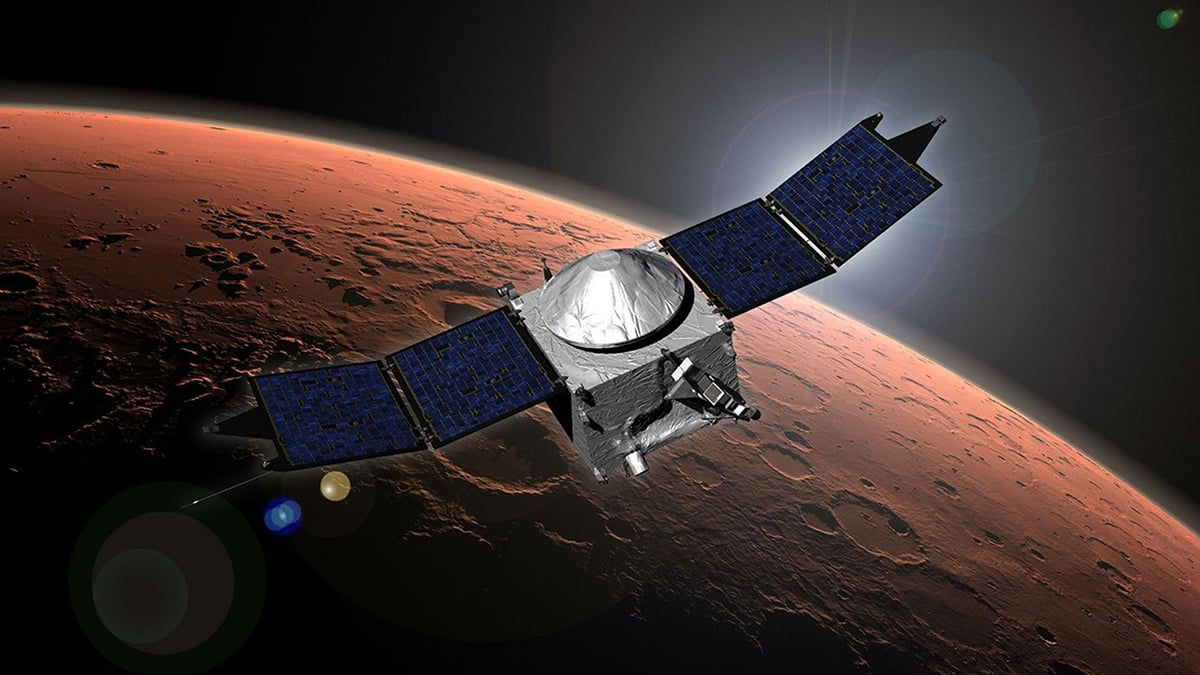
Unlike surface rovers, MAVEN focused almost entirely on the upper atmosphere and near-space environment around Mars. Its elliptical orbit allowed the spacecraft to travel through different atmospheric layers during each pass. At lower altitudes, MAVEN sampled the upper atmosphere itself. At higher altitudes, it observed particles escaping into space.
Although MAVEN’s primary role involved atmospheric science, the spacecraft also became an important operational asset for NASA’s Mars program. The orbiter frequently served as a communications relay between Earth and robotic missions on the Martian surface. Rovers such as Curiosity and Perseverance transmitted scientific data upward to orbiters, which then relayed the information back to Earth.
MAVEN showed how Mars lost its atmosphere
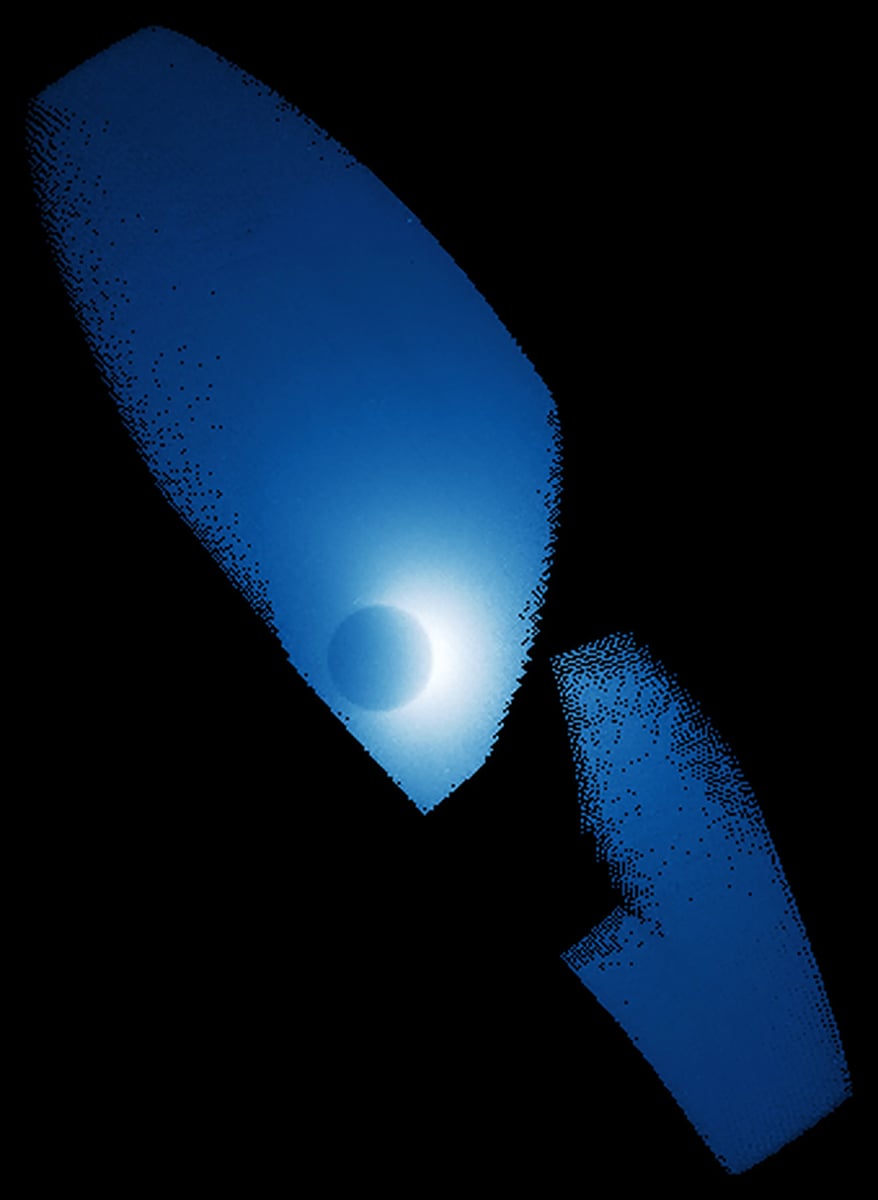
One of MAVEN’s most important contributions came from its measurements of atmospheric escape during solar storms. The spacecraft observed that escape rates increased significantly whenever strong solar activity reached Mars. These events included solar flares, coronal mass ejections, and enhanced solar wind streams. The findings helped scientists connect present-day atmospheric loss with the ancient history of Mars.
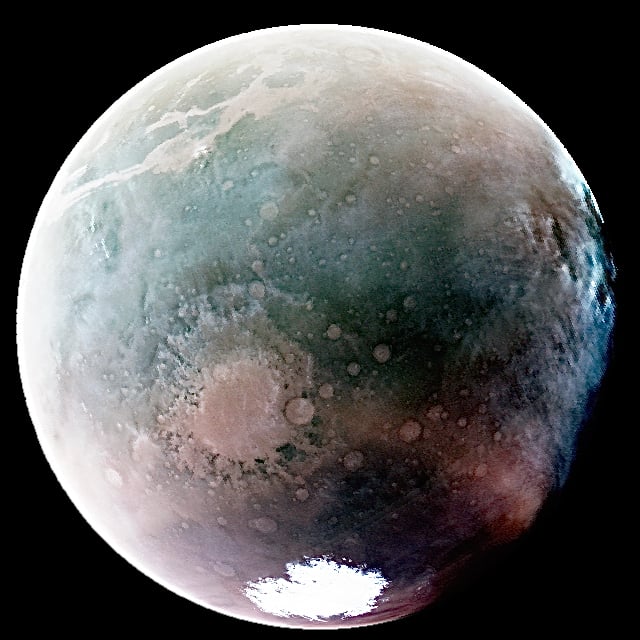
Billions of years ago, the young Sun produced much stronger solar activity than it does today. During that early period, Mars likely experienced far more intense space weather conditions. MAVEN data showed that these energetic conditions could remove atmospheric particles at much higher rates than scientists had previously estimated.
As the atmosphere slowly thinned, Mars lost much of its ability to retain heat and maintain stable liquid water on the surface. Surface pressure dropped over time, and the climate gradually shifted toward colder and drier conditions. Eventually, the planet became largely inhospitable to surface water.
MAVEN provided observational evidence for this long-standing theory. The mission transformed atmospheric escape from a theoretical concept into a measurable physical process.
The spacecraft also revealed that Mars loses atmospheric particles through several different mechanisms. Some particles gain enough energy to escape gravity through heating processes in the upper atmosphere. Others become ionized and then get swept away by solar wind and electromagnetic interactions.
A decade of observing space weather around Mars
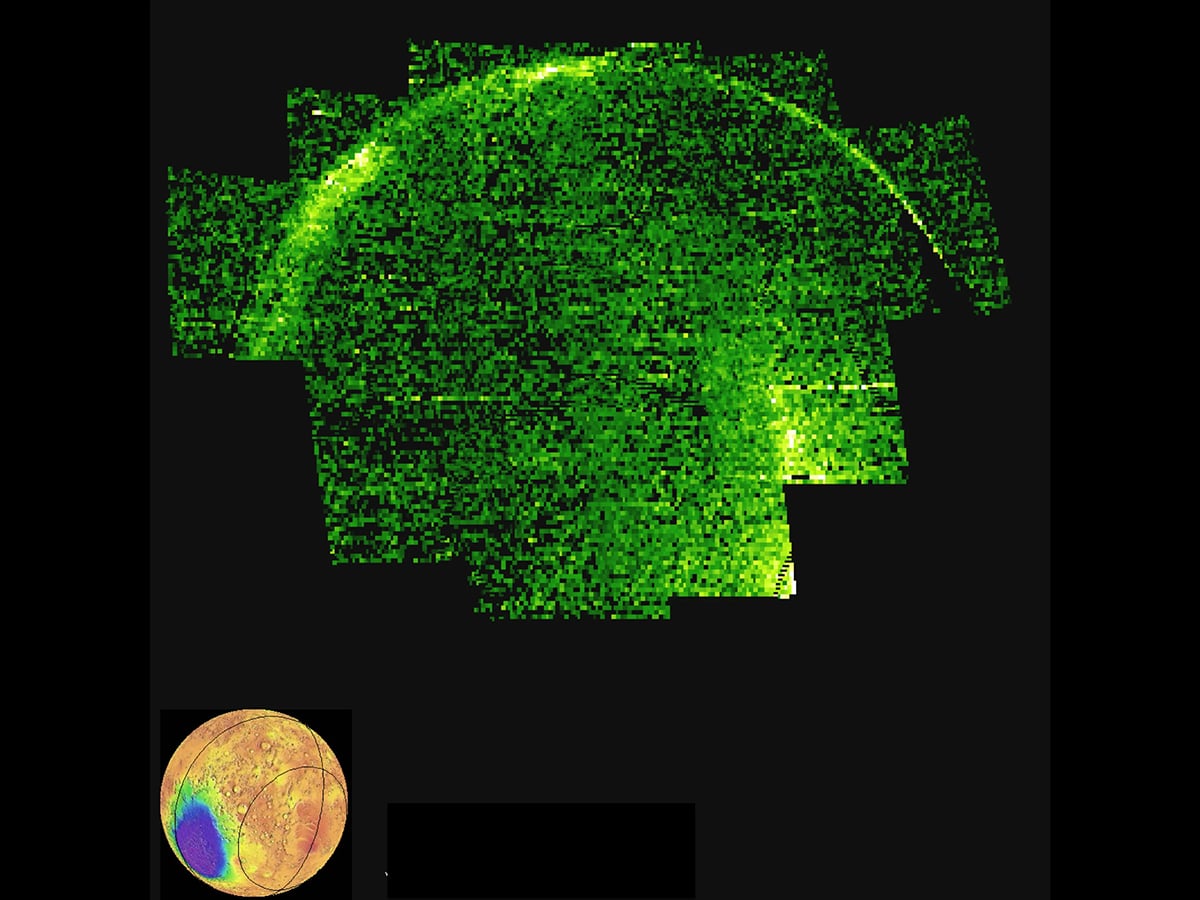
MAVEN also became one of the most important spacecrafts for studying how solar activity affects Mars in real time. Throughout its mission, the orbiter monitored repeated solar storms and their effects on the atmosphere.
During periods of intense solar activity, MAVEN observed rapid changes in atmospheric structure and particle escape rates. The spacecraft detected increased ionization, heating, and expansion in the upper atmosphere. These events demonstrated how strongly the Sun can influence planetary atmospheres without magnetic shielding.
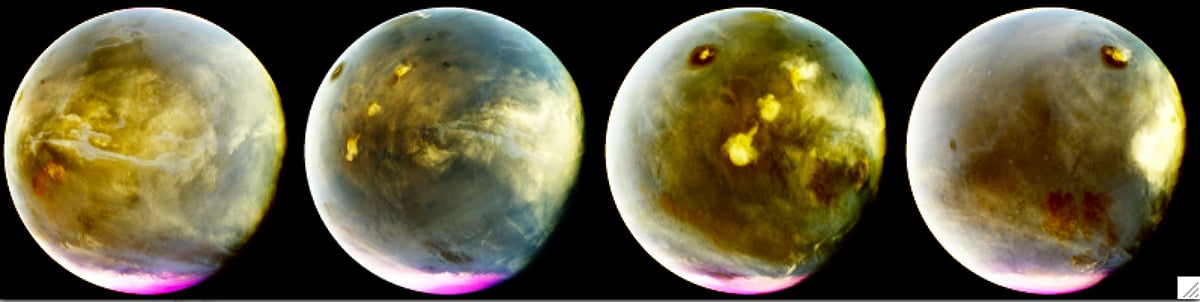
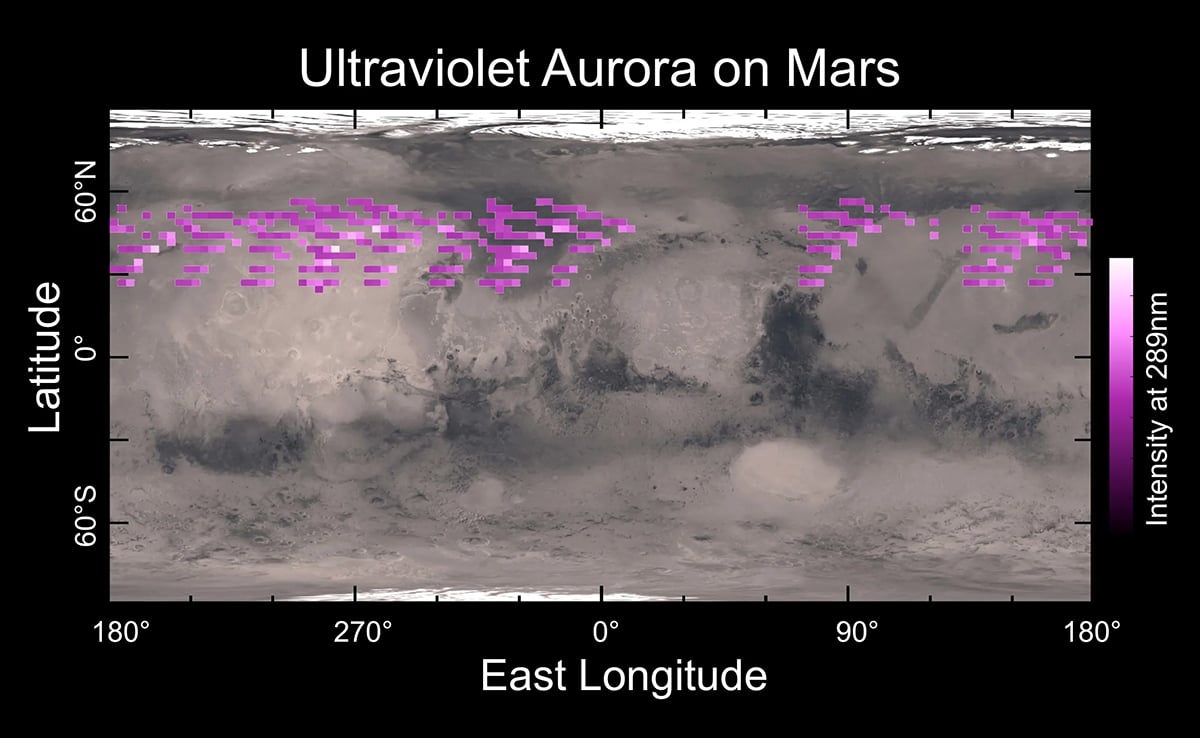
The mission also revealed several forms of Martian auroras. Unlike Earth, Mars lacks a strong global magnetic field that channels auroral activity toward the poles. As a result, auroras on Mars can appear across much broader regions of the planet.
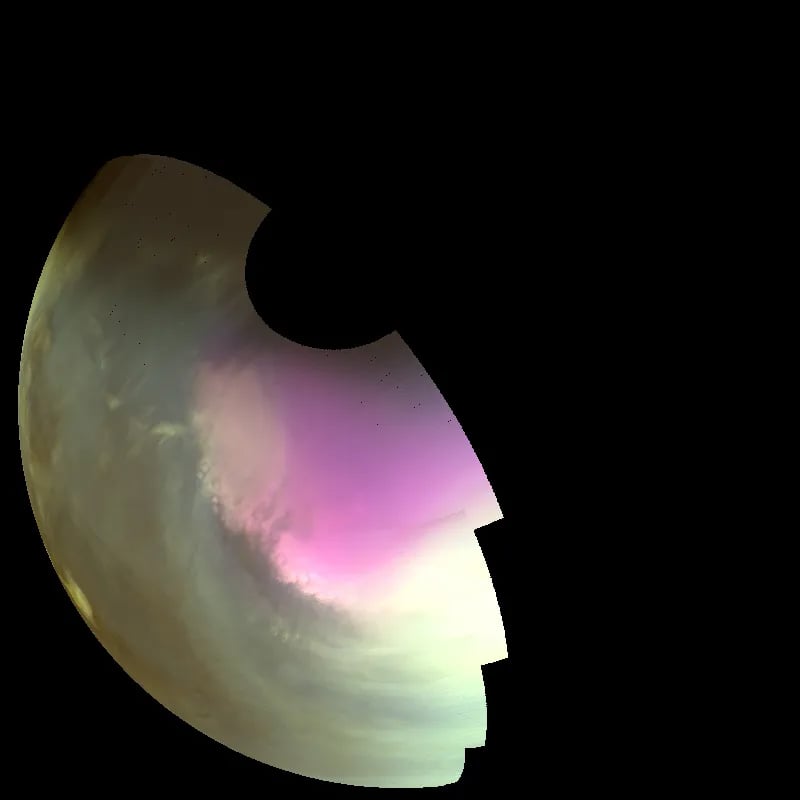
MAVEN detected ultraviolet auroras, diffuse auroras, and proton auroras during different solar conditions. These observations provided valuable insight into atmospheric chemistry and particle interactions in the Martian environment.
Over the years, MAVEN also recorded seasonal changes in atmospheric density, composition, and circulation patterns. Since the mission operated across multiple Martian years, researchers gained a long-term perspective on atmospheric variability.
The final loss of communication
NASA lost communication with MAVEN on December 6, 2025, during a routine solar conjunction period. During solar conjunction, Mars passes behind the Sun relative to Earth, temporarily interrupting communication signals between spacecraft and mission controllers. Communication blackouts during conjunction are normal for Mars missions. However, MAVEN never re-established contact after the conjunction ended.
Engineers spent months attempting recovery operations. Eventually, NASA concluded that the spacecraft likely entered an uncontrolled spin. That rotation probably prevented the solar arrays from receiving enough sunlight to recharge the batteries properly.

Even though MAVEN is no longer active, the spacecraft remains in orbit around Mars. Scientists estimate that it may continue orbiting the planet for several more decades before eventually descending into the atmosphere.
The mission far exceeded its planned operational lifetime. A spacecraft designed for one year remained scientifically productive for more than eleven years around another planet.
Clear skies!
See more from DIYPhotography.net on Google
Add DIYPhotography.net as a trusted source. This makes
our stories more likely to appear in your Google Search results.
 Add as a preferred source on Google

Soumyadeep Mukherjee
Soumyadeep Mukherjee is an award-winning astrophotographer from India. He has a doctorate degree in Linguistics. His work extends to the sub-genres of nightscape, deep sky, solar, lunar and optical phenomenon photography. He is also a photography educator and has conducted numerous workshops. His works have appeared in over 40 books & magazines including Astronomy, BBC Sky at Night, Sky & Telescope among others, and in various websites including National Geographic, NASA, Forbes. He was the first Indian to win “Astronomy Photographer of the Year” award in a major category.
Related Posts
 The Disposable Camera Astronauts Have Sent On A Suicide Mission To Capture Photos Of Burning Spacecraft
 NASA’s Orion spacecraft sends back first detailed photos of the moon
 New images from NASA’s Juno mission show Jupiter’s atmosphere spot in 3D detail
 NASA’s Lucy Spacecraft captures gloomy black-and-white image of the Earth
Join the Discussion
DIYP Comment Policy
Be nice, be on-topic, no personal information or flames.