






















Four Humans in a Few Pixels: Green Bank Telescope Captures Artemis II Near the Moon
May 18, 2026
Soumyadeep Mukherjee
Soumyadeep Mukherjee is an award-winning astrophotographer from India. He has a doctorate degree in Linguistics. His work extends to the sub-genres of nightscape, deep sky, solar, lunar and optical phenomenon photography. He is also a photography educator and has conducted numerous workshops. His works have appeared in over 40 books & magazines including Astronomy, BBC Sky at Night, Sky & Telescope among others, and in various websites including National Geographic, NASA, Forbes. He was the first Indian to win “Astronomy Photographer of the Year” award in a major category.
Share:
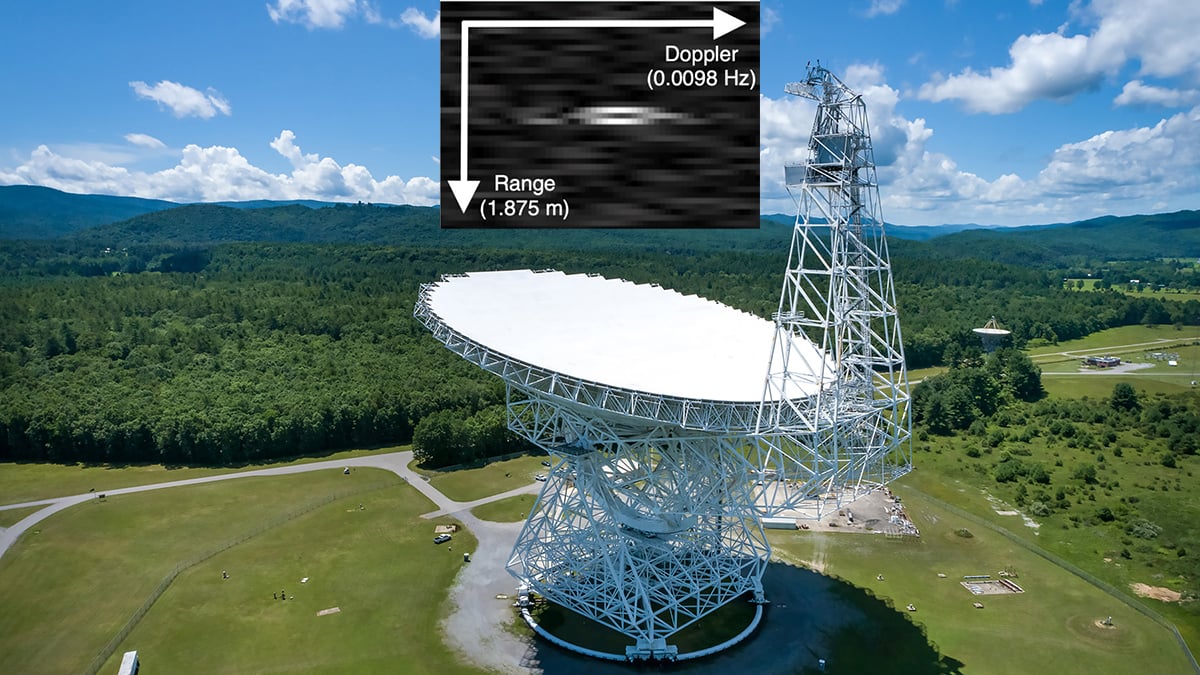
During NASA’s Artemis II mission, the Orion spacecraft travelled hundreds of thousands of kilometers away from Earth while carrying four astronauts around the Moon. Throughout the flight, tracking stations and communication networks continuously monitored the spacecraft’s position, velocity, and trajectory. Among the facilities supporting those observations was the Robert C. Byrd Green Bank Telescope in West Virginia, one of the world’s largest and most sensitive radio telescopes.
Using Orion’s radio transmissions, scientists at the NSF Green Bank Observatory produced a range-Doppler image of the spacecraft while it moved through cislunar space, around 3,43,000 Kms away. The image looks surprisingly simple. Orion appears only as a few bright pixels inside a patch of scientific data. However, the importance of the image is well represented in the words of Will Armentrout, an NSF GBO scientist, presenting to colleagues at the NSF GBO:
“There are four people in those pixels.”
Artemis II: NASA’s first crewed lunar mission since Apollo
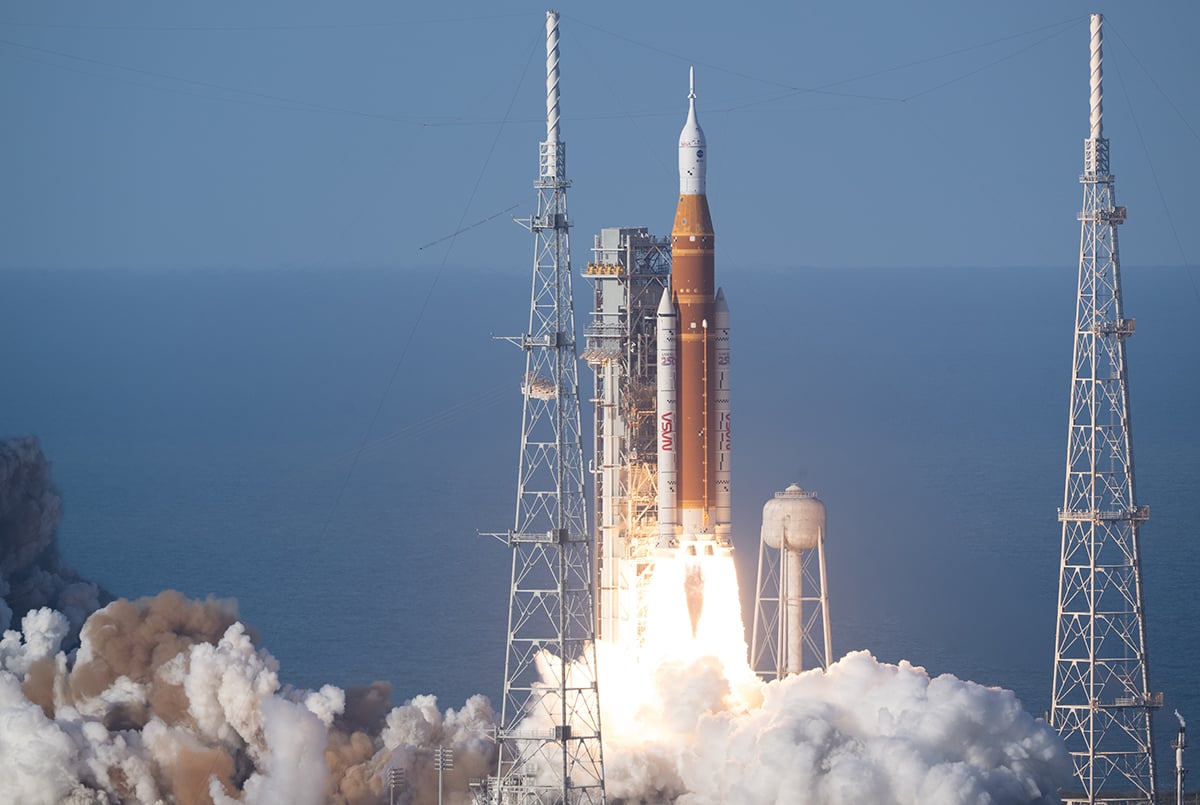
NASA launched Artemis II as the first crewed mission of the Artemis program and the first human journey toward the Moon since Apollo 17 in 1972. The mission carried NASA astronauts Reid Wiseman, Victor Glover, and Christina Koch, along with Canadian Space Agency astronaut Jeremy Hansen, aboard the Orion spacecraft.
Unlike Artemis I, which flew without astronauts in 2022, Artemis II tested Orion’s systems during an actual crewed mission. The spacecraft traveled around the Moon using a free-return trajectory before heading back to Earth. During the mission, Orion moved far beyond low Earth orbit and entered the cislunar environment where future Artemis missions will operate regularly.
NASA designed the mission as a full systems test for future lunar exploration. Engineers evaluated Orion’s life-support systems, guidance hardware, communication systems, and operational performance during the flight. The agency also tested procedures that astronauts and mission teams will use during future lunar landing missions.
The Green Bank Telescope followed Orion through space
While Artemis II travelled around the Moon, tracking teams on Earth continuously monitored the spacecraft’s position and movement. NASA relied heavily on the Deep Space Network and Near Space Network for communication and navigation support. However, the Green Bank Telescope also joined the effort by tracking Orion using radio observations.
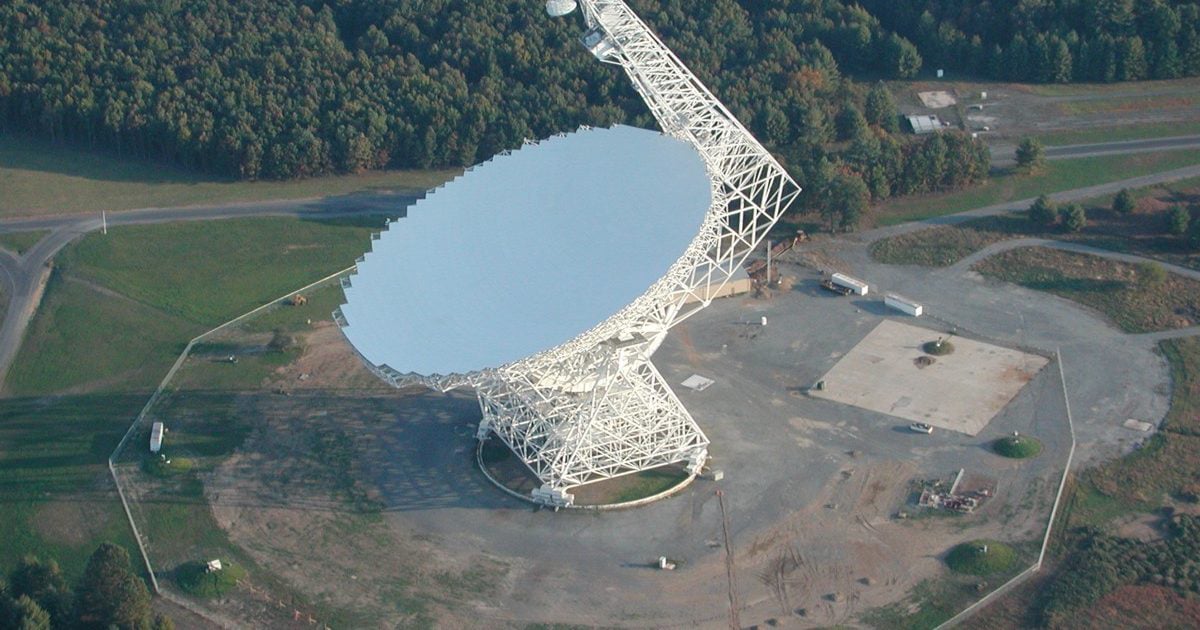
The telescope is situated within the National Radio Quiet Zone in West Virginia, an area designated as a protected zone from radio interference. Its massive 100-meter dish makes it the world’s largest fully steerable radio telescope. Astronomers normally use the instrument to study pulsars, galaxies, black holes, and clouds of gas between stars. Yet radio telescopes can also detect and measure spacecraft signals with extraordinary sensitivity.
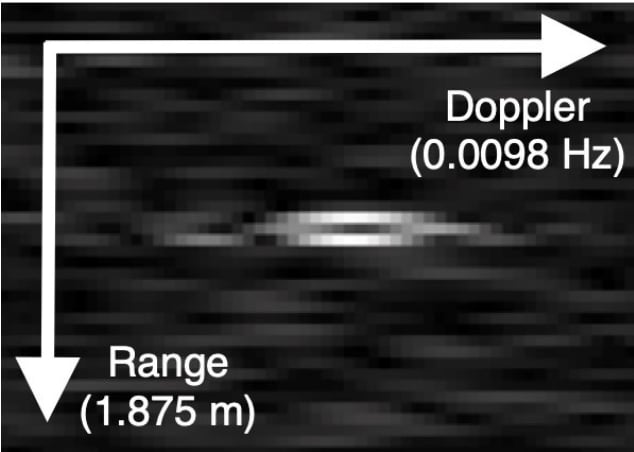
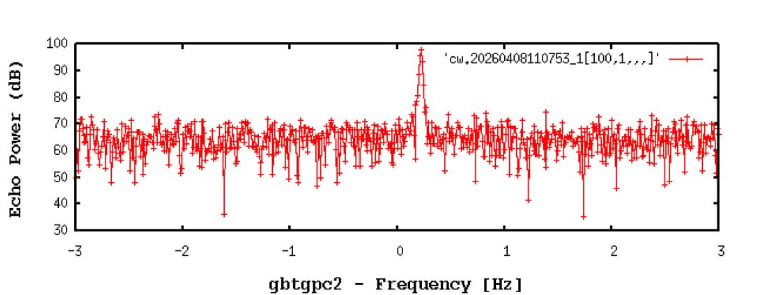
During Artemis II, scientists used the telescope to observe Orion’s radio transmissions while the spacecraft traveled through cislunar space. These observations produced range-Doppler measurements rather than optical photographs.
The resulting image represented Orion’s distance and motion relative to Earth. In the dataset, the vertical direction showed the spacecraft’s range from Earth, while the horizontal direction represented the Doppler shift, which measures changes in signal frequency caused by motion.
A photograph different from other space images
One reason the Green Bank Telescope image attracted my attention is that it looked very different from the kind of space imagery we usually see today. Space missions often produce visually stunning photographs. Space telescopes reveal galaxies in remarkable detail, while planetary probes return high-resolution images from distant worlds.
The image forces viewers to think about what those pixels actually represented. Orion appeared extremely small because it was far away. Unlike astronauts aboard the International Space Station, the Artemis II crew had travelled far beyond Earth orbit. The spacecraft was moving through deep space with only a thin layer of hardware separating the astronauts from the environment outside.
The phrase “There are four people in those pixels” resonates because it translates a complex radio observation into something human. A few blurry pixels represented four astronauts traveling around another world. And it also highlights how powerful context can be in scientific imagery.
More from the Artemis II Mission
- NASA Chooses Sony as Official Camera on Artemis Lunar Missions
- NASA’s Artemis II Lifts Off for the Moon: Images of the Launch
- Artemis II Astronauts Capture Historic Earth Images from Space
- Crew Portraits with Earth, and Moon Photos from Artemis II
- Artemis II Completes Historic Lunar Flyby: New Images of the Moon
- Artemis II Lunar Close-Up Images: NASA’s Lunar Science Goals
- Earthset, Earthrise, and Eclipse: Photos from Artemis II Lunar Flyby
- Artemis II Begins Final Return to Earth After Historic Lunar Flyby
- To the Moon and Back: NASA’s Artemis II Returns Safely to Earth
- NASA Releases 12,000 Photos from Artemis II Mission: Top Picks
Clear skies!
See more from DIYPhotography.net on Google
Add DIYPhotography.net as a trusted source. This makes
our stories more likely to appear in your Google Search results.
 Add as a preferred source on Google

Soumyadeep Mukherjee
Soumyadeep Mukherjee is an award-winning astrophotographer from India. He has a doctorate degree in Linguistics. His work extends to the sub-genres of nightscape, deep sky, solar, lunar and optical phenomenon photography. He is also a photography educator and has conducted numerous workshops. His works have appeared in over 40 books & magazines including Astronomy, BBC Sky at Night, Sky & Telescope among others, and in various websites including National Geographic, NASA, Forbes. He was the first Indian to win “Astronomy Photographer of the Year” award in a major category.
Join the Discussion
DIYP Comment Policy
Be nice, be on-topic, no personal information or flames.