
























To the Moon and Back: NASA’s Artemis II Returns Safely to Earth
Apr 10, 2026
Soumyadeep Mukherjee
Soumyadeep Mukherjee is an award-winning astrophotographer from India. He has a doctorate degree in Linguistics. His work extends to the sub-genres of nightscape, deep sky, solar, lunar and optical phenomenon photography. He is also a photography educator and has conducted numerous workshops. His works have appeared in over 40 books & magazines including Astronomy, BBC Sky at Night, Sky & Telescope among others, and in various websites including National Geographic, NASA, Forbes. He was the first Indian to win “Astronomy Photographer of the Year” award in a major category.
Share:
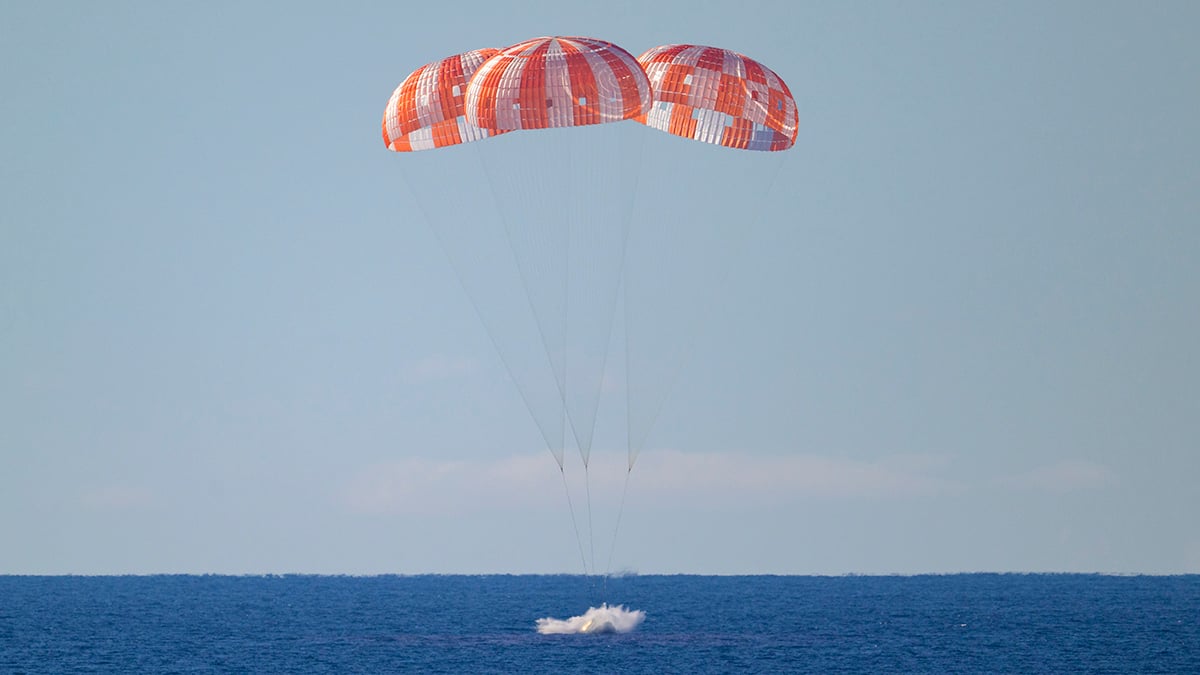
NASA’s Artemis II mission concluded successfully with the safe splashdown of the Orion spacecraft in the Pacific Ocean on April 10, 2026. The mission marked the first crewed test flight of the Orion spacecraft in deep space and the first human return from the vicinity of the Moon since the Apollo era.
During the ten-day mission, four astronauts travelled hundreds of thousands of miles beyond low Earth orbit, completed a lunar flyby on a free-return trajectory, and showed the performance of critical spacecraft systems required for future lunar landing missions. With splashdown completed as planned, Artemis II has now achieved its primary objective of validating crewed deep-space transportation capability ahead of upcoming Artemis missions.
A controlled lunar-return entry brought Orion back to Earth
The final phase of Artemis II began with Orion’s carefully planned return trajectory toward Earth. Mission controllers executed a short trajectory correction burn shortly before atmospheric entry. This manoeuvre refined the spacecraft’s approach angle and ensured safe passage through the upper atmosphere. The entry angle remains one of the most critical parameters during lunar-return missions, as even small deviations can significantly impact heating loads and landing accuracy.
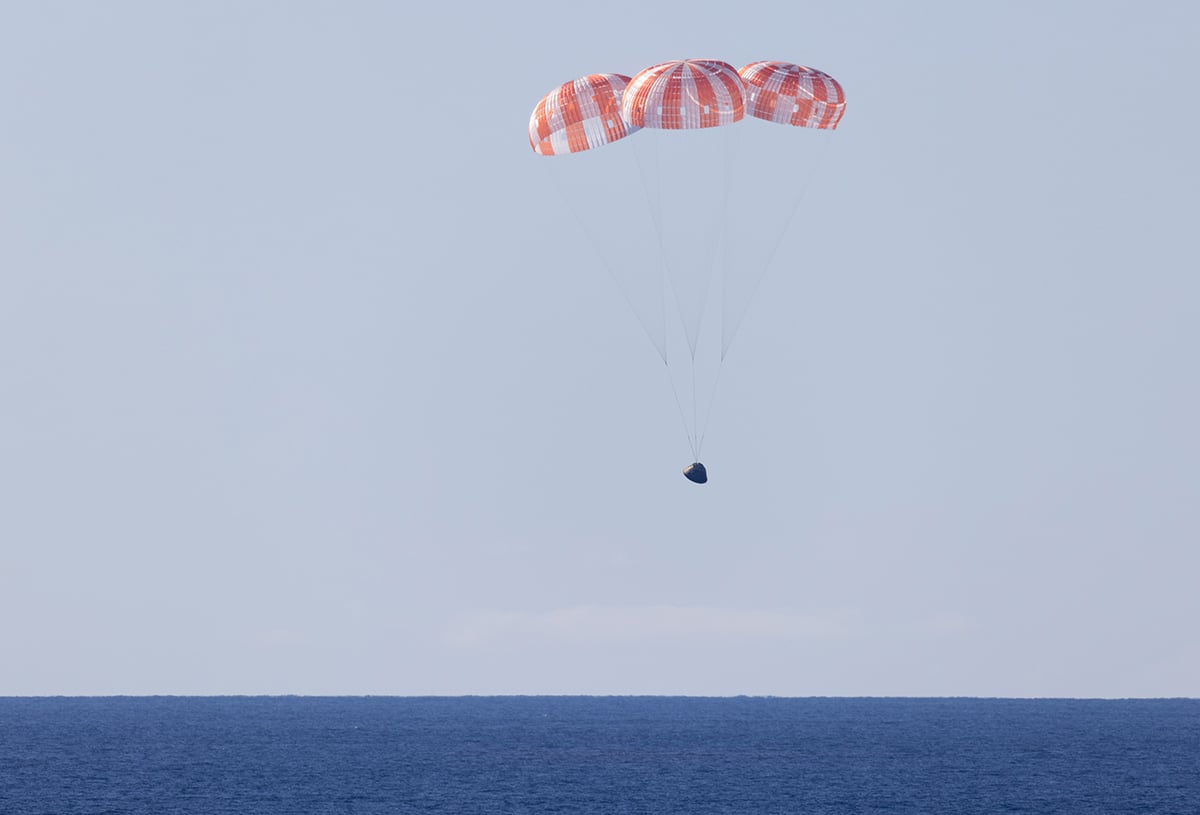
As Orion approached Earth, the spacecraft entered the atmosphere at nearly 25,000 miles per hour. This velocity is typical for missions returning from lunar distance but significantly higher than speeds experienced during low Earth orbit returns. Consequently, the spacecraft encountered intense aerodynamic heating during descent. Orion’s heat shield protected the crew throughout this phase, maintaining safe internal conditions inside the capsule.
The spacecraft then performed a guided skip-entry maneuver. During this procedure, Orion briefly dipped into the upper atmosphere before climbing slightly again and continuing its descent. This technique reduced peak heating and allowed mission controllers to target a precise landing location in the Pacific Ocean. The entry profile matched predictions closely and confirmed the performance of Orion’s guidance and thermal protection systems during a crewed lunar-return scenario.
Parachute deployment and splashdown
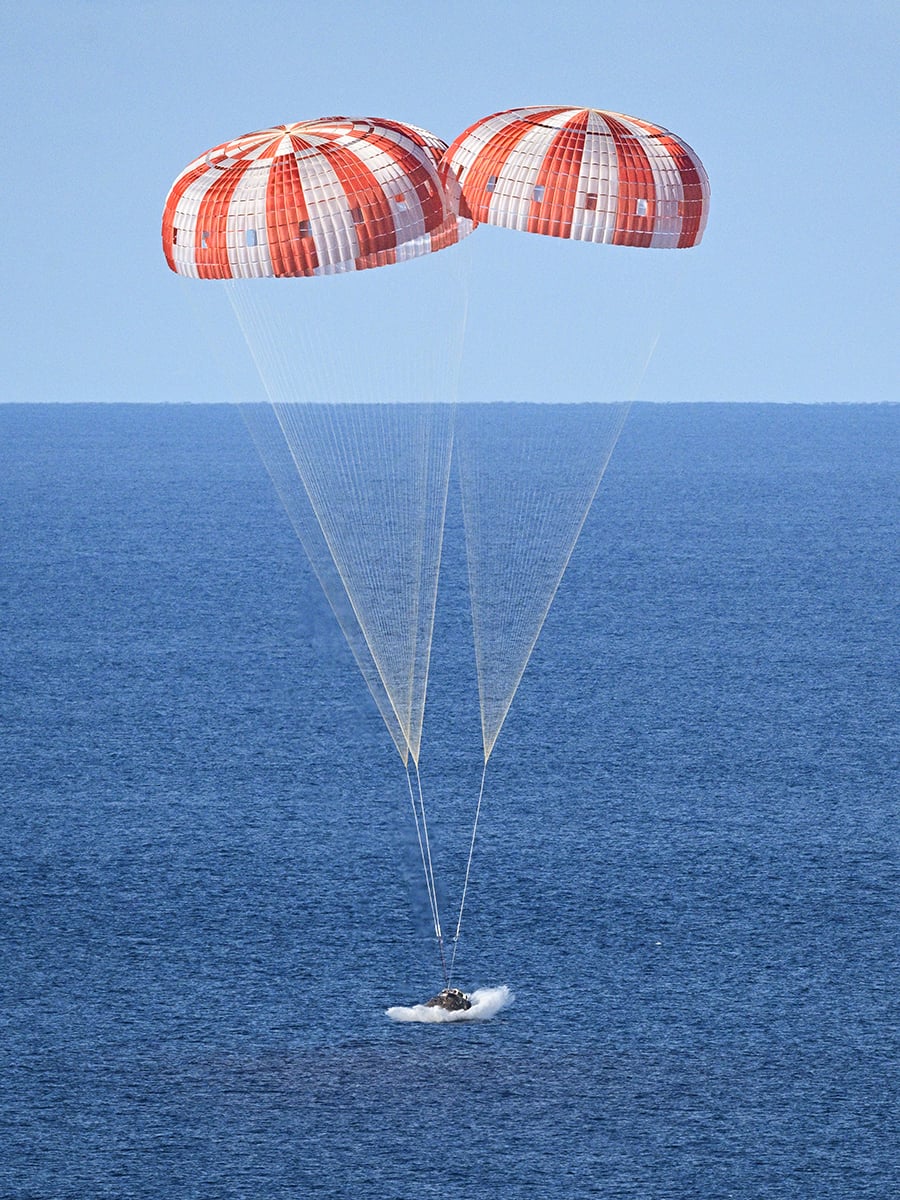
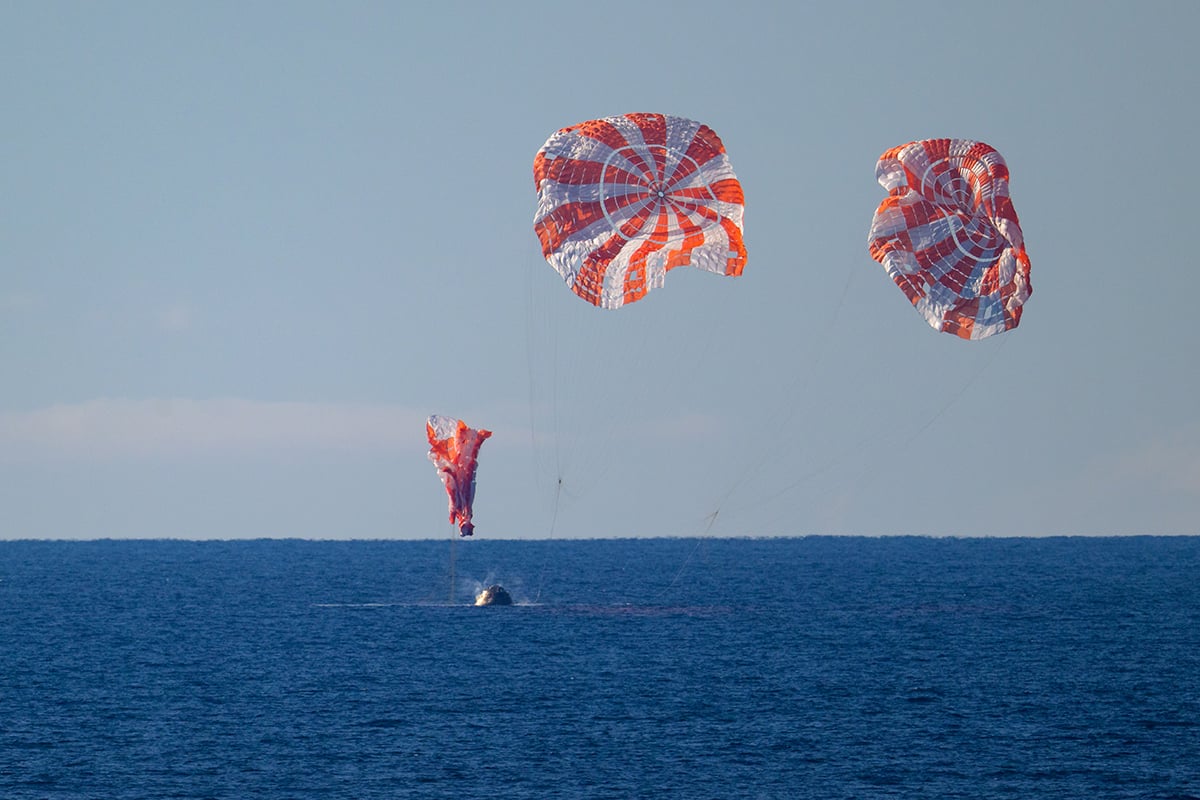
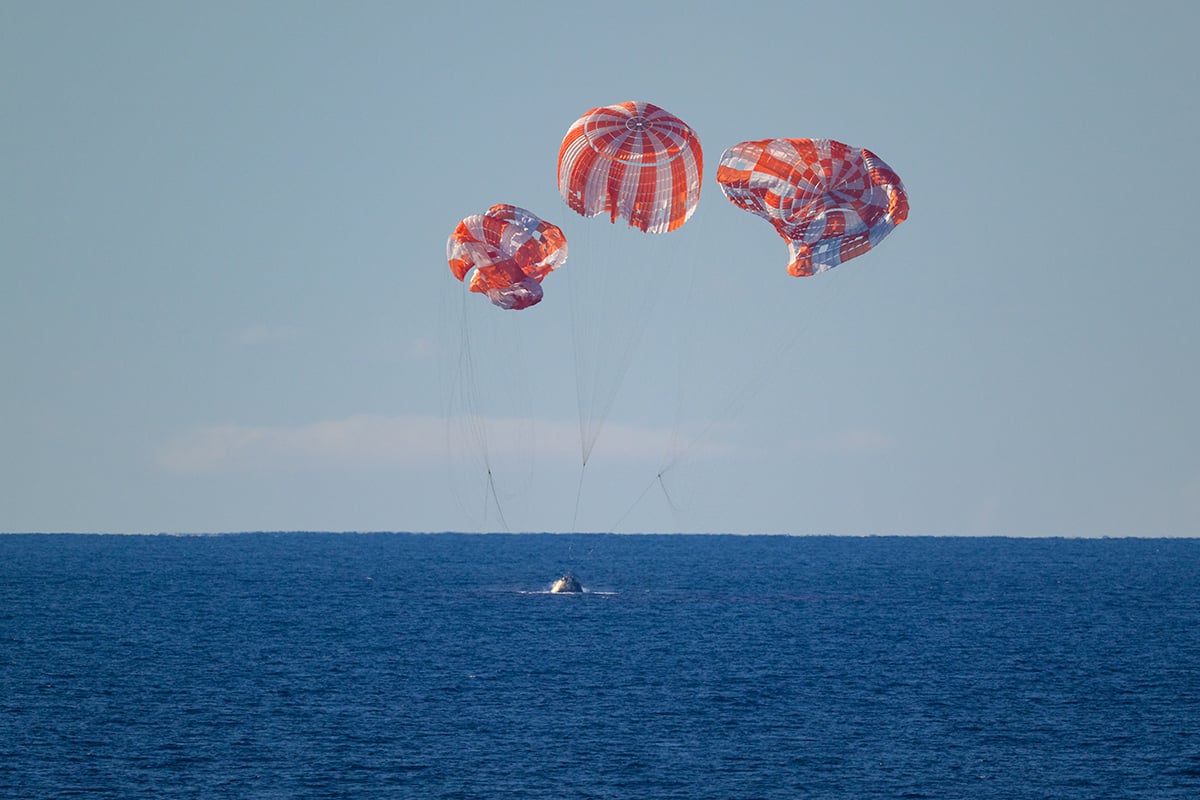
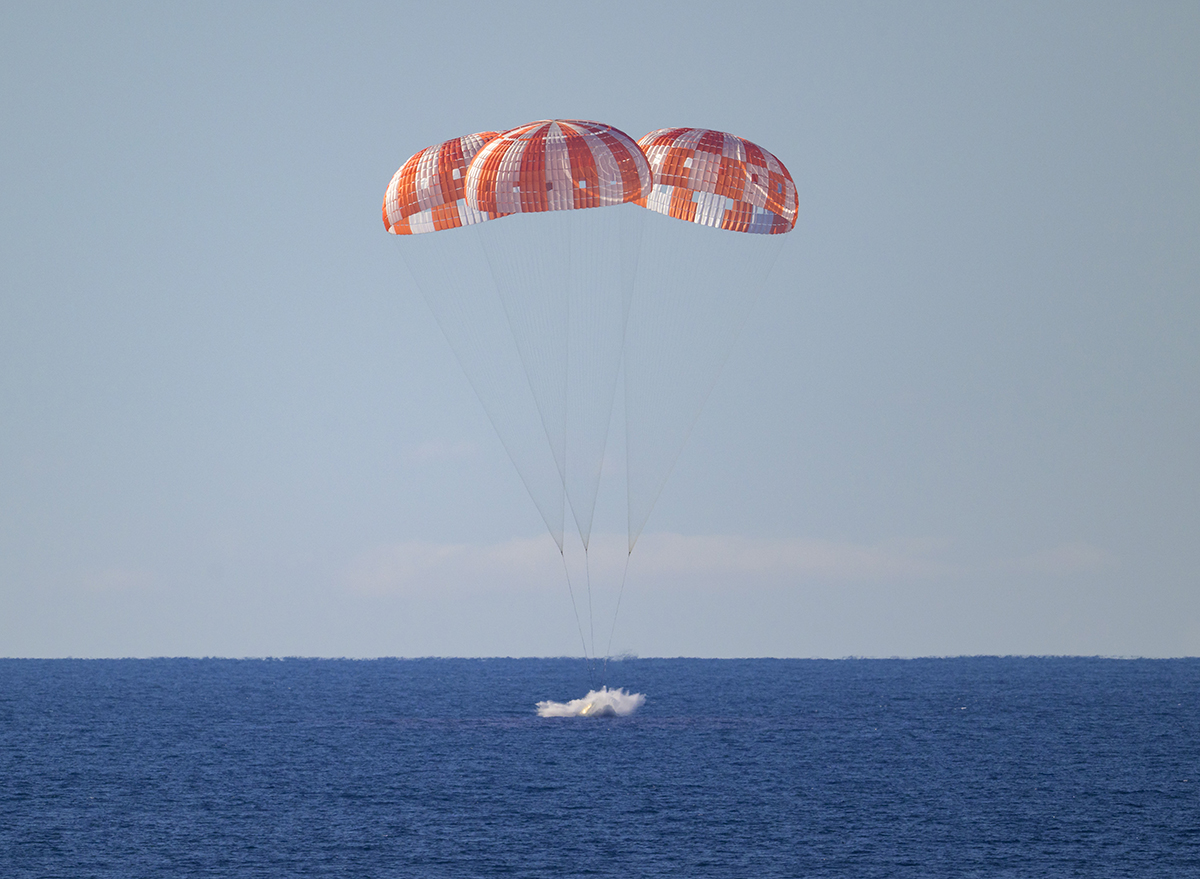
Following atmospheric deceleration, Orion deployed two drogue parachutes to stabilize the capsule. These parachutes slowed the spacecraft and prepared it for the final descent phase. Shortly afterward, three large main parachutes opened above the Pacific Ocean. Together, they reduced the spacecraft’s velocity to a safe landing speed before splashdown.
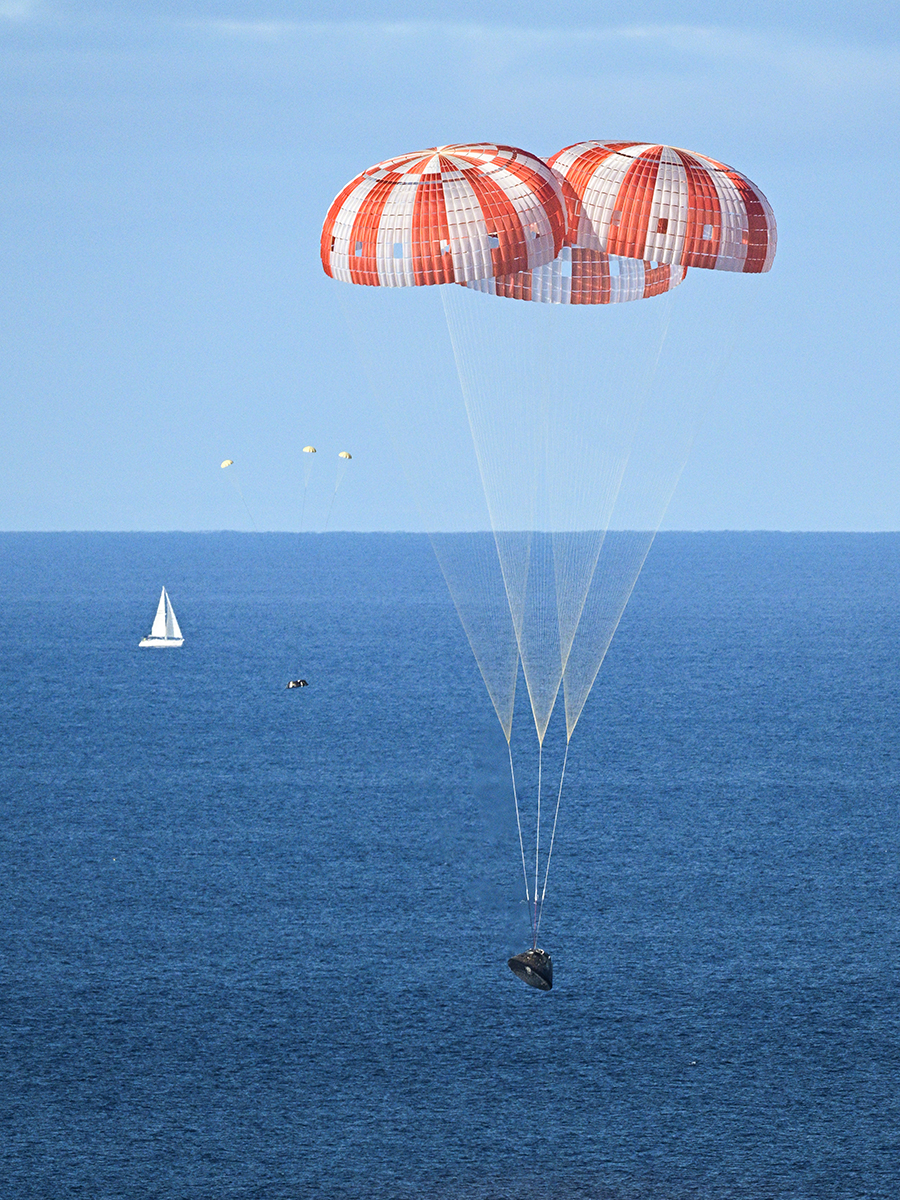
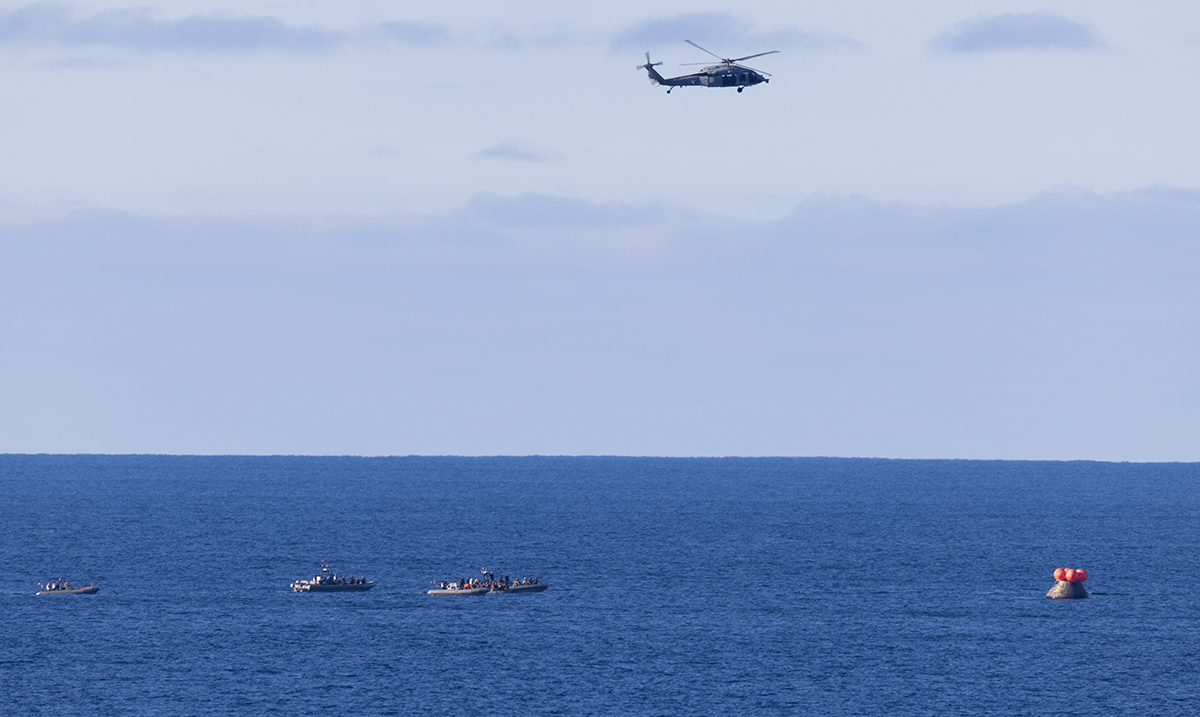
The capsule touched down within the planned recovery zone off the coast of California. Recovery teams from the U.S. Navy reached the spacecraft quickly after landing and secured it in the water using flotation collars. Divers then assisted in preparing the capsule for hatch opening and crew extraction operations.
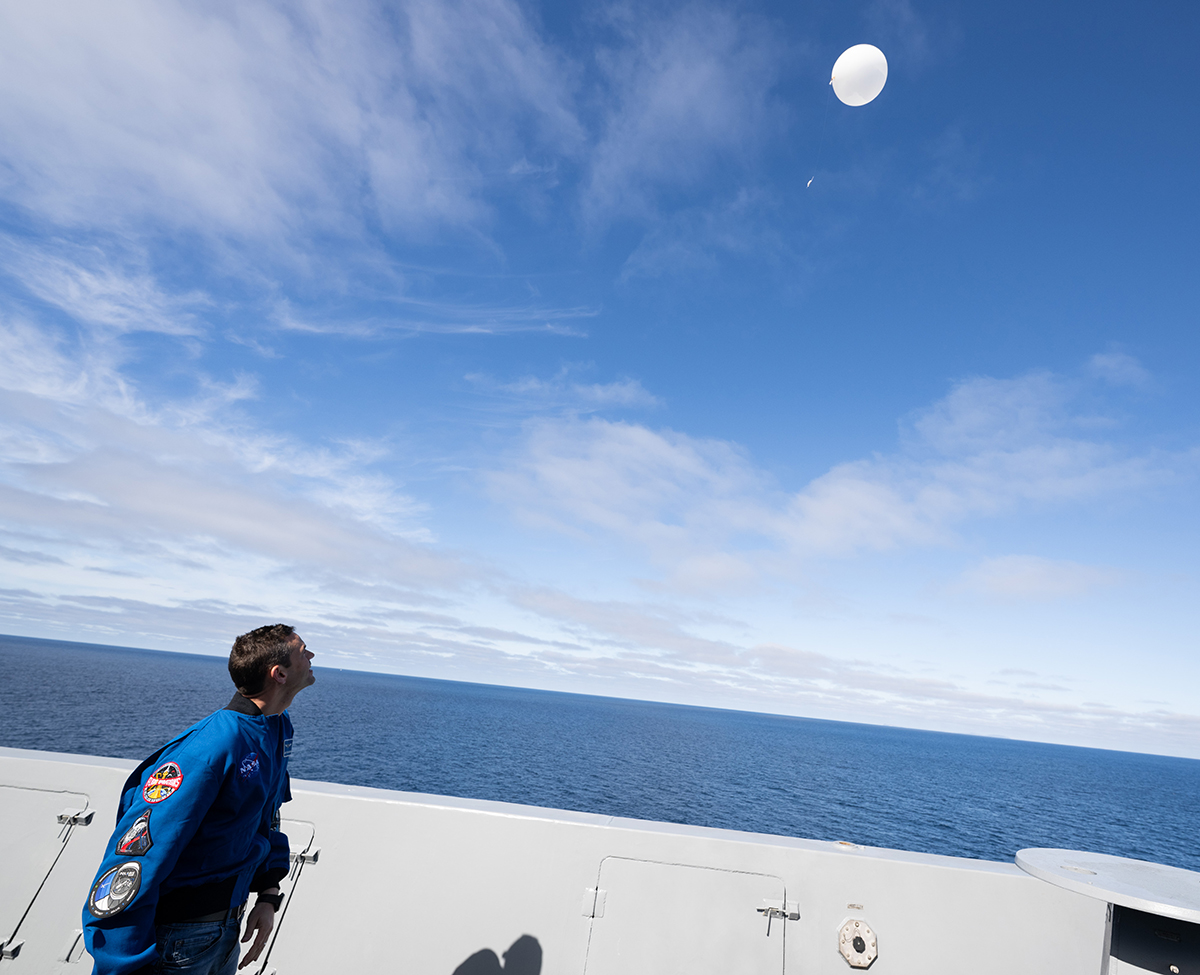
All four astronauts exited the spacecraft safely and began standard post-flight medical evaluations aboard the recovery ship USS John P. Murtha. These procedures help flight surgeons assess how astronauts respond to deep-space missions and return to Earth’s gravity after extended flight beyond low Earth orbit. The successful splashdown confirmed the performance of Orion’s landing systems and completed the final operational milestone of the Artemis II mission.
Human flight beyond low Earth orbit for the first time since Apollo
Artemis II represented the first crewed mission to travel beyond low Earth orbit in more than five decades. Commander Reid Wiseman, pilot Victor Glover, mission specialist Christina Koch, and mission specialist Jeremy Hansen traveled hundreds of thousands of miles from Earth during the mission. At its most distant point, Orion reached a record distance for a human spacecraft in modern spaceflight operations.
The spacecraft followed a free-return trajectory around the Moon during the outbound phase of the mission. This trajectory allowed Orion to swing around the lunar far side and return toward Earth without requiring a major propulsion maneuver for the return leg. Such trajectories improve mission safety because they naturally guide the spacecraft back toward Earth even if propulsion problems occur near the Moon.
The mission also included several historic milestones for the crew. Christina Koch became the first woman to travel to the vicinity of the Moon. Victor Glover became the first Black astronaut to complete such a mission. Jeremy Hansen became the first Canadian astronaut to fly around the Moon. Together, the crew completed the first human lunar flyby mission since the Apollo program.
Recovery operations
Following splashdown, recovery teams secured Orion in the water and prepared the spacecraft for lifting operations. Engineers then began early inspection activities aboard the recovery vessel. These inspections focused on the spacecraft’s exterior surfaces and landing systems.
The heat shield remains one of the most important components under evaluation after the mission. Engineers will examine its condition carefully because it protects astronauts during the highest-temperature phase of lunar-return entry. The parachute system will also undergo inspection following its successful deployment during descent.
Data collected during re-entry and landing will support improvements to operational procedures for future Artemis missions. These studies represent an essential step before astronauts attempt a lunar landing during the Artemis III mission.
Recovery teams completed initial spacecraft stabilization procedures soon after landing and transported Orion aboard the USS John P. Murtha for continued inspection and transport operations.
More from the Artemis II Mission
- NASA Chooses Sony as Official Camera on Artemis Lunar Missions
- NASA’s Artemis II Lifts Off for the Moon: Images of the Launch
- Artemis II Astronauts Capture Historic Earth Images from Space
- Crew Portraits with Earth, and Moon Photos from Artemis II
- Artemis II Completes Historic Lunar Flyby: New Images of the Moon
- Artemis II Lunar Close-Up Images: NASA’s Lunar Science Goals
- Earthset, Earthrise, and Eclipse: Photos from Artemis II Lunar Flyby
- Artemis II Begins Final Return to Earth After Historic Lunar Flyby
- To the Moon and Back: NASA’s Artemis II Returns Safely to Earth
- NASA Releases 12,000 Photos from Artemis II Mission: Top Picks
Clear skies!
See more from DIYPhotography.net on Google
Add DIYPhotography.net as a trusted source. This makes
our stories more likely to appear in your Google Search results.
 Add as a preferred source on Google

Soumyadeep Mukherjee
Soumyadeep Mukherjee is an award-winning astrophotographer from India. He has a doctorate degree in Linguistics. His work extends to the sub-genres of nightscape, deep sky, solar, lunar and optical phenomenon photography. He is also a photography educator and has conducted numerous workshops. His works have appeared in over 40 books & magazines including Astronomy, BBC Sky at Night, Sky & Telescope among others, and in various websites including National Geographic, NASA, Forbes. He was the first Indian to win “Astronomy Photographer of the Year” award in a major category.




Join the Discussion
DIYP Comment Policy
Be nice, be on-topic, no personal information or flames.