


















Ocean Photographer of the Year 2025 Finalists Reveal the Stunning and Stark Reality of Our Blue Planet
Aug 15, 2025
Alex Baker
Alex Baker is a portrait and lifestyle driven photographer based in Valencia, Spain. She works on a range of projects from commercial to fine art and has had work featured in publications such as The Daily Mail, Conde Nast Traveller and El Mundo, and has exhibited work across Europe
Share:
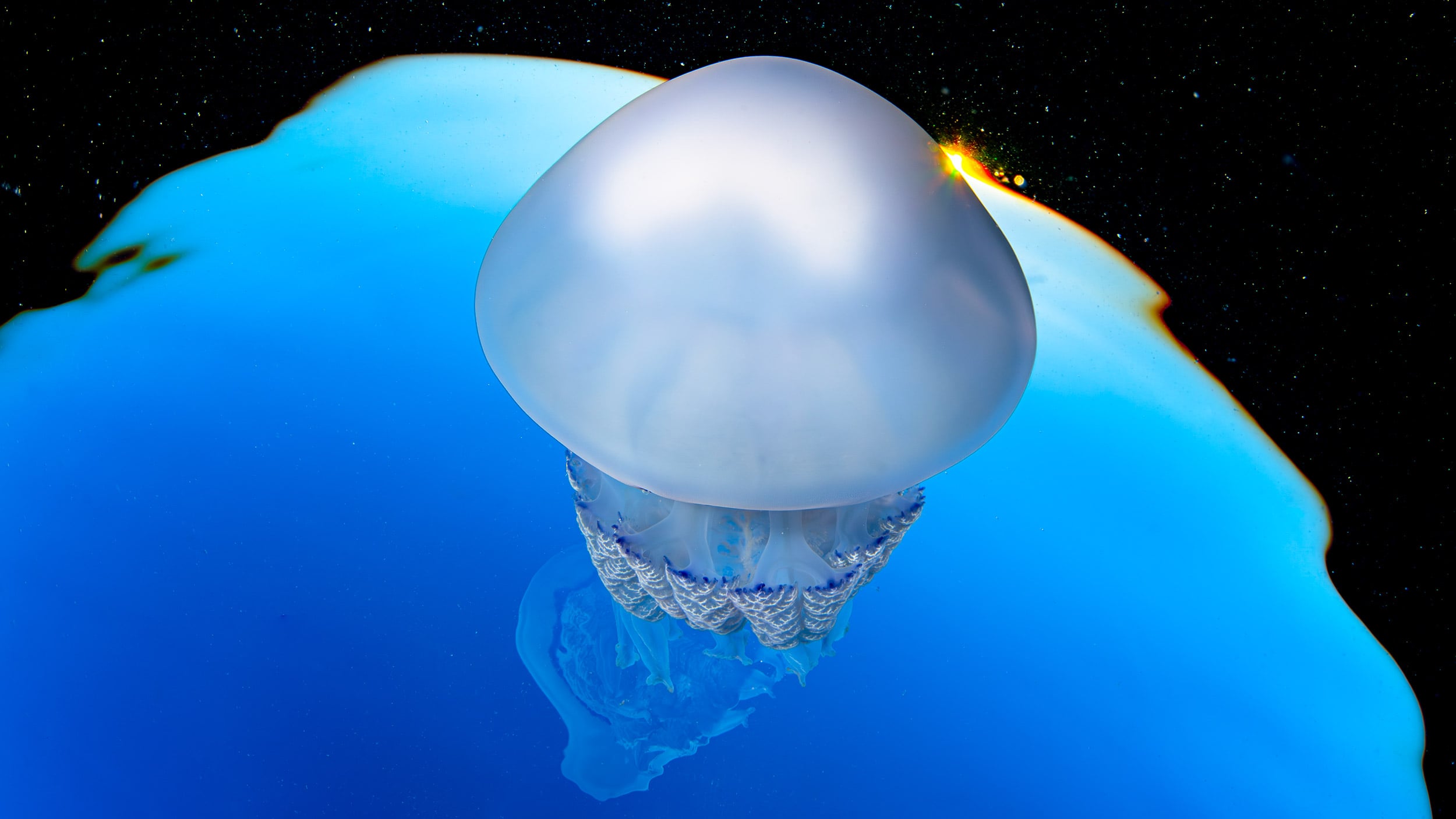
The finalists for Ocean Photographer of the Year 2025 have been unveiled, and they’re nothing short of spectacular. This year’s selection spans the full spectrum of ocean life, both its awe-inspiring beauty and its heartbreaking fragility. Among the submissions are a marine iguana caught mid-sneeze, and an otherworldly jellyfish that looks like it’s making a break for deep space.
The competition also confronts humanity’s complicated relationship with the sea, indicating our destructive impact through haunting images of bleached reefs, plastic-choked marine life, and the controversial Faroe Islands whale hunt. The category winners and overall Ocean Photographer of the Year will be announced in September. However, it’s clear that the award once again proves an urgent call to take action. Here is our pick of favourite images from the finalists.
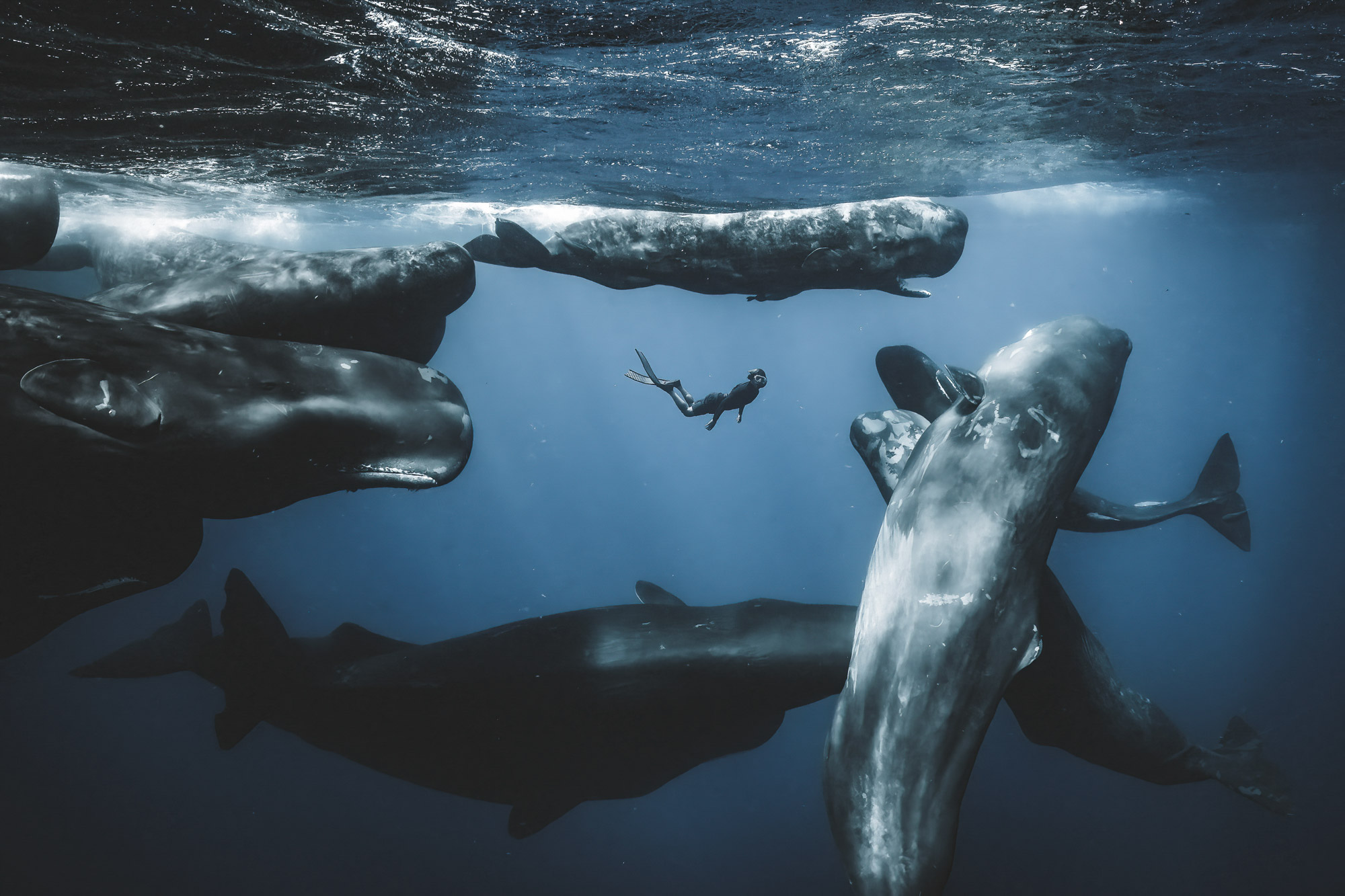
Adventure
Romain Barats
Location: Dominica
“I’ve been fond of whales since my childhood, so I was really excited to get the opportunity to swim with sperm whales for the first time in my life,” says Barats. “I was extremely lucky on my first day at sea. We saw 15 whales socialising for 45 minutes or so. The sea was rough but when you get to see something like that you quickly forget the conditions. There were three of us in the water, spread out due to the action. The whales began to move out when I suddenly saw my buddy freediving from afar. I managed to get a shot of him surrounded by whales.”
Alex Dawson
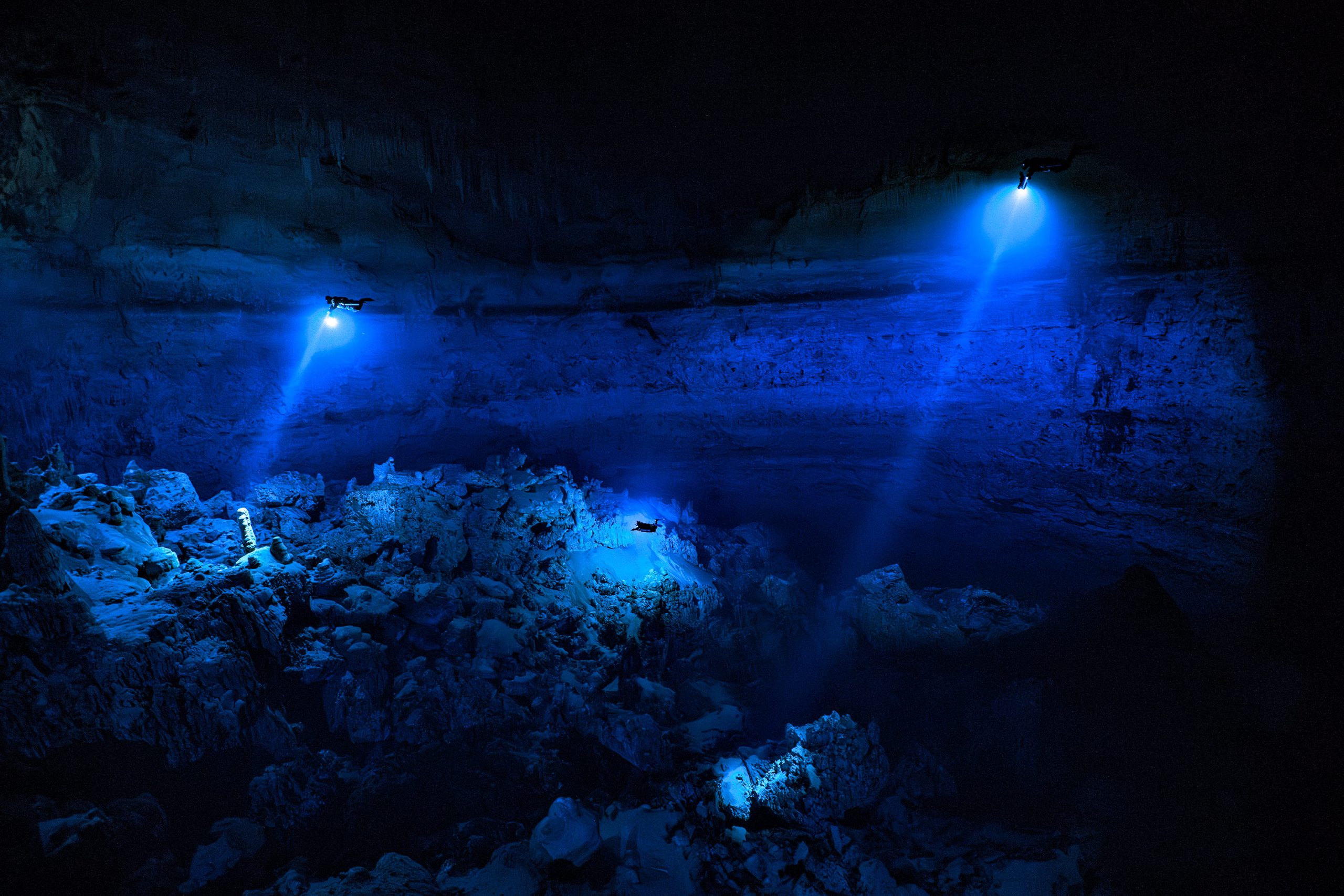
Location: Mexico
“This very unique cave, Yab Yum, is the largest water-filled sinkhole ever documented, close to 100 in diameter and more than 70m deep,” says Dawson. “You hit the saltwater at around 15m depth. The stalactites and stalagmites in this enormous space are huge. To reach Yab Yum, you must first drive deep into the jungle on dirt roads, followed by about 40 minutes on off-road trails that are accessible only by large-wheel 4×4 vehicles. Then finally, you need to carry all your diving gear through dense jungle, and after that, it’s a 60-minute cave dive to get to this unique location.”
Wildlife
Arturo de Frias
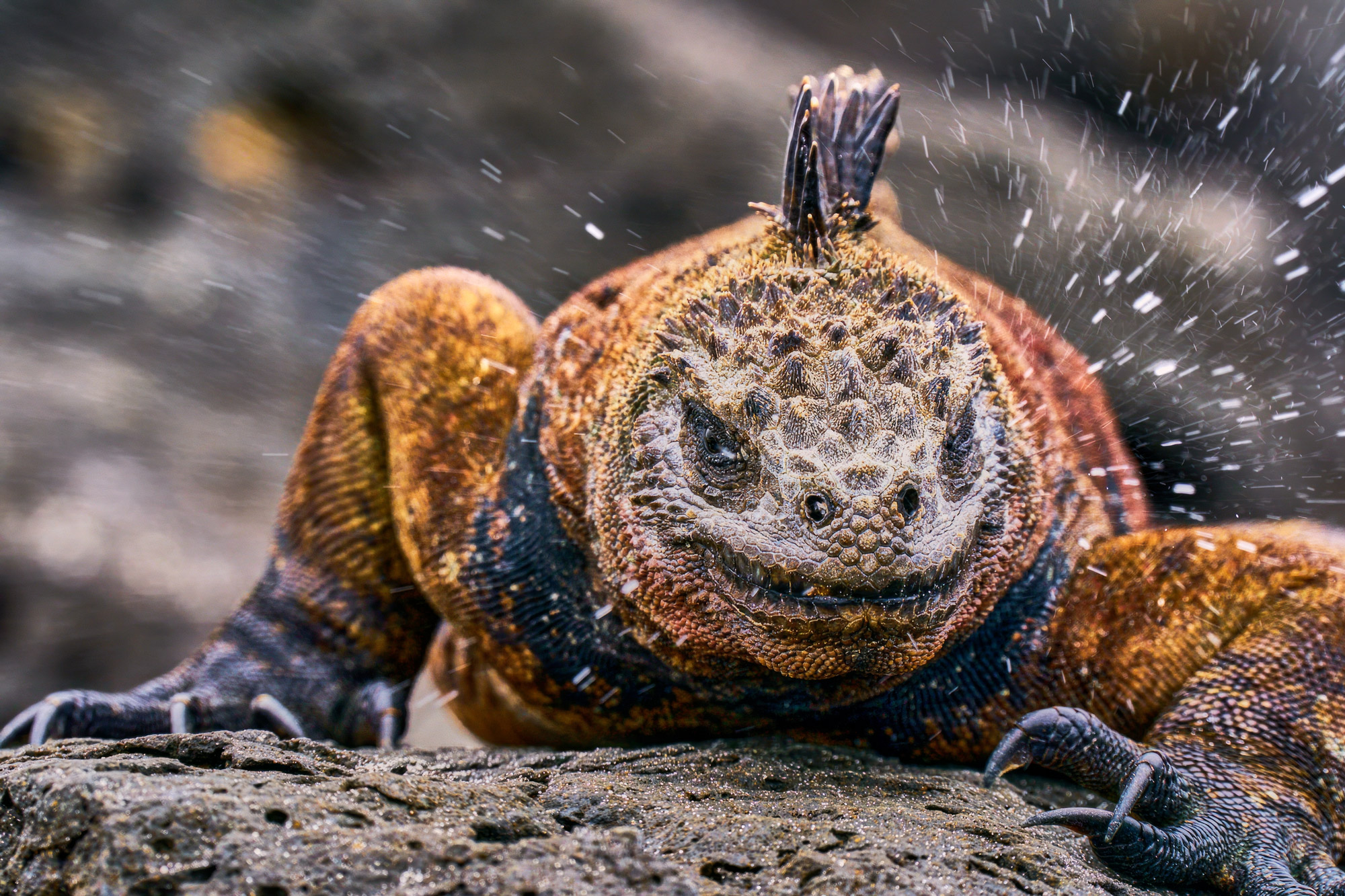
Location: Galapagos
“Marine iguanas, endemic to the Galapagos, are one of the most iconic species in the archipelago,” says de Frias. “They are like miniature dragons, especially in low angle eye-to-eye portraits like this one. This individual was resting on the black rocks of Santa Cruz Island, sunbathing after a foraging dive. By sheer luck, I photographed the split-second in which it was sneezing the excess salt it had absorbed during its dive. Sneezing is not a discomfort signal, it is perfectly natural behaviour. I made sure not to disturb the animal, shooting from a very safe distance, using a 600mm lens.”
Romain Barats
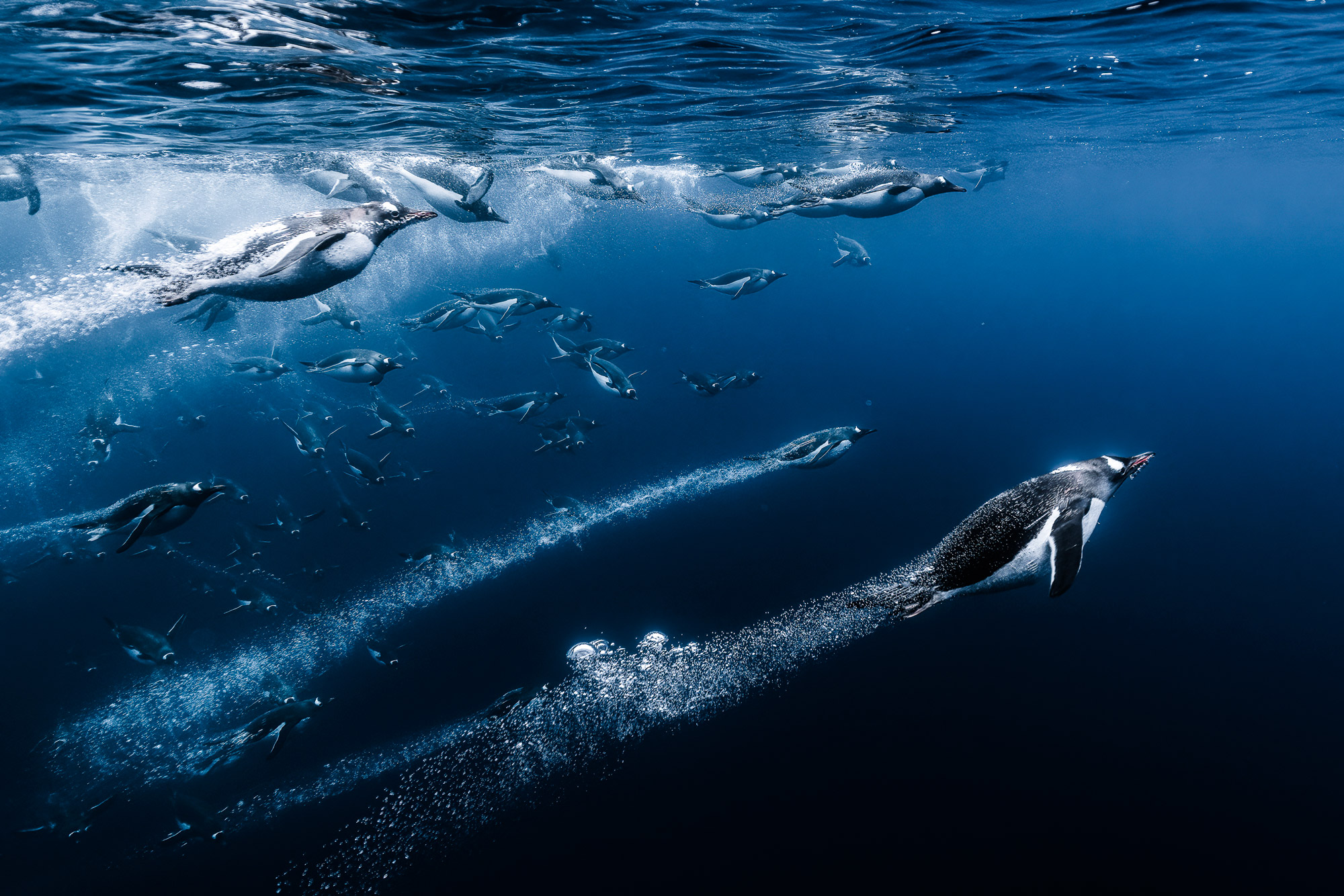
Location: Antarctica
“It’s amazing how fast gentoo penguins are able to build a colony during the austral summer in the Antarctic peninsula,” says Barats. “Port Charcot is usually a good place for this. This sheltered bay surrounded by mountains and icebergs is a perfect base for gentoos. We anchored our sailboat in this bay for three days, near the colony. We got in the water every day to enjoy the spectacle of these highly curious birds, who came to check on us so many times. Clumsy on land, these birds are fast and agile in the water.”
Fine Art
Marcia Riederer
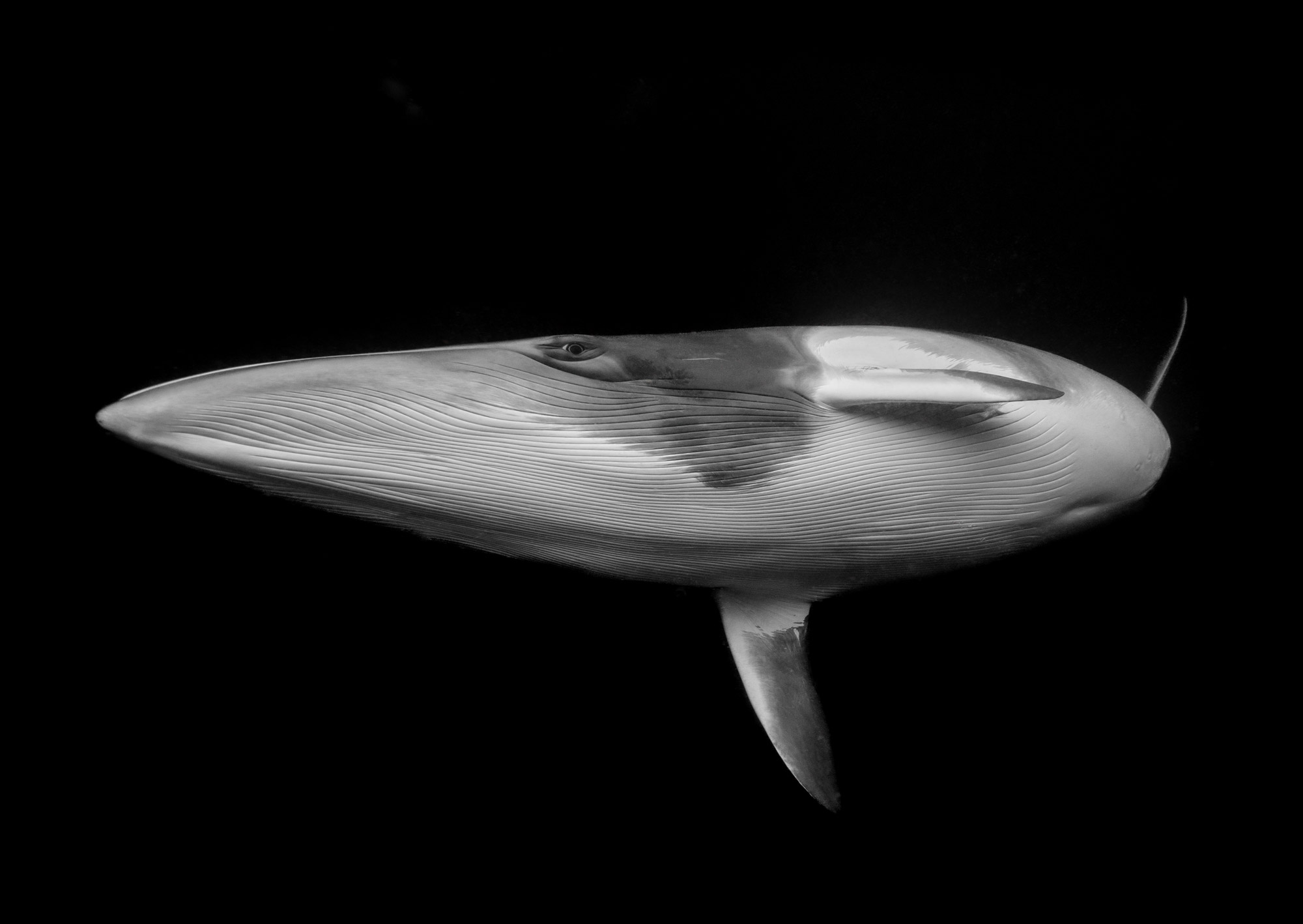
Location: Australia
“Dwarf minke whales are known to visit the northern Great Barrier Reef during the winter, making it the only known predictable aggregation of these whales in the world,” says Riederer. “These curious giants approach swimmers with an almost playful curiosity. Floating in the turquoise water, watching a sleek, dark body glide effortlessly towards you, its eye meeting yours in a moment of connection. The whales, seem to acknowledge your presence, circling and interacting with you. It’s a humbling experience, reaffirming the wonder of the ocean and its inhabitants, and the urgent need to conserve it.”
Hitomi Tsuchiya
Location: Japan
“This image was taken near Mount Iwo on Satsuma-Iojima Island, where the underwater aurora can be seen,” says Tsuchiya. “The volcano spews out iron-rich substances not only from above ground but also from the ocean floor, creating these rich colours. I hope this images pushes people to think about the connection between global warming and marine conservation. We must preserve these mysterious and fantastical landscapes, created by land and sea, for future generations.”
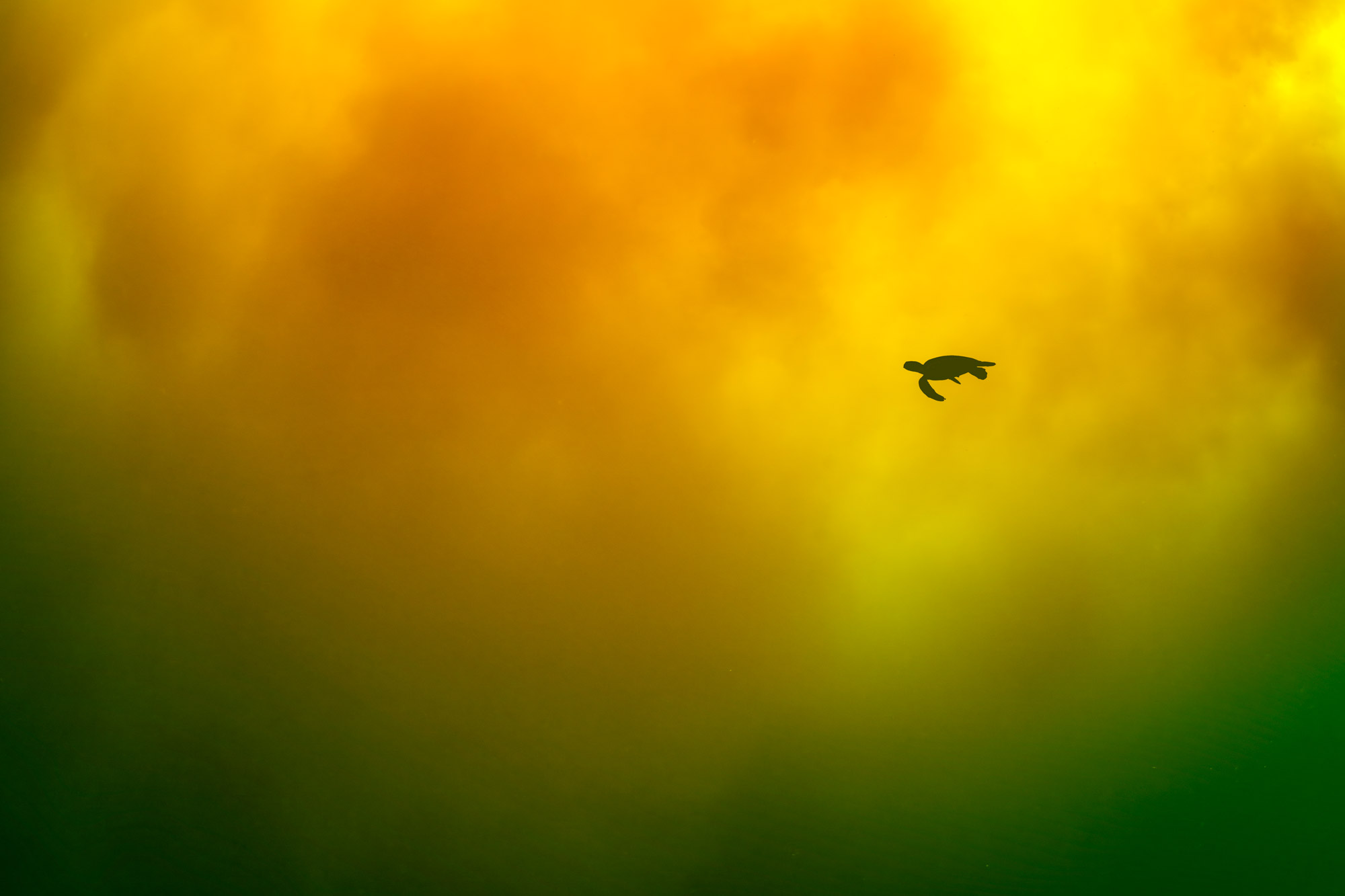
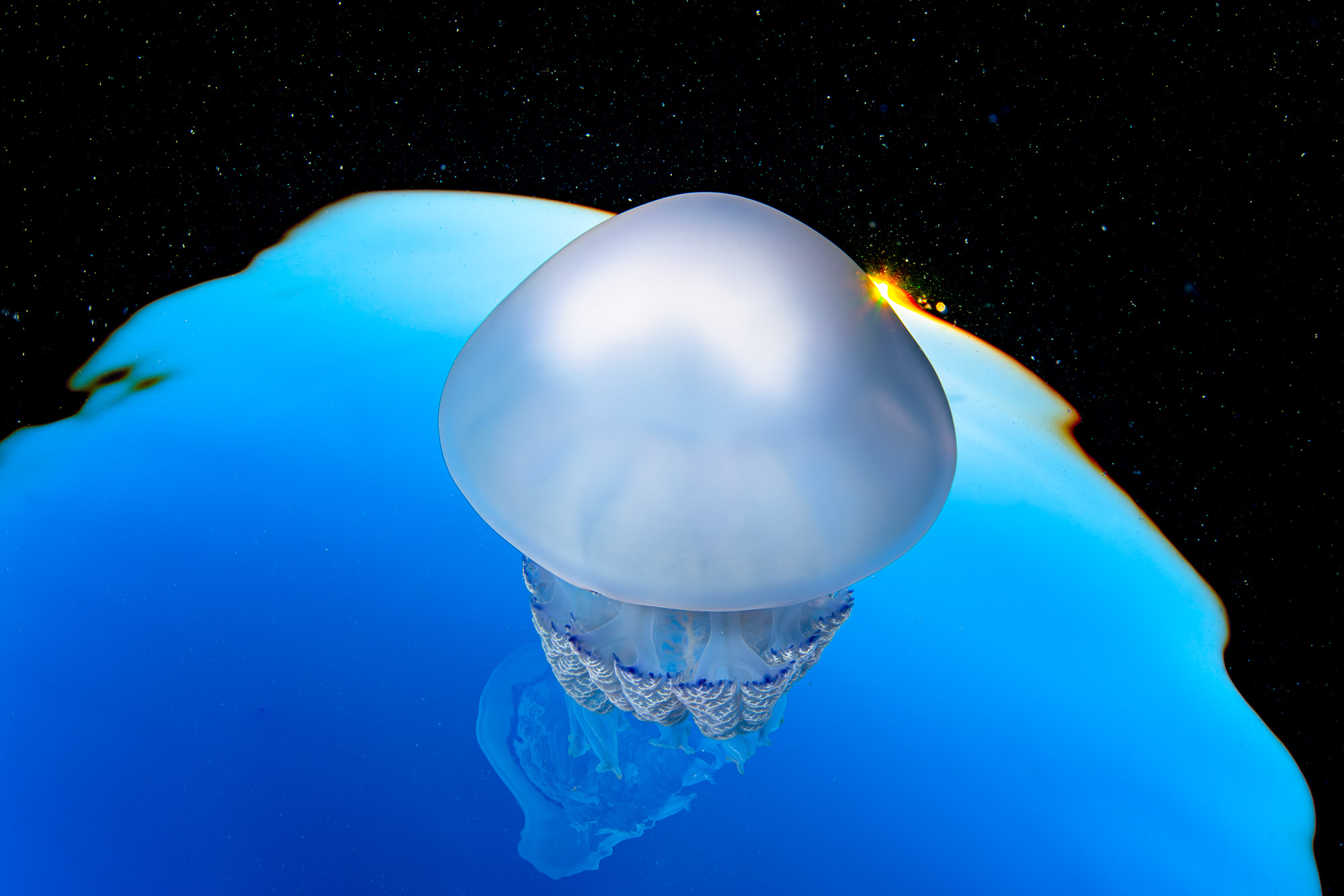
Toni Bertran Regas
Location: Spain
“I’ve always been fascinated by the resemblance between jellyfish and space rockets,” says Bertran Regàs. “I was looking for a photograph that conveyed that connection: a rocket leaving Earth. To do this, I used a fisheye lens and took the photo just as the sun was rising. Snell’s Window helped me create the Earth, the particles were the stars, and the sun luckily appeared behind it. I don’t think I’ll ever be as close to space as I was that day.”
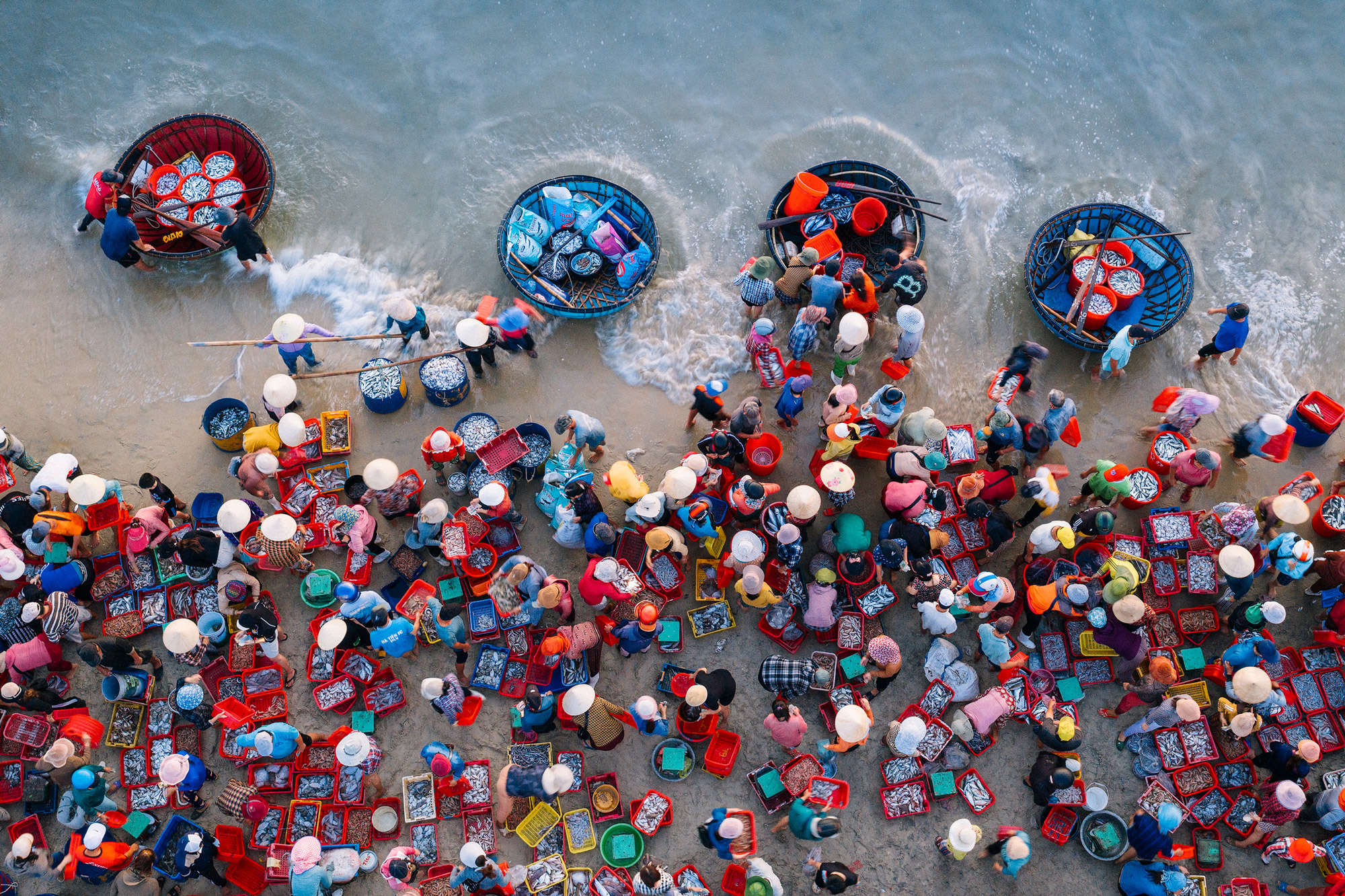
Human Connection
Natnattcha Chaturapitamorn
Location: Vietnam
“Each morning before sunrise at Tam Tien beach, the shoreline comes alive with a flurry of activity,” says Chaturapitamorn. “Clusters of wooden fishing boats anchor offshore, forming a floating fleet. From there, teams of fishermen in round basket boats skillfully navigate through the waves, ferrying barrels of freshly caught seafood to the shore. On the beach, families of fishermen and wholesale traders wait eagerly, ready to sort and purchase the catch. The seafood is quickly loaded into baskets and rushed off to markets throughout the province. This daily ritual reflects the deep connection between the sea and coastal livelihoods.”
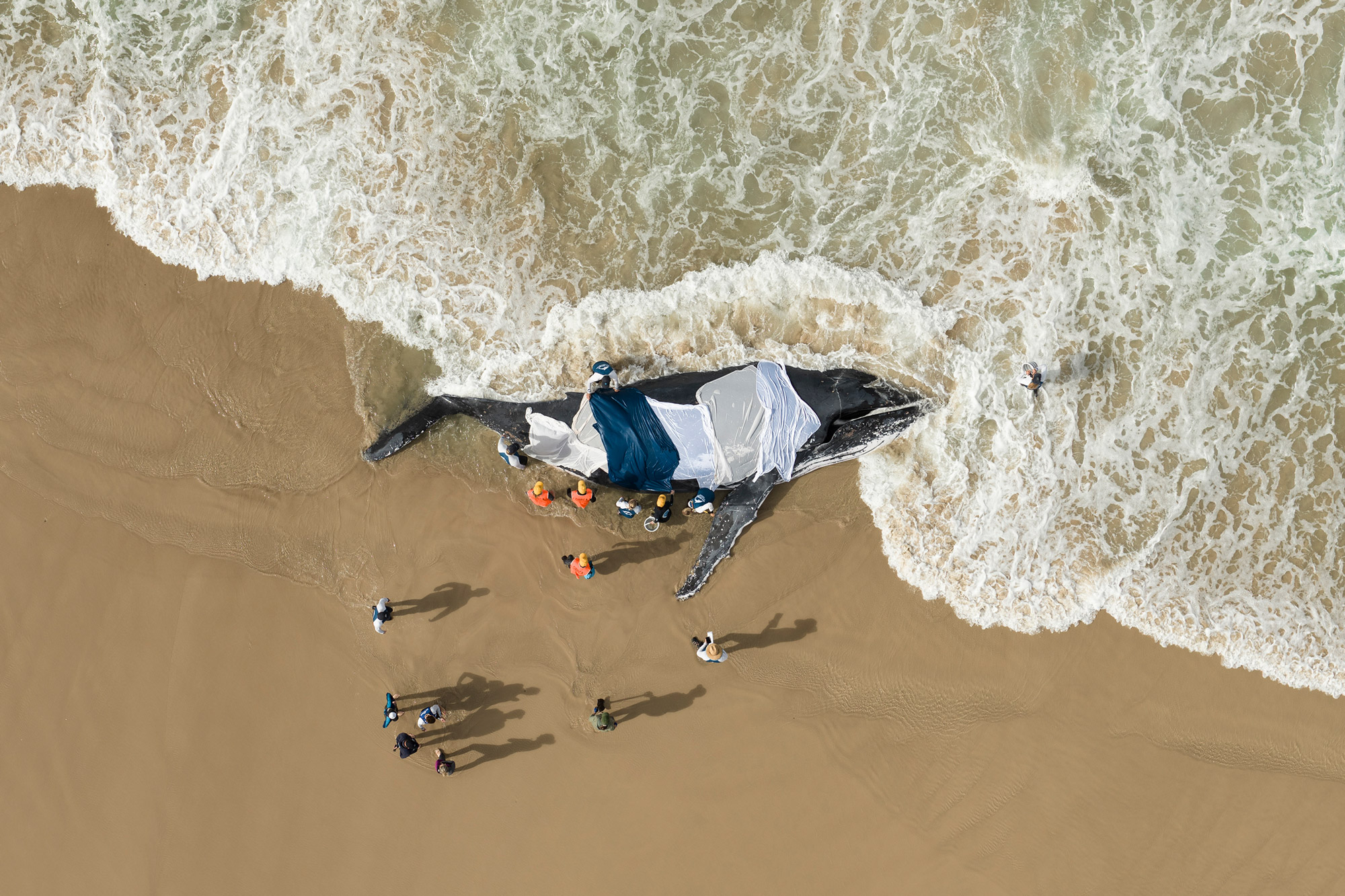
Craig Parry
Location: Australia
In the early hours of July 1st, we received a call about a stranded humpback whale,” says Parry. “Wildlife veterinarian Steve Van Mill quickly assessed the situation and contacted SeaWorld Marine Rescue and other key agencies to coordinate a response. For 15 hours, rescue teams and the local community worked tirelessly in a unified effort to save her. Sadly, despite their dedication, she could not be saved. While the outcome was heartbreaking, witnessing the collaboration and compassion shown by multiple agencies and volunteers was incredibly moving – a powerful reminder of what can be achieved when people come together with a shared purpose.”
Impact
Jesse Miller
Location: USA
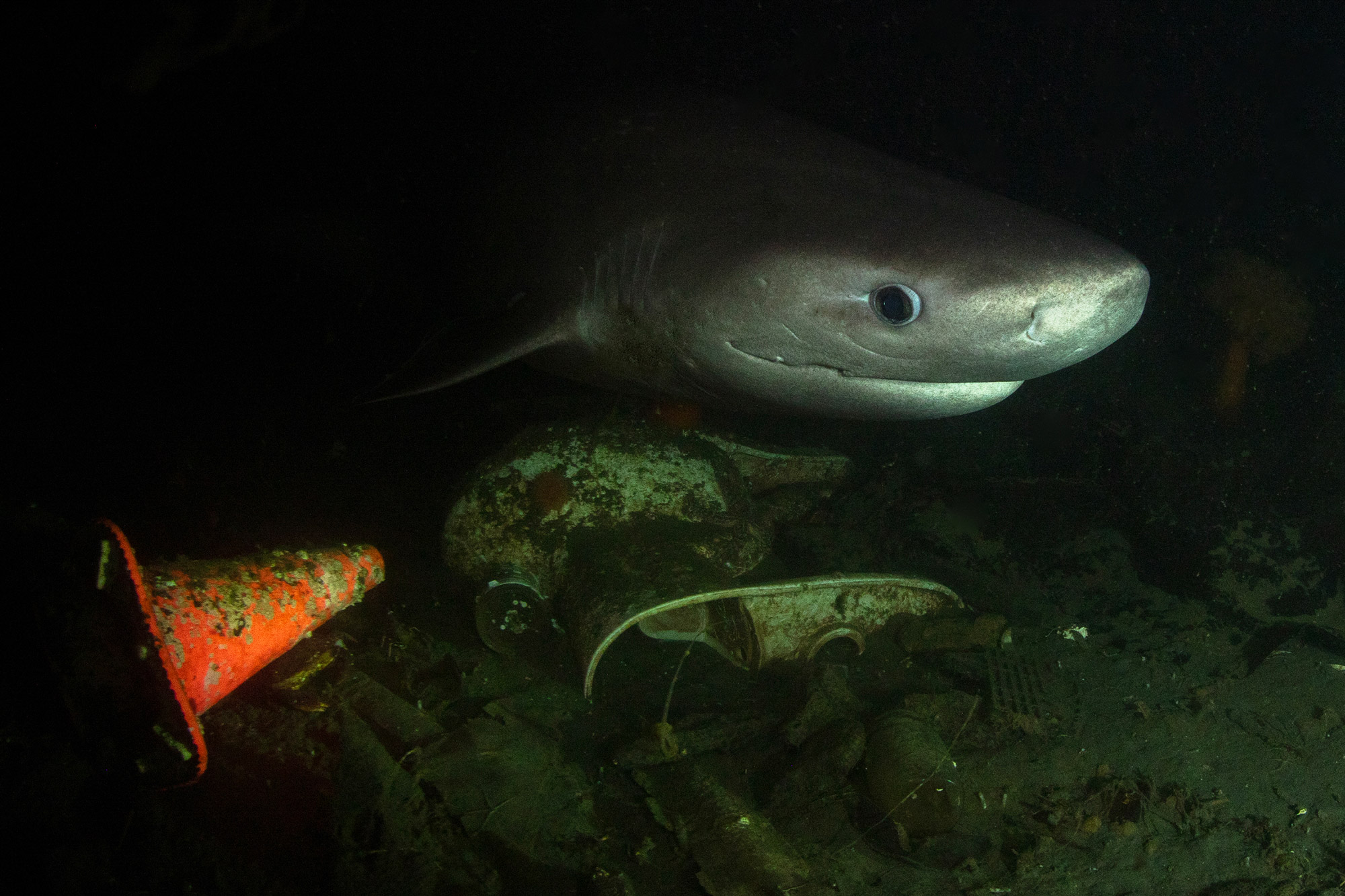
“In recent years, Sixgill Sharks have been spotted at our local dive spot, Redondo Beach in Des Moines, Washington,” says Miller. “Every time I encounter one of these ancient animals, it is truly a spiritual experience. When I initially took this image, I almost discarded it due to the toilet and traffic cone. But something drew me back to it. I believe it is the contrast between a 200 million year old prehistoric animal and trash that humans have created. This image is a juxtaposition between nature’s beauty and humanity’s destructive nature.”
Claudio Moreno Madrid
Location: Australia
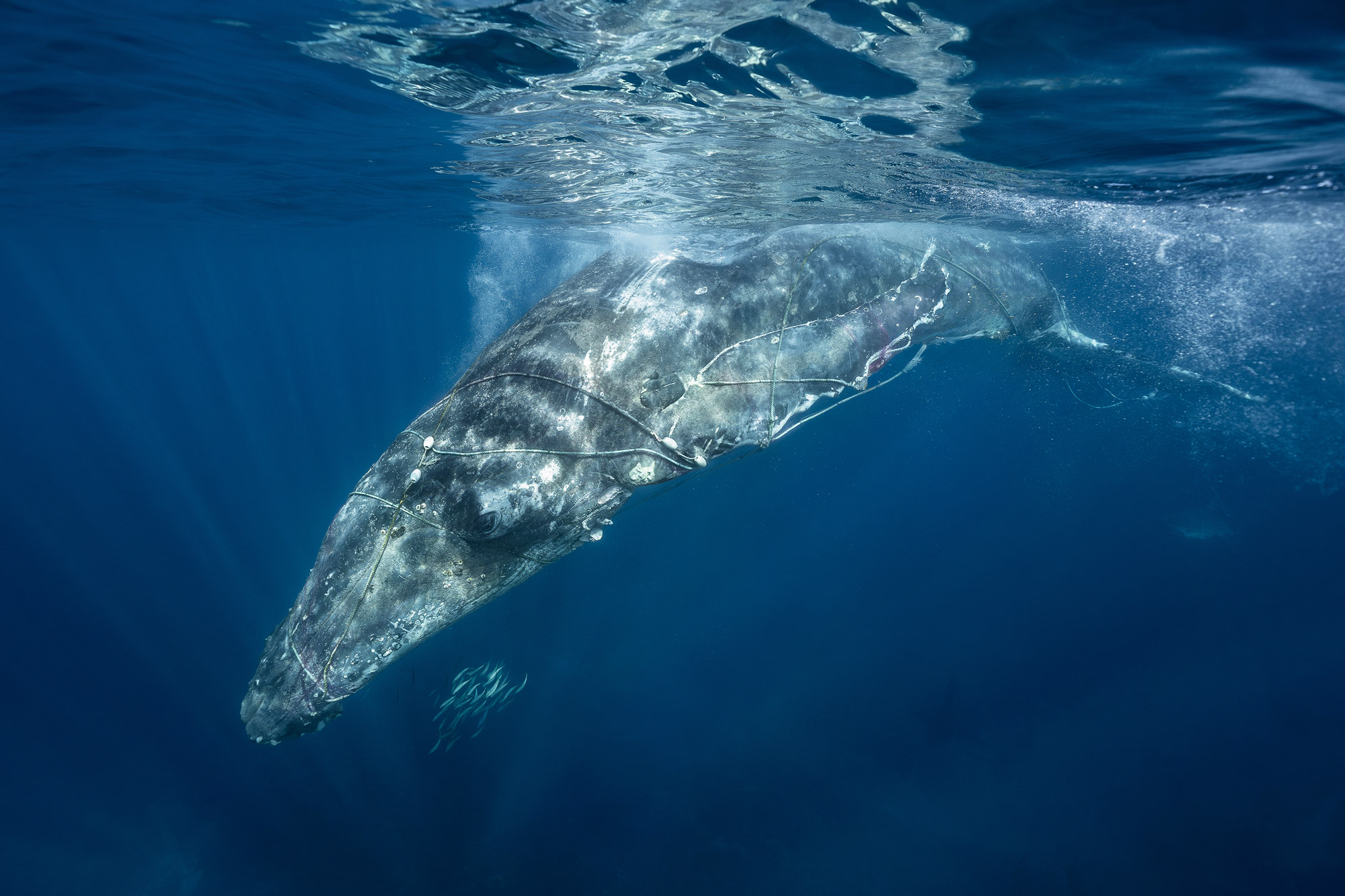
“This image represents one of the most profound moments of my life,” says Moreno Madrid. “It was my first year in Exmouth, drawn by the stories about Ningaloo Reef. With just a kayak and an obsession with the ocean I explored the reef weekly. On this particular day, a friend and I went to Turquoise Bay, where we encountered this humpback whale, hopelessly entangled in fishing nets, chased by dozens of sharks. In a moment of desperation, knowing it was beyond us to help, I tried to document the situation. I hope this image turns tragedy into awareness, inspiring real change for our ocean.”
Andrew Sullivan-Haskins
Location: Hawai’i
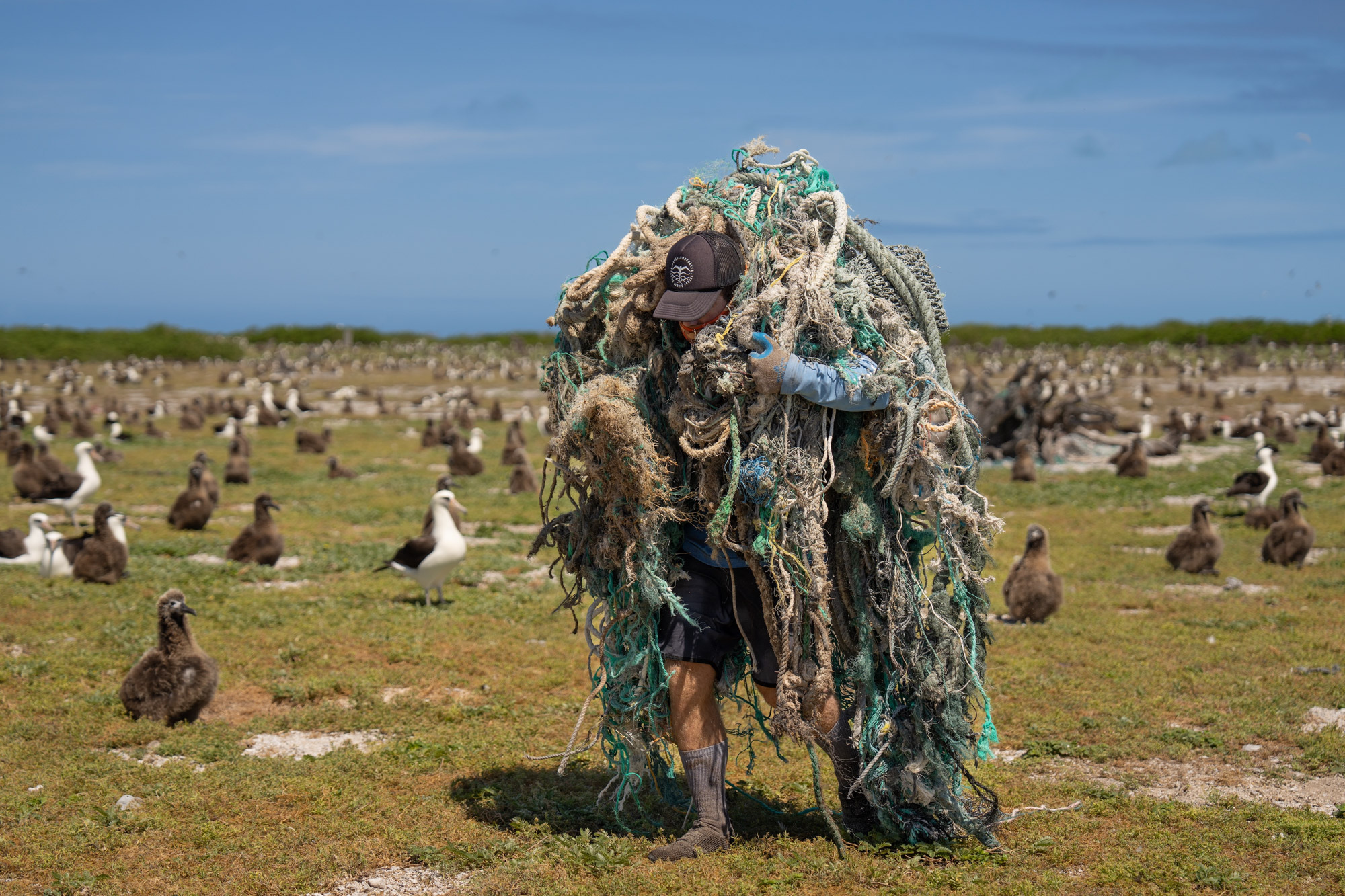
“Inside the world’s largest albatross colony at one of the most remote locations on the planet, a specially trained technician from the Papahānaumokuākea Marine Debris Project (PMDP) carefully weaves their way through thousands of albatross chicks while carrying a large ghost net,” says Sullivan-Haskins. “During their gruelling nineteen-day mission, the team removed more than 70,000 pounds of marine debris from this critically important wildlife habitat ensuring that these young albatross chicks will have a better chance at survival. Over the past four years PMDP has removed more than one million pounds of marine debris from Papahānaumokuākea. This is action-based conservation at its finest.”
Hope
Simon Lorenz
Location: Palau
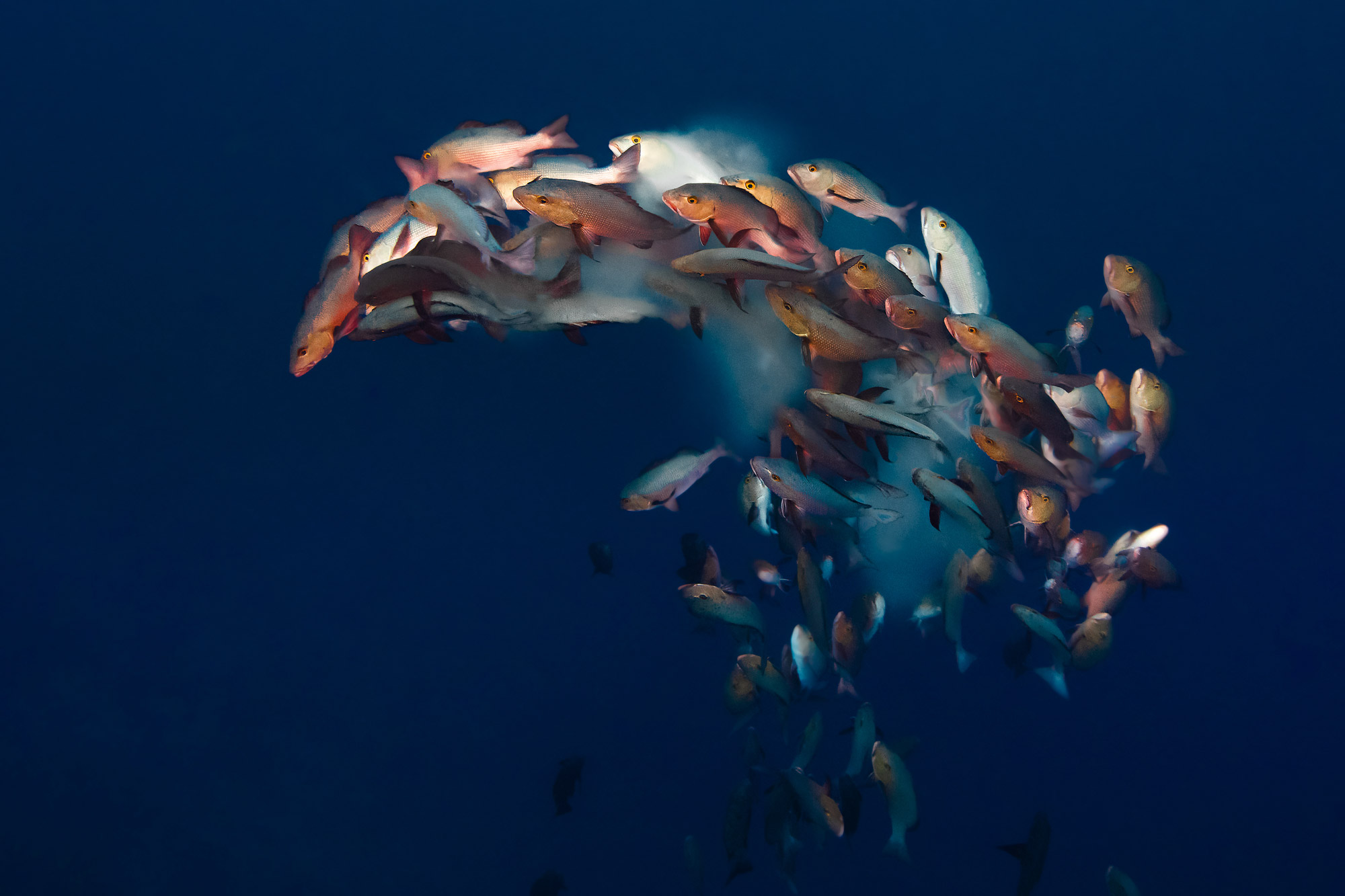
“The snapper spawn is a monthly event in Palau where up to 30,000 snappers come together to spawn in strong currents,” says Lorenz. “They form rapid moving groups of fish that release such dense quantities of eggs in the water that the lurking sharks can barely be seen.”
Sirachai Arunrugstichai
Location: Thailand
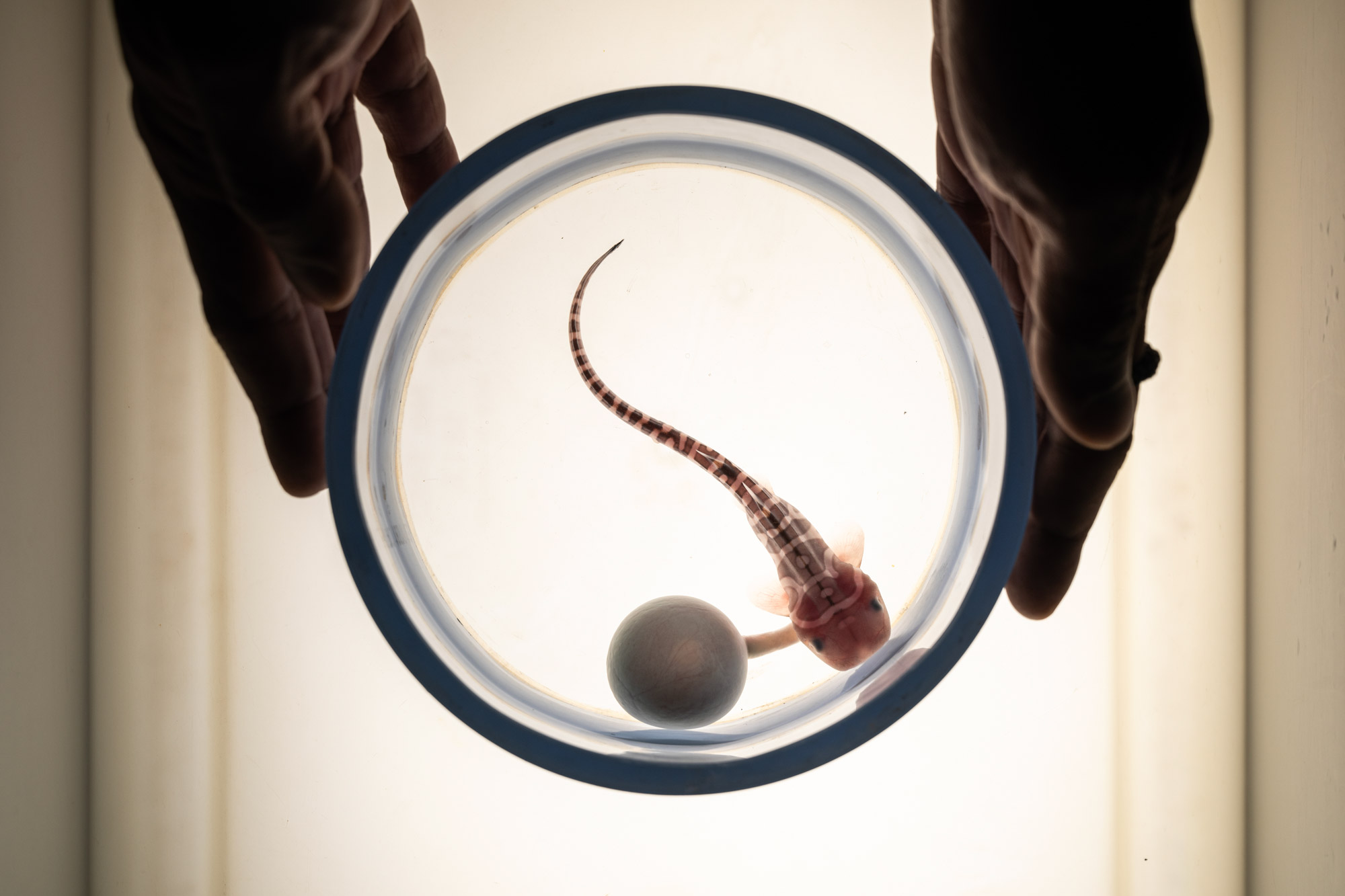
“An aquarist holds a glass jar with an early-stage embryo of an Indo-Pacific Leopard shark (Stegostoma tigrinum), its egg case removed for a rearing experiment at Aquaria Phuket, one of Thailand’s largest private aquariums,” says Arunrugstichai. “Since 2023, the aquarium’s staff-driven breeding program has produced over 40 pups of this Endangered species, listed on the IUCN Red List. Aquaria Phuket now works with the Department of Marine and Coastal Resources, ReShark, WildAid, Ocean Blue Tree, and private partners on the StAR (Stegostoma tigrinum Augmentation and Recovery) Project Thailand, reintroducing these sharks to the wild, beginning August 2025.”
Young
Aaron Sanders
Location: United Kingdom
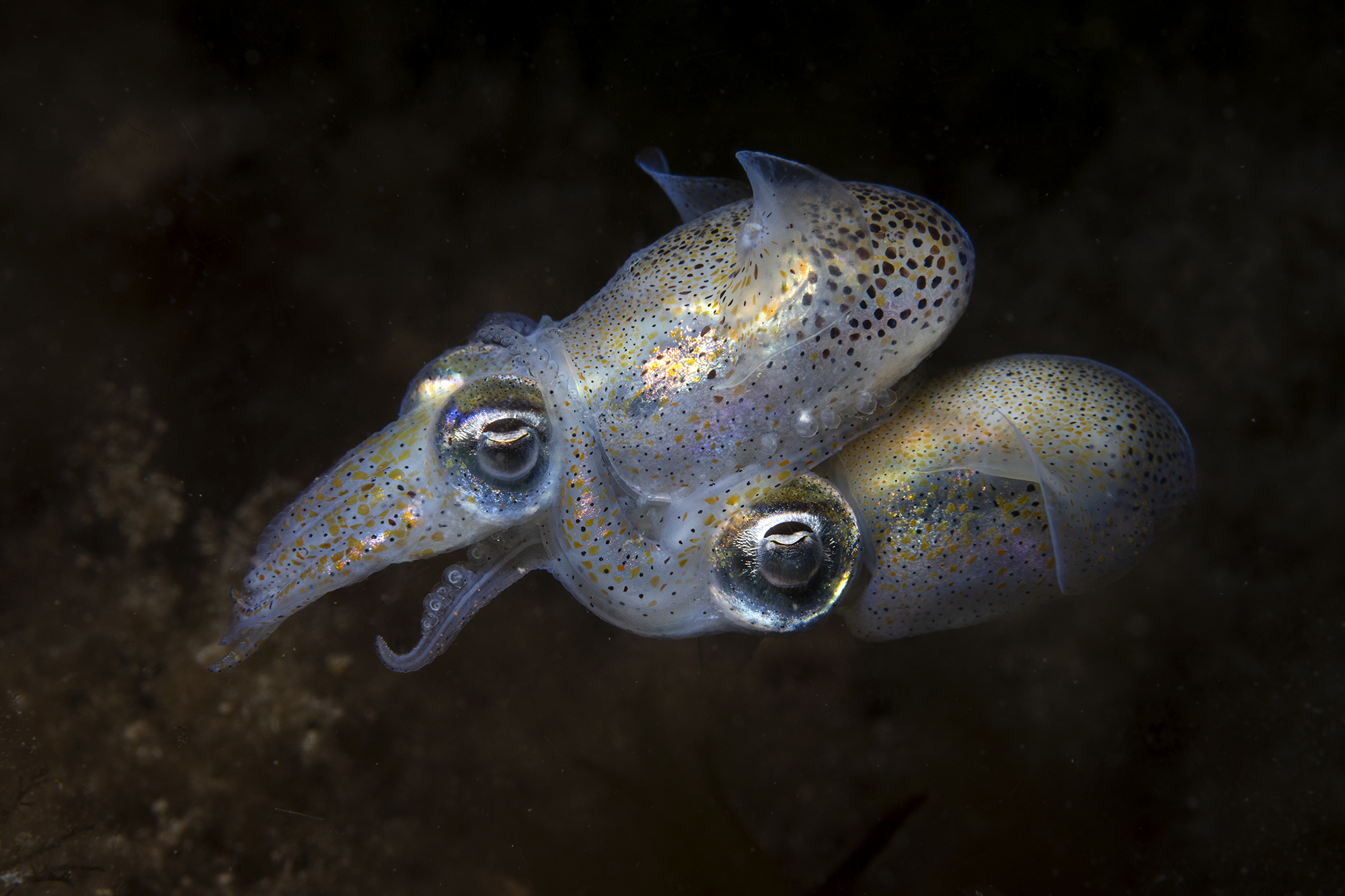
“Under the cover of night, two tiny Bobtail squid engaged in an intimate display, their arms intertwined as they mated on the seabed,” says Sanders. “Waves of colour rippled across their bodies as chromatophores pulsed in a mesmerising rhythm, white flickered to gold, gold to red, and back again, transforming them into living, glowing jewels in the dark. These otherworldly creatures performed their courtship, creating the next generation of Bobtail squid. I felt privileged to have witnessed this rare and tender moment. Approaching with care, I documented this encounter without disturbing the pair, capturing their brilliant display in all its intricate detail.”
Yuka Takahashi
Location: French Polynesia
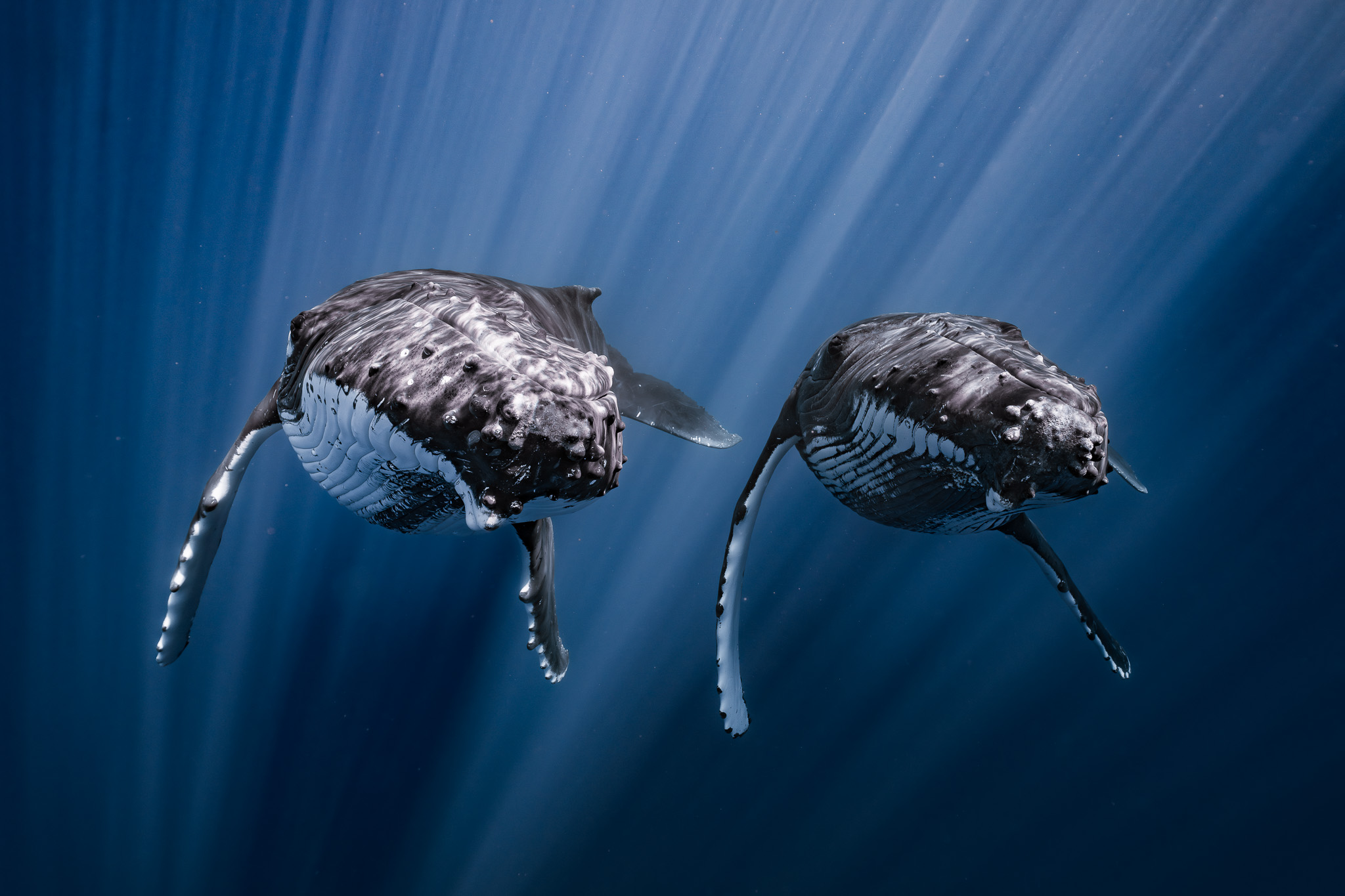
A pair of synchronised humpback whales. “Putting myself out in the field has taught me lessons no textbook ever could,” says Takahashi. “It has also deepened my understanding of the profound biophilia held by the Tahitian people on the island of Mo’orea. These two humpback whales are always seen together, and I was fortunate to capture this rare moment of synchronicity. To me, this photo reflects the strong bond between them while also revealing their playful and curious personalities.”
You can see all the finalists in the Ocean Photographer of the Year winner’s gallery.
See more from DIYPhotography.net on Google
Add DIYPhotography.net as a trusted source. This makes
our stories more likely to appear in your Google Search results.
 Add as a preferred source on Google

Alex Baker
Alex Baker is a portrait and lifestyle driven photographer based in Valencia, Spain. She works on a range of projects from commercial to fine art and has had work featured in publications such as The Daily Mail, Conde Nast Traveller and El Mundo, and has exhibited work across Europe
Related Posts
 This hungry lizardfish is one of the stunning Ocean Photographer of the Year 2023 finalists
 These impressive photos are the finalists of the 2024 Ocean Photographer of the Year
 Close-Up Photographer of the Year 2025 Shortlists Reveal a Hidden World in Stunning Detail
 Tiny paper nautilus riding ocean debris wins Ocean Photographer of the Year 2023
Join the Discussion
DIYP Comment Policy
Be nice, be on-topic, no personal information or flames.