





















Player One Launches a New Mono Guide Camera: Xena 585M
Jan 19, 2026
Soumyadeep Mukherjee
Soumyadeep Mukherjee is an award-winning astrophotographer from India. He has a doctorate degree in Linguistics. His work extends to the sub-genres of nightscape, deep sky, solar, lunar and optical phenomenon photography. He is also a photography educator and has conducted numerous workshops. His works have appeared in over 40 books & magazines including Astronomy, BBC Sky at Night, Sky & Telescope among others, and in various websites including National Geographic, NASA, Forbes. He was the first Indian to win “Astronomy Photographer of the Year” award in a major category.
Share:

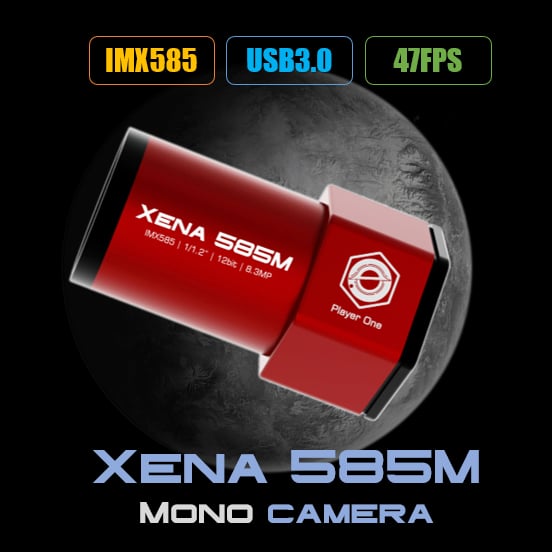
Recent advances in CMOS sensor design have reshaped how amateur astronomers approach guiding and imaging. Back-illuminated architectures, lower read noise, and faster data pipelines now allow small cameras to deliver performance that once required larger, more complex systems. Within this context, Player One Astronomy has introduced the Xena 585M USB3.0 Mono Camera, a new addition to its Dwarf Planet Series. This camera is built around Sony’s IMX585 mono sensor, a device already known for its balance of sensitivity, resolution, and speed.
The Xena 585M enters a category that continues to evolve. It sits between traditional guide cameras and dedicated imaging cameras. Player One does not position it as a cooled deep-sky workhorse. Instead, the company presents it as a versatile mono camera designed for guiding, high-speed capture, and short-exposure imaging. This positioning reflects how many modern astrophotographers now work. They favor compact rigs, portable mounts, and hardware that can perform more than one role without adding complexity.
A camera for modern practices
Astrophotography no longer centers only on large observatories or permanent installations. Increasingly, observers work from temporary setups, dark-sky trips, and travel-friendly systems. As a result, equipment design has shifted. Cameras must remain compact. They must connect reliably. They must also adapt to different tasks on the same night.
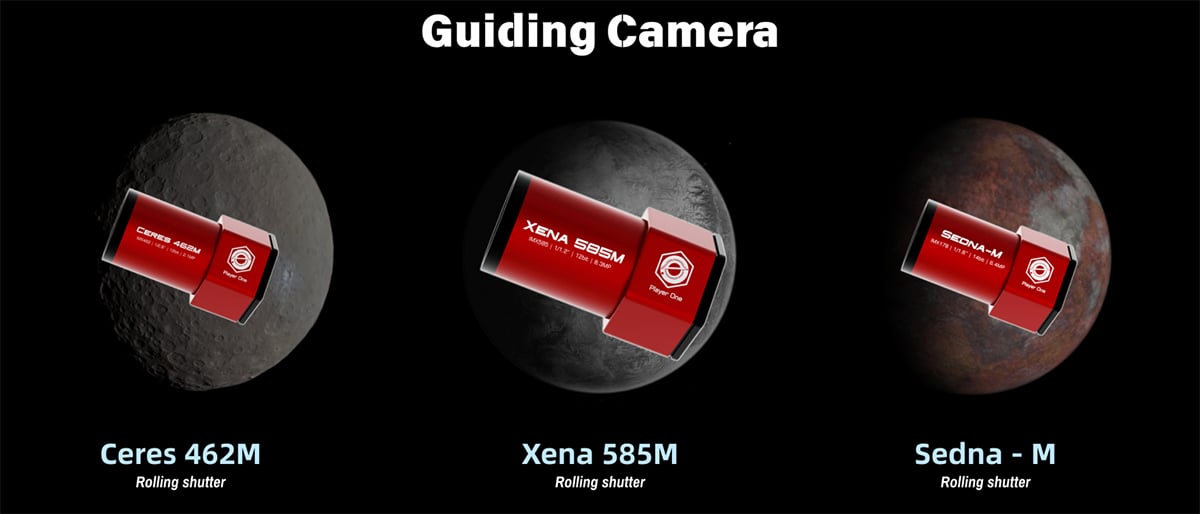
The Xena 585M follows this design philosophy. Player One lists it as a guiding camera, yet its hardware capabilities extend well beyond basic guiding requirements. The sensor size alone sets it apart from older guide cameras. A larger sensor improves guide star availability. It also enables wider framing when used for imaging.
At the same time, the camera remains lightweight and simple. It draws power through USB. It avoids the added bulk of active cooling. These choices reduce overall system complexity. They also align with portable imaging trends. As mounts become smaller and more precise, cameras like the Xena 585M allow users to build efficient systems without sacrificing sensitivity or responsiveness.
The Sony IMX585 mono sensor
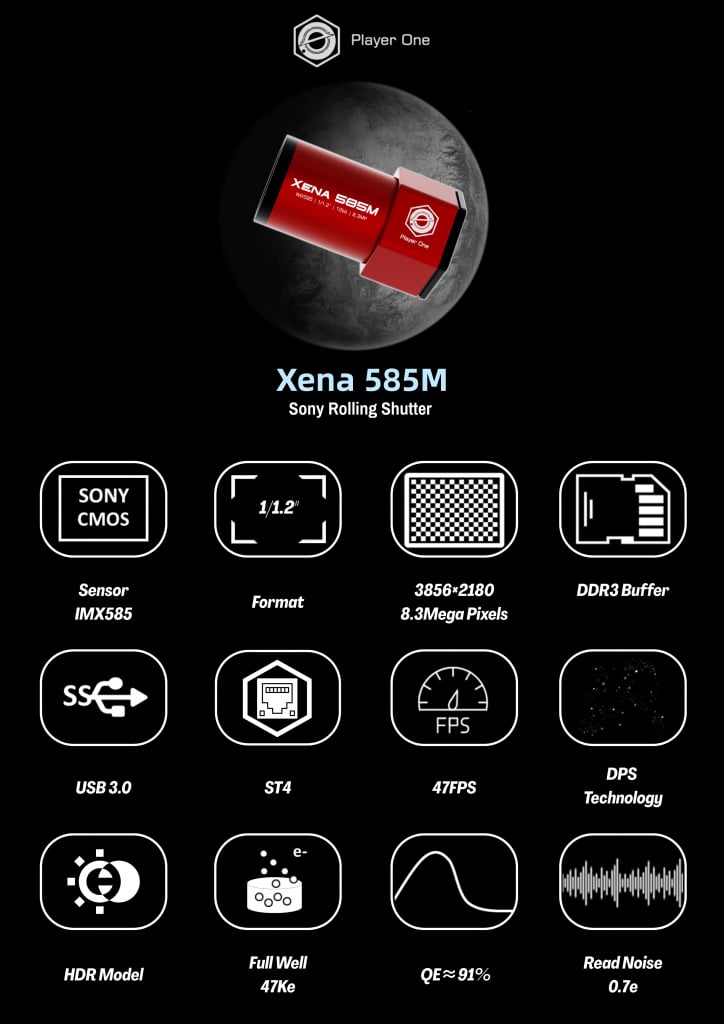
At the center of the Xena 585M is Sony’s IMX585 CMOS sensor. This is a 1/1.2-inch back-illuminated sensor using STARVIS 2 technology. Sony designed STARVIS 2 for extreme low-light performance. That makes it particularly well-suited for astronomical applications.
The sensor delivers a native resolution of 3856 × 2180 pixels, totaling 8.3 megapixels. Each pixel measures 2.9 microns. This pixel size supports fine spatial resolution while maintaining adequate full-well capacity. As a result, the sensor captures both faint and moderately bright targets with good tonal separation.
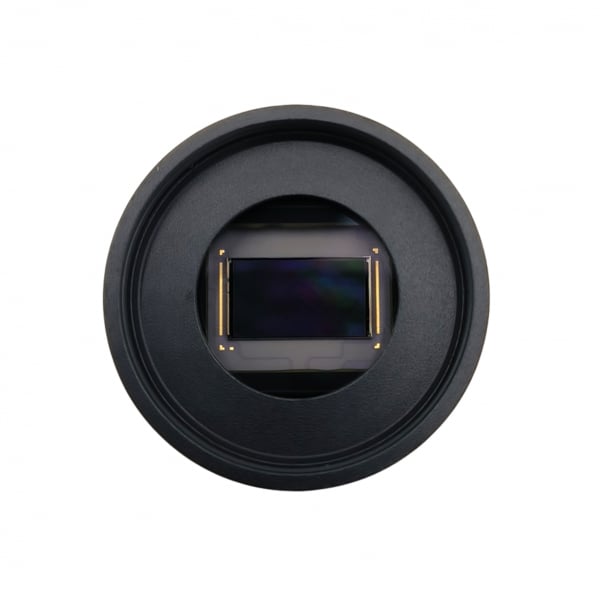
The sensor’s 12.85 mm diagonal offers a noticeable advantage over smaller guiding sensors. A wider field of view improves star acquisition during guiding. It also allows more flexible framing when the camera is used for imaging.
Because the sensor is monochrome, each pixel records full luminance data. This improves quantum efficiency and avoids the losses associated with color filter arrays. It also makes the camera compatible with narrowband filters, a key requirement for many deep-sky imaging workflows.
Sony designed the IMX585 with low read noise characteristics. This helps preserve the faint signal during short exposures. Combined with the sensor’s back-illuminated structure, it allows efficient photon capture even under challenging sky conditions.
Data handling and internal processing
One of the most significant features of Xena 585M is the inclusion of a 256 MB DDR3 memory buffer. This buffer sits between the sensor and the USB interface. It stabilizes data flow during capture. It also reduces the risk of dropped frames when bandwidth fluctuates. This buffer becomes especially important during high-frame-rate operation. Lunar and planetary imaging rely on capturing thousands of frames quickly. Any interruption in data flow reduces efficiency. The onboard memory helps maintain consistent performance throughout the capture sequence.
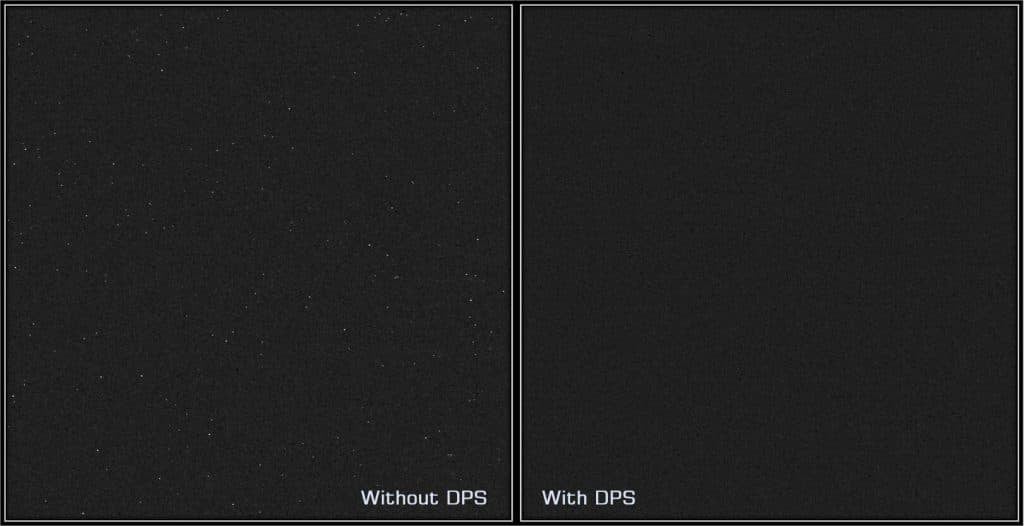
The camera also implements Dead Pixel Suppression (DPS) technology. During calibration, the system identifies hot and dead pixels using dark frames. During capture, it replaces these pixels with values derived from surrounding data. This process reduces visible defects without altering the valid signal.
In addition, Player One includes overvoltage and overcurrent protection. These protections help safeguard the camera during field use, where power sources may vary in quality. Such features contribute to long-term reliability, especially for users who image frequently in remote locations.
USB3.0 performance and high-speed operation
The Xena 585M connects to the host system through a USB 3.0 interface. This interface supports high data throughput and low latency. It enables the camera to operate at high frame rates while maintaining stable communication.
At full resolution, the camera can reach up to 47 frames per second in RAW8 mode, depending on system performance. This speed supports real-time guiding corrections. It also makes the camera suitable for high-speed imaging of the Moon and planets.
Fast readout improves responsiveness during guiding. The camera detects guide star movement quickly. It sends correction data with minimal delay. This responsiveness helps maintain accurate tracking, especially at longer focal lengths.
The USB connection also simplifies system integration. In many setups, the camera receives both power and data through a single cable. This reduces cable clutter and improves overall reliability.
Guiding capability and imaging flexibility
Player One positions the Xena 585M primarily as a guiding camera, and it performs that role with ease. The sensor’s sensitivity allows it to detect faint guide stars. The large sensor area increases the probability of finding a suitable star within the field.
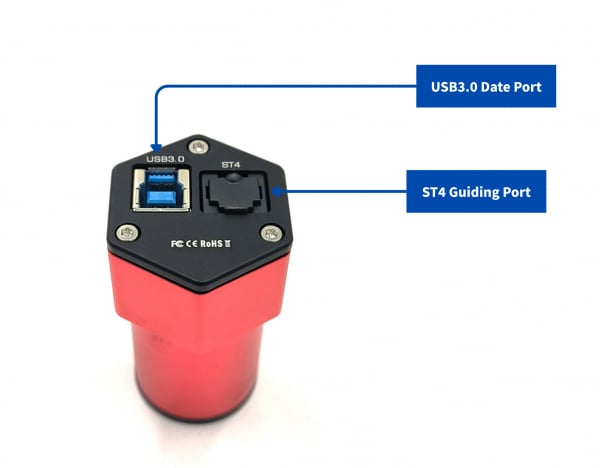
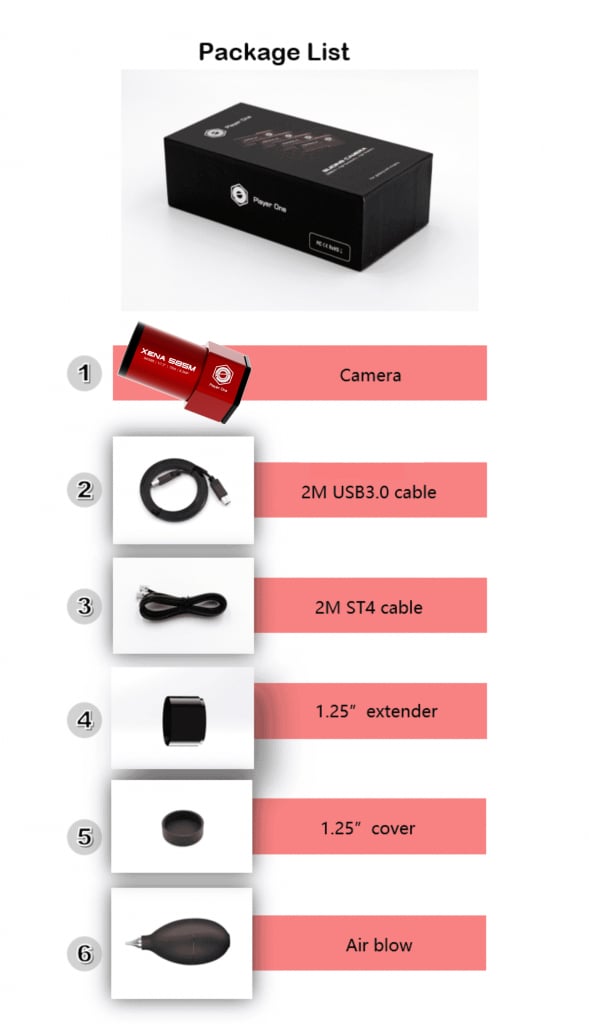
The camera includes an ST4 guiding port, allowing direct connection to mounts that support hardware guiding. It also works with software-based guiding solutions through USB. This flexibility ensures compatibility with a wide range of control systems.
Beyond guiding, the camera supports multiple imaging applications. Its high frame rate and mono sensor make it suitable for lunar and planetary imaging. Users can capture fine surface detail through lucky imaging techniques.
For deep-sky imaging, the camera works best with short or moderate exposures. The Xena 585M does not include active cooling. Instead, it relies on passive thermal management. This keeps the camera compact and lightweight. It also means thermal noise increases during long exposures.
Design and system integration
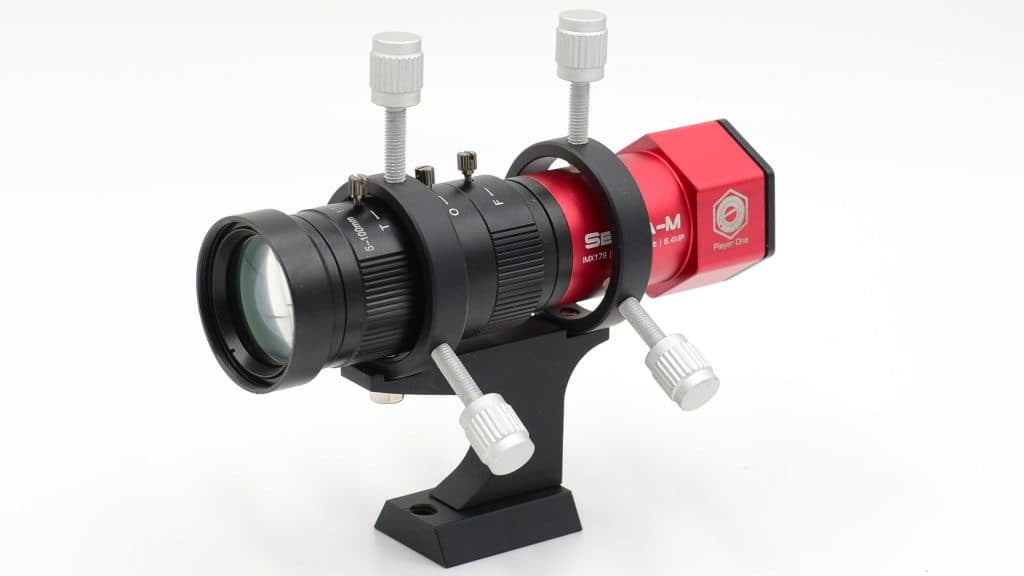
The physical design of the Xena 585M shows Player One’s experience with compact astronomy cameras. The body remains small and robust. The weight stays low, reducing strain on focusers and guide scopes.
This compact form simplifies integration into modern imaging rigs. Users can mount the camera on guide scopes, off-axis guiders, or small refractors without balance issues. The reduced cable count further improves system stability.
The camera’s design also supports accessories such as filter drawers and compact filter wheels. This expands its use in narrowband imaging setups while maintaining portability. By avoiding unnecessary bulk, Player One ensures that the camera fits naturally into lightweight systems that dominate current astrophotography practice.
Price and availability
The Player One Xena 585M is priced at $359. The camera is available for ordering via Player One’s official website.
Within Player One’s product range, the Xena 585M sits below the company’s cooled cameras, such as the Uranus-M Pro series. Those models target dedicated deep-sky imaging with active cooling and extended exposure capability. The Xena 585M focuses instead on versatility. It serves users who want a capable guide camera that can also image when needed. It supports experimentation and hybrid workflows.
Clear skies!
See more from DIYPhotography.net on Google
Add DIYPhotography.net as a trusted source. This makes
our stories more likely to appear in your Google Search results.
 Add as a preferred source on Google

Soumyadeep Mukherjee
Soumyadeep Mukherjee is an award-winning astrophotographer from India. He has a doctorate degree in Linguistics. His work extends to the sub-genres of nightscape, deep sky, solar, lunar and optical phenomenon photography. He is also a photography educator and has conducted numerous workshops. His works have appeared in over 40 books & magazines including Astronomy, BBC Sky at Night, Sky & Telescope among others, and in various websites including National Geographic, NASA, Forbes. He was the first Indian to win “Astronomy Photographer of the Year” award in a major category.

Join the Discussion
DIYP Comment Policy
Be nice, be on-topic, no personal information or flames.