





















Apertura 2″ Dark Frame Filter: Automating Darks in Astrophotography
Sep 24, 2025
Soumyadeep Mukherjee
Soumyadeep Mukherjee is an award-winning astrophotographer from India. He has a doctorate degree in Linguistics. His work extends to the sub-genres of nightscape, deep sky, solar, lunar and optical phenomenon photography. He is also a photography educator and has conducted numerous workshops. His works have appeared in over 40 books & magazines including Astronomy, BBC Sky at Night, Sky & Telescope among others, and in various websites including National Geographic, NASA, Forbes. He was the first Indian to win “Astronomy Photographer of the Year” award in a major category.
Share:

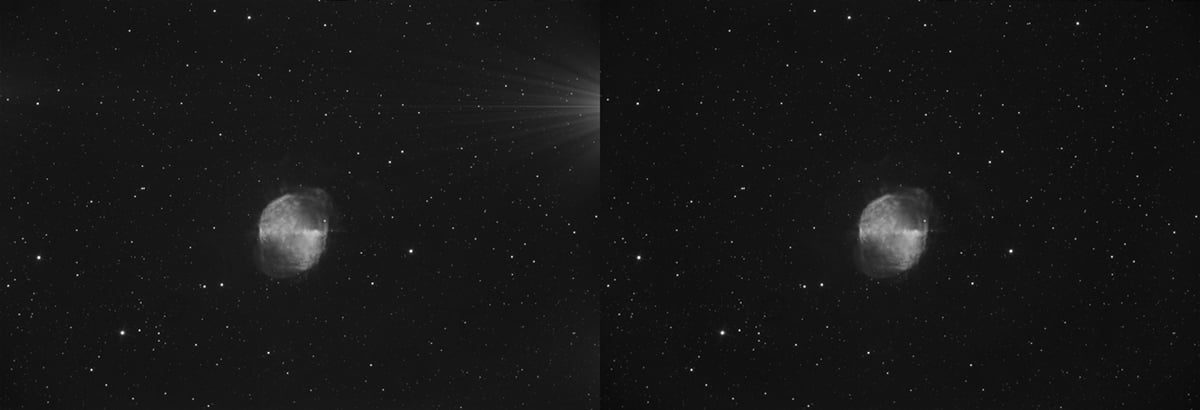
Dark frames are the backbone of clean astrophotography. They capture the electronic noise, hot pixels, and amp glow produced by your camera sensor. When subtracted from light frames, they reveal cleaner, sharper images. Traditionally, astrophotographers have taken darks by covering the telescope or capping the camera. That works fine for local setups, but what if your system runs remotely or you want everything automated? This is where the Apertura 2″ Dark Frame Filter becomes useful.
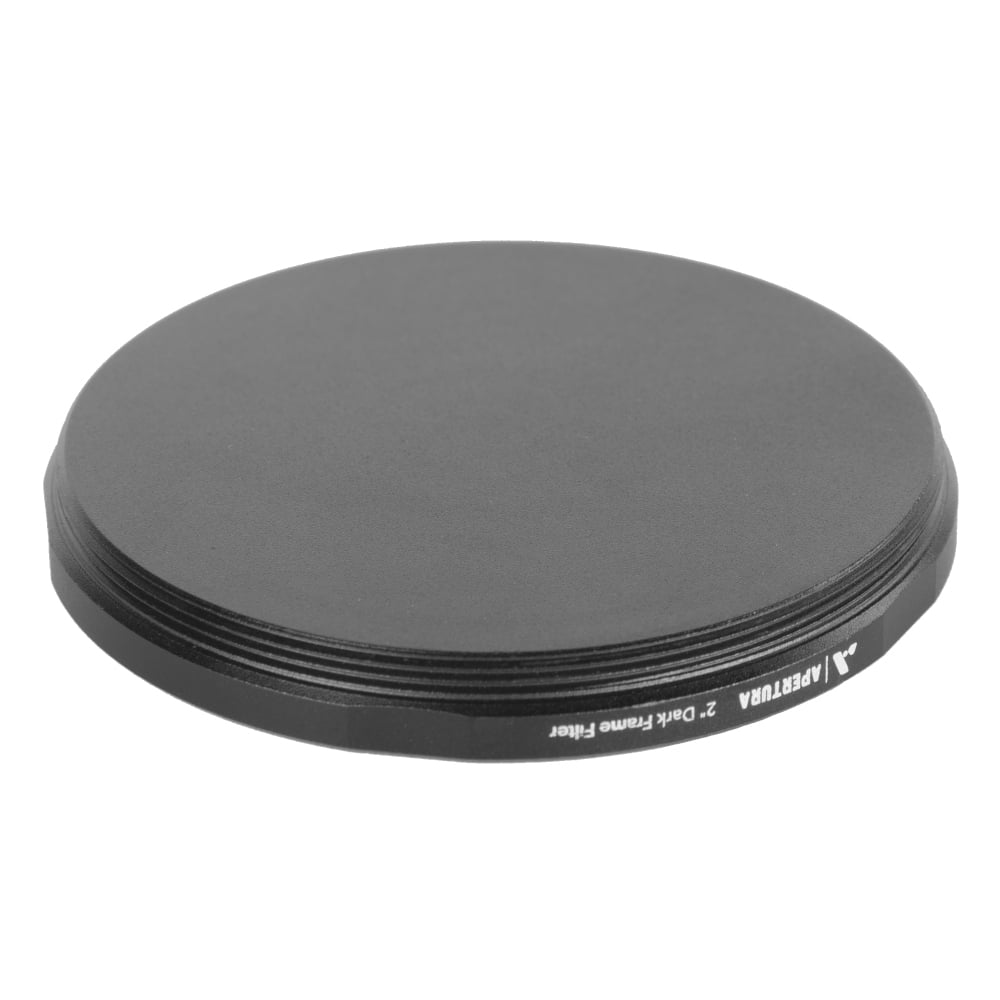
Apertura 2″ dark frame filter
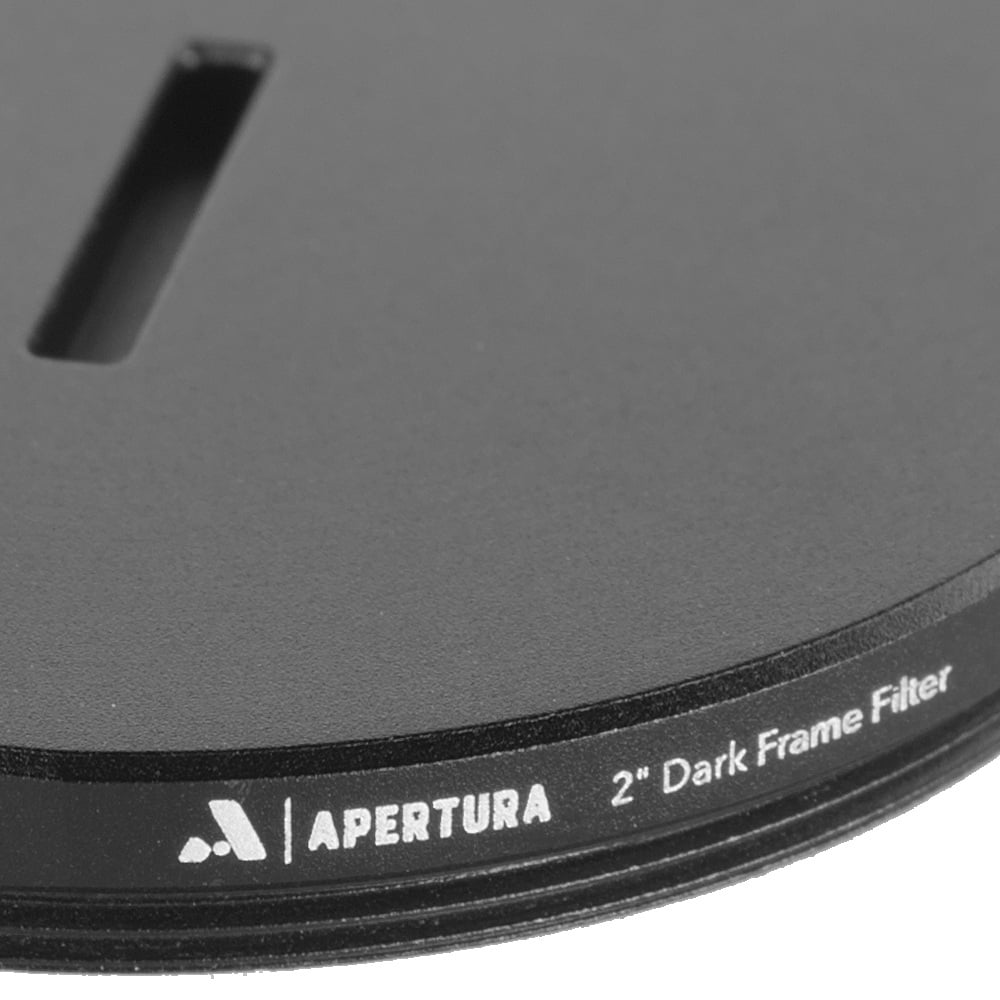
The Apertura dark frame filter looks like any other 2-inch filter, but it is completely opaque. Instead of letting light through, it blocks it entirely. Installed in a filter wheel, it becomes a “dark slot.” At the click of a button, your capture software can rotate to this slot and take darks without you touching the telescope.
This may sound like a small detail, but it changes workflow for many astrophotographers. Remote observatories, robotic rigs, and even backyard setups benefit when you no longer need to add or remove dust caps manually. It keeps your imaging sequence smooth and consistent, which is especially important if you capture data all night or run unattended automation.
Design and build
Apertura designed the filter to be both simple and durable. The body is made of black anodized aluminum. It has standard 2″ threads, so it drops into most wheels and holders without issue. The cell thickness is about 3.5 mm, excluding the threads, which means it’s slim enough not to disturb back-focus in most optical trains.
There are a couple of thoughtful touches as well. The filter has a small grip slot, which makes removal easier if it gets stuck. There’s also a coin slot, so you can twist it out with a coin if needed. These details come in handy in the field when things are cold and gear is tight. According to the official listing, the filter weighs around an ounce, so it won’t add noticeable load to your wheel.
How the filter works in practice
Once the filter is installed, using it is straightforward. In your capture software, assign that filter position as “Dark.” Whenever you need to take dark frames, the filter wheel rotates to that slot and completely blocks light. It lets you automate a calibration step that otherwise requires physical intervention.
The Apertura 2″ Dark Frame Filter may not be for everyone. If you run a DSLR on a tripod or shoot locally with direct access to your gear, you can keep using a lens cap for darks. But if you operate a cooled astronomy camera, use a filter wheel, and especially if you run your setup remotely, the value becomes obvious.
Benefits of the dark frame filter
The biggest gain is convenience. With a dark frame filter in place, you can schedule calibration frames at any point in your imaging plan. Some astrophotographers capture a set of darks at the start of the night, others at the end, and some even mix them between targets. Since the filter makes the process seamless, you get consistent calibration data without interrupting your session.
It also means less handling of equipment. Every time you touch a telescope to cap or uncap it, you risk introducing vibrations, dust, or even slight misalignment. With the filter, those risks disappear. For remote imagers, this advantage is even greater. Once the filter is installed, you can run dark frames months or years later without ever touching the rig.
Things you should consider before buying it
Before buying, check a few practical points.
- First, make sure your filter wheel can spare a slot. Some wheels only hold five filters, and giving up one for a dark plug may feel limiting. Larger wheels with seven or more positions make this much easier.
- Second, verify that the filter blocks all light. A quick test is to place it in the wheel during the day and capture an exposure with the telescope uncovered. If no light leaks through, you’re good.
- Third, confirm that your wheel positions are accurate. If the wheel does not align perfectly with the filter, stray light may sneak in during darks. Most modern wheels handle this well, but it’s worth checking.
- Finally, remember that darks only work when taken under the same conditions as your lights. That means the same temperature, the same gain, and the same exposure length. The filter makes taking them easier, but the principles of calibration remain unchanged.
Price and availability
The filter is priced at $22.50 and is available through retailers.
The Apertura 2″ Dark Frame Filter is a simple idea executed well. It doesn’t change your images directly, but it makes one of the most important calibration steps far easier. For remote imagers and automation enthusiasts, it’s almost essential. If your workflow demands efficiency and your imaging rig already includes a filter wheel, the Apertura dark frame filter deserves consideration.
Clear skies!
See more from DIYPhotography.net on Google
Add DIYPhotography.net as a trusted source. This makes
our stories more likely to appear in your Google Search results.
 Add as a preferred source on Google

Soumyadeep Mukherjee
Soumyadeep Mukherjee is an award-winning astrophotographer from India. He has a doctorate degree in Linguistics. His work extends to the sub-genres of nightscape, deep sky, solar, lunar and optical phenomenon photography. He is also a photography educator and has conducted numerous workshops. His works have appeared in over 40 books & magazines including Astronomy, BBC Sky at Night, Sky & Telescope among others, and in various websites including National Geographic, NASA, Forbes. He was the first Indian to win “Astronomy Photographer of the Year” award in a major category.
Related Posts
 Apertura Carbonstar 200: A Powerful Tool made for Astrophotographers
 Automating image capture for 3D scanning through photogrammetry
 Automating scanning film with the help of Lego, a Raspberry Pi and a little machine learning
 Enjoy The World’s Disappearing Dark Skies With These Spectacular Winning Shots from Capture The Dark 2025
Join the Discussion
DIYP Comment Policy
Be nice, be on-topic, no personal information or flames.