
























Apertura Carbonstar 200: A Powerful Tool made for Astrophotographers
Jul 11, 2025
Soumyadeep Mukherjee
Soumyadeep Mukherjee is an award-winning astrophotographer from India. He has a doctorate degree in Linguistics. His work extends to the sub-genres of nightscape, deep sky, solar, lunar and optical phenomenon photography. He is also a photography educator and has conducted numerous workshops. His works have appeared in over 40 books & magazines including Astronomy, BBC Sky at Night, Sky & Telescope among others, and in various websites including National Geographic, NASA, Forbes. He was the first Indian to win “Astronomy Photographer of the Year” award in a major category.
Share:

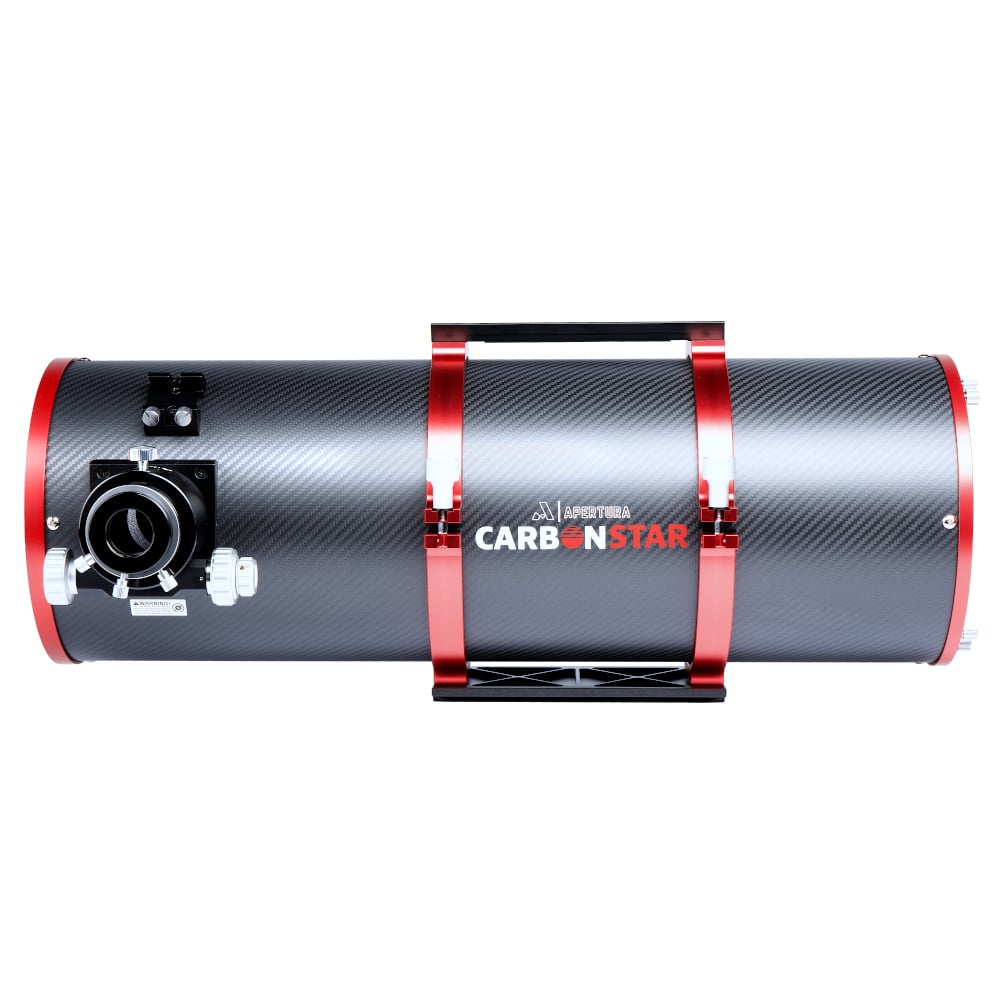
The Apertura Carbonstar 200 Imaging Newtonian is a dedicated telescope for astrophotographers. Built for speed, precision, and stability, it offers an excellent platform for deep-sky imaging. With a lightweight carbon-fiber body and fast f/4 optics, this scope caters to serious imagers who want high-quality results without unnecessary weight or complexity.
Designed for astrophotography
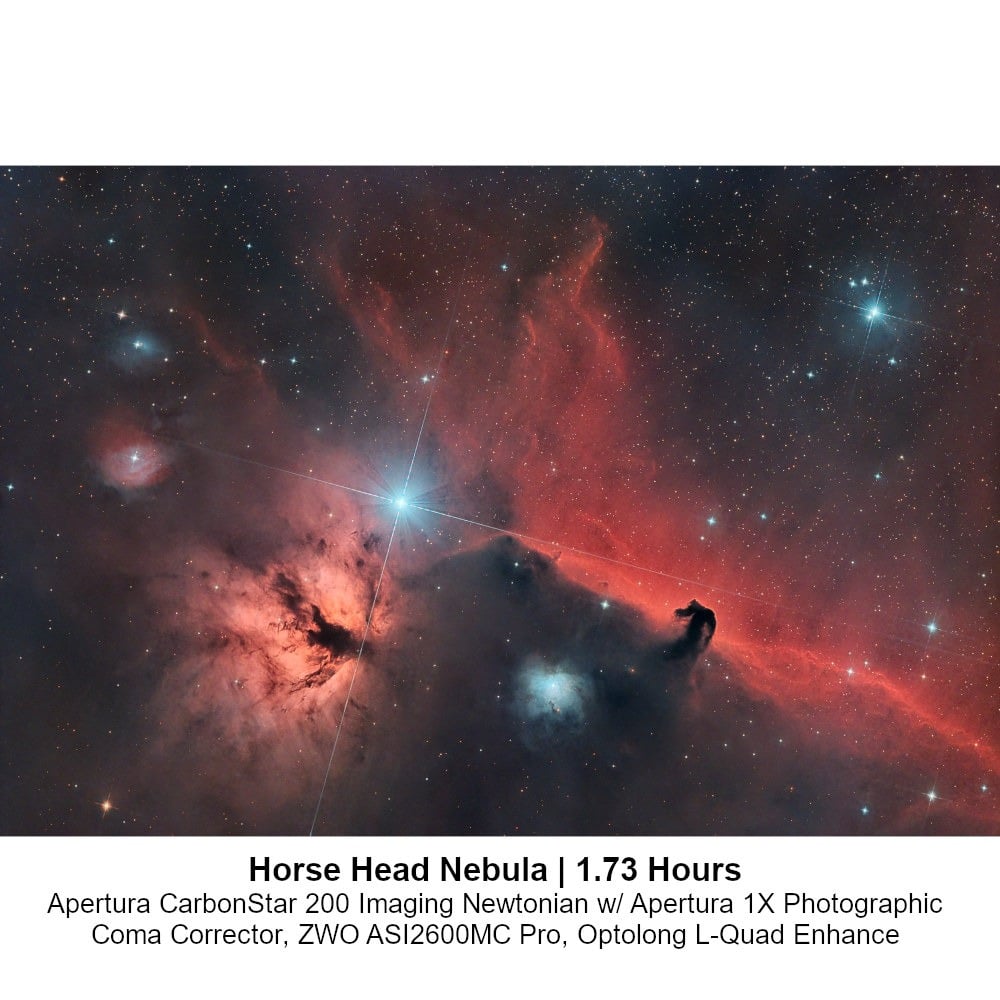
The Carbonstar 200 is not a general-purpose telescope. It is built specifically for astrophotography. Apertura designed it for APS-C-sized sensors. This makes it ideal for many DSLR and dedicated astronomy cameras. It features an 8-inch (200 mm) parabolic primary mirror. The focal length is 800 mm. The f/4 focal ratio makes it very fast. This means you can capture more light in less time. It’s perfect for deep-sky targets like nebulae, galaxies, and star clusters.
Highlights of the telescope
Here are some of the highlights of the telescope:
Lightweight carbon-fiber tube: The body of the Carbonstar 200 uses carbon fiber. This material is both light and strong. It also has low thermal expansion. This means the tube won’t expand or contract much with temperature changes. That keeps the optics aligned better during long imaging sessions. The total weight of the OTA is just 15.8 pounds (7.2 kg).
Premium optical coatings: The optics of the Carbonstar 200 are coated for maximum performance. The mirrors feature 96% enhanced aluminum coatings with SiO₂ overcoating. These coatings reflect more light. This increases contrast and brightness in your final images.
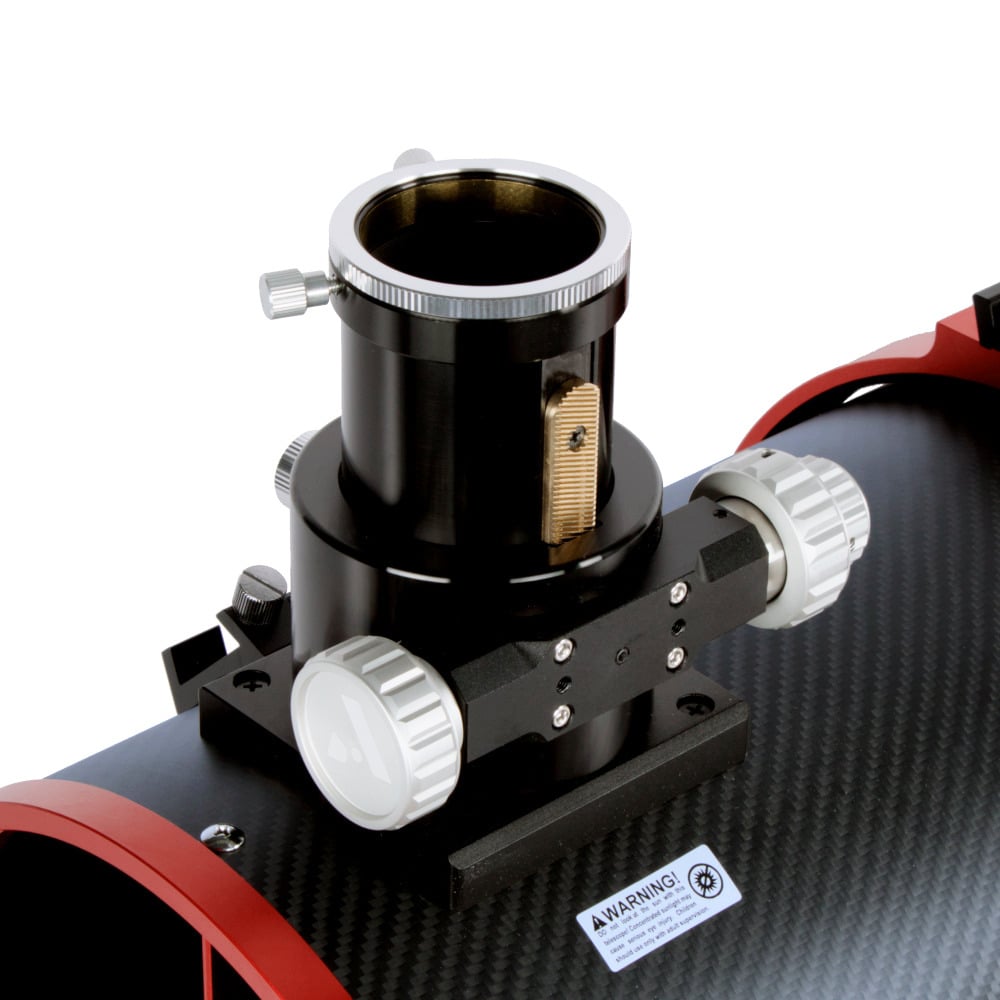
High-quality focuser: The Carbonstar 200 includes a heavy-duty 2-inch rack-and-pinion focuser. It’s precision-machined and holds imaging gear firmly. The focuser uses compression rings instead of thumb screws. This provides better centering and reduces tilt.
Enhanced light management: Internal reflections can ruin astrophotos. Apertura addressed this with internal knife-edge baffles. The Carbonstar 200 has 13 such baffles along the inside of the tube.
Strong CNC-machined rings and mounting bars: The telescope includes robust tube rings made from CNC-machined aluminum. These rings are stronger and more precise than cast rings.
Collimation support: Fast Newtonians require accurate collimation. The Carbonstar 200 includes collimation thumbscrews on both mirrors. The primary mirror cell uses three collimation and three locking screws.

Key specifications
| Aperture | 200 mm (8 inches) |
| Focal Length | 800 mm |
| Focal Ratio | f/4 |
| Weight | 15.8 lbs (7.2 kg) |
| Tube Material | Carbon Fiber |
| Focuser | 2″ Rack and Pinion (EAF-ready) |
| Coatings | 96% enhanced aluminum + SiO₂ |
| Baffles | 13 internal knife-edge |
| Mounting | Dual D-style and V-style dovetail bars |
| Use Case | Deep-sky astrophotography with APS-C sensors |
Who is it for?
This telescope is best for intermediate to advanced astrophotographers. It’s especially useful for those with cooled cameras or DSLRs. Beginners can also use it with care and learning. Collimation and setup are straightforward with the right tools. It’s not designed for visual observing. You can view objects through it, but its real strength is imaging.
Price and availability
Apertura Carbonstar 200 is priced at $1,199 and is available to order via online retailers.
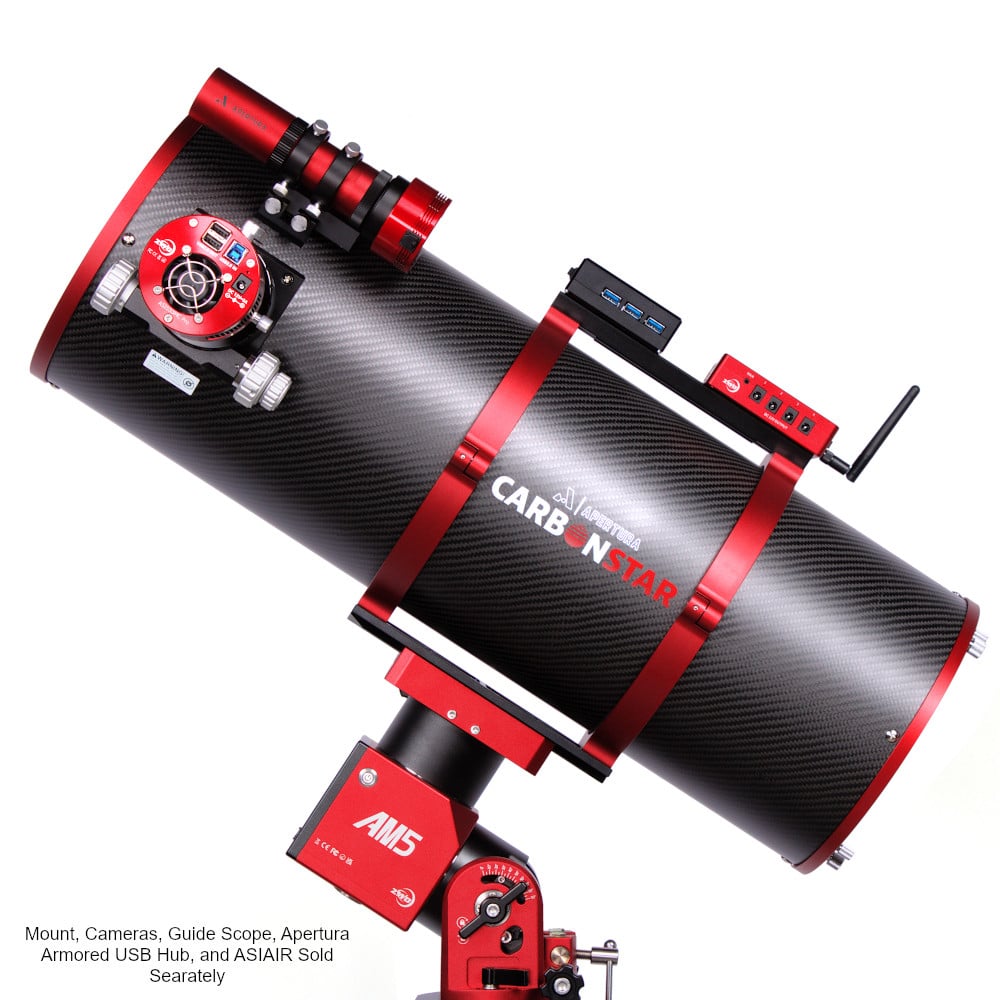
The Apertura Carbonstar 200 is a powerful telescope for deep-sky astrophotography. With fast optics, premium materials, and imaging-ready features, it offers excellent value. It simplifies the imaging process without sacrificing performance. From its carbon-fiber body to its baffle system, every element is designed for better photos. If you’re serious about capturing the universe in detail, the Carbonstar 200 deserves your attention.
Clear skies!
See more from DIYPhotography.net on Google
Add DIYPhotography.net as a trusted source. This makes
our stories more likely to appear in your Google Search results.
 Add as a preferred source on Google

Soumyadeep Mukherjee
Soumyadeep Mukherjee is an award-winning astrophotographer from India. He has a doctorate degree in Linguistics. His work extends to the sub-genres of nightscape, deep sky, solar, lunar and optical phenomenon photography. He is also a photography educator and has conducted numerous workshops. His works have appeared in over 40 books & magazines including Astronomy, BBC Sky at Night, Sky & Telescope among others, and in various websites including National Geographic, NASA, Forbes. He was the first Indian to win “Astronomy Photographer of the Year” award in a major category.


Join the Discussion
DIYP Comment Policy
Be nice, be on-topic, no personal information or flames.