
















https://noirlab.edu/public/images/Antennae-Optical-Blanco-DECam/
Nov 28, 2026
Soumyadeep Mukherjee
Soumyadeep Mukherjee is an award-winning astrophotographer from India. He has a doctorate degree in Linguistics. His work extends to the sub-genres of nightscape, deep sky, solar, lunar and optical phenomenon photography. He is also a photography educator and has conducted numerous workshops. His works have appeared in over 40 books & magazines including Astronomy, BBC Sky at Night, Sky & Telescope among others, and in various websites including National Geographic, NASA, Forbes. He was the first Indian to win “Astronomy Photographer of the Year” award in a major category.
Share:
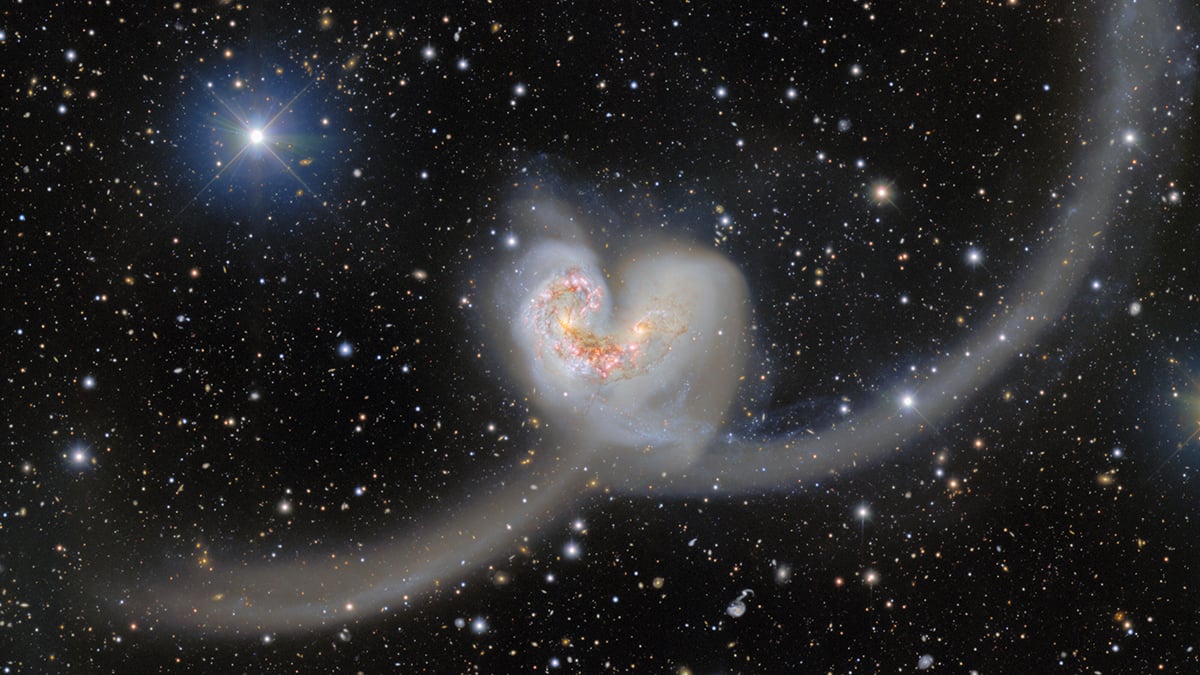
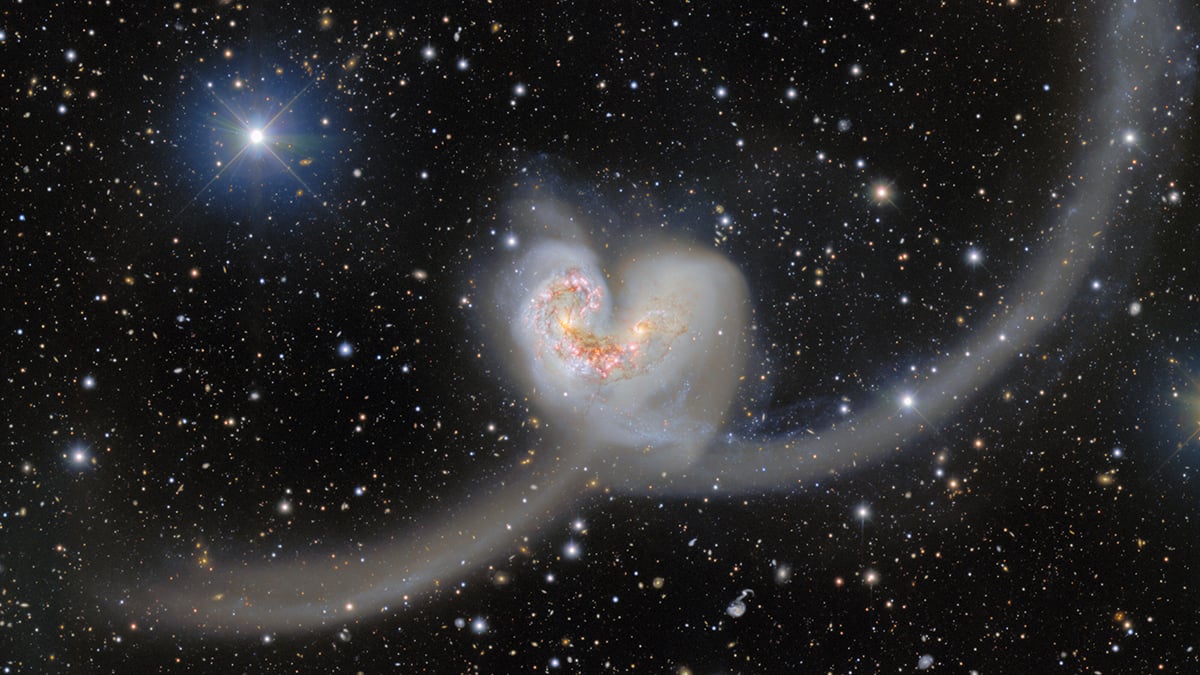
About 60 million light-years from Earth, two galaxies are moving towards a common future. NGC 4038 and NGC 4039, known together as the Antennae Galaxies, have been interacting for millions of years. Their gravitational pull has distorted their spiral arms, drawn long streams of stars into space, and compressed gas clouds.
Astronomers have used seven observatories to investigate these different components. A collection of images from NSF NOIRLab compiles these observations from the Blanco Telescope, GALEX, WISE, Spitzer, ALMA, Hubble, and Chandra. Each image gives us a different view of the collision.
Blanco Telescope: The scale of the collision
The wide-field optical image from the Víctor M. Blanco 4-meter Telescope at Cerro Tololo Inter-American Observatory provides a great starting point. Its Dark Energy Camera, or DECam, has a 570-megapixel sensor. That large field of view captures the galaxies and much of the surrounding structure in a single frame. The image gives viewers a sense of how far the collision has disturbed the two systems.
The most striking features are the long, curved streams extending away from the galaxies. These are tidal tails, formed as gravity pulled stars and gas out of their original positions. The two galaxies have passed close enough to disrupt their structures, but they have not yet settled into a single system.
GALEX: The youngest and hottest stars
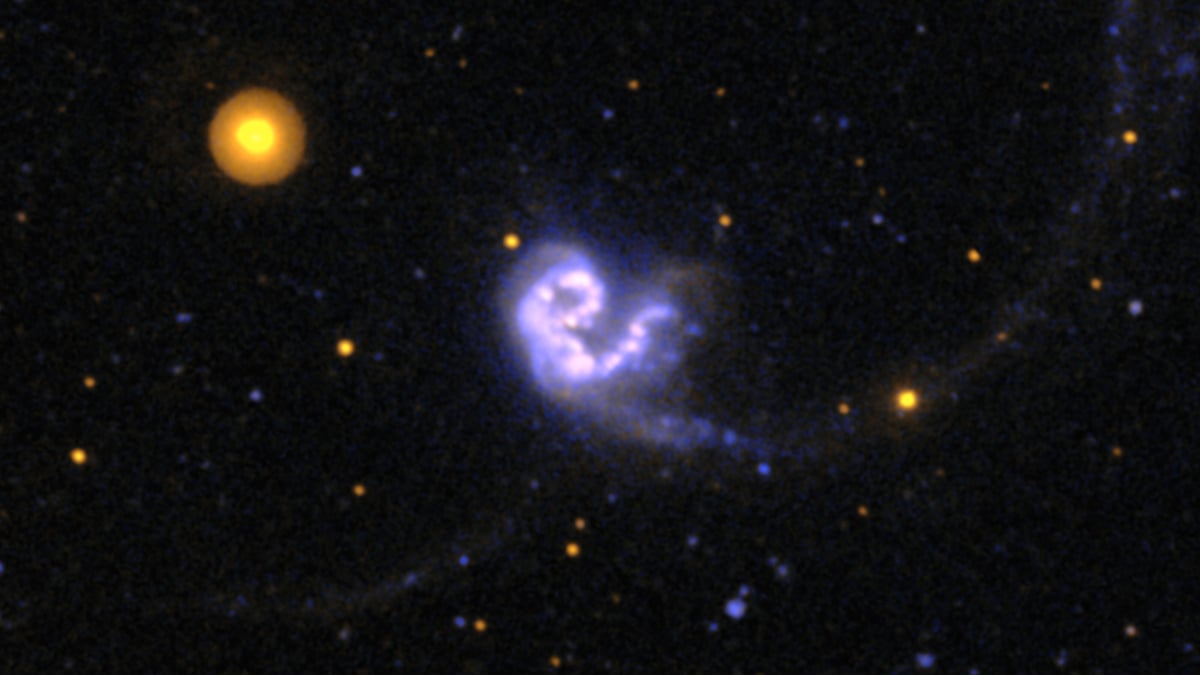
The ultraviolet image from NASA’s Galaxy Evolution Explorer, or GALEX, shifts attention from the galaxies’ overall shape to their recent star formation. Ultraviolet light comes strongly from very hot stars, particularly massive young stars. These stars burn through their fuel quickly, so bright ultraviolet emission can reveal regions where stars formed relatively recently.
The ultraviolet view also adds a sense of the timescale involved. The collision began more than 100 million years ago, but star formation continues as the galaxies interact. Some of the massive stars born during this process have already ended their short lives in supernova explosions. Others remain young and hot, producing the ultraviolet light seen by GALEX.
WISE and Spitzer: Looking beyond visible light
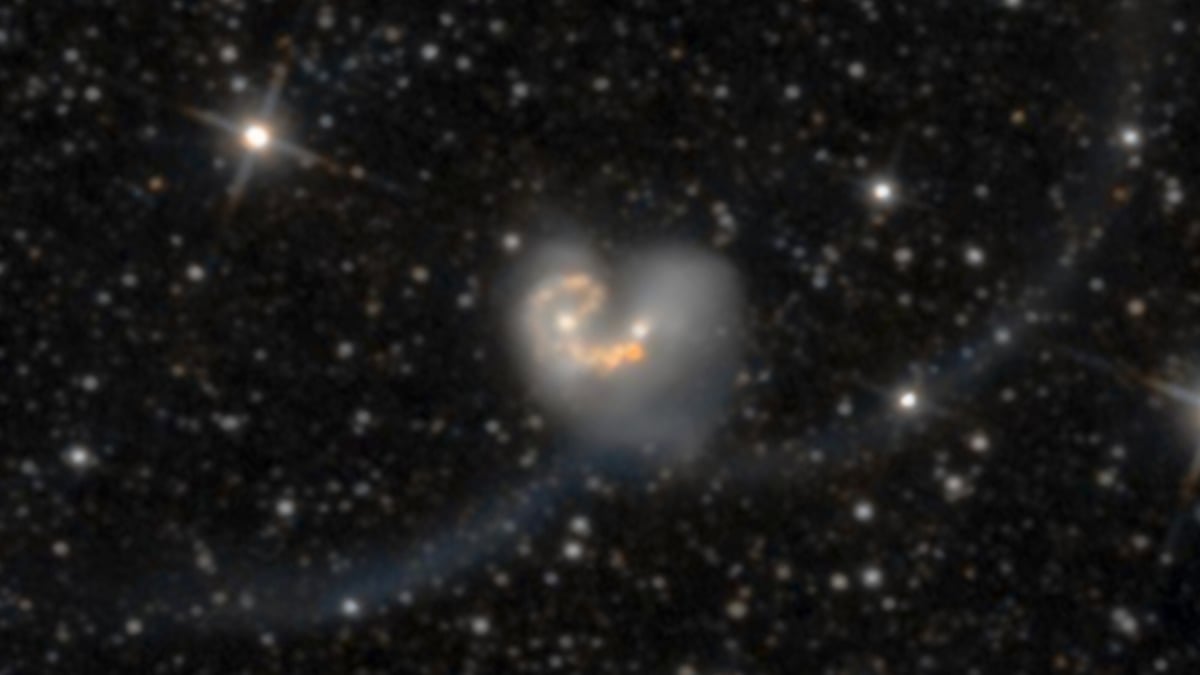
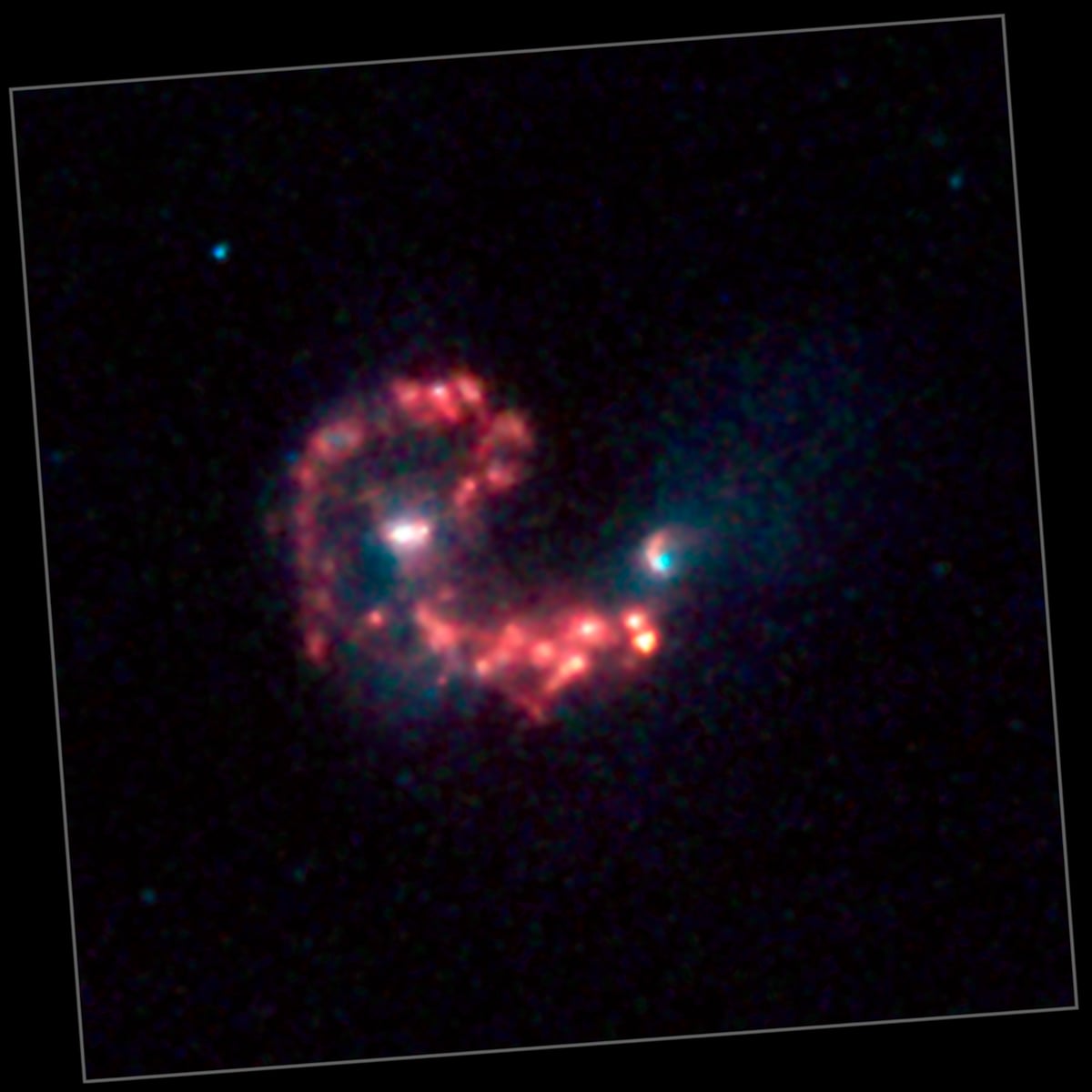
The near-infrared image made with data from NASA’s Wide-field Infrared Survey Explorer, processed through the unWISE project, offers another view of the Antennae system. Near-infrared observations help reveal stellar structures that may be difficult to separate in visible light. They provide information about the distribution of stars across the interacting galaxies, including regions where dust affects the optical view.
Spitzer’s mid-infrared observations show a different part of the picture. Dust grains absorb energy from nearby stars and re-emit it at infrared wavelengths. Bright emission can therefore mark areas containing heated dust, including regions associated with active star formation. The mid-infrared view helps astronomers examine parts of the galaxies where thick dust clouds conceal much of the visible light.
ALMA: Cold gas between the galaxies
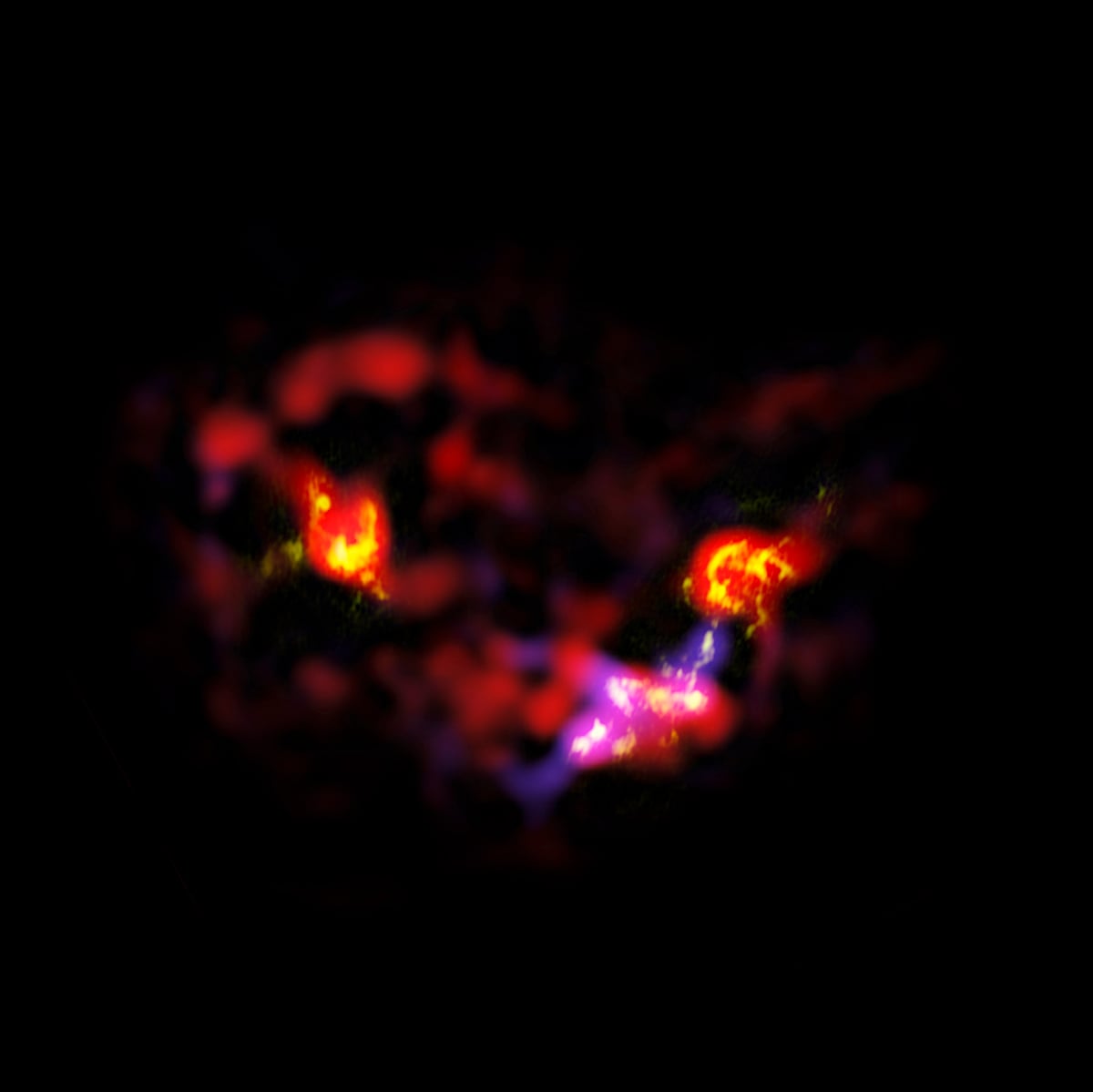
Stars form from cold molecular gas, so understanding the Antennae collision requires more than counting young stars. Astronomers also need to locate the material from which those stars emerge. The Atacama Large Millimeter/submillimeter Array, or ALMA, observes at wavelengths that can reveal cold gas and dust in galaxies.
One of the most important targets is molecular hydrogen. It makes up much of the cold gas in star-forming regions, but it is difficult to observe directly under typical interstellar conditions. Astronomers often use carbon monoxide emission as a tracer. By mapping this emission, ALMA can show where molecular gas gathers and how it is distributed across the interacting galaxies.
Hubble: Star clusters and dust lanes
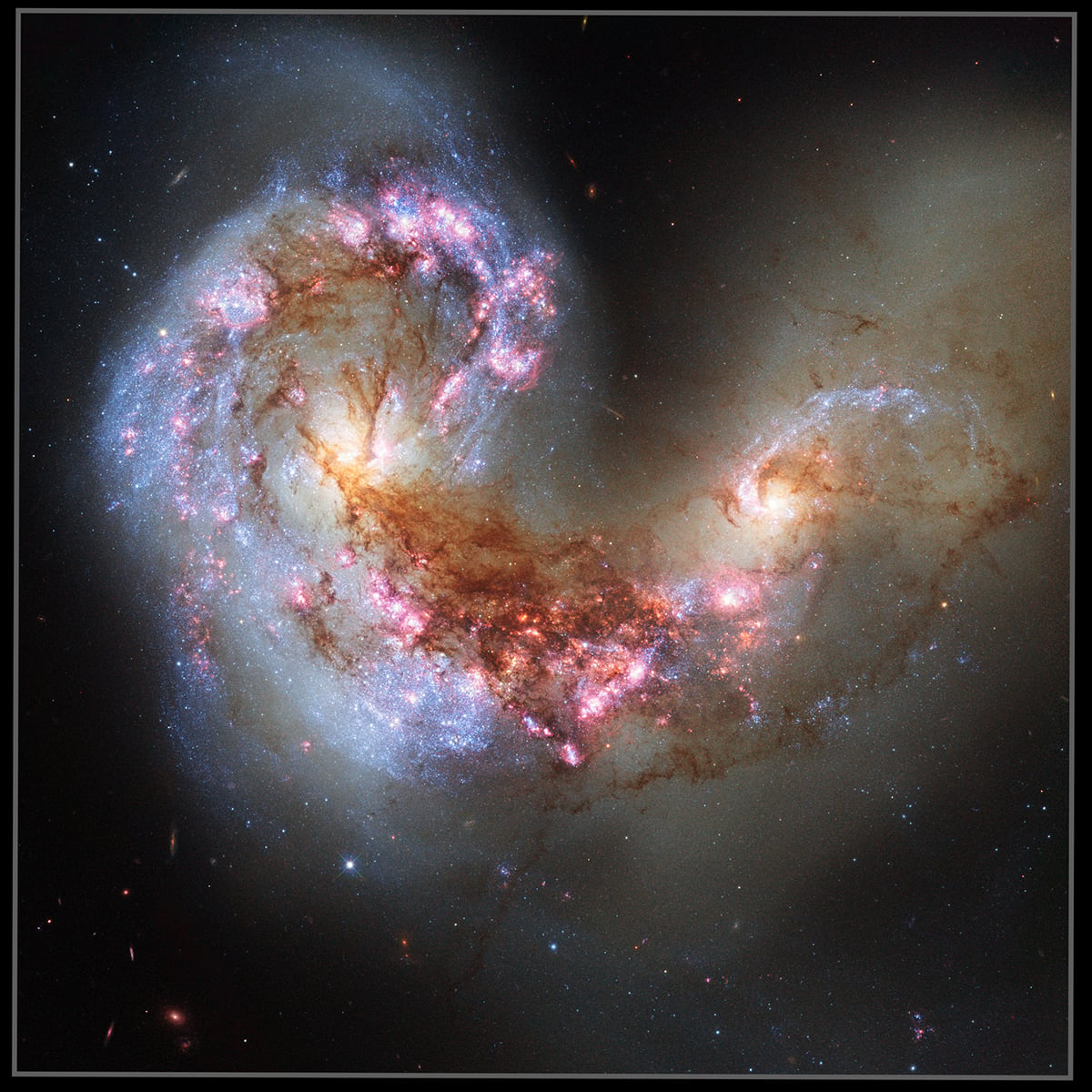
The Hubble Space Telescope brings the view back to visible and near-infrared light, but with far greater detail across the galaxies’ crowded central regions. The image combines observations from Hubble’s Wide Field Camera 3 and earlier data from its Advanced Camera for Surveys. These instruments resolve individual star-forming regions, clusters, and complex dust structures across the interacting system.
Hubble also reveals compact clusters containing large numbers of stars. Some of these clusters formed during the interaction. Their presence helps astronomers study how galaxy collisions can influence the formation of stellar groups. The image captures both the large-scale disruption and the smaller structures developing within it.
Chandra: The collision’s high-energy activity
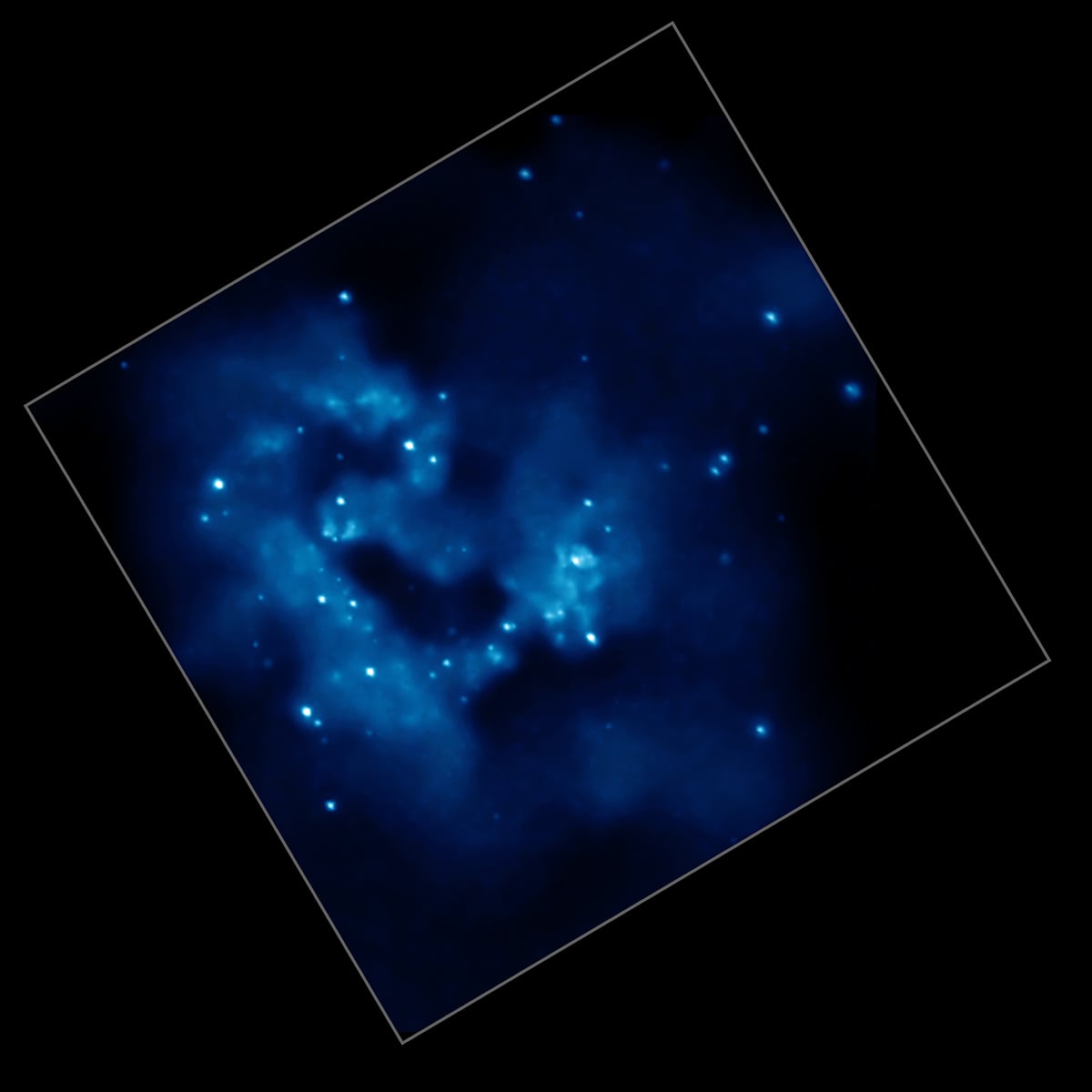
The final image goes beyond the wavelengths associated with stars, dust, and cold gas. NASA’s Chandra X-ray Observatory detects extremely energetic sources, including very hot gas and compact objects. In the Antennae Galaxies, its observations reveal the high-energy effects of the ongoing collision.
Clear skies!
See more from DIYPhotography.net on Google
Add DIYPhotography.net as a trusted source. This makes
our stories more likely to appear in your Google Search results.
 Add as a preferred source on Google

Soumyadeep Mukherjee
Soumyadeep Mukherjee is an award-winning astrophotographer from India. He has a doctorate degree in Linguistics. His work extends to the sub-genres of nightscape, deep sky, solar, lunar and optical phenomenon photography. He is also a photography educator and has conducted numerous workshops. His works have appeared in over 40 books & magazines including Astronomy, BBC Sky at Night, Sky & Telescope among others, and in various websites including National Geographic, NASA, Forbes. He was the first Indian to win “Astronomy Photographer of the Year” award in a major category.


Join the Discussion
DIYP Comment Policy
Be nice, be on-topic, no personal information or flames.