
















Hubble Reveals “Ocean of Stars” in the Milky Way’s Galactic Bulge
Nov 26, 2026
Soumyadeep Mukherjee
Soumyadeep Mukherjee is an award-winning astrophotographer from India. He has a doctorate degree in Linguistics. His work extends to the sub-genres of nightscape, deep sky, solar, lunar and optical phenomenon photography. He is also a photography educator and has conducted numerous workshops. His works have appeared in over 40 books & magazines including Astronomy, BBC Sky at Night, Sky & Telescope among others, and in various websites including National Geographic, NASA, Forbes. He was the first Indian to win “Astronomy Photographer of the Year” award in a major category.
Share:
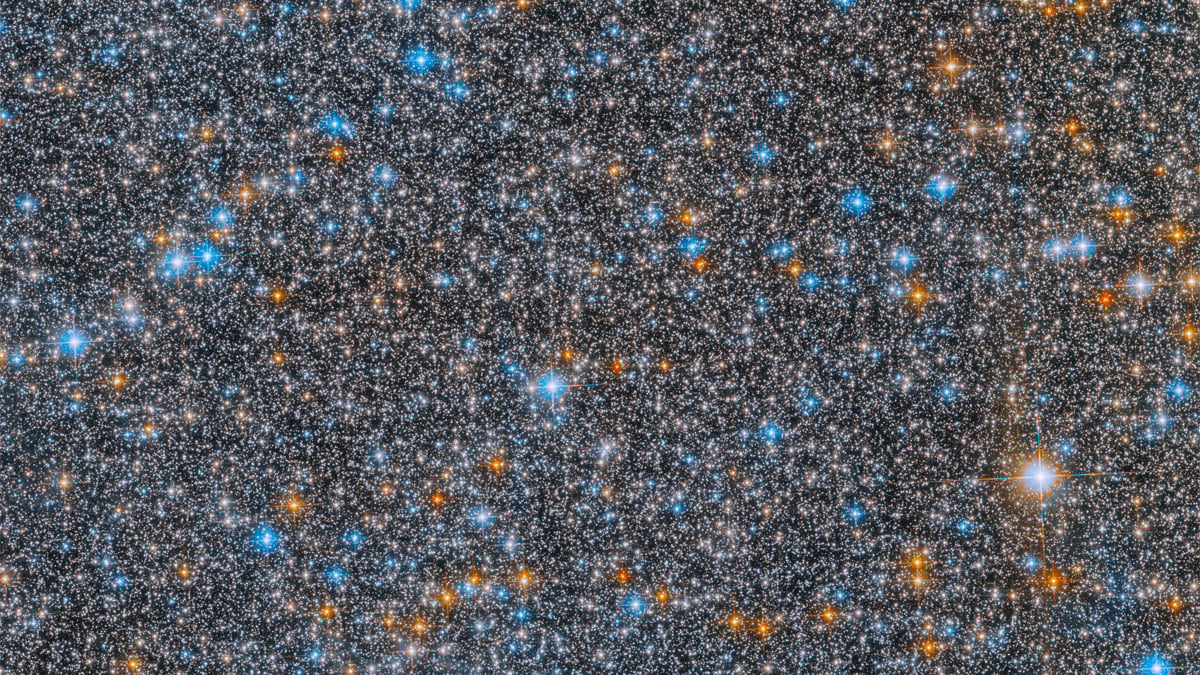
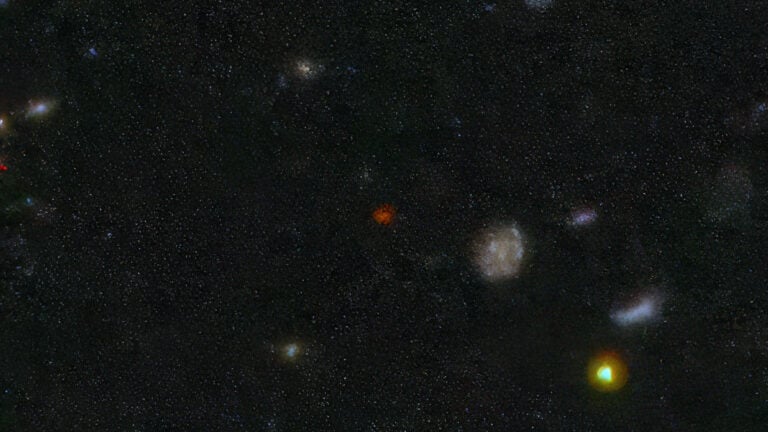
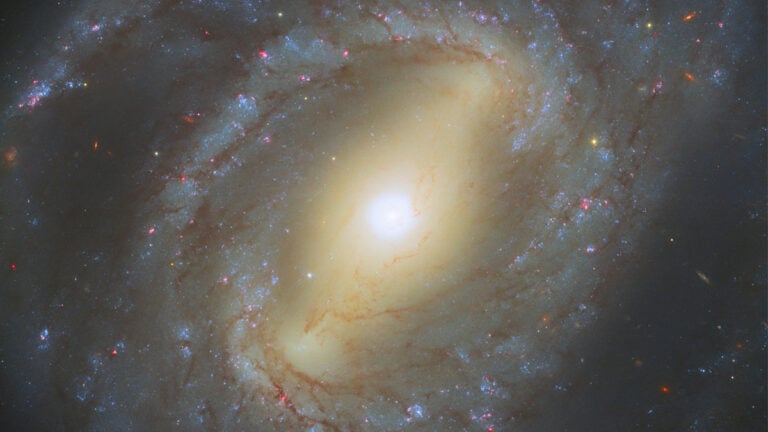
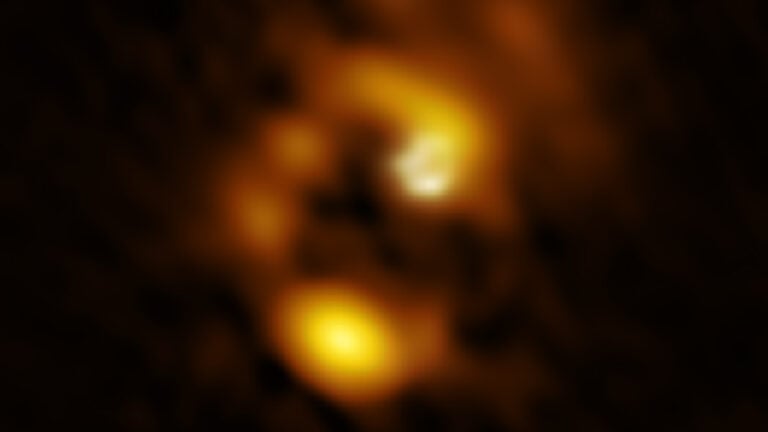
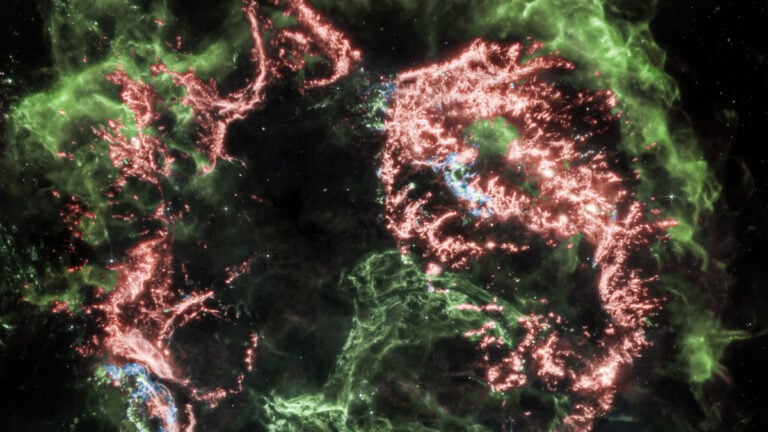
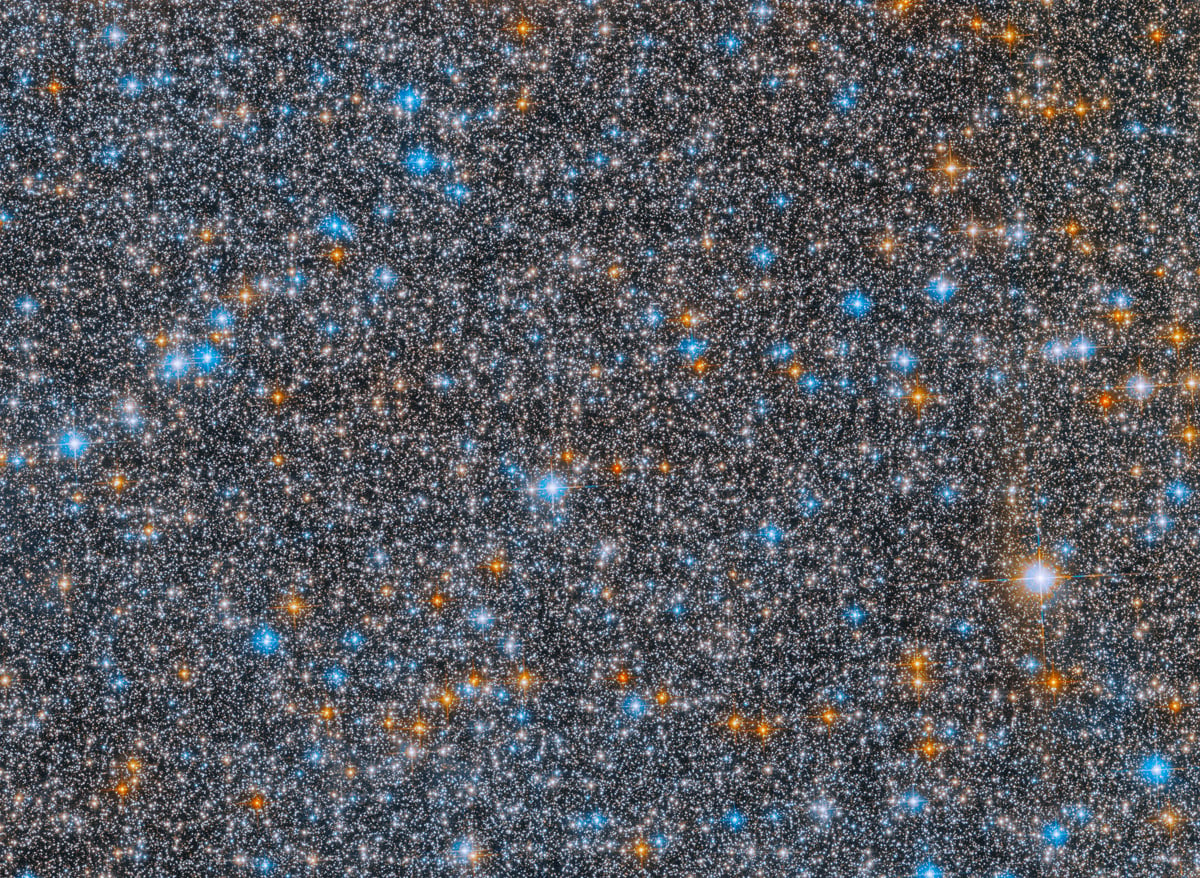
The center of the Milky Way contains an enormous concentration of stars. From Earth, many of them appear so close together that their light blends into a crowded background. NASA’s Hubble Space Telescope has captured a detailed view of this region, resolving individual stars that would otherwise be difficult to distinguish.
The images show a section of the galactic bulge, the dense concentration of stars surrounding the Milky Way’s central region. They include a field filled with stars of different colors and another where a dark patch interrupts the crowded starfield. That apparently empty area contains numerous faint stars that become visible on closer inspection.
A closer look at the Milky Way’s galactic bulge
The galactic bulge surrounds the center of the Milky Way‘s disk and contains nearly a quarter of the galaxy’s stellar mass. Its stars formed across different periods in the galaxy’s history. Their ages, chemical compositions, and movements offer clues about how the Milky Way developed over billions of years.
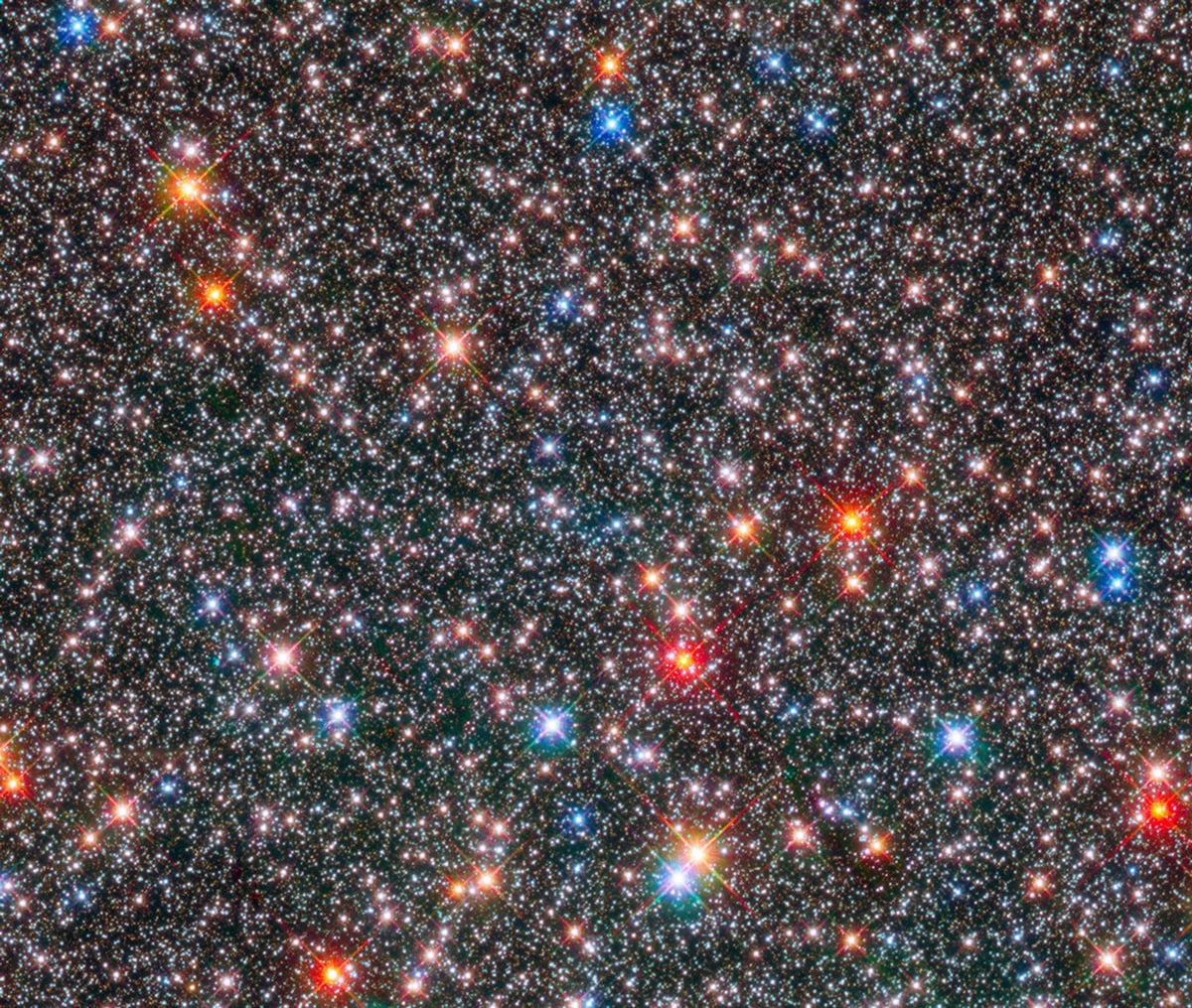
Observing the galactic bulge remains challenging. Thousands of stars occupy a relatively small area of the sky. Some appear almost on top of one another in astronomical images. Dust along the line of sight also obscures parts of the region, making faint stars harder to detect. Even a small difference in brightness can determine whether a star stands out or disappears into the background.
Hubble‘s high-resolution imaging helps astronomers separate these sources of light. Its observations allow researchers to examine individual stars and measure their brightness and positions. They can also compare measurements taken at different times to track stellar movements and changes. Such precision becomes particularly useful when astronomers investigate a field containing so many overlapping sources.
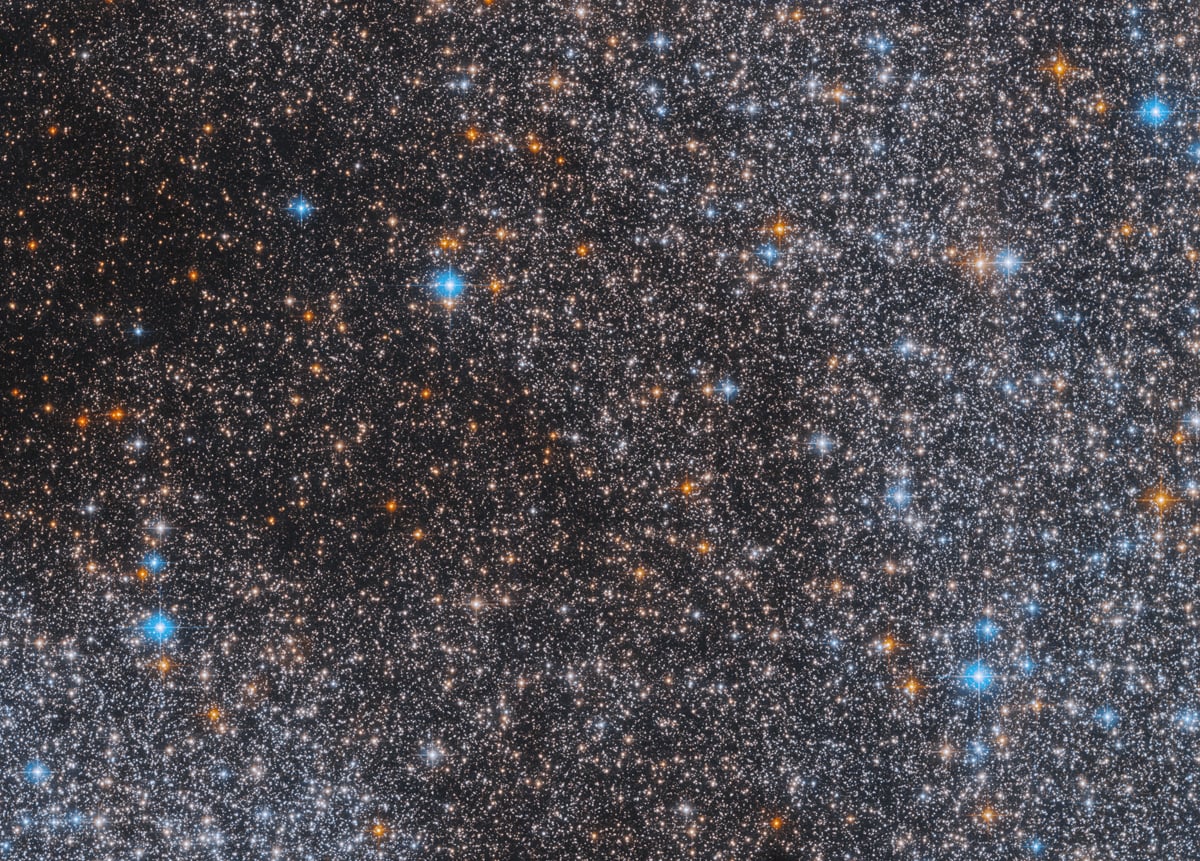
Hubble is observing the same region that Roman will study
Hubble and Roman do not observe the universe in the same wavelengths. The Hubble survey focuses on the red end of visible light and near-infrared wavelengths. This choice will help astronomers connect Hubble’s detailed measurements with Roman’s future observations.
Hubble’s instruments can measure the brightness, ages, composition, and motion of stars. These measurements give researchers a detailed picture of the stellar population before Roman starts monitoring the region. When Roman records a change in brightness, astronomers can return to Hubble’s images and examine the objects around that position.
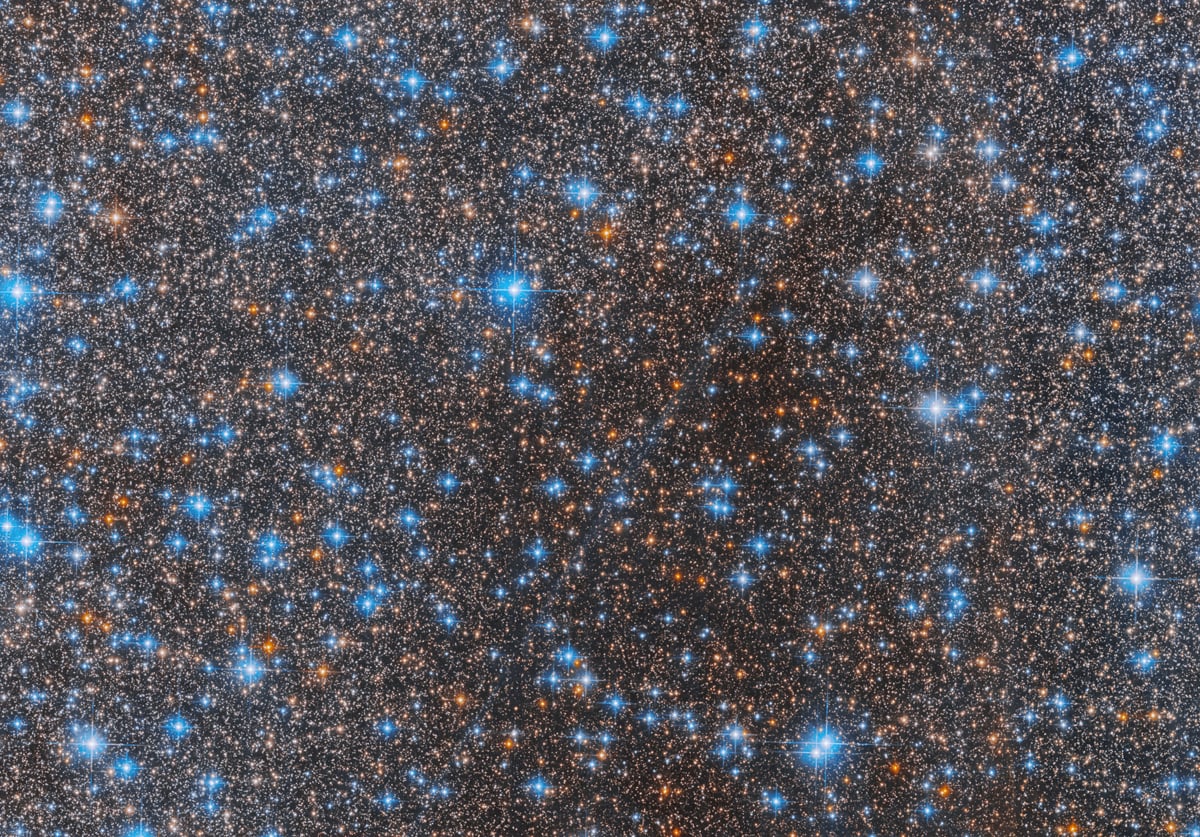
Gravitational microlensing can reveal exoplanets
Roman’s search for exoplanets will include gravitational microlensing, a technique that uses the bending of light by gravity. The method relies on a chance alignment between a foreground object and a more distant background star. When the foreground object passes close to the line of sight, its gravity bends the background star‘s light and magnifies its apparent brightness.
A planet orbiting the foreground star can also affect the lensing pattern. Its gravity produces an additional disturbance, which may appear as a brief feature in the background star’s brightness curve. Astronomers can study that feature to determine whether a planet caused it and estimate some of its properties.
This technique can uncover planetary systems at considerable distances from Earth. It can also detect planets that orbit far from their host stars. In some cases, microlensing can reveal rogue planets that travel through space without a parent star.
Clear skies!
See more from DIYPhotography.net on Google
Add DIYPhotography.net as a trusted source. This makes
our stories more likely to appear in your Google Search results.
 Add as a preferred source on Google

Soumyadeep Mukherjee
Soumyadeep Mukherjee is an award-winning astrophotographer from India. He has a doctorate degree in Linguistics. His work extends to the sub-genres of nightscape, deep sky, solar, lunar and optical phenomenon photography. He is also a photography educator and has conducted numerous workshops. His works have appeared in over 40 books & magazines including Astronomy, BBC Sky at Night, Sky & Telescope among others, and in various websites including National Geographic, NASA, Forbes. He was the first Indian to win “Astronomy Photographer of the Year” award in a major category.

Join the Discussion
DIYP Comment Policy
Be nice, be on-topic, no personal information or flames.