

















Euclid Telescope Captures the Most Distant Quasar Ever Seen
Nov 25, 2026
Soumyadeep Mukherjee
Soumyadeep Mukherjee is an award-winning astrophotographer from India. He has a doctorate degree in Linguistics. His work extends to the sub-genres of nightscape, deep sky, solar, lunar and optical phenomenon photography. He is also a photography educator and has conducted numerous workshops. His works have appeared in over 40 books & magazines including Astronomy, BBC Sky at Night, Sky & Telescope among others, and in various websites including National Geographic, NASA, Forbes. He was the first Indian to win “Astronomy Photographer of the Year” award in a major category.
Share:
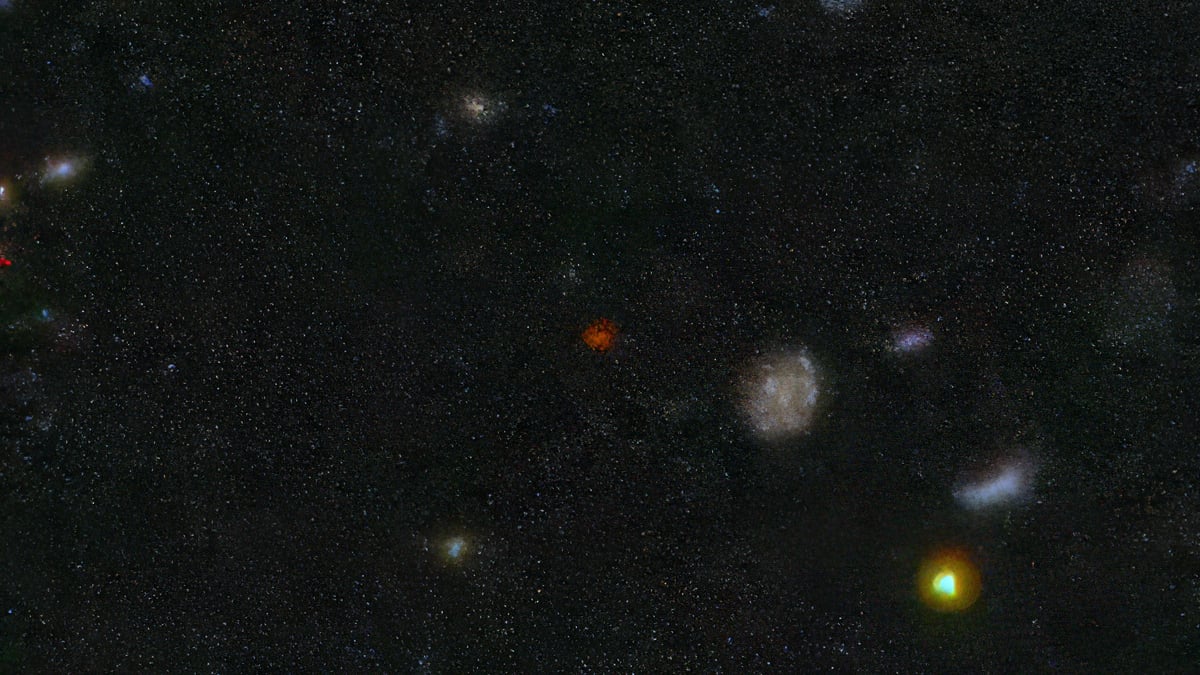
Astronomers have discovered a quasar that existed just 630 million years after the Big Bang. The object, named Dún Aonghasa, contains a supermassive black hole 360 million times the Sun‘s mass. Its discovery gives astronomers a new record for the most distant known quasar.
The European Space Agency‘s Euclid space telescope spotted the object among millions of sources in its survey images. Follow-up observations with some of the world’s most powerful telescopes revealed what lay behind that faint source. The James Webb Space Telescope helped confirm its distance and measure the mass of its central black hole.
A quasar from the Universe’s first 630 million years
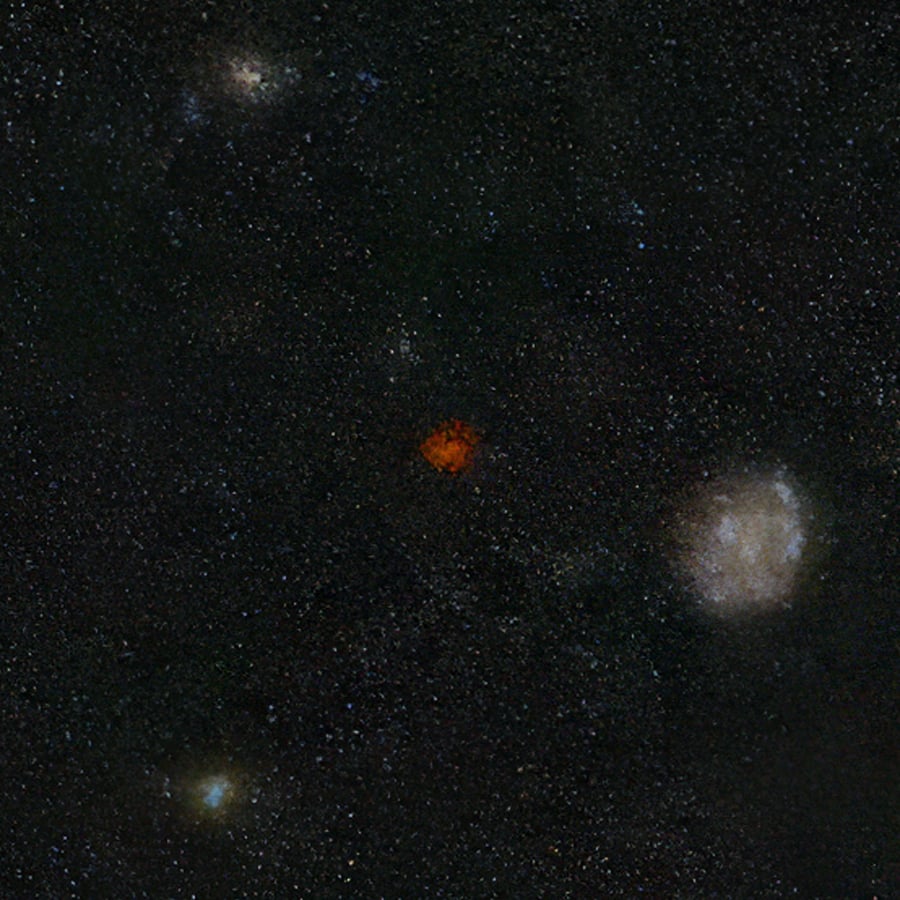
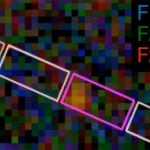
The discovery started with Euclid‘s wide-field survey. During approximately 18 months of observations, the telescope recorded millions of astronomical sources. Among them was an unusually red object, formally catalogued as J1504+6252. The research team nicknamed it Dún Aonghasa, after a prehistoric cliff-top fort on Ireland’s Inis Mór island.
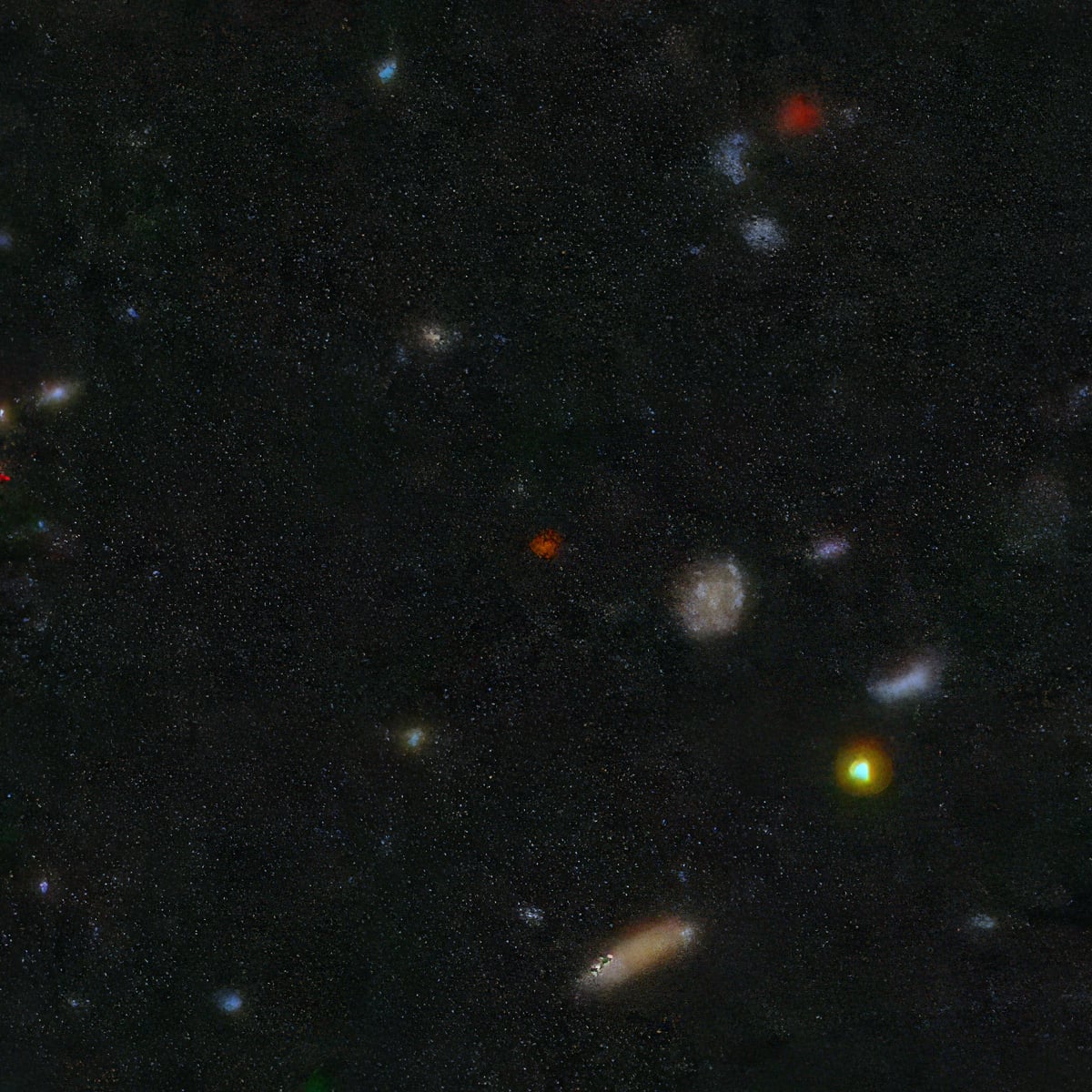
The team organized an extensive follow-up campaign involving several observatories. The W. M. Keck Observatory and the Large Binocular Telescope Observatory contributed ground-based observations. The Hubble Space Telescope also examined the source before the James Webb Space Telescope provided crucial measurements.
Those observations revealed a redshift of 8.13. Redshift measures how much the expansion of the Universe has stretched the wavelengths of light during its journey towards us. The greater the redshift, the further back astronomers generally look into cosmic history. At redshift 8.13, Dún Aonghasa shows the Universe as it existed just 630 million years after the Big Bang.
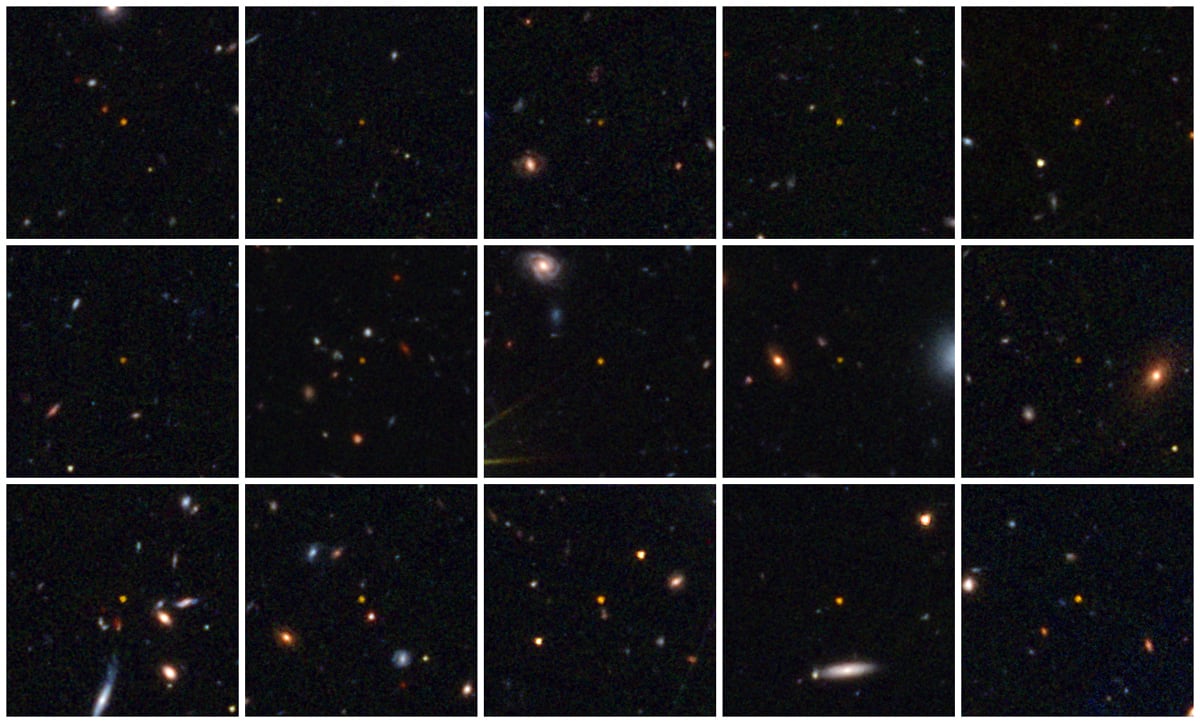
The discovery breaks Euclid’s own previous record by approximately 40 million years. In July 2026, the mission announced 31 newly identified quasars from the early Universe. The most distant among them had a redshift of 7.77. Dún Aonghasa now pushes the observational boundary beyond redshift 8. This is more than a numerical achievement. At that stage of cosmic history, even a few tens of millions of years represent a significant period in the development of the first galaxies and black holes.
A supermassive black hole inside the quasar
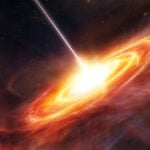
Quasars are extremely bright galactic cores powered by supermassive black holes. They shine when enormous quantities of gas and dust gather around a black hole and spiral towards it. Astronomers call this process accretion. As the material moves through the rotating accretion disk, friction heats it to extremely high temperatures. The resulting radiation can outshine the stars throughout the host galaxy.
Dún Aonghasa belongs to an interesting group of ancient quasars. Its central black hole has approximately 360 million solar masses. That is an extraordinary mass for an object from an era when the Universe had existed for less than a billion years. Astronomers have found other massive black holes from this period, but each discovery adds pressure to existing theories about their formation.
How Euclid found such a distant object
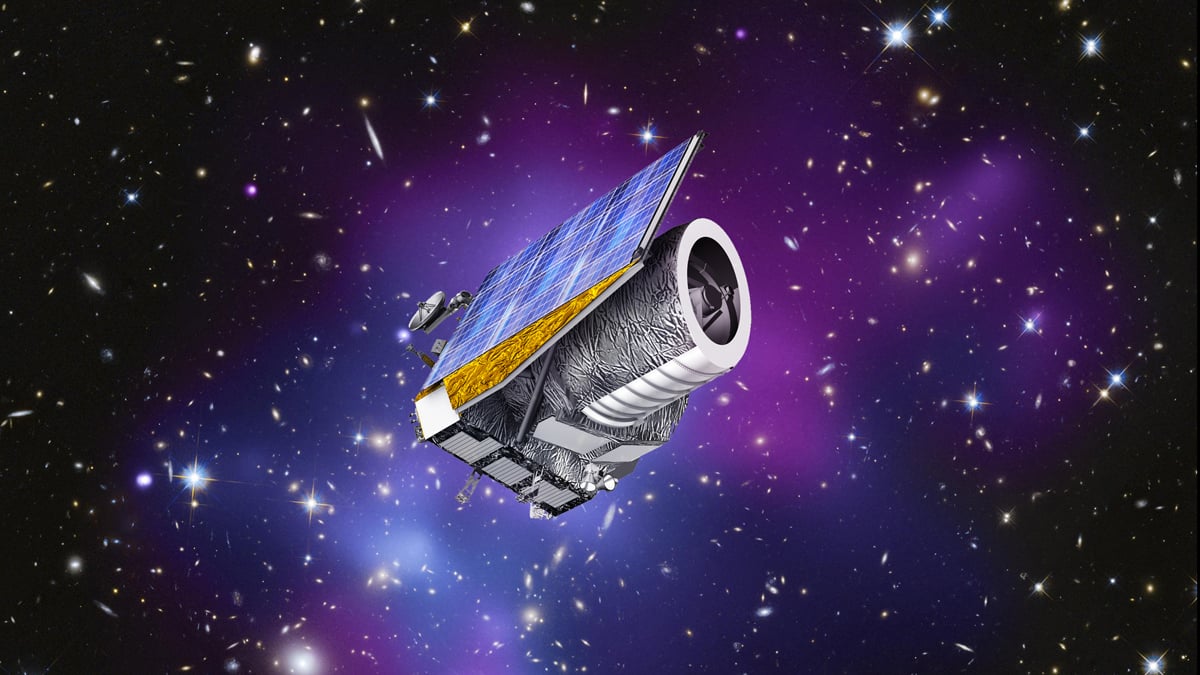
Euclid‘s primary mission is to investigate dark matter and dark energy. The spacecraft will map the distribution of billions of galaxies and study how the large-scale structure of the Universe has changed. The spacecraft carries a 1.2-metre telescope and two scientific instruments. Its Visible Instrument, known as VIS, captures detailed images in visible light. The Near-Infrared Spectrometer and Photometer, or NISP, observes near-infrared radiation and collects information about the light from distant sources.
The infrared observations play an important role in finding ancient quasars. As light travels through the expanding Universe, its wavelength becomes longer. Ultraviolet and visible light from extremely distant objects can reach Earth at infrared wavelengths. NISP helps astronomers detect this stretched radiation and investigate the sources that produced it.
Clear skies!
See more from DIYPhotography.net on Google
Add DIYPhotography.net as a trusted source. This makes
our stories more likely to appear in your Google Search results.
 Add as a preferred source on Google

Soumyadeep Mukherjee
Soumyadeep Mukherjee is an award-winning astrophotographer from India. He has a doctorate degree in Linguistics. His work extends to the sub-genres of nightscape, deep sky, solar, lunar and optical phenomenon photography. He is also a photography educator and has conducted numerous workshops. His works have appeared in over 40 books & magazines including Astronomy, BBC Sky at Night, Sky & Telescope among others, and in various websites including National Geographic, NASA, Forbes. He was the first Indian to win “Astronomy Photographer of the Year” award in a major category.

Join the Discussion
DIYP Comment Policy
Be nice, be on-topic, no personal information or flames.