

















ALMA Captures a Giant Magnetic Eruption on a Dying Star
Nov 24, 2026
Soumyadeep Mukherjee
Soumyadeep Mukherjee is an award-winning astrophotographer from India. He has a doctorate degree in Linguistics. His work extends to the sub-genres of nightscape, deep sky, solar, lunar and optical phenomenon photography. He is also a photography educator and has conducted numerous workshops. His works have appeared in over 40 books & magazines including Astronomy, BBC Sky at Night, Sky & Telescope among others, and in various websites including National Geographic, NASA, Forbes. He was the first Indian to win “Astronomy Photographer of the Year” award in a major category.
Share:
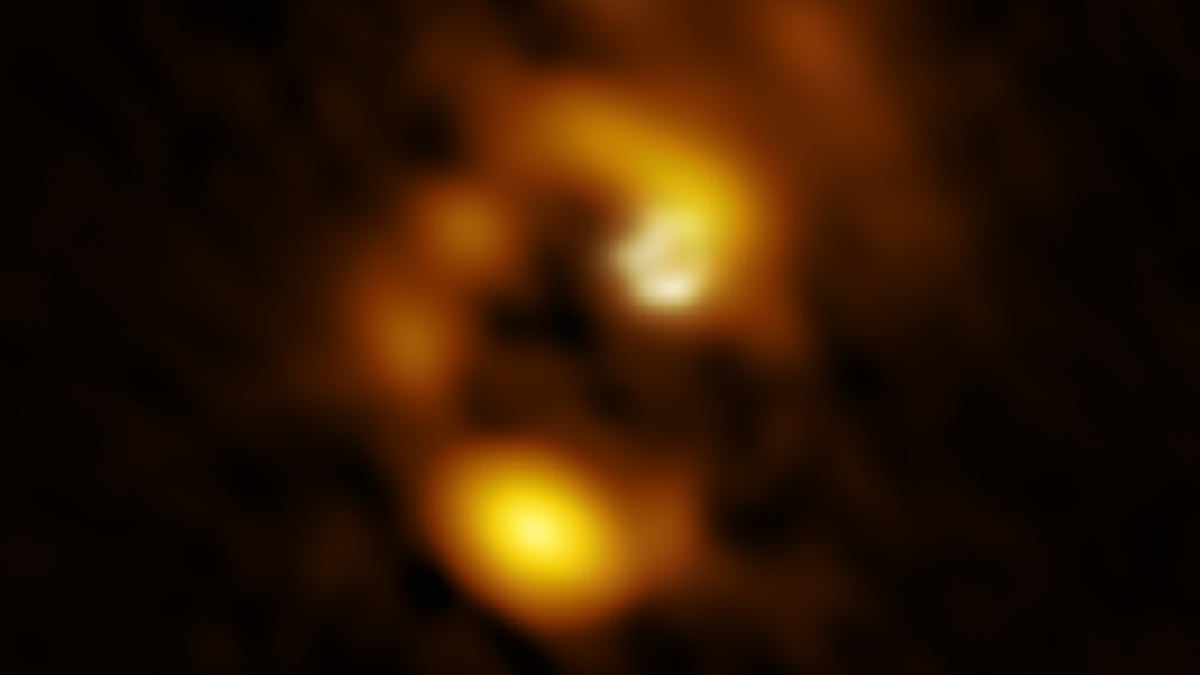
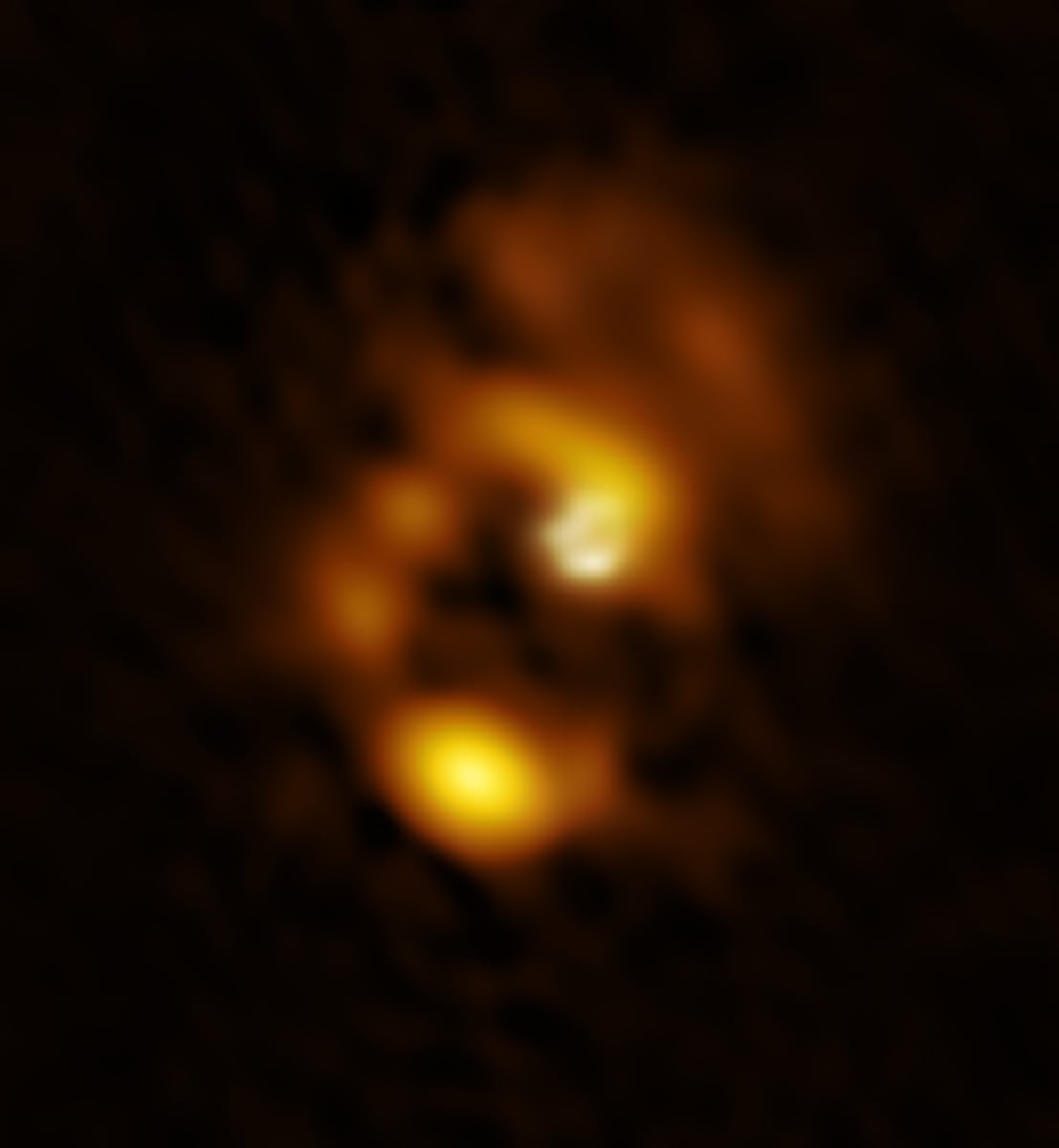
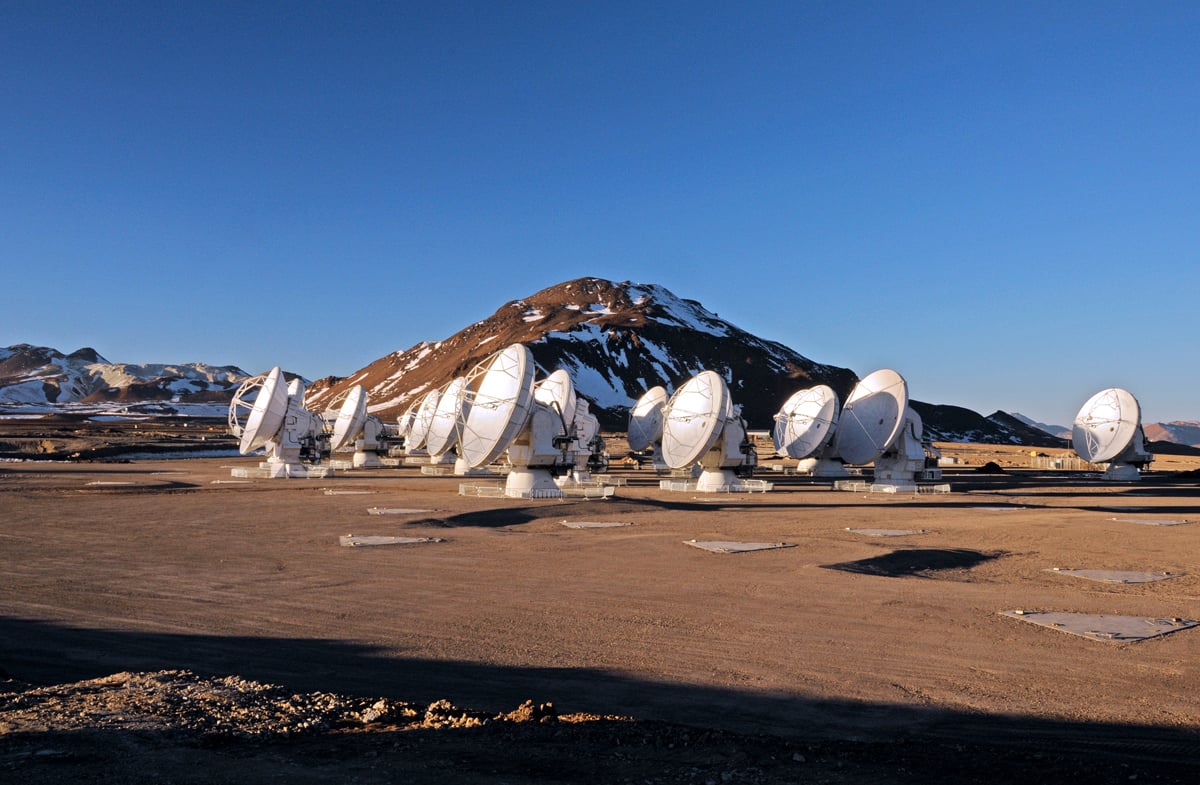
A giant red star 330 light-years from Earth has thrown an enormous amount of gas into space. The ejected material forms a loop that stretches roughly 10 astronomical units from the star’s surface. That is comparable to the distance between the Sun and Saturn. Astronomers captured the structure using the Atacama Large Millimeter/submillimeter Array (ALMA) in Chile. Their observations have revealed a powerful magnetic eruption on Mira A, an aging star in the constellation Cetus.
ALMA sees an eruption around Mira A
Mira A sits approximately 330 light-years away and belongs to a class of evolved stars known as asymptotic giant branch stars. It has expanded considerably during its later stages of evolution. Its outer atmosphere extends far beyond the region occupied by its original main-sequence star. The star also releases material into space as it approaches the end of its life.
ALMA’s latest observations show just how dramatic this mass loss can become. The image captures the star’s uneven, glowing surface alongside a huge loop of surrounding material. The loop reaches up to 10 astronomical units from the stellar surface. At that distance, it extends roughly as far as Saturn‘s orbit from the Sun.
Resolving such a structure around another star presents a considerable observational challenge. Even relatively nearby stars appear extremely small through conventional telescopes. Astronomers can follow changes in their brightness, but identifying the shape of an eruption requires much finer detail.
A coronal mass ejection on a star
The event resembles a coronal mass ejection (CME) from our Sun. Solar CMEs occur when magnetic activity releases enormous quantities of plasma into space. They often accompany solar flares and magnetic storms. Some eruptions travel towards Earth and interact with our planet’s magnetic field.
These interactions can produce geomagnetic storms and trigger auroras. Powerful CMEs can also disrupt radio communications and affect satellites. Solar physicists have spent decades studying how magnetic fields store and release energy during these events.
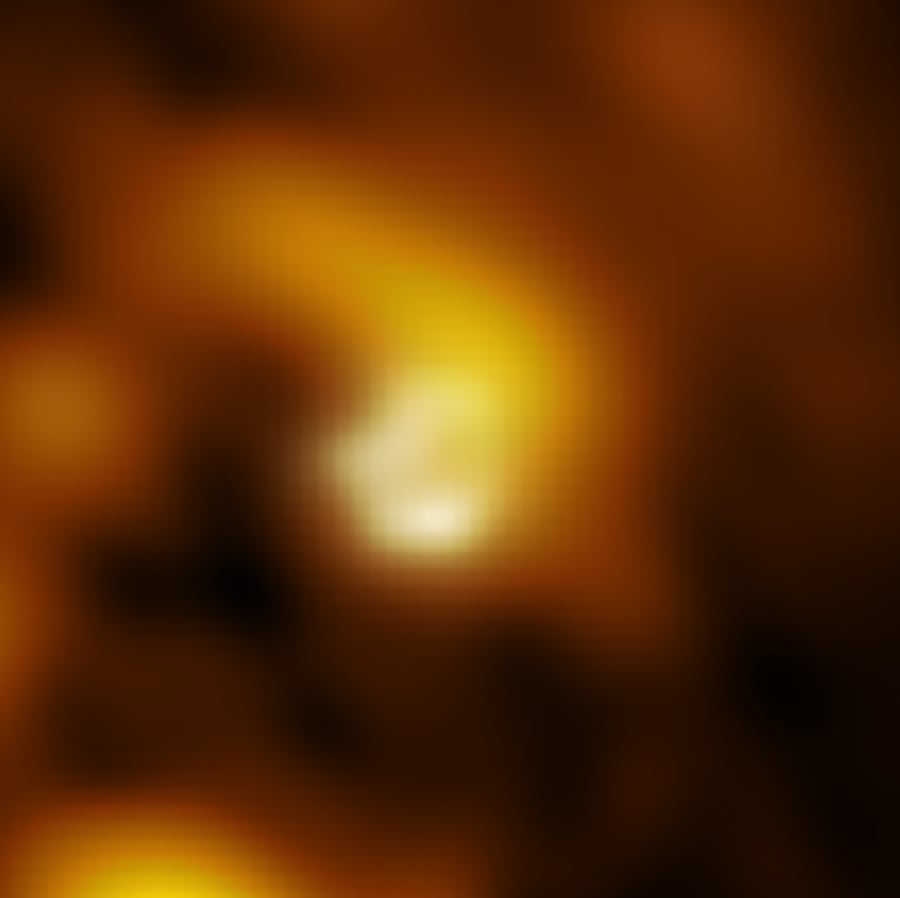
Mira A appears to experience a comparable process, although on a much larger scale. Its eruption produced an enormous loop of magnetized gas around the star. ESO reports that the event carries more energy than the strongest stellar flares recorded. The researchers also found that magnetic activity can lift material from the star’s extended outer atmosphere.
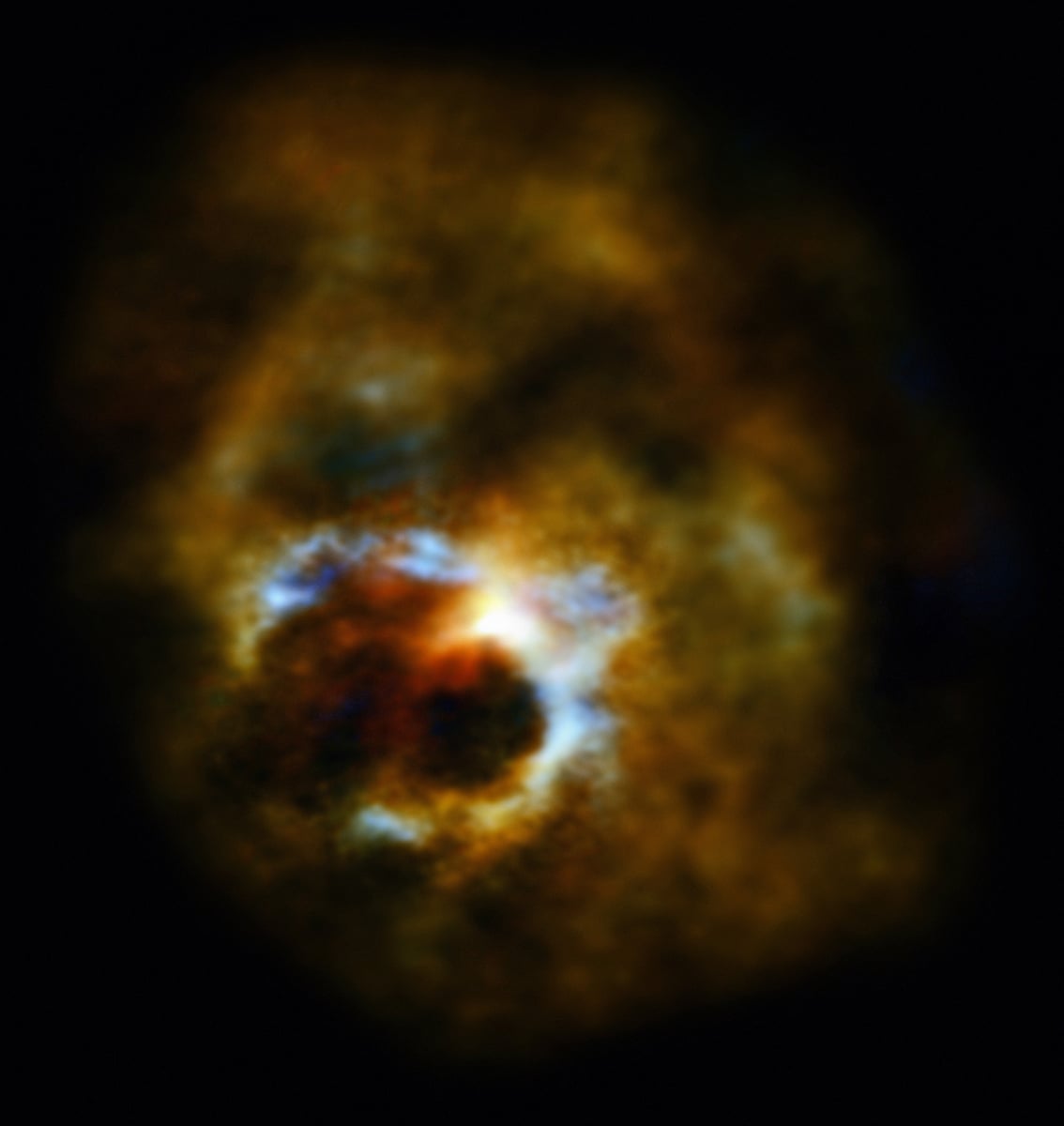
Magnetic storms on a red giant
Astronomers have traditionally explained mass loss from red giants through dust-driven stellar winds. As an evolved star expands, its outer atmosphere cools. Dust grains form within the surrounding gas, and radiation from the star pushes against them. As the grains move outward, they carry gas along with them. This creates a steady flow of material away from the star.
The process plays an important role in the final stages of stellar evolution. However, Mira A’s enormous eruption raises questions about whether radiation pressure can explain every aspect of this mass loss. A concentrated ejection carrying so much energy requires another source of momentum.
The researchers found evidence pointing towards the star’s magnetic field. ALMA can measure the polarization of incoming radiation, which allows astronomers to investigate magnetic fields within distant objects. The team used full-polarization observations of silicon monoxide emission around Mira A. These measurements revealed a strongly magnetized loop of expelled material.
Clear skies!
See more from DIYPhotography.net on Google
Add DIYPhotography.net as a trusted source. This makes
our stories more likely to appear in your Google Search results.
 Add as a preferred source on Google

Soumyadeep Mukherjee
Soumyadeep Mukherjee is an award-winning astrophotographer from India. He has a doctorate degree in Linguistics. His work extends to the sub-genres of nightscape, deep sky, solar, lunar and optical phenomenon photography. He is also a photography educator and has conducted numerous workshops. His works have appeared in over 40 books & magazines including Astronomy, BBC Sky at Night, Sky & Telescope among others, and in various websites including National Geographic, NASA, Forbes. He was the first Indian to win “Astronomy Photographer of the Year” award in a major category.
Join the Discussion
DIYP Comment Policy
Be nice, be on-topic, no personal information or flames.