


















This 570-Megapixel DECam Image Reminds Us of Van Gogh’s “Starry Night”
Jul 16, 2026
Soumyadeep Mukherjee
Soumyadeep Mukherjee is an award-winning astrophotographer from India. He has a doctorate degree in Linguistics. His work extends to the sub-genres of nightscape, deep sky, solar, lunar and optical phenomenon photography. He is also a photography educator and has conducted numerous workshops. His works have appeared in over 40 books & magazines including Astronomy, BBC Sky at Night, Sky & Telescope among others, and in various websites including National Geographic, NASA, Forbes. He was the first Indian to win “Astronomy Photographer of the Year” award in a major category.
Share:
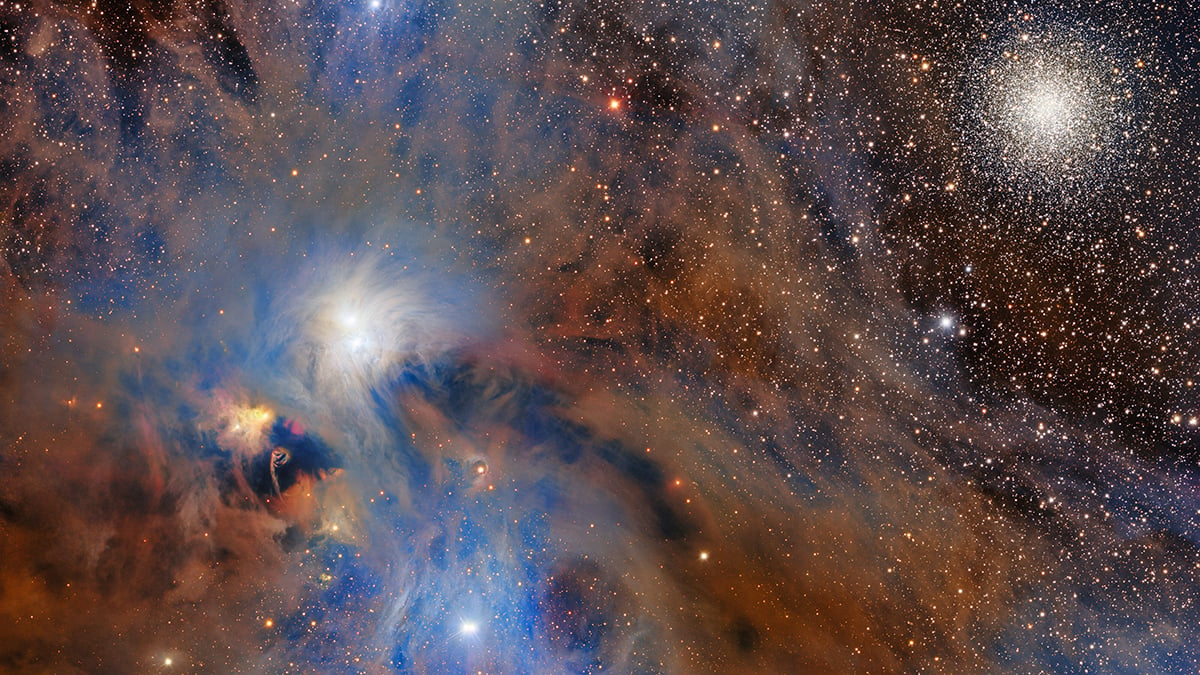
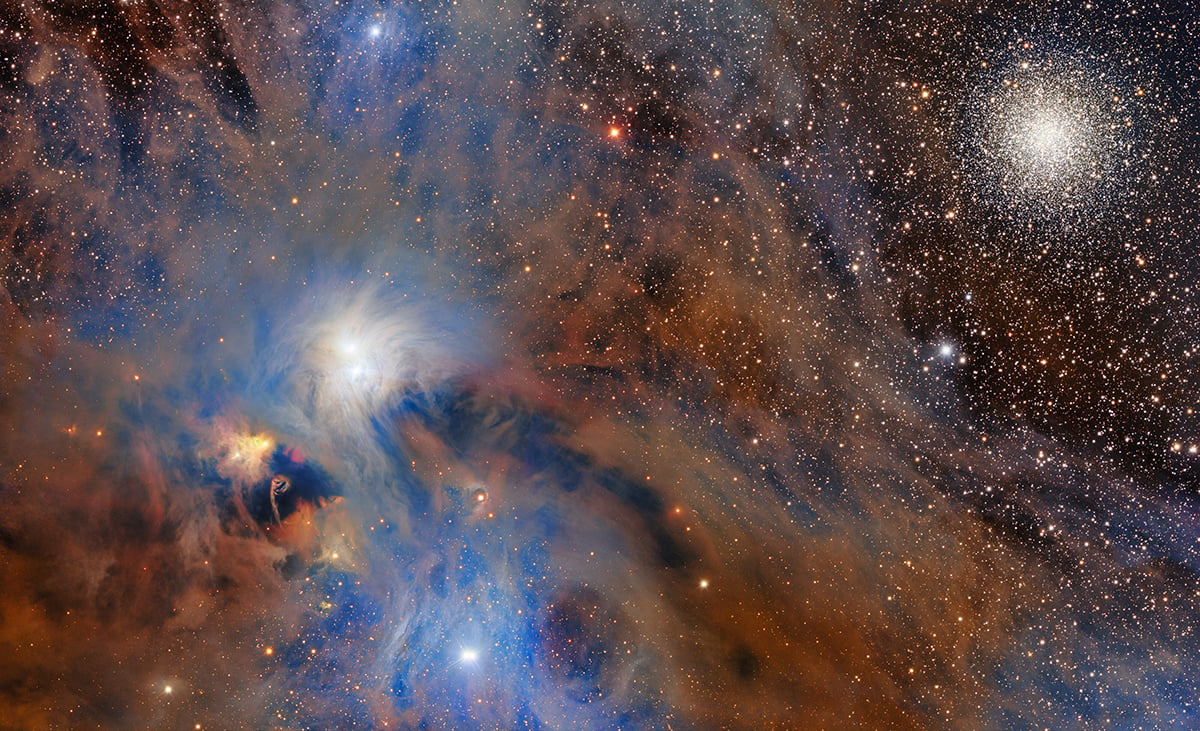
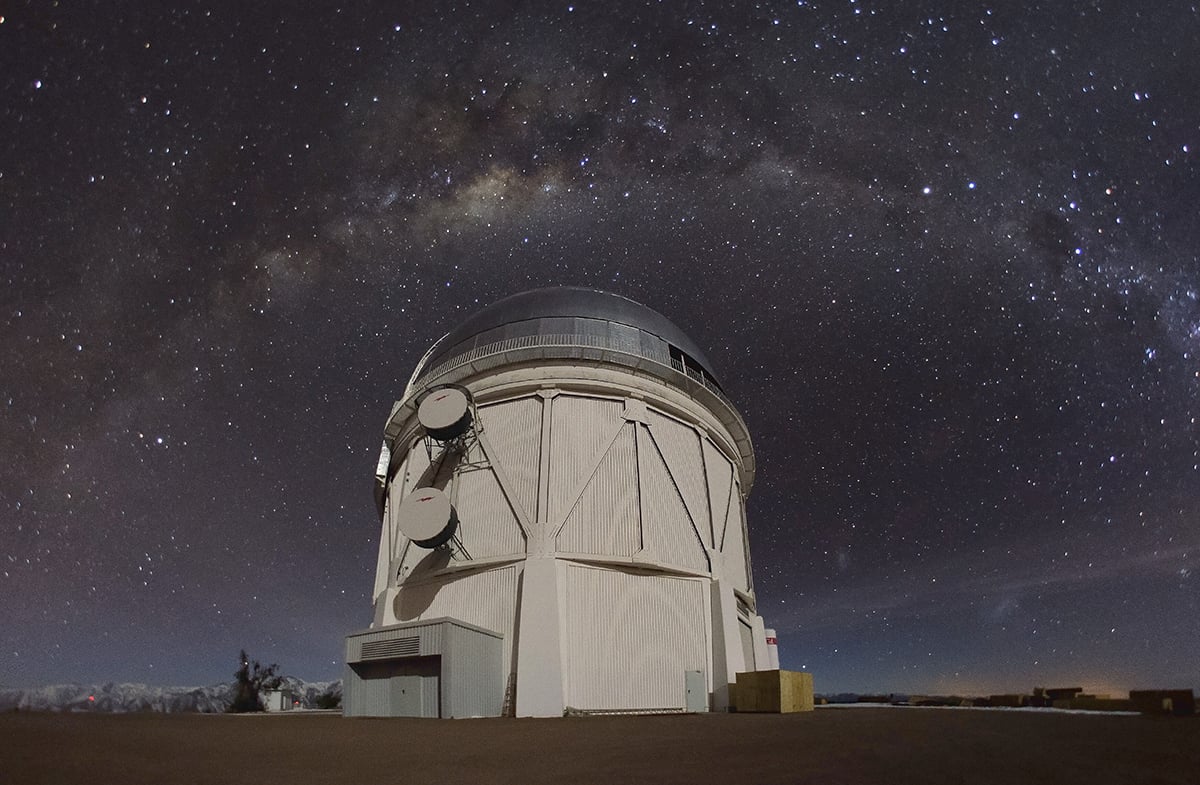
More than a century after Vincent van Gogh painted the “Starry Night”, the swirling patterns that made the masterpiece so recognizable continue to find echoes in the night sky. A new image from the Dark Energy Camera (DECam) brings back that resemblance. The intricate ribbons of dust, glowing blue reflection nebulae, and densely packed star fields of the Corona Australis Molecular Cloud create a scene that bears a striking visual similarity to the famous painting.
Using the 570-megapixel Dark Energy Camera mounted on the Víctor M. Blanco 4-meter Telescope in Chile, astronomers recorded one of the most detailed wide-field views of the Corona Australis Molecular Cloud to date. Located about 430 light-years away, the Corona Australis Molecular Cloud has attracted scientific attention for decades. It is also a favourite target for amateur astrophotographers.
Inside one of the Sun’s closest stellar nurseries
The Corona Australis Molecular Cloud occupies a relatively small region of the southern sky, yet it hosts an impressive variety of astronomical objects. It belongs to a much larger network of cold molecular clouds scattered throughout the Milky Way. These clouds serve as stellar nurseries, where gravity slowly gathers gas and dust until new stars begin to emerge.
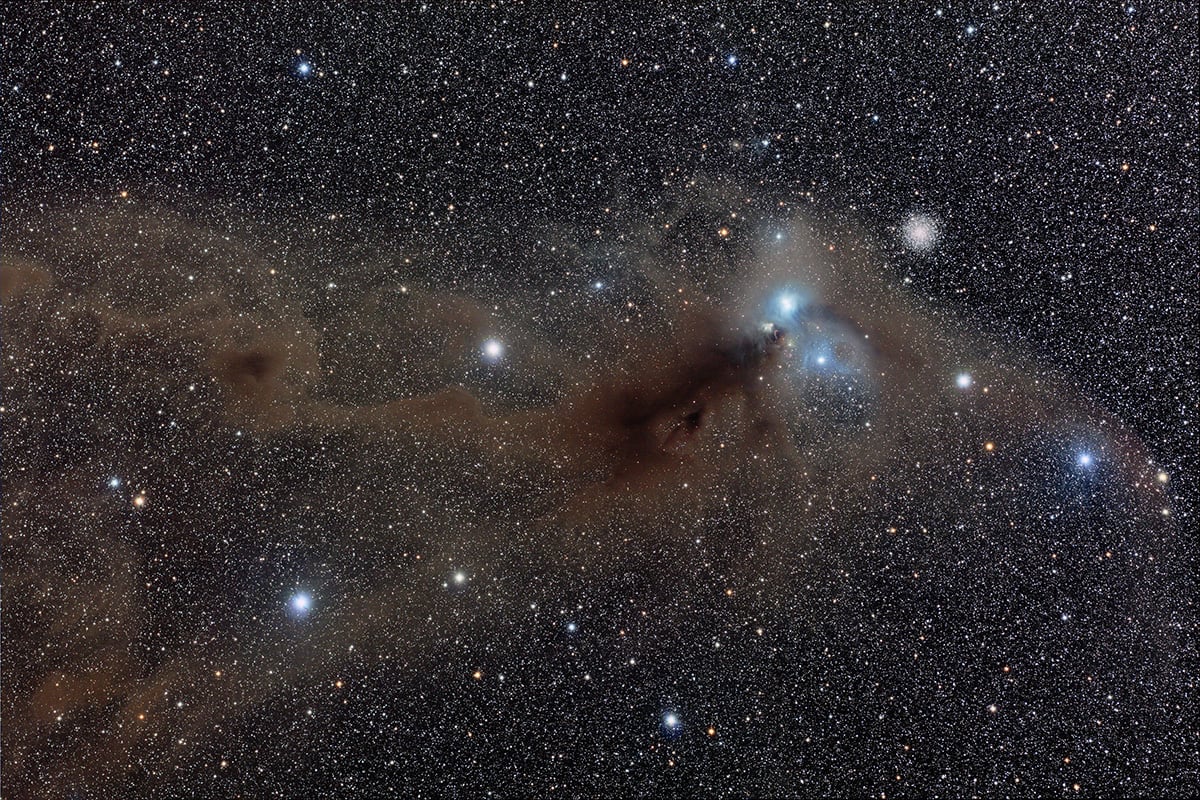
Unlike the bright emission nebulae, the Corona Australis Molecular Cloud has a different appearance. Large portions of the cloud remain dark because dense dust absorbs visible light coming from stars behind it. Instead of glowing on their own, many parts of the cloud become visible only because nearby stars illuminate the surrounding dust.
This process produces what astronomers call reflection nebulae. Tiny dust grains scatter starlight, especially shorter blue wavelengths, giving the cloud its characteristic bluish appearance. The same physical process explains why Earth‘s daytime sky appears blue. In both cases, small particles scatter blue light more efficiently than red light.
Many of these newborn stars remain invisible in ordinary optical images because thick blankets of dust surround them. Infrared telescopes can penetrate much of this dust, revealing young stellar objects still gathering material from their natal clouds. Optical observations, however, continue to play a vital role because they show how those young stars interact with the surrounding environment. Light from the stars illuminates nearby dust, while stellar winds reshape the cloud.
Well-known deep-sky objects in a cosmic landscape
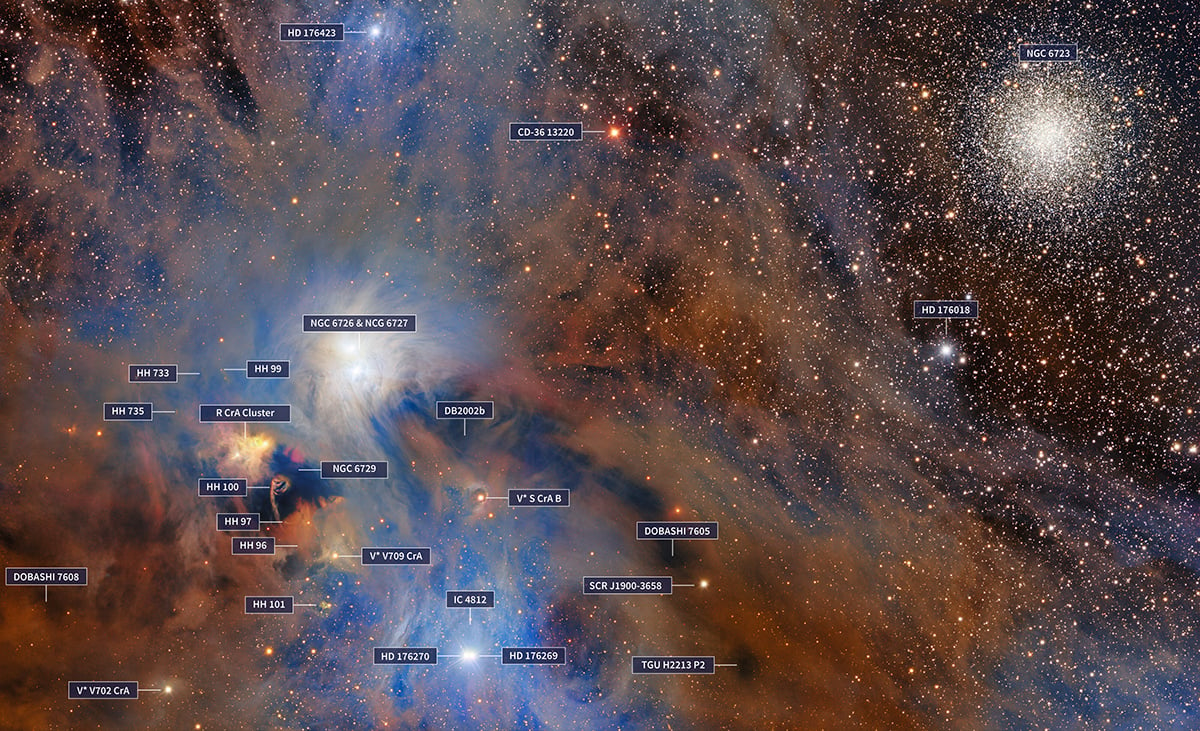
One of the most fascinating aspects of the Corona Australis Molecular Cloud is the number of well-known astronomical objects concentrated within a relatively small area. The new DECam image captures this rich environment by capturing several famous nebulae and star clusters together in a frame.
The brightest object in the image is NGC 6729, a reflection nebula illuminated by the young variable star R Coronae Australis. This star has not yet reached the stable phase of its life. Instead, it continues evolving while interacting with the gas and dust surrounding it. Changes in the star’s brightness can alter the appearance of the nearby nebula, making the region particularly interesting for long-term observation.
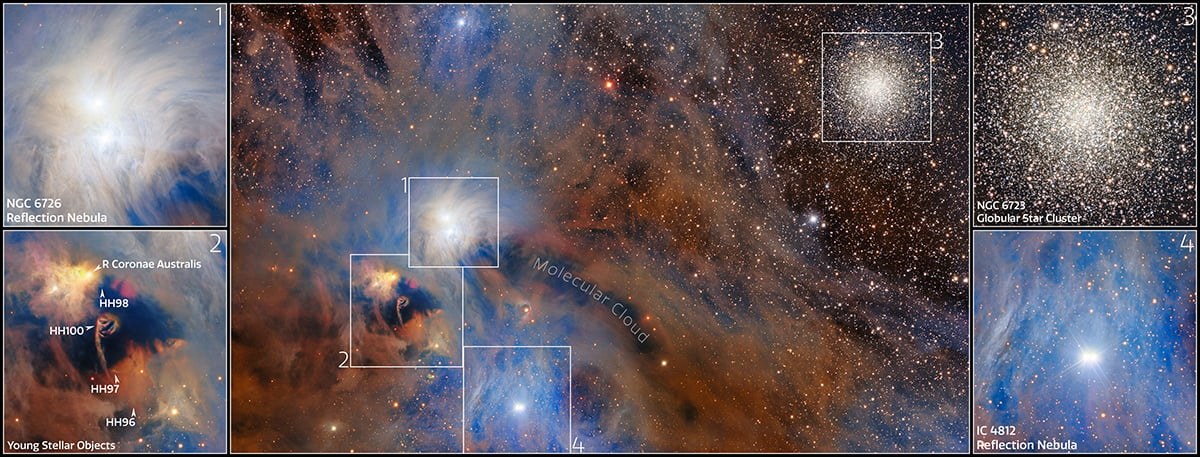
Just beside it lies NGC 6726 and NGC 6727, two additional reflection nebulae embedded within the same molecular cloud. Their soft blue glow comes entirely from scattered starlight rather than hot, ionized gas. Although these nebulae appear delicate in photographs, they occupy an active environment where star formation continues beneath thick layers of dust. We also have the star cluster NGC 6723 here, a dense swarm containing hundreds of thousands of ancient stars.
From probing dark energy to revealing stellar nurseries
The instrument responsible for this image has a story that is just as interesting as the target itself. The Dark Energy Camera, better known as DECam, was never intended to become famous for photographing colorful nebulae. It was designed to tackle one of cosmology‘s most significant mysteries: why the universe’s expansion is accelerating.
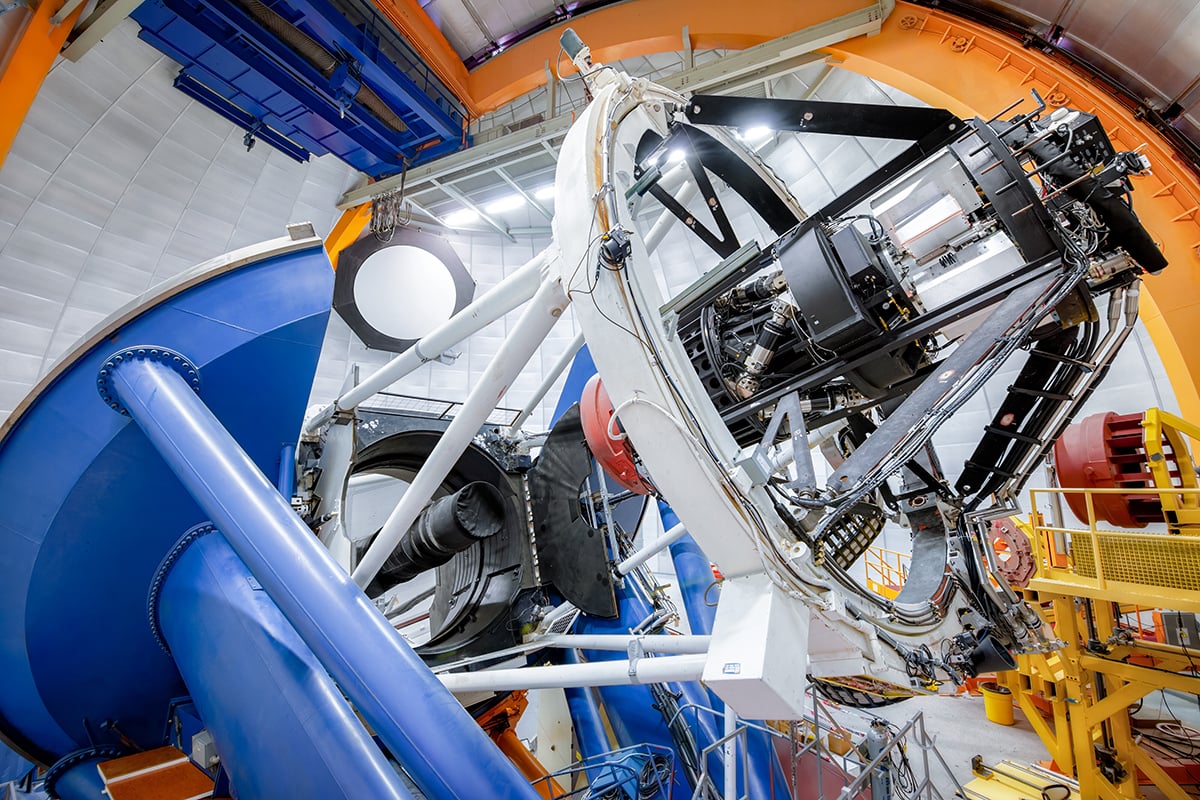
To support that effort, scientists developed one of the most capable optical cameras ever installed on a ground-based telescope. DECam contains 62 science CCDs that together produce images with a resolution of 570 megapixels. The camera operates on the Víctor M. Blanco 4-meter Telescope at Cerro Tololo Inter-American Observatory in northern Chile. The site offers some of the darkest skies in the world, along with dry air and stable atmospheric conditions.
Although the Dark Energy Survey completed its primary observations several years ago, DECam has remained one of the observatory’s busiest instruments. Astronomers continue using it for projects that range far beyond cosmology. Today, the camera studies nearby galaxies, stellar streams around the Milky Way, supernovae, asteroids, comets, and star-forming regions like Corona Australis.
Clear skies!
See more from DIYPhotography.net on Google
Add DIYPhotography.net as a trusted source. This makes
our stories more likely to appear in your Google Search results.
 Add as a preferred source on Google

Soumyadeep Mukherjee
Soumyadeep Mukherjee is an award-winning astrophotographer from India. He has a doctorate degree in Linguistics. His work extends to the sub-genres of nightscape, deep sky, solar, lunar and optical phenomenon photography. He is also a photography educator and has conducted numerous workshops. His works have appeared in over 40 books & magazines including Astronomy, BBC Sky at Night, Sky & Telescope among others, and in various websites including National Geographic, NASA, Forbes. He was the first Indian to win “Astronomy Photographer of the Year” award in a major category.
Join the Discussion
DIYP Comment Policy
Be nice, be on-topic, no personal information or flames.
One response to “This 570-Megapixel DECam Image Reminds Us of Van Gogh’s “Starry Night””
In New Zealand on Thursday 16 July 2026 Son Location Residential House Son Recently got Pie, 8 Seasonal Fruit Salad, Green Grapes, Champagne Ham Shaved and 4 BTC Chicken Roll from Wellington Karori: Woolworths and/or New World.
And So DIYPhotography, Canada, Mexico, Central America, Caribbean, South America, Polynesia, Greenland, Europe, United States, Japan, New Zealand, Africa, West Asia, Philippines, Vietnam, Laos, Cambodia, Thailand, Myanmar, Micronesia, Melanesia, Singapore, Central Asia, South Asia, North Korea, South Korea, Malaysia, Indonesia, Brunei, East Timor, Bermuda, Australia, United Kingdom, Macau, Hong Kong, Taiwan, Mongolia, Saint Pierre and Miquelon and Everyone, now all go have a best upgraded realest strongest extremely biggest fighting and moreover to get all the money, everything, whatever and many more out from 4 Quintuple Country List: List 1 China/Mongolia/Taiwan/Macau/Hong Kong, List 2 North Korea/South Korea/Central Asia/South Asia/Myanmar, List 3 Laos/Thailand/Cambodia/Philippines/Vietnam and List 4 Russia/West Asia/Eastern Europe/Southeast Europe/Central Europe into 4 Single Country List: 1st List New Zealand, 2nd List United Kingdom, 3rd List Singapore and 4th List United States for every time.