
























A Starry Spectacle in the Night Sky: Hubble Photographs NGC 685
Aug 1, 2025
Soumyadeep Mukherjee
Soumyadeep Mukherjee is an award-winning astrophotographer from India. He has a doctorate degree in Linguistics. His work extends to the sub-genres of nightscape, deep sky, solar, lunar and optical phenomenon photography. He is also a photography educator and has conducted numerous workshops. His works have appeared in over 40 books & magazines including Astronomy, BBC Sky at Night, Sky & Telescope among others, and in various websites including National Geographic, NASA, Forbes. He was the first Indian to win “Astronomy Photographer of the Year” award in a major category.
Share:
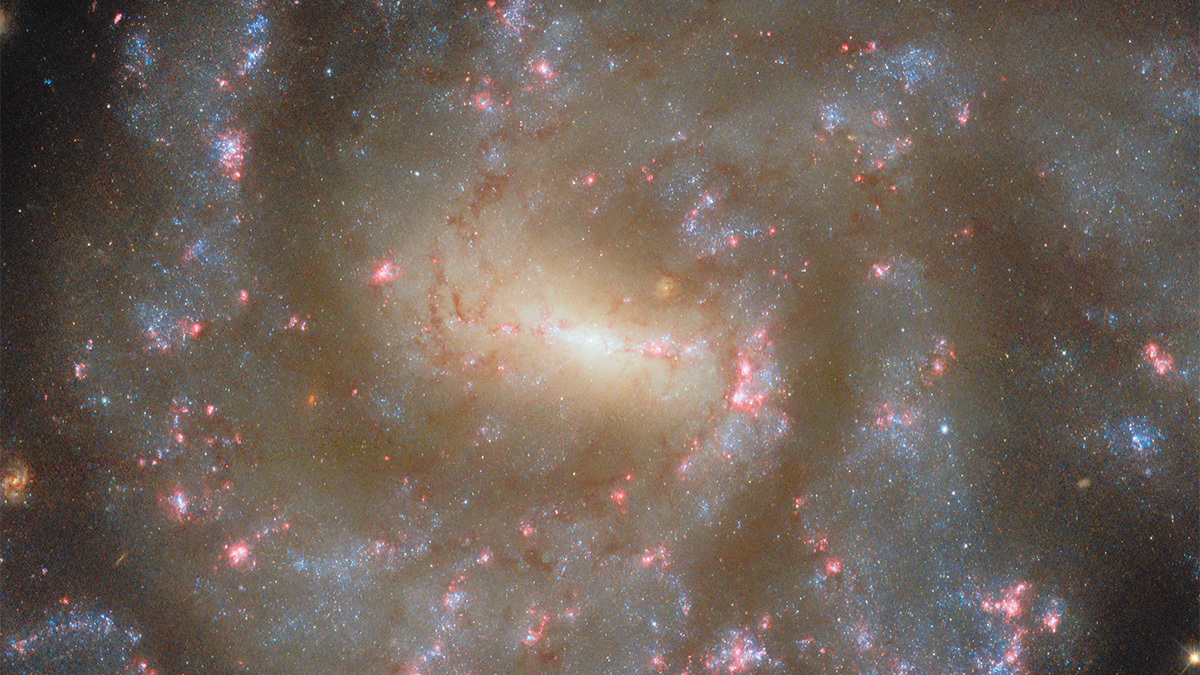
The Hubble Space Telescope has captured a detailed image of the spiral galaxy NGC 685, glowing with color and teeming with activity. Located in the constellation Eridanus, this galaxy lies around 64 million light-years away from Earth. The image shows us a vibrant scene filled with young stars and glowing clouds of gas. It also adds to our growing understanding of how galaxies like this form and evolve.
A galaxy full of action
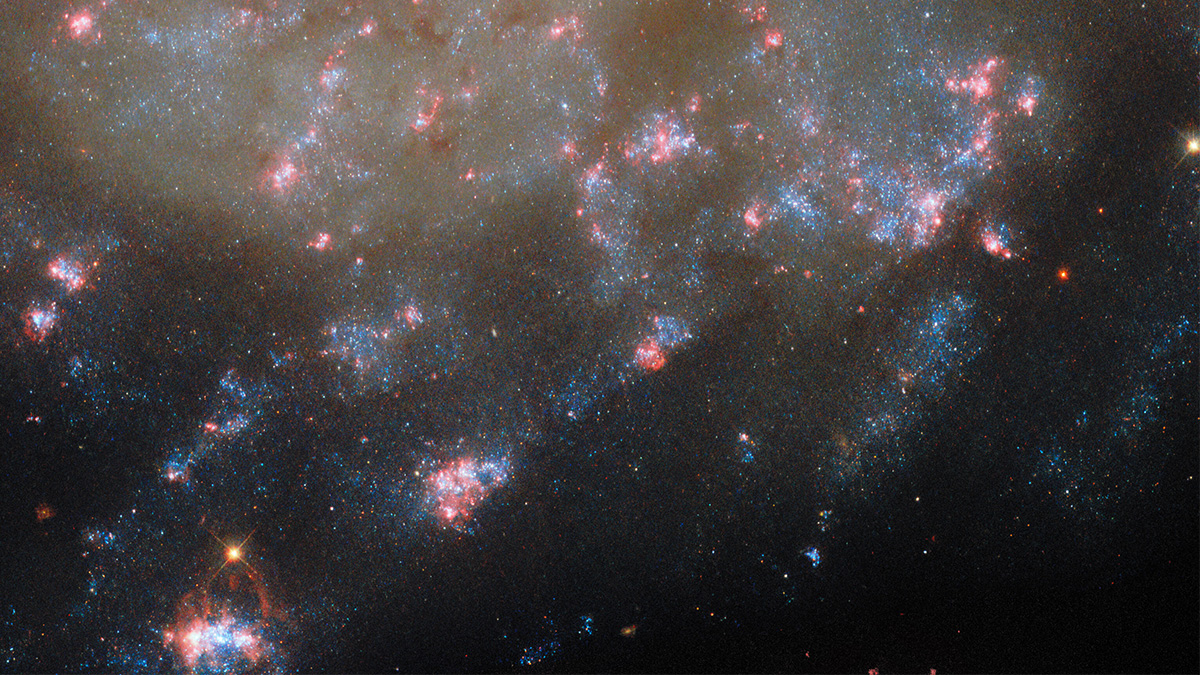
NGC 685 is a barred spiral galaxy. This means it has a central, bar-shaped structure composed of stars. From this bar, spiral arms stretch outward, forming a graceful and recognizable shape. These arms are packed with bright blue stars, pinkish gas clouds, and dust lanes. The image taken by Hubble reveals the intricate structure of these features with incredible clarity. Astronomers are especially interested in the pink regions scattered throughout the spiral arms. These are H II regions, zones filled with ionized hydrogen gas. These glowing clouds are lit up by young, hot stars that have recently formed. The stars emit high-energy radiation that strips electrons from hydrogen atoms, causing the gas to glow. These H II regions are powerful indicators of recent star formation. They help scientists identify where new stars are being born in galaxies like NGC 685.
Not a starburst galaxy, but still active
NGC 685 is not a “starburst” galaxy. Starburst galaxies are known for extremely rapid and intense star formation. Instead, NGC 685 forms stars at a slower but steady pace. According to NASA, it produces less than half the mass of the Sun in new stars every year. Although this may seem insignificant, it still indicates that the galaxy is actively forming stars. This moderate rate of star formation gives astronomers a great opportunity. They can study how galaxies evolve when they are not in extreme environments. NGC 685 becomes a kind of cosmic laboratory, quiet enough to study in detail, but active enough to offer meaningful insights.
A beautiful and useful target
The image was taken using Hubble’s Advanced Camera for Surveys (ACS). This instrument has delivered thousands of deep-space images since it was installed in 2002. The ACS captures visible light and helps astronomers study the structure of galaxies, clusters, and star-forming regions. This particular observation of NGC 685 is part of a large multi-year research program. The goal is to catalog tens of thousands of H II regions and young star clusters in dozens of nearby galaxies. Researchers want to understand how these regions are distributed and how they relate to the overall structure of a galaxy.
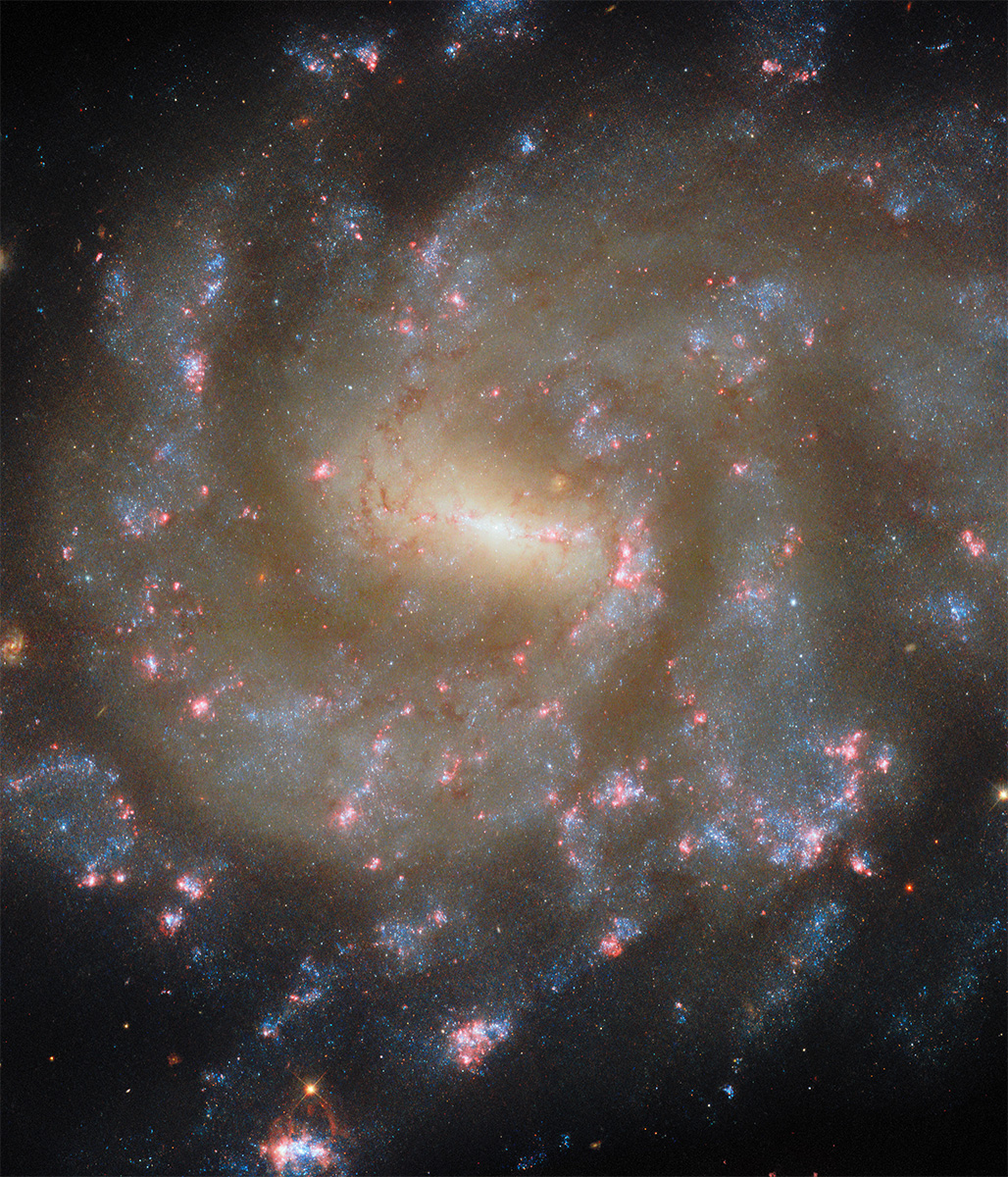
The new image of NGC 685 from the Hubble Space Telescope is packed with information about how galaxies grow and evolve. The galaxy’s spiral arms glow with young stars and active gas clouds. Its moderate star formation offers scientists a stable system to study in depth.
Clear skies!
See more from DIYPhotography.net on Google
Add DIYPhotography.net as a trusted source. This makes
our stories more likely to appear in your Google Search results.
 Add as a preferred source on Google

Soumyadeep Mukherjee
Soumyadeep Mukherjee is an award-winning astrophotographer from India. He has a doctorate degree in Linguistics. His work extends to the sub-genres of nightscape, deep sky, solar, lunar and optical phenomenon photography. He is also a photography educator and has conducted numerous workshops. His works have appeared in over 40 books & magazines including Astronomy, BBC Sky at Night, Sky & Telescope among others, and in various websites including National Geographic, NASA, Forbes. He was the first Indian to win “Astronomy Photographer of the Year” award in a major category.


Join the Discussion
DIYP Comment Policy
Be nice, be on-topic, no personal information or flames.